Tag: World Cup

  • WC: India-Ireland encounter gets 9.8 TVR in six metros

    WC: India-Ireland encounter gets 9.8 TVR in six metros

    MUMBAI: The World Cup match between India and Ireland got a TVR of 9.8, according to data from Tam Sports (C&S 4+ six Metros).

    The match got a peak TVR of 20, lower than the India versus England tie which crossed a TVR of 12 but higher than the opening match of the World Cup between India and Bangladesh which got a TVR of 7.8.

    So far the first 24 matches got an average TVR of 2.38. In 2007 for the same period, the average TVR was 2.3. The reach for this event is up, as expected. 25 million viewers had tuned in to the India versus Sri Lanka game in 2007 compared to 29 million for the India Ireland match now.

    20 million viewers watched the India-Ireland match on Star Cricket compared to eight million on Star Sports and seven million on DD. Pakistan matches continue to do well. Their encounter against New Zealand got a TVR of 2.62. 18 million viewers tuned in for that match.

    The 21 non India matches played so far have delivered an average TVR of 1.28 compared to 1.04 in 2007. The low scoring England versus South Africa match got a TVR of 1.08 but India was also playing at the same time. Just four million viewers tuned in to see West Indies hammer Bangladesh in under 50 overs.

  • ‘The ad market will grow by 13-15% this year’ : Lodestar Universal CEO Shashi Sinha

    ‘The ad market will grow by 13-15% this year’ : Lodestar Universal CEO Shashi Sinha

    Cricket is expected to earn an advertising revenue of Rs 18 billion from its television telecast this year, up from Rs 15 billion in 2010, as it showcases the World Cup and the Indian Premier League (IPL) in back-to-back events.

    The World Cup will be bigger for ESPN Star Sports than it was for Sony in 2007. Digging into the game are a lot more advertisers, offering the telecast rights owner a wider plate to bargain from. The telecom and auto categories, which are the two big cricket spenders, have also grown.

    Ad monies will not shift dramatically from other genres to the World Cup. There is no real worry for the Hindi general entertainment channels (GECs) as the ad market is expected to grow between 13-15 per cent. Cricket will get its share of ad revenue growth, but it will not substitute the Hindi GECs.

    In an interview with Indiantelevision.com‘s Ashwin Pinto, Lodestar Universal CEO Shashi Sinha talks about the advertising opportunities cricket throws up and the impact it could have on the other genres of television content.

    Excerpts:

    The cricket genre is expected to get a big boost with the World Cup and the IPL happening in the same year. Will we see a big ad shift to cricket this year?
    Our estimate is that this year cricket will earn Rs 17-18 billion from television telecast. The World Cup and the IPL will each get around Rs 6-7 billion.

    How much will ESPN Star Sports make from the World Cup?
    Eighty per cent of the figure I earlier mentioned will go to them. The balance will be shared between Doordarshan and news channels.

    The World Cup this year will be far bigger than in 2007. There is an 80 -100 per cent increase in rates compared to what was paid in 2007.

    The logic is that today there are more advertisers. In 2007, there were three telecom companies; today, there are 15. There were five auto companies then; today there are 15. Reach has also gone up. There are at least 60 per cent more TV homes today compared to 2007. I expect ESPN Star Sports to make at least double of what Sony managed to garner in 2007.

    Cricket is pre-sold. Eighty per cent of the ad inventory has been pre-sold for this World Cup, which is what also happened in 2007. It is the client and agency‘s gamble on the property when it is pre-sold.

    Was there hesitation on the part of advertisers after the disaster of 2007?
    It is a question of demand and supply. Also, the issue of India going out after two games does not arise this time (Last time in seven days India was out and people lost interest in the remaining games). Now the schedule has been done smartly. If India goes out, it will be in the third week of March. You are not just sustaining India but also the other teams around India. People, for instance, will follow Australia in anticipation of India meeting them later on, though they are not in our group. Advertisers see a great opportunity in the World Cup. They look at what the scene is today.

    The advantage of the World Cup is that there is more inventory for clients to get on-board. It is not like the 20:20 format; there are more secondages here.

    When people talk about how so much inventory will be sold, they have to keep in mind the fact that the advertising landscape has changed. Advertising was a Rs 160 billion business industry in 2007. Today, it is sized at Rs 280-290 billion. The male dominated categories have grown faster than the female categories. The telecom and auto categories, which are the two big cricket spenders, have also grown.

    Is there any performance guarantee in deals done with ESS?
    There isn‘t any in cricket. It is easy to say that there should be. If supply outstrips demand, then a broadcaster will ensure that there is performance guarantee. If 10 companies are waiting to take sponsorship, why would there be a performance guarantee? Some Indian advertisers don‘t understand that the dynamics of advertising has changed. It is about the supply and demand ratio.

    Are we going to see ad monies shifting from other genres to the World Cup?
    I don‘t think that the shift will be dramatic. There will be a temporary blip, but overall the ad market will grow by 13-15 per cent this year. That makes a big difference. If it was static, I would worry. Around Rs 35 billion will be added this year. It is not like it is not growing like the US – or is shrinking. Cricket is getting its share of ad revenue growth; it is not that it is substituting the Hindi GECs.
    ‘Our estimate is that this year cricket will earn Rs 17-18 billion from television telecast. The World Cup and the IPL will each get around Rs 6-7 billion‘

    How will news channels fare during the World Cup?
    They have built specials around it. CNN-IBN, for instance, is doing programming that is different.

    The news channels will make some money, but the genre is a small part of the overall television advertising expenditure; they earn Rs 8 billion of ad revenue in combine. They will gain but in the larger scheme of things, the gain will be small.

    News channels will make around 10 per cent of what the live World Cup broadcast earns. It is a complementary activity for some clients; others take it as it is less expensive.

    Hindi GECs say that they will hold on due to the women audience. What do you see happening?
    There will be a problem as 75-80 per cent of the Indian homes are single TV. But it depends on who controls the remote. If it is the woman, then the Hindi GECs will be watched. If it is the man, then cricket will gain.

    From an ad revenue perspective, due to competitive pressures people are advertising more; there are more companies coming in. There is no problem in the larger scheme of things. If this was 2009 or five years back, I would have spoken differently.

    How does the World Cup compare to the IPL?
    They are different properties and they do not happen simultaneously. I don‘t know why people compare them. If extra money is coming into cricket advertising, then how are they competing?

    Both properties have relative strengths. If a company is in one property, then its rival will be in the other. IPL gives sustained viewership. In the World Cup, you have to factor in the non India viewership. If India wins, the hype will be much bigger and there will be more eyeballs.

    What difference will there be between India and non India games?
    There will be a dramatic difference. When India plays, there will be an expectation of a national rating of six to seven. If the hype is generated to ensure that non India games deliver a rating of two, then we will be alright. It should not be that non India games give a rating of just 0.5 or 1.

    How do you see this event faring vis-?-vis 2003 and 2007?
    2003 was very good as India reached the final and the tournament was held in South Africa; the telecast timings were very good. 2007 was a disaster and we went out in the first round after two games. This time India would have to be unlucky not to reach the quarter-finals. We play six to seven matches.

    The problem is that with the World cup taking place in India, the hopes are higher. In South Africa, the ratings built up slowly and picked up when India played Pakistan and England. With the event being in India, there is more hype. You are seeing different commercials being created. The bad news is that India has to perform. That is the issue.

    How important will the audience delivery of World Cup be for the ODI format?
    I feel that ODIs are here to stay. People earlier said that Tests would disappear. But it remains healthy, if you look at the India versus South Africa ratings. All depends on the contest and the performance of the teams. In 2009 when Australia came here, people wondered what would happen. Each game was thrilling.

    Your client Amul has sponsored the Holland team. Could you talk more about this?
    It was a bit of a punt taken, but at this point of time the sponsorship is paying off. Holland is a milk producing country. And this is a low cost sponsorship that has been done.

    What kind of activation is being done by companies?
    The ICC should be better organised from an activation standpoint. A key component of activation is tickets. Castrol and other companies are running competitions where people can get tickets. Then you go to the stadium and make a noise, generate excitement.

    The fact, though, is that there are not enough tickets available. I have sat in meetings where ICC sponsors have jumped around and said that tickets are not available. Activation is a weak area in this World Cup.

    Sony is using Dhoni in a campaign while Coca-Cola is doing gully cricket. Can this be construed as ambush marketing?
    No! Coca-Cola did the initiative in the past also and it is for the IPL. Ambush marketing is when you are doing activities in a stadium. While Reliance is an ICC sponsor, if a competitor does something in the stadium that is ambush marketing. It is very direct. These examples that you have given do not constitute ambush marketing.

    There was ambush marketing done in the past. Now the rules are very tight and corporates realise that it is not worth the risk. Big corporates are careful about their reputations. For brands that want recall, it boils down to how good the commercial is. Does it have a good story to tell? That is what consumers will react to rather than anything else.

    Didn‘t LG make a mistake by not taking on-air sponsorship for the World Cup?
    I am sure that LG would have thought about it. Being an on-ground sponsor, the first right of refusal for on-air would have been theirs. As sport gets more official, ambush marketing is getting difficult. LG would have realised that if they did not take the on-air sponsorship, there would be five other television manufacturers waiting.

    In terms of ROI, how is cricket faring?
    Cricket gives instant reach, eyeballs and passion. The disadvantage is that the entry cost is high. With cricket you do activities in a four-to-six-week period. If you want to do activities for a sustained period, then you have to look elsewhere. Cricket is too expensive to use across the year.

    Has there been a fatigue in cricket viewership?
    In India, there is no sport apart from cricket. In the US, you have four games competing; there is an audience for all of them. Here there is a lack of sporting content. The Indian cricket team cannot play for more than 150 days.

    Are advertisers looking at other sports?
    As sports develop, advertisers will come; they chase eyeballs. In the 15-18 demographics, EPL has become big in Mumbai and Delhi. Clients are looking at it. Tennis and F1 may be very niche, but for certain clients associating with them makes a lot of sense. I expect football to become big here – as it has globally.

  • World Cup: ICC issues footage guidelines for news channels

    World Cup: ICC issues footage guidelines for news channels

    MUMBAI: The International Cricket Council (ICC) has come out with its news access guidelines for broadcasters in India intending to cover the cricket World Cup starting next month.

    Being just unveiled, news broadcasters are going to take a common stance through the News Broadcasters Association (NBA) after studying the footage cap thoroughly.

    According to the guidelines, a news broadcaster may broadcast a maximum of 5.5 minutes of fresh footage of the cricket World Cup per News Day, provided always that:

    (a) not more than a maximum of two minutes of Fresh Footage may be broadcast per hour of broadcasting; and

    (b) the number of repeats of any Fresh Footage is restricted to a maximum of two exhibitions per hour of broadcasting.

    These guidelines are solely for bona fide news broadcasters registered under the category of “News and Current Affairs” channels according to India’s Ministry of Information and Broadcasting.

    They are issued on the principle of copyright fair-use principles and are valid until 24 hours after the end of the last match of the event.  
         
      It might be recalled that last year the Indian Premier League (IPL) had a tussle with news broadcasters over terms and conditions. At the last moment a solution was found.

    The use by a news broadcaster of live footage is not permitted at any time under any circumstances. There must be a minimum of at least 60 minutes delay following the live broadcast of any footage by the official/host broadcaster before any extract of such Footage may be used by the news broadcaster

    A news broadcaster may broadcast a maximum of six minutes of archival footage per day, provided always that:

    (a) a maximum of two minutes of the Archival Footage may be used per hour of broadcasting; and

    (b) the number of repeat exhibitions should be limited to four per News Day with not less than a two-hour interval between each exhibition.

    The use of fresh footage and the use of Archival Footage pursuant to paragraph 8 above is strictly limited in each case to use within news and/or current affairs programmes. No use of fresh footage and/or archival footage is permitted in any circumstances for any commercial purposes.

    News broadcasters are allowed live video streaming of their news channels on their official nominated websites as long as it is a simulcast of the entire channel as aired on the broadcaster’s television news channel and is not broadcast online on-demand, in a deferred manner or provided as highlight packages or clips. Subject to the aforementioned, news broadcasters shall not display deferred or Archival Footage, whether as part of news bulletins or otherwise, on their own website(s) or via their account or page on a third-party video-upload site such as YouTube, DailyMotion, Facebook, etc.

    A news broadcaster may commercially exploit a news and/or sports and/or current affairs and/or other programme within which Fresh Footage and/or Archival Footage is broadcast as a whole, in the regular course, through normal advertising breaks usual in programming of news channels, provided always that no advertising, sting, logo, graphic and/or any other commercial (morphing) activity occurs immediately before, immediately after or during the Fresh Footage and/or Archival Footage and no association is created, suggested or implied between the use of Fresh Footage and/or Archival Footage and any third party brand or product.

    To clarify further, no programme, bulletin or segment (whether a news or sports bulletin, special programme or promotional programme) that uses Fresh Footage and/or

    Archival footage may have a title or other sponsor and no advertisement may be used or repeated in the regular advertising breaks during the programme in such a manner as to create, suggest or imply an association between the advertiser and the Footage or the Event.

    Courtesy bugs acknowledging IDI and ESS must be pasted by the Designated News Broadcaster, with due prominence, throughout the broadcast of any Fresh Footage and/or Archival Footage.

    News broadcasters must use the correct name of the Event (being either ICC Cricket World Cup 2011 or the shorter title „ICC Cricket World Cup) and the Event Logo in any and all broadcasts in which the Event is mentioned or referred to, whether or not including the broadcast of any clips of fresh footage and/or archival footage. For the avoidance of doubt, there should not be any direct commercial association created, suggested or implied between any third party brand or product and any Event Marks.

    In the event that the Event logo or the ESPN Star Sports (ESS) logo should be covered by the logo of the Designated News Broadcaster, the news broadcaster must include a courtesy line extended at the bottom of, or elsewhere, on the screen.

    News broadcasters may only use footage as above without financial obligation to IDI. The ICC has warned that any use beyond as permitted under these Guidelines, if not under a prior bilateral agreement between the relevant Designated News Broadcaster and IDI, will be treated as a violation and, in the case of Archival Footage, shall be subject to payments in accordance with the Footage Licensing Rate Card. It is $800 (0-60 seconds) and archival gootage is for $1000 (0-60 seconds)

    IDI may exercise its other remedies, including possible suspension of media accreditation, pending payment of such fees for overuse of Footage. It is further clarified that IDI has certain legal obligations to its official broadcaster and is only able to grant rights hereunder (including rights subject to the Footage Licensing Rate Card) subject to these limitations, which include that only an aggregate 10 minutes of Archival Footage from the events listed in Schedule 2 may be used in any one programme.

    If the news broadcaster’s use exceeds such limitations, in addition to agreeing to pay IDI the fees for overuse under the Footage Licensing Rate Card as above, the Designated News Broadcaster hereby (i) agrees to indemnify IDI for any and all losses or damages that may be due from IDI to its official broadcaster as a result of the violation and breach of their agreement resulting from such overuse and (ii) acknowledges that it may be subject to IDI’s official broadcaster’s legal remedies directly for such overuse.

    IDI retains and, to the extent required, is hereby granted by the relevant copyright owner governed by these Guidelines, the rights to monitor and enforce compliance by Designated News Broadcasters and associated and unassociated third parties with these Guidelines (whether by means of anti-infringement actions, legal proceedings or otherwise) and with the copyright law in force.

    In all such cases the relevant Designated News Broadcaster will not undertake any act to obstruct, nullify or obviate the rights of IDI granted hereunder.

    The ICC has said that the usage by news broadcasters of footage in connection with the World Cup shall be monitored by a Designated Monitoring Agency on behalf of IDI and IDI expressly reserves all of its legal rights and remedies against any Designated News Broadcaster that breaches these guidelines.

    So how are the Indian broadcasters reacting to the guidelines? Says BAG Films and Media CMD Anurradha Prasad, “The NBA has to take a call on the issue. Members will go along with what has been decided. It is important that everybody is on the same page.”
     

  • Advertisers chase soccer World Cup

    A day to go to the Fifa World Cup and fans are already geared up to pump their lungs that would scream and pound to cheer their favourite teams.

    And to attract those fans, companies around the world are devising various strategies to build consumer connect.

    These range from apparel manufacturers, airlines and TV hardware companies to gaming and DTH service providers. Everybody wants a piece of the action which comes around just once in four years.

    However, there is a certain amount of caution in the market in terms of marketing spends as the economic downturn is just over. Also, not all Fifa partners are doing activation around the event.

    Products that will be the most active are youth centric and upper middle class brands that would be targeting the urban youth. This would be important as international footballers are treated almost on par with cricketers – at least in three states. There is, as expected, some amount of activation happening in Goa, Kerala and West Bengal where the interest for soccer is high.

    Percept India joint MD Shailendra Singh notes that male specific brands for the foreseeable future would be active. “This is because marketing ultimately has to justify some sort of RoI and products that are looking for a higher sale during this period would be the ones that would market extensively,” he says.

    Boon for ESPN Star Sports: Broadcast partner ESPN Star Sports is expected to clock an advertising revenue of Rs 1 billion from the Fifa World Cup.

    ESS has sold most of its inventory and has roped in sponsors that include Vodafone, Airtel, Nokia and Samsung.

    ESS MD RC Venkateish expects a 25 per cent growth in ratings this time around. “Last time the event managed an average TVR of 2.1. We also expect families to tune in besides males. That is because the soccer World Cup cuts across TGs,” he says.

    ESS‘ bullishness is shared by a Nielsen study. According to it, eight out of 10 Indians surveyed would follow the event live on television.

    While the ratings during Fifa World Cup in terms of absolute numbers may not go up by a lot, the sheer increase in the base will see larger audiences coming into the game. There has been a lot of coverage especially in newspapers which will drive people to ESS.

    Venkateish is confident that the boost in viewership for the soccer World Cup will have a positive carry over effect to other soccer events as well like the EPL once the World Cup gets over.

    TV companies get cracking: With the sporting extravaganza being on HD, television manufacturers are looking at boosting their sales of premium products. Brands like Samsung and LG who have a global exposure to the football platform through multiple fronts will be most active.

    Analysts say television sales could grow in the region of 15 per cent as consumers prefer to upgrade to better and bigger sets. In the key markets of West Bengal, Goa and Kerala sales can actually double.

    Sony Electronics, which is a Fifa partner, will focus on launching a full range of Bravia Full HD and LED 3D TVs. The 3D push is being done as it gives the consumer a new way of looking at soccer.

    Says Sony India MD Masaru Tamagawa, “We are focussing on the soccer crazy Kerala and West Bengal. We have introduced consumer promotions in West Bengal and Kerala wherein on purchase of every Bravia LCD TV above 26 inches, the consumer shall also be a recipient of Official Fifa Football replica. Our aim is to sell around 30,000 units in West Bengal region and around 10,000 units in Kerala.”

    Haier, meanwhile, has launched their Soccer Scheme in the form of the Haier ‘Free Kick offer‘. Haier India president Eric Braganza says that this is a scratch card scheme where on purchase of any LED/ LCD TV above 81 cms (except 32S9), a customer can win 100 per cent cash back or an Adidas track jacket with an autograph from its brand ambassador John Abraham, worth Rs 2290. In terms of new products, Haier has launched a range of 117 cm inch Full HD LED backlit TVs and 140 cm LCDs.

    Panasonic India is targeting a sales turnover of Rs 750 million from Kerala, West Bengal and Goa during the event. Panasonic‘s marketing manager sports and eco products Kunal Dua points out that the company, which is the primary sponsor of the Indian football team, has kicked off road shows to promote its products during the World Cup in Kochi, Kolkata and Goa.

    “Panasonic has introduced a unique ‘Panasonic Soccer Mania 2010‘ offer on their range of ‘Viera‘ Plasma TV and LCD TVs where the customers can get assured gifts. The aim is to maximise the wave of excitement and joy during the football seasons,” he says.

    The Merchandise Scene: On the merchandise front, adidas, Nike and Puma will be active.

    adidas will supply outfit and gear to 12 teams including Spain, Argentina, Germany and France while Nike is working with nine teams and Puma with six. adidas, in fact, is sponsoring the teams that play the opening match – Mexico and South Africa. These companies leverage on the iconic status of some of the footballers. It is likely that the winner of the event will be wearing gear from one of these companies.

    Nike is cashing in on Ronaldo as part of their ‘Write The Future‘ campaign. The company will benefit in a big way if Brazil win. Puma is outfitting defending champions Italy. Adidas, meanwhile, focussed on a three-city selection event in New Delhi, Mumbai and Chandigarh to select six students. They will be the official ‘adidas Fifa Fair Play Flag Bearer‘ at the 2010 Fifa World Cup in South Africa.

    More recently in Johannesburg, adidas launched The Quest with its interactive Fifa World Cup football campaign. Kicking off with a star-studded film, created in the style of a movie trailer, The Quest challenges fans from all over the world to sign up to a multi-platform digital innovation. Highlights include a Live Graphic Novel that combines live action and animation in an interactive experience that reacts as the tournament unfolds.

    Online marketplace eBay will be having some official Fifa Merchandise listed on eBay India from adidas which will be promoted on eBay. An eBay spokesperson says that this will mark the first time that eBay is promoting Fifa merchandise in India. The issue though is whether this entire buzz will translate into strong retail sales for jerseys, boots etc.

    adidas India MD Andreas Gellner says that he expects sales to multiply.

    Relay Worldwide India GM Mahesh Ranka, though, notes that companies need to get their price points right. “The fact that a jersey costs a few thousands of rupees means that a large section of fans are excluded. While merchandise will sell, it may not be significant. Also, the consumer today is very value conscious. He wants RoI on every rupee spent. Also, consumers are still facing difficult economic conditions due to inflation, home loan rates etc. Therefore, spending could be more discretionary compared with 2007 and 2008.”

    He also notes that Indians still have to grow in the merchandise realm. “We are happy following the sport, speaking and debating about it and probably have an expert comment or two. But when it comes to spending the greenbacks for the team, there has to be a good reason to do so, and for better value to prevail. Having said that, the EPL teams‘ Jerseys have sold in decent numbers – especially the bigger clubs like Man U and Chelsea.”

    Interestingly, DVDs around the event are not expected to fare as well. Collectibles are still to grow but a start should be made.

    As far as retail stores are concerned, Shoppers Stop and Landmark are rolling out Fifa-licensed merchandise. While Shoppers Stop and adidas are selling the official casual wear range, Landmark is focussing on non-apparel merchandise.

    Ranka adds that while the mood in the market is much better compared to 2006, it hasn‘t translated much in terms of marketing spends by companies. The economy has come around a full circle in last two years and even now people are being cautious of spending money on marketing.

    What is good for companies, though, is that there is more awareness about soccer. This has grown over the past four years with all the sports channels pushing it. In addition, the number of foot-balling icons has grown and the competition this time is more open. There are more than the usual two or three suspects. So the reach for the event will be much more compared to 2006.

    According to a recent study, Manchester United has close to 13 million fans in India, while Chelsea has close to nine million fans.

    In South Africa, meanwhile, the rush for merchandise related to the event is high. But there is a lot of counterfeit merchandise that is also being sold which is hurting the manufacturing industry. Fifa‘s official World Cup suppliers are losing thousands of dollars.

    Gaming: Another product category that will benefit is gaming. Zapak, for instance, expects millions of game plays for Power Soccer which is its MMOG launched last year.

    7Seas Technologies will launch two games, Soccer Ball and Soccer Tournament, to coincide with the event. Indiagames is distributing Electronic Arts‘ Fifa game on its portal and will also be doing activities with telecom operators to push the game.

    Says Indiagames COO Samir Bhangara, “Soccer games will see thrice as much activity during the one-month period that the World Cup is on. After that it will reduce to an extent but interest will still be there.”

    Globally, it is expected that 10 per cent of Internet users will play soccer related games.

    A sponsorship windfall for Fifa: The IEG Sponsorship Report says that the tournament has generated $1.6 billion between 2007 and 2010 as opposed to $584 million between 1999 and 2002.

    Fifa had introduced a three-tier sponsorship system with the levels being Fifa Partners, Fifa World Cup Sponsors and National Supporters. Partners received exclusive marketing assets and international rights to various Fifa activities including the World Cup and other competitions. FIFA‘s six partners are adidas, Coca-Cola, Emirates Airlines, Hyundai-Kia, Sony and Visa and they pay between $ 24 to 44 million every year.

    The eight companies, Anheuser-Busch InBev‘s Budweiser, BP Castrol, Continental tires, McDonald‘s, MTN, Mahindra Satyam, Seara and Yingli Solar, are at the World Cup Sponsor level and pay anywhere from $10 – $25 million in annual fees. These companies have acquired the rights to the event at a worldwide level and they also have chosen marketing assets, secondary media exposure and the assurance of category exclusivity.

    In India, in terms of Fifa‘s partners, one of the companies that is being aggressive is Castrol. In fact, the campaign is its largest ever consumer promotion activity being carried out in India. As part of its promotional activity, Castrol has a contest. It will fly 50 winners along with its brand ambassador John Abraham for World Cup matches.

    Another company that will have a big presence at the Fifa World Cup is Mahindra Satyam which is the IT services provider. To manage ticketing, accreditation, transport, materials management and overall event management, Fifa employees will be using a software solution developed by Mahindra Satyam.

    Team Valuations: The Spanish team is the most valuable with an estimated value of 565 million euros, according to Euromericas Sport Marketing and Gerardo Molina and Associates.

    Number two is Brazil, with an estimated value of 515 million euros. France is third, with an estimated value of 450 million euros, followed by England which is worth 440 million euros.

    The rankings calculate the market worth in terms of economic rights, or contract value, of the 25 players who have played most frequently for their teams during the qualifying round of the World Cup.


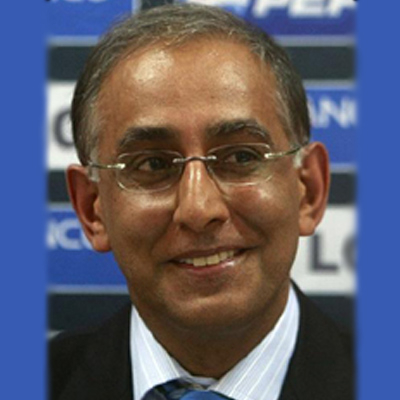
  • ‘The ICC will continue to manage its economics on a global basis with India as a key market’ : ICC CEO Haroon Lorgat

    ‘The ICC will continue to manage its economics on a global basis with India as a key market’ : ICC CEO Haroon Lorgat

    Wearing the International Cricket Council (ICC) hat isn‘t an easy job these days. With the Indian Premier League (IPL) becoming the new economic powerhouse, scheduling international cricket can be a tough task.


    The challenge of the ICC is to ensure that a balance is maintained between the three formats – Test cricket, one-dayers and T20 – of the game as each has its own attraction and value proposition.


    The other task is to take the game to new markets including the US and China. The ICC has set aside $300 million for the development of the game.


    With the BCCI (Board of Control for Cricket in India) gaining superpower status in world cricket, the role of the ICC is to manage its economics on a global basis with India as a key market.


    In an interview with Indiantelevision.com‘s Ashwin Pinto, ICC CEO Haroon Lorgat talks about cricket continuing to be in a healthy state as it has three viable formats of the game running at the international level.


    Excerpts:
     
     
    How would you describe the health and state of cricket at this point of time?

    Cricket is in a very healthy state at present. We are fortunate to have three viable formats of the game at the international level – Tests, ODIs and T20Is. Having these three formats is a huge opportunity that offers our fans, sponsors and broadcasters different options. No other sport can boast three viable formats of the game at international level.


    What is the ICC‘s strategy going to be to ensure that all formats of the game co-exist?

    Depending on how all of us collectively manage the game, we believe that all three formats can survive because each has its own attraction and value proposition: Test cricket has its endurance, cut and thrust, and its tradition of more than 130 years and, importantly, it is regarded by the players as the ultimate format. It is the benchmark by which they will be measured.


    ODIs have a history of their own with nine ICC Cricket World Cups stretching back to 1975. This format offers a chance for sides to recover from difficult situations while still affording a result in a single day.


    It boasts the biggest attractions in the World Cup and largest team prize in the game.


    Twenty20 is a great new attraction and vehicle to develop the game at domestic level. This short and sharp format draws new interest and allows tournaments to take place over a short period of time.


    It is important that the ICC and our members get the balance right, particularly in terms of scheduling.


    What measures are being taken to protect Test cricket‘s status as the pinnacle of the game?

    There are three important factors – competitive matches, context and the spectator experience. Improvements can be made in all of these areas and we are working with our members to achieve this.


    Some current examples of this are the current investigation into developing greater context for Test cricket, the possibility of staging day/night Test cricket in territories that would benefit from that, and more effective and consistent marketing and promotion of Test match cricket.


    Could we see the day night concept being introduced post 2012 for Test cricket?

    We need to make sure that Test cricket is accessible to the supporters that want to watch it. The indications are that in some markets supporters may be more interested in watching Test cricket, at the venues and on television, if it is played in the evening.


    Day/night Test cricket is one of several options under consideration. It is dependent on successfully developing a cricket ball that can be used in night conditions and this would need to be trialled at the domestic level first.


    While you maintain that the ODI format is fine, the fact is that the Champions Trophy will now be held once in four years and not every two years. The Twenty20 World Cup will take place every two years. Doesn‘t this indicate that to some extent the balance of power in terms of viewership and revenue is shifting from the ODI towards Twenty20?

    Don‘t forget that the ICC cricket World Cup is also held every four years and between this and the Champions Trophy, there will be a 50-over tournament every two years until 2015. In other words, the World Twenty20 will alternate with a 50-over format every year.


    Not surprisingly the 50-over format at international level remains very popular with players, spectators, TV viewers and sponsors. The highly successful ICC Champions Trophy event in South Africa demonstrated that yet again as have other recent bilateral series.


    ‘Our major events are televised into more than 200 countries with hundreds of millions of viewers. Cricket receives the second highest amount of TV viewers of any team sport after soccer‘


    Are you satisfied at the progress that has been made in terms of the preparations for the 2011 World Cup?

    Yes, we have done extremely well with preparations during the course of this year.


    How much revenue will the ICC and the boards make from cricket‘s showpiece event?

    In terms of commercial and broadcast interests, the World Cup 2011 is bundled with all the other major ICC events over an eight-year period. The current deal will run from 2007 to 2015 but the details, as you would appreciate, are confidential.


    We will, though, be investing $300 million into the development of the game in our associate and affiliate members over the course of this cycle.
     

    Do you see the IPL posing a threat to international cricket? Already last year Sri Lanka withdrew from their tour of England so that their players could take part in the IPL which offers much more money?

    On balance, the IPL has been very positive for the sport overall. It must be remembered that it is a domestic tournament under the auspices of the BCCI and does not take precedence over international cricket. This is something that the IPL itself and the BCCI has made clear to the players and public.


    Is the ICC examining the possibility of creating a window for the IPL?
    Being a domestic event, there is no consideration for a window at present and there is also no request for one.


    Australia, New Zealand and South Africa are also planning a league. Would this pose a challenge to the ICC in terms of formulating the FTP post 2012?

    I am not aware of such a league being planned. In any case, it would not impact the FTP post 2012 as this has already been agreed subject to a few provisos.


    India dominates the game economically in that 80 per cent of the revenue generated comes from here. Does the ICC have a gameplan to reduce this imbalance which cannot be healthy for any sport?

    We are always pleased when our members are able to generate funds and optimise their revenues domestically. On the other hand, we have always been fortunate to attract local and global sponsors that are not purely driven by the Indian market.


    However, given the huge market in India, it is not a surprise that this is the revenue generating powerhouse for world cricket. We will, therefore, continue to manage our economics on a global basis with India as a key market.


    Does more need to be done in terms of how the game is covered on television or are you satisfied?

    I think that the coverage the game receives worldwide is excellent. Our major events are televised into more than 200 countries with hundreds of millions of viewers. Cricket receives the second highest amount of TV viewers of any team sport after soccer.


    New media is growing through mobile and the Internet. How is the ICC taking advantage of this to spread the reach of the game?

    We have an excellent partnership with Yahoo! in relation to our website and other internet platforms. We also work with our commercial partners to make the most of the mobile platforms.

     
    The BCCI recently formed a consortium to fight piracy. Is this a serious threat from your point of view?

    ICC supported the BCCI in this regard and is also working seriously to handle this issue. We are working with our stakeholders to form a coalition to actively address and counteract online piracy.
     

    Could you shed light on the strategy that the ICC follows when it comes to doing local sponsorships for its events?

    The strategy we adopt depends on the event and the market in which it is taking place.
    In truth, it was not really difficult to get in sponsorships for this year. We managed to secure some excellent local sponsors despite the global recession and we were very pleased with the overall outcome. That is a reflection of the good health of the game and the value we are able to offer our commercial partners.


    For instance, we got Standard Bank to sponsor the World Twenty20 cricket championship. Local partners are an important feature of all ICC events because they tend to have a vested interest in the markets in which our events are staged. The ticketing component of the local partner packages offers an excellent platform for targeted sales promotions by sponsors.


    Our marketing research suggests that the dollar value of the televised brand exposure that local partners receive far exceeds their level of investment, primarily because our events are uncluttered in terms of the number of branding messages.


    What are the steps taken by the ICC to avoid ambush marketing?

    We implement sensible and practical measures during our events to ensure that orchestrated ambush marketing does not occur. I don‘t want to go into too much detail. But it is suffice to say that we are vigilant in our efforts to preserve our commercial partners‘ rights and make sure they receive value for their investment. 

     
    Is it easy to spread the reach of cricket to emerging and new markets?

    We invest more in developing the game than any other sport, apart from soccer. The Pepsi ICC Development Programme is spending around $300 million over the next cycle to develop and promote cricket below Full Member level.

    The Development Programme has made huge strides over recent years and we have seen teams like Ireland, Kenya, Scotland and the Netherlands come through that programme and put in competitive performances against the top sides. Ireland made it through to the Super Eight stage of Cricket World Cup 2007 and the World Twenty20 2009 beating a number of Full Members along the way. We recently saw the Netherlands beating England at Lord‘s in the World Twenty20. Participation has doubled over the last five years with the biggest growth areas being junior and female players.


    Finally, do China and the US play an important role in the ICC‘s growth plan?

    We have identified the US and China as two obvious areas for potential growth and, through our regional structures, we are involved in developing the game there. They are two very distinct and different markets for cricket and so cannot really be compared.

    However, there is no doubt that both offer a wonderful opportunity for cricket to continue to spread the sport and we intend to do just that.
     

  • ‘TV established its rightful claim, as the medium for the nation’

    ‘TV established its rightful claim, as the medium for the nation’

    It’s that time of year, for the annual tea leaf-reading ritual, as the media pundits herald a new round of trends.

    Looking back, 2007 was an unusual year. It held much promise for media pundits, poised as it was, on the back of an unparalleled economic boom and a raging bull market. The bull was expected to take a breather and consolidate before a fresh charge and 2007 was to be the “Year of Consolidation” for the financial markets.

    The Media market was to pick up the baton and 2007 was billed as THE year as predictions flew thick and fast (yours truly was guilty of it too!). Almost all of them were, in one way or the other linked to the broadcast business – as the driver, the catalyst, the victim, the recipient.

    Lots of action was predicted and it did deliver, albeit differently. The bull confounded experts and continued to charge, clocking another year of impressive growth.

    What was 2007 for the media market? With the benefit of hindsight, let’s look at some of the popular predictions…

    Year of Cricket? – Starting with the World Cup, that turned out to be a fiasco, cricket proved to be a damp squib, leading many an advertiser to rue misplaced faith and rush back to the time tested favourites and mainstream entertainment.

    Year of Broadcast Erosion & GEC demise? – Probably the strongest and most confident predictions were about the rapid erosion in TV viewing and flight to other media. GEC as a genre held firm as the dominant choice during the year as Zee grew rapidly and consolidated on the gains. Broadcast viewing across genres moved northwards as the viewing experience expanded.

    Year of Consumer? – Besides indirect consumer voice through content viewership, consumer empowerment in a definitive, direct way was to be created on a large scale by way of the addressable Cas systems.

    After starting with much fanfare and anticipation in a limited “manageable” area, it remained confined there as ill equipped operators and logistical inadequacies resulted in thousands of homes blanking out on their favourite content at the stroke of midnight on 31st December 2006.

    Year of Launches? – The “buzz” in the market was entirely around the highly awaited “new additions” across the constituents of the industry. With the enticing promise of taking the TV experience to the next level. A slew of channels on the content side that many believed would reorganize the content genre structure. New broadcast delivery platforms that offered to “liberate” the consumer. Alternative media.

    Fact: The local cablewallah still rings my doorbell each month. General entertainment still rules the roost.

    Year of measurement? The lowest profile, yet most influential stakeholder in the industry was expected to see a major overhaul during the year. TAM’s expanded peoplemeter system was to be a generation leap from a four-year-old limited area, limited scope system, to a cutting edge, expansive full scale one. With capabilities ranging from handling new technologies and platforms, expansive coverage, deeper understanding of viewer segments and viewing behaviour etc. The new panel was a step upgrade in coverage terms. The elite panel too promised much and delivered little as it struggled with limited scope and the hangover of existing methodologies.

    SO WHAT WAS 2007 REALLY?

    It was the year of media consolidation.

    TV established its rightful claim, as the medium for the nation. The resurgence of TV and its ability to thrive even amid an onslaught of new and fragmenting media. Other traditional and new media alike (including FM radio, Internet, Mobile) failed to live up to the hype and proceeded to occupy their place in the hierarchy.

    It was the year when the broadcast industry took its seminal step towards maturity and financial viability in the form of a surcharge. It started of as a unified cry to bring attention to the broadcast industry’s frustrations. Concern against gross under valuation and runaway costs that threaten TV’s vulnerable ad-supported framework.

    It was the 20-20 year

    Not just in terms of the 20-20 format reviving depleting consumer interest in cricket, but to a greater extent, it brought to the fore a new formula of success based on changing audience preferences – short, sleek, quick, entertaining.

    WHAT WILL BE THE MEDIA INDUSTRY’S SEMINAL MOMENTS IN 2008?

    Nothing can kill this much desired, most maligned, most adored, advertising vehicle – not dropping rates, not under valuation, not an overcrowded market, not insufficient measurement, not print, not mobile, not the Internet.

    Genre Consolidation

    The much spoken about deluge of launches will unfold in the coming months, leading to an expansion in viewing experience and preferences, rather than fragmentation as is widely predicted.

    However, as competition enters the market, time, resources and overall value will shift, taking the broadcast industry rapidly towards the inflection point where consolidation becomes inevitable.

    Spiraled out costs, below par returns and maturing viewer preferences would force intra genre consolidation with an alpha duo in the lead and a following pack.

  • ‘How do you wake up?’

    ‘How do you wake up?’

    We all sleep differently. Some sleep tight, like a baby. Some sleep light, like the mother of a newborn. No matter how we sleep, most of us wake up with a start – some so mild in fact that we don’t recognize them, while some hard enough to bring our whole body and mind to sudden consciousness in a milli second.

    Sometimes we are either too tired or too lazy to give up our sleep, and that’s when someone has to shake us up and give us a wake up call. It happened the night before the examination, during a rather chilly night, when the quilt seemed like a long lost friend, it happens many times now in hotel rooms in some distant city.

    The wake up call is rarely likeable, but it’s meaningful and important nevertheless, because something really significant often waits for us on the other side.

    As I look back at 2007, it appears to me to be a year of wake up calls. There were many major events than happened this year, that shook us out of our slumber, or they should have. There are other things that appeared to be minor sleep breakers, but meaningful nevertheless, perhaps because of their regularity of occurrence. Major or minor, these were not just events, for they will have an impact on our thought and action in 2008 and beyond.

    I recount seven of my favorites here, in random order.

    Wake Up Call 1: T20

    T20 was not about India getting World Cup glory back. It was not about defeating an arch rival. In a way, it wasn’t even about cricket. From a marketing viewpoint, it finally brought to life what we at Starcom have been forcefully claiming for a while – that today’s consumers are time starved, choice flattered and attention challenged. For the same reason the one day cricket got popular decades ago, T20 became an overnight rage in 2007. The message is clear: in marketing anything, do not try the consumer’s patience, do not assume she is sitting there waiting for your message. Respect her time, respect the complexity of her life, and talk to her not just talk at her. The spirit of T20, applied to marketing is this: don’t just count your consumers, connect with them.

    Wake Up Call 2: Input Cost Surcharge & the October stand off

    The memory of the passionate October is too fresh for all of us, for me to revive it, but as with many things, there were two sides to the backdrop to the impasse. The October debate was not really about who is right and who is not. It was about perspectives and a willingness to achieve common goals. I believe that for a month we all forgot that the fundamental relationship between media owners and marketers has always been collaborative, even if at the negotiation table, it often looked to be adversarial. I have said this before and I will say this again. If we do not find ways to collaborate, today’s hypercompetitive world will find ways of decimating us.

    Wake Up Call 3: Digital Signage

    Place based media, point of purchase media, in-store media – whatever name you call it by, this is a medium whose birth 2007 will be remembered by. I was fortunate to attend a conference in November in Mumbai, where a lot of stake holders spoke very passionately about digital signage networks, why and how they work and about highly advanced technology driving it. Unfortunately, there were not many creative or media agency folks attending that conference, to receive the wake up call, although I remember meeting some people from ICICI, Levers and ITC. I understand that there are close to five thousand LCD screens that have been installed in stores, at workplaces and in lift lobbies across the country and hundreds more are going live every month. Mark my words, very few media will generate as much curiosity and excitement in the next two to three years as this one.

    Wake Up Call 4: The Vanishing Line

    As many of us started putting the tag Experience Society on ourselves, the already thin line between above-the-line and below-the-line became even thinner in 2007. Call it IMC, 360 degree marketing, through-the-line marketing or holistic marketing, no marketing practitioner worth her Kotler and Levitt can today ignore the necessity to connect with the consumers using all the cards in our box. This was particularly heartwarming for us at Starcom MediaVest Group, as we have invested significant managerial energy and other resources building new competencies over the last four years and today quite proudly claim to be the media network with the biggest competency portfolio in India. Today, many of us are learning to activate one idea through multiple media and platforms, rather than plan one medium ate a time. It is my strong belief that anyone, marketer or communication practitioner, who does not upskill herself rapidly in how to think and activate in a holistic way, runs the risk of being left behind.

    Wake Up Call 5: Digitisation of Life

    After years of wondering and imagining, more marketers than ever embraced the digital way in 2007, recognising that you cannot forever hide behind meek arguments of ‘too few internet connections’ and other such. Unfortunately, many are still stuck in the early 2000’s model of generating leads by burning a billion banners. This will change, with or without another wake up call. In 2008, I believe, we will see many genuine attempts by marketers to use digital as a platform, rather than medium, to deliver an enriching experience to their consumers.

    Wake Up Call 6: Using a New Body Part

    To call the mobile phone a technological device would today be an error. It’s something we sleep with, take to the bathroom with and cannot truly imagine our life without. The irony is the contrast between consumers’ alacrity to adopt everything mobile and the marketers’ hesitation in using the platform as a communication and enablement platform. Companies like Affle, One-to-One Technologies, Sixty Nine mm are creating highly interesting mobile marketing platforms that can allow marketers to connect well with consumers, particularly young consumers. Many of our clients are more curious than ever and we have to move to the next level of converting the excitement into application.

    Wake Up Call 7: TV isn’t dying anytime soon

    In the last few years, particularly with the growth of non-classical media and experiential marketing disciplines, it became fashionable to talk about the reducing effectiveness of TV and many of us were challenged to divert budgets to other media. At Starcom, we have a contrarian’s view. We believe that if anything, TV will become even more important in future. We call that future an era of visual engagement. The way consumers watch TV will change, and the way we will use TV both in its traditional box format as well as through other screens, will change.

    The fight in the traditional TV front is getting interesting, with Zee TV slowly but certainly narrowing the gap with Star Plus, but the debate on TV is more than just a Star Plus versus Zee TV debate. It’s not even about dozens of new stations springing up. It’s about innovativeness of programming, about audience engagement and freshness of thought. The broadcast industry needs to stop for a breather and take a long hard look at what it has been doing and how it wants to do that in future. It won’t be easy. Waking up rarely is.

    Have an exciting 2008. I will!

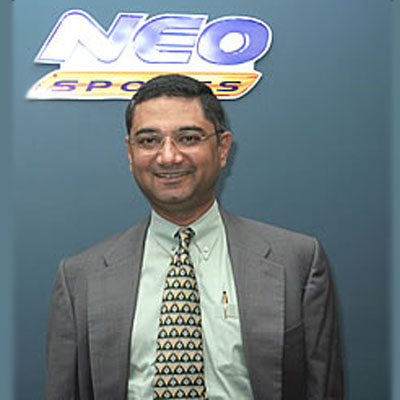
  • ‘Language feeds can get us 30 per cent more viewership’ : Shashi Kalathil – Neo Sports CEO

    ‘Language feeds can get us 30 per cent more viewership’ : Shashi Kalathil – Neo Sports CEO

    Neo Sports has had a testing time. The distribution deal with Star did not work out and the two channels – Neo Sports and Neo Sports Plus – did not find space on cable networks. This, in turn, impacted ad revenues.

    Now with Australia and Pakistan touring India, Neo is ramping up the distribution of its two channels. And it is hoping that strong content will drive in viewership and revenue.

    In an interview with Indiantelevision.com's Ashwin Pinto, Neo Sports CEO Shashi Kalathil reveals the gameplan for the company.

    Excerpts:

    Has Neo Sports gone through a rough weather ever since its launch almost a year back?
    The going has been tough. There was uncertainty on the regulation front. We had mandated Star to handle our distribution, but our channels had serious problems of being carried on cable networks. Cricket also went through its ups and downs, with the World Cup being the lowest point for the sport. There was a lot of media hype which made a not – so – good situation worse.

    What were the factors that made you terminate the distribution contract with Star and decide to do it on your own?
    We had an arrangement with Star. While I do not want to get into details as the matter is under arbitration, I will admit that we got almost zero delivery. We found that we would not be able to survive as a channel if we did not reach anyone. Besides, the payments that were contractually due to us were delayed – or never arrived.

    Did it also badly impact your ad revenue?
    Our ad revenue was hurt as a result of the Star deal. We got away with it to some extent in the Sri Lanka series by keeping ad rates high and through strategisation where some matches aired on Doordarshan. However, we could not fully exploit the Bangladesh Test series. That would have been worth at least Rs 70-90 million. We could not realise even one fifth of that.

    How have you worked out on your distribution strategy?
    We have covered one third of the cable networks. We went to the smaller towns first as there the declaration is much better. A lot of viewership comes from rural areas. We signed with direct-to-home (DTH) service provider Tata Sky. We expect to sign with Dish TV soon. We are also stitching deals with the south-based cable networks.We are now approaching the big multi-system operators (MSOs) like Incablenet, Hathway Cable & Datacom and Siticable. By the time the Australia series starts we will be in three fourths of cable & satellite (C&S) homes.

    Since the matches have to be shared with Doordarshan, doesn't it affect the kind of deals that Neo is able to strike with the cable operators?
    No! The sharing of feed has been going for a long time. The 2003 World Cup was shared. There are guidelines. Last year for a while, the Supreme Court had taken a view on this kind of activity. India-South Africa was a rare example where DD did not air the matches.

    We have a situation where the pubcaster does not bid for cricket but takes feed when it wants to do so. Besides, there is the issue of encryption.

    What was the write off that Neo Sports got from BCCI due to the non-encryption of DD's signals?
    DD's footprint extends from China to the Middle East. We had a protection clause in case of circumstances that dilute the value of our BCCI rights. If DD sends an unencrypted signal, then how can you sell the rights in those markets?

    Right now there are a lot of cricket rights coming up for grabs. Is Neo Sports going after any of these or are you first trying to justify the BCCI investment?
    It isn't a sequential process. If there are rights that are of value, we will bid for them. Right now what we are seeing is that the price appreciation for these boards has not been as high as what it was for the ICC and BCCI rights.

    If someone gets the BCCI rights which are huge, you will see polarisation happening around the ICC rights. These two rights are the definitive ones in the cricket world; nothing else comes close. About 70 per cent of cricket that India plays in the next 13 months will be on Neo. That is an awesome depth to have.

    For the Australia and Pakistan tours, in terms of coverage what are the kind of innovations being looked at?
    We are keen on language feeds. You can get 30 per cent viewer addition doing this. Traditionally, the South has been neglected in terms of the regionalised feed. Neo Sports Plus will be broadcasting the matches in Hindi, Tamil and Telugu while Neo Sports will have English language transmission.

    We are looking at virtual advertising and programming innovations. We are also looking at interactivity on DTH.

    How challenging is it to push up ad rates to match rising acquisition costs?
    The cricket market is well set up. There are certain clients who advertise heavily in it. The economy is opening up which will allow you to have better inventory utilisation. There are ways to exploit cricket like having multiple language feeds.

    There is also a proliferation of general entertainment and movies channels which is resulting in further fragmentation. This will make the monolithic viewership of cricket more cost effective for brands and more valuable. Break viewership is becoming a serious issue for advertisers. On movie channels, often the break might be too long and people surf. Cricket's format is built to counter this.

    You will eventually be able to do multiple visual feeds for advertising. Now, though, it is still expensive and messy. With addressable delivery platforms like DTH coming in, the dependence on advertising will gradually fall.

    'If someone gets the BCCI rights which are huge, you will see polarisation happening around the ICC rights. These two rights are the definitive ones in the cricket world'

    How would you describe the perception of cricket at the moment among viewers and advertisers?
    I don't think that it is changing. Yes, there is noise made in the media on perceptions of how India is faring. It has to do with the quality of the opposition, how they are perceived. However, I do not think that cricket viewership or ad revenues are as sensitive as what the media says it is. When India did not do well in South Africa last year, people said that the sport was in trouble. Then we did well at home against Sri Lanka and the same media said that this was the best team for the World Cup.

    There is huge interest in the Australia series as it takes place during the festive season. Cricket in media parlance offers viewership that other programming cannot match. This will not change.

    Which are the clients with whom Neo Sports has signed long term deals?
    Perfetti and Hero Honda are our anchor sponsors. The concept is to have someone who wants a long term relationship with cricket on board. We have predictability to our calendar. So a client knows that Australia, Pakistan England, South Africa or Sri Lanka will be visiting us. So if a client does media activity, he knows that a footprint is available.

    How many anchor sponsors do you want to have?
    Initially, we had thought of having four anchor sponsors. However, the media space is getting so competitive that we held back a little bit as we did not want to preclude a large media buyer. There are emerging segments like retail and financial services that will become large. We are waiting for the media environment to settle down before we make more long term deals. There is a risk and also a de-risk in long term deals. You might end up paying more. You might end up paying less. Management is about dealing with it.

    During the World Cup there was a lot of grumbling about the deluge of ads. Steve Waugh went public about it in a column. What is Neo Sports' gameplan to ensure that commercial considerations do not interfere with viewer enjoyment?
    Cricket has a certain format which allows you space for ads – between overs, when a wicket falls, and also during the lunch interval. I think that the World Cup was a situation where matches were going beyond midnight. So perhaps the broadcaster was trying to get in as many ads as possible in the first half as viewership would certainly drop precipitously during the second half.

    In terms of domestic cricket with the push that has been given to it by Neo Sports, has there been any increase in viewership?
    We have had a good experience with domestic cricket. Now that our distribution issues have been settled, we will do innovations around domestic cricket.

    We don't air every domestic match. Cricket is tiered at various levels. We broadcast the best part of it. I have heard arguments about having less matches and fewer teams which I will leave for the administrators to settle. But at the end of the day, a Ranji Trophy final has value. It is the question of packaging it. There is also an awareness issue. People have not gotten used to watching domestic cricket. However when they find that the coverage quality is as good as what you get for an international match, there is stickiness. Last year's data shows that domestic cricket has potential. It is for us to develop that.

    However, the ad fraternity does not seem to be getting on board domestic cricket. Is there a perception problem in the market?
    The product needs to be developed and defined. Once you do that and take it to the advertiser, it will draw interest. But it will not happen overnight. There is still work to be done.

    What is the status regarding your second channel Neo Sports Plus?
    One part of its identity is to be an adjunct to Neo Sports. So Neo Sports Plus airs cricket in local languages. We were clear at the beginning that we wanted to adopt a regional multi language feed for it.

    Neo Sports Plus also airs other sports like German soccer, Italian league. We have badminton, cycling, motorsports. We have also found that rugby got a strong niche viewership among males.

    Can we flesh out the definition of Neo Sports Plus to go beyond cricket? That is something we are working on. Other sports have a growing niche. In the long term, you can grow it to a mass level like what EPL has done. Activities were done that led to the product definition being unique. However, no other sport can substitute cricket. The assumption that if India does poorly, a cricket fan will watch another sport is wrong. Our research tells us that a lot of ODI watchers in India do not watch any other sport.

    Could you shed light on the investments made in technology?
    We are set to go live with broadcast management system ForeTV from MSA Focus. This follows the solution's recent implementation at Neo's Mumbai headquarters for $4 million. The Fore TV Broadcast management system allows Neo Sports the ability to efficiently manage the proliferation of new revenue streams that these rights will inevitably generate.

    Unlike traditional systems which treat each stream separately, ForeTV offers a consolidated solution for total revenue management, encompassing income from Internet Protocol Television (IPTV), advertising, sponsorship, pay-per-view (PPV), interactive (iTV) and video on demand (Vod). This system will be fully integrated into workflow of the channel, automation, editing and financial software allowing seamless process from acquisition, production and post production, transmission and billing at the end of the process.

    On the production front, we have installed Vizrt Virtual studio, a virtual studio for sport production. This allows Neo to create a number of different sets for each sport and change it at the flick of a button. There is no need for storing and changing physical sets. The advantages of using Vizrt virtual studio are flexibility in different backdrops, virtual monitors in the set and incorporation of sport results directly to the set. Vizrt Graphics are template based, allowing for rapid changes and are especially suited for the ever changing sport environment.

  • Pantaloon wears passion this World Cup

    MUMBAI: Keeping World Cup fervour in mind, Pantaloon has launched Passion Wear, a specially designed range of World Cup apparel and accessories. Pantaloon Retail India is the sole retail for ICC World Cup merchandise in India. These rights allow Pantaloon to use Dazzler, the ICC World Cup mascot as well as to design, manufacture, distribute and market the World Cup Cricket 2003 merchandise.


    The apparel range includes Replica T-shirts (exact replica of T-shirts worn by Sachin Tendulkar, Virendra Sehwag and Saurav Ganguly and others from the Indian cricket team), Message T-shirts (having amusing anecdotes of cricket & films, one-line jokes on cricket etc.), Dazzler T-shirts (Officials Mascot of the ICC World Cup), sweatshirts, sweat pants, track pants, socks and select designs for ladies like short tops etc.

    The accessories range includes bats – memorabilia, crazy balls, stress relief balls, key chains, Dazzler key chains- Flat & 3 D Caps Ties-with ICC logo. Hankies, mugs etc. also form part of Pantaloons ICC collection, which have the image of the mascot printed on them. The apparel and accessories are available at all Pantaloon Retail outlets.

    Director, Pantaloon Retail India Rakesh Biyani said, “ The two things Indians are most passionate about are films and cricket. Cricket is not a game in India it is a religion hence our World Cup range is known Passion Wear. We have chosen the World Cup to launch our cricket accessories and apparels. The range caters not only to children and men but also to women.”

    Pantaloon Retail (India) Limited has over 15 superstores in the country.

  • ”Absolute number watching TV has increased 50%, we should be paid for that’ : Joy Chakraborthy – Zee Entertainment Enterprises Ltd. executive vice president, head network

    ”Absolute number watching TV has increased 50%, we should be paid for that’ : Joy Chakraborthy – Zee Entertainment Enterprises Ltd. executive vice president, head network

    The biggest bouquet of channels on Indian television and the second largest player in the GEC space, the Zee Network has been in the limelight recently, whether it be on the receiving end of HLL’s ad spends or with big ticket events like the Zee Cine Awards.

    Joy Chakraborthy, the man spearheading ad sales for the broadcaster, agreed to offer his opinions on the current television scenario, highlighting its drawbacks of under pricing, ad revenues that exceed distribution monies and the constant debate over cricket. At the same time he lends a word of caution to new players pacing ahead to enter the broadcast space. All this and more in a free-wheeling conversation with Indiantelevision.com’s Renelle Snelleksz.

    Excerpts:

    The big news currently seems to be around how Hindustan Lever is significantly increasing spends on your network. You have even been on record as saying you are looking at a growth of at least 100% on Lever spend in FY08 over FY07? How do you justify that optimism?
    Levers is the biggest client in the television space and we have channels across all genres, Levers is a good client for consumption also because they are perennial clients. There has been rate correction but we have also given them big properties. At the same time, Levers buying process over the last two years has changed, initially they used to buy slots that appeared at a particular time band but now they have started buying quality as well so they would necessarily have to pay for that. Therefore, there has been a jump in ad sales rates this year over the previous year.

    When you say ‘rate correction’ – what do you mean?
    The Zee network itself is very under-priced, so we are continuously correcting our rates. I have over my tenure here (which is two years) revised my rates three times, but no rate correction is very drastic, it’s really a gradual correction.

    After all we are still in a World Cup year and although India is out of the tournament, we will see loads of other cricket action as well?
    As a network, we haven’t suffered at the hands of cricket. However a lot of money is diverted there. But thanks to cricket and sport, I believe that the overall PUT (people utilizing television) will also increase, because of World Cup TV sales will also increase, so the whole space is only going to expand.

    It will eventually benefit us also, but my only concern and what I see as a challenge this year is that the unofficial currency is cost per rating point (CPRP), which has to move cost per thousand (CPT). CPT is more important and with Tam’s expanded panel the absolute number of people watching has increased by 50 per cent and we as an industry should be paid for that. Even more, if you are a listed body you also should subscribe to the CPT model, which will happen sooner or later.

    But how soon do you think the transition from a CPRP model to CPT model will take to materialize?
    The IBF and AAAI have already met on two occasions, the next one is in April. But at the end of the day this shift will benefit all of us. It’s not that it is unfortunate for the client alone, as the television medium continues to grow the cost of programming, distribution, marketing and manpower is increasing every day. With the CPT model the ad rates will go up, infact most agencies buy on CPRP and give it to the client on CPT, but after expansion the minimum rate has increased. The recommendations of these two industry body’s should materialize within a month’s time.

    It has been previously stated that Cas impact only accounts for a 1- 1.5% drop in C&S 4+ level across TV. However, with moves to extend Cas to cover the full metros and then possibly go into other cities and towns this argument cannot be sustained for much longer. How does Zee view this situation and how do you plan to use it to your advantage?
    Cas is here to stay but the thing is that Cas growth was marginal, across the Zee network the drop accounted for 2.5 per cent, which is very less in comparison to the kind of growth that we are experiencing.

    With Cas rolling out further, the pressure from media buyers on rates is only going to go up? Do you see the possibility of many channels, including entertainment channels, going FTA to protect advertising revenues? For instance, Peter Mukerjea’s Hindi entertainment channels will be FTA when it launches…?
    Sometime we really wonder whom the media buyers really work for, the channel or the client. They will always pressurize us. Do you think they deal with rate hikes easily? They will fight for each rupee just as we fight for the same. But that is what makes our relationship so lasting.

    India is the only market where ad revenues are more than distribution revenues, ideally it should be the other way round. It will be better for the industry if distribution revenue picks up. Worldwide the distribution versus ad revenue model is 70:30, but in India it’s about 35:65.

    What’s the viewership growth that Zee network has seen in 2006 over 2005?
    It’s not only about Zee TV, but all our channels across the network have done well. In Marathi and Bangla we are number one, even Zee TV from Monday to Friday is delivering for us, as it is not just about one show alone. We have such a spread across our network and as a sales head I would rather have a couple of shows delivering 4 – 5 per cent ratings rather than one show delivering 10 per cent, as it helps my inventory giving us a properly defined FPC (fix point chart), because all our shows deliver within numbers in this region providing a complete media plan.

    Sa Re Ga Ma Pa has been the mantra for the network, not only did Zee TV come back with the show but also Marathi and Bangla. I believe Zee Café is number one right now and with Zee Studio we are getting back to where we belong, which means we are getting close to HBO and Star Movies. Etc and Zee Music combined gives us better numbers than even MTV and Channel [V]. Therefore, we are trying to find ways of selling together.

    In Zee TV you now have a strong number two position sewn up? Which are the channels that you have achieved a clear leadership position with?
    Percentage wise all the channels have seen growth, but in the cinema genre there has been a significant correction in GRP’s with the number of people watching cinema drastically increasing. Today 155 -160 GRP’s is equivalent to 210 GRP’s in the past, which is an absolute number of people. Movies generally give an average of 0.8 – 1.3 ratings, which points to the number of people sampling the channel.

    What’s the current order of importance of channels on the Zee network in terms of ad sales and how does it stack up percentage wise?
    Zee TV is operating on GEC where the maximum revenue lies, it will always remain the top most from an ad sales point, followed by Cinema, Marathi, Bangla, then Café, Studio, Music and Etc will stack up accordingly. But value-wise and outlay-wise these four are the ones that deliver the maximum.

    For example percentage wise Zee TV would range between 50 – 60 per cent, Cinema would be roughly around 25 per cent, while the others will corner the remaining share of the pie.

    Our differentiator is that we don’t compromise on the big channels just to accommodate weaker ones

    How is the selling done across the network? Is it broken up into Hindi entertainment, news, cinema, English entertainment and regional channels? Or is there some other formula you apply?
    We work on a matrix, for which we have all India heads and branch heads. The obvious thing is to present one face of the network to the media buyer without losing the immediate focus. The differentiation in the way we work is that we don’t compromise on the big channels just to accommodate weaker channels. As part of our strategy we also do network deals with clients like HLL, Pepsi, Coke, Nestle, L’Oreal for which we provide a bouquet offer. In fact, we can replace a lot of other networks because we have a range of channel genres to offer from GEC, music, cinema, regional etc. Each of the channels within the bouquet has its own respective teams which go out and meet the market and keep updating media agencies and through SMS we inform the trade of current GRP’s.

    From a programming perspective, Zee TV has gained a strong foothold between the 8 and 10:30 prime time, and even with the arrival of KBC you have managed to hold your ground to an extent. Are there any strategies in place to really get into programming overdrive once KBC completes its run?
    If you see, we did not panic at all when KBC was launching and didn’t resort to doing anything drastically different. We have a very close knit team for programming and marketing that evaluates the market and competition. Infact our primetime is not just 8-10.30 pm, we start at 7 pm and 7 – 11.30 pm is what we like to call primetime. All our properties are Monday – Friday that gives us a weekday skew of scheduling spots, which has been consistent in delivering an average rating between 2.5 – 8 per cent. Besides we also do plug repeats of Sa Re Ga Ma Pa, Shabash India and Johhny Aala Re.

    But what about the afternoon prime time? That is a band that Sony is actively looking at as well we’re told?
    This is a place we are not currently at, but would like to be in the future depending on the decisions taken by the programming team. With KBC and cricket we noticed that suddenly the afternoon was doing well for us, causing the time band to grow big time across all out channels. We have plans that will be unveiled once budgets are approved by the management for the financial year April – March.

    As for Sony, there seems to be confusion as to whether to go with reality or not. I strongly feel that soaps are the most important thing for a GEC because it gives you consistent viewers. I enter the fiscal in April with 60 per cent of my deals done in advance, on an assumption of X, that only soaps can deliver. As reality picks up only towards the end, you should have an ideal mix of soaps and reality, which as a network we currently have. This ultimately helps me sell well as I have more properties to offer to a client.

    Any significant weaknesses? And how do you propose to get it sorted out?
    As a network the year has been very good but we still have miles to go. For Zee TV alone, its just been a year since we started doing well, besides there is so much to be done within this genre.
    Also, the type of selling methodology is changing and we have to understand the move from CPRP to CPT. Going forward we would also like to focus on training people with skill sets because until now it was just fire fighting to grab the money that was lying in the market.

    What has been the growth like over FY06 and has it been in line with the targets you set? What are the revenues you are expecting to close this fiscal at?
    I can’t reveal growth figures but the growth has exceeded my predictions.

    We have infact exceed our revenue target by 30 per cent. However, we keep revising our targets depending upon demand and supply, channel performance which are fixed standards for us. But usually these floating targets usually go up.

    And what about Zee Next? There was talk that it would launch by mid-year. Is that plan still on track or is the current view that another channel might be a distraction as far as Zee TV’s focus on getting further ahead is concerned?
    It is still in the planning stage as there are various factors to be considered before launching a channel and we want to be fully prepared. But it is on our radar for this year. To say we are ‘on track’ largely depends on the market conditions and with KBC and so many channels actually coming in, it depends on how and when to launch.

    Yes, currently the focus is on Zee TV because our FPC has changed slightly. We also have programme launches, Sa Re Ga Ma Pa will return at the end of April and a few more strategies that will help sales.

    The Zee Cine Awards in Malaysia are obviously a headline event for you. Could you offer a picture as to the big properties Zee will have in the coming months?
    We are probably the only broadcasters that can say we own an award. In fact, the client gets lots of exposure by tying up with it across the network, that’s why there is a demand for it. It was within four days from the day we started selling, that we were sold out.

    How do you view the coming onslaught of channel launches? Wouldn’t the increased clutter only lead to further pressure on price points?
    It will affect the TV space causing further fragmentation but with so many channels coming in the number of people watching TV will increase. The only bad side to this is that new entrants will spoil the market, causing marketing and distribution costs to go up. Additionally, discounting rates will also get affected. But please note, it’s not easy to launch a channel as after launch it is difficult to maintain, because how long can you bleed? You’re basically into business and not into charity, so lets see how many will last?

    Yes, there will be pressure on price points. A situation will arise where there will be a lot of buying out of people as well as offering different credit periods to suppliers and this will ultimately spoil the market.

    If you were asked to offer a view on how the broadcast landscape will look over the coming year, what would that be?
    My only request would be that people should be very careful and do their homework before launching a channel. We have a big bouquet of channels and we know what it’s like.

    Just because somebody says GEC has got so much money and if I launch I will eat some of that pie, but at the end of the day it must make business sense.

    Competition will always keep you on your toes, you can’t be complacent and you can’t take people for granted. Even if the channel is performing, you have to be there out in the market.