Tag: World Cup

  • FIFA World Cup Final sets Twitter, Facebook abuzz

    FIFA World Cup Final sets Twitter, Facebook abuzz

    Mumbai: Football is fodder for social buzz. And when a European team and a Latin American team are battling to take home the FIFA World CUP, it can scale new heights. As it did in the case of the final last night when Germany emerged triumphant by sneaking a goal in in the second half of extra time. According to both Twitter and Facebook, the World Cup Final has set new records for them as far as social engagement is concerned.


    Twitter announced the  game peaked at 618,725 tweets a minute, smashing the previous record of 580,166 tweets per minute set during Germany’s wipeout of Brazil in the semifinal. The total number of tweets: 32.1 million during the game.  But the German-Brazil match holds the record at 35.6 million tweets for the most socially active sports event ever.


    Facebook said that its timeline was buzzing like never before with 88 million users making a record 280 million interactions (posts, likes, comments) when the Germans and Argentinians chased the ball on the field during the final.  The previous highest was 245 million interactions, which was registered during the SuperBowl in 2013.

  • LIV Sports attracts 20 million page views during 2014 FIFA WC

    LIV Sports attracts 20 million page views during 2014 FIFA WC


    MUMBAI: The official mobile and internet broadcaster of 2014 FIFA World Cup LIVSports.in attracted 20 million page views during the month long sporting extravaganza. On an average, viewers spent 28 minutes watching the live streaming of the matches across online, mobile and the tablet LIV sports app.


    Sony Entertainment Network executive vice president-new media, business development and digital syndication Nitesh Kripalani said, “The 2014 FIFA World Cup digital viewership is a gratifying proof of LIV Sports’ success since its launch a little over a month ago. Our goal was to redefine the way sports content is viewed and consumed in India via a new category – ‘Sportainment.’ We are glad to see that sports fans have engaged with LIV Sports.”


    The top three matches, by time spent were the finals between Germany and Argentina with 48 minutes. Next was the semi finals between Netherlands and Argentina with 42 minutes and finally, the quarter finals between Netherlands and Costa Rica with 42 minutes.


    Of the total traction observed on LIV Sports, the maximum percentage of unique views came from the six metros with 53 per cent  with Mumbai and Delhi in the lead (13 per cent each), followed by Bengaluru (10 per cent). 83 per cent of the total viewers in the country were within the age bracket of 18-34 years. The FIFA World Cup on LIV Sports also attracted 25 per cent  female viewers due to engagements like the ‘Predictor’, ‘Mohit Bana Messi – Jerseyfy Me’ and ‘Pehchaan Kaun’


    Its blogger outreach programme enabled a reach of over 2.85 million.


  • The journey of Kapil’s Devils to be immortalised on celluloid

    The journey of Kapil’s Devils to be immortalised on celluloid

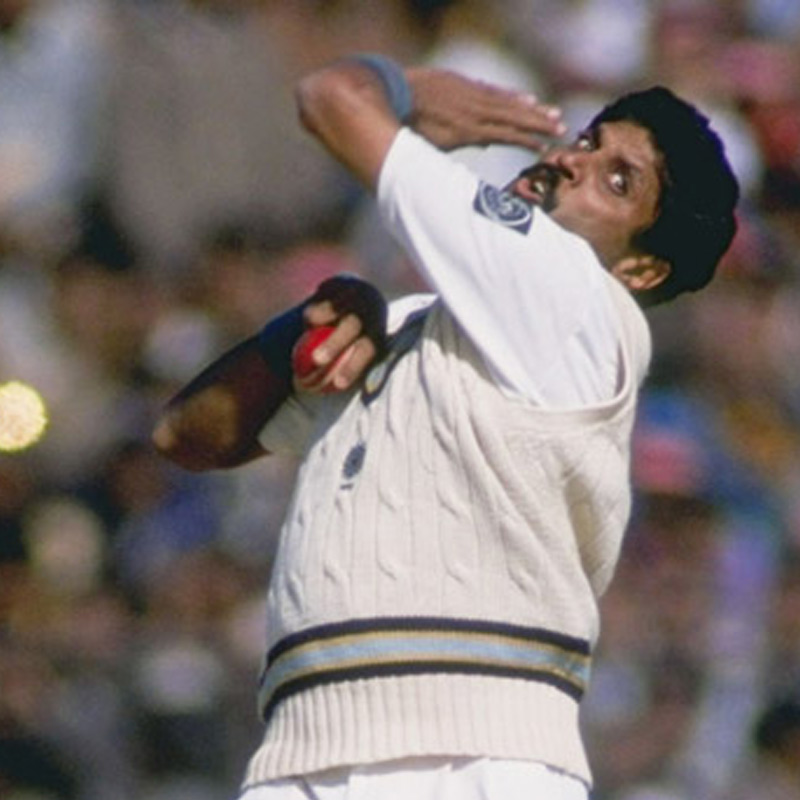
    NEW DELHI: In June 1983, veteran cricketer Kapil Dev led his men to win the prudential World Cup Cricket by defeating the then two time defending champions West Indies in the finals, widely regarded as one of the greatest upsets in the world of sport.


    That picture of Kapil Dev holding the World Cup title at the balcony at the Lords Cricket Ground has become part of cricket folklore and has become etched in collective memory of Indians as one of the greatest sporting achievements.


    Kapil while reminiscing about that victory has revealed that a film is being made on the team’s journey during the 1983 World Cup. “I wish all the success to Vishnu (Vishnu Vardhan Induri, founder of Celebrity Cricket League) who is producing the movie and his team,” he said.


    He added, “It is heartening to see the trend of movies being made on sports in our country which I am sure will inspire the youth to get motivated and do well for the country.”


    “In what seems like a rather bizarre turn of events even three decades after the historic World Cup victory, a cricket crazy country like India has not produced a single feature film that captures the achievement. In many ways that victory was instrumental in turning cricket into a religion it has become in India. I was a school kid then and still remember the euphoria surrounding the victory. The 1983 World Cup is seminal event in the history of sport in India and I believe it’s a story that needs to be told,” says Induri.


    Sanjay Puran Singh, who won the National Award for his debut film Lahore is directing the film. “We are in touch with the members of the 1983 World Cup winning team and they have lent their full support to us. The film is in the pre-production stage at the moment and we are hoping to finish the casting and hit the floors in the first quarter of 2015,” says Induri, promising that the film will turn out to be a proper Bollywood feature film on sports that will set a new benchmark.

  • Live events boost viewing of TV, but need newer digital technologies

    Live events boost viewing of TV, but need newer digital technologies

    NEW DELHI: It is the live events covered by television that boost ratings and help encourage innovation and establish new services, despite the popularity of on-demand content and the proliferation of over-the-top services.


    In fact, television viewership has remained near record levels in part because of the popularity of coverage of big events, said panelists in the session “Cisco Presents: The Transition from Live to Event TV” on the concluding day of the National Association of Broadcasters Show in Las Vegas. 


    “The broadband world is growing and people are watching more programmes on demand,” said Globo, CTO & general director of ENG Fernando Bittencourt.


    “But in the world of broadcasting, I think the future is live programming. I do not think movies will be in primetime broadcast in the next five or 10 years. People will watch those on demand. … There will be more news, more sports and live content like our tele-novelas that are designed to be watched at a specific time.”


    “They drive a lot of viewer and social interaction, but they have also been an important driver for the development of TV Everywhere and authenticated services,” said IDC research manager of consumer markets, video Greg Ireland.


    He noted that big events like the Olympic Games have encouraged consumers to set up authenticated apps, making it more likely that they would later use the apps for regular programming.


    Cisco Systems, VP & GM of ESBI Charles Stucki said, “Big live events have bigger budgets, so you can have a lot of innovation.” He mentioned the recent Summer and Winter Olympics, from which NBC streamed a record amount of coverage to online and mobile platforms.


    This innovation also helped boost the popularity of the linear live broadcast, with NBC posting record ratings for its summer games coverage. During the Winter Olympics, viewers who watched content online tended to watch more live games programming on TV.


    But finding the right technologies for the digital applications that viewers increasingly demand with big live events can be challenging.


    Globo’s Bittencourt said popular programmes on the Brazilian broadcaster regularly pull in 30 million to 40 million viewers. “If only half of those go to the second screen, it is very difficult for the network to support it.”


    Such concerns were highlighted right before the NAB Show, when the HBO Go app went down during the season premiere of its hit series Game of Thrones.


    “Consumers now have the expectation that a big event will have a live streaming component, but the experience is not always optimal,” Ireland said.


    “A lot of extra engineering has to go into creating and surviving big events that require a lot of additional resources beyond those needed to simply produce live programming,” Stucki explained.


    He said Cisco sees a growing number of broadcasters building staff to manage CDNs used for big events, in order to assure the best architecture and redundancy.


    The general trend toward IT and IP infrastructures raises additional issues of reliability.


    Bittencourt revealed while Globo’s viewers would not tolerate the network going off the air, the quality of online streaming can be quite variable. In addition, the lag between the live broadcast and the mobile stream causes complaints. “During the World Cup, viewers will want to watch the Brazilian games on a TV,” he said. “If they watch on the Internet, they will see the goal 30 seconds after it happens” – after their neighbors have already started celebrating.


    But for 4K production, he said that IT and IP technologies would be necessary. “You can’t do that with traditional technologies,” said Bittencourt, adding that Globo planned a test 4K broadcast during the World Cup.


    Stucki argued that the growing importance of video on digital platforms, where video traffic now accounts for half of all mobile traffic, is forcing the IT and IP worlds to become more reliable.


    “They are starting to figure this out,” Bittencourt agreed. “Right now we have very specific vendors for broadcast and different ones for IT and IP. We have to create a third world where there is a combination of IT and broadcast that would be specific for broadcast to get the high reliability we are used to.”

  • Coca-Cola launches ‘The World’s Cup’

    Coca-Cola launches ‘The World’s Cup’

    MUMBAI: With just over two months left for the biggest football bonanza to start, The Coca-Cola Company has launched a campaign to celebrate the game as a force for social good. This is the largest marketing programme in the history of the cola company.  


    Through ‘The World’s Cup’ campaign, Coca-Cola will create unrivalled access, participation, empowerment and conversation with the goal of delivering the most accessible and inclusive FIFA World Cup ever.


    ‘The World’s Cup’ will be brought to life through a number of key elements: 


    • ‘One World, One Game’ television and digital film created in partnership with Wieden + Kennedy Sao Paulo, brings to life the stories of four football teams from four different corners of the world who have each overcome life’s challenges through their love of the game.


    • ‘Where Will Happiness Strike Next’ documentary-style short films will share stories of passionate football fans that are using the game to help them triumph over adversity, in turn inspiring others to use the power of football to overcome difficulties.  At each film’s climax, the stars are surprised by Coca-Cola and a special viewing of the FIFA World Cup Trophy.


    • The official music anthem for the Coca-Cola 2014 FIFA World Cup campaign features vocals from Brazilian born David Correy and sounds from Monobloco – a Brazilian street band.


    • The Happiness Flag – constructed from photos and tweets submitted by fans from around the world – will be seen on-pitch prior to the opening match of the 2014 FIFA World Cup in Sao Paulo on 12 June.


    • FIFA World Cup Trophy Tour by Coca-Cola on a journey spanning more than 92,000 miles and visiting 90 countries to encapsulate the true spirit of the campaign.


     “Just as Brazil is everyone’s country and Coca-Cola is everyone’s drink, the FIFA World Cup is everyone’s cup,” said The Coca-Cola Company executive VP and chief marketing and commercial officer Joseph Tripodi, about the brand’s new campaign for the 2014 FIFA World Cup.  “Through ‘The World’s Cup’, Coca-Cola wants to celebrate real people playing football, demonstrating how the game is a force for a more inclusive and connected world.”


    “Coca-Cola prides itself on celebrating the power of football and the ability of the sport to bring the world together.  Football is for everyone, regardless of geographical and social boundaries, that’s why this year we are launching ‘The World’s Cup’,” added Tripodi.


    The visual identity for ‘The World’s Cup’ campaign will be featured on all brand communication during the tournament and represents happiness, togetherness and celebration.  For the first time, the design was created in collaboration with a street artist, employing the unique style and talent of Brazilian artist Speto.  It features the colour and characteristic designs of Brazilian street art with the faces of four young people from Brazil reproduced in Speto’s signature graphic style.


    The Coca-Cola Company has had a long-standing relationship with FIFA since 1974 and has been an official sponsor of the FIFA World Cup’ since 1978. Coca-Cola has had stadium advertising at every FIFA World Cup’ since 1950 and is a long-time supporter of football at all levels.

  • UK TV ad market reached record high in 2013

    UK TV ad market reached record high in 2013

    MUMBAI: According to last year’s complete revenue figures released by Thinkbox – compiled on the basis of figures provided by UK’s commercial broadcasters – the total TV advertising revenue in UK rose 3.5 per cent in 2013 to ?4.63 billion ($7.75 billion).


    Last year marked the fourth consecutive year that TV ad revenue had growth in the UK. TV ad investment is forecast to increase again this year, boosted by the World Cup in Brazil. The Advertising Association/Warc predicts growth in revenue for the TV ad market of six per cent in 2014.


    There were 737 new or returning advertisers to TV for the year, accounting for two per cent of total TV ad revenues. TV advertising prices for the year were also the cheapest on record, some 38.5 per cent less expensive than 20 years ago.


    Commercial impressions (the number of TV ads watched at normal speed) during 2013 were up 1.6 per cent on 2012, and have grown by 10.4 per cent over the last five years. The average viewer watched 47 ads a day. This is four ads more a day than five years ago. Collectively UK watched an average of 2.8 billion ads a day in the first half of the year.

  • ESPN announces new film series, 30 for 30: Soccer Stories

    ESPN announces new film series, 30 for 30: Soccer Stories

    WORLD: ESPN Films, creators of the critically-acclaimed 30 for 30 film series, will premiere a new series in April surrounding the 2014 FIFA World Cup on ESPN. 30 for 30: Soccer Stories will include a mix of standalone feature-length and 30-minute-long documentary films from an award winning group of filmmakers telling compelling narratives from around the international soccer landscape. In addition, a collection of 10 vignettes about Brazil’s rich culture will be featured throughout ESPN’s FIFA World Cup programming.


    “With ESPN being the home of the 2014 FIFA World Cup, we know that sports fans will be looking forward to high quality content focused on what is perhaps the world’s most revered sport,” said Connor Schell, VP of ESPN Films and Original Content. “We feel this is the perfect time to expand upon the success of our 30 for 30 series by focusing this collection on some of the incredible stories of soccer’s legendary past.”


    Two feature-length films:


    Hillsborough, Directed by Daniel Gordon


    25 years ago, on April 15, 1989, the worst disaster in British football history occurred in an overcrowded stadium in Sheffield, England, 150 miles north of London. 3,000 fans flocked through the turnstiles to head to the area reserved for standing, despite a capacity of less than half of that. The result was a “human crush” that killed 96 people and injured 766.  Initially the police blamed fans for the disaster, but a long investigation revealed that was not the truth. Prior to the disaster at Hillsborough, British football was known for the grime of its stadiums, hooligan fans and inadequate facilities, but great change came after the Hillsborough disaster. What emerged is now known as the most rich and powerful soccer league in the world, the English Premier League.


    White, Blue and White, Directed by Camilo Antolini; Produced by Juan José Campanella


    Although a large number of Argentinian players have found football success around the world, few have made a name for themselves in England’s top league. One notable exception is Ossie Ardiles. Fresh off Argentina’s victory in the 1978 World Cup, Ardiles and his compatriot, Ricky Villa, joined Tottenham Hotspur later that year, when the notion of overseas players was still new to the English league. Helping lead Spurs to victory in the 1981 FA Cup, the Argentinian stars became cult heroes in England. But on April 2, 1982, everything radically changed as Argentinian troops descended on the British-ruled Falkland Islands, asserting rightful sovereignty. A conflicted Ardiles returned to Buenos Aires two days later, his bright future with Spurs suddenly in question.


    Six 30-minute films:


    Garrincha: Crippled Angel, Directed by Marcos Horacio Azevedo


    In Brazil, Pelé is “The King.” But his teammate, Mané Garrincha, is also remembered as the one of the best soccer players of all time. In a country where the sport grants its protagonists such royal deference, Garrincha is the jester– an entertainer who amused crowds and turned soccer into an irresistible spectacle, all while helping Brazil capture two World Cups. This, despite his legs being so bent that early in his career doctors deemed him unfit to play professionally. Match after match, he proved them wrong. But his unpredictable moves were of little assistance after his playing career came to an end. Abandoned by the soccer establishment, Garrincha died a victim of alcoholism in 1983. But his fans did not forget him. His body was brought to a cemetery, in the outskirts of Rio de Janeiro. Garrincha’s relatives had to borrow a grave, which turned out to be too small for his coffin. Thousands of people flooded the tiny burial ground, much more than the place could accommodate. After 49 years of a brilliant career and tumultuous life, the man who turned soccer into a “Beautiful Game” was memorably laid to rest. His legend lives on.


    Barbosa – The Man Who Made All of Brazil Cry, Directed by Loch Phillipps; Executive Producers: Jonathan Hock & Roger Bennett


    In 1949, Goalkeeper Moacir Barbosa and his Brazilian national team are on top of the world, having just won the South American championship by a score of 7-0. Barbosa is one of the heroes, widely considered one of the world’s best goalkeepers. But everything changed during the 1950 World Cup, played for the first time in Brazil. Before the final game against neighbor and rival Uruguay, the Brazilian Football Confederation was so confident of victory it had made 22 gold medals with the names of their players imprinted on them. With 11 minutes left, Uruguay shocked the estimated crowd of 200,000 at Marcana and scored the winning goal – a goal that is still considered to be the greatest sporting tragedy to befall Brazil. The blame was mostly pinned on Barbosa for being out of position on his goal line, tantamount to Bill Buckner letting a baseball roll between his legs. The country went into a deep mourning, fans committed suicide, and Barbosa was nationally blacklisted. Barbosa was considered cursed and he never played in another World Cup. He rotted away, practically penniless and alone. On July 13th, the 2014 World Cup Final will again take place at the Maracana, giving the Brazilian team the chance to write a new ending into Brazilian folklore.


    Ceasefire Massacre, Directed by Alex Gibney and Trevor Birney


    New Jersey, June 18, 1994. Giants Stadium is awash with green as Irish soccer fans arrive to watch Ireland’s opening World Cup match against the mighty Italy. The sense of optimism is infectious. The Celtic Tiger is in its infancy, Bill Clinton’s decision to grant a visa to Irish Republican leader Gerry Adams has propelled the peace process forward and Jack Charlton’s team are walking onto the pitch before 75,000 fervent spectators made up of Irish, Italians and Americans of Irish and Italian decent. Amongst the fans is Irish Prime Minister Albert Reynolds who is sitting with members of an American group who’ve been working behind-the-scenes to end the conflict in Northern Ireland. The electrifying mood is shared by the supporters watching the match in the Heights Bar, a tiny pub in the Northern Irish village of Loughin Island, 24 miles south of Belfast. At the half, the Irish are remarkably ahead 1-0. Shortly after the second half begins, two masked gunmen belonging to a Protestant terror group burst into the Heights Bar. Thirty rounds are fired and six innocent men watching a soccer match were killed. Ceasefire Massacre will reveal how the juxtaposition of the jubilation felt inside Giants Stadium against the horrors of what happened in the Heights Bar, encapsulated the mood of the time. After 25-years of conflict, Ireland and her people longed for peace and prosperity but the brutalities of the violence in the North were never far from the surface. The gunning down of innocent men as they watched a soccer match marked both a low-point and a turning-point in the Northern Ireland conflict; one that would ultimately contribute to the paramilitaries on both sides calling ceasefires just weeks later.


    The Opposition, Directed by Ezra Edelman; Co-directed by Jeffrey Plunkett


    In the wake of the 1973 military coup in Chile, American-backed dictator Augusto Pinochet transformed Santiago’s National Stadium into a concentration camp where political opponents were tortured and assassinated. Only months later, that same stadium was scheduled to host a decisive World Cup qualifier between Chile and the Soviet Union. Despite protests, FIFA’s own investigation, and the Soviet’s eventual boycott, the Chilean team still played the game as planned, qualifying for the 1974 World Cup on a goal scored against no one.


    Mysteries of The Jules Rimet Trophy, Directed by Brett Ratner


    Inspired by Nike, the Greek goddess of victory, the Jules Rimet Trophy was awarded to the nation that won FIFA’s World Cup and was among the most coveted prizes in all of sports. It is also the sports prize shrouded in the most intrigue – with the whereabouts of the original trophy unknown to this day. This film focuses on the great prize’s first brush with crime – a Nazi plan to steal the Rimet Trophy from Italy during World War II. The story unfolds like a great caper film, where our hero, Ottorino Barassi, a mild-mannered Italian soccer official, attempts to protect a valued treasure.


    Maradona ’86, Directed by Sam Blair; Executive Produced by John Battsek


    In the 1986 World Cup, Maradona redefined what is possible for one man to accomplish on the soccer field. Already a figure of notoriety, but with one failed World Cup behind him, Maradona took possession of the international stage in Mexico, the spotlight rarely drifting from him as he wrote an indelible history with his feet and, of course, with a hand from God. Delivered with passion and intelligence, Maradona ‘86 is a fascinating, evocative and operatic portrait of Maradona, revealing his inner complexity and contradictions while basking in the joy and passion of his performance on the pitch as he wrote his name on soccer history forever.


    10 Vignettes:


    Coraçao, Directed by Jonathan Hock; Executive Produced by Roger Bennett


    Brazil’s soccer tradition does not compete with other countries’ teams: it exists on a different level. But aside from soccer success, and despite Brazil’s recent economic boom, most Americans know little about the country, its geographical richness, gripping culture, and complex recent history in which the nation has transformed from a military dictatorship to a thriving, if young, republic. This short vignette series will travel from the beaches and favelas of Rio, to Salvador – the former hub of the slave trade – on a journey of music, dance, and history, to discover the stories that lie behind Brazil’s legend and explore how Brazilian soccer is truly the expression of the soul of its people.

  • ICC invites breweries to partner with them for World Cup 2015

    ICC invites breweries to partner with them for World Cup 2015

    MUMBAI: The pitch is open for the brewing companies for the International Cricket Council (ICC) World Cup 2015. The Council is inviting brewing companies to submit proposals to become the Official Beer Partner of the ICC Cricket World Cup 2015 in Australia and New Zealand.

    The brewery that gets the partnership can avail a lot of provisions — it will receive a raft of rights and benefits that will enable it to use valuable ICC intellectual property in association with its beer brand(s); it will also have the right to sell products containing the exclusive ICC Cricket World Cup 2015 event logo, and will also have the right and obligation to supply beer at all 14 venues of the event.

    But to be on board to avail all this and more, the company should have a proven track record. The Council is seeking companies that have dealt in large scale sports sponsorship and marketing programs, the supply of beer at major sporting events, and a sound understanding of the Australian and New Zealand markets, as well as sufficient human and financial resources to leverage the promotional opportunity.  

    ICC General Manager – Commercial Campbell Jamieson said in a release: “Being the Official Beer Partner of ICC is a much bigger opportunity than just being an exclusive supplier of beer to the 49 matches of the ICC Cricket World Cup 2015. This will be an attractive marketing and business opportunity for any brewing company, and hopefully the seed of a longer term relationship with ICC. We expect to receive high quality proposals from brewing companies that will both leverage the marketing and media rights package to maximize association with this prestigious global sporting event, and to provide a great product to the spectators in the stands.”

  • Gulf Oil presents ‘LEADER TALK’ with Ratan Tata and Kapil Dev

    Gulf Oil presents ‘LEADER TALK’ with Ratan Tata and Kapil Dev

    NEW DELHI: At a time when India is looking for young and dynamic leadership in all spheres, CNN-IBN, in association with Gulf Oil, brings you LEADER TALK, a unique new talk show that will explore the ever-evolving aspects of leadership, be it in a corporate boardroom or in a sports arena.


    This week, IBN Network Editor-in-Chief Rajdeep Sardesai talks to one of India’s most respected and admired business leaders,former Chairman of Tata Group Ratan Tata, and legendary cricketer Kapil Dev. On the show, Ratan Tata stresses on the need for leading from the front and doing business without compromising on ethics and core values. Kapil Dev narrates how he led the unlikely Indian cricket team to World Cup victory in 1983 and explains that a good leader is the one who credits the team for success and takes the blame for failures.


    The show will be aired on Sat, Sept 7th at 12:30 PM, followed by a repeat telecast on the same day at 10:30 PM and on Sun, Sept 8th at 10:00 AM and 7:30 PM only on CNN-IBN.


    More details on this series can be viewed on www.ibnlive.com/leadertalk.

  • T20 World Cup initial matches notch up 2.8 TVR

    MUMBAI: The initial eight group stage matches of the ICC World Twenty20 2012 have garnered an average rating of 2.8 TVR with a reach of 60.55 million (CS 4+ TG All India), as per TAM data provided by media agencies who are tracking the mega event‘s viewership trends for their clients.

    The ratings for the first eight matches are higher than the ICC World Twenty20 2010 in West Indies which managed a TVR of 1.6 for the first four matches with a cumulative reach of 42 million.

    The India-Afghanistan match has recorded a combined TVR of 4.9 on Star Cricket, ESPN and Doordarshan with a reach of 36.7 million. Comparably, the India versus Afghanistan in the previous edition of the tournament had got a rating of 4.

    The India versus Afghanistan match got a rating of 3.5 on Star Cricket, 0.4 on ESPN and 1.1 on Doordarshan. The sports broadcaster is also simulcasting India matches, semi-finals and the final on ESPN with Hindi commentary.

    The South Africa-Zimbabwe match was the second best rated match despite featuring a relatively weaker team. The match posted a TVR of 3.5 with a reach of 26.5 million.

    The match between Sri Lanka and Zimbabwe rated 1.2 TVR, slightly better than the South Africa-Sri Lanka as well as the Australia-West Indies matches. The two matches registered a TVR of 1.1 and 0.9 TVR respectively.

    While South Africa-Sri Lanka match had a reach of 16.1 million, the Australia-West Indies match could manage a reach of only 9.1 million.

    Media agencies say the group stage matches hold relatively less significance for advertisers; the key to the commercial value of the property is how the Quarter Final and the Semi Final matches deliver.

    DDB Mudra Group COO Pratap Bose expects the Super Eight matches to do well as the tournament is perfectly poised.
    “The initial eight matches are not of much significance as the important matches will begin from the Super Eight stage. There will be a spike in ratings if India remains in the fray,” said Bose.

    GroupM Maxus Client Leader Jigar Rambhia shares the same sentiments. He feels the real tournament even for advertisers begins with the Super Eight stage when all the strong teams will compete against each other.

    “It‘s too early to talk about ratings at this stage since the group stage mainly involves matches with weaker sides and there is only one India match. However, the interest in the tournament will start peaking with the Super Eight stage,” says Rambhia.

    ESPN Star Sports has sold out its entire inventory for the ICC T20 WC with as many as 34 advertisers on board including three joint presenting sponsors and seven associate sponsors.

    Channel Match Date TVR Reach 000‘s
    Star Cricket Sri Lanka v Zimbabwe 18 Sep 1.2 18020
    Star Cricket Australia v Ireland 19 Sep 0.6 9280
    Star Cricket+ESPN+DD1 India v Afghanistan 19 Sep 4.9 36728
    Star Cricket South Africa v Zimbabwe 20 Sep 3.5 26529
    Star Cricket Bangladesh NewZealand 21 Sep 0.7 15009
    Star Cricket England v Afghanistan 21 Sep 0.6 8204
    Star Cricket Sri Lanka SouthAfrica 22 Sep 1.1 16159
    Star Cricket Australia v West Indies 22 Sep 0.9 9152
      2.8 60553
    ICC T20 WC2012
     
    Channel: ESS+DD1
    TG: CS 4+, All India