Tag: World Bank

  • India excels in Cloud, AI, and ML: 85 per cent of Indian businesses use cloud providers for analytics: Experian Study

    India excels in Cloud, AI, and ML: 85 per cent of Indian businesses use cloud providers for analytics: Experian Study

    Mumbai: India demonstrates remarkable resilience in the face of a challenging global landscape, according to the World Bank. Robust domestic demand, public infrastructure investments and the strengthening of the financial sector collectively contribute to India’s performance. As a testament to this resilience, a staggering 77 per cent of business leaders surveyed maintain a positive outlook for the upcoming year. These findings emerge from a comprehensive study conducted by forrester consulting commissioned by Experian, a global information services leader. The study also explores the profound impact of AI on analytics, risk assessment and customer experience. Notably, India demonstrates impressive AI and Machine Learning (ML), adoption rates, reaching 49 per cent in customer service and 40 per cent in identity verification.

    The study highlights India’s leadership in the EMEA and APAC regions, with 85 per cent of surveyed Indian businesses using external cloud providers for analytics. India’s adoption outpaces countries like Germany (66 per cent), New Zealand (per cent), and Spain (58 per cent), solidifying its position as a front-runner in cloud, AI, and ML utilisation.

    Role of AI in mitigating top risks:

    The report delves into the transformative potential of AI, the biggest risk priorities, and underscores how AI plays a pivotal role in fortifying resilience. Data privacy (59 per cent) and cybersecurity (53 per cent) emerge as the top risk concerns for the upcoming year, followed by ESG risk (47 per cent) and credit risk (41 per cent).

    Effectively mitigating these risks depends on improving the predictiveness of models and unlocking value from a wide variety of data sources. In this regard AI, particularly ML stands out as an instrumental tool with immense potential.

    Data integration and cloud investments drive AI success:

    Achieving AI success requires large volumes of data and the right data infrastructure. Despite an increase in new data sources, the biggest data-related challenge (for 48 per cent of respondents) pertains to the difficulty in effectively sharing data at a large scale while ensuring trust and security. As a result, 86 per cent of business leaders are prioritising investments in new data sources to better understand risk and affordability.

    The research shows that the biggest analytics-related challenge for nearly half of respondents (55 per cent) is the ability to seamlessly connect different data assets in a data warehouse that can adequately support AI/ML use cases. To address this issue, 86 per cent are prioritising investments in cloud technology for seamless data integration with 63 per cent agreeing that externally hosted cloud services are the best way to avoid data silos and aggregate data sources.

    Unlocking AI’s potential: productivity and efficiency enhancements:

    There are multiple ways in which AI can improve productivity, efficiency, and service delivery. Many organisations are actively exploring AI use cases, with a diverse range of possibilities, including enhanced underwriting with ML-based models, proactive and early identification of vulnerable customers, improved fraud prevention and faster customer service. More than half (65 per cent) of those already using AI find that their productivity gains have offset the initial cost – a clear indication of positive ROI from AI adoption.

    Experian managing director Saikrishnan said, “AI is currently leading the way in identifying innovative approaches to unlock the power of data, revolutionising business operations and elevating customer experience. As businesses engage with increasingly intricate decisions, AI plays a pivotal role in optimising the efficiency and effectiveness of business processes. Embracing the enduring role of AI becomes imperative, providing unparalleled insights for precise decision-making, particularly in critical areas such as risk management and fraud prevention. Simultaneously, it ushers in a new era of operational efficiency through automation, ultimately elevating the customer experience to new heights.”

    “AI/ML has increasingly emerged as a pivotal catalyst in combating new fraud challenges, automating credit risk processes, and leverage alternative data. AI is rapidly transitioning from a choice to a necessity, driving improved business performance and fostering inclusive financial growth,” he further added.

    Adding to it, Experian CEO, EMEA & APAC Malin Holmberg said, “While AI is driving innovation and enhancing analytical performance, it is critical to ensure this technology is used in a responsible and ethical way. It is reassuring that 61 per cent of our respondents have a comprehensive AI risk management program in place and are actively addressing unintentional bias through fully transparent and explainable AI. Businesses that embrace this technology will find themselves at an advantage as they unlock new growth opportunities through process efficiency and greater automation,”

  • Govt launches ‘Darwaza Band-Part 2’ campaign to promote ODF sustainability

    Govt launches ‘Darwaza Band-Part 2’ campaign to promote ODF sustainability

    MUMBAI: The Swachh Bharat Mission  Grameen launched the 'Darwaza Band -Part 2' campaign focusing on sustaining the open defecation free status of villages across the country. Produced by the Ministry of Drinking Water and Sanitation, the campaign has been supported by the World Bank.

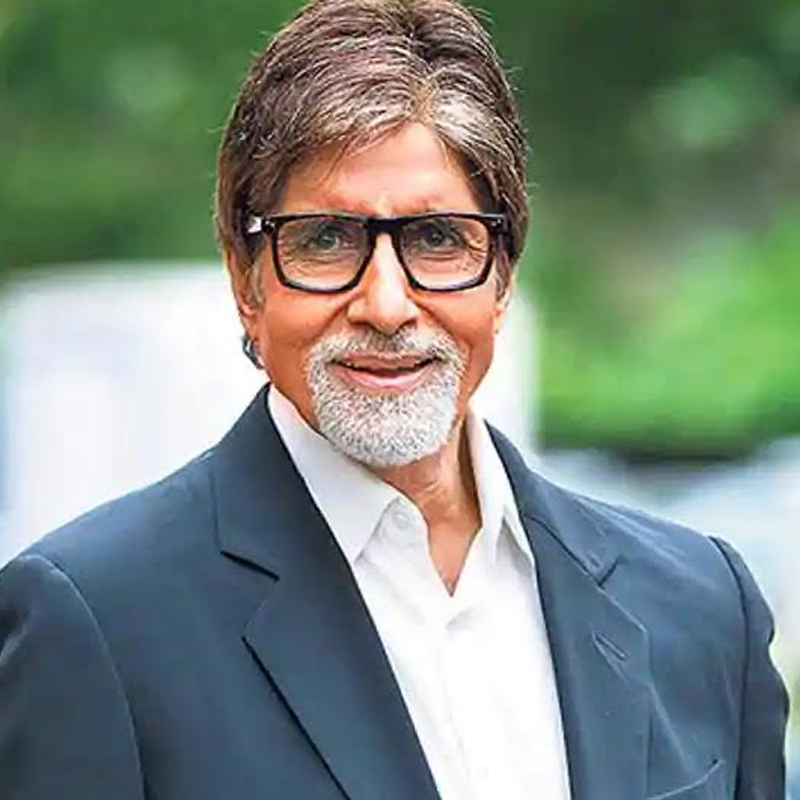
    The launch event took place in Mumbai and was attended by brand ambassador Amitabh Bachchan, Maharashtra minister for water supply and sanitation Babanrao Lonikar, Ministry of Drinking Water and Sanitation secretary Parameswaran Iyer and other dignitaries and representatives of the Mission's development partners.

    At the launch, World Bank manager—operations, New Delhi office Hisham Abdo Kahin spoke about World Bank’s longstanding association with the Swachh Bharat Mission. He said that India’s commitment and progress on improving sanitation were unprecedented in the world and that India had achieved in five years what many of the much smaller countries took over 40 years to achieve.

    The ads will be aired across various television channels over the next few weeks in various regional languages. There will also be radio jingles, outdoor publicity and digital campaigns aired under the campaign.

  • India’s youngest CEO Suhas Gopinath’s journey of highs & lows

    India’s youngest CEO Suhas Gopinath’s journey of highs & lows

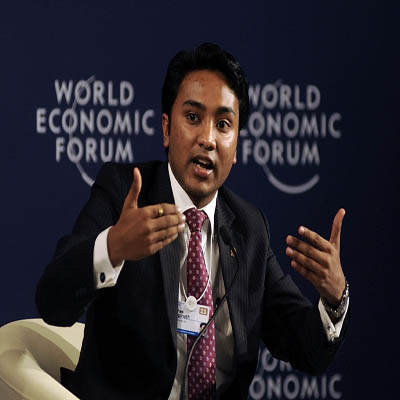
    MUMBAI: If a 14 year old boy frequently visits an Internet café in India, he is often presumed to be viewing prohibited sites. However, Suhas Gopinath a small boy from Bangalore, made such use of internet café that no mother will stop her child from visiting one anymore! Gopinath taught himself to make websites with the help of books used on the internet to start Global INC.


    How He Started:


    In the beginning of 2000, usage of internet was very expensive in India and something that Gopinath could not afford out of his pocket money. So he decided to crack a barter deal with the internet cafe owner. “I went to the shop owner and asked offered him my free service. I told him that while he went out for lunch, I would take care of the shop and in return I would use his internet for free. That’s how I started,” Gopinath tells Indiantelevision.com. 


    It from that internet cafe that he started his journey.


    Parental Pressure:


    Indian parents always want their child to finish schooling, then engineering and ultimately land a great job. Gopinath’s family was no different. His parents also wanted him to be an engineer and entrepreneurship was a sin according to them. “Whenever I spoke about entrepreneurship, my mother reacted as if I committed a crime. The life cycle was pre-drawn and entrepreneurship has no room in it. I lied to my mom that I joined NCC classes after school so that I could give myself more time at the internet café. However, after my board exams, my mother was called for a parent teacher meeting where the teacher told her about my poor performance. Defending me, my mom replied saying that it wasn’t my fault but theirs as the NCC classes exhausted me. The stunned teacher was obviously stunned and that’s how my mom came to know about the truth. On our way back, my mother wept and told me that it was okay if I didn’t want to study because my elder brother was in IIM and would take care of me once he settled down. That was the only moment I felt sad as I never wanted to be taken care by anyone,” said Gopinath, who was by then the CEO of his IT Company Global INC.


    First Marketing Step:


    In the United States, he did his first marketing stint. Out of the yellow pages, Gopinath listed all the automobile companies without a website and mailed them from a fake id called ‘Micheal.’ 


    “Please send me your company details and website link, we want to sign a long time deal with your company,” he wrote in the email.


    As the companies didn’t have a website, they responded with a PDF. Gopinath replied from the faux id, “If you don’t have a website, you don’t meet the necessary requirement to be our client.”


    After a few days, Gopinath mailed them again from his official id offering to build a website for $500 and in case they needed it built in a day’s time, the charge would be $750.


    “There were more people opting for the faster option. But I was scared of the entire mischief and thought the FBI would be at my door any moment. So after a while, I confessed and 80 per cent of the people forgave me, while 20 per cent threatened legal action. However, eventually they all realised that a website is an important tool,” says Gopinath.


    The last encounter with Indian education system:


    Just because his mother wanted, he decided to complete his college. However, due to lack of attendance, his hall ticket was withheld. In the same year, he was invited to represent the World Bank’s ICT Leadership Roundtable, and he thought if he shows the certificate, the HOD would be proud of him and allow him to sit for the examination. The HOD replied, “It doesn’t matter if you work for State Bank or World Bank, I want 75 per cent attendance.”


    That reply shattered him. He says, “Education should be a manifestation and not a bookish one always. While it is very important to have an education, we need to change the system and introduce more practicality in it. A kid may not be equally talented in each and every subject.”


    Recognition and rewards:


    Gopinath taught himself to make websites with the help of books and made his one – www.coolhindustan.com, at the age of 14. With this, he incorporated his company Global INC the same year in 2000. He became CEO of his multinational company at the age of 17. According to the India Book of Records, Gopinath holds the record as “The Youngest CEO.”


    • In 2005, Gopinath was the youngest among the 175 recipients of Karnataka”s Rajyotsava Award.


    • On 2 December, 2007, The European Parliament and International Association for Human Values conferred “Young Achiever Award” on Gopinath at the European Parliament, Brussels.


    • In November 2008, he was invited to represent the World Bank’s ICT Leadership Roundtable for adopting ICT in Africa to increase employability and fostering ICT skills in students from these countries. 


    • He was announced as “Young Global Leader” for 2008–2009 by the World Economic Forum, Davos. In that position he would be involved in development programs across the world.  


    • He holds a diploma on global leadership and public policy from the John F. Kennedy School of Government and Harvard University.


    • Most importantly the mother who wanted his brother to look after him is proud of Gopinath and says, “I can’t take care of a maid in my house and he takes care of so many employees in his office,  though I was scared of entrepreneurship in the beginning as no one has ever gone for it from our family I am proud of Suhas and what he is doing” despite his huge wealth and global recognition Suhas Gopinath lives a normal life with his family in Bangalore. 


    The excerpts have been taken from his key note in Goafest 2015.

  • TV channel and new events part of Olympic Agenda 2020

    TV channel and new events part of Olympic Agenda 2020

    MUMBAI: The International Olympic Committee (IOC) president Thomas Bach recently revealed 40 proposals that make up the Olympic Agenda 2020, which is a roadmap for the future of the Olympic movement, which will be discussed and voted on by the full IOC membership at the 127th IOC session to be held on 8 and 9 December in Monaco. 


    During the public launch of the recommendations president Bach called the 20+20 proposals “the culmination of a year of open, transparent and widespread debate and discussion, which had already begun in mid-2013.”


    “These 40 recommendations are like pieces of a jigsaw puzzle. When you put them together, a picture emerges that shows the IOC safeguarding the uniqueness of the Olympic Games and strengthening sport in society,” he added.


    Some of the key areas addressed by the recommendations are:


    – Launch of an Olympic TV Channel to provide a platform for sports and athletes beyond the Olympic Games period, 365 days a year. To fully connect with the digital age and connect with young people on their terms which will be a worldwide platform and an opportunity to spread Olympic values as well as highlighting the IOC’s many cultural and humanitarian projects. Candidate cities may also be given exposure during the bidding phase.


    – Changes to the bidding process with a new philosophy to invite potential candidate cities to present a project that fits their sporting, economic, social and environmental long-term planning needs. The organisation of sports and events outside the host city and even, in exceptional cases, outside the host country could also be allowed, always respecting the integrity of the Olympic Village.


    – Reducing costs for bidding by decreasing the number of presentations that are allowed and providing a significant financial contribution from the IOC. At the same time emphasising that the sustainability of a bid must be taken into consideration right from the beginning.


    – Move from a sport-based to an event-based programme. Create limits on accreditation for athletes, coaches and other athlete support staff to ensure that the games do not grow bigger. Allowing more than 28 sports to be on the programme while respecting these limits.


    – Strengthen the sixth fundamental principle of Olympism by including non-discrimination on sexual orientation in the sixth fundamental principle of Olympism in the Olympic charter.


    – Adapting and further strengthening the principles of good governance and ethics to changing demands. Ensuring compliance with the Basic Universal Principles of Good Governance and transparency of accounts with the IOC’s financial statements to be prepared and audited according to the International Financial Reporting Standards (IFRS) even when not legally required. Strengthening the independence of the IOC Ethics Commission with the chair and members of the commission to be elected by the IOC Session. The IOC will also create the position of compliance officer to advise IOC members, staff, NOCs and IFs with regard to compliance.


    The recommendations were first presented to a round table of athletes, many of whom actively contributed to the Olympic Agenda 2020 process. The athletes remain at the centre of all 40 of the proposals, with the protection of the clean athletes being at the heart of the IOC’s philosophy. The central importance of the “athletes’ experience” will be introduced into the evaluation criteria with no compromise on the field of play for athletes, and the paramount importance of the Olympic Village.


    The 40 recommendations were finalised by the IOC executive board in October following presentations from the chairs of the 14 Working Groups that were set up to refine the proposals earlier this year. In addition to members of the Olympic Movement, including national Olympic committees, international federations, sponsors and athletes, the working groups consisted of experts from civil society such as the United Nations, Google/YouTube, Transparency International, the Clinton Foundation, the Victoria and Albert Museum, and the World Bank.  

  • Publicis’ Levy gets bullish on India

    Publicis’ Levy gets bullish on India

    MUMBAI: If the chairman and CEO of a multinational advertising and public relations company comes to India, then canards are definitely going to gain currency.

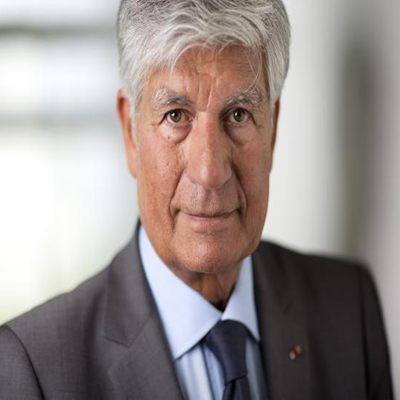
    And that CEO happens to be Publicis Groupe’s Maurice Levy, who signed the deal with the Omnicom Group to create a $35 billion mega-agency, journos would not be faulted for wondering why. To everyone’s dismay, Levy told a select group of the media that his current trip to India falls in the category of a “regular visit”.

    “I was here last in 2011 and thought it’s high time I visited again. I have always said that India is a major market for us and we want to build the group here,” said Levy.

    Industry has been speculating whether that “building” includes possibly picking up equity in the fiercely independent Sam Balsara run Madison World who has recently stated that his agency is open to collaborations. Levy very intelligently deflected this question by saying that that the group has made investments in the country and will continue to do so as there is a cesspool of talent here.”

    Among the agencies Publicis runs in India include: Publicis India, Leo Burnett, Saatchi & Saatchi, Starcom, ZenithOptimedia, Razorfish and Digitas.

    Levy further elaborated that “according to the World Bank, India will have the largest number of middle class income group members by 2030, surpassing even China. Hence, we have to strategically make moves. India is a very strategic country for us.”

    He believes that since the country has a great deal of knowledge in IT and digital, it should take advantage of that skillset rather than just become an ‘outsourcing’ nation.

    When asked about the importance of digital media today and in the future, Levy quipped, “Publicis was the first group to invest in the sector. In 2006, we had said how digital is going to be one of the most important pillars of the emerging markets and started investing in it.”

    He pointed out that a large share of Publicis’ revenue comes courtesy the digital space and that the firm is heavily invested in it already. “In 2011, there were 100 people working in the digital sector in India and now there are around 1500 people. Globally, there are over 20,000 people devoted to the sector.”

    He also highlighted that “emerging markets contributed roughly 25 per cent” to the group’s turnover and his aim is to bring it to “35 per cent by 2017.”

    As everyone waits for the Publicis-Ominicom merger to get the official nod from the EU, the US and China, Levy too has big dreams and expectations from it. Without revealing too much on how progress the fusion process has made and who will head the combined entity in India, Levy said that it will only benefit the clients of both the companies.

    “The law doesn’t allow me to speak about it unless and until all procedures are done. And till then we will work as competitors but the future will be all about offering a wide range of platforms to the client. For me, it has always been how can I make it more valuable for the client. And it will continue to be so.”

    When asked if there have been any ‘disagreements’ with Ominicoms’s president and CEO John Wren, Levy laughingly responded by saying, “Yes of course. He’s American and I’m French.”

    He further added, “A French poet has written that boredom comes from uniformity and it will be true for me as well. Over and again, I have always said that collaborations is the way forward though they can be challenging. When we acquired Saatchi & Saatchi, all we had to do was cross the channel but it turned out to be a major challenge because of our differences. Such things are bound to happen but there is no fun if there aren’t such challenges.”

    However, the group’s number one competitor WPP CEO Sir Martin Sorrell has been very vocal about the merger and even gone on to call it the merger of ‘unequals’ and that it won’t last a long time. On it Levy responded that he only comments on what he knows best and that’s his company and work. “From the way he (Sorrell) has been speaking about it, it seems like it has become a part of his job!” he added wittily.

  • Amol Palekar to head CMS Vatavaran Environment Filmfest Jury

    Amol Palekar to head CMS Vatavaran Environment Filmfest Jury

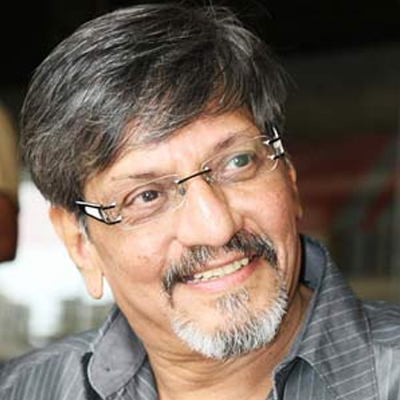
    NEW DELHI: Eminent actor, director and producer Amol Palekar will head the jury for the coveted 7th CMS Vatavaran Awards in national and international categories.


    The Award Jury is meeting from today for three days at the ITC Maurya, New Delhi.


    The jury comprises 14 eminent personalities from widely divergent sectors and streams, that is filmmaking, conservation, research and media will be headed by Amol Palekar


    The jury members include World Bank New Delhi senior environmental specialist, Dr Anupam Joshi; Indira Gandhi National Centre for Arts (IGNCA) member secretary (Chief Executive Officer) Dipali Khanna; author, columnist, birder Ranjit Lal; filmmaker, Vichitra Nirmiti, Pune Sumitra Bhave; film critic and senior columnist The Indian Express Shubhra Gupta; The Hindu, New Delhi features editor Ziya Us Salam.


    CMS Vatavaran received a total of 541 entries out of which 86 Indian and International films have been nominated in 11 categories. The Awards will be conferred on 2 February 2014 during the 7th CMS VATAVARAN 2014 International Environment & Wildlife Film Festival and Forum which is scheduled from 30 January to 3 February 2014 at IGNCA Lawns, New Delhi.


    Vatavaran is India’s only International Environment & Wildlife Film Festival and Forum organised as initiative of Centre for Media Studies, New Delhi. The festival is not just a film festival celebrating the cinematic art of films but focuses more on using the films as a tool and catalyst for creating impact. The festival has an International recognition and till date 39 festivals have been organised in 26 cities of India ever since its maiden run in 2002.