Tag: work from home

  • Sumit Vyas goes on an epic rant in Wakefit.co’s new campaign

    Sumit Vyas goes on an epic rant in Wakefit.co’s new campaign

    Mumbai: “Yeh Covid na…2020 ghar mein, aur 2021 darr mein!”

    From uncertainty about going back to work to worrying about a new variant of Covid-19 that might wreak havoc, 2021 has been a challenging year for everyone. And, this is exactly what Wakefit.co- the D2C home, and sleep solutions company is highlighting in its latest campaign- ‘The Honest Office-goer’s Rant’.

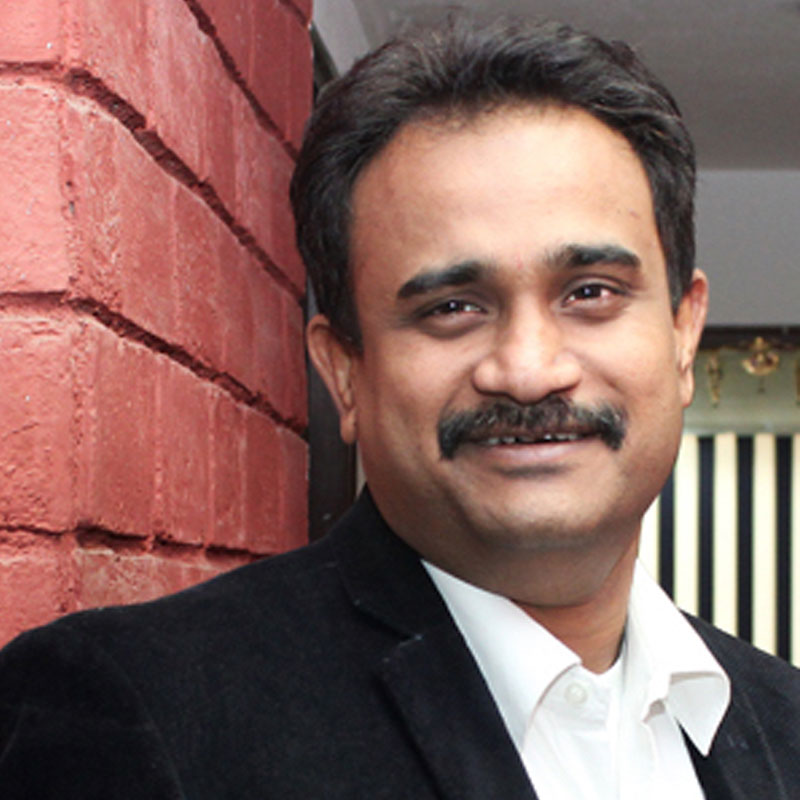
    The new campaign video features Sumeet Vyas as the protagonist, who encapsulates the emotional turbulence people have been going through in the past year, in a light-hearted manner. As several months passed and people transformed their homes into office-like environments, the relationship and the bond with homes and home furnishings have increased. ‘The Honest Office-goer’ Rant’ (which follows the viral Bartan Dho Liye video that was introduced as part of the Open Letters campaign by Wakefit.co) highlights how the new normal and WFH has fostered a close relationship between people and their homes.

    Wakefit.co head of brand Prateek Malpani said, “In the last two years, people have reoriented their way of living between the four walls of their homes. While doing so many people have naturally channelled their energies into livening up their surroundings, leading to an increasing interest in the home furniture segment. Through quirky and witty initiatives like these, we try and echo each other’s sentiments, while also addressing the importance of investing in their homes.”

    Spring Marketing Capital partner-branded content Sandeep Balan said, “The campaigns we collaborate with Wakefit.co on always have a dash of wit and humor, to go with the core brand messages. The Honest Office-goer’s rant is another out-of-the-box attempt to showcase the pulse of the average Indian citizen and build brand resonance”

    In 2020, when the first wave of Covid-19 broke out, Wakefit.co launched the Open Letters Campaign which attempted to evoke a sense of empathy and assure people that we are in this together, as a community, and will come out of it stronger, if we stand together. The videos were hosted on Wakefit.co’s branded content channel, Home Time. 

  • Guest column: How brands can negotiate the ‘work-from-home’ & ‘virtual’ reality of PR

    Guest column: How brands can negotiate the ‘work-from-home’ & ‘virtual’ reality of PR

    NEW DELHI: John Wooden, a renowned American ex-basketball player, coach and author, once famously said, “If we fail to adapt, we fail to move forward.” True to his saying, every change that mankind has faced has forced us to adapt and evolve, and the current Covid2019 pandemic is no different. Not only has it altered the way we take care of ourselves at a personal level to avoid contracting the ailment, but it has also impacted us financially, professionally and socially, among others.

    One of the most common adaption at a professional level, unequivocally, has been implementing the practice of work from home (WFH) by organisations across geographies and scale. This is particularly true for the IT, FMCG, pharmaceutical, electronics, online retail platforms, digital lenders, start-ups, and BPO/ KPO sector. A recent report by a leading search engine company (Naukri.com) notes that the hiring of employees for a WFH job role has increased by a whopping 300 per cent since the lockdown. The enthusiasm for this ‘new normal’ has been equally reflected at employees’ end, with WFH being one of the top keywords searched.

    Advantages of WFH

    Aside from the safety factor, there are several other advantages of WFH. It has been observed that a significant amount of time is saved, that would otherwise be spent on travelling to work and meetings. Instead, it can, now, be used more productively and to incubate innovative solutions and ideas. WFH can also help organisations blur geographical boundaries by connecting all its stakeholders through common virtual communication and transactional platforms. Additionally, it is beneficial financially. In WFH, lower overheads, especially fixed, would be incurred and this would, eventually, prompt organisations to offer products and services at lower costs and make them more profitable and affable to its customers. Hence, post the pandemic, these factors are going to continue to encourage a multitude of organisations across sectors to reconsider a permanent WFH for some or all of its employees.

    Changing dynamics of the PR landscape

    Given that organisations are increasingly getting accustomed to WFH, public relations (PR), being a service-led industry, has also adopted the new norm of WFH to be on the same page as its stakeholders. The dynamic PR industry has redefined itself and has reinvented its objectives, strategies and tools to transcend to the world of ‘virtual reality’, seamlessly. Virtual models and methods are, at times, replacing and in other times, going hand in hand with traditional approaches to client servicing, media relations and other stakeholder engagements.

    At a time, when client engagements can no longer happen via in-person meetings, it has to be conducted virtually. PR consultants need to maintain effective engagement with clients by sharing daily updates and various status reports in a timely manner, and schedule regular phone and video calls so that the client does not feel alienated.  Key documents could be updated on shared drives to enable real-time reviewing and discussion on the way forward. It is, of course, imperative to use encrypted and trustworthy platforms to avoid leakage of confidential information or data. Time management is of key essence in WFH. It is ideal to synchronise work timings with those of the clients, to the maximum extent possible, so as to be available when the client requires your assistance and ensure that neither is eating into each other’s personal time. Virtual working has also led to merging geographical boundaries. Consultancies can now cater to existing clients, as well as onboard new ones in any location and engage virtually.

    The media catches on too

    It has been noted that in times of Covid, consumers are heavily relying on online and social media forums for information. This is true not just for consumers but also for the media where press conferences are now being replaced by video calls. Product launches and key announcements are taking place through social media handles of organisations. There is an even greater need for brands to post various ‘updates’ so as to maintain the brand recall in this age of information overload. It could be easy for consumers to lose interest in virtual engagement. Hence, the content to be driven on such platforms needs to be brief, relatable and highly engaging. Crisis resolution also has been redefined, since every social media participant could be a potential influencer for the brand. In the wake of this, there is a pressing need to reshape the crisis manual, timely engagement with the client, its customer or media, and address concerns promptly. All in all, a PR professional has to be well versed with digital engagement as well as the measurement metrics for gauging interest and evaluating strategies.

    In the media domain, engagement has also become virtual since media rounds and meetings, one of the key relationship-building approaches are no longer feasible. There is a need to constantly engage with the media to share updates about clients, but avoid calling journalists at odd hours or expect them to check emails instantly, since WFH is a new setup for them, as well. The bottom line is to maintain a fair balance of engagement without overwhelming them.

    So, how to turn this into a success story?

    Last, but far from the least, WFH requires PR consultants to work in a more collaborative manner with all stakeholders, including their teams. It is vital for leaders to stay connected with teams and keep them engaged, motivated, and maintain a personal connect, beyond work. Using positive reinforcement, rather than negative, will help keep up the morale. Small gestures like celebrating achievements, occasions or simply connecting at regular frequencies, will go a long way in retaining team bonding whilst working remotely.

    In a nutshell, since the end of the pandemic is indefinite, many organisations and sectors have declared, or atleast considered, WFH for its employees for at least a year. It has been observed through the passage of time that every working environment requires its own strategy to succeed. Leveraging this ‘virtual reality’ to maintain healthy relationships with all stakeholders, will enable PR consultants to assist clients to respond to new age challenges more effectively and lead the overall PR and communication industry to its growth and evolution.

    (The author is founder of Value360 Communications. Indiantelevision.com may not subscribe to his views.)

  • Work from home: The new culture in the making

    Work from home: The new culture in the making

    As a matter of fact, WFH had been instituted in Isobar almost a year ago considering the various needs of the employees and to give them a fair chance to strike a balance between personal and professional life. That was a different purpose then, vis-à-vis a forced requirement during this current pandemic. So, in a way, we were able to segue into this WFH comfortably.

    Learning from our offices in the orient, we began working from home a week before the country went into lockdown. Just overnight, the machines of the creative teams were shipped to their homes; remote access to our network was enabled; online meeting platforms were made accessible to all, and so on and so forth. All this to ensure that work continued as usual without any interruption.

    Contrary to popular belief in India, I think WFH has worked really well for us. Efficiency and productivity have reached new heights. Teams and clients from different cities are working more cohesively and in an integrated fashion busting the myth that they always need to be in the same room to be more effective. They are now able to utilise the time they save on travel, to attend to personal commitments or office work. They have become more responsible and productive, the proof of the pudding being in the heightened outcome we have seen in the last two months or so. Brainstorms, discussions, research surveys, pitches, and everything that drives success for the agency has seen a new gleam during this WFH phase. It is not just the internal teams, but also our clients and vendors who have contributed to the success.

    During this time, we have in fact won a couple of accounts and executed some noteworthy campaigns. The account wins will be out there in the media soon. One of the campaigns that stand out is the one we ran for Kia Motors India. We used existing video rushes in an interesting way to create a film that is just apt for the current situation. It inspires everyone and instils hope for a better future. Have a look here.

    In my humble opinion, WHF would continue for us as the lockdown gets lifted in phases and as the authorities would allow only a percentage of the staff to attend office. It would also stay relevant in the long run as we start gauging possibilities of people in certain functions to work from home while others who are more client-facing to work from office or those who are needed on a film set to be at an outdoor location. Or, maybe we look at some sort of rotation of staff. All this is going to be quite a fluid evolution as we move into the future. 

    (The writer is chief growth officer at Isobar. The views expressed are his own and Indiantelevision.com may not subscribe to them)  

  • Agencies should allow more flexibility to work remotely

    Agencies should allow more flexibility to work remotely

    NEW DELHI: It will be wiser for advertising agencies not to waste the crisis and plan to adopt the hybrid work cultures where a part of the workforce can work from home once the normal kicks in. The point was raised by BBH India CEO and managing partner Subhash Kamath and Wunderman Thompson South Asia group CEO and chairman Tarun Rai during a webinar discussing the future of advertising workplaces hosted by The Advertising Club Bangalore on Tuesday.

    “I have been passionate about the fact that people should be allowed flexibility at workplaces. We need to be more output-focussed and not input. We can work remotely and deliver the same results,” said Rai as he shared how he has always been open to the idea of certain members of his team working from home in case of emergencies.

    Kamath added: “My wife has been working from home for the past six to seven years now, a decision she took on her own to take care of the kids. I think this flexibility to work remotely should be given to women and also to people with ailing parents any day, irrespective of Covid2019 because family always comes first.”

    Both agreed that making working remotely a norm in advertising agencies will, therefore, also solve the problem of gender bias at offices.

    Rai elaborated, “We have achieved a 50:50 ratio of male-to- female workforce, but there are certain subconscious biases that still exist. People do not want to promote a woman who has recently got married or is planning a family. Working from home ends that issue as a woman who is getting married will be treated the same as a man.”

    They also highlighted that promoting a remote or work-from-home culture will also liberate good talent from geographical boundaries as it will be easier for a good suitable talent positioned in a different city than the client to contribute to a good project.

    Kamath said: “There is a difference between team-building and coalitions. You will find that in agencies people work on pitches in coalitions but then get back to the traditional, hierarchical team mode of linear reporting after that. Going forward, we will have to work together with more coalitions. Geography is history now. (As a good leader), you should be a part of a team that can get people together from across the world to find better solutions for clients.”

    Another benefit highlighted by the duo was the cutting of expenditure on things like travel, entertainment, real estate, etc. They insisted that it will be wiser to put all that extra money into a more valuable resource, i.e., the people.

    “We have moved from a culture of closed offices to open offices. Earlier, people used to sit in these opaque cabins, but with time we have made way to more open spaces where people can work in collaboration. Now we are moving to agile spaces. For example, at our Mumbai office, 20 per cent of the workforce doesn’t come to the office on any given day, that means there are no set cubicles or seats. You come to the office and sit at any place you find vacant,” Rai elaborated.

    He added that soon it could be moved to a no-office module. “No office doesn’t mean that you don’t have a place to go to. It means that instead of going to a cubicle or workstation, you will go to meeting rooms.”

    However, while all of it seems like a utopian dream achieving, this might not be very easy.

    Rai argued that to make all of this function in the real world, people will have to give up the control they are used to exercising on their teams and will have to turn more trusting towards people.

    “In addition to that, we also need to work on our HR policies and appraisal schemes. To this date, we have to punch in our office timings as the system remains input-based. Even with consultants, we are used to asking how many days they will be coming to the office. All this needs to change,” he noted.

    Kamath added that even the compensation structure of clients is heavily reliant on an input-based system, which also needs to change. “Instead of asking how many people you are going to give us for this project, they should be telling us this is what they want to achieve in this amount. Obviously, all of that can be negotiated, but the focus should be on the end result.”

  • Great ideas can never be locked down: FCB India’s Rohit Ohri

    Great ideas can never be locked down: FCB India’s Rohit Ohri

    From JWT to Dentsu to FCB India, that’s how the career pans out for FCB India group chairman and CEO Rohit Ohri. Within a year of joining FCB India, he had bagged the title of ‘One of India’s Most Trusted CEOs of 2017’.

    FCB India also has an array of offerings to meet the end to end communication needs of its clients – two creative agencies –  FCB Ulka and FCB Interface, Lodestar UM – media planning and buying, FCB Digital, FCB Healthcare, FCB Cogito Consulting for brand consulting, FCB Asterii for analytics, FCB Aquila for activation and FCB Neon brand PR and FCB FuelContent.

    Having managed advertising communications for  top brands such as Amul, Tata, Indian Oil, Hamdard, Horlicks, etc., over the years, FCB  India  has grown to become one of the top fully integrated marketing communications companies. Recently, the company also had 38 shortlists at The One Show 2020.

    With close to three decades of experience, Ohri has been able to catapult brands into fame and the vision stays the same even during the ongoing lockdown. Indiantelevision.com’s Shikha Singh spoke to Ohri to understand how the lockdown has prevailed for him and the company, being creative during a pandemic, his top learnings from the lockdown and the future of the sector. 

    Edited excerpts: 

    You are heading a group which has three agencies under its umbrella. How is each of them faring in the thick of this crisis? Could you and how did you prepare them for this before the lockdown?  

    One of the things that we did was to go into the work-from-home mode a week before it was mandated by the government. Because of that what we managed to do was get our systems in place. So, all the staff got trained on technology platforms like Zoom and Microsoft to stay connected. We started a 24/7 IT helpline to address our employee’s queries.

    What are you doing with the projects which were already underway?

    A number of projects had to change because the environment has changed so dramatically. Many industries have had to shut down their manufacturing facilities. But our 600+ factories are working night and day manufacturing ideas that build our brands and our clients’ businesses even in these hard times. Great ideas can never be locked down. That’s why we’ve launched an initiative branded – ‘Ideas Unlocked’.  We believe these ideas will help our clients’ brands unlock new, meaningful and authentic connections with their consumers.

    How are things panning out with each of them now that we are more than a month into lockdown? Have clients kept you busy?

    We have a global EXCOM every week. I’m doing meetings with my board every week as well. Every fortnight, I’m doing town halls with all employees. The CEOs and office heads are doing weekly and daily meetings with their teams. So, the workflow is very carefully planned for each day and everybody is reporting at the end of the day as to what they managed to finish that day. For the wellbeing of our employees, we are offering them classes to upgrade themselves and their skills, especially in the digital space. We are heavily emphasizing on L&D, where we offer our employees with a list of courses they could undertake from various organisations. We are also doing a talent showcase where an employee from our office comes on Instagram to share their talent with the FCB family. We have partnered with Doctor 24×7, an app-based service which provides our employees with the opportunity to speak with doctors and health specialists across the country at any time.

    Have summer product launches died down because of Covid2019? 

    A number of product launches which were expected in May and June have got pushed. We have partnered with XP&D and BE.Live to launch a digital platform that can be used by brands for engagement and launches. Effectively moving offline experiences online.

    Does that mean the summer boom time quarter is going to be a washout? What are you doing to plug the gap?

    We are doing a lot, in terms of delivering to our clients and brands. But obviously, Q2 will be negatively impacted. However, we believe that brands should not lose their voice in times of crisis. Brands may need to pivot on their core promise and create new relevance for themselves.

    Consumers are walking through a long dark Covid2019 tunnel. Brands can either wait for the light at the end of that tunnel or light up that tunnel for consumers. We believe brands need to walk by the side of their consumers during this time of need.

    What did the first few days teach you and your teams about your business? How have senior management and other employees responded? 

    Till this SarsCov2 crisis came upon us, we did not have an official WFH policy. Honestly, I was not a believer. I didn’t think we could be effective in working from home. We have a very young talent in our agency and I thought they would get distracted and in the process not be able to work at optimum levels. Fortunately, I’ve been proven completely wrong. The kind of dedication that everybody is showing in this WFH situation is amazing! All the meetings are happening on time and are super productive.

    This, in my opinion, will be a big reboot in the ways-of-working of the advertising industry. It is actually a fantastic experience.

    What inputs have the senior management given to you? 

    I am part of the FCB Global Executive Committee. At the EXCOM, we share experiences and learnings; truly invaluable learning at this point of time. This current crisis has no playbook. Understanding what’s happening around the world and how people are coping in the current times is helping each one of us create our own playbooks.

    Has the lockdown helped show up manpower flab where we earlier could not see it or chose to ignore it? Will we see a total freeze on hiring and will we see layoffs and salary cuts in this industry?

    How organisations behave in times of crisis will determine how they will fare in the post-crisis-world. I believe companies cannot shrink themselves to greatness. In the advertising industry, people are our only assets. If an agency is looking to bounce back strongly from a crisis, it will need a highly motivated and talented team.

    Layoffs and furloughs of employees to protect company profitability are self-inflicted wounds. Wounds that can turn grievous in the post-crisis period. Undoubtedly, cost-cutting measures in this period are critical and companies need to axe all non-productive costs.  

    Is the ad industry going to de-grow 10-20 per cent in 2020?  

    There are talks about the global economy shrinking. India’s GDP has been projected to come down to zero. It is not just the ad industry, but every industry is suffering. That is the most unfortunate outcome of the recession. Pundits are forecasting that it’s going to take us till 2022 to come back to the 2019 level. What exactly is going to be the percentage of de-growth is very hard to say. It all depends on how soon we come out of this crisis and what economy-boosting measures the government introduces. If we come out of this quickly and there are enough incentives and economic packages by the government to help the industry come back on their feet, then we could be restricted to between 10 to 20 per cent of de-growth over 2019. But if the lockdown continues till June, there will be severe economic repercussions.

    What steps could you take to get the network you head back into the fast growth lane?

    The most important thing is that we are preparing for the new normal. We will definitely have a pre-covid and a post-covid era going forward. So, AC, i.e., after covid, is really going to be a whole different world.  If we really want to kickstart our business and quickly move into a recovery phase we need to help clients connect with their consumers in the new normal. We are currently doing large-scale research which will map consumer behaviour changes among consumers in the entire pre-covid and post-covid phase. With these findings, we are looking to advise clients about the big consumer shifts that may happen in different categories. This will, hopefully, enable them to create new relevance for their brands.

    Further, our partnership with XP&D and Be.Live will help brands take offline experiences online. We feel that after the lockdown is over, offline experiences will be very few and far between. We now have the capability to execute large brand launches, dealer meets and employee meets etc., online.

    We’ve also just launched Retail: DAY 1. This is a partnership with Networkbay and will enable us to reimagine retail experiences for brands.

    Now that TV has revived aggressively, has your faith in the medium strengthened?

    Television is and will always be a powerful medium. Audio-visual today is not restricted to the TV screen. Mobile is the new entertainment screen.

    The print medium is, unfortunately, facing some crippling challenges. Unfortunately, a majority of the people have stopped taking newspapers. This was a golden opportunity for the print medium to reinvent itself. Newspapers have gone online. The problem is that the online version is a replica of the offline version. And on the phone, it’s really hard to read. The format needed to be recast for the mobile screen. It is similar to running a television film online.  Being adaptive will perhaps be the most critical skill needed for survival in the new post-covid world.

  • COVID-19: How affirmations can help deal with work from home

    COVID-19: How affirmations can help deal with work from home

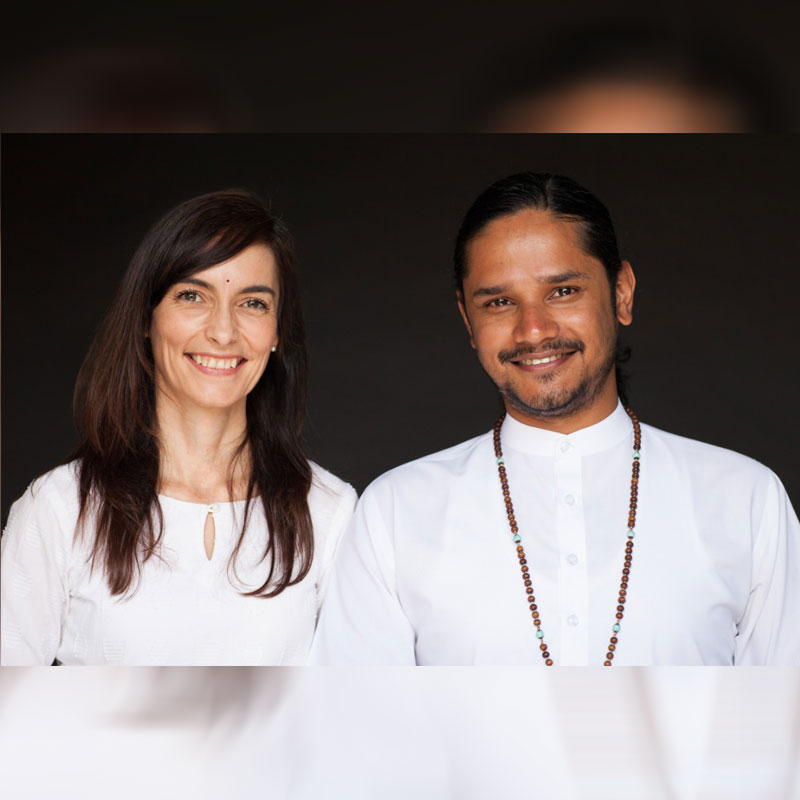
    At a recent workshop on “How to develop Harmonious Relationships”, my wife, Narayani, and I used a pendulum to demonstrate the power of thoughts, both, positive and negative. We invited a volunteer from the class to come up and sit on a chair facing everyone. Narayani placed the pendulum a few inches above this person’s head and allowed it to settle down until it was perfectly still.

    Now, we asked all those present to send positive thoughts to this person, without saying a word. Just inwardly, in their mind. As they did so, the pendulum suddenly began to swing in a clockwise direction. The more powerfully they sent these thoughts the larger and faster the pendulum swung.

    Asking them to stop, we allowed the pendulum to return to neutral. As you may have guessed already, we now had them think and project negative thoughts towards this person. The pendulum, awakening from its slumber, gradually began swinging in the opposite direction — anti-clockwise. Everybody in the room was shocked, “Our thoughts did that?”

    We’ve all heard about the power that thoughts have to shape and affect our reality, but nobody really takes it that seriously. Often we dismiss them as personal indulgences.

    “These are my thoughts, what difference does it make to others?” “I can think whatever I want.”

    We think just because no one can hear us, we are not affecting anybody. But seeing this lucid experiment, right before their eyes, they could no longer deny the power. The power that they, you and I, your neighbour, and everyone carry within them.

    The world, believe it or not, is responding to these very thoughts and creating for you a reality that corresponds to those thoughts.

    Now, the first question is: what thoughts most preoccupy your mind right now?

    Fear?

    Uncertainty?

    Anxiety?

    It seems so natural, given the present circumstances, that no one would fault you for having them. But what effect are they having on your immediate surroundings and circumstances?

    How do we get out of the habit we have created of constant worry and frustration at our situation?

    Easy. By “consciously” re-seeding the ether with fresh new positive thoughts.

    For this purpose we will use the technique of AFFIRMATIONS! These affirmations will replace the old habit-driven patterns with purposeful and uplifted thoughts. There is a specific way to do these affirmations to ensure they are most effective.

    First, one repeats them out loud: thereby commanding the other thoughts to seize their restless flurry. Then, gradually we repeat the words softer and softer, taking them deep into our subconscious mind, where all our thought patterns are stored. And finally, we say them silently, mentally only, with our eyes closed trying to plant this seed-thought deeper still, into the super-conscious mind.

    Now the best times to do an affirmation is right after waking up and just before going to bed. These two time periods are perfect because in those moments we are exposed to both our subconscious mind, through the state of sleep and the conscious mind, in the state of wakefulness. However, in addition, we then continue to repeat them several more times. At least four to eight-time daily.

    The affirmation (taken from the book 'Affirmations for Self-Healing' by Swami Kriyananda) that I will share with you today is on “Good Health,” since that is what is preoccupying so many of our minds.

    “My body cells obey my will: They dance with infinite vitality! I am well! I am strong! I am a flowing river of boundless power and energy!”

    This is step one of the journey towards self-mastery. If you are interested in this journey, then walk with us as we continue to explore different practices, techniques and perspectives that will mould our lives into expressing our highest potential.

    (The authors are disciples of Paramhansa Yogananda and are currently the spiritual directors of Ananda Mumbai, a yoga and meditation centre. The views expressed in the article are the authors’ and indiantelevision.com need not subscribe to them.)

  • McDonald’s India introduces a unique ‘Work from Home’ policy for its Restaurant Management Team and Frontline Crew

    McDonald’s India introduces a unique ‘Work from Home’ policy for its Restaurant Management Team and Frontline Crew

    MUMBAI: Westlife Development Ltd that owns and operates McDonald’s Restaurants in West and South India has introduced a unique ‘Work From Home’ policy for its restaurant management teams and the frontline crew, who are unable to go to work due to the nation-wide lock down. The move is intended to keep the youth of the country productively engaged in these unprecedented times and upskill them for a strong comeback as soon as normalcy resumes.

    The company has adapted many of its classroom training modules digitally, and introduced e-learning modules, quizzes, masterclasses by managers and many more creative learning sessions, which employees can access on their phone while in quarantine at home. This initiative by Westlife Development is aimed to make sure that the team continues to learn and grow even when they are staying home.

    The e-learning modules include McCafé masterclass, equipment masterclass and a number of development and orientation programs for employees across different positions in the restaurants, among others. The initiative is set to benefit the company’s close to 10,000 employees, who can access these modules at the click of a button on their digital devices including mobile phones.

    The company has created a strong framework to support employees through the process and track their progress on a regular basis. This has been enabled by the company’s strong digital capabilities that have been developed to support agility and innovation.

    Speaking on this one-of-a-kind initiative, Seema Arora Nambiar, Senior Vice President, Menu, Marketing and People Resources at McDonald’s India West and South says “At McDonald’s India, we are committed to the well-being and growth of our people. In these unprecedented times, we have created this unique program to make sure that our crew is empowered to use their time efficiently. Through this, we hope to keep our people engaged, connected and motivated, so they are able to come back to work better and stronger.”

  • Companies learn the positive side of WFH

    Companies learn the positive side of WFH

    MUMBAI: As the spread of COVID-19 is causing ripples in the economic system, companies around the globe have temporarily shifted to the work-from-home (WFH) model. They are enabling remote working to keep the business running while helping employees to follow social distancing.

    Considering the recent world crises around the COVID-19 outbreak, industry experts believe it has become more critical than ever for companies in India to be able to support remote working for their employees. They are resorting to virtual meet-ups, VPNs, Google Slack, Zoom calls, Microsoft Teams, etc., for better functioning.

    Sodexo vice president technology and operations Priya Dronadula says, "Sodexo BRS India has adopted the split – team routine for employees to work from home. Cloud video conferencing tools like Microsoft Teams and Blue Jeans have been deployed for employees to connect virtually and share presentations and have multi-party conversations, real-time. We are also encouraging our clients to adopt these safe and reliable tools for virtual meetings. Even our customer support teams have moved to this model so that there is business continuity without impacting the customer experience. VPN connection network creates a safe, encrypted network-enabled with strong authentication factors for hustle-free communication.”

    The way people work has evolved significantly. Digital offers businesses the right tools to support remote work schedules at any time and on any device that they can imagine. Logicserve Digital founder-CEO Prasad Shejale thinks that it is important for companies to evaluate and make necessary arrangements to equip remote workers at scale. Companies should check whether their workers can join virtual meetings and accomplish important tasks irrespective of their location with available devices and applications.

    “At Logicserve Digital, the health and safety of our team members and partners is our top priority. We are aligned with the government's efforts to curb this global crisis and have instituted a robust work-from-home programme as we already had the right collaboration tools in place including uKnowva," he says.

    Shejale elaborates, “Logimates have stepped up engagements with our colleagues as well as clients on emails, calls and video chats. The company has made sure that all the teammates have available resources to work from home and there is a separate ‘Emergency Response Team’ that engages with co-workers regularly to ensure everyone is safe.”

    Every morning, the live stream is led by Prasad with 350+ team members, which is another step towards social distancing and prioritising employee engagement while keeping them abreast of important updates and also motivating them during these tough times.

    Dentsu Aegis Network India has been working from home since the outbreak and teams have adapted to this efficiently and are not causing any work-related hassles. Says CEO Anand Bhadkamkar: “Availability of internet bandwidth and connectivity is definitely critical; yet, the infrastructure across the country during this period is holding up quite well thanks to our network operators. This robustness and stability will surely provide a push towards the transition to digital.”

    Surprisingly, the WFH trend has been growing around the world, but without much acceptance in India. To this, Bhadkamkar adds, “People are now getting used to this working environment, be it through choice or by force. Hence, it won’t be surprising if some companies completely switch to digital now when we come out of these challenging times.”

    “A few companies including Ogilvy have introduced partial WFH in the last year or two. But, overall in the Indian industry, very few jobs allow full WFH. In fact, this approach has been looked down upon as a 'part-time' way of working for someone who is not properly employed. The lockdown is teaching us the positive side of WFH and after the crisis is over, it will become a far more significant way of working in India than ever before,” says  82.5 Communications chairman and chief creative officer Sumanto Chattopadhyay.

    While work from home becomes the temporary norm, it will be worthwhile to check on the same a few months after this pandemic will be under control.

  • Godrej Interio releases ‘Work From Home’ guide

    Godrej Interio releases ‘Work From Home’ guide

    MUMBAI:  Godrej Interio has announced the release of its exclusive guide: ‘Stay Healthy. Be Productive’ – a ‘Work From Home’ guide that reveals the challenges and solutions for the modern-day home-office setups.

    With an unprecedented work-from-home (WFH) experiment setting in across Indian cities owing to the COVID-19 outbreak, professionals unused to working from home are finding a new work-life dynamic despite the technological and infrastructure challenges. The guide was released today by Godrej Interio as many more companies across a variety of sectors are going extra mile to provide viable WFH options for a, possibly, undefined period.

    The guide will help professionals to improve their efficiency and productivity by working comfortably and avoiding unnecessary stress and injury. The right work environment at home will also help them avoid wrong postures and prevent MSDs (musculoskeletal disorders).

    Godrej Interio COO Anil Mathur said: “The sedentary nature of modern office work, as well as the number of hours spent during work from home can cause adverse effects on workforce’s health. Advances in technology have made it easy to work remotely but adopting an incorrect posture while working at home can cause some serious health issues. People work with their laptop while sitting on the sofa, the bean bag, sitting cross-legged on the floor, and even while lying down. This may affect our musculoskeletal system. Basis these insights, we developed a work from home guide which talks about the importance to incorporate ergonomics into the home-office set up. Today’s modern workers needs are very different, and the home-office setup needs to provide them the enabling environment they need to be engaged. Ergonomic seating for the home seating is a way for individuals to know that when they take a break and decide to relax they avoid fatigue, muscle strain, and cramps. It will help them be highly efficient and productive.”

    The newly released ‘Work From Home’ guide shared the following tips with the modern day professionals:

    ·         The right desk and chair – It is important to invest in ergonomic chairs and work desks that support different postures throughout the day. The chair that one invests in should have adjustable features to ensure maximum comfort, also having excellent lumbar support that is adjustable to keep the back straight. One needs to adjust the desk at the right height. An ideal set of proper positioning is when one can type on the keyboard with your elbows bent at around 90 degrees.

    ·         Clear desk (and environment) – Create a dedicated workspace for yourself to improve focus and reduce distractions. Ensure maximum comfort while working for long hours at a stretch.

    ·         Have the right accessories- Improper screen heights are a big reason for sore necks and related issues. One should make sure that the computer screen is in level with the users eyes, so one don’t have to drop your neck or slouch over to view it. The screen should also be at your arm’s length while typing on the keyboard. One may consider investing in a high quality laptop stand, an external keyboard and mouse to ensure proper posture at any time.

    ·         Smart props – To sit on the sofa or a bean bag for a short duration while working, one should maintain a proper position by placing cushions behind your back and beneath the laptop to raise it at the level of users eyes. Avoid slouching at any cost, as it may give rise to back pains and related issues.

    ·         Keep moving – One needs to make sure to move around a little while working for long periods of time. Take coffee breaks, go to the balcony and enjoy the tranquility outside, call a friend to chat a little, or check your mails from your mobile. Move around for a bit, before sitting down to work again. This is because sitting at the same posture for hours, even if one is using ergonomic seating arrangements, may put a lot of stress on body and mind. One can also practice some freehand exercises during the breaks to improve your blood circulation and stretch your muscles.

    ·         Try to stand and work – Standing and working for some time reduces the chance of backaches, improves concentration, and helps you work faster. It also aids in burning calories to some extent. One could convert the dresser, an ironing board, or a storage unit into a standing height workstation for shorter periods of time.

    ·         Lighting Choices – Ensure proper lighting in the room one is working in and keep the windows open to let in natural light. However, if one experiences any glare, one needs to draw the curtains or shut the blinds at right angles to the windows. While working at night, one may consider setting up a night lamp on your desk.

  • When pandemic strikes, trust keeps brands, agencies going

    When pandemic strikes, trust keeps brands, agencies going

    MUMBAI: Trust plays an important factor when you can’t see the other person, and now the whole world is running on trust, as the whole world remains engulfed by the Covid-19 pandemic. Never has trust between advertisers and agencies been more apparent than now.

    Dentsu Aegis Network India CEO Anand Bhadkamkar says that trust builds if one acts responsibly and delivers in time. “Trust, definitely, is quite critical during this time. Clients or colleagues need comfort in regular interaction, which builds trust amongst teams. Yes, the challenge remains of not being able to see the person physically but, the current phase is a passing phase. Thus, as long as the deadlines are met, commitments delivered and there is constant engagement, the trust keeps on building,” he says.

    While most of us have always seen work from home as a convenient way of working, it has its challenges and limitations, too. It comes true for the advertising industry, where agencies and brands were used to physical meetings either in offices, coffee shops, board rooms, etc., which has now been converted into virtual meetings. According to industry experts, in these difficult times, teams have adopted the new way of working quite effortlessly via virtual meetings and teleconferences, etc.

    Bhadkamkar says that DAN had already planned this out. “For the work to continue smoothly, we provided alternative sharing sites and a secured VPN line for better communications and data access. There are some small challenges but that’s all part of the teething and learning process. Efficiency has not dropped that much. Yes, the work is slow but not hampered completely. As a daily practice, teams have regular check-ins – daily/weekly as per agreed duration to plan, review and execute. The working pattern also varies from team to team. Frankly, people are responsible and all the more support each other in these times.”

    Socxo CMO and program head Ajit Narayan says, “Business friendship is one of the most powerful drivers of the business, so educate them, help them and over service them. Forget the inane content of handwashing (they are already getting bombarded by it.) They would appreciate if you stepped back on the sales pitches to them and helped in whatever you do for them. They will remember you and do more business with you once they get their side of the business going well.” 

    The Mavericks founder and CEO Chetan Mahajan think that COVID-19 has impacted every human being and every brand globally. Agencies now have become geography-agnostic and are doing everything possible to support the brand's communication needs. Trust is derived from the transparency of relationship and commitment to the outcome and during these trying times, one has to have 200 per cent commitment. “Our teams are separated by corona yet together with purpose with unprecedented resilience, commitment, camaraderie, and focus to be solution-oriented and be together in spirit as well as action. Our clients have been appreciative of our efforts so far and the show must go on.”

    Adding to this, RED FM national marketing head Rajat Uppal says that he has always considered a brand-agency relationship as a partnership based on trust and faith in each other’s abilities and alignment to a common objective of delivering work par excellence.

    One of the major challenges of working from remote locations like home is the brand-agency team co-ordination issues and delays in work. This can be addressed with advance timeline planning. If one is more considerate about the limitations of the current setup of WFH, brands can actually get more quality work out of the agencies.

    Uppal adds, “For us at RED FM, last one week has been pretty productive and we have been able to get some good work going with our creative, PR and digital agencies. Briefs have gone out on time and agencies have delivered work with greater responsibility. With most brands prioritising work effectively, work has not really got affected. In fact, being away from the workplace and not getting occupied with the routine and hygiene work only, has given our brand team the time to think strategically and take on jobs and projects which were part of the wish list and never got the time to be taken up. On the flip side, WFH has surely extended the work hours for everyone, as everyone is accessible anytime and there are no stringently scheduled work hours. The need of the hour is for the brands and agencies to collaborate well and deliver quality work till we all move back to our workplaces and I am sure we all will do it well.”

    WATConsult VP – account planning and strategy Sabiha Khan  feels that the most important thing to do to ensure trust is to communicate with each other and be honest in communication, which means – be frank about the good, the bad and the ugly.

    Agencies should proactively keep clients abreast of trends and how the situation will impact and change behaviour among the audience and for the respective sectors/ industries.  They should seek to work towards the next quarter keeping in mind the presence of consumer fears and the change in behaviour and possibly even preempt an indoor summer and work towards campaigns accordingly.

    Brands on the other hand should consider agencies as partners whom they can trust in such turbulent times. Brands can keep an agency in the loop about their ongoing situation and the business operations to enable the agency to make informed plans and suggestions that can benefit the brand not just in the immediate term but for the long run.

    Technology has been a big enabler during this time. Brands and agencies are communication via platforms like Zoom Cloud Meetings, Google Hangout, Slack, Google Duo for both internal and client meetings. If things go fine, maybe we are looking at a future where more companies will provide work from home options.