Tag: Wong Kar Wai

  • Aamir Khan – Jackie Chan to star in ‘Kung Fu Yoga’

    Aamir Khan – Jackie Chan to star in ‘Kung Fu Yoga’

    MUMBAI: Prime Minister Narendra Modi’s visit to China has spelt good news for the Indian film industry.


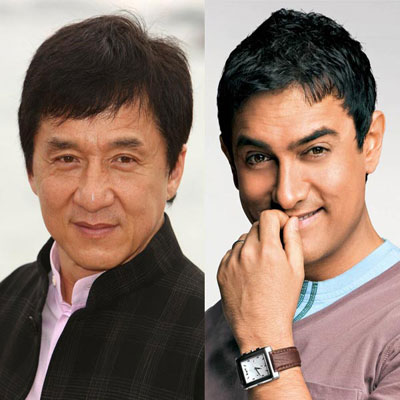
    In a casting coup of sorts, Chinese film regulators have announced that Indian actor Aamir Khan and Jackie Chan will be starring together in a movie titled Kung Fu Yoga. The movie, which will be co-produced by India and China, is being touted as a perfect combination of Chinese martial arts and Indian culture.


    As was reported by Indiantelevision.com earlier, Khan was in China to attend the premier of his blockbuster movie PK. The dubbed Chinese version of the movie is slated to release across 3500+ screens in China on 22 May.


    China will also co-produce another movie with India titled Da Nao Tian Zhu (Causing Havoc in India). The movie will be the directorial debut of Chinese film star Wang Baoqiang.


    As was reported earlier, India’s Eros International and Chinese Film Corporation entered into a co-production deal for a film titled Da Tang XuanZang (Monk XuanZang). Wong Kar Wai will be the executive producer on the movie.


    The three film co-productions were jointly announced by China’s State Administration of Press, Publication, Radio, Film and Television (SAPPRFT) and the Indian Embassy in China.

  • Rajnikant, Wong Kar Wai to be honoured at International Film Festival of India, China is country in Focus

    Rajnikant, Wong Kar Wai to be honoured at International Film Festival of India, China is country in Focus

    NEW DELHI: A total of 179 films from 75 countries across different categories would be screened and China will be the focus country for the forthcoming International Film Festival of India in Panaji, later this month.

     
    Megastar Amitabh Bachchan will inaugurate the annual filmfest to be held from 20 to 30 November.

     
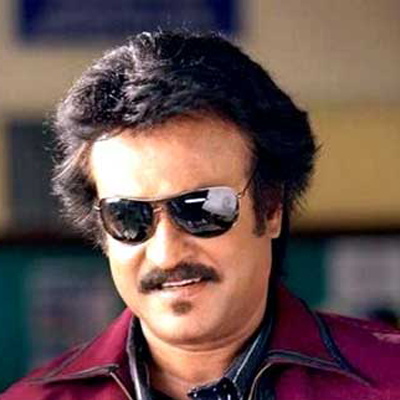
    Popular star Rajnikant would be bestowed with the Centenary Award for Indian Film Personality of the Year, and Chinese filmmaker Wong Kar Wai would receive the Lifetime Achievement Award.

     
    This information was given by Minister of State for Information and Broadcasting Col. Rajyavardhan Singh Rathore, who said the first meeting of the “Indo-China Joint Working Group” would be held on the sidelines of the festival. The Minister added that this partnership provided a platform opening new avenues for film makers from both the countries by sharing best practices and technologies.


    Referring to the opening ceremony, the Minister stated Chinese film actress Zhang Ziyi, Swedish filmmaker Jan Troell, and Polish filmmaker Krzysztof Zanussi would be the Guests of Honour.

    The President directed by renowned filmmaker Mohsen Makhmalbaf from Iran will be the opening film on 20 November and The Grandmaster by Wong Kar Wai would be the closing film of the festival on 30 November.


    The international films include World Cinema (61 films), Master-strokes (11 films), Festival Kaleidoscope (20 films), Soul of Asia (7 films), Documentaries (6 films), and Animated Films (6 films).

    In addition, the Indian Panorama section would include 41 feature and non-feature films. The North-East being the focus region of the festival, IFFI 2014 would be showcasing seven films from that region.

    Retrospectives will be held on Gulzar and Jahnu Baruah and a special tribute to Farooq Sheikh. One film each of eminent film personalities who passed away in the past year would be screened. These are Richard Attenborough, Robin Williams, Zohra Sehgal, and Suchitra Sen.

    A special section of films that focus on dance, personality based retrospectives, and Masterclasses and workshops would also form part of IFFI 2014.  


  • Two Indian movies nominated for the 8th Asian Film Awards

    Two Indian movies nominated for the 8th Asian Film Awards

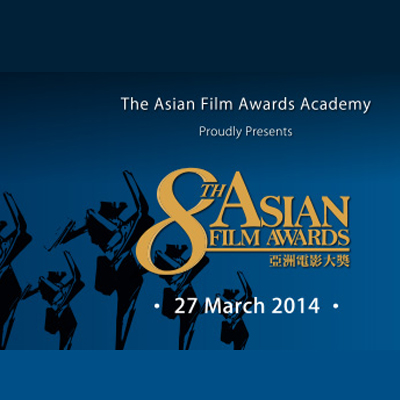
    NEW DELHI: The Lunchbox by Ritesh Batra may have failed to make it to the Academy nominations but it figures prominently in the nominations for the Asian version of the Oscars — the 8th Asian Film Awards.


    The awards are to be presented on 27 March at a ceremony to be held at the City of Dreams casino resort in Macau, and the nominations were announced in Hong Kong over the weekend.


    The Lunchbox has been nominated for the best film award and Ritesh Batra has been nominated for the best screenplay while actor Irrfan Khan is in the list of best actor awards.


    The only other Indian film to make it to the nominations is Bhag Milka Bhag by Rakeysh Omprakash Mehra, the music composers of which – Shankar Ehsaan Loy – have been nominated for best music category.


    Renowned filmmaker Wong Kar-wai’s The Grandmaster topped with eleven nominations including best film and best director out of 14 categories. The highly stylised martial arts drama opened the Berlin festival this time last year.


    After being organised by the Hong Kong International Film Festival Society Limited (HKIFF) for the past seven years, this year’s award is being organised by the new Asian Film Awards Academy (AFAA), a combined effort between the Hong Kong International Film Festival, the Busan International Film Festival (BIFF), and the Tokyo International Film Festival (TIFF).


    Competing closely with Wong Kar-wai is Korean director Bong Joon Ho’s sci-fi fantasy Snowpiercer with five nominations including best film and best director.


    A total of 28 films from ten countries and regions have been nominated this year from over a thousand eligible films. Hong Kong films have the most nominations with a total of 19 shared between The Grandmaster (11 nominations), Rigor Mortis (4 nominations), Young Detective Dee: Rise of the Sea Dragon (3 nominations) and The Way We Dance (1 nomination).


    Films from South Korea and Japan are tied at 14 nominations each. In addition to the five recognitions for Snowpiercer, the nominated South Korean films are Cold Eyes (4 nominations), The Attorney (3 nominations), Mr. Go (1 nomination) and The Face Reader (1 nomination).


    The 14 nominations for films from Japan are shared between The Great Passage (3 nominations), Like Father, Like Son (3 nominations), Why Don’t You Play in Hell? (3 nominations), Tokyo Family (2 nominations), Backwater (1 nomination), and The Ravine of Goodbye (1 nomination).


    HKIFF’s chairman Wilfred Wong is Chairman of the AFAA committee, which also includes BIFF’s Lee Yong-kwan and TIFF’s Shiina Yasushi.


    Director Peter Chan is serving as this year’s jury president, with Donnie Yen joining as a “celebrity jury” member. The two are joined by the Philippines’ Ronald Arguelles, Indonesia’s John Badalu, Japan’s Ishizaaka Kenji, France’s Christian Jeune, Singapore’s Eric Khoo, South Korea’s Lee Yong-kwan, Thailand’s Kong Rithdee, Taiwan’s Wen Tien-hsiang as well as Hong Kong’s Jacob Wong and Patricia Cheng.


    “Each industry, although successful commercially, is becoming more and more localised, catering to the taste of local audiences. As a result there are fewer channels for crossover distribution outside local markets. I think AFA is not only important in its celebration of Asian film and filmmakers, but an event that can bring Asian films together,” says Chan.


    For the first time this year, the award ceremony has been moved to a venue outside of Hong Kong, to a casino resort in neighbouring Macau. While the ceremony is traditionally held on the first day of the Hong Kong FilMart, this year’s ceremony will be held on 27 March, the final day of this year’s film market.

  • India’s The Good Road out of the Oscar race

    India’s The Good Road out of the Oscar race

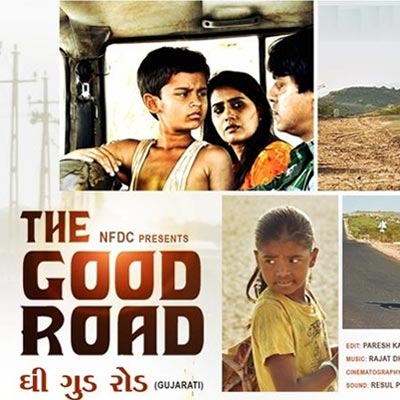
    MUMBAI: Gyan Correa’s much publicised The Good Road is out of the race for the Foreign Language Oscars. Nine features will advance to the next round of voting in the Foreign Language Film category for the 86th Academy Awards. Seventy-six films had originally been considered in the category.


    Even earlier, The Good Road, Correa’s directorial debut that intertwines three stories in the hostile and remote Kutch in Gujarat, had a bumpy ride – when it invited the wrath of The Lunch Box team, which felt that Correa’s work stood little chance at the Oscars.


    The films, listed in alphabetical order by country, are: Belgium, The Broken Circle Breakdown, Felix van Groeningen, director; Bosnia and Herzegovina, An Episode in the Life of an Iron Picker, Danis Tanovic, director; Cambodia, The Missing Picture, Rithy Panh, director; Denmark, The Hunt, Thomas Vinterberg, director; Germany, Two Lives, Georg Maas, director; Hong Kong, The Grandmaster, Wong Kar-wai, director; Hungary, The Notebook, Janos Szasz, director; Italy, The Great Beauty, Paolo Sorrentino, director; Palestine, Omar, Hany Abu-Assad, director.


    Foreign Language Film nominations for 2013 are being determined in two phases. The Phase I committee, consisting of several hundred Los Angeles-based Academy members, screened the original submissions in the category between mid-October and December 16. The group’s top six choices, augmented by three additional selections voted by the Academy’s Foreign Language Film Award Executive Committee, constitute the shortlist. The shortlist will be winnowed down to the five nominees by specially invited committees in New York and Los Angeles.  They will spend 10 January to 12 January viewing three films each day and then casting their ballots.


    The 86th Academy Awards nominations will be announced live on16 January, 2014, Thursday in the Academy’s Samuel Goldwyn Theater.

  • ‘The spring of Hong Kong’s film industry is in Mainland China’ : Wong Kar Wai – Hong Kong film director ( published in ‘Yazhou Zhoukan’ )

    ‘The spring of Hong Kong’s film industry is in Mainland China’ : Wong Kar Wai – Hong Kong film director ( published in ‘Yazhou Zhoukan’ )

    Wong Kar-wai believes that the culture and language of films in Hong Kong and mainland China share much in common. With the opportunities made possible by CEPA, there is plenty of room for the development of Hong Kong films in mainland China. The trick lies in how to capitalise on Hong Kong films’ uniqueness and strengths to plant seeds for their growth in the mainland.

    In Hong Kong, Wong Kar-wai is the film director who has won the most awards in international film festivals, yet he finds that the spring of Hong Kong’s film industry is in mainland China, since “the biggest market for Hong Kong films now is mainland China”. Wong is currently in New York preparing for his new film. He will act as the president of the jury in the Cannes Film Festival in May.

    In an exclusive interview with Yazhou Zhoukan, Wong shared his views on the development of Hong Kong’s film industry.

    Excerpts:

    You have recently become the first Chinese to be the president of the jury in the Cannes Film Festival. You seem to be closely associated with France, and a number of French people said they could easily relate to your films without any cultural barriers. What do you think are the reasons?
    The success of a film depends not only on the film’s quality, but good publicity and good film guides are also crucial. In this regard, my French distributor has been doing a superb job. The popularity of “In the Mood for Love” is mainly due to its relatively simple plot and characters. The film’s story and background as well as the characters’ relationships can be found in almost any city. For this universality, the film has been able to touch audiences in many different regions.

    All your films, from “As Tears Go By” to “Days of Being Wild”, “Happy Together” and “2046”, feature stories happening in Hong Kong, yet they can arouse empathy from audiences in different communities and races. They have an international audience. Can you share with us some tips and insights?
    The stories in my films happen mostly in Hong Kong, as Hong Kong is the place where I grew up. I have strong feelings for this city. Over the years, my creative experiences have been intertwined with happenings in this city. In filming “As Tears Go By” and “Days of Being Wild”, most of the shots were taken on Hong Kong streets. For “Happy Together”, although the film was shot in Argentina, the theme is also about Hong Kong. The city in “2046” is also a simulated Hong Kong created out of my subjective impressions from images taken in Thailand, Shanghai and Macau. Like most modern cities, Hong Kong has its own charm and all the characteristics of a cosmopolitan city. Stories happening here may very well happen in any other city. As I’ve said just now, because of this universality, my films can touch audiences outside of Hong Kong.

    The film industry in Asia including mainland China, Korea and Thailand have enjoyed increased box office sales and won wide acclaim. On the contrary, although Hong Kong films dominated the Chinese film market in the 80s and 90s, the industry’s development has not seen any major breakthroughs in recent years. What do think about the present Hong Kong film industry?
    Hong Kong films are now in a stage of transformation. Looking back, the boom in Hong Kong’s film industry had its historical reasons. Hong Kong’s film industry began to develop rapidly in the 40s in the last century. It catered not only to the local market then, but also met the needs of the numerous Chinese residing overseas. By the 70s, 80s and 90s, Hong Kong films basically dominated the Asian market. Backed by such a vast market, the Hong Kong film industry had grown to be so prosperous that not only did mainstream action films and comedies have a market, but other film genres could also exist.

    Take myself as an example, when I first joined the film industry, opportunities abounded for newcomers. But in the past several years, strong competitors have surfaced and eroded Hong Kong’s share in the film markets. Today, the future for Hong Kong’s film industry lies very much in mainland China where there is a population of 1.3 billion who speak Putonghua or Mandarin. Following the opening up of mainland China’s film industry to Hong Kong under CEPA (Mainland and Hong Kong Closer Economic Partnership Arrangement), coupled with the gradual easing of restrictions in the market, the mainland China is a good way out for Hong Kong’s film industry. We definitely have competitive advantages over Thai and Korean films, but have to think hard to identify our niche and strengths in the mainland market. We should revitalise the Hong Kong film industry with the backing of the mainland market on the one hand and have our eyes set on the world market on the other.

    So how do you think Hong Kong films should be positioned in the mainland China market?
    In the past two decades, Hong Kong has made significant contributions towards the development of mainland China’s film industry. Apart from investment in capital, Hong Kong film workers have also influenced their mainland counterparts in areas such as film techniques, creative thinking and marketing concepts. We should seize the opportunities made available by the current expansion of the China film market. Our greatest difficulty now is how to modify our films to meet with the needs of this enormous market, as moviegoers’ tastes in Hong Kong and the mainland differ a lot. We may easily find ourselves ending up in a situation where we pay too much attention to one and lose sight of the other. If we cater only to the needs of the mainland Chinese audience, we may lose our Hong Kong audience and perhaps also the essence of Hong Kong films.

    To address this “indigestion” problem, we have to be familiar with our own strengths and maximise our creative freedom to produce more film genres so that we can tap into more markets.

    What are Hong Kong’s competitive advantages in the mainland China market?
    In the mainland China market, Hong Kong has at least three competitive advantages. Firstly, in terms of culture, for historical reasons, Hong Kong is the point where east meets the west. In dealing with cross-culture themes in films or in partnering with western filmmakers, we definitely have a competitive edge. Secondly, in terms of themes, we have more freedom to create. All along, we have had a rather lenient censorship regime, giving us great flexibility in the choice of themes. Thirdly, in terms of financing, Hong Kong has a healthy and stable economic and finance systems, providing a favourable environment for film financing. This is also one of the strengths of our film industry.

    ‘Restrictions on films gradually easing in the Mainland China market

    The Korean film industry has been flourishing in recent years. What are its lessons for Hong Kong?
    Some people think that the boom in the Korean film industry in recent years is related to the Korean government’s protectionist measures, whereas in fact such measures have been in place for a long time. The prime reason for the boom in Korean films is that the Korean government has lifted restrictions on themes allowed in films in response to the major changes taking place in Korean society. As a result, themes banned in the past are now all of a sudden put on cinema screens. These films have made people sit up and attracted more moviegoers. The success of Korean films therefore lies in filmmakers’ ability to grasp the changes in Korean society and launch a facelift for their films.

    On the other hand, the Hong Kong film industry is very conservative. Perhaps because of the shrinking market, filmmakers are unwilling to take risks and tend to stick to old thinking and work patterns. Hong Kong film workers should widen their horizons and keep a close watch on our fast-changing world. They should not just reminisce on the glory of the past.

    For instance, when Hong Kong film workers complain about the lack of talents, have they ever considered where our talents have gone? If we can export our first-rate action choreographers to other countries, why can’t we borrow talents from other places? I believe that with the solid foundation of Hong Kong films and an open attitude, the prospects of Hong Kong’s film industry are still very promising.

    What are the areas for improvement in Hong Kong’s film industry?
    There are at least three areas where improvements can be made. Firstly, we need to strengthen our communication with banks. Although Hong Kong has a relatively stable finance system, banks are rather passive when it comes to talking about film financing. Secondly, the Hong Kong film industry lacks new blood. Although the government and community bodies have been organising filmmaking training programmes, the problem is that trainees do not have many career prospects when they have completed the training. This has put people off.

    Let’s take a look at the Directors Guild of America. They also organise training programmes in which trainees are put on every process in film production so that they can try out what they have learned. Hong Kong’s operating conditions are less favourable, and we do not have in place a mechanism to find jobs for trainees before the programmes are organised. This is a predicament of Hong Kong’s film industry. Thirdly, Hong Kong lacks professional film producers.

    The creative head and the producer are often the same person. Therefore, it may be difficult for them take a more macro perspective on the mainland China market or the international market.

    What do you think should be the division of work between a film’s creative head and its producer?
    A good analogy will be to liken the creative head to a seed and the producer to a gardener. A good seed needs the gardener to put it in good soil and water it. A good gardener with good soil but without a good seed cannot do much. Hence, the two should complement each other in their roles. For example, the theme of Ang Lee’s Brokeback Mountain was originally catered for a small audience. The director’s role is to film it to the best of his ability, while the producer should provide an environment, under limited costs, where the director can deliver his best, and bring the film to the right market. When a film has the ability to touch people, it can produce a good harvest given the right soil. If we say that a director is the soul in the creative process, the producer is then the guide of the film.

    Being part of the Hong Kong film industry, how do you wish the government can help and support the industry?
    The more urgent and short-term assistance needed is to clamp down on the piracy of films and BT, and the government is working hard on it now. In the long term, the film industry should sit together and discuss the issues that should be brought to the government’s attention. In fact, officials in the related government departments do not come from the film industry and will have difficulty in understanding our needs. It is best that we think about and express our needs to them.