Tag: Women

  • India braces for a grey wave as elderly numbers set to hit 230m by 2036

    India braces for a grey wave as elderly numbers set to hit 230m by 2036

    MUMBAI India’s population is ageing fast. By 2036, roughly 230 million Indians—one in seven—will be 60 or older, more than double the 100 million recorded in 2011. It’s a demographic earthquake that will reshape everything from healthcare to housing, pensions to public transport.

    The south is greying fastest. Kerala, already home to 13 per cent elderly in 2011, will see that figure leap to 23 per cent by 2036, matching developed nations. Tamil Nadu and Himachal Pradesh aren’t far behind. 

    Meanwhile, northern states like Uttar Pradesh, though younger now, are catching up quickly—elderly numbers there will nearly double from 7 per cent to 12 per cent.

    Women dominate the demographic. They make up 58 per cent of India’s elderly, with a sex ratio of 1,065 females per 1,000 males. More than half are widows. The overall dependency ratio—62 dependents per 100 working-age people—signals mounting pressure on families and the state.

    The challenges are stacked high. Mental health stigma around dementia and Alzheimer’s persists. Geriatric infrastructure is patchy, especially in rural areas. Social security remains inadequate even as living costs climb. Traditional family support systems are fraying under the weight of urbanisation and nuclear households. And India’s infrastructure—from public transport to pavements—remains stubbornly unfriendly to the elderly.

    New Delhi is scrambling to respond. The ministry of social justice and empowerment has rolled out a raft of schemes. The Atal Pension Yojana, launched in 2015, has swelled from 15.4 million subscribers in 2019 to 82.7 million by October 2025, managing assets worth over Rs 49,000 crore. It promises monthly pensions of Rs 1,000 to Rs 5,000 after subscribers turn 60.

    The Integrated Programme for Senior Citizens runs 696 old-age homes across 29 states and union territories, with 84 more approved this year. The Rashtriya Vayoshri Yojana distributes walking sticks, hearing aids, wheelchairs and dentures to low-income seniors. A toll-free helpline—14567—offers support. The Sacred portal helps those over 60 find jobs. The SAGE portal encourages start-ups to develop elderly care solutions, offering equity support of up to Rs 1 crore per project.

    Legal muscle backs the effort. The Maintenance and Welfare of Parents and Senior Citizens Act, amended in 2019, compels children—including step-children and in-laws—to provide for parents. It scrapped the Rs 10,000 monthly maintenance cap and mandated special police units for seniors in every district. All hospitals, private included, must now provide dedicated queues, beds and geriatric care.

    Technology is pitching in too. Telemedicine platforms like e-Sanjeevani offer free home consultations. Wearable devices track vital signs. Online pharmacies deliver medicines to doorsteps. Smart home sensors let families monitor elderly relatives remotely.

    The silver economy—goods and services for those over 50—is booming. Valued at Rs 73,000 crore in 2024, it’s set for multi-fold growth. Globally, senior citizens and professionals aged 45 to 64 are the wealthiest cohort. India’s senior care market presents vast opportunities for health and wellness firms, both at home and abroad.
    Yet success hinges on more than schemes and start-ups. India needs specialised regulations for senior care, policy reforms anchored in evaluation frameworks, and better coordination across ministries. Panchayati raj institutions, urban local bodies, NGOs and private providers must work in concert. Public-private collaboration across healthcare is essential.

    The clock is ticking. By 2050, India’s elderly population will swell to 319 million, growing at three per cent annually. The country that once prided itself on youthful demographics now faces a greying future. Whether it becomes a burden or a boon depends on how swiftly India adapts. The grey wave is coming. Ready or not.

  • Niine pushes the envelope on sanitary pads, menstrual hygiene in Maha Kumbh Mela

    Niine pushes the envelope on sanitary pads, menstrual hygiene in Maha Kumbh Mela

    MUMBAI: There was a time when menstruation and religious ceremonies did not go together. When if a woman was having her periods she could not enter a temple. As she was “unclean.” No more. With the  wider availability of absorbent napkins and tampons, women need not be consider themselves unclean and could visit the temple even when they are menstruating.  

    Many contemporary Hindus argue that menstruation is a natural biological process and should not bar women from worship. Some temples, including progressive shrines, have openly welcomed menstruating women to challenge the stigma. This practice, though still followed in many places, is increasingly being questioned as education and awareness about menstrual health grow.

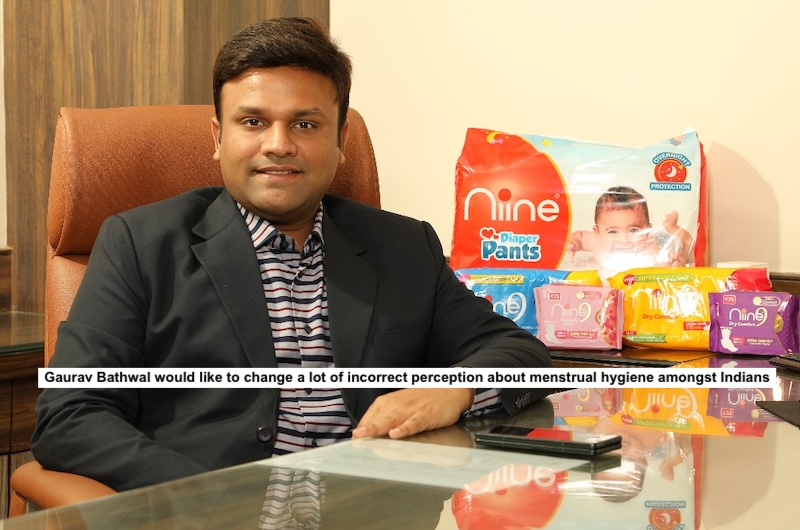
    Taking a step further in this direction,  Niine Sanitary Pads which has brought menstrual hygiene to the forefront at India’s largest religious gathering, the Maha Kumbh Mela in Prayagraj.

    Collaborating with Vatsalya Seva Samiti and local authorities, the brand has distributed thousands of sanitary pads to women attendees, with numbers expected to rise by the event’s conclusion.

    This initiative aims to ensure menstruation is not a barrier to participation in the spiritual event. Niine, known for driving conversations on menstrual health through campaigns like ‘Let’s Talk Period,’ has been widely praised for its effort. Videos of volunteers distributing sanitary pads have gone viral on social media, sparking conversations about menstrual awareness and accessibility.

    “We believe menstrual hygiene is essential to women’s health and dignity,” said Niine co-founder Gaurav Bathwal. “By being present at the Maha Kumbh Mela, we aim to foster an environment where women feel empowered and supported.”

    Niine CEO Ameya Dangi  added: “Access to sanitary pads is crucial, especially at large public gatherings. We have always believed in using such platforms to raise awareness about menstrual hygiene.”

    The initiative has received overwhelming appreciation from women attendees, many expressing gratitude for the essential support. It is particularly significant for rural and semi-urban communities, where access to sanitary products remains limited.

    Far from a simple CSR activity, Niine’s efforts at the Kumbh are being hailed as a movement to normalise menstruation and promote menstrual hygiene. By taking this bold step, the brand continues to demonstrate its commitment to fostering social change and empowering women.

  • Cactus celebrates the forgotten women in the field of science and technology

    Cactus celebrates the forgotten women in the field of science and technology

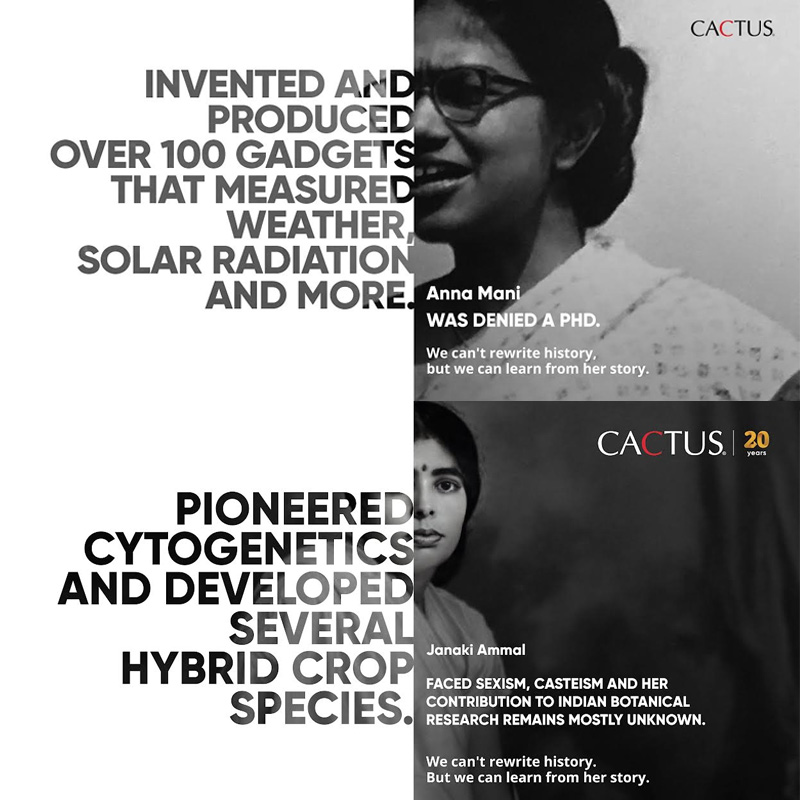
    Mumbai: A science communications and technology company, Cactus Communications, launched a new campaign, “#WomenWhoChangedTheWorld,” to celebrate and bring back the forgotten tales of women in science, technology, engineering, and mathematics (STEM) back into the spotlight.

    This year-long campaign started on 8 March 2022, featuring 52 inspiring women across the globe, with one story being highlighted every week of the year through Cactus social media handles.

    The campaign features inspirational Anna Mani (the weather woman of India), Alice Ball (an African American chemist who developed the “Ball Method”), Katherine Johnson (one of the first black American mathematicians to ever work at NASA), Rosalind Franklin (a British chemist and x-ray crystallographer), and many others, and celebrates their contributions and the life-changing scientific discoveries made by them.

    Through this campaign, the company has quietly unveiled a hard-hitting reality that highlights the under-representation and disparity in STEM caused by deep-rooted social norms, stigma, discrimination, and biases against women. Cactus is determined, as the voice of science and technology, to amplify the stories of these under-represented heroes who made an unforgettable contribution to the science and technology space, leaving a legacy for many to follow but not receiving their due credit.

    Cactus CEO and co-founder Abhishek Goel said, “Women have always played a key role in where we see science and technology today. However, very few can name these trailblazers, which is tragic. We at CACTUS, feel responsible for bringing the stories of these women to spotlight through our #WomenWhoChangedTheWorld campaign.”

    A key creator for the campaign, Cactus creative director Saurabh Doke said, “Women have historically played a key role in the advancement of science and technology that has been long overlooked. This campaign is a tribute to all the unsung heroes who have not only contributed to but also defined the world we live in today. This heartwarming and thought-provoking campaign recognises the significant role women have played and advocates that we celebrate them throughout the year and not just on one day. Cactus aims to spread the much-needed awareness of women’s contributions to the world of science and technology and relay valuable information about them through this campaign.”

  • coto unveils ‘app tiles’ ahead of its launch – reflects values of inclusivity and community building

    coto unveils ‘app tiles’ ahead of its launch – reflects values of inclusivity and community building

    Mumbai: The web3-based social communication platform, coto, has unveiled its ‘app tiles’ as a precursor to the launch. The women featured in the ‘app tiles’ exude a fervent enthusiasm for doing what they love and being who they are in a safe space with no judgements. coto wanted women with different personalities and across cultures to come together, all in one place, just like the vibe on the platform.

    The design process for the ‘app tiles’ involves portraying carefree women who enjoy building their own communities with those who share the same vision. The use of pastel shades conveys the feeling of being supportive and nurturing. With this imagery and complementing colour themes, they reflect the coto ethos.

    These app tiles showcase how like-minded women from across cities, irrespective of their caste, creed, colour, etc., come together to connect and share their experiences. It showcases the sense of freedom that these women enjoy while engaging in meaningful dialogues and conversations. The app tiles give a glimpse of all the emotions that these women experience when in a group as one unit. Most importantly, they are seen enjoying themselves without worrying about the outer world and toxicity.

    Speaking of the app tiles, coto co-founder Rajneel Kumar said, “Every aspect of coto is designed to foster a sense of togetherness and belonging amongst all the members of the community. We chose our ‘app tiles’ to be an ever-evolving representation of women across geographies and ethnicities. This is another way for us to stay true to our core brand values of inclusivity and create a safe space for women.”

    Adding to it, photographer Tanya Agarwal shared, “The thought behind the ‘app tiles’ was clear—to portray a safe space for like-minded women around the world to come together and express themselves freely. Through the visual representation, we wanted to bring alive coto’s philosophy of creating an engaging, dynamic space shaped by women, for women, where you can just be. The emotions, colours, body language, and interactions between them evoke a sense of enthusiasm, which best represents the coto tribe.”

  • upGrad’s latest digital-first campaign focuses on upskilling

    upGrad’s latest digital-first campaign focuses on upskilling

    Mumbai: Edtech firm, upGrad’s latest campaign focuses on the importance of upskilling across tech domains for working professionals. It is a digital-first, gender-specific micro-targeted campaign.

    The campaign aims to encourage more women professionals to upskill and scale up their tech careers, across the industry. upGrad’s tech offerings like blockchain, full stack development (FSD), big data, devOps, cybersecurity and cloud computing are areas that learners are showing interest.

    Aligning with the viewer’s needs, the campaign targets professionals using gender-specific ads and creatives, based on their area of interest.  

    With close to 10 different versions, the campaign aims to micro-target users who are seeking to upskill themselves, by showcasing creatives and ads that align with their gender and subject interest across technology programs.  

    The digital film for the campaign, which is conceptualised by The Womb, showcases the mayhem that ensues when there is a fire in the office, and who the team rescues. The campaign has been directed by Roopali Singhal of Chrome Pictures and is live on digital.

    /

    Moreover, given the increased interest by women professionals in coding and software programs, upGrad’s campaign is reinforcing the importance of women coders by representing female protagonists in the ad films. The film showcases women learners upskilling with upGrad’s tech courses to become ‘very very important’ team members who drive organisational growth and success at their jobs, upon course completion.

    Commenting on the tech campaign, upGrad head of marketing Ankit Khirwal said, “we can no longer pretend that skilling is not important, especially in the field of technology, where human-machine interactions, Web 3.0, brand building in Metaverse are happening as we speak. Following this trend, we have witnessed an increase in interest from women coders for our tech offerings across blockchain, fsd, devops, cybersecurity, and more.”

    “Therefore, to encourage them further to upskill and fast forward their careers, our digital campaign will undertake a micro-targeting approach, to showcase the right offering to the right viewer based on their interest and profile, to help them navigate their upskilling solutions,” he added.

    Till date, upGrad learners have received an average career hike of 51 percent while getting placed with top companies like Uber, Flipkart, Meesho and Razorpay, after completing tech courses with the edtech major.

     “When there’s fire in the office, who will you save? Yourself, your boss or the most important employee in the office? That’s the premise Gunjan cracked when thinking of this campaign. The chaos added to the drama, the twist added to the fun and thus, we found a creative way of highlighting the importance of tech courses in today’s world,” added the Womb creative head Suyash Khabya.

  • Vega comforts young girls with #FlauntYourBefikar campaign

    Vega comforts young girls with #FlauntYourBefikar campaign

    Mumbai: Grooming accessories and beauty brand Vega has come up with a #FlauntyourBefire campaign featuring Bollywood actor Ananya Pandey. The brand campaign was launched on the occasion of International Women’s Day.

    Ananya’s zesty campaign reel spells out her #Befikar mantra reflecting a free-spirited and happy-go-lucky vibe centred on embracing one’s true self.

    The brand tells young girls to be comfortable in their skin. “The campaign is all about owning one’s day and attitude by not getting swayed by perspectives catapulted at the speed of light. Rather it’s about celebrating the individual for who she is and what she stands for,” said Vega in a statement.


    A post shared by VEGA (@vegabeauty)

    “The campaign strives to reinvigorate the equilibrium between the multiple roles played by women in their lives and living their true self,” commented Vega CMO Eiti Singhal. “It emphasises how women can be #Befikar version of themselves and define their ideal of beauty and be comfortable with it.”

    “In a world that’s getting increasingly shadowed by opinions and outlook, it’s time to look within. What you have to prove to you, yourself. With #FlauntYourBefikar, we wanted to shift the needle to be confident and comfortable in your skin,” stated Liqvd Asia’s NCD Sunil Gangras. “We wanted to tell women to squash all expectations and live up to their own, in a unique, #Befikar way.”

  • Tarun Katial announces his venture- ‘Eve World’

    Tarun Katial announces his venture- ‘Eve World’

    Mumbai: Tarun Katial, a senior media-tech professional has unveiled details of the soon-to-be-launched platform under his new venture Eve World platform.

    ‘Eve’ is a women-only platform that proffers expression, creation, and community enablement said Katial. The platform seeks to build a positive and valuable digital experience for women worldwide. Resting on the pillars of empowerment and building sisterhood, young girls and women of all ages can create and consume content, share opinions and thoughts, engage and build connections in a responsible virtual environment.

    The company has raised initial investment from Singapore-based Jungle Ventures.

    Eve World CEO and founder Tarun Katial said, “The world around us has been traditionally built keeping in mind men as average users. My co-founders shared this vision and purpose for a while and we decided to come together – to innovate keeping women at the center of our universe. Eve World will enable, and empower women to achieve what they want in an environment that furthers their aspirations. We want to become a platform that gives women true freedom online, for them to create and consume content, have meaningful conversations, share opinions, thoughts, and build social connections that will help them grow and develop.”

    Aparna Acharekar has joined the platform as co-founder and will be responsible for building the content and community verticals. Rajneel Kumar, who has successfully built large gaming, streaming, and consumer-tech platforms in the past, will soon join as a co-founder to lead the product, technology, and growth verticals.

  • Cadbury’s iconic cricket ad gets a contemporary twist

    Cadbury’s iconic cricket ad gets a contemporary twist

    MUMBAI: Confectionary giant Cadbury surprised its consumers on Friday, as it released its iconic 90’s ad – ‘Asli swaad zindagi ka’, albeit with a contemporary twist.

    Decades later, the heartfelt ad remains true to its original idea almost frame-to-frame. There is a nail-biting cricket match in progress, the scoreboard reads ’99 not out’, and the batter is gearing up to face another ball. A young spectator sitting among the crowd of well-dressed audience watches anxiously while biting into a Cadbury’s Dairy milk chocolate bar, muttering a silent prayer as the player goes for a big hit.

    The stadium erupts in joy. Only this time, the cricketer batting at the crease is a woman. The ad released on Friday, showed a young woman cricketer scoring the winning run as her male friend makes a dash towards the field, dodging the security guard. He dances with the unabashed glee reminiscent of the original film, celebrating his friend’s smashing performance, as she watches him in delight and the crowd cheers on.

    The refreshed version of the brand’s iconic campaign, conceptualised by Ogilvy India wishes good luck to the Indian women’s cricket team, with a rousing message of #GoodLuckGirls.

    “It needed a brave client back in 1993 to go ahead with the original Cadbury Cricket film that became so popular. It needed an even braver client to attempt something with an iconic film and make magic out of it. I am delighted that the team at Mondelez and at Ogilvy has made this magic, made it relevant, exciting and so did Cadbury, in its bold and front foot fashion,” said Ogilvy, chairman global creative & executive chairman India, Piyush Pandey.

    The 1994-released Cadbury Dairy Milk campaign directed by Mahesh Mathai, featuring model Shimona Rashi with the memorable jingle ‘Asli Swad Zindagi ka’ is fondly remembered till date. It not only changed the perception that chocolates were only for children but it also broke away from the stereotypical ‘prim and proper’ image towards adulting- appealing to the child in all of us, giving way to an unbridled expression of pure joy. The brand once again succeeds in breaking notions- this time associated with the game once referred to as a ‘gentleman’s game’- while bringing back nostalgia, with a present-day take.

    “The excitement and the stress in our heads were competing with each other. To recreate such a big hit is like setting yourself up for a million opinions. The only reason we went ahead was it felt right and it felt awesome. We loved the idea from our gut. Luckily, so did the client. Hats off to the all-girls team who thought of it and hats off to Bob from Good Morning Films for making it so well,” said Ogilvy India chief creative officers Sukesh, Harshad, and Kainaz, while talking about the latest campaign.

    The film couldn’t have come at a better time with the ‘girls in blue’ all set to compete with the Aussies in the upcoming series against Australia, Down under. Indian women’s cricket is growing in popularity and attracting great interest from viewers and advertisers alike.

    “From acing in the corporate world to winning Olympic medals, women are at the forefront of creating new milestones, every single day, and our film is an ode to each one of them. As a brand that has always promoted gender inclusivity, contemporising an iconic campaign is our way of recognising the changing times and extending support to all the women trailblazers,” said Mondelez India senior director – marketing, Anil Viswanathan. “We hope this film brings back a gush of nostalgia and are confident that this refreshed version will find as much love as the original one.”

    Well-played Cadburys and Ogilvy!

  • Meesho reaches out to small town consumers in new ad

    Meesho reaches out to small town consumers in new ad

    Mumbai: Homegrown social commerce platform Meesho has launched a new TVC that promises ‘lowest prices, great quality products’ to its consumers.

    This new TVC targets consumers from small towns and cities who are getting on board with online shopping for quality products at affordable price points, the platform said.

    Conceptualised by DDB Mudra Group, the ad showcases that women are smart spenders and have unique ways of saving money. They manage their monthly expenses by better planning and create a pool of small savings from their monthly budget, safely tucked away in unexpected places of their home.

    Meesho founder and chief executive officer Vidit Aatrey said, “As we enter a new phase in Meesho’s growth, one of our priorities has been to serve more people than we have ever before, especially those living in tier-2, tier-3 cities, who have the least spending power as compared to the rest of our customer base.”

    DDB Mudra Group’s chief creative officer Rahul Mathew said, “Meesho brings you fashion at such affordable prices that it fits effortlessly into those little savings in your life. It’s this simple thought that we’ve brought to life through an execution that’s just as simple yet delightful.”

  • NYUMI launches five new products for urban Indian women

    New Delhi: Direct to consumer start-up, Nyumi has entered the fast-growing nutraceutical space with the launch of five critical products specifically formulated for the urban Indian women.

    The company addresses the specific issues of nutrient deficiencies in Indian women through products that blend Indian herbs and Western ingredients in the form of vegan, gluten and allergen-free gummy. The initial product portfolio targets the most prevalent women centric issues: immunity, hair, skin, sleep and urinary tract wellness.

    With the second wave of the COVID-19 pandemic, issues of everyday immunity, wellness and nutrition have become major concerns, driving explosive growth for the nutraceuticals industry, further aided by the boom in e-commerce with wellness being one of the largest and fastest growing categories.

    Nyumi founder and CEO Ananya Kejriwal Agarwal said, “We have invested heavily in R&D for all of our products to ensure maximum efficacy and bio-availability while making delicious flavours. All of our ingredients have been tested not just for their nutritional benefits but also for the quality of their source, clinical reports and compatibility with other ingredients. Our gummies blend time-tested Indian herbs such as Amla, Haldi and Tulsi with Western nutrients like biotin and hyaluronic acid.”

    According to the company, all ingredients are clinically researched, and multiple ingredients are even patented extracts. “The new products are just the beginning of the overarching mission of the company to address some of the significant health issues affecting women, more so in the post-Covid-19 world,” it said. The products are available through Nyumi.com, Amazon, and Nykaa.

    As per International Trade Administration, the nutraceuticals market is expected to grow from $ four billion (in 2017) to $18 billion by 2025. This growth is expected to be even more after the attention that the issues of immunity & overall wellness have got post the pandemic.