Tag: Wolff Olins

  • Type Directors Club opens call for entries for global TDC70 Competition

    Type Directors Club opens call for entries for global TDC70 Competition

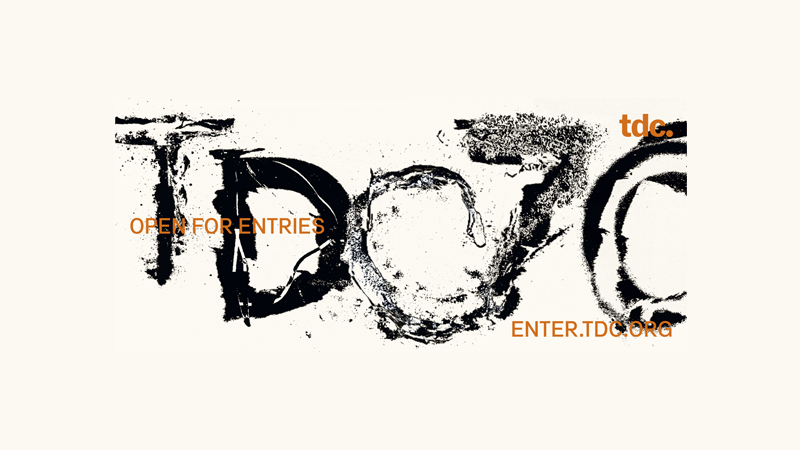
    Mumbai: The Type Directors Club, the world’s leading typography organization, has opened the call for entries for its prestigious TDC70 competition.

    As changed last year, the program is a single competition under the TDC70 umbrella consisting of three disciplines: Communication Design, Lettering, and Type Design.

    The Communication Design discipline encompasses any design or creation that uses type, lettering, or written language as a significant element, and is an expansion of what was previously the TDC Communications Design discipline. Typography includes graphic design, UI/UX, environmental design or architecture with typographic elements, film, animation and motion design, social media campaigns, new media, and anything else where typography is used.

    The dedicated discipline for Lettering is for work where the letters were created or modified.  This includes contemporary lettering, traditional calligraphy, sign painting, wordmarks and custom logos, digital or analogue distortions, eccentric display typefaces, and more.  This new discipline, now in its second year, has its own dedicated jury, made up of some of the world’s leading lettering practitioners and experts.

    Type Design is for entries showcasing the design of typefaces.  It also allows for entries of any thematically applicable code or software, such as software for creating or generating type.

    To be eligible, work must have been produced or published in the 2023 calendar year.  Early bird deadline for entry is 27 October, with entry fees increasing for the regular deadline of 8 December, and final deadline on 26 January 2024.

    Juries will be announced shortly.  Across the three juries, TDC70 will have native experts for writing systems spanning Arabic, Cyrillic, Indic, CJK, Thai, and select African scripts. While the competition always accepted international and multilingual entries, the addition of more judges in recent years was a reflection of TDC’s commitment to have a greater number of the most appropriate experts judging designs for which they have a deep knowledge.

    The TDC competition regularly receives entries from more than 60 countries.  To make TDC70 as accessible as possible on a global level, the organization is offering significant regional discounts on entry fees.

    Approximately half of the world’s countries qualify for a 60 percent discount, and another quarter of them receive a 20 per cent discount, with only the most economically prosperous countries and regions paying the full entry fee.  Additional discounts are also available to TDC members and students.

    Winners of TDC70 receive a Certificate of Typographic Excellence and digital seal certifying their work is among the world’s best of the year.  Winning work will also be featured in the highly respected TDC Annual, The World’s Best Typography, and showcased in eight exhibitions that travel to museums, schools and design organizations around the world.

    TDC70 winners are also part of The One Club’s prestigious Global Creative Rankings, earning points alongside winners in The One Show and ADC Annual Awards to chart the world’s leading independent creatives, ad agencies, production companies, and brands.

    This year’s TDC70 competition committee is chaired by Eric Q. Liu, typographer, editor, podcaster and writer with The Type in Tokyo, with support from TDC Advisory Board members John Kudos, managing partner, KUDOS Design Collaboratory and KASA Collective, New York, and Trisha Tan, design director, Brooklyn, NY.

    Branding for this year’s competition was created by Wolff Olins, with fonts generously donated by Neubau, based in Berlin.

    “Each year, the TDC has epitomized the essence of the current era,” said Wolff Olins global principal Thomas Wilder.  “This year, we wanted to challenge the all-too-common approach of looking to the future or to the past, and instead bring urgency and importance to the present moment.  We set out with the idea ‘Made For Now’ to design with the power of ephemerality in an ever-changing world.”

    “TDC’s annual competition strives to always remain relevant to the greater typographic community in all regions and cultures, and we’re excited to accept and celebrate entries in more disciplines and styles than ever before,” said Type Directors Club executive director Carol Wahler.  

  • First IAA Knowledge Seminar on an industry specific subject on 2nd August, 2013 in Mumbai

    First IAA Knowledge Seminar on an industry specific subject on 2nd August, 2013 in Mumbai

    Mumbai: Chapter of International Advertising Association (IAA) has organized an industry specific Knowledge Seminar for the realty sector on digital media. Digital has emerged as India’s 3rd largest medium and very few real estate developers have exploited its full potential. This seminar will enable an understanding and appreciation of this important medium which real estate developers can apply, and thereby benefit from, in this fast-changing communication era.

    In the words of Srinivasan Swamy, President IAA India Chapter & Vice President, Development Asia/Pacific, “through this Knowledge Seminar, the Indian Real Estate industry gets a new perspective on digital as a medium, grasp global trends, and hopefully apply these for better marketing solutions. When the economy is difficult and many real estate projects are not finding ready buyers, a cost effective medium like digital can help the realty sector. I hope many will participate and benefit from it”.

    Titled ‘Real Estate in a Digitized World’, this internationally aligned Seminar to be held on 2nd August, 2013 at The Trident, BKC, (Agenda Attached) will have prominent Speakers representing leading international Companies in Digital and Social Media including Group M, Google, Addikt, Wolff Olins and Panel speakers from Microsoft, Madhouse, Netcore & Magicbricks. The Guests of Honour will be Niranjan Hiranandani, Managing Director, Hiranandani Constructions & Steve Waugh, the legendary Australian cricketer.

    Across the world, digital and social media have become the platform to create, impact, and foster brand experiences. The Seminar will address how marketing strategies of the real estate industry will be enhanced by this technology revolution. It will work as a practical guide to learn and apply the new world medium.

  • Changing the branding game

    MUMBAI: Britain based brand consultancy Wolff Olins has released a report titled ‘Game Changers’ that talks about the five behaviours that are changing the future of the business.

    Conducted across 500 people and 14 countries, the study examines today’s high-growth businesses and tries to understand what sets them apart. It also explores how some companies like Tata, Unilever, Hero, Adani, Ashok Leyland, Google, Skype, General Electronics, Microsoft and Tata Docomo are changing the way the game is played and thereby shaping the future of business.

    The Game Changers report talk about how five laws of branding have been morphed to cater to the contemporary paradigm based on five new realities based on the consumer-brand relationship.

    While according to the old methods of branding ‘the mission of branding is to defend a positioning’, the new law states that a brand needs to ‘define its purpose beyond profit.’ This new definition is based on the reality that there is a shift in attidues from businesses being ‘corporate citadels’ to becoming ‘corporate citizens’. The Edelman Good Purpose study conducted in 2010 also revealed that 86 per cent global citizens gave equal importance to the business interests of a company and it contribution to the society.

    Similarly, the role of branding in persuasion is also changing. While earlier branding was meant to persuade people to buy the product/service, the present day TG has transformed into a creator from his role as a consumer. According to the Game Changers study, 25 per cent of leaders believe that the the company’s usefulness is more important than the growth factor while 40 per cent believe in offering consumers flexibility and personalization options in order to be more useful to them.

    In other words, the thrust has shifted from making people want things to making things people want. Thus, from a persuasion tool, the focus is now on making the brand a useful platform where people can come and do things and interact.

    The third guideline of branding that is now seen as obsolete is ‘the essence of branding Is consistency.’ The new reality is that brands are now changing from steady state to constant revolution. The study also states that the developing markets are more adventurous when it comes to experimentation. Thirty four per cent Asian market leaders are confident that experimenting with the brand will result in growth.

    Take for example Google. The search engine’s homepage is in a state of flux as the ‘Google doodle’ changes from time to time to commemorate events, remember people and celebrate occasions. A similar thing is observed in case of retail as a tweak in the store design or the brand communication is sure to grab eyeballs and initiate conversations about the brand. The new law, thus, states, ‘use your brand to constantly innovate.’

    The fourth postulate of branding that has evolved through time deals with ownership. The old concept of ownership of brand stated that branding is about asserting ownership. The new age branding mantra, however, reads, ‘share your brand and be boundayless.’

    This shift can be attributed to the fact that brands are increasingly adopting the constellation model of organization from the corporate model. Be it Amazon or the Android technology, these companies are made of clusters of small to medium sized entrepreneurs who are also users and the combined efforts of these entities make the brand strong. The survey states that highly networked enterprises have 50 per cent more chances of gaining market share as opposed to their less networked competitors and also report higher profit margins.

    Lastly, the idea of controlling the brand is becoming disregarded with speed. The evolved notion with regards to control of the brand is that creativity is more important than strategy. Fifty four per cent of CEOs said that creating new business models is a priority in their company’s innovation portfolios. This model is already followed by the likes of microblogging site Twitter and Lego. In case of the former, many features on the site have been developed by users. Hence, the new law with regards to controlling the brand is to use it to inspire new ways to be value creative.

    In summary, the old concept of using a brand for positioning, persuasion, consistency, ownership and control is now being replaced by making it purposeful, useful, experimental, boundaryless and value-creative. In other words, many terms related to branding will see a sea change. For example has been has become could be, differentiation is being replaced by relevance, positioning has taken a back seat and the role a brand plays in the society has take center stage and cost is secondary and value is important.

  • ‘India is one of the few markets where making positive impact is possible’ : Wolff Olins MD Charles Wright

    ‘India is one of the few markets where making positive impact is possible’ : Wolff Olins MD Charles Wright


    Q. Why has Wolff Olins not set up shop in the rapidly growing market of India when it has caught the attention of every big global agency?
    We have no such plans to enter India soon as Mumbai is a very expensive real estate city. We do work for a lot of clients in India. But we have created Dubai as a hub from where we serve a much wider region. We service India from Dubai as a base.


    Q. So how do you get a feel of the local needs of the Indian clients?
    In our Dubai office, we have Westerners, Indians and Arabs working together. The mix is very important. If we only have an American or European team, there would have been huge cultural misunderstandings. So what we are offering clients is the best of both worlds. The benefit from this is that clients can be assured that while we are adding an international flavour, we are also taking into account the local needs.

    Q. Isn’t India a difficult market from a brand perspective as it is very price sensitive?
    I think we have now figured out a model for working in India. You have to, if you are to do business here. Everyone here likes to negotiate. People will bargain even if they don’t need to. I have seen people haggle when you think “why are you even bothering?” But I guess it’s a cultural thing.

    Q. So how do you deal with this?
    Initially, it was irritating but now I enjoy it. That is, perhaps, because Indian businesses do not have the luxury of money. The idea of everything being done frugally is something I have learnt from here. If you were working for a big corporation in America, you would be accustomed to spending large amounts of money. So you could do all sorts of things which here would be considered to be frivolous. It’s something like an athelete that has trained hard and we have now become fitter at running the race the Indian way.

    ‘We have no such plans to enter India soon as Mumbai is a very expensive real estate city. We have created Dubai as a hub from where we serve a much wider region‘

    Q. What other lessons have you learnt from here?
    Having Indians on the team have helped because people are direct even with me and say, “Don’t do that!” What I have learnt working here is that while in Europe modesty is a virtue, here modesty is a weakness. We have to be more forceful. As a foreigner, one might mistake forcefulness for rudeness, but it’s not so! It’s being just honest. I am still learning to be much more direct. There is a big positivity that comes from working in India.

    Q. What about growth?
    There are a number of clients that are super ambitious. Here more than most of the countries I have worked in, making positive impact is possible. It’s not easy, but it’s possible.

    Q. Do Indians value brands as much as the matured consumer markets?
    The word brand identity has been devalued today to mean logo – not just in India but everywhere. Having said that, I find there is a lot of interest in branding in India. You have special supplements and shows about advertising and branding. In the US, which is the most developed market, there are no TV shows on this topic. There are columns in the newspapers and trade magazines like Advertising Age, etc. Perhaps the reason behind this is that the stuff is fairly new here following liberalisation. More people can afford more things, so there is that interest in the topic. There is a curiosity about lots of things. India is like a sponge soaking up stuff not just about branding but a lot of things.

    Q. Isn’t that good news for a branding company?
    Being a branding company, we create or refresh brands. What makes us special is that first of all we try to work for companies that are ambitious and want to do something important. From our point of view, we also want that the work has a big impact. Our internal line is that we are optimistic and ambitious for our clients. So we are looking for clients that are looking at doing good for the world rather than just making money.

    Q. Are Indian brands receptive to this? 
    Hero is a company we have worked with and if you see the ads, they all tell a story or sing a song about how each of us is a hero. I think where we got to our work is that the motor bike isn’t the point. The point is what the two-wheeler or the bike can do for the guy. This ad is a dramatic example of what I am talking about; it reflects the optimism and the ‘doing good for the world’ concept. When you give a young guy or a young couple a bike when they get married, their life takes a different shape. And that, in a small way, is about celebrating the common man as opposed to the high fancy stuff, which to my mind is brilliant.


    In a similar way but in a different segment, Tata Docomo talks about enabling ordinary people to do stuff that they couldn’t do before. The common thread in these two brands is the positive impact we are trying to create.


    I would love to do work in the healthcare sector and financial services. Why is there no big financial group from India like in America and Europe? How come so many families do not have access to clean water? We would love to work with companies that are addressing the big issues of our times. We want to do stuff which has positive impact.

    Q. How do you select brands?
    We want to work with ambitious Indian clients. It could be a small company of designers or it could be companies that know about digital stuff. But they should allow us to do interesting stuff in tune with our philosophy.

    Q. Doesn’t this sound like you were born in a different age and era?
    The company is a child of the 60s. It was the decade of the Beatles in England. In fact, they were one of the first clients of the company. That was the time when the mood was for optimism, equality and freedom. One of the characteristics of the 60s was a desire to do good. There is a sense that the culture from back then has still lived on. These kind of things get us excited – and the good news is that there is lots of such work to do in India.

    Q. With such independent thinking, wouldn’t you have been better off staying separate rather than selling to Omnicom?
    A small group of us actually bought out the company in the mid 90s from the founders. We had an office in London and were active in Europe. We had another office in Spain and one in Portugal. But we had the dream of going fully international. We, thus, set shop in New York and started doing business in Japan because we thought that Asia would be the future.


    America, however, was a very tough market. So we approached Omnicom and told them that we needed their help to go international. We were willing to be acquired but wouldn’t want to be bulldozed because it’s the way that we work that makes us successful and not the size of what we do. So if we get acquired, it is on the understanding that the culture is what makes us successful and Omnicom has to trust us on this one.


    Omnicom agreed to our terms. The way it works is that at the start of the year we tell them what we are going to achieve and as long as you do that, they leave you alone. It is a very fertile environment for us.