Tag: Wipo

  • Entertainment bigwigs and global IP gurus mull over AI, royalties and rights

    Entertainment bigwigs and global IP gurus mull over AI, royalties and rights

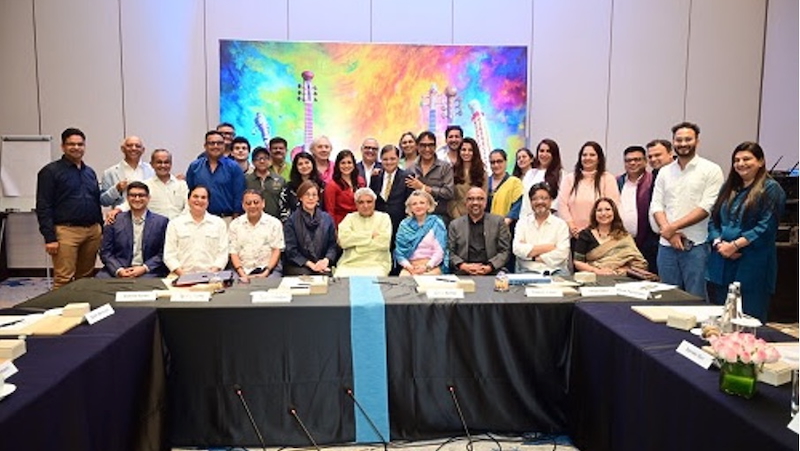
    MUMBAI: Mumbai’s glitterati of lyricists, composers, and legal eagles gathered for a confabulation with World Intellectual  Property Organization (WIPO),  deputy director general Sylvie Forbin, courtesy of the Indian Performing Right Society Ltd. (IPRS).

    The topic?

     Intellectual property rights (IPR), the rise of AI, and how to keep the creative juices flowing in a digital age.

    Held under the watchful eye of legendary lyricist and IPRS chairman Javed Akhtar, the closed-door roundtable was a veritable who’s who of India’s music and entertainment scene. From Vishal Dadlani’s vocal chords to Kausar Munir’s poetic prose, all were present to discuss the future of creativity.

    “The music community has always shown resilience to overcome the challenges brought as well by technological advances,” Forbin declared, clearly impressed by India’s grasp of the AI conundrum. “They have adapted in the best way by showing a strong alliance between them. I am impressed by India’s knowledge and assessment of what would be needed when it comes to the AI revolution and happy to go along with Indian creators to foster regulatory, business, and technological solutions to engage in this new era with the necessary tools and safeguards. Long life to Indian music!”

    Akhtar, never one to mince words, stressed:  “The music industry has always been at the forefront of technological breakthrough. The music community has always shown resilience to overcome the challenges brought as well by technological advances. They have adapted in the best way by showing a strong alliance between them. I am impressed by India’s knowledge and assessment of what would be needed when it comes to the AI revolution and happy to go along with Indian creators to foster regulatory, business, and technological solutions to engage in this new era with the necessary tools and safeguards. Long life to Indian music!,” 

    The session, a proper meeting of minds, covered everything from strengthening IP frameworks to navigating the AI revolution. Key takeaways included the need for robust metadata, empowered collective management organisations (CMOs), and a stronger voice for creators in policy-making.

    “Having WIPO at the table added immense value, bringing international expertise and highlighting collaborative efforts to strengthen IP frameworks across nations. SWA and SRAI as representatives of screenwriters and lyricists strive for the rights of the creators and it is good to see all the stakeholders coming together to discuss the betterment of creators and protection of Intellectual Property,” said  Screenwriters Association general secretary Zaman Habib.

    The event, a veritable feast of ideas, saw participants calling for a unified voice to drive India’s cultural and economic growth. They also emphasised the importance of copyright education, data integrity, and international cooperation.

    “It was a great opportunity to listen to Sylvie and express our thoughts.We truly appreciate the initiative by the one and only IPRS in supporting India’s rapidly evolving entertainment and music landscape,” said Simca secretary general Sridhar J Swaminathan.

    With AI looming large, the roundtable was a timely reminder that creativity needs protection, and that India’s creative community is ready to fight its corner. It’s clear that when it comes to safeguarding artistic rights, they’re not about to play second fiddle.

    Key Takeaways from the Roundtable:
    * IP as a Growth Enabler: Strengthening IP frameworks is essential for fostering innovation and supporting India’s growing creative industries.
    * Global-Local Synergy: Engagement with WIPO highlighted the importance of international collaboration and knowledge exchange.
    * Preparing for the AI Era: A strong focus on evolving digital rights, metadata management, and ethical guidelines to navigate emerging technologies.
    * Institutional Strengthening: The need for proactive government support, legal clarity, and empowered CMOs (collective management organisations) to enforce rights.
    * Building a Unified Voice: The event marked a milestone in uniting diverse voices to drive long-term impact on India’s cultural and economic growth.
    * Elevating the Role of Creators in Policy-Making: Formal inclusion of creators in national IP and digital policy formulation was strongly advocated.
    * Copyright Education & Awareness: Emphasis on educating both creators and consumers on IP rights to reduce misuse and promote informed practices.
    * Strengthening collective management organisations (CMOs): Modernisation and transparency of CMOs were recognized as pivotal for trust and efficiency.
    * Data and Metadata Integrity: The need for robust crediting systems through better metadata was highlighted to ensure fair attribution and royalties.
    * Cultural Exchange and International Cooperation: The role of WIPO in encouraging global partnerships was applauded, with a call for more international dialogue.
    * Youth and Innovation: Recognising the contribution of young creators and startups in redefining the future of creative economies.


  • Indian govt approves accession to WIPO treaties relating to copyright

    Indian govt approves accession to WIPO treaties relating to copyright

    NEW DELHI: The Indian government on Wednesday approved accession to two important international treaties aimed at coverage and protection of copyright to the internet and digital environment.

    Addressing the media here, Minister for Information Technology and Electronics and Law Ravi Shankar Prasad said the cabinet took this decision along with a slew of other policy initiatives.

    The proposal had been mooted by the Department of Industrial Policy and Promotion under Ministry of Commerce and Industry and involved the WIPO Copyright Treaty and WIPO Performers and Phonograms Treaty.

    Commenting on this momentous occasion, Mr. Rajat Kakar President &CEO of PPL said “We are committed to professional collective management of rights for our Member Record Labels and this progressive decision by the Indian Government under the stewardship of the Department of Industrial Policy & Promotion (DIPP) is a welcome move and enhances the economic value of the members copyrights in Sound Recording”

    The government said that the approval was a step towards the objective laid in the National Intellectual Property Rights (IPR) Policy, adopted 12 May 2016 and which aims to get value for IPRs through commercialisation by providing guidance and support to content owners about commercial opportunities of e-commerce through internet and mobile platforms.

    The government listed the following benefits of the WIPO treaties:

    # Enable creative right-holders enjoy the fruit of their labour through international copyright system that can be used to secure a return on the investment made in producing and distributing creative works.

    # Facilitate international protection of domestic rights holder by providing them level-playing field in other countries as India already extends protection to foreign works through the international copyright order and these treaties will enable Indian right holders to get reciprocal protection abroad.

    #Instill confidence to distribute creative works in digital environment with return on investment.

    # Spur business growth and contribute to the development of a vibrant creative economy and cultural landscape.

    WIPO Copyright Treaty came in force on 6 March 2002 and has been adopted by 96 contracting parties till date and is a special agreement under Berne Convention (for protection of literary and artistic works). It has provisions to extend the protection of copyrights contained therein to the digital environment. It recognises the rights specific to digital environment, of making work available, to address “on-demand” and other interactive modes of access.

    WIPO Performances and Phonograms Treaty (WPPT) came in force on 20 May 2002 and has 96 contracting parties as its members. WPPT deals with rights of two kinds of beneficiaries, particularly in digital environment: (i) performers (actors, singers, musicians, etc.) and (ii) producers of phonograms (sound recordings). The treaty empowers right owners to negotiate with new digital platforms and distributors. It recognises moral rights of the performers for the first time and provides exclusive economic rights to them.

    Both the treaties provide framework for creators and right owners to use technical tools to protect their works and safeguard information about their use, meaning protection of technological protection measures (TPMs) and rights management information (RMI).

  • Vital IP topics, piracy & counterfeiting ill-effects: 4000 workshops to be conducted under DIPP

    NEW DELHI: The newly-launched Scheme for IPR Awareness – Creative India; Innovative India aims to conduct over 4000 IPR awareness workshops/seminars in academic institutions (schools and colleges) and the industry, including MSMEs and Startups, as also IP training and sensitisation programmes for enforcement agencies and the judiciary.

    The Scheme aims at raising IPR awareness amongst students, youth, authors, artists, budding inventors and professionals to inspire them to create, innovate and protect their creations and inventions across India including Tier 1, Tier 2, Tier 3 cities as well as rural areas in the next 3 years.

    It has been launched taking forward the National Intellectual Property Rights (IPR) Policy 2016 by the Cell for IPR Promotion and Management (CIPAM) under the aegis of the Department of Industrial Policy and Promotion (DIPP).

    Workshops will cover all vital IP topics including international filing procedures, promotion of geographical indications and highlighting the ill-effects of piracy and counterfeiting.

    The Scheme for IPR Awareness would be implemented through partner organisations to promote innovation and entrepreneurship.

    Earlier this year, DIPP and World Intellectual Property Organization (WIPO) signed an agreement to establish Technology and Innovation Support Centers (TISC)

    CIPAM is designated as the National Focal point for the TISC national network. As the national focal point, CIPAM shall identify potential host institutions, assess their capacities and support them in joining the TISC project. CIPAM will also act as the main intermediary between WIPO and TISC host institutions and coordinateall the activities of the national TISC network.

    Over 500 TISCs operate worldwide and establishing TISC in India will give the host institutions access to the Global network. In upcoming years CIPAM is planning to establish TISC’s in Universities, State Science Councils, R&D institutions etc. TISC will give an impetus to Knowledge sharing, sharing of best practices among the TISC’s, capacity building, generation and commercialisation of IPs

    Recenly, DIPP Joint Secretary Rajiv Agarwal had said the intellectual property rights regime in India is undergoing a process of re-engineering with the government and industry collaborating.

    The year 2017 marked a step forward for India in its IP history with the Indian leadership adequately recognizing the crucial role that intellectual property played in fostering innovation, accelerating growth and enhancing business competitiveness, industry experts say.

  • Govt. measures to reduce patent application time to 18 months under way

    NEW DELHI: Intellectual Property Rights regime in India is undergoing a process of re-engineering with the collaboration of government and industry, Department of Industrial Policy and Promotion (DIPP) Joint Secretary Rajiv Aggarwal said today.

    Speaking at a conference on ‘IP: Innovation to Drive Business and Competitiveness’ , Aggarwal said the tool kit to protect intellectual property (IP) rights which had been launched earlier in association with FICCI has enabled the law enforcement agencies especially police to help strengthen the government machinery to handle IP rights infringement issues.

    The meet was organised by FICCI in association with DIPP, Ministry of Commerce & Industry, to commemorate the World Intellectual Property Day 2017.

    He added that this tool kit has been provided to all state police departments across the nation. He added that there was still a long way to go and with partners like FICCI the government was looking forward to step up its efforts.

    Aggarwal said recently Chandigarh was felicitated with an award for enforcement of IP in the country, which was a proof of government’s earnest intentions of fast-tracking enforcement in IP. He added that the government was taking steps, including hiring manpower, to reduce the patent application examination time to 18 months.

    Alluding to the need of embedding the culture of IP early in life, Aggarwal said a new drive had been initiated where awareness programmes on IP were being run in schools as it would also enable in taking forward the agenda of innovation.

    The conference aimed to capture the essence and increasing IP buzz in the country while providing a useful forum for various IP stakeholders to deliberate on the importance and potential of generating, protecting, enforcing, commercializing, and incorporating IP and innovation in the core of business strategies.

    The deliberations focused on how IP supported innovation by attracting investment, rewarded creators and encouraged them to develop their ideas ensuring, at the same time, that the emergent knowledge was ultimately available for the future innovators to develop further on the existing knowhow. The forum served as a platform for leading IP experts from India and abroad to discuss how to ensure that, in the days to come, IP and Innovation become the driving force for business growth and competitiveness in India as well as globally.

    FICCI IP Committee Chairperson Narendra Sabharwal, formal Deputy General of WIPO, said a baseline survey should be undertaken by the stakeholders to audit the progress in the IP space, which would help in identifying the priorities as well as the gaps in the system. He added that economic impact studies should also be carried.

    He said there was need to strengthen enforcement, especially, in the online arena and focus on appropriate commercialization of IP assets. He added that creation of human capital should be accorded priority. In recent years, Intellectual Property has spawned a new wave of technological innovations, leading to rapid economic growth and development. As businesses grow and attract competition, the need to identify, develop and leverage IP becomes even more important in order to sustain and thrive in the market.

    The industry looks forward to the further strengthening of certain key areas of India’s IP regime. Stronger IPR enforcement and greater connectivity of IP policy with existing legislations and business environments are two such critical needs. These will not only incentivise innovation, but help attract investment that will create new jobs and opportunities. Indian business is confident that as the IPR Policy implementation moves forward, the economy will grow faster towards achieving the desired growth rate. The year 2017 marked a step forward for India in its IP history with the Indian leadership adequately recognizing the crucial role that intellectual property played in fostering innovation, accelerating growth and enhancing business competitiveness.

    Also Read:

    Copyright infringement: Kross awarded injunction against ‘Pushpaka Vimana’, hearing on 12 Apr

    FICCI FRAMES: Legitimate screens, stricter laws, best practices for IPR

    IPR: DIPP allocation increased after copyright shift from HRD

    FICCI Frames ’17: Maharashtra to form IP crime unit to fight online piracy

  • FICCI keen on IPR awareness & enforcement to encourage innovation

    FICCI keen on IPR awareness & enforcement to encourage innovation

    NEW DELHI: Department of Industrial Policy & Promotion joint secretary Rajiv Aggarwal has said India’s IP framework was in the midst of a paradigm shift following the announcement of the National IPR Policy.

    Chairing a session on India’s IPR Policy: A Roadmap to Robust IP Ecosystem in India in a meet organized by FICCI, he said while the Department was spearheading the overall policy, specific recommendations listed in the policy were being taken up for action by concerned ministries and departments.

    He elaborated on the initiatives undertaken by DIPP and the Cell for IPR Promotion and Commercialisation (CIPAM) set up by the Government to implement the seven objectives which formed the basis of the National IPR Policy, besides bringing forth the industry’s role in ensuring the effective roll-out of these initiatives.

    FICCI, in its drive to spur growth in the Indian industry, specially manufacturing, organised in association with the International Chamber of Commerce (ICC) India, the International Conference on ‘IP: Key Enabler to Growth & Innovation’ here.

    FICCI IPR Committee chairman Narendra Sabharwal who is the former convener of Think Tank on IPR Policy and former deputy director-gneral in World Intellectual Property Organisation (WIPO) said that FICCI had a particular interest in supporting and encouraging innovation for the benefit of industry and economic growth. Consequently, FICCI was working with all stakeholders towards creating awareness about IP, its adequate enforcement, besides ensuring the effective implementation of India’s National IPR Policy recommendations.

    He said India’s IP policy gives IP the prominence it deserves as it is for the first time that IP has been brought into the mainstream of the growth process. He underlined the need to raise awareness amongst businesses on how to use IP as a tool to raise competitiveness and foster growth. While the IP policy provides the overall direction, the rest of the economic and social policies need to be tweaked to bring them in sync with the IP policy.

    Sabharwal enumerated the objectives of the IP policy as promotion and awareness of IP issue, generation of IP, legal and legislative framework, administration and management, commercialisation of IP, enforcement and adjudication and creation of human capital.

    He recommended that all industries and businesses should undertake a baseline IP survey to assess where we are and how do we move forward. He also suggested that there was need for a study on the economic contribution of IP such as a copyright-related industries survey on contribution of GDP.

    ICC Commission on Intellectual Property chairman David J Koris underlined the need of creating an ecosystem that nurtured and promoted intellectual property to fulfill its potential as a tool to spur innovation and creativity, and economic growth.

    Through its awareness-raising and advocacy initiatives, the Commission on Intellectual Property promotes the positive role of the IP system, gives guidance on how the system can be made more efficient and cost effective, helps policy makers adapt the system to new challenges, and promotes the use of IP as a business tool. It also actively contributes on issues arising from the areas of interface between intellectual property and other areas, such as the digital environment and the Internet, the environment, health, development, and competition policy.

    Koris said that for meaningful support to countries in the markets where they operate, the key imperatives were: uniform belief in the rule of law, good regulations and laws and focus on infrastructure.

    He said IP is a key driving force for growth in many companies and economies today, as the different types of intangible assets of a business are becoming increasingly important and valuable in relation to its tangible assets. The IP Commission produces publications and organizes events to support the ICC network of business organizations and chambers of commerce in their efforts to help companies use the IP system to increase their competitiveness.

    ICC India president Prashant Modi highlighted the important role of intellectual property in promoting innovation and technology diffusion, and the way technologies were disseminated in different sectors and countries globally. He observed that IP was a dynamic and constantly evolving field, which was closely tied to technological, economic, political and social changes, and the vital role that intellectual property rights (IPRs) – copyrights, patents, trademarks and similar rights upon which the lion’s share of creative and innovative products and services relied – had in helping the economies of developed and developing countries all over the world grow.

    Dr. K. S. Kardam, senior joint controller of patents and designs at Indian Patent Office, observed that, in the recent years, India was paying increasing attention to facilitate the ease of doing business in the country. With the significance of IPR as a foremost enabler now being increasingly recognized, the government was making efforts to address the concerns that the industry had in conducting business in India, and to work with the industry and other stakeholders to identify solutions towards further enhancing India’s business landscape.

    ICC India vice president Subhrakant Panda said protection of IP rights had become more important than ever following the new economic reforms initiatives introduced by the government. Innovation, he said, was the cornerstone of economic development and emphasised that India had a robust IP regime and a strong judicial system for recourse for settlement of disputes.

    The delegates at the conference deliberated on important developments in intellectual property like India’s recently announced National IPR Policy and the subsequent initiatives undertaken by the government e.g. setting up the Cell for IPR Promotion and Commercialisation (CIPAM) to oversee the implement the policy recommendations, besides bringing froth Industry’s views and perspective on these initiatives.

    Discussions also focussed on other IP-specific issues including constraints that India was facing on account of Counterfeiting and Piracy and the sustained actions needed among the stakeholders to effectively combat this global threat; the concerns of industry in areas such as CRI Guidelines, TRAI Regulations for broadcasting sector, issues with regard to SEP & FRAND terms – among other.

    One of the conference sessions was dedicated to a comparative outlook of India’s IP ecosystem vis-a-vis other jurisdictions, where the panelists undertook an assessment of where India stood on IP matters in comparison to the global standards and practices, whether India could incorporate certain relevant international IP best practices and where the country should be positioning to figure in the emerging global IP framework.

    The Conference brought together a number of leading policy makers, professionals, government officials and IP expert from India and from across the globe. A number of members of the International Chamber of Commerce (ICC) attending the ICC IP Commission meeting in India also participated in the conference, both as speakers and delegates.

  • FICCI keen on IPR awareness & enforcement to encourage innovation

    FICCI keen on IPR awareness & enforcement to encourage innovation

    NEW DELHI: Department of Industrial Policy & Promotion joint secretary Rajiv Aggarwal has said India’s IP framework was in the midst of a paradigm shift following the announcement of the National IPR Policy.

    Chairing a session on India’s IPR Policy: A Roadmap to Robust IP Ecosystem in India in a meet organized by FICCI, he said while the Department was spearheading the overall policy, specific recommendations listed in the policy were being taken up for action by concerned ministries and departments.

    He elaborated on the initiatives undertaken by DIPP and the Cell for IPR Promotion and Commercialisation (CIPAM) set up by the Government to implement the seven objectives which formed the basis of the National IPR Policy, besides bringing forth the industry’s role in ensuring the effective roll-out of these initiatives.

    FICCI, in its drive to spur growth in the Indian industry, specially manufacturing, organised in association with the International Chamber of Commerce (ICC) India, the International Conference on ‘IP: Key Enabler to Growth & Innovation’ here.

    FICCI IPR Committee chairman Narendra Sabharwal who is the former convener of Think Tank on IPR Policy and former deputy director-gneral in World Intellectual Property Organisation (WIPO) said that FICCI had a particular interest in supporting and encouraging innovation for the benefit of industry and economic growth. Consequently, FICCI was working with all stakeholders towards creating awareness about IP, its adequate enforcement, besides ensuring the effective implementation of India’s National IPR Policy recommendations.

    He said India’s IP policy gives IP the prominence it deserves as it is for the first time that IP has been brought into the mainstream of the growth process. He underlined the need to raise awareness amongst businesses on how to use IP as a tool to raise competitiveness and foster growth. While the IP policy provides the overall direction, the rest of the economic and social policies need to be tweaked to bring them in sync with the IP policy.

    Sabharwal enumerated the objectives of the IP policy as promotion and awareness of IP issue, generation of IP, legal and legislative framework, administration and management, commercialisation of IP, enforcement and adjudication and creation of human capital.

    He recommended that all industries and businesses should undertake a baseline IP survey to assess where we are and how do we move forward. He also suggested that there was need for a study on the economic contribution of IP such as a copyright-related industries survey on contribution of GDP.

    ICC Commission on Intellectual Property chairman David J Koris underlined the need of creating an ecosystem that nurtured and promoted intellectual property to fulfill its potential as a tool to spur innovation and creativity, and economic growth.

    Through its awareness-raising and advocacy initiatives, the Commission on Intellectual Property promotes the positive role of the IP system, gives guidance on how the system can be made more efficient and cost effective, helps policy makers adapt the system to new challenges, and promotes the use of IP as a business tool. It also actively contributes on issues arising from the areas of interface between intellectual property and other areas, such as the digital environment and the Internet, the environment, health, development, and competition policy.

    Koris said that for meaningful support to countries in the markets where they operate, the key imperatives were: uniform belief in the rule of law, good regulations and laws and focus on infrastructure.

    He said IP is a key driving force for growth in many companies and economies today, as the different types of intangible assets of a business are becoming increasingly important and valuable in relation to its tangible assets. The IP Commission produces publications and organizes events to support the ICC network of business organizations and chambers of commerce in their efforts to help companies use the IP system to increase their competitiveness.

    ICC India president Prashant Modi highlighted the important role of intellectual property in promoting innovation and technology diffusion, and the way technologies were disseminated in different sectors and countries globally. He observed that IP was a dynamic and constantly evolving field, which was closely tied to technological, economic, political and social changes, and the vital role that intellectual property rights (IPRs) – copyrights, patents, trademarks and similar rights upon which the lion’s share of creative and innovative products and services relied – had in helping the economies of developed and developing countries all over the world grow.

    Dr. K. S. Kardam, senior joint controller of patents and designs at Indian Patent Office, observed that, in the recent years, India was paying increasing attention to facilitate the ease of doing business in the country. With the significance of IPR as a foremost enabler now being increasingly recognized, the government was making efforts to address the concerns that the industry had in conducting business in India, and to work with the industry and other stakeholders to identify solutions towards further enhancing India’s business landscape.

    ICC India vice president Subhrakant Panda said protection of IP rights had become more important than ever following the new economic reforms initiatives introduced by the government. Innovation, he said, was the cornerstone of economic development and emphasised that India had a robust IP regime and a strong judicial system for recourse for settlement of disputes.

    The delegates at the conference deliberated on important developments in intellectual property like India’s recently announced National IPR Policy and the subsequent initiatives undertaken by the government e.g. setting up the Cell for IPR Promotion and Commercialisation (CIPAM) to oversee the implement the policy recommendations, besides bringing froth Industry’s views and perspective on these initiatives.

    Discussions also focussed on other IP-specific issues including constraints that India was facing on account of Counterfeiting and Piracy and the sustained actions needed among the stakeholders to effectively combat this global threat; the concerns of industry in areas such as CRI Guidelines, TRAI Regulations for broadcasting sector, issues with regard to SEP & FRAND terms – among other.

    One of the conference sessions was dedicated to a comparative outlook of India’s IP ecosystem vis-a-vis other jurisdictions, where the panelists undertook an assessment of where India stood on IP matters in comparison to the global standards and practices, whether India could incorporate certain relevant international IP best practices and where the country should be positioning to figure in the emerging global IP framework.

    The Conference brought together a number of leading policy makers, professionals, government officials and IP expert from India and from across the globe. A number of members of the International Chamber of Commerce (ICC) attending the ICC IP Commission meeting in India also participated in the conference, both as speakers and delegates.

  • Internet included in broadcasting for purpose of Copyright

    Internet included in broadcasting for purpose of Copyright

    NEW DELHI: “All kinds of broadcasting including internet broadcasting” will also form part of broadcasting organizations desirous of communicating to the public for purposes of copyright, according to the Government.

    Amplifying the definition of broadcasting in section 31D of the Copyright Act 1957, Department of Industrial Policy and Promotion Deputy Secretary Surabhi Sharma has said in a directive to the Registrar of Copyrights that broadcasting should not be restrictively read as meaning just radio and television.

    The Section refers to any performance or work available for being seen or heard or otherwise enjoyed by the public “other than by making physical copies of it.”

    This is one of the several measures taken by the DIPP since administration of the Copyright Act and Intellectual Property Rights were shifted to it in March this year. Until then, it had been part of the Human Resource Development Ministry and the film, music and television industries have always grudged this as they feel it should be with the Information and Broadcasting Ministry.

    A single window interface was unveiled by the Government for information on IPR and guidance on leveraging it for competitive advantage. The Indian IP Panorama portal seeks to increase awareness and build sensitivity towards IP, among stakeholders in the SME sector, academia and researchers. The Indian IP Panorama can be accessed at http://ict-ipr.in/index.php/ip-panorama

    It is a customized version of IP Panorama Multimedia toolkit developed by World Intellectual Property Organization, Korean Intellectual Property Office and Korea Invention Promotion Association.

    The toolkit has been adapted to cater to SMEs and start-ups, especially in the ICTE sector of India based on an agreement signed between WIPO and Department of Electronic and Information Technology. The Indian IP Panorama is thus a customized version of WIPO’s original product and is in accordance with Indian IP laws, standards, challenges and needs of the Indian ICTE sector.

    The Indian IP Panorama has been developed under the aegis of Department of Electronics and Information Technology (DeitY) and Department of Industrial Policy and Promotion (DIPP), Government of India by Centre for Development of Advanced Computing (C-DAC), in close coordination with the Indian IP office.

    India is a member of WIPO and party to several treaties administered by WIPO. Recognizing that the strategic use of intellectual property could contribute significantly to the national development objectives of India, DIPP entered into an MoU with WIPO on 13 November 2009.

    The Indian IP office has been recognised as an International Searching Authority and International Preliminary Examining Authority under the Patent Cooperation Treaty (as in force from 15 October 2013).

    India acceded to Madrid Protocol for the International Registration of Marks at WIPO on July 8, 2013. The Madrid System for the International Registration of Marks (Madrid system) offers trademark owners a cost effective, user friendly and streamlined means of protecting and managing their trademark portfolio internationally.

  • Internet included in broadcasting for purpose of Copyright

    Internet included in broadcasting for purpose of Copyright

    NEW DELHI: “All kinds of broadcasting including internet broadcasting” will also form part of broadcasting organizations desirous of communicating to the public for purposes of copyright, according to the Government.

    Amplifying the definition of broadcasting in section 31D of the Copyright Act 1957, Department of Industrial Policy and Promotion Deputy Secretary Surabhi Sharma has said in a directive to the Registrar of Copyrights that broadcasting should not be restrictively read as meaning just radio and television.

    The Section refers to any performance or work available for being seen or heard or otherwise enjoyed by the public “other than by making physical copies of it.”

    This is one of the several measures taken by the DIPP since administration of the Copyright Act and Intellectual Property Rights were shifted to it in March this year. Until then, it had been part of the Human Resource Development Ministry and the film, music and television industries have always grudged this as they feel it should be with the Information and Broadcasting Ministry.

    A single window interface was unveiled by the Government for information on IPR and guidance on leveraging it for competitive advantage. The Indian IP Panorama portal seeks to increase awareness and build sensitivity towards IP, among stakeholders in the SME sector, academia and researchers. The Indian IP Panorama can be accessed at http://ict-ipr.in/index.php/ip-panorama

    It is a customized version of IP Panorama Multimedia toolkit developed by World Intellectual Property Organization, Korean Intellectual Property Office and Korea Invention Promotion Association.

    The toolkit has been adapted to cater to SMEs and start-ups, especially in the ICTE sector of India based on an agreement signed between WIPO and Department of Electronic and Information Technology. The Indian IP Panorama is thus a customized version of WIPO’s original product and is in accordance with Indian IP laws, standards, challenges and needs of the Indian ICTE sector.

    The Indian IP Panorama has been developed under the aegis of Department of Electronics and Information Technology (DeitY) and Department of Industrial Policy and Promotion (DIPP), Government of India by Centre for Development of Advanced Computing (C-DAC), in close coordination with the Indian IP office.

    India is a member of WIPO and party to several treaties administered by WIPO. Recognizing that the strategic use of intellectual property could contribute significantly to the national development objectives of India, DIPP entered into an MoU with WIPO on 13 November 2009.

    The Indian IP office has been recognised as an International Searching Authority and International Preliminary Examining Authority under the Patent Cooperation Treaty (as in force from 15 October 2013).

    India acceded to Madrid Protocol for the International Registration of Marks at WIPO on July 8, 2013. The Madrid System for the International Registration of Marks (Madrid system) offers trademark owners a cost effective, user friendly and streamlined means of protecting and managing their trademark portfolio internationally.

  • Meeting of expert committee on WIPO early next month

    Meeting of expert committee on WIPO early next month

    NEW DELHI: The first meeting of the expert committee constituted earlier this year for the protection of broadcasting organisation at the World Intellectual Property Organisation (WIPO) will be held on 2 September.


    The aim is to discuss with members from broadcasting organisations and broadcasters to examine and articulate the stand being taken by India.


    The meeting will discuss the text of the broadcasting treaty and proposals submitted by India during the 26th SCCR; discussion on the informal proposal submitted by Japan; discussion on the proposal submitted by European Union and discussion on the formats circulated by WlPO secretariat. 


    The members of the committee include representatives of all the concerned Ministries, representatives of the News Broadcasters Association and Indian Broadcasting Foundation, the radio industry, the film industry, Prasar Bharati, Amit Shukla who is Director (Copyright) in the Registrar of Copyrights (copyright division) of the Department of Higher Education; BECIL; the Advertising Standards Council of India (ASCI); Centre for Media Studies (CMS); Community Radio Forum; Community Radio Association; Association of Regional Television Broadcasters of India; School of Legal Studies in Cochin; Cine & TV Artistes Association; the Film Federation of India; the Indian Music Industry and the Film & TV producers Guild of India.

  • UN broadcast rights treaty comes for debate next year

    UN broadcast rights treaty comes for debate next year

    MUMBAI: As per the World Intellectual Property Organization (Wipo), a new proposal for an international agreement to protect broadcasting rights will be negotiated during a conference, which is scheduled to take place from 11 July to 1 August 2007.

    The proposed treaty, which aims among other things to prevent broadcasting and cable signals being stolen and retransmitted elsewhere, was approved by a key committee of the UN agency.

    Wipo director general Kamil Idris has been quoted in media reports as saying that the positive spirit of the discussions will further strengthen consensus on these issues in the months leading up to the diplomatic conference. Wipo deputy director general Rita Hayes described the meeting a tremendous success after eight years of work, and said a lot of the contentious issues could be resolved.

    According to reports, a coalition of representatives from electronics and telecommunication companies, including Dell, Intel and Sony, as well as consumer rights organizations, said in a joint statement ahead of the Wipo meeting that they weren’t convinced such a treaty was needed and that the most important intellectual property issues were already addressed under existing law.