Tag: WinZO

  • Game over? Gaming giants roll the dice on life after India’s RMG ban

    Game over? Gaming giants roll the dice on life after India’s RMG ban

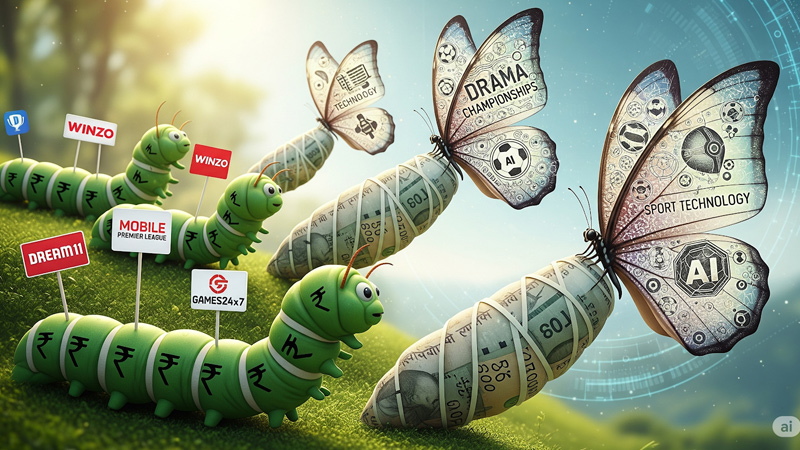
    MUMBAI: When the house always wins, sometimes the only move left is to change the game. That’s exactly what India’s biggest online gaming giants are scrambling to do after the Promotion and Regulation of Online Gaming Bill, 2025 pulled the plug on all real-money contests skill or chance alike.

    Fantasy sports kingpin Dream11, India’s largest operator, is preparing to close its real-money business. CEO Harsh Jain told employees there was “no legal pathway to continue operations once the law takes effect.” In public remarks, Jain added, “We have always been a law-abiding company and have always conducted our business in compliance with the law. While we believe that progressive law would have been the way forward, we will respect the law and fully comply with the Promotion and Regulation of Online Gaming Bill 2025.”

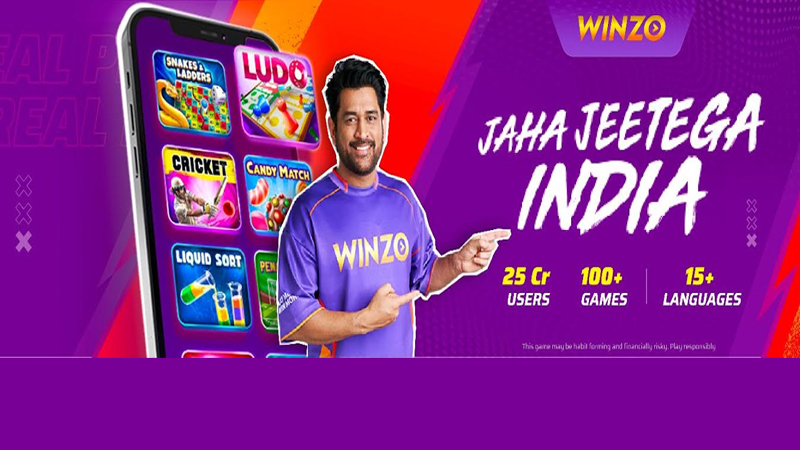
    Winzo has officially launched in the United States, following its Brazil entry in 2023. With this, the company now straddles three of the world’s top four mobile gaming markets India, Brazil, and the US together worth 65–70 billion dollars. Positioned as a Tech Exports 2.0 story, Winzo aims to take Indian gaming IP, talent, and culturally relevant content global through its plug-and-launch distribution model. Backed by 250 million users, 100 plus games, 15 languages, 100 plus patents, and its 50 million dollars Zo Fund, Winzo is scaling innovation beyond India while responsibly exiting real-money formats at home.

    “The launch of Winzo in the United States is a proud milestone for us and for India’s digital entertainment ecosystem. Our vision has always been to empower Indian game developers to reach global audiences. Entering the U.S., the world’s largest and most influential gaming market, is a decisive step towards that mission. We are equally excited to introduce ZO TV, our new short video format, which further diversifies our content offerings and strengthens Winzo’s position as a global hub and one stop destination for interactive entertainment,” said Winzo co-founders Saumya Singh Rathore and Paavan Nanda.

    The financial impact was immediate. Jain revealed that after the bill’s enactment, “95 per cent of revenues disappeared,” describing the legislation as a “knockout blow.” Still, he struck a note of resilience, insisting Dream Sports has “sufficient reserves to sustain its business during this transition” and can adapt by leaning on other ventures like Fancode, Dreametgo and Dream Game Studios.

    The pivot is not just about apps. Dream Sports is now pushing an AI-first strategy, with Jain saying the technology could disrupt “every part of sports: content, commerce, performance, and coaching.” Beyond tech, it is doubling down on grassroots development. At the first Telangana Sports Conclave, COO Sumit Pandey highlighted how the Dream Sports Foundation is backing long-term athlete journeys. “By investing in inclusivity and accessibility,” he noted, the company hopes to carve a sustainable role in India’s sporting ecosystem beyond gaming.

    Meanwhile, Zupee has pulled the plug on its cash contests, but insists the fun isn’t over. Announcing the withdrawal of its RMG offerings, the Gurugram-based company reassured its 150 million-strong user base that its platform will continue to host fan favourites like Ludo Supreme, Ludo Turbo, Snakes & Ladders and Trump Card Mania.

    “Our foremost priority has always been our users, and we remain committed to offering them innovative, responsible, and joyful gaming experiences,” the company said in a statement. “We will continue to focus on engaging, and culturally rooted free-to-play gaming formats…” It added that the aim now is to serve players with entertainment that is “fun, engaging and responsible.”

    MPL (Mobile Premier League), backed by Sequoia and Pegasus, has also hit pause on money-based offerings in India. The platform is funnelling resources into free-to-play titles at home, while going aggressively global with eyes on Europe, the US, and Latin America.

    Games24x7, operator of Rummycircle and My11circle, has stopped accepting deposits and shut its real-money engine. While tight-lipped publicly, industry watchers note the company’s focus may shift towards broader tech plays such as Techxpedite, its accelerator for AI, gaming and tech startups.

    For some, the ban was simply the end of the road. Flutter Entertainment, the global gambling powerhouse behind Junglee Rummy, announced a full India exit, cutting off over 1,100 employees and chalking up a 200 million dollars revenue loss for 2025. CEO Peter Jackson voiced frustration: “We were disappointed… this regulation might push users toward unregulated markets lacking consumer protection and economic contributions.”

    Gameskraft, one of India’s biggest rummy operators, also chose compliance over confrontation. “As a responsible and law-abiding corporate entity, Gameskraft has no intention of pursuing any legal challenge to the legislation. We fully respect the legislative process and remain committed to operating within the framework of the law…” a spokesperson said. They stressed the company’s ongoing commitment to “constructive dialogue with policymakers and stakeholders, responsible innovation, player protection, and regulatory alignment.” Gameskraft noted it had stopped all ‘Gameplay’ and ‘Add Cash’ services as of August 21.

    Not every player was equally exposed. Nazara Technologies, whose stock briefly dipped seven per cent on the news, clarified that it has no direct involvement in real-money gaming and therefore faces little business impact. “The bill is unlikely to significantly affect our financial performance,” the company said.

    Industry associations, however, remain combative. AIGF, EGF and FIFS warned in a letter to home minister Amit Shah that a blanket ban could wipe out Rs 20,000 crore in annual tax revenue and drive players to offshore platforms raising risks of fraud, money laundering and data breaches.

    Delta Corp’s Adda52, India’s top poker platform, is also feeling the squeeze. Its stock has plunged nearly 34 per cent in a year, with an additional nine per cent shaved off after the Bill passed. But unlike pure-play fantasy or rummy firms, Delta still has chips left on the table, its casinos in Goa, Sikkim and Daman remain unaffected. Even before the ban, Delta had lined up a demerger of its hospitality and real estate arms, ring-fencing casino operations for the long haul.

    Between AI-powered sports labs, grassroots investments, free-to-play contests and casino strongholds, the industry is scattering in every possible direction. The only certainty? Real money has left the building but the game is far from over.

  • Winzo reinvents, rolls out  short drama championship

    Winzo reinvents, rolls out short drama championship

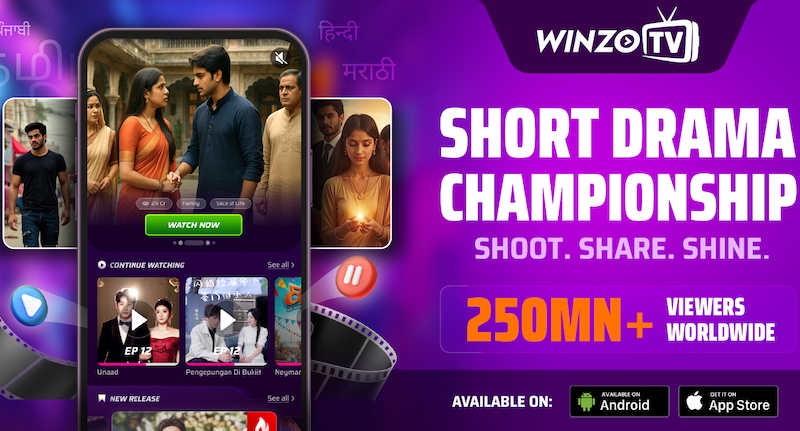
    NEW DELHI: Homegrown interactive entertainment platform, Winzo, is scripting a new chapter. Best known for its real-money gaming empire of 250m users, 100+ competitive titles and a 15-language spread, the company has announced the launch of the Winzo Short Drama Championship — billed as the world’s first global contest for microdrama creators.

    Winners will bag full production sponsorship, long-term content deals, and guaranteed slots on Winzo TV, the firm’s freshly unveiled short-form storytelling platform. Entries will be judged on originality and narrative power, with final selections based on audience engagement. Winning dramas will also be showcased at marquee events, plugging India’s storytellers into a worldwide stage.

    “We’ve always believed India’s cultural capital is its greatest export,” said Winzo co-founder Paavan Nanda. “We built Winzo to democratise opportunity for creators — first in gaming, and now in storytelling. India has the talent and scale to lead the global microdrama revolution.”

    The move comes days after the government passed the Online Gaming Bill, forcing real-money game operators to rewire their business models. Winzo’s pivot positions it not only as a gaming major but also as a potential exporter of Indian narratives, from Bharat to the world.

    Applications are open at winzotv.com, with Winzo calling on production houses and content creators to partner and reach its 250m-strong global audience.

  • Winzo levels up, takes India’s gaming power play to the US market

    Winzo levels up, takes India’s gaming power play to the US market

    MUMBAI: From Delhi to Dallas, Winzo has just hit its biggest checkpoint yet. India’s largest homegrown digital entertainment platform has officially launched in the United States, levelling up its ambition to export desi gaming tech, IP, and talent to global arenas. The move marks Winzo’s entry into the world’s largest gaming market by revenue, hot on the heels of its Brazilian foray in 2023. That places the company squarely at the crossroads of three of the planet’s top four mobile gaming markets India, Brazil and the US together worth an estimated 65–70 billion dollars with over 20 billion annual game downloads.

    With a 250 million-strong user base back home, Winzo’s ecosystem already spans 100 plus competitive games across esports and social formats in 15 languages, backed by more than 100 tech patents. Among them: its Real-Time Game Engine, GenAI-powered vernacular companion, live streaming stack, one-click integration tech and AI-driven cybersecurity solutions.

    The platform also brings financial muscle via its 50 million dollars Zo Fund, fuelling early-stage tech ventures and creating a pipeline of Indian innovation for global markets. Alongside gaming, Winzo is rolling out Zo TV, its new short-video format, aiming to be a one-stop hub for interactive entertainment.

    “This is a proud milestone for India’s digital entertainment ecosystem,” said co-founders Saumya Singh Rathore and Paavan Nanda, noting that the expansion represents “Tech Exports 2.0” where Indian developers can finally take culturally resonant games and esports to the most lucrative gaming market in the world.

    While Winzo continues to expand abroad, it is also doubling down on its Indian audience, even as it responsibly rolls back select offerings impacted by regulatory shifts. For the company, the US debut isn’t just a market entry, it’s a statement that India’s gaming story is no longer just local, but truly global.

  • Game for exports Winzo, SEPC join hands to power Made in India gaming

    Game for exports Winzo, SEPC join hands to power Made in India gaming

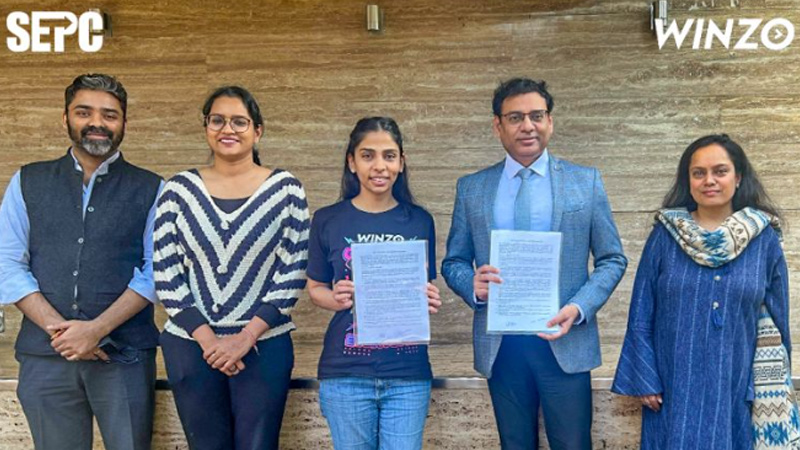
    MUMBAI: India’s gaming industry just scored a big power-up. The Services Export Promotion Council (SEPC) and Winzo, the country’s largest social gaming platform, have inked a three-year MoU to catapult “Made in India” games onto the global stage.

    With India already accounting for 20 per cent of the world’s gaming user base and 15.1 per cent of all global app downloads, the partnership is designed to strengthen India’s claim on the 300 billion dollars global gaming market. The sector, which attracted USD 3 billion in FDI over the last five years, is home to 1,888 gaming startups and is projected to grow from 3.7 billion dollars in 2024 to USD 9.1 billion dollars by 2029, clocking a 19.6 per cent CAGR.

    As part of the tie-up, Winzo will showcase Indian developers and their IP at Gamescom, Germany, this month Europe’s largest gaming expo before taking them to other global events. The initiative aims to connect Indian talent with publishers, investors, and industry leaders, opening fresh avenues for international collaboration.

    The MoU also promises to address persistent ecosystem hurdles like startup incubation, funding, monetisation, and talent development, while scaling Winzo’s Bharat Tech Triumph programme, which has previously spotlighted Indian developers at GDC, Gamescom LATAM, and Startup Mahakumbh.

    A cornerstone of the alliance is Winzo’s Global Centre of Excellence (GCoE), set up with DPIIT, to champion Indian gaming IP worldwide. The focus: protecting IP, attracting more FDI, and building a skilling pipeline for developers, influencers, innovators, and students fuelling India’s creator economy and new-age jobs.

    “This initiative will have a profound impact on game developers, empowering them with new opportunities and a global platform,” said SEPC Chairman Karan Rathore. Winzo co-founder Saumya Singh Rathore added, “The socio-economic potential of online gaming can create multifold opportunities for skilling, jobs, and IP exports, supporting India’s journey to a 5 trillion dollars economy.”

    With prime minister Modi’s Atmanirbhar Bharat vision as backdrop, this first-of-its-kind national-level collaboration seeks nothing less than securing India’s rightful 20 per cent share of the global gaming industry matching its user strength with export muscle.
     

  • India’s gaming giants face extinction as government prepares blanket ban

    India’s gaming giants face extinction as government prepares blanket ban

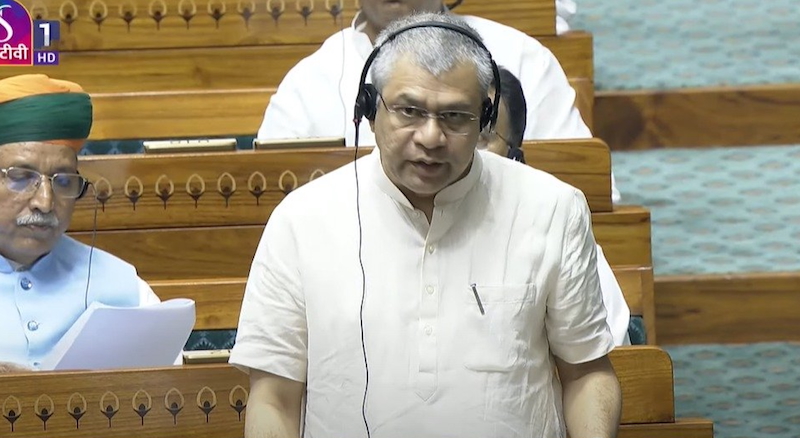
    MUMBAI: India’s booming online gaming sector is bracing for devastation after electronics and information technology minister Ashwini Vaishnaw introduced the Promotion and Regulation of Online Gaming Bill, 2025, in the Lok Sabha on Wednesday. The proposed legislation threatens to outlaw all real-money gaming platforms, regardless of whether they involve skill or chance—a move that could obliterate 86 per cent of the industry’s current revenue streams.

    The bill proposes harsh penalties for violators: up to three years imprisonment and fines of Rs 1 crore for operators, and two years jail plus Rs 50 lakh fines for advertisers. Banks and financial institutions facilitating transactions for money games face similar punishment. Repeat offenders could face between three and five years behind bars with higher fines.

    Market leaders including Dream11, Games24x7, Winzo, GamesKraft and My11Circle now face an existential crisis. India’s online gaming market, currently valued at $3.7 billion and projected to reach $9.1 billion by 2029, could see its financial lifeline severed overnight.

    The All India Gaming Federation, E-Gaming Federation and Federation of India Fantasy Sports have written jointly to home minister Amit Shah, warning that the legislation would “destroy over 200,000 jobs, result in over 400 companies shutting down, and weaken India’s position as a digital innovator.”

    The industry argues that legitimate platforms will be forced to close, pushing crores of users towards illegal matka networks, offshore gambling sites and unregulated operators. The sector has grown into a Rs 2 trillion industry, generating Rs 31,000 crore in annual revenue and over Rs 20,000 crore in taxes whilst expanding at 20 per cent compound annual growth rate.

    The bill defines an online money game as one where users pay fees or deposit money “in expectation of winning in return of money or other stake.” It explicitly excludes esports and online social games such as casual entertainment formats without monetary stakes. A proposed Online Gaming Authority would determine whether games qualify as money games and oversee the sector.

    MeitY secretary S Krishnan said the legislation aims to recognise the industry’s creative intent whilst restricting undesirable segments. The government cited instances of severe financial distress and suicides linked to online money gaming during cabinet deliberations, noting particular concerns about addiction among children and youth.

    The move represents a decisive shift from tax-and-regulate to prohibit-and-enforce. Authorities have already imposed a 28 per cent goods and services tax on gaming revenues since October 2023, followed by a 30 per cent tax on net winnings from FY 2024-25. Over 1,400 illegal betting and gambling sites have been blocked since 2022.

    Players themselves will not face criminalisation under the proposed law, being treated as victims rather than offenders. Free-to-play and subscription-based games where users pay fixed fees without wagering during gameplay will remain permissible.

    Industry insiders warn the legislation could violate constitutional principles whilst strengthening illegal offshore operators—described as “one of the biggest national security threats to the country today.” India’s gamer base has grown from 360 million in 2020 to over 500 million in 2024, with foreign direct investment in the sector crossing Rs 25,000 crore by June 2022.

    The Lok Sabha session was adjourned until 2pm shortly after the bill’s introduction amid opposition protests, leaving the industry’s fate hanging in the balance.

  • India plays its game at GDC – San Francisco developer conference

    India plays its game at GDC – San Francisco developer conference

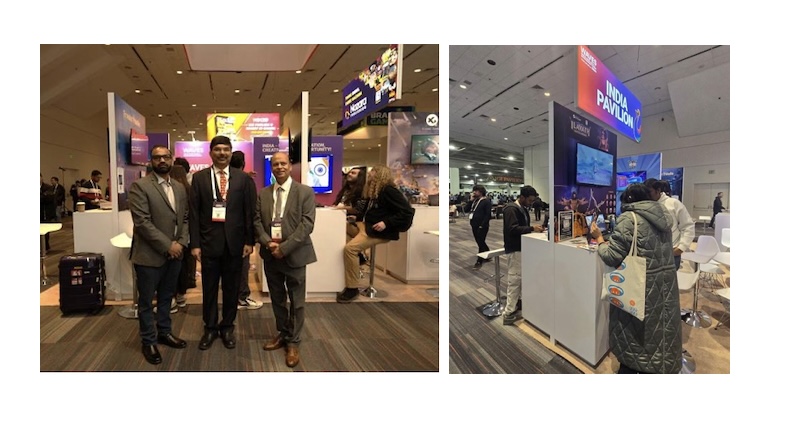
    MUMBAI: India has levelled up its presence in the global gaming industry with its  pavilion at the Game Developers Conference (GDC) in San Francisco. The showcase, inaugurated by India’s consul general in San Francisco K. Srikar Reddy, puts the spotlight on the country’s burgeoning gaming sector and its ambitions to become a worldwide content powerhouse.

    The India Pavilion features an impressive roster of exhibitors, including established players like Nazara Technologies and WinzO, alongside plucky award-winning upstarts such as Wala Interactive, Brewed Games, Xigma Games, and Singular Scheme. These companies are demonstrating that India’s gaming industry is no longer just pressing “play”—it’s pressing ahead.

    Several champions of the “Bharat Tech Triumph Season 3” challenge are also showcasing their wares, including Yudiz Solutions, Brahman Studios, and the whimsically named Over the Moon Studios. The pavilion serves as a matchmaking service of sorts, connecting Indian developers with global publishers, investors and potential collaborators.

    Beyond gaming, the pavilion is drumming up interest for the upcoming World Audio Visual and Entertainment Summit (Waves), scheduled for May in Mumbai. This flagship event, organised by the ministry of information and broadcasting through the National Film Development Corp (NFDC), aims to position India as the “Content Hub of the World”—a lofty ambition for a country already producing films and television at an industrial scale.

    The timing could hardly be better. GDC, running from 17 to 21 March, attracts the crème de la crème of the global gaming industry. By planting its flag at this influential gathering, India is signalling that its developers are ready to play in the big leagues.

    For a nation long associated with outsourced IT services, the pivot to creative digital content represents a strategic shift. India’s gaming companies are no longer content to be mere back-office operations—they’re designing the games, creating the characters, and writing the storylines that could captivate players worldwide.
    As one industry insider quipped, “India has been the world’s back office. Now it wants to be its arcade too.”

  • India’s Competition Commission Investigates Google’s Real-Money Gaming Policies

    India’s Competition Commission Investigates Google’s Real-Money Gaming Policies

    With the Competition Commission of India (CCI) launching an investigation into Google’s restrictive policies on real-money gaming (RMG) applications, India’s digital gaming industry is witnessing a regulatory showdown. The incident came to light when a leading Indian gaming platform, WinZO, accused Google of discriminatory policies favoring a few gaming apps while excluding others.

    These developments have added to the regulatory challenges Google has faced in India. Earlier, the company was penalized for abusing its dominance in the Android ecosystem by enforcing restrictive policies that favored its own services over competitors.

    . In 2022, the European Commission fined Google €4.34 billion ($5 billion) for favoring its search engine and Play Store ecosystem.

    . In 2021, South Korea’s Fair Trade Commission fined Google $177 million for anti-competitive Play Store policies.

    All About Google’s Gaming App Policy and WinZO’s Complaint

    The controversy traces its roots to 2022 when Google revised its gaming app policy and permitted a few RMG apps, mainly fantasy sports and rummy, on its Play Store. However, WinZO’s app, which offers a wide range of games like carrom, puzzles, and racing, was excluded. As a result, the company argued how Google’s selective acceptance has generated a two-tier system that favors some developers while disapproving others.

    As per the CCI order, “By granting preferential treatment to select app categories, Google effectively creates a two-tier market where some developers are accorded superior access and visibility while others are discriminated against and thus, left with a competitive disadvantage.” The regulator also stated that Google may have violated Sections 4(2)(a)(i), 4(2)(b), and 4(2)(c) of India’s Competition Act and a detailed investigation was required to look through the issue.

    Moreover, WinZO went on to criticize Google for what it calls an “unreasonable and restrictive” approach due to which developers are forced to distribute their apps outside the Play Store through direct downloads via the sideloading method. The company further alleged that when users attempt to make payments, Google begins flagging the platform as risky, thereby warding off potential players. 

    Regulatory and Market Implications

    India’s online gaming industry is at a critical juncture as regulatory uncertainty has clouded its rapid expansion. Despite the Indian government actively working on new regulations introduced in 2023 and 2024, challenges remain.

    . India’s gaming market is projected to grow from $3.7 billion in FY24 to $9.8 billion by FY29, reflecting a 20% CAGR, according to a 1Lattice report.

    The introduction of 28% GST on gaming transactions in 2023 has added further strain to the industry, significantly impacting revenue streams for major gaming firms.

    . Reports indicate that leading gaming companies like Dream11 and MPL have experienced revenue declines of 20-30% in FY24-25, driven by the increased tax burden

    With both taxation and Google’s restrictions in play, many RMG platforms now struggle to scale their operations in India, leading to slower innovation, investor uncertainty, and a shift toward offshore markets. 

    Case Study of Alternative Strategies

    As regulatory and platform restrictions tighten, many emerging gaming platforms are adopting alternative distribution strategies to circumvent Google Play’s limitations. Brands like Parimatch and other web-based new casinos bypass these restrictions by offering direct APK downloads while leveraging influencer marketing on platforms like Telegram and YouTube to engage Indian players effectively.

    Following this approach helps gaming companies to maintain user engagement without relying on Google’s ecosystem. These methods involve distributing APK files directly through their websites, which allows them to avoid Play Store commissions and restrictions on payment processing. Additionally, they can also seek influencer-driven marketing that helps build trust and visibility in a market where digital word-of-mouth plays a crucial role.  
    Another emerging trend is the development of web-based gaming platforms. Here, games run directly in browsers without requiring a Play Store listing, providing a seamless user experience while bypassing App Store policies altogether.

    Next Steps to Watch for in the Investigation

    If the CCI enforces regulatory action against Google, it could reshape India’s digital gaming landscape with fair competition and greater accessibility for gaming platforms. Meanwhile, the industry’s swift adaptation to alternative distribution strategies signals that Indian gaming firms are ready to challenge the status quo-whether through legal battles or innovative market approaches.

    Simultaneously, we see several gaming platforms already adapting to the situation by utilizing alternative distribution models, exploiting influencer networks, and investing in direct user acquisition strategies.

    Disclaimer: This article does not have journalistic/ editorial involvement of indiantelevision.comindiantelevision.com group or its websites does not endorse/ subscribe to the contents of the article/advertisement and/or views expressed herein.

    The reader is further advised that Online Casino, Betting, Online Gaming , Crypto products, Financial Investments/Engagement , NFTs, Products associated with health, wellness, and food are unregulated and can be highly risky. There may be no regulatory recourse for any loss from such transactions or risk associated with health conditions.

    Indiantelevision.com group shall not in any manner, be responsible and/or liable in any manner whatsoever for all that is stated in the article and/or also with regard to the views, opinions, announcements, declarations, affirmations etc., stated/featured in the same. The decision to read hereinafter is purely a matter of choice and shall be construed as an express undertaking/guarantee in favour of indiantelevision.com (indiantelevision.com group) of being absolved from any/ all potential legal action, or enforceable claims. The content may be for information and awareness purposes and does not constitute financial advice.

  • WinZO achieves 40 per cent growth in retention rate with Clever Tap

    WinZO achieves 40 per cent growth in retention rate with Clever Tap

    Mumbai: CleverTap, the all-in-one engagement platform announced that mobile gaming platform, WinZO, has achieved 40 per cent growth in retention rate following the CleverTap rollout.

    Founded in 2018, WinZO has over 175 million users, making it the mobile social gaming platform. WinZO hosts more than 100 games across multiple formats in more than a dozen regional languages.

    WinZO provides product value and fosters user retention. The challenge was to quickly analyse data to enhance user retention. CleverTap’s integrated partnership with WinZO’s technology stack, to nurture more robust customer relationships, bolster user engagement, and increase retention rates. Currently WinZO has 5 billion micro in-app transactions every month, and delivers highly personalised experiences to gamers.

    Commenting on development WinZO strategy and growth Angad Sehdev, “In the current highly competitive environment, where users have an abundance of options with numerous apps and brands competing for their attention, our goal is to craft experiences that are highly responsive and based on real-time interactions,”

    He further added, “CleverTap doesn’t just provide data; it equips us with the insights, segmentation, and tools needed to execute swiftly. In this kind of an ecosystem, if you’re not acting on the data in real time, you lose your user base. You need to understand what the user wants before the user has even expressed the need.”

    CleverTap offers comprehensive tracking and analytics, enabling WinZO to gain insights into customer interactions with its products. This real-time feedback on new app updates aids in refining rollout strategies.

    CleverTap chief revenue officer Sidharth Pisharoti said, “Customer retention has always been at the heart of everything we do at CleverTap, and we’re thrilled to have helped WinZO increase their retention rates by 40%. It’s been an immense pleasure working with WinZO over the last 5 years. Today, they are one of India’s largest mobile gaming platforms. This is a result of their deep understanding of customer behavior and the team’s ability to deliver on those expectations. As WinZO embarks on an ambitious journey to expand its user base to 700 million and introduce new gaming formats, CleverTap remains a steadfast partner in this tech-driven gaming revolution.”

  • WinZO ropes in Youtuber CarryMinati as brand ambassador

    WinZO ropes in Youtuber CarryMinati as brand ambassador

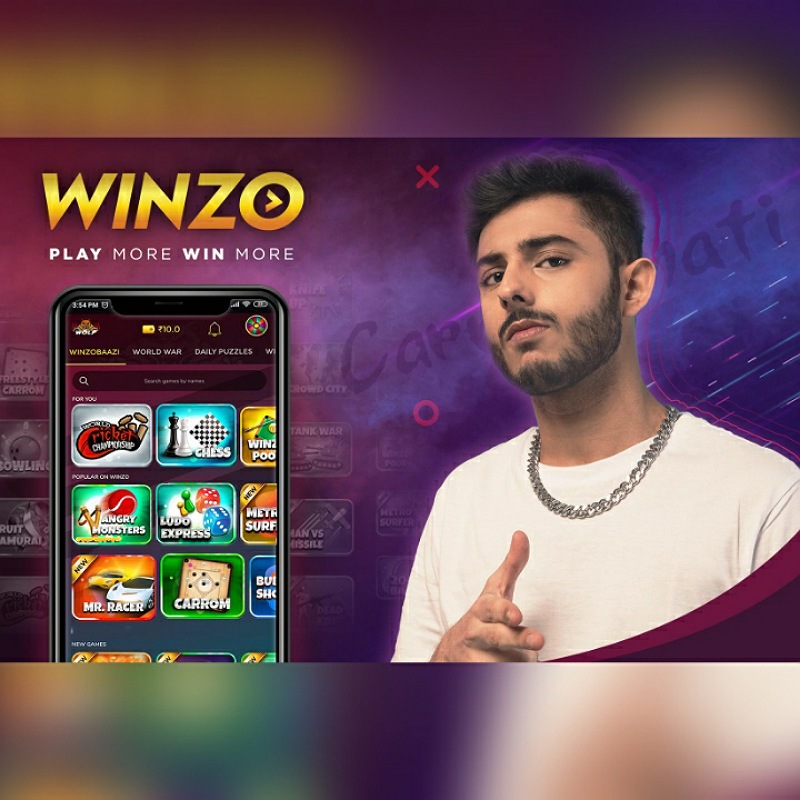
    Mumbai: Homegrown interactive entertainment platform WinZO has roped in independent content creator Ajey Nagar who goes by the alias CarryMinati, as its brand ambassador. The New Delhi-headquartered interactive social gaming startup seeks to leverage its foothold within the gaming community in India with this strategic partnership. 

    As a part of this strategic collaboration, the Youtuber will generate gaming-centric content that is interactive, unique, and relatable for WinZO exclusively on his streaming channel ‘Carryislive’ and a solo integration on his primary YouTube channel CarryMinati, said the gaming company.

    “India is fast emerging as a critical market for interactive entertainment on the global grid. Gaming is also rapidly evolving and isn’t limited to only playing anymore,” remarked WinZO co-founder Saumya Singh Rathore. “The advent of live streaming and community engagement has resulted in the evolution of a 360-degree gaming ecosystem, which CarryMinati has been at the forefront of. We are thrilled to have him onboard. We collectively hope to further our vision of promoting the spirit of winning and culturally relevant content across Bharat.”

    According to the latest industry reports, the Indian gaming industry is generating over $1.5 billion revenue and is expected to exponentially grow to be a trillion-dollar industry by 2025. Interestingly, approximately, one in every five mobile game downloads worldwide is from India. Ahead of markets such as the US and Brazil, India was the leading country for the first half of 2021, reaching 4.8 billion downloads.

    “India is at the epicentre of a swiftly growing trillion-dollar global gaming opportunity. The country is the largest market for mobile games, contributing to nearly 40 per cent of the worldwide downloads, which speaks volumes about the untapped potential of the social gaming community,” stated CarryMinati. “Considering there is a similarity in WinZO’s and my core competencies and brand values, I would like to create multiple avenues via this partnership to connect people from the remotest parts of the country through culturally relevant and relatable content. It is important that visionaries in the marketplace join hands to discover and develop this untapped industry to build a robust ecosystem.”

    This announcement comes shortly after WinZO’s recent partnership with Ranveer Singh starrer Bollywood film “83” as the official sports brand partner. The brand also launched its multilingual brand campaign in close collaboration with Ogilvy’s global chief creative officer, Piyush Pandey.