Tag: WiFi

  • Which is the Best WiFi Connection for Gaming?

    Which is the Best WiFi Connection for Gaming?

    Online gaming has become a major source of entertainment among multiple individuals. Whether it’s an intense multiplayer showdown or an immersive role-playing game, players demand seamless connections and dependable speeds. ACT Fibernet, a pioneering business in broadband services, delivers an array of WiFi packages designed for players. 

    With its high-speed internet plans and the fastest WiFi router for gaming, players can fully immerse themselves in uninterrupted gameplay and higher functionality. Among all its plans, the ACT Lightning Plan stands out as the ultimate solution for players demanding top-tier speed for superior gameplay.

    The ACT Lightning Plan for Gaming

    The ACT Lightning Plan is clearly intended to fulfil the demands of online gamers. With an unbelievable 500 Mbps speed, this plan offers a high-performance connection that confirms lag-free play at all times.

    The unlimited plan ensures that players no longer need to worry about data boundaries or extra costs that can interrupt their gaming experience.

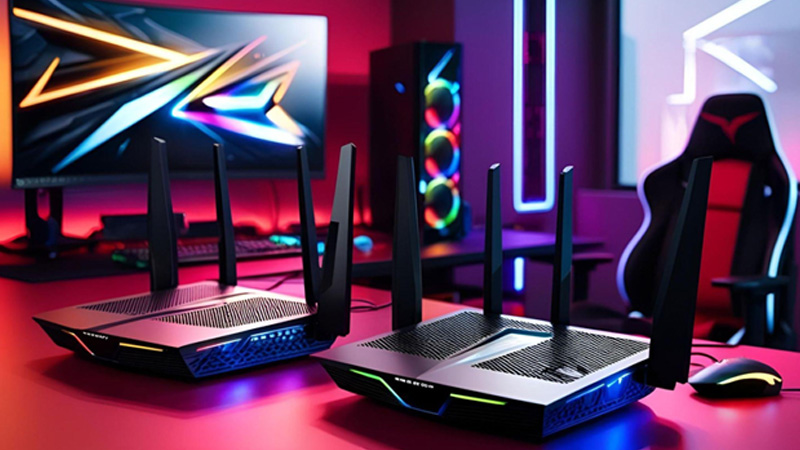
    Are you wondering which WiFi router is best for gaming? The ACT Lightning Plan includes a free router. So, it provides users with everything essential to build a reliable and fast gaming system. 

    Whether streaming, downloading, or engaging in online battles, the plan’s robust performance guarantees that your connection stays stable and swift, even with multiple devices connected to the same network.

    What Sets ACT Fibernet Apart for Gaming?

    ACT Fibernet has established itself as a pioneering participant in the fibre internet space, offering cutting-edge broadband services tailored for diverse needs, from home offices to dedicated gaming setups. But what is it that truly sets ACT Fibernet apart and makes it the best WiFi for gaming? Here, we have discussed the benefits:

    . Lightning-quick connections for competitive play: ACT Fibernet’s unparalleled speeds make it the best WiFi for gaming. It ensures online matches remain smooth without lag or buffering. Whether downloading hefty game files or live streaming conquests, their high-speed internet guarantees a smooth and unhindered experience.

    . Optimised across an array of devices: ACT Fibernet’s steady and rapid connectivity can handle multiple gadgets operating simultaneously. Regardless of how many people are using the connection on diverse devices, you’ll enjoy continuity throughout without slowdowns.

    . No weak wireless zones: With the fastest WiFi router for gaming from ACT Fibernet, you won’t have to deal with dead WiFi coverage zones in any corner of your home. The connection stays strong in every room, ensuring gaming is never interrupted by poor signals or dropped connections.

    . Self-treating capabilities: ACT Fibernet’s self-healing abilities ensure the network rapidly recovers from minor issues, allowing seamless performance even in rare technical glitches. This provides an extra layer of dependability crucial for maintaining a steady connection during extended play sessions.

    . Fortified security: Online gaming regularly involves sensitive information, and ACT Fibernet prioritises protection with enhanced safety features. Their secure network safeguards private details, accounts, and transactions, offering peace of mind while gaming.

    About ACT Fibernet

    ACT Fibernet is dedicated to delivering superior speeds, reliable connections, and innovative plans tailored to meet the needs of both individuals and businesses. Renowned for its high-performance fibre optic internet, ACT Fibernet continues to guide innovation and revolutionise connectivity. 

    With a focus on speed, stability, and customer satisfaction, it provides some of the most consistent and dependable internet plans in the country.

    Contact Information:
    Atria Convergence Technologies Ltd.
    Customer Support: +91 9945999459
    Email: helpdesk@actcorp.in

  • Zee vs Railtel arbitration: tribunal dismisses claims by both

    Zee vs Railtel arbitration: tribunal dismisses claims by both

    MUMBAI: Railtel Corp and Zee Entertainment have been at loggerheads for the past three years.

    The bone of contention has been the cancellation of a 10 year contract that Zee’s subsidiary Margo Networks had signed with the former in March 2021 to provide content on demand (movies, news, music videos, and general entertainment) free of buffering onboard 8,731 trains including 5,723 suburban trains and more than 5,952 wi-fi-enabled railway stations. As part of this, media servers were to be installed in railway coaches.

    The Railway Board had assigned Railtel with the task of implementing this dream project which had then subcontracted it to Margo. Revenue expectations were high with the Railways hoping to pocket at least Rs 60 crore as part of the 50:50 arrangement it had made with Railtel.

    The project had moved to pilot implementation stage in a Rajdhani train and in an AC rake of the western railways.

    And then it was called off suddenly in November 2021. Railtel said, it was due to the alleged non-performance of Margo Networks. Zee Entertainment had disagreed and announced that it would haul Railtel to the courts.

    In August 2023, it started arbitration proceedings against Railtel for cancelling the contract and claimed amounts wrongfully forfeited by the latter along with costs/damages. The matter had been with the arbitral tribunal since then.

    Zee Entertainment, on 26 November 2025, informed  the BSE in a regulatory filing, that the arbitral tribunal had made its arbitral award. As part of that, it had rejected its and Margo’s claims against Railtel. It added that the tribunal had  also rejected the counter claims made by Railtel.

    Zee added that it is “evaluating the option of filing an application/appeal before the appropriate court for setting aside of the arbitral award.”

    Clearly, we have not seen the last of this courtroom saga. 

  • NxtDigital launches its flagship integrated solution ‘OneDigital’

    NxtDigital launches its flagship integrated solution ‘OneDigital’

    Mumbai: Hinduja Group’s NxtDigital has announced the introduction of its flagship integrated solution, OneDigital. This customised customer solution provides a wide range of services, including wi-fi, digital TV, OTT, voice/intercom, broadband, and CCTV.

    When compared to broadband packages, which range in speed from 10 mbps to 1 gbps, the TV solution offers clients up to 650 TV channels in both standard and high definition.

    Customers can access over 3,00,000 hours of OTT content from top global and regional platforms through OneDigital on any device.

    Customers can still be reachable over an IP or telecom network and have a personalised landline number with the help of its partners’ VOIP (voice over internet protocol) service, which is available nationwide. ONEDigital may offer customised CCTV solutions and wi-fi-enabled internet access in public spaces as part of the solution.

    Speaking at the launch of OneDigital at SCAT 2022, NxtDigital’s broadband subsidiary OneOTT Intertainment chief operating officer and OneDigital project lead Sanjeev Agarwal said, “Consumer preferences are radically changing in the way they not only consume but also access and engage digital services at home or at work. OneDigital has been designed specifically based on that premise to give customers access to all digital solutions for their home and office through a single business conduit  facilitating true digital convergence and much needed convenience.”

    He further added, “The USP is that this is a bespoke end-to-end solution and can be tailored based on a customer’s specific needs—whether for home or a small, medium, or large business. This is the start and we will, of course, continue to add more products to the OneDigital portfolio over time.”

    The company also unveiled its future OTT content aggregator app, which will enable users to access OTT content from leading local and international platforms.

    The app, which will soon be accessible online, will allow users access to over 3,00,000 hours of international and local material at first and pave the way for the integration of education, gaming, and other apps within the solution.

    The company has already built an ecosystem of partners to provide quality VOIP and CCTV hardware and software solutions. In order to fulfil customer demands from pre-sales and installation to service support and troubleshooting, NXTDIGITAL has started training its digital franchisees throughout its TV and broadband businesses. OneDigital is now being introduced in Mumbai and will be made available in additional significant cities by the end of the year.

    NxtDigital chief operating officer NK Rouse said, “We have over the years built a robust infrastructure, a strong subscriber base, and a national network of franchisees, all backed by best-in-class technology, including our HITS platform and our award-winning NxtHubs.”

    He further added, “OneDigital and NxtPlatly are extensions of our solutions portfolio, focusing on emerging technologies and the need to develop solutions with an eye on the future. We have also commenced training our franchisee partners to make the paradigm shift to digital solutions providers, ready for the next decade of growth that will also include broadband over satellite.”

    The award-winning NxtHubs that NxtDigital owns and operates, which just passed 100 locations and already provide digital TV, broadband, and OTT solutions in the majority of locations, will try to offer one digital solution.

    NxtDigital is hoping to leverage the strength of its planned broadband-over-satellite service to augment the solution in countries where terrestrial connectivity may be an issue.

  • WiFi-enabled device sales expected to grow 8% in 2019: Report

    WiFi-enabled device sales expected to grow 8% in 2019: Report

    MUMBAI: Over 204 million Wifi-enabled consumer devices were sold last year by India and in 2019, an 8 per cent growth is expected to touch 221 million units, according to a report by techArc.

    According to the report, with 65 per cent contribution in the total sales, mobile phones have become the most-used Wifi-enabled devices. 23 per cent is expected to be contributed by feature phones, followed by 4 per cent and less to PCs and others. 

    During the year 2018, all WiFi-enabled devices sold were based on WiFi 4 or WiFi 5 standards. 31.39 per cent of WiFi 5 was sold by the country whereas 68.61 per cent of WiFi 4 standard was sold in the previous year.

    In the future, the country will see WiFi of 6th standard which will be supported by the flagship smartphones. It is expected that with more flagships being launched supporting this standard, the actual enablement would happen only in the first quarter of 2020.

    techARC founder and chief analyst Faisal Kawoosa said, “The future lies in wireless high-speed connectivity and WiFi offers one of the most reliable and affordable alternatives to it. We have seen so far WiFi enablement through legacy IT and communications devices like laptops, routers and smartphones. This is now shifting to other consumer electronics like TVs, lighting, ACs, and refrigerators.”

    The report also added that the Indian market will move towards WiFi 5 in 2019 and it’s expected that the contribution of WiFi 5 devices will more than double by the year end owing to expected growth in Smart TVs including streaming devices as well as other homes automation or smart devices leveraging WiFi connectivity.

  • Broadband internet subscriber additions small in April 2019

    Broadband internet subscriber additions small in April 2019

    BENGALURU: Telecom Regulatory Authority of India (TRAI) data for the month ended 30 April 2019 (Apr-19, month under review) reveals that India’s broadband subscriber base grew by 86.4 lakh (8.64 million, 0.864 crore). This is only the fourth time over the past 15 months that less than 1 crore subscribers were added, the earlier occasions being for the month ended 31 August 2018 (34.1 lakh, 3.14 million 0.314 crore), 31 December 2018 (66.5 lakh, 6.65 million, 0.665 crore) and 30 April 2018 (71.9 lakh, 7.91 million, 0.791 crore).  It must be noted that TRAI indicates subscriber data in terms of millions  up to two decimal points, hence the granularity of subscriber data in this report is limited to 10,000.

    Growth in the country’s broadband internet subscriber base was led by mobile (phones and dongles), followed by growth in subscribers of Fixed wireless- WiFi, Wi Max, Point to Point, Radio, Vsat internet services. Wired broadband internet subscriber base saw a decline in Apr-19.

    As mentioned above, broadband internet subscribers grew by 86.4 lakh (8.64 million, 0.864 crore), or by 1.53 percent to 5,719.5 lakh (571.95 million, 57.195 crore) in Apr-19 as compared to 5,633.1 lakh (563.31 million, 56.331 crore) at the end of Mar-19. Mobile broadband internet subscribers increased by 78.8 lakh (7.88 million or 0.788 crore) in Apr-19 or 1.45 percent to 5,522.5 Lakh (552.25 million, 55.225 crore) from 5,443.7 lakh (544.37 million, 54.437 crore) in Mar-19. Wired broadband internet subscriber based declined by 0.04 percent or declined by about 10,000 to 184.1 lakh (18.41 million, 1.841 crore) in Apr-19 from 184.2 lakh (18.41 million or 1.841 crore) in Mar-19.  Subscribers of Fixed wireless- WiFi, Wi Max, Point to Point, Radio, Vsat internet services more than doubled (increased by 147.22 percent, 7.6 lakh or 0.76 million or 0.076 crore) during the period under review to 12.8 lakh (1.28 million, 0.128 crore) from 5.2 lakh (0.52 million or 0.052 crore) in the previous month Mar-19.

    The top five broadband internet service providers constituted 98.68 percent market share of the total broadband subscribers at the end of Apr-19. These service providers were Reliance Jio Infocomm Ltd or Jio  which had 3,148.1 lakh (314.81 million, 31.481 crore);  Bharti Airtel  or Airtel with 1,157.1 lakh (115.71 million, 11.571 crore); Vodafone Idea 1,096.6 lakh (109.66 million, 10.966.crore), BSNL 222.9 lakh  (22.29 million, 2.229 crore) and Tata Tele. Group 19.4 lakh (1.94 million, 0.194 crore).

    Wireless broadband internet subscribers

    As on 30 April, 2019, the top five Wireless Broadband Service providers were Reliance Jio Infocomm Ltd  with 3,148.1 lakh (314.81 million, 31.481 crore), Bharti Airtel 1,133.3 lakh (113.33 million, 11.333 crore), Vodafone Idea 1,096.4 lakh (109.64 million, 10.964 crore), BSNL 123.9 lakh (12.39 million, 1.239 crore) and Tata Teleservices 15.4 lakh (1.54 million, 0.154 crore).

    As has been the case right from the time it was launched, growth in wireless broadband internet subscribers was led by Jio which added 80.9 lakh (8.90 million, 0.809 crore) subscribers in Apr-19.  Airtel added 10.7 lakh (1.07 million, 0.107 crore) during the period, while Vodafone-Idea lost 5.6 lakh (0.56 million, 0.56 crore). Also, BSNL lost 5.4 lakh (0.54 million, 0.054 crore) subscribers during the period under review.

    Wired broadband internet subscribers

    As on 30 April, 2019, the top five Wired Broadband Service providers were BSNL with 91.5 lakh (9.15 million, 0.915 crore), Bharti Airtel 23.8 lakh (2.38 million 0.238 crore), Atria Convergence Technologies  or ACT with 14.3 lakh (1.43 million, 0.143 crore), Hathway Cable & Datacom or Hathway with 8.2 lakh (0.82 million, 0.082 crore) and MTNL 7.5 lakh (0.75 million, 0.075 crore).

    Both the public sector service providers BSNL and MTNL lost subscribers in Apr-19, while the three private players – Airtel, ACT and Hathway gained subscribers in Apr-19. BSNL lost 20,000 subscribers, while MTNL lost 40,000 subscribers in Apr-19. Hathway and Airtel added 50,000 subscribers each, while ACT added 20,000 subscribers during the month under review. Overall, the top 5 subscribers added a net of 60,000 subscribers in Apr-19, while the number of wired broadband subscribers in India shrank by 10,000, hence, the other players which include MSOs’ and LCOs’ saw their wired broadband subscriber base decline by 70,000.

  • Fortinet deploys over 500 WiFi locations across Mumbai

    MUMBAI: Fortinet, a leader in high-performance cybersecurity solutions, has announced that the Maharashtra Information Technology Corporation (MITC) has selected Fortinet to provide wireless Internet access to the citizens of Mumbai, India.

    Fortinet’s access points provide WiFi Internet access for the public in Mumbai and are deployed in more than 500 locations across the city for the Mumbai WiFi project. The WiFi network is also planned to be used for smart transportation in the near future. This deployment is part of the state government’s digital empowerment program, and Fortinet beat several other enterprise wireless providers to win the deal. Fortinet is uniquely able to support the technical implementation of this project with its wireless R&D center in Bangalore.

    In the first phase of the Mumbai WiFi project, the Maharashtra Government has deployed a combination of Fortinet indoor and outdoor access points with omnidirectional antennas, wireless controllers, and a wireless manager to provide simplified deployment and scaling, voice mobility, and the high performance needs required.

    Digital Empowerment of Mumbai

    Mumbai is home to 20.5 million people and is the commercial capital and the largest city in India. The Government of Maharashtra launched the Mumbai WiFi project to cover all major areas in the city with public WiFi hotspots to ensure that government services are available online to its citizens. Later this year, the WiFi network will also be used for smart parking and smart transportation, by providing real-time updates on the routes and available capacity of various modes of public transport in the city. The introduction of WiFi hotspots in Mumbai expands on the government’s vision of making Maharashtra the country’s first digital state.

    Fortinet Secure Access Solution

    Securing public communications over WiFi, such as personal information, financial transactions, and mobile device data sharing, involves much more than simply managing network access control. As organizations change the way they deploy access networks, connect devices, and the number and types of network-connected wireless devices and mobile applications grows exponentially, IT leaders must deal with the difficult task of balancing the requirements of network security with the flexibility to onboard a growing number and diversity of clients.

    Users want fast WiFi and a smooth experience across wired or wireless networks and IT leaders need reduced complexity of network management, application management, and device management. Typical WiFi solutions cannot satisfactorily address these requirements. Fortinet’s Secure Access solution delivers three WLAN deployment options to meet the different WLAN requirements of today’s enterprises. In addition to WLAN services, our complete secure access portfolio also provides the most flexible security with end-to-end enforcement enabled by the Fortinet Security Fabric.

    Maharashtra’s principal secretary – information technology Vijay Kumar Gautam says: “With the Mumbai WiFi project, our goal was to cover all major areas in the city with public WiFi in order to make important government services available online. Because of the hyper-connected nature of our public infrastructure today, an ambitious project like this requires technology that can scale and be flexible to enable more users, devices, and applications over time.”

    Fortinet SVP – products and solutions John Maddison says: “BYOD and the Internet of Things (IoT) are creating new attack vectors that put critical assets within public or private networks at risk. As more users, devices, and applications are added to WiFi networks, organizations need secure, enterprise-class WiFi that can deliver a superior experience for all users. Secure access needs to extend consistent security policies to the very edge of the network where most vulnerabilities target. Security cannot happen at the expense of high-availability, speed and density of coverage which are all must-haves in a public WiFi network.”

  • FB Express WiFi to deploy 20k hotspots through Airtel, more tie-ups in pipeline

    MUMBAI: Times are a changing. The cable guy no longer carries optical fibre for satellite TV to the consumer’s house. Entrepreneurs will now establish WiFi hotspots through Facebook to provide internet in public places. Google has already rolled out free Net access through public Wi-Fi at 100 railway stations, in partnership with government’s RailTel. 

    India has a population of around about 1.3 billion people, but according to TRAI report, only 390 million are connected to the internet.

    Facebook’s Express WiFi is a sequel to the Free Basics platform, which has partnered with entrepreneurs to help them establish public WiFi hotspots. Facebook has partnered with Airtel to deploy 20,000 internet hotspots through the Wi-Fi service in a few months. However, unlike Free Basics, Express Wi-Fi works on a ‘paid’ model. 

    FB head of connectivity solutions – Asia Pacific Munish Seth said that it was working with ISP and operator partners to test Express WiFi with public WiFi deployments. 

    Indians would now be able to purchase reliable, fast and affordable data packs in four states (Gujarat, Uttarakhand, Rajasthan and Meghalaya). Express WiFi is being deployed in partnership with ISPs — LMES in Rajasthan, AirJaldi in Uttarakhand, Tikona in Gujarat, and with Shaildhar in Meghalaya shortly. Express Wi-Fi is operational in four countries excluding India, that is, Tanzania, Kenya, Nigeria and Indonesia. 

    Airtel COO (India & South Asia) Ajai Puri said that the initiative would provide affordable access to high speed data to the underserved segment thus contributing to the Government’s Digital India vision.

    While Facebook did not elaborate, it plans to have similar tie-ups with other telcos, including Vodafone and Reliance Jio. It is in talks with state governments and government-owned Bharat Sanchar Nigam, to establish similar hotspots.

    Also Read:

    FB targets next billion Indians with local content and Express Wifi

    FB adds India-specific options, shows how to build communities

    Jaitley, stakeholders discuss broadband speed & penetration, wi-fi, digitisation, open Net & cyber security

    Facebook exec ponders: How to hold the brain’s attention?

  • Comcast to launch wireless service using Verizon

    Comcast to launch wireless service using Verizon

    MUMBAI: Here is good news for all Comcast subscribers. The US cable giant’s chief executive Brian Roberts has announced the launch of a wireless service by mid-2017. It plans to create a service that would run on its 15 million WiFi hotspots and use Verizon’s wireless network through a deal struck in 2011. Under that deal, a consortium of cable companies led by Comcast sold nationwide spectrum licenses to Verizon for $3.6 billion and secured wireless-resale rights.

    This new business line will in-turn help the company to better retain its cable customers in the pay-TV market.

    Roberts said that they believed there would be a big payback with reduced churn, more stickiness and better satisfaction. Comcast would market the wireless service inside their footprint, to existing and potential Comcast cable customers, as opposed to nationwide. The company was interested in up-selling customers to a bigger bundle of services.

    Roberts also introduced Comcast’s newly integrated Netflix experience on its next-generation X1 set-top box and guide. It is in discussions with several other video streaming providers to integrate their services into the X1 box.

    Over the past several years, Comcast has been replacing its cable customers’ routers with new ones doubling as public Wi-Fi hotspots. It is also among the potential bidders for wireless airwaves in a current federal auction. With this move, Comcast is trying to be the first successful cable mobile virtual network operator (MVNO), a concept pioneered by Virgin Mobile UK in 1999.

  • Comcast to launch wireless service using Verizon

    Comcast to launch wireless service using Verizon

    MUMBAI: Here is good news for all Comcast subscribers. The US cable giant’s chief executive Brian Roberts has announced the launch of a wireless service by mid-2017. It plans to create a service that would run on its 15 million WiFi hotspots and use Verizon’s wireless network through a deal struck in 2011. Under that deal, a consortium of cable companies led by Comcast sold nationwide spectrum licenses to Verizon for $3.6 billion and secured wireless-resale rights.

    This new business line will in-turn help the company to better retain its cable customers in the pay-TV market.

    Roberts said that they believed there would be a big payback with reduced churn, more stickiness and better satisfaction. Comcast would market the wireless service inside their footprint, to existing and potential Comcast cable customers, as opposed to nationwide. The company was interested in up-selling customers to a bigger bundle of services.

    Roberts also introduced Comcast’s newly integrated Netflix experience on its next-generation X1 set-top box and guide. It is in discussions with several other video streaming providers to integrate their services into the X1 box.

    Over the past several years, Comcast has been replacing its cable customers’ routers with new ones doubling as public Wi-Fi hotspots. It is also among the potential bidders for wireless airwaves in a current federal auction. With this move, Comcast is trying to be the first successful cable mobile virtual network operator (MVNO), a concept pioneered by Virgin Mobile UK in 1999.

  • Lukup launches on-demand television service in India

    Lukup launches on-demand television service in India

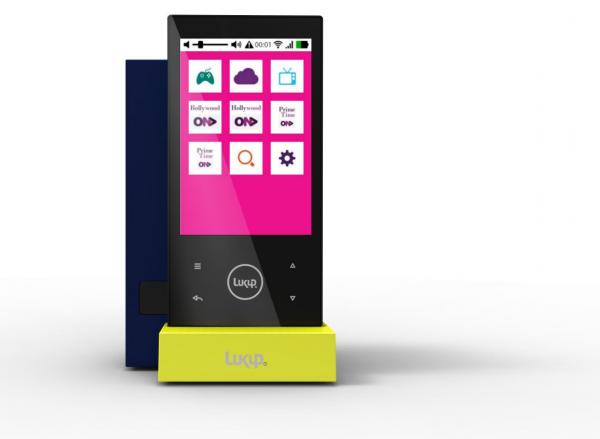
    BENGALURU: Indian company Lukup Media has announced the launch of an on-demand TV service powered by a connected device- the Lukup Player. The device is similar to Apple TV or Google TV, but can also deliver content across multiple screens using WiFi.

    Lukup CEO Kallol Borah said, ““Our TV service is designed to meet the requirements of changing lifestyles and consumer behaviour where more and more people want their entertainment when they have time, on a device of their choice and even when they are travelling and away from home. We also want to bring content and channels not available to viewers in India currently and broaden their choice of content substantially.”

    The Lukup TV service aims to deliver a large number of TV channels in addition to those available on cable and DTH platforms. These additional TV channels will have content from multiple genres including movies, shows, lifestyle and sports. Using the Lukup Player, users will also be able to stream content on more than one screen or device – TV screens, tablets, mobile phones, wireless speakers – at any one time. The service includes unlimited recording capacity starting from 500 GB which can be upgraded without limit. Users can also download content on their mobile devices which they can access offline. With no minimum monthly subscription charges, users can pay per view.

    Lukup CFO Harsha Mutt said,” “The television and broadcast industry in India needs an overhaul since customers’ desire experiential content on a device of their choice, at a time of their liking. To cater to this demand, we are meticulously putting together an elaborate network for delivering content to our customers through an over the top (OTT) TV service. With exclusive content, movies and TV shows available on our video-on-demand platform, we aim to make life easier for our customers, inspiring them to celebrate their joie-de-vivre. Our association with various content providers is a significant step forward in this direction.”

    The Lukup TV service is currently available in Bengaluru and will be available across India in phases. The Lukup Player will be online and in retail stores from October 2014.