Tag: Who wants to be a Millionaire

  • Kannada KBC to air on Colors Kannada starting 22 June

    Kannada KBC to air on Colors Kannada starting 22 June

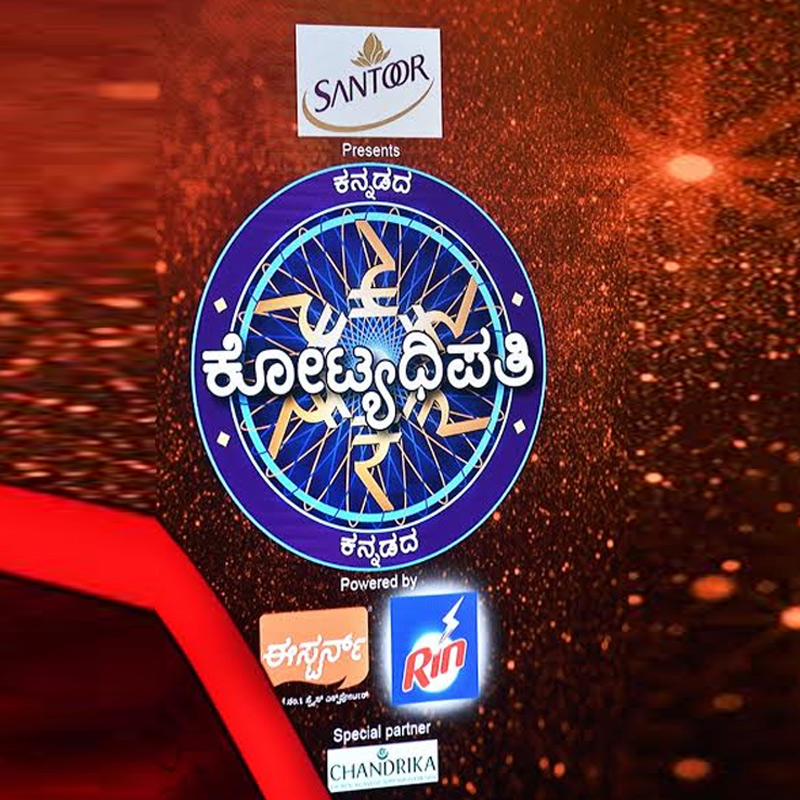
    BENGALURU: Viacom18 has taken over where Star India left off – the Kannada version of Kaun Banega Crorepati – Kannadada Kotyadipathi or KK will start airing on Viacom18’s flagship Kannada GEC Colors Kannada and its HD counterpart Colors Kannada HD starting Saturday 22 June.

    It’s a strategic move as far as Viacom18’s Kannada entertainment cluster head Parameshwar Bhat is concerned – Colors Kannada has a strong lineup of programmes for the week. More often than not, more than half of the programmes in Broadcast Audience Research Council of India (BARC) list of top 5 Kannada programmes in Karnataka during primetime are aired on it. Besides, on most weeks, Colors Kannada is the most watched Kannada channel based on BARC weekly data.

    Bhat needed the weekend programming of his flagship channel to be strengthened – he asked for it and got the rights for KK for his channel when Star India forsake the show after a not very successful season in 2018. Colors will air 41 episodes, of which 4 have already been canned, for the clone that has been tweaked for local Kannada audiences of the globally popular Who Wants To Be A Millionaire. Colors has tweaked the fourth season of KK a bit as compared to the previous editions – besides the changes that evolved with each season, the channel has brought back Kannada film icon Puneeth Rajkumar to host the show.

    Industry pundits peg the KK cost per episode at Rs 25 lakh or thereabouts. While not confirming the estimates, Bhat is confident that the show will be in the black. And he has his experience with Kannada Bigg Boss to back his confidence. “A property such as Kannadada Kotyadipathi attracts spot advertisers even during the day of the broadcast of the show,” he says. Bhat says that he is sure of them coming in, more so for the weekend, which incidentally, he feels is just an urban phenomenon. For rural folks all weekdays are the same, be they working days or weekends for the rest of the world. He has already roped in Wipro’s soap brand Santoor as presenting sponsor, Eastern Masala and detergent Rin as powered by sponsor and another soap brand – Chandrika Soap as special partner. His marketing is actively working out deals, he says.

    Colors has a 360-degree marketing plan to attract eyeballs for KK with touchpoints across on-ground, outdoor, radio, print, cross channel and digital. However, outdoor and billboard promos on the 500 to 600 Karnataka State Road Transport Corporation buses have been restricted to outside Bengaluru for now. Once the show starts Bhat plans to strategically release ads across media including print. Most of the creative work has been done in-house by the channel’s own teams.

    Company speak:

    Besides strengthening the weekend slot, there are other reasons for Colors doing the show. Here’s what Viacom18 Head of regional entertainment Ravish Kumar had to say via a press release: “The language content consumers have grown enormously over the years and though their tastes vary from region to region, they all converge at family game-show formats like Who Wants To Be A Millionaire. The universality of a quiz-show brings about cohesivity in viewing making it enjoyable and enhances captive engagement. Featuring real people and stories that showcase their aspiration and reason to win a substantial sum makes for a compelling content proposition.”

    Kumar further added, “Gauging the success of our previous two editions in different languages, we’re confident that Kannadada Kotyadipathi will certainly be well received by viewers as well as the advertisers on our channel, who rely on us to bring only the best of content to Kannada television.”

    Elaborating further, Bhat said, “Colors Kannada leads the roster in creating and presenting pathbreaking content for its viewers, and Kannada Kotyadipathi is yet another example of our commitment to be industry leaders. We’re luring audience to a form of entertainment that keeps them engaged as well as invested. While the format of the game remains unchanged, we’re scaling up the production and sprucing our treatment to make it more delightful for viewers across genres and milieu; and are also bringing back on board the indomitable superstar Puneeth Rajkumar who will multitask as a host, a friend and a guide.”

    KK is produced by Studio Next, the production house of Sony Pictures Networks. Studio Next holds the license of the format, for all Indian languages and has produced more than 1,800 episodes of the show across nine languages. The latest edition of KK will have an upgraded look and feel including an advanced set, claims a press release

    Studio Next head Indranil Chakraborty said, “We are extremely happy and privileged to bring the show to the people of Karnataka with their favourite host, Puneet Rajkumar and in the leading channel, Colors Kannada. We have maintained the same ethos of the show as in other languages, followed strict and transparent process for contestant selection and delivered production quality of the highest standards. Kannada Kothyadipathi will celebrate the great leveller of our society i.e. knowledge”.

  • KBC’s 15 years: A dash of nostalgia

    KBC’s 15 years: A dash of nostalgia

    MUMBAI: 3 July, 2000 is a date Indian television industry folks will not forget. It was on this day that a new show hit TV screens on a channel called Star Plus which was a straggler in the Hindi general entertainment channel (GEC) sweepstakes.


    It was hosted by an ageing actor who was a superstar a decade before.  Amitabh Bachchan on the Indian adaptation of Who Wants to be a Millionaire? Kaun Banega Crorepati? caught Indian TV viewers’ imagination.


    Television had in the past experimented with film talent hosting or acting or directing shows. In the eighties, Ramesh Sippy, BR Chopra and Ramanand Sagar had managed to get the Indian TV audiences riveted in front of their TV sets with their ensemble consisting of film actors and some newbies. And it had worked – worked incredibly well.


    But Mr Bachchan was not at his peak.  He had begun his fall down the cliff. The buzz was that his star was on the descendant, his health had failed him and his business ventures had capsized, he had defaulted on payments and loans and he owed a lot to people.


    Hence, no one really expected Mr Bachchan and the new show to work. Excepting two executives: Sameer Nair, who was then programming head at Star and Steve Askew, his senior colleage out of Star Asia, HongKong. And Peter Mukerjea who headed Star India then. He had replaced the flamboyant former government bureaucrat Rathikant Basu.


    Packaged intelligently with Kaun Banega Crorepati were two other shows: Kyyunkii Saas Bhi Kabhi Bahu Thi and Kahaani Ghar Ghar Ki. Both talked about families and values of a bygone era, yet they seemed very contemporary because probably they were. And these three powered Star Plus very soon to the number one spot in the GEC space, polevaulting over the well entrenched Zee TV, Sony and Doordarshan.


    It was a spot it held on to for almost seven years, earning for News Corp billions of dollars, and becoming the brilliant stone of its Asian crown.


    Today, the network is headed by Uday Shankar who has expanded it into the regional space, niche content, sports, OTT services. It still leads the Indian market as probably the most valued Indian entertainment company. Some may argue that it’s Zee which is at the top, but that’s an argument that no one will possibly win.


    On 3 July, however, who were associated with the channel and the show at that time got nostalgic on social media.


    It began with a post by the then Star entertainment channel programming head Steve Askew: “15 years today since the beginning of the Indian Television revolution for STAR Plus! Thanks to Big Synergy, Balaji and of course Sameer Nair.”


    Sameer in turn went on to thank Big B and a host of others from Star associated with the show at that time.  Big Synergy promoter Siddhartha Basu then raised a toast stating: “Here’s to the crystal anniversary of the show that brought in the millenium, and everybody who was part of making it happen, cheers !”


    Star Plus marketing executive Mubina Ansari then posted a comment on her Facebook page which attracted several comments like bees to a honeypot.


    Said she:  “I will never forget 3.7.00. Rains like never before and a 1000 promoters on the streets of Mumbai asking people to tune in to KBC.”


    To which another Star Plus marketing had Vidyuth Bhandary (currently with Fremantle India) responded: “Yep !! How 15 years have passed !! I still remember behaving like a typical client with Roshan Abbas and Karan Chettri, as I was overlooking the Delhi onground promotions on 3rd July 2000 !! That was a mammoth operations and nothing has come close to it even today !!!”


    Remembering the old times Roshan Abbas who ran an event agency then added: “Oh I remember ! With Siddharth Roy Kapur (currently CEO UTV-Disney) in Lucknow, Vidyuth Bhandary Mubina Ansari all manning the streets ! And then came the biggest revolution in TV and Star Plus.”


    Sumantra ‘Sumo” Dutta (currently based in Dubai with a telecom company) who headed sales at that time piped in  “Seriously fun times. Game changing times. High risks too.”


    “Everything was planned up to the last detail,” revealed Samson Jesudas (in the distribution of Star India then). “Be it programming, marketing, distribution, advertising, branding, etc etc. I have yet to see a launch like this… No wonder today, if one picks up any channel, advertising firm, agencies, MSO, etc, one will find a ex Star guy/girl working for them. Amazing experience.”


    Jesudas also elaborated the role that distribution played in making the show visible to Indian viewers. He remarked in his response to Mubina: “Guys u forgetting the distribution team who ensured that Star Plus runs in prime band in all cable networks. I remember that we bought all cable guys under one roof on 3.7.00, so that there’s no sabotage and blackout of Star Plus and even if there’s one, we have the cable owner in front of us to rectify the same.”


    He finally ended by saying it was “teamwork” which made it happen.


    KBC, ran for only three seasons on Star Plus (2000-2001, 2005-2006 and 2007) but it helped chart a new course for Murdoch’s Indian entertainment venture. It moved to Sony in 2010 and has run for five seasons (2010, 2011, 2012, 2013, and 2014).  The format has undergone a metamorphosis with more reality elements being added. Hopefully, its sixth season will do the trick for Sony.

  • The Content Hub: Talent shows and drama series drive the global format business

    The Content Hub: Talent shows and drama series drive the global format business

    MUMBAI: “Format business is a major industry.  Today, the production value of format business is well over 20 billion euros,” said The Format People CCO & partner Justin Scroggie during his keynote at ‘The Content Hub’ organised by indiantelevision.com.

    It is unquestionable that television formats have indeed become essential components in the international television market. Largely licensed by television networks, TV formats describe the overall concept of a show and its premises. Investors around the world are now looking at television as an attractive business.

     “Over the past nine years, American Idol has generated US $8 billion on its own,” he said.

    Scroggie also discussed about the major global trends and television formats in the international landscape as part of his keynote presentation. According to him, the original drivers for the format business are game shows. “Game shows are flexible, relatively short, scalable in terms of cost and renewable. They are repeatable and above all, they are adaptable in various cultures,” he opined while highlighting that despite all this, game shows are struggling these days.

    So why is this happening? “Everybody is looking for the next big game show breakout and nobody is finding it,”Scroggie explained.  Citing the example of the popular game show Who wants to be a Millionaire, Scroggie said that big money prizes are not delivering the kind of drama as the audience is too familiar with it now.

    In addition, with the advent of reality and talent programmes, game shows are not delivering the same level of drama, strong characters and emotional connect which the audiences are expecting. According to Scroggie, talent and reality shows are driving the international format business.

    “Got Talent entered the Guinness book of world record as the world’s most successful reality television format. It has been adapted in 63 countries,” he informed. There are many successful talent show formats like ‘Strictly Come Dancing’ and ‘Masterchef’ that have been adapted globally.  “However trends don’t happen in every country at the same time,”Scroggie added. While Canada does not have many talent shows, China currently has more than 90 talent shows on air.  

    At this point, Scroggie also said that talent shows are also getting saturated.  “Having learnt the grammar of making international talent programmes, more and more countries are making their own versions so that they don’t need to buy international formats,” he explained.  

    Scroggie believes that the fastest growing area of format business is scripted formats which include drama series that can be adapted and remade in other countries. Homeland, for example, one of the highly successfully television shows in the US, is actually an Israeli format.

     
    “The best dramas are those that travel and have something about them. They can be adapted into the story and emotions of any country,” he said.

    Scroggie also spoke about telenovelas, such as ‘Everest’ on Star Plus that drive scripted formats. He believes that today we can find quality drama content written by top talent starring A-listers.  Serialised dramas like family, crime and politics also work.

    In the last part of his keynote, Scroggie explained how the barriers between viewers and shows are breaking down. “Television is a passive medium and the audience wants to interact with the people they see on screens,” he added.  Scoggie feels that web series is picking up and is easy to watch.  While social experiments are popular, they are also risky as they involve real people in a live and reality drama.

    Scroggie, whose organisation deals in format creation, consultancy on formats, branding and in-house training also delved on why UK is a leader in format sales.

    “UK broadcasters are only allowed to keep 15 per cent of the rights on the show. The creators of the shows retain 85 per cent. This has created a huge incentive for producers to sell their formats to broadcasters,” he stated.   

    While UK, US, Netherlands, Israel and Brazil are doing well in the format business, Scroggie feels that Turkey and China are potential countries to also look out for in the future.

     “With your help, let’s add India to the list,” he concluded.