Tag: Whistling Woods

  • There is a worldwide audience eager to embrace more international products: Chantal Rickards OBE

    There is a worldwide audience eager to embrace more international products: Chantal Rickards OBE

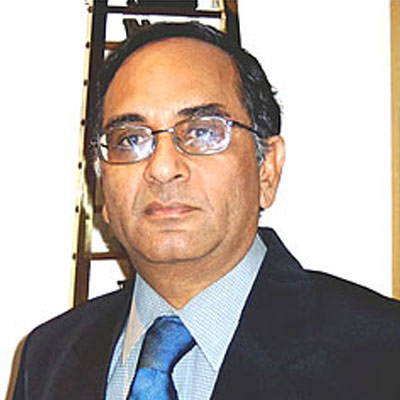
    Mumbai: Chantal Rickards OBE is a British television and film professional, a native of London, UK and was the CEO of BAFTA Los Angeles – The British Academy of Film and Television – from 2015 to 2019.

    In 2015 Chantal was appointed the first Chief Executive Officer of BAFTA Los Angeles. Chantal looked after the members based in the USA and made it her duty at BAFTA to encourage trade between the UK and the US in the creative sectors. While at BAFTA LA she conceived the formation of BAFTA North America and the consolidation of one global BAFTA brand to allow it to grow its international status and worldwide educational work.  Her work was recognized by Her Majesty the Queen in 2020 when she was awarded an OBE for her services to the industry and philanthropy.

    Rickards has had a successful career in the British creative and media sector since the 1980s. She’s produced and directed over 1,000 television programmes for the BBC, ITV, Channel Four, Sky and Channel Five since leaving University College, London. She trained at ITV, the largest commercial channel in the UK, rising from a low-level television researcher to a Director and Executive Producer of live and recorded Factual Entertainment programmes including MasterChef, one of the UK’s most prominent food shows which has travelled globally, Through the Keyhole, which ran for 32 years on British television, the French format game show, Countdown, still the longest-running game show on UK television, City Hospital, a live daily show from one of the UK’s largest public hospitals, Parkinson, a leading chat show and This Morning, ITV’s live mid-morning show.

    After five years at the BBC, she joined WPP’s GroupM which is the leading global media investment management company, which represented 40% of all global advertising spend.  Through GroupM, Chantal created long and short-form content over a seven-year period that subtly melded popular programming with advertising messaging and propelled brands from the bland to the outstanding. She has vast experience in brand strategy and recently rolled out a property brand in the USA.

    She is currently running a stimulating portfolio of roles, Chantal sits on the Board of Directors of The Dot Group, a global student housing business, and is on the Advisory Board of the UK’s National Youth Theatre; she continues to be a voting BAFTA member and raises money for them through events and donations; she also reviews films and television programmes for MRS Radio Station once a week under the moniker the ‘Screen Queen’.  Other recent project work includes creating a new business TV format, developing an 8-part true-life drama series about a prominent American family with a Hollywood producer, consulting on numerous film projects, from funding to development, in both the UK and the USA, and continuing to be the format consultant for Through the Keyhole, one of British TV’s most successful factual entertainment shows ever. Chantal recently supported Ryff, a US-based dynamic product placement company, which has just launched their Spheera platform in the UK.

    Indiantelevision.com spoke to Chantal Rickards OBE when she was visiting India recently. She spoke in length about her journey, her visit to Whistling Woods and interacting with the students there…

    Edited Excerpts:

    On your long career as an artist and then heading BAFTA how has the journey been

    A career in film and TV has been enormously rewarding. I’ve worked in live and recorded TV, in the UK and internationally, in Daytime and Primetime TV and then my exciting move to Los Angeles and Hollywood to run the British Academy of Film and TV for 5 years. It’s been hard work and a lot of fun.

    On Indian films being recognised globally. What is your perspective on the talent here in India

    My favourite film in 2022 was RRR, which was recognised with an Oscar. The Elephant Whisperer, a terrific Indian documentary, also received an Oscar and received great international recognition for Indian filmmakers. I am consistently impressed by the work of Indian filmmakers, composers and writers who are making their stories much easier for international audiences to appreciate.

    On Whistling Woods International as a leading institution for nurturing creative talent, what more can be done to make this talent recognized globally

    The young students I met at Whistling Woods International were keen to learn more about what’s popular around the world. Significantly, most young Indians stay in India and use their talent in their own country, but there are terrific and growing opportunities for young people from Asia in the UK and the USA. Talent is travelling. Good storytelling has universal appeal and no boundaries.

    On the other avenues for young students to showcase their talent globally and be recognised

    Young people from India need to understand what makes Western audiences tick, over and above Hollywood blockbusters, which resonate globally. It’s all about the story and the universal themes that bind us the world over like love and loss, ambition and power, mystery and magic, hope and desire.

    On the session with these young minds

    I was very impressed with the level of academic input at Whistling Woods International, most particularly with the interest in VR and immersive technologies. The technology facilities are very impressive and often these young professionals are trialling new products before they even reach the consumer. That’s really impactful.

    On WWI improving and innovating their curriculum

    I think Whistling Woods International could offer more information about how young Indians could market their content internationally. There is a worldwide audience eager to embrace more international products.

    On some of the projects you are working on presently

    I am currently working on developing cinema and TV projects with a Hollywood producer, and I am in early development on projects with Red Carpet Moving Pictures in Mumbai. I continue to have an executive position looking after the super successful and long-running UK factual entertainment show about the homes of the famous called Through the Keyhole for which I am eager to find an Indian broadcaster. I also review films and TV each week for a radio network in the UK and I sit in the Advisory Board of the UK’s National Youth Theatre. I also continue to support the BAFTA Student Awards as a Board Member of Yugo, the headline sponsor of the BAFTA Student Awards and leading global student accommodation provider.

  • Tribute to Irrfan Khan to be the highlight of Florence Indian filmfest

    Tribute to Irrfan Khan to be the highlight of Florence Indian filmfest

    NEW DELHI: A tribute to actor Irrfan Khan, who will soon be seen in Colin Trevorrow’s Jurassic World (the new chapter in the Jurassic Park saga out in June 2015) will receive Europe’s first tribute, with the screening of three of his films at the 14th River to River Florence Indian Film Festival in Italy, later this week.


    The festival being held from 6 to 12 December will feature Qissa by Anup Singh (Italian premiere on 7 December) in the presence of director Anup Singh and Irrfan Khan), Paan Singh Tomar by Tigmanshu Dhulia (Italian premiere, on 8 December), and the cult movie The Namesake by Mira Nair (on 12 December).


    In addition, seven episodes of the third series of the US HBO episodes of In Treatment that the actor starred in will be screened from 9 to 11 December. Khan will receive ‘The Key to the City’ from the Lord Mayor of Florence Dario Nardella. 


    Apart from Florence, this festival will be held in Rome on 13 and 14 December and in Milan in February. All films will have English and Italian subtitles. Also, for the first time, the festival will be held in Mumbai in March next year.


    The festival will open with the Italian premiere of the on-the-road comedy Finding Fanny by Homi Adajana, with a stellar cast including Nasseruddin Shah, Arjun Kapoor, Pankaj Kapur, Dimple Kapadia and Deepika Padukone.  Deepika Padukone stars in the closing film too- Goliyon Ki Rasleela Ram-Leela by Sanjay Leela Bhansali.


    The selected short films, all Italian premiers, are 6 Cup Chai by Laila Khan, Dreamworks by Vishal Vittal, Hechki by Kartik Singh, My Dear Americans by Arpita Kumar, The Frame by Samvida Nanda (directors Laila Khan and Kartik Singh will meet the audience); 8 to 8 by Pratim Dasupta, Bar Stools by filmmaking duo Varun Bajaj and Neale Hemrajani, Chypre by Anish Dedhia, Int Café night by Adhiraj Bose, and Stuff by Sofian Khan.


    There will also be a Student Film Section, a selection of non-competing premieres from India’s three film schools, the Film and TV Institute of Pune, the Whistling Woods of Mumbai, and the Prasad Film and TV Institute of Chennai.

  • Dolby Institute’s sound designing techniques to help broadcasters

    Dolby Institute’s sound designing techniques to help broadcasters

    MUMBAI: A movie experience is usually about compelling video effects that has the power to blow one’s mind away. But have you ever paid attention to the sound of an aeroplane crashing into a building or a fast moving car bashing against another one. The effort that a sound designer puts into layering sounds and making it sound real is hardly ever recognised.

    In order to create more awareness about sound designing, two renowned sound designers from the US are undertaking a unique teaching model along with Dolby Laboratories. The Dolby Institute, created over a year ago, is a non physical place that aims to reach out to producers and writers both professional and budding. As part of this training, Dolby Institute director Glenn Kiser and supervising sound editor Steven Cahill are traveling to various countries.

    Currently amazed with the Indian culture as they tour film schools and broadcasters, the duo are trying to spread the word about the opportunities sound designing can provide to film and TV. In its India leg, they are meeting students at FTII and Whistling Woods as well as providing insights to broadcasters such as Star India, Viacom18, Epic TV, Zee Network etc. “We are presenting case studies where sound was used creatively to enhance quality. The idea is to bring rich experience from outside to India,” says Kiser.

    While students get an introduction into the sector, broadcasters will learn the aesthetics and nuances of the technique. This apart, the Dolby Institute has tied up with the Sundance Film Festival to provide aid to low budget movie producers who have the idea but not the technique to execute it.

    According to them, VFX has made its mark as to how fulfilling it is for storytelling and the institute’s hope is to get sound designing to the same level. However, while sound has been created in 3D for nearly five decades, it is actually picture that has taken time to change from SD to HD.

    It was in the 1990s when sound became an important aspect of storytelling but in India it is only now that some directors have started giving it a thought. “Between Indian personality driven stories and music being so overly thought of before, the chances are that they would be less apt of sound driving at the moment,” says Cahill.

    The four day workshop will demonstrate how to use sound as a budget saving device as well as script writing and directing with sound in mind. “The entire sound budget of a film could be less than five VFX shots,” says Cahill adding that it constituted just 1 per cent of the budget of blockbuster Avatar.

    In the American television scenario, a lot of film directors shifted to TV in the 1990s, primarily due to HBO, bringing along with them their teams and sophistication. “The technology and aesthetics of a film director made an immersive experience on both broadcast as well as OTT,” says Kiser naming NCIS, True Detective, House of Cards, 24 and Game of Thrones as examples of fantastic sound designing.

    Action, thriller and horror lend themselves as most apt for good sound designing. Kiser adds that it is also possible to alter sounds so that the viewer can experience it from the character’s point of view. With lesser processes and people, sound can have the same narrative impact as visuals, he says. This was adapted by Pixar in its animated movies where they built a whole realistic audio world that could be experienced with closed eyes.

    However, the challenge that sound designers face is about being the last in the chain of processes. “The best ones were where the scriptwriter and sound designer would collaborate to imagine the sound while the script was made,” says Kiser. Usually, sound is added once the entire film is cut so the options are limited. He adds that scenes have to be thought of by the director and executed by the sound designer.

    Nowadays, too little time is allotted for post production, so this crucial part gets pushed to the end. “If you don’t give sound its full due, it’s only 50 per cent good because you aren’t giving it even 50 per cent of the time or talent,” says Cahill.

    The duo seem to be elated with the response they have been receiving from India and will be looking forward to return and check some of the students’ projects to provide tips and criticism.


  • Whistling Woods & Neeta Lulla to set up a School of Fashion

    Whistling Woods & Neeta Lulla to set up a School of Fashion

    MUMBAI: Producer – director Subhash Ghai and fashion designer Neeta Lulla have joined hands to launch a fashion school, which will be called Whistling Woods – Neeta Lulla School of Fashion (WWNL).

    Spearheaded academically by Lulla and featuring a guest faculty of fashion industry greats, WWNL aims to create the next generation of fashion designers and fashion industry professionals. WWNL will commence classes in August with admissions opening in the second week of May.

    Ghai said, "Fashion has always played an integral role in films. Through fashion, characters come alive before the camera. Neeta Lulla who has spent so many years with the industry has continually strived to grow the field of fashion, both within the film industry and outside of it. I‘m delighted that Whistling Woods is partnering with her to create the Whistling Woods – Neeta Lulla School of Fashion."

    Courses run will be a Diploma in Fashion Design (one year) and an Advanced Diploma in Fashion Design (two years). The WWNL School of Fashion will also be bridging the gap between industry and academia by bringing on board an advisory board consisting of industry specialists, guest and visiting faculty from the industry. The institute also plans to invite globally renowned teachers from Europe‘s finest fashion schools and the global fashion industry to deliver guest lectures.

    Lulla added, "When I started out in the fashion industry, there were limited options available within fashion education in India but today, it gives me great pride to announce our school of fashion that will train fashion aspirants to excel at the highest levels. I could not see a better fit than Whistling Woods to partner with and to launch a structured comprehensive School of Fashion and I‘m thrilled to be working with Subhashji and his institute for the same."

    Whistling Woods International president Meghna Ghai-Puri said, "We‘re very excited to be launching the fashion space. This is something we‘ve wanted to do for a long time and we couldn‘t have found a better partner. Whistling Woods has always been the best platform for industry aspirants. With the launch of the Whistling Woods – Neeta Lulla School of Fashion, we are reinforcing our commitment to developing local talent in all spheres of the thriving Indian film industry."

  • Whistling Woods in co-production pact with University of Calgary

    Whistling Woods in co-production pact with University of Calgary

    MUMBAI: In another move to widen its wings internationally, Whistling Woods International (WWI) has signed a Memorandum of Understanding with the University of Calgary and SAIT for a co-production partnership.

    This will be an exchange program between select students from the joint University of Calgary (UC) and South Albertan Institute of Technology (SAIT) Bachelor of Film Studies Program and Whistling Woods International (WWI) film school, Mumbai.

    This agreement is poised to mark an important milestone in education and training in Digital technology and knowledge exchange related to different facets of film production. This initiative is spread over six months, including pre-production, production and post-production process shared equally between WWI and UC. 10 students (5 from Mumbai, 5 from Calgary) and 4 instructors (2 from Mumbai, 2 from Calgary) will participate in this venture.

    Speaking on the occasion, Whistling Woods International, founder and chairman Subhash Ghai said, “It is a great privilege for Whistling Woods to be associated with universities of this stature internationally. I am truly grateful that UC and SAIT have extended their support to us for this new exchange programme and look forward to a long-standing, strong working relationship together.”

    The WWI team will travel to Canada for part of the principal shoot and the rest will be executed in India with the Canadian counterparts in Mumbai. The project will create greater cross-cultural and mutual understanding of each other‘s work processes, values, approaches and ways of working. Additionally, the project will encourage possibilities of curricula and faculty exchange in the future.

    Students and faculty involved in the project will be the first to participate in this cross-cultural exchange and have the opportunity to gain international work experience. This cooperative initiative will evaluate the feasibility of future collaborative ventures related to the training of professionals in the film industry.

    These select students along with selected instructors from both campuses will work together to produce a short 20-minute film that shall be premiered at the 2013 Banff World Media Festival, one of the biggest International gatherings of short films in the world.

    Recently, WWI had announced that it would, in collaboration with Trend Media City Ltd (TMC), set up a film and media training institute in Nigeria that would mark Africa‘s first world-class film institute to be called Whistling Woods International Nigeria (WWIN).

  • Media education space in focus as industry biggies take aim

    The Indian media and entertainment industry is expected to grow at 19 per cent compound annual growth rate to reach Rs 837.4 billion by 2010 from Rs 353 billion at present, says a study by FICCI and PricewaterhouseCoopers. As market analysts point out, one area, which is going to capitalise immensely on this expansion will be the media education sector.

    So, that explains the kind of boom that this particular stream of education has been witnessing since the last two years. Some of the listed media firms in the country such as Zee and B.A.G. have also chosen the occasion to explore the media education space while more players are gearing up to make their entries.

    B.A.G. invested to the tune of Rs 120 million to launch its International School of Media and Entertainment Studies (iSOMES), Noida, in collaboration with Missouri School of Journalism, USA in August 2004. Zee Interactive Learning Systems Ltd (ZILS), the education arm of the Subhash Chandra-promoted Essel Group, launched its own media institute, the Zee Institute of Media Arts (ZIMA), in the same year in November on an initial investment of Rs 30 million.

    The latest to join the bandwagon is the Subhash Ghai promoted Mukta Arts Ltd which will unveil its Whistling Woods International Ltd (WWIL) in July this year. Mukta Arts has invested Rs 500 million to set up what it claims is Asia‘s biggest film, television, animation and media arts institute in Mumbai.

    Balaji Telefilms is another player, which is seriously looking at the media education sector. According to market sources, the production house will be launching its institute in Pune within another year or two.

    B.A.G Film‘s iSOMES at Noida

    Looking at the kind of investments made by these media firms on media education, the thought would occur that if they are considering the space as a natural extension of their main area of business. Does a firm hold on the media space and the right understanding of the industry enable them to give a better performance in this area? Are they able to translate the kind of talent accessible to improved business performance in the areas of production and broadcasting? How much does it help them to forget the worries of head-hunting for their own organisations? Are their final products competitive enough to survive in the uncertain industry (here films)?

    “The media industry is now driven by the techniques of convergence and I would say a well-trained talent pool is the key for survival,” says B.A.G. Films promoter Anurradha Prasad. “Earlier, we used to hire fresh trainees and spend a lot of time and effort to get them equipped. Now, we are able to source well-rounded professionals from our institute and that helps our cause to an extent. It saves a lot of trouble because they are already trained. That way, the whole industry is also benefited.”

    ZILS CEO Arun Khetan says his institute follows a standalone business model irrespective of Zee‘s interest in the broadcast business. “Irrespective of our parent company‘s interest in the broadcast business, we have access to all the major players in the industry,” he says.

    Speaking on the advantages, Khetan adds it brings a certain kind of synergy into the business. “You can get the right kind of feedback on the programming and other areas from your student community. They can be very good critics. You can use this talent pool for your research as well.”

    Subhash Ghai‘s Mukta Arts has followed the theory that, expert knowledge should be passed on to the right hands. Explains Chaitanya Chinchlikar, who heads the marketing division of WWIL, on the rational behind Mukta extending to film education: “If one knows how to make a qualitatively good film and turn a profit while doing so, it would make sense to teach others how to do so.”

    When queried on the kind of revenues that these initiatives chip into the kitty of their parent companies, the general feedback is that there is not much dependence as such for the initial years. “We are not looking at WWIL as a revenue resource at this point of time. The idea is to invest in quality education, which keeps up to the international standards, and boosts the whole industry by offering well-trained talents,” says Ghai.

    Khetan reveals that, Zima was launched as a high level pilot project and major expansion plans are on the anvil. “We made an initial investment of about Rs 30 million to launch this project. Now the plan is to convert it as a complete academy through a gradual process of expansion. We are planning to pump in at least Rs 350 million more over a peiod of three years,” he says.

    WWIL dean Kurt Inderbitzinn

    While Zima is mainly targeting Indian students, WWIL and iSOMES (remember the Missouri connection) keep an eye on the international aspirants as well. That fact is reflected in the fees structure that these institutes follow. Zima charges about Rs 150,000 for its one-year Diploma course in Television Direction, according to Khetan.

    “While offering a competitive curriculum, we have also made it a point to attract the right Indian talent through an affordable fees structure. Presently we are not targeting international students,” says Khetan.

    On the other hand, the two-year film direction course in WWIL costs about Rs 1 million. On an aggressive note — in order to attract global attention — WWIL has gone ahead and associated with most of the leading entertainment technology providers on the infrastructure front. The institute also has its dean in the internationally renowned film-television professional Kurt Inderbitzin.

    “There is a clear lack of International level of technical expertise. Hence India falls behind in a truly global economy,” reasons Chinchlikar.

    At a time when media institutes mushroom as each and everyone – be it media firms, media personalities or independent aspirants – try a hand in the seemingly lucrative space, what should be the criterion for choosing an effective educational platform?

    “I agree that lots of shops are being opened these days and they are charging some unbelievable amounts as fees. It is up to the aspirants to decide between boys and men. The criteria one should look at to choose an institute would be, exposure, experience and quality of curriculum. Work experience in a live environment is very important,” says Prasad.

    So much said and done, there remains the most important element in any education – placements. Khetan feels that the television industry‘s growth in the recent past and the eagerness to rope in the right talent has boosted the placement side really well. “The concept of campus interviews is now gradually coming into this space. Well trained students will really benefit from this trend,” he says.

    Visualisation of the reception area at WWIL

    “An Indian Film, TV, Animation & Media Arts institute having campus placements akin to MBA schools and Engineering colleges will be commonplace. The industry is hungry for professionally trained talent,” confirms Chinchlikar.

    Prasad feels that this has become true to an extent for television, while it is not the same for film aspirants. “People who are trained in television-related streams are able to fetch jobs very easily and the payment is also decent. An assistant director earns in the range of Rs 12,000 to Rs 16,000 and that is not very bad if that person is a new entrant. However, it is still difficult in films,” says Prasad.

    Film industry aspirants indiantelevision.com spoke to call for an organised professional set up to drive recruitments and a competitive payment structure. They feel that firms such as Zee, Mukta and B.A.G. should take an initiative in this regard. “If the industry is coming up with so many courses, the main question is – are they prepared to offer job and pay on merit? Or do they expect their students to work free-of-cost for them? Industry contacts should not be the criteria, but the right talent. Opportunities should be given on merit,” says a qualified film aspirant in condition of anonymity.

    “It matters what training has been imparted to the student – students who are taught expired knowledge, will not be valued heavily in the industry, and hence will be paid less. Time will tell that well-trained, technically brilliant freshers will be able to command a much higher price in the market than their current peers,” Chinchlikar responds.

    That seems a valid question and a valid explanation at a time the industry is witnessing an explosion of growth. However, lot would depend on how these companies plan their growth in this space.