Tag: WhatsApp

  • TRAI, telco chiefs to meet in December over OTT regulation

    TRAI, telco chiefs to meet in December over OTT regulation

    MUMBAI: The Telecom Regulatory Authority of India (TRAI) is scheduled to meet top executives of telcos in the month of December. The meeting is being lined up in order to discuss plans for 2019. The regulator may also issue a consultation paper next week on whether over-the-top (OTT) apps such as Skype, WhatsApp and Google Duo should be regulated.

    Speaking to Economic Times, TRAI chairman Ram Sewak Sharma said, “We are going to call chief executives of telecom service providers in the month of December to actually finalise the agenda and roadmap for the next year.”

    The regulator will also separately meet the Indian broadcasting industry stakeholders and multiple system operators, informed Sharma.

    As these apps are already being regulated under the Information Technology Act, telcos have demanded that OTT communication apps should be brought under a regulatory regime similar to theirs since they provide comparable services without the liabilities associated with being a licence holder.

    TRAI chairman confirmed that they were coming out with a consultation paper next week as the final document was almost ready.

  • “3-day India Mobile Congress 2018 concludes; showcasing the latest and the best in digital communications technologies, products, services, and applications; and establishing the future horizons for the digital communications sector in the country”: Manoj

    “3-day India Mobile Congress 2018 concludes; showcasing the latest and the best in digital communications technologies, products, services, and applications; and establishing the future horizons for the digital communications sector in the country”: Manoj

    India Mobile Congress(IMC) 2018 – a marquee event which provided a peep into the exciting future in the rapidly evolving area of digital communications – ended today, with participants and organisers promising to be back next year. This year’s event, with its’ theme of “New Digital Horizons – Connect. Create. Innovate.”, established the IMC as a regular platform for global and local stakeholders in the sector to collaborate in the cause of exploring opportunities and leveraging possibilities, with specific focus on South and South-East Asia.

    Addressing members of the press and media on the last day of IMC 2018, Minister of State (Independent Charge) for Communications, Shri Manoj Sinha said – “Having participated in the World Mobile Congress in Barcelona earlier this year, I can assure you that IMC 2018 was no less – in terms of substance, scale, and style. The IMC is just a two-year old baby, and it has already acquired a personality of its’ own. It will now be an important annual event on everyone’s calendar.”

    The mega 3-day event was inaugurated on October 25 by Shri Manoj Sinha,Minister of State (Independent Charge) for Communications, in the august presence ofShri Suresh Prabhu, Minister for Commerce & Industry and Civil Aviation; Shri Ravi Shankar Prasad, Minister for Electronics & Information Technology and Law & Justice, and Shri Hardeep Singh Puri, Minister of State (Independent Charge) for Housing & Urban Affairs. Also gracing the inaugural function were captains of the telecom industry – Shri Mukesh Ambani, Chairman, Reliance Industries; Shri Kumar Mangalam Birla, Chairman, Aditya Birla Group; and Shri Sunil Bharti Mittal, Chairman, Bharti Enterprises.

    The IMC 2018 conference and exhibition was held over a total area of more than 50,000 square-metres, with more than 5,000 delegates in attendance. Delegations from 20 countriesparticipated in the event, which saw more than 300 companies showcasing their latest and best technologies, products, services, and applications. According to the organisers, more than 50,000 curious visitors attended the various sessions and viewed the futuristic solutions on display at the exhibition stalls.

    An extremely relevant addition at this edition of the IMC was the presence of high-level ministerial delegations from several BIMSTEC and ASEAN countries. Hon’ble Ministers from the European Commission, Cambodia, Myanmar, Nepal, and Lao PDR led their respective delegations, and participated in plenary sessions which were focused on the specific needs, challenges, and opportunities applicable to member countries of these regional forums. The presence of the high-level delegations also offered them an opportunity for bilateral meetings with their Indian counterparts, where topics of mutual interest were discussed, and possibilities of strengthening cooperation were explored.

    Among the companies whose participationcontributed to the success of IMC 2018 were global and local giants such as Samsung, Intel, Ericsson, Nokia, Cisco, NEC, Accenture, KPMG, E&Y, Facebook, Huawei, Sterlite, Vodafone Idea, Reliance Jio, Airtel, and BSNL. Several exhibition stalls set up by these companies attracted crowds of interested visitors, while leaders from the companies enriched the discourse through their participation in the various plenary sessions. The exhibition stalls covered a variety of interesting possibilities, hinged around 5G, Internet of Things, Augmented and Virtual Reality,Artificial Intelligence, Robotics, Smart City Solutions, Fintech, Health-Tech, Autonomous Cars, and Cyber Security, amongst others.

    An interesting feature of this edition of the IMC was the focused attention on the critical Start-ups ecosystem. More than 200 start-ups marked their presence at the event, with their booths displaying ideas and innovations which seek to leverage the potential of digital communications to create and meet ever-changing consumer needs – in areas such as artificial intelligence, integrated services, healthcare, pharma, security, safety, food, sports, social networking, travel, education, and disaster management, among others. As Shri Manoj Sinha, while inaugurating the simultaneous release of 250 start-up applications at the IMC 2018 today, said – “The sheer volume and quality of what I see here is amazing. Who knows, we may right now be releasing the WhatsApp and Google Maps of tomorrow!”

    The event was also noteworthy for some very remarkable announcements which clearly established the direction of the Indian digital communications industry over the next several years. The Government of India announced the commitment of the industry to rollout One Million WiFiHotspots in the Country by December 2019. The National Frequency Allocation Plan (NFAP) 2018 was also unveiled at the event. NFAP 2018 frees up a total of 605 MHz spectrum in the 5-GHz band for Wi-Fi services. Several spectrum bands for Short Range Devices and Ultra WideBand Devices have been made license exempt, benefitting the public as well as industry. As Smt.Aruna Sundararajan, Secretary (Telecom) and Chairman, Telecom Commission, Government of India said – “These initiatives provide an excellent launchpad for achieving the goals such as Broadband for All, which are outlined in our recently released National Digital Communications Policy (NDCP) 2018.”

    In his concluding remarks, the Minister added – “Our Government, under the leadership of the Hon’ble Prime Minister Shri Narendra Modi, remains committed to make the digital communications sector a core part of our national infrastructure. The initiatives and reforms we have announced here will provide a strong boost to employment generation and digital economic activity – especially in the rural and semi-rural areas of the country. We are determined to succeed in our endeavours, in partnership with industry, academia, regulators, and startups.”

    Shri Sinha thanked the Department of Telecommunications and the Cellular Operators Association of India for designing and successfully organising a best-in-class event.

    Follow updates on #IMC2018

    For more information please visit us atwww.indiamobilecongress.com

    For more updates please visit:
    Twitter: @exploreIMC
    Instagram: @exploreIMC
    Facebook: http://www.facebook.com/IndiaMobileCongress
    YouTube: https://goo.gl/UcZhCP

  • Bloomberg|Quint WhatsApp Service – India’s only business news service which offers customized news & stock updates on the go Over 3.5 lakh subscribers in less than 8 months

    Bloomberg|Quint WhatsApp Service – India’s only business news service which offers customized news & stock updates on the go Over 3.5 lakh subscribers in less than 8 months

    MUMBAI: WhatsApp has become synonymous with communication on the Internet and with brands deploying innovative means to engage with customers using the app, it has gone beyond being just an informal messaging app. One such innovative use of WhatsApp to engage with audiences is the Bloomberg|Quint (BQ) WhatsApp Service. The service uses advanced features for users to consume personalised business news and stock updates. Users can simply key-in their topic of interest and receive the latest information on that topic. The BQ WhatsApp Service is a first-of-its-kind offering in the business news space with a reach of more than 3.5 lakh users and a 90% daily engagement rate.

    Bloomberg|Quint is the only news service in India which deploys a technology called ‘news-bots’, which allow users to create their personalized news streams. The WhatsApp service also makes use of ‘stock-bots’ to provide real-time information about any stock. BQ has recently introduced its ‘Stock Watchlist’ feature, which allows users to set ‘stock alerts’ on WhatsApp. This helps users get the latest stock updates tailored to their requirement. This distinctive service assists and enables new-age decision makers and executives to stay updated, on the go. 

    Commenting on this commendable achievement, Mr. Ankit Dhadda, Head – Product & Marketing, Bloomberg|Quint said, “As the fastest growing business news portal, we realised that readers have a packed schedule and their need for crisp and curated content is higher than before. Hence, WhatsApp works as a perfect platform for content distribution. We utilized the mobile web space to convert mobile traffic into WhatsApp subscribers in just 2-clicks. The focus was on enabling BQ WhatsApp subscribers take better and faster business decisions.”

    Adding on to the uniqueness of the service, he said, “The product is a clear breakthrough innovation in the news space in India and has helped us augment our stellar performance. Although a few brands have already imitated the first layer of the product, we are continuously innovating in this space and have a clear competitive advantage.”

    Ms. Menaka Doshi, Managing Editor at Bloomberg|Quint said “Bloomberg|Quint’s Whatsapp service is used by a wide audience ranging from business leaders to financial market experts mostly for two reasons. Its timeliness, we bring all big breaking stories to our readers and viewers in real time. And the convenience. No more flipping through tons of stories across numerous websites and social media platforms to find what’s important and relevant to your business day. Just check the BQ whatsapp feed on your phone and read the story whenever you have time.”

    According to an internal research conducted by BQ, on mobile, pages per session is almost 60% higher for users coming through WhatsApp as compared to users coming through other sources. Over 56% of the users consume news on Bloomberg|Quint via BQ WhatsApp. 49% users find WhatsApp News Service more useful as compared to other platforms used to disseminate news. 

    BQ WhatsApp Service was launched to deepen its engagement with users and augment its distribution footprint. Subscribers to the service receive Bloomberg|Quint’s much acclaimed “All You Need To Know” morning podcast, business and financial news and more. Users can also interact with the service through a hashtag-based search to consume content of their interest across markets, business, politics and opinion. 

    To subscribe to the service, users have to click on this link and save the number as a WhatsApp contact, and send a message saying ‘Start BQ’ to initiate their subscription.

  • Data of 29 mn users hacked says Facebook

    Data of 29 mn users hacked says Facebook

    MUMBAI: Social media company, Facebook, on Friday stated that hackers had accessed 29 million user data in the breach which was disclosed late last month. Facebook previously had said that 50 million users were affected due to the data breach.

    In a recent conference call regarding the investigation, Facebook vice president of product management, Guy Rosen said, “We now know that fewer people were impacted than we originally thought.”

    The hackers had accessed the names, phone numbers and email addresses of 15 million users and for the other remaining 14 million users, the attack came to be more damaging as along with that data the hackers accessed additional information including gender, religion, hometown, birth date and places they had recently “checked in” to as visiting.

    Also one million people remain unaffected as no data was accessed, although their ‘access tokens’ were stolen, said Rosen.

    Facebook reassured that the attack did not affect Facebook-owned Messenger, Messenger Kids, Instagram, WhatsApp, Oculus, Workplace, Pages, payments, third-party apps or advertising or developer account.

    On the account of recent happenings, Zee Entertainment Enterprises chief executive officer Punit Goenka appeared cautious on Twitter.

  • Instagram co-founders resign from Facebook

    Instagram co-founders resign from Facebook

    MUMBAI: There’s trouble brewing at the Facebook group. Mike Krieger and Kevin Systrom, the co-founders of the photo-sharing app Instagram which was acquired by the social media site in 2012, have decided to leave the company. The duo have put down their papers and will leave the company in a few weeks, adding to the challenges facing Instagram’s parent company, Facebook.
    In a statement issued by Krieger, he informed Instagram’s team about their decision to leave the company. While he did not give a reason for stepping down, he said: “We’re planning on taking some time off to explore our curiosity and creativity again. Building new things requires that we step back, understand what inspires us and match that with what the world needs; that’s what we plan to do.”
    Their departure adds to questions about Instagram’s future as concerns about Facebook’s approach to user data and foreign interference begin to take a toll on business.
    The resignation of Instagram founders is an echo of the exit of Whatsapp founder Jan Koum who resigned from the company in April after his rising concern about Facebook’s approach to user data.
    Facebook acquired Instagram in April 2012 for $1 billion and WhatsApp in 2014 for a steep $19 billion.

  • WhatsApp gets grievance officer under pressure from India

    WhatsApp gets grievance officer under pressure from India

    NEW DELHI: Under pressure to clamp down on sinister messages, WhatsApp has appointed a grievance officer for India and detailed out the process for users to flag concerns and complaints, including those around fake news.

    Meeting one of the key demands that India had put on WhatsApp to curb fake messages that triggered mob killings, the Facebook-owned company has updated its website to reflect the appointment of a 'Grievance Officer for India'. The update mentions that users can seek help through the mobile app, send an email or write in to 'Komal Lahiri', who is based out of the US, reports the Press Trust of India.

    According to Lahiri's LinkedIn profile, she is senior director, global customer operations and localisation at WhatsApp. When contacted, a WhatsApp spokesperson declined to comment on the matter but pointed to the public FAQ on the company's website that contains these details.

    According to sources, the appointment of the grievance officer was made at the end of August. They added that the officer for India being based in the US is in tune with similar practices by other American tech giants. Users can reach out to the company's support team directly from the app under 'settings' and in case they wish to escalate the complaint, they can contact the grievance officer directly.

    A section within FAQs read: "You (users) can contact the Grievance Officer with complaints or concerns, including the following: WhatsApp's Terms of Service; and Questions about your account". The updated FAQs also detailed out the mechanism for law enforcement officials to reach out to WhatsApp.

    The government has been pressing WhatsApp to develop tools to combat fake or false messages. One of the demands was to name a grievance officer to deal with issues in India.

    India is WhatsApp's biggest market with more than 200 million users. It, in July, limited message forwards to five chats at a time and had also removed the quick forward button placed next to media messages to discourage mass forwarding. It has also introduced a 'forward' label to help users identify such messages.

    The latest appointment is also significant as the Supreme Court, last month, had agreed to examine a petition alleging that WhatsApp does not comply with Indian laws, including the provision for appointing a grievance officer. The apex court had sought a reply on the matter within four weeks.

    With general elections slated for next year in India, the government is taking a tough stance on the use of social media platforms like Facebook, Twitter, and WhatsApp for the spread of misinformation.

    The government had warned WhatsApp that it will treat the messaging platform as an abettor of rumour propagation and legal consequences will follow if adequate checks are not put in place.

    In a meeting held with WhatsApp head Chris Daniels last month, IT Minister Ravi Shankar Prasad had asserted that the company will have to find a solution to track origin of messages on its platform, set up a local corporate entity that is subject to Indian laws within a defined time-frame as well as appoint a grievance officer.

    WhatsApp, which has been slapped with two notices and a third one under consideration, has said it is in the process of establishing a local corporate entity. It has, however, not accepted the government's demand for traceability of messages saying creating such a software will go against the idea of user privacy.

  • Govt to make social media accountable

    Govt to make social media accountable

    MUMBAI: In a bid to ensure that social media is free from harmful content the government is looking at shifting the accountability from users to platforms such as WhatsApp, Facebook and Telegram.

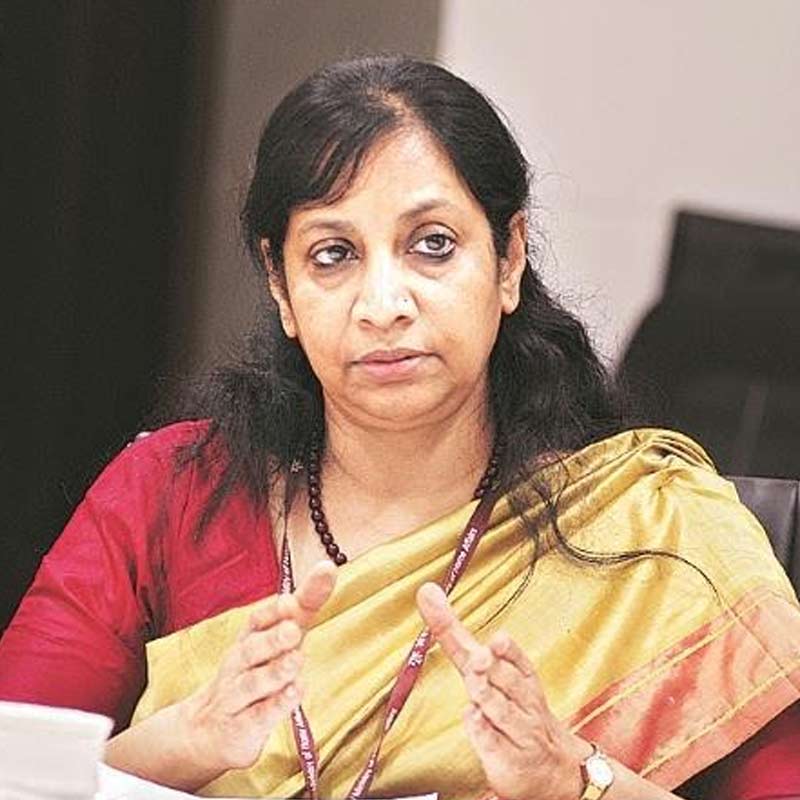
    According to the reports, Telecom secretary Aruna Sundararajan said, “The committee which I’m part of is primarily looking into a few key aspects, including shift of accountability from a user to a social platform, as users are sometimes unaware and innocently retweet or forward content, so much higher standards of accountability for platforms are needed.”

    Every major platform that has a significant presence in India must be accountable to Indian authorities. “There must be a full-fledged management team present in the country accountable to Indian laws,” she said. “It should not be, as such, one compliance officer is here only.”

    The government is preparing to repeat its demand that WhatsApp put in place a technical solution to trace the origins of incendiary messages spread on its platform, something the Facebook-owned platform has resisted, maintaining that it goes against its privacy policy.

    The centre has been dissatisfied with the steps taken by WhatsApp to restrain fake news. The Ministry of Electronics and IT (MeitY) is drafting a letter—its third since July to the platform—asking it to design a technology-led solution to the viral messages that in the past have led to lynching and riots.

    In a report, experts said that any decision that makes a company such as Whatsapp responsible for the content on its platform, will force the messaging app to devise ways to ensure it is not misused instead of merely passing on the blame to the user, who will be difficult to trace given the encryption.

    Sundararajan said, “There are algorithms and artificial intelligence (AI), which these platforms already use, that can also be deployed to curb such content. While regulation of social media apps rests with MeitY, the Department of Telecommunications (DoT) ensures security of the content being transmitted through the network.”

    She added that DoT can make lawful interceptions in the interests of public safety but does not propose to block social apps. It’s up to the companies to have adequate precautionary measures.

    The government had earlier raised its concerns after which WhatsApp limited forwards to five users or groups, when it used to be 250, while identifying forwarded messages, and a publicity campaign against fake news.

    The government has also told WhatsApp that it won’t be allowed to set up a payment service until it establishes an office and recruits a team in India.

    Sundararajan said the government wants Facebook, WhatsApp, Instagram and others to treat Indian consumers on par with those overseas while it looks to bring in higher standards of accountability. “Is the Indian citizen any less than an American citizen? No. Whatever safeguards and best practices you (companies) are providing globally, nothing less than should be available for India. This is the principle we are trying to establish,” Sundararajan said. “Like companies should treat India as most-favoured nation in trade and Indian consumers should also be treated likewise.”

  • Madras HC issues notices to social media networks

    Madras HC issues notices to social media networks

    NEW DELHI: India’s bumpy regulatory ride with online media continues. Now, the Madras High Court has issued notices to social media networks like Twitter and Facebook taking serious note of the claim that they were not responding to questions of law enforcement agencies on cybercrime complaints.

    A bench of justices S Manikumar and Subramonium Prasad passed the interim order yesterday based on the submission made by the Central Crime Branch (CCB) police that social media networks like Facebook, Twitter, YouTube and WhatsApp seldom reply to their queries or provide information, according to a Press Trust of India (PTI) report from Chennai yesterday.

    The court issued notices to the social media giants headquarters in San Francisco and California.

    A public interest litigation was filed by Antony Clement Rubin seeking a direction to the Centre to declare linking of Aadhaar (India’s biometric identification initiative for its citizens)  mandatory for social media accounts to effectively check cybercrime.

    When the plea came up last week, the court asked why these companies were not cooperating with the law enforcement agencies as mandated by the Information Technology Act. It directed the networks to explain as to why they should not be impleaded in the plea as party respondents by 18 September 2018.

    Similar notices have also been issued to the offices of Facebook and YouTube at Hyderabad.

    The court said the Information Technology (Intermediaries Guidelines) Rules makes it clear that when required by a lawful order, the intermediary (social media firm) shall provide information or any such assistance to government agencies which are lawfully authorised to investigative.

    But, according to the submission made by the CCB, it could be seen that though request has been made to furnish details, social media companies have not furnished it in many cases and also rejected the requests, the court said.

    "Having regard to the fact that some information, disseminated is an offence, punishable under Indian law, the law enforcing agencies request the intermediaries to furnish details, for investigation/detection and as per rules, the intermediary shall observe due diligence in the discharge of his duties," the PTI report quoted the court having observed while passing an interim order.

    Meanwhile, concerns in India are increasing relating to content on social media platforms as they are used to spread rumours, fake news and even threats, sometimes resulting in actual crimes taking place. Moreover, some of them like Facebook have also trained their guns on streaming content like soccer tournaments that were earlier on traditional television.

  • WhatsApp declines tracking message source in India

    WhatsApp declines tracking message source in India

    MUMBAI: WhatsApp has rejected the Indian goverment’s demand for a solution to track the origin of messages on its platform, saying building traceability will undermine end-to-end encryption and affect privacy protection for users.

    Earlier this week, Information Technology minister Ravi Shankar Prasad, during his meeting with the WhatsApp CEO Chris Daniels, had suggested that the social media company find the source of “fake” news and WhatsApp forwards. He said that the government has asked WhatsApp to set up a local corporate entity and find a technology solution to trace the origin of fake messages circulated through its platform as well as appoint a grievance officer.

    Prasad acknowledged the role played by the Facebook-owned company in India’s digital story, but was stern that WhatsApp could face abetment charges if it did not take action to tackle the issue of fake news being circulated on its platform.

    WhatsApp is under scrutiny in India after the circulation of fake news and rumours on its platform were blamed for several incidents of mob violence and lynchings. The company has since announced several measures – such as introducing a ‘forwarded’ label for messages as well as a limit on how many people a message can be shared with at once.

    What makes the rumours problem worse on WhatsApp is its sheer scale in India. The Facebook-owned messaging app is the most popular choice for users in India with the over 200 million active users in the market. The company had also revealed that India is the one market where forwarding messages is very popular. It recently announced an update to limit WhatsApp forwards to just five chats in India. In global markets, it is testing a limit of 20 chats for forwards.

  • WhatsApp needs to have local entity answerable to Indian laws: Govt

    WhatsApp needs to have local entity answerable to Indian laws: Govt

    NEW DELHI: The Indian government’s unambiguous and non-encrypted message to WhatsApp: set up a local entity in the country that is answerable to local laws, and find a tech solution to trace the origin of fake messages and content on the platform.

    “I had a productive meeting with Chris Daniels, the CEO of WhatsApp. I complimented him for the awakening, which WhatsApp has led in the entire country… But there are also sinister developments like mob lynching and revenge porn, you must find solutions to these challenges, which are downright criminal and [in] violation of Indian laws,” Minister of Electronics and Information Technology (Meity) Ravi Shankar Prasad was quoted by PTI as having said after meeting WhatsApp head Chris Daniels yesterday.

    While admitting that the Facebook-owned messaging app has contributed significantly to India’s digital story, Prasad said he has asked WhatsApp to set up a corporate entity in India, appoint a grievance officer and find a technical solution to tracing the origin of fake messages on its platform.

    “I requested CEO WhatsApp Chris Daniels to set up a grievance officer in India; establish a corporate entity in India & comply with Indian laws. He assured me that #Whatsapp will soon take steps on all these counts,” Prasad said in a tweet.

    Later talking to reporters in the capital, the minister added: “I had said earlier also; it does not take rocket science to locate a message being circulated in hundreds and thousands…you must have a mechanism to find a solution.”

    According to Prasad, Whatsapp could face abetment charges if no action is taken by it. The messaging platform has taken some corrective steps in the recent past like limiting the number of forwards that an individual can make in India.

    In recent times, WhatsApp has been facing the heat as it had been accused of being the platform via which hateful messages and rumours were spread in India leading to violence and crimes. The issue, which some critics said was akin to shooting the messenger instead of upholding the law of the land, has also reverberated in the Indian parliament with lawmakers trying to put the government on the mat for WhatsApp-spread rumours-linked deaths and crimes.

    While Prasad is on record saying he’s in favour of gradually evolving a policy for regulating the likes of WhatsApp, Facebook and Twitter, his ministry’s nudge has made the Department of Telecoms circulate a missive to telecom players and industry bodies seeking suggestions on ways to block services that ride the telecom infrastructure. The proposal has been criticized by many, including a chamber of commerce, Assocham.

    Telecoms regulator TRAI is also exploring regulations for OTT services like WhatsApp.