Tag: WFH

  • Kumar Varun rants about WFH in Man Matters’ #LetsTalkMan campaign

    Kumar Varun rants about WFH in Man Matters’ #LetsTalkMan campaign

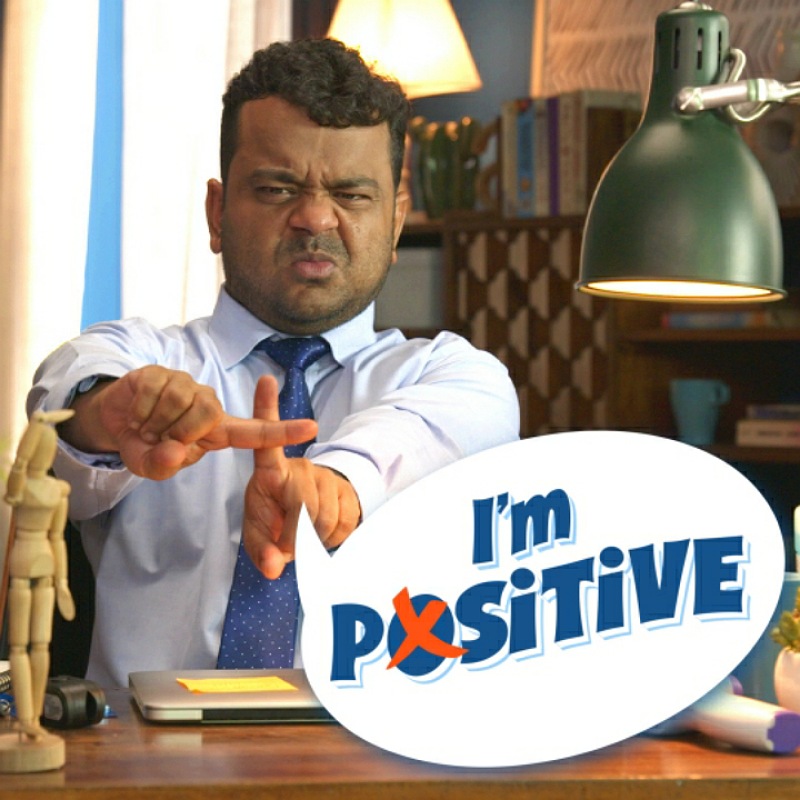
    Mumbai: Work from home (WFH) was perhaps the most common outcome worldwide for offices amid a coronavirus-ridden world. We went from being paranoid about Covid-19 and its impact on health to normalising it. Now, with the world battling another wave of the pandemic, Man Matters – a digital health platform for men, has come up with a very relatable rant video featuring actor, stand-up comedian Kumar Varun that voices the sentiments of employees who are bound to work despite being covid positive. 

    The campaign is the latest to come out from the brand’s initiative #LetsTalkMan, which was first launched on International Men’s Day 2021.

    The digital film executed by Spring Marketing Capital portrays Varun as the protagonist encapsulating the emotional turbulence of employees who have been Covid positive in the third wave and yet, are not spared from expectations of work. 

    The film begins with an online conference call, wishing employees speedy recovery and asking each other to take care of themselves. Cut to reality, in the name of deadlines, employees continue to work from home and are expected to work and complete work as before. The rant aims to throw light on the reality that while the current wave is mild and most of us who are vaccinated will recover fast, it is equally important to be cognisant of the fact that it still impacts our health and wellbeing, and that of our near and dear ones.

    “From being paranoid about Covid during the first and second wave, to now witnessing a ‘normal’ third wave, we have seen a significant shift in our attitude towards Covid-19,” said director of brand marketing Anuroop Nair, commenting on the campaign message. “At Man Matters, we believe in helping men open about their health & wellness needs and hence really felt like making this video to help those who are unable to in this period.”

    “Man Matters as a brand has always pushed the boundaries on how we should open up about how we feel. In Jan ’22, I think most of us feel this way but someone needed to say this and hence we finally did through this piece,” remarked Spring Marketing Capital branded content partner Sandeep Balan.

  • LinkedIn urges professionals to hit ‘pause’ with new #FindTheBalance campaign

    LinkedIn urges professionals to hit ‘pause’ with new #FindTheBalance campaign

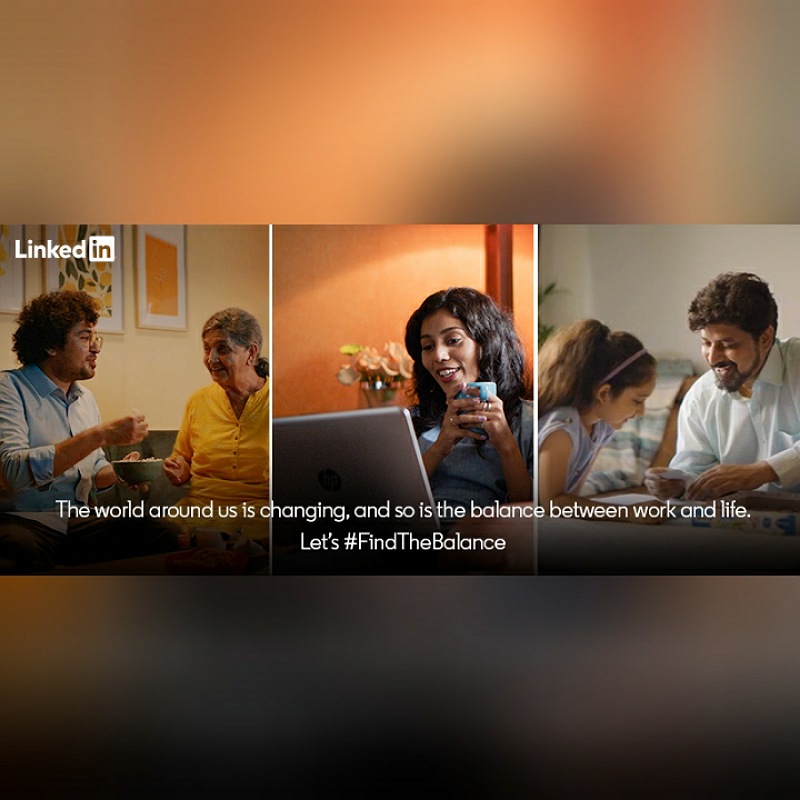
    Mumbai: Online professional network LinkedIn has tied hands with digital creative agency The Glitch to launch the second phase of the #FindTheBalance campaign that provokes honest conversations about the realities of working from home and the struggle of finding work-life balance amid the pandemic. The new creative films spotlight the importance of well-being in today’s remote hustle culture by encouraging professionals to hit pause and strike the right balance between work and life in the new world of work.

    In the second phase of the campaign, the three films take a deeper look at the lives of the characters introduced in the first #FindTheBalance film and present three 35-second films that depict the lives of professionals Vedika, Andrew and Gaurav, who struggle to keep up with work-from-home challenges.

    Conceptualised and executed by The Glitch, the second phase of the campaign comes as an extension of its first phase, which sparked honest conversations about the realities of working from home amid the pandemic across India.

    “Professionals in India are grappling with burnout at this time, and our Future of Work perception study also finds that today professionals value work-life balance (52 per cent) even more than job security (50 per cent),” said LinkedIn APAC head of brand marketing Sivaram Parameswaran. “The #FindTheBalance brand campaign is a reminder for our members to hit pause, reconnect with their family, friends, and colleagues, and find a new idea of balance.”

    These films are also being supported by a social media campaign across LinkedIn, Facebook and Twitter that encourages professionals to rewrite motivational quotes to make them more relatable for the post-pandemic world of work that professionals find themselves in today.

    “What I love about this campaign is the mirror it holds up to our lives. In the last 1.5 years, working from home gave us so many new perspectives,” The Glitch creative director Lucille Pereira said. “It showed us how to make time for family, or carve out time for self, whether it’s doing things we love or just a quiet coffee & sunset session. Whatever it means to you, however you do it, this campaign is a beautiful reminder to #FindTheBalance.” 

    With six million engagements on Facebook alone, the first phase of the campaign resonated with the Indian workforce aching to discuss issues of burnout and an increasingly toxic hustle culture.

    “The world around us has changed and many of us have experienced the blurring of our professional and personal lives. This film aims to showcase this very relatable narrative — the monotony that has become part of our everyday. Our hope is that it leaves professionals with the message of how we are all in this together, and as we navigate these unprecedented times it is important to remember to find our own unique version of balance,” The Glitch associate business director Riya Lalchandani stated.

    Professionals in India are also taking to LinkedIn to spark conversations, and share tips and learnings about how they can #FindTheBalance to beat the pandemic blues.

    The three films are now live on LinkedIn and other digital channels including YouTube.

  • What next after the WFH honeymoon?

    What next after the WFH honeymoon?

    NEW DELHI: The ‘new normal’ might already have started setting in with major conglomerates of the world taking calls like allowing their employees to work from home ‘forever’. Recently, Twitter CEO Jack Dorsey announced in a company-wide email that while opening the offices will be the company’s call, to come back will be totally an employee’s choice.

    Several other tech companies, including the other two giants Facebook and Google, have told their employees to work from home till the end of this year. Closer home, e-learning platform Unacademy announced that 60 per cent of its workforce will be working from home permanently, even after the lockdown.

    This gives a clear picture of what the future of workplaces is going to be like, at least for the tech firms where most of the work can be managed over servers and clouds. Reacting to the same, brand-thinker and independent consultant Harish Bijoor noted: “WFH makes sense for every factor: economic, social, family, commute, cost, time, and common sense. Corporate society does not need to artificially divide home and work anymore. It makes great sense!”

    Brand-nomics managing director Viren Razdan said: “While Google has announced WFH beyond the lockdown, the truth is tech companies have thrived on the idea of WFH or rather WFA or Work From Anywhere. Amazon and Apple were born in home-garages, giving birth to the cult of ‘ideas behind napkins’, start-up buzz at cafes, the informality bred a new culture of play.”

    Sharing his thoughts on how the culture can be embedded in other industries, he added, “This IS perhaps the WFH honeymoon; we are all learning and encouraging, holding each other’s hand firmly through this phase. The real truths would unveil once we bring the practice into regular play.  The biggest challenge perhaps would be to disrupt our culture to allow this fluidity and freedom. Our models at work based on firm control, checks and balances in place. The buzzing office is symbolic of efficiency and business as usual. Companies would be pushed to make accountability a key factor, and shed the weight of authority. A lot of companies are moving to fast-forward to agile models of work, which are perhaps more conducive to adapt to these new systems.”

    Recently, in  a webinar hosted by the Advertising Club of Bangalore, BBH India CEO and managing partner Subhash Kamath and Wunderman Thompson South Asia group CEO and chairman Tarun Rai supported the idea of allowing flexibility to agency workforce to work from home, citing reasons like the fact that it will bring more gender-equality within the teams and liberate the talent from geography.

    However, they had also noted that to make this culture a reality, people will have to bring some behavioural changes in themselves and leave control that they like to have on subordinates, and also the firms will have to rework their appraisal policies.

    Agreeing to this, Samsika Marketing Consultants MD Jagdeep Kapoor said: “I had learnt this from grandmother and it stands relevant today that when everything closes there should be one thing that remains open, and that is your mind. I think any transition will be possible if people keep an open mind and accept changes.”

    He also vouched for the many benefits that working from home will come with. “I think working from home increases productivity, saves time, and allows teams across cities to work together for better deliverables. Personally, I have been working from a home office for more than a decade now and it has been great. I have this policy that I don’t visit client offices and meet them at my place. With remote working, now clients have eased out even more and we have those meetings over video calls now.”

  • Work from home: The new culture in the making

    Work from home: The new culture in the making

    As a matter of fact, WFH had been instituted in Isobar almost a year ago considering the various needs of the employees and to give them a fair chance to strike a balance between personal and professional life. That was a different purpose then, vis-à-vis a forced requirement during this current pandemic. So, in a way, we were able to segue into this WFH comfortably.

    Learning from our offices in the orient, we began working from home a week before the country went into lockdown. Just overnight, the machines of the creative teams were shipped to their homes; remote access to our network was enabled; online meeting platforms were made accessible to all, and so on and so forth. All this to ensure that work continued as usual without any interruption.

    Contrary to popular belief in India, I think WFH has worked really well for us. Efficiency and productivity have reached new heights. Teams and clients from different cities are working more cohesively and in an integrated fashion busting the myth that they always need to be in the same room to be more effective. They are now able to utilise the time they save on travel, to attend to personal commitments or office work. They have become more responsible and productive, the proof of the pudding being in the heightened outcome we have seen in the last two months or so. Brainstorms, discussions, research surveys, pitches, and everything that drives success for the agency has seen a new gleam during this WFH phase. It is not just the internal teams, but also our clients and vendors who have contributed to the success.

    During this time, we have in fact won a couple of accounts and executed some noteworthy campaigns. The account wins will be out there in the media soon. One of the campaigns that stand out is the one we ran for Kia Motors India. We used existing video rushes in an interesting way to create a film that is just apt for the current situation. It inspires everyone and instils hope for a better future. Have a look here.

    In my humble opinion, WHF would continue for us as the lockdown gets lifted in phases and as the authorities would allow only a percentage of the staff to attend office. It would also stay relevant in the long run as we start gauging possibilities of people in certain functions to work from home while others who are more client-facing to work from office or those who are needed on a film set to be at an outdoor location. Or, maybe we look at some sort of rotation of staff. All this is going to be quite a fluid evolution as we move into the future. 

    (The writer is chief growth officer at Isobar. The views expressed are his own and Indiantelevision.com may not subscribe to them)  

  • FCA India’s Emergency Response to Safeguard Workforce from Coronavirus Pandemic

    FCA India’s Emergency Response to Safeguard Workforce from Coronavirus Pandemic

    Mumbai: With an intent to safeguard its workforce from the adverse effects of the Coronavirus pandemic, FCA India, as an immediate response, has permitted over 50% of its staff, from its Mumbai and Pune offices, to work from home, at least until March 31, 2020, and is taking proactive measures to ensure ‘social distancing’, which is the need of the hour.

    FCA, which operates from three locations in India – Corporate Office in Mumbai, an Engineering office in Pune and the main Engineering Centre in Chennai, has prioritized the option of ‘work from home’ (WFH) for its staff in Maharashtra based on precautionary advisories by the Government of India and also the State Governments. The WFH alternative for the mission-critical Engineering workforce in Chennai is under consideration and not in play as yet.

    FCA India’s President and Managing Director, Dr. Partha Datta said, “The health and welfare of our employees and various partners is of utmost importance to us as an organization. We have to endure these challenging times together as responsible citizens and care for our families, friends and colleagues, while at the same time, ensuring business continuity. Although no employee of FCA India has reported or tested positive, we are fully aware of the gravity of the situation and are taking quick, proactive steps every day that are necessary for everybody’s well-being.”

    FCA India has taken the following steps to help its workforce remain unaffected:

    Work from home (WFH) option – FCA employees, who use public transport, are advised to work from home. They can remain connected via the tools provided in their laptop computers and remotely manage and attend critical meetings. Employees with business critical needs and those using company vehicles are permitted to work in the office subject to their manager’s approval. FCA field sales personnel have been advised to coordinate business from home, pan-India. A health advisory has been sent to FCA’s national dealer network instructing them on steps that need to be taken at showrooms for their own hygiene and also while dealing with customer walk-ins and sales events.

    International and domestic travel – All FCA employees have been advised to cancel or postpone their domestic or international travel until further notice. For any emergency international travel, a governance process for business-essential travel has been established with concurrence from the MD and FCA Top Management.

    Social distancing – Employees have been requested to postpone meeting visitors in person, in the office premises with an intent to enable ‘social distancing’; critical / unavoidable meetings can be held only with prior permission from FCA India’s senior management. Meetings among office staff have been curtailed and, if at all, employees are advised to restrict meeting attendees to less than 10 individuals.

    Office management – Most meetings are now conducted via available audio / video conferencing technology in office or remote locations. A mandatory temperature-check of all employees and visitors, during entry, is conducted through state of the art apparatus. Cleaning regime of the entire office has been stepped up and the staff is encouraged to use freely available hand sanitizers and other hygiene upkeep methods. Employees are advised to take staggered breaks with longer lunch breaks in the cafeteria to maintain distance between each other. Cafeteria and janitorial staff has been provided with masks and gloves as a precautionary safeguard to minimize their exposure to possible infection.  

    FCA in India has a total employee base of 1500 across its offices in Mumbai, Chennai and Pune. Daily health advisories are being emailed to the FCA India employee base so that they take precautionary steps to remain safe along with their families.