Tag: WeChat

  • #fame launches India’s first video fashion mag with KJo, Lakme ‘School of Style’

    #fame launches India’s first video fashion mag with KJo, Lakme ‘School of Style’

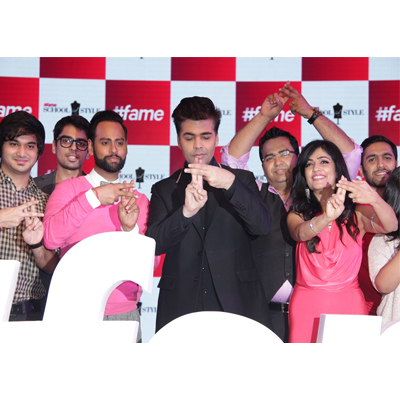
    MUMBAI: #fame, India’s leading talent led digital network, has pioneered another content coup by launching Lakmé ‘School of Style’. The show will not only give India its first ever video fashion magazine but, will also script film maker and fashion icon Karan Johar’s digital debut.


    Lakmé School of Style is a first of its kind show that will not only bring the newest trends and happenings from the fashion world but in the process will also create new age fashionistas and idols. Lakmé is a pioneer in beauty and fashion and through this association the brand will lend its expertise and industry knowledge to Lakmé School of Style. A fashion brigade led by Karan Johar himself will bring the fashion news, views and events from all over the world to the internet screen. The debut season of Lakmé School of Style will span over six months and content will be served through digital videos on a daily basis. The channel will be hosted across the #fame network which is available on all leading digital and social platforms including YouTube (youtube.com/fameschoolofstyle), facebook (facebook.com/famesos), Dailymotion, WeChat, and leading content publishers.


    Speaking on the occasion of opening the lines for entry, Saket Saurabh, CEO, #fame said, “At #fame, we are committed to discovering and promoting the best emerging talent on the digital video platform. ‘Lakmé School of Style’ will achieve this objective, by giving talented fashionistas a once-in-a lifetime opportunity to shape the dialogue on style and trends. As India’s first fashion video magazine, ‘Lakmé School of Style’ will be the definitive destination for fashion in the country.”


    Speaking on this association Shashwat Sharma, Head, Lakme and Beauty shared, “Lakmé epitomizes beauty and fashion.  Digital is increasingly becoming the first port of call for the youth to discover and decode the latest trends. Therefore, we believe that School of Style provides us with the right platform to actively engage with this audience. Inspired by backstage fashion, Indian beauty expert Lakmé continuously innovates to offer a wide range of high performance and world class color cosmetics, skincare products, and beauty salons.


    Interested and active fashion vloggers can send their entries to karanjohar@livfame.com or log on to www.livfame.com/schoolofstyle. Karan Johar, excited to make his digital debut with Lakmé School of Style said, “Iam excited about the power of digital and the new wave of promising young talent that’s coming to the fore through it. #fame’s unique initiative, Lakme School of Style, is the perfect opportunity for us to discover top fashion talent and I look forward to making my digital debut with this show.”


  • Is the current generation evolved? #fames find out

    Is the current generation evolved? #fames find out

    MUMBAI: Has the new Indian youth truly come of age? Are they braver and open to accepting the realities of life and speaking the truth? The youth in India has some answers for such questions that have been compiled through a series of vox pop videos by one of India’s talent led digital entertainment network, #fame. These videos are trying to throw light on how a typical Indian youth reacts when they face unconventional questions centered on women.


    The channel went to the streets of Mumbai and other cities to ask the young generation about topics like the following:

    Makeup versus no makeup
    Who do women dress for?
    How do they want their ideal man/ woman to dress?
    Cleavage: to show or not to show?
    Hair or no hair? Nation wants to know.


    Viewers can watch these videos through the channels network on social and digital platforms such as YouTube (https://www.youtube.com/user/LivYourFame), Facebook (https://www.facebook.com/livyourfame), WeChat, DailyMotion. This extends the network’s focus on key strategic genres, which include fashion, food, music and comedy. Catering to mobile millenials through an integrated ‘talent-first’ strategy, #fame strategically focuses on emerging and established talent to build engaged digital content and communities with them. #fame is building a network spanning 5,000 channels and 50,000 content creators across six countries over the next three years.


  • “How India is leading the way in BBC innovation”

    “How India is leading the way in BBC innovation”

    It is always exciting to be in Delhi, to catch up with the latest political news and see a city that changes every time you visit. But for the BBC, India isn’t now only a fascinating story and a place with a large audience that is deep in the heart of the BBC. India is now a thriving hub of media and technology innovation.


    Yesterday, I visited the instant messaging app firm Line, in Gurgaon. It has 30m users in India, with just five employees here. The BBC, I’m proud to say, is the first news organisation to distribute its content via Line. I had a fascinating conversation with Line about how it’s very young users react to the news, using the emoticons or emojis which chat apps are famous for. We discussed whether serious news and emoticons go together. But if users want to react to BBC News emotionally that’s fine by me. Images that say “amazing news”, “scary news”, “funny news”, “important news” can only show the power of BBC news’ impact on people.


    For those of you who are users of chat apps and social media I hope that your reaction to my speech today about how well the BBC is innovating today in India will be, in the language of the chat app, smiley, smiley, smiley, smiley.


    I’m going to speak about some of the BBC’s innovative projects in India and how they stand as a symbol of a revitalised and modernised BBC World Service throughout the world. And I will give you a glimpse of the further reinvention of the BBC that will be seen in India and globally in future years. I believe that the greatest days for the BBC around the world are yet to come, based on the incredible transformation that has happened in recent years.


    First, let me detail the basis of the recent strength of the BBC. When I started my role as the director of BBC World Service Group in 2009, we had an estimated weekly audience of 238m globally. 177m of our audiences, the majority, were radio listeners and 82m were TV viewers and only 16.4m were online users. Six years on, our weekly radio audience has declined to 127m, but the TV audience has massively increased to 126m and online users have sharply risen to 46m, almost three-fold. Although our radio audience has declined sharply as Shortwave listening fades, our overall global audience now stands at 265m. Despite losing 50m radio listeners our total audience has gone up by over 10 per cent. We have achieved this through offering distinctive content via new platforms, in response to rapidly changing technologies and audience behaviours.


    But while we develop onto new platforms the BBC’s core strengths remain – our accuracy, our impartiality, our independence. And those values mean we continue to be rated the world’s most trusted news brand – that’s something that I hope is never going to change.


    In India trust in the BBC is still high and we remain a key player. Our BBC News website is the top international news site in India. The number of its page views is equal to the number of pages viewed by users of CNN, the New York Times and Huffington Post combined. Relied on by millions to understand the world and see how the world sees India, it serves a mainly young population. 73 per cent of users of BBC News website are under 35. We provide Indian audiences with a dedicated international homepage for BBC.Com, which curates the breadth of the BBC for Indian audiences – whether in News or in our world-beating factual genres like BBC Earth. Our BBC News app has an average of 11m page views per month in India.


    BBC World News is one of the highest rated international news channels here. It reaches around 32m households in India, which constitute over 8 per cent of BBC World News’s total household distribution globally. And our Hindi services have grown on new platforms – TV, online and mobile.


    Amongst its international competitors in India, the BBC is not only the most trusted, but research shows it is perceived to be relevant, high quality, unbiased, distinctive and providing a clear global view.


    So I believe the BBC has a growing role but it is one that will differ significantly from the heyday of shortwave radio. To understand how that role is inevitably altering let me give you a quick tour of the global media context, as seen from BBC News.


    In recent years the challenges in reaching global audiences have been intensifying. The platform on which BBC World Service historically was strongest – shortwave radio – has come under great pressure as FM radio, TV and mobile phones offer audiences compelling alternatives. In India, BBC Hindi is still available on shortwave and achieves an audience of 5.5 million which the BBC greatly treasures, but that audience has been declining fast as audiences switch to more audible radio and other platforms like TV.


    Globally, state-funded and commercial players are investing heavily to increase their reach and influence. In the past decade, we have witnessed a host of new international players emerging, including Qatar’s Al Jazeera and China’s CCTV. While many news organisations, including the BBC, have to operate in a very tight financial environment, countries such as China are spending billions pumping news to audiences around the world.


    At a local and regional level, news provision is rapidly increasing. India, for example, has nearly 800 TV channels, more than 240 private FM radio stations and over 94,000 registered periodicals.


    The Indian audience has grown, recovering from the last few years of decline. This comes thanks to investments in digital and TV for the Hindi Service, including the launch of the Global India programme on TV, which pulls in 6m weekly viewers. These increases now more than offset the loss of shortwave listeners to the Hindi Service. Our services in India, shifting from old platforms to new ones, are a strong illustration of a shift going on all over the world. In this, as in other areas, India is leading the way.


    This success has been mainly the result of our investment in digital and TV, and changing the way we work. However, we need to do a lot more to materialise our ambition, which is to double our international audience to half a billion by 2022.


    The massive shift of news consumption towards mobile and social media demands we work in different ways in a modernised operation.  Users consume our journalism everywhere, increasingly in real time on mobile devices and across social media. Working in platform based silos won’t work anymore. 


    Our London and Delhi newsrooms are a mix of talents from around the world and its output is enhanced by contribution from highly skilled journalists from our language services. We have individuals who come from the countries we are reporting, speaking the relevant languages fluently. They are bilingual reporters who work with our globally known English News teams, able to operate in English and their own language in various platforms.


    We believe this is one of the most ambitious and innovative undertakings in international journalism. It is cost effective but, much more importantly, it means our agenda which already strives to be truly and even-handedly global, is driven further by our multinational, multilingual approach.


    We have also been restructuring our overseas bureaux into multimedia, multilingual production units to work in an integrated way across platforms and languages. And the BBC Delhi bureau is also leading the way on this.


    In Delhi we have created a new digital first newsroom. It consists of a single multimedia team, which is working across languages for bbchindi.com and bbc.com/news. And that means that the story of India is increasingly being told to the world through our brilliant Indian teams, including from BBC Hindi, alongside the traditional high class ex-pat correspondents. It is vital that the BBC’s global output reflects the world it is reporting on. And I am delighted by the way the BBC India teams are contributing to that.


    As a result of our innovative ways of working and our distinctive editorial agenda we have been able to produce some unique output, covering topics that other media find uncomfortable to cover. I am particularly proud of our coverage of gender issues in India. I give you a few examples to illustrate this.


    Since the Delhi bus rape in December 2012, we have consciously kept gender issues high on our agenda. The incident triggered an ambitious, highly popular season of programming called ‘100 Women’, in October last year and this year. The aim was to turn the spotlight on women’s lives around the world and feature more women’s voices and women’s stories on the BBC’s global news channels.


    We have published moving pieces by our bilingual reporters in India, including a piece by Rupa Jha who highlighted the stigma and taboo around the issue of menstruation in the country. She reported on how women are considered impure and even cursed during menstruation and how at least one in five girls drop out of school during their periods due to lack of access to sanitary products.


    In another piece, our Delhi-based bilingual reporter, Divya Arya, looked at how lack of toilets in rural India is endangering the safety of women who have to walk long distances to go to open-air toilets in the fields. She travelled to a village less than 50 miles from Delhi to speak to women who have to wait for the dark and move in groups to keep safe when going to toilet.


    And our teams do original reporting and stage discussion on other important aspects of India.


    Last week the BBC broadcast an extended debate from the India International Centre here in Delhi on India’s role in World War One. In conjunction with our partners the British Council we brought the often neglected enormous sacrifice of Indians in WW1 to a global audience. The pride of the descendants of those Indian soldiers was wonderful to hear.


    And the BBC’s unrivalled network of correspondents around the world can keep an increasingly global India in touch with how the world sees it. For instance when PM Modi was in New York in September our reporter based there was able to tell the world of the powerful reaction to the PM, broadcasting in English, Hindi and Urdu, for BBC on TV, radio and online. (We keep our reporters pretty busy these days).


    All of our strongest stories about India are produced in Hindi and English. Local reporters who tell the stories from their country to the whole world are now an essential part of the BBC’s international newsgathering approach. They provide a depth and subtlety of understanding that complements the indispensable insights of the BBC’s “ex-pat” foreign correspondents. This shift to bilingual journalism is one of the most important changes in the BBC’s face to the world in recent years. It is an historic and irreversible shift.


    We are also innovating in our use of social media. BBC Hindi is operating as ‘Social First’, meaning social platforms are as important as publishing on its own homepage. BBC Hindi Facebook page has a fan base of 2.7 million and is growing faster than most of its competitors. BBC Hindi breaks news on Twitter and other social platforms first and produces infographics exclusively for social media.


    New Products


    Developing new digital products for mobile apps and web is a key priority for us. More than half of BBC World Service markets are “mobile first”, which means over 50 per cent of users’ first point of access to the internet is through their mobile phones. More than 70 per cent of BBC Hindi’s Unique Visitors online access our content through mobile devices. 


    Given the explosion in different types of mobile devices, all BBC World Service websites have been converted to responsive design, which adapts a site according to the device it’s being viewed on. BBC Hindi’s responsive mobile browser site was launched in March 2013 and its desktop went responsive in September this year. This has contributed to a rapid and steady growth of the Hindi website’s traffic. The number of Hindi’s monthly unique visitors across all platforms has jumped from 1.3m in April 2013 to 4.5m in October 2014 – remarkable tripling of audience in 18 months.


    In editorial terms, we’ve adapted our storytelling approach. The Hindi service has been one of the first services to pilot a “mobile first” strategy this year, making the stories shorter and punctuated with more pictures and graphics.  There was a 20 per cent uplift in mobile traffic after the first month of piloting these new editorial techniques.


    For the coverage of the Indian general elections earlier this year, we used two new platforms, WhatsApp and WeChat, to reach Indian voters and the Indian diaspora globally. We used these chat apps, which are widely used in India, to create a new editorial service in English and Hindi.


    This was the first time any international news organisation had used these platforms in this way. We had thousands of subscribers across both platforms and it meant we were able to deliver trusted news content, which was a big issue for many Indian voters with regards to domestic news providers, straight onto people’s mobile phones.


    Last month we launched a new ‘lifeline’ Ebola service for people in West Africa on Whatsapp, based on that innovation in India. This was the first time the BBC has used a chat app specifically for health information content.


    Recently BBC Hindi also made its content available on smartphone instant messaging platform Line, which is one the world’s top five chat apps. The launch of the BBC Hindi LINE app follows the recent launch on LINE of an English language BBC News account which has already acquired 300000 subscribers globally and over 100000 in India.


    Last year, we launched a number of innovative programmes global programmes, based on social media. For instance, we set up a new social media unit, BBC Trending, to spot and investigate social media trends around the world. The team produces a weekly World Service radio programme, a blog and a unique video product which is built to be shared.  Trending’s content is enhanced by BBC Monitoring and language services’ contribution which gives it a truly global flavour. Due to BBC Trending success, we have been expanding it to other languages including Arabic and Mundo and we hope also to launch in Hindi.


    I would like to give you some examples of how BBC Trending works and goes behind the stories.


    BBC Trending picked up the growing tension over the ‘’kiss of love’’ protest in Kerala at its very early stages and contextualised the social confrontation in India between young people and the conservative cadres of religious groups for a global audience.


    Last week, BBC Trending made a video on the “We are South of India’’ song, which became a YouTube hit and was made by a comedy group from the south of the country to educate northern people about the diversity of their culture down south. This is an example of the conversation India is having with itself and shared with the wider world through BBC Trending.


    When the newly elected Indian Prime Minister, Narendra Modi, launched a campaign to encourage Indians to clean up the country, there was a huge fanfare. But despite the huge coverage on the day, no other media outlets checked if it actually worked on social media.  BBC Trending looked at the lack of spread of the trend forensically.


    And those BBC Trending stories get reported back to India in both English and Hindi.


    Partnership


    We see editorial partnerships as a key way to reach a wider audience, enhance our content and help raise media standards around the world.


    We have built a network of FM partner stations around the world.  Here in India – we have a partnership with ETV which broadcasts the BBC Hindi TV programme, Global India, on its channels across the Hindi-speaking states. We have received encouraging indications of the substantial audiences already being achieved by Global India. I think this reflects a hunger among Indian audiences for content that relates India and the world, content that is largely missing from local providers who tend to be ruthlessly focussed on an India-only view of the world. The BBC can play a vital role in opening the eyes of audiences to the world.


    However, although partners are important to the BBC on TV and in digital, there is one area where the BBC is not able to rebroadcast its news content in India – on FM radio.  Since the election of the new government the former Minister for Information and Broadcasting, Prakash Javadekar, said this on deregulation of news on FM radio:


    “About (broadcasting) news on FM radio, it is an issue close to my heart. Sometimes I am unable to understand the government logic. When 24×7 news channels have the freedom to show news the way they want to…, what have radio channels done that they can’t air news? “


    “Why only restrict radio channels to AIR (All India Radio) bulletins (feed)? There can be three-four more options. We are looking at this issue very positively and we will take a decision soon.”


    That was an encouraging statement and we hope the new minister will take this idea forward.


    India is a highly modern and open society in so many ways. Its economically liberal IT sector, with an open internet at its core, is a huge advantage to the growth of India. But India’s out-dated approach to the control of news on FM radio betrays an unconfident approach. The BBC hopes that indications of reform from the Minister of Information are followed through with real action.


    The components of a dramatically modernised BBC World Service are clear: a commitment to distinctive journalism that reports stories that others won’t, with utter fairness; delivering that journalism on any platform that audiences use; a global editorial ethos based on a multilingual and diverse global workforce; and the systematic use of social media to engage with audiences, to gather their news and anticipate their information needs.


    But how will the BBC evolve further? It will need to continue to change as fast, even faster. I believe that if it does so, with the right support from the wider BBC, the best days of the World Service are yet to come. The remarkable advantage of committed public funding, a revitalised ethos of global journalism, the talents of the global BBC team and a commitment to technological innovation give the BBC inestimable advantages.


    Here are some clues for what we will do in future in India and around the world:


    The rapid proliferation of digital devices, the growth of digital video viewing and the declining cost of bandwidth create huge new opportunities for the BBC – an organisation with the strongest video news in the world. We are no longer constrained  by the time limits of TV news bulletins. BBC teams are experimenting with a variety of technologies that will produce continuous video news streams for digital devices on the subjects and places that most interest the world.


    Do you want news about the South Asia region? Do you want Asian business news? Do you want to know about new global developments in health technology? Do you want to know about Indian success stories in the UK and around the world? Each of those subjects will be able to be delivered as a video stream to your specification. We call this “channel in a box” – in other words a channel, or a visit stream, made in a black electronic box not a studio.


    And our multilingual teams are prototyping new techniques to produce these video streams in multiple languages. I expect all the services I mentioned should be able to be delivered in Hindi, Tamil, Urdu and Bengali and possibly other South Asian languages.  We will be organising our teams in multilingual subject-based global teams that make full use of our journalistic skills from across the world. This will shortly create the most innovative global content production of any news organisation in the world.


    In recent months the BBC World Service has started to add languages rather than cutting them, as happened over previous decades. We launched an emergency service in Thai after the military coup in Bangkok. And just this week we started a temporary crisis offer, funded through BBC Media Action, in Liberian English to help tackle the Ebola crisis.


    But I believe that with new technology and low cost translation methods the BBC could be producing content in 50 languages in five years’ time, with video streams/channels in about half those languages. That will help in achieving the BBC’s aim of a 500m global audience. More importantly, it would mean that in a world that has too much inaccurate, distorted and sensationalist news there will be a truthful news source available to a high proportion of the global population.


    As you may know, I will shortly be leaving the BBC. But I believe that the robust health of the BBC around the world, along with the ideas I have mentioned and the innovation that is already in train, provide a firm platform for continued success. All that is needed is for the BBC, the politicians who ultimately decide about the World Service and the British public who now pay for it, to realise that it is within their grasp to create the greatest days of the BBC World Service.


    If the BBC seizes that opportunity it will be following the example of many of the innovations by the BBC’s teams in India. In this, as in many other areas, India is helping to lead the way to help create the Future of the BBC World Service.


    (These are purely personal views of BBC World Service Group director Peter Horrocks and indiantelevision.com does not subscribe to these views.)

    (Peter Horrocks was speaking at the Observer Research Foundation)

  • #fame to invest 10 million dollars across six countries

    #fame to invest 10 million dollars across six countries

    MUMBAI: To The New (TTN), an end-to-end digital services network, through its digital content platform #fame will be investing $10 million in the next couple of years as it sets a target to reach out to 5000 channels and 50,000 content creators across six countries in south east Asia.


    #fame CEO Saket Saurabh, who was previously working with the Network18 group, says the company will follow a three pronged strategy for its talent-first programmes. Saurabh elaborates, “In the first stage it will focus on emerging talent and to establish them and help them promote and build digital communities.  In the second stage, content through digital IPs’ will be created via innovative digital shows in genres such as food, fashion, music, comedy and technology and in the third stage the company will monetise by helping brands reach out and engage with audiences through digital conversations via digital video services.”


    The digital agency has adopted a multi-platform approach when it comes to distribution on social platforms like YouTube, Facebook, WeChat etc. “We are screen agnostic. We are looking at mobiles, movies, airports, television screens etc,” says Saurabh.


    #fame, which was formerly known as Four Cross Creative Services, in the last few months decided to redefine its business operations and thus ideated to come up with its multi-tier talent management programme, which is designed to help talented youngsters grow their presence digitally and evolve as performers.


    TTN Ventures MD Puneet Johar feels that video is the new language for consumers on internet. “It is combining powerfully with the smartphone explosion and the rise of social sharing across screens to inspire a new wave of talent. We have built a strong ecosystem of digital businesses well positioned to create value in such a landscape,” he informs.


    #fame has identified six key markets – India, Singapore, Malaysia, Indonesia, Thailand and Philippines. It will now focus on creating Indian-based IPs and will begin its local businesses in other five countries in the coming six to eight months.


    To create talent inflow, it has partnered with Blogmint which is a fast growing network of bloggers. It currently has 5000 content creators and this figure is expected to reach 10,000 by the end of the year. It will also build a network of alliances with talent hubs such as comedy clubs, film and music schools, art and culinary academies.


    #fame announced a slew of digital shows like School of Style which it claims to be India’s first online hunt for top stylists and will be hosted by celebrated entertainment and fashion icon Karan Johar who will be the host, judge and mentor. Others include, Websinger which seeks promising young singing talent, Gang No 1 a search for top comedy collectives and the second season of Webchef the country’s largest online hunt for amateur chefs.


     When asked if the IPs will rest with either #fame or the hosts, Saurabh says it will be dealt on a case to case basis.


    Celebrities that have signed up with #fame include TV star Maria Goretti, child comic star Saloni, top fashionista Anusha Dandekar, celebrity chef Ajay Chopra, singing sensation Shibani Kashyap and style guru VJ Andy.

  • TRAI paper on broadband next month

    TRAI paper on broadband next month

    MUMBAI: The Telecom Regulatory Authority of India (TRAI) will come out with a comprehensive consultation paper on broadband next month. It will invite views of public on issues related to roll out of broadband in the country.


    Inaugurating the “Eighth Mobile India Summit: Broadband Highway-Driving India’s Growth” organised by Assocham, TRAI chairman Rahul Khullar said, “The authority has been working on broadband issues, and hopefully, we will come out with a paper on broadband, may be by the end of next month.” He also admitted that India’s progress in terms of broadband has been very limited and disappointing.


    “Of 1.8 lakh kilometres (kms) cable that has been ordered 15,000 has been delivered which is just about eight per cent, of six lakh kms for ducting actual achievement is about 2,000 kms which is about 0.3 per cent, the optical fibre cable pulled is about 250 kms which is less than 0.05 per cent of the target and all this has been achieved in past two years,” he added.


    He further stressed the need for targeted approach to achieve broadband policy objectives. He also focused on the scope to use available private infrastructure in conjunction with already existing public infrastructure


    TRAI is also planning to issue a consultation paper soon to discuss regulatory framework around Over-the-top (OTT) players like WhatsApp, Skype, Viber, WeChat etc.


    The OTT players facilitate free calls and messaging services, making it affordable for consumers to use them. Telecom subscribers are required to pay only internet charges to their operators for using OTT services.


    The authority had recently organised a seminar on ‘Regulatory Framework for OTT Services’ with the aim to provide a platform for exchanging views on key issues related to OTT and also rejected the proposal put forward by telcos to charge popular apps.

  • Your WhatsApp could cost you, soon

    Your WhatsApp could cost you, soon

    MUMBAI: Telecom operators are worried with the increasing number of over the top (OTT) services that are using their bandwidth to provide share audio, video and text. Therefore, the Telecom Regulatory Authority of India (TRAI) decided to pacify everyone with a seminar to discuss the issue.


    The telecom industry claims that it is suffering huge losses due to platforms such as Skype, Whatsapp and Viber that provide similar services at no cost but the internet service charge. PTI reports Cellular Operators Association of India director general TV Ramachandran stating during the seminar, “We want some kind of regulatory help to get a level-playing field. There are so many regulations binding on us but the same don’t exist for OTT players. We can do a lot more if level-playing field is given to us.”


    According to data by PricewaterhouseCoopers managing consultant Neeraj Kataria, Skype usage is costing the telecom industry around $36 billion a year globally.


    On the other hand, when WhatsApp picked up speed in the country, several other such services such as Hike, Line, WeChat, Snapchat etc also emerged to eat a share of the pie.


    Ramachandran also shared his concern that OTT services can switch calls over the web outside India but telecom ops have to pay interconnect charges.


    Association of Unified Telecom Service Providers of India (AUSPI) president CS Rao said that OTT service providers have no rule regarding quality of service and consumer commitment. “If 20 per cent of our customers start using OTT service then burden on network will increase $55 per subscriber,’ he added.


    A report in Business Today states that telcos currently are losing around Rs 5000 crore per year due to these OTT services that will cross Rs 16,400 crore in next two years.


    On the other hand, Internet and Mobile Association of India president Subho Roy stated that TRAI should keep out of it since it is a business to business issue. But the TRAI secretary Sudhir Gupta is reported to have said that the purpose of the seminar is not to see if OTT services are cutting into telecom operators’ revenue but whether there is a need for regulating such service or not.


    Amid all this, Facebook India has also joined the Cellular Operators Association of India to ‘focus on mobile technology, access and its continued desire to work in collaboration with the industry to increase connectivity.’


  • BBC using WhatsApp and WeChat at Indian elections

    BBC using WhatsApp and WeChat at Indian elections

    MUMBAI: The BBC is taking to instant messaging to hear what voters across India think as they go to the polls.  ‘BBC News India’ accounts are being launched today, on instant messaging platforms WhatsApp and WeChat giving Indian audiences of BBC World News, bbc.com and BBC World Service unprecedented coverage of the Indian election campaign.

     
    ‘BBC News India’ will receive user generated content directly from Indian voters whilst also distributing the best of BBC coverage of the election including videos, special graphics and interview clips. This will provide people with top analysis of the election and also go behind the headlines to tell the personal stories that reveal what’s really at stake.  

     
    On the launch of ‘BBC News India’ Trushar Barot, Assistant Editor for the Social Media Hub at BBC News, said: “Instant messaging apps have had phenomenal user growth in the past year. We know that hundreds of millions of people are using these platforms to stay connected, but increasingly also to share news stories, pictures and videos. This has been particularly evident with the Indian election campaign, so it’s the perfect news event to pilot our use of these apps. We’ll be using these accounts to encourage Indian voters – and those from around the world with an interest in Indian politics – to share their key issues, questions and experiences of the election campaign. We’ll also be sharing with them the best of our content from inside these platforms”.
     

    The launch of ‘BBC News India’ will complement a host of election dedicated content going out throughout April and May across BBC World News and BBC.com with the focus on providing audiences in India and around the world with top analysis and the latest developments as the campaign progresses. Access to news stories will now be made even easier for Indian audiences with the launch of the India edition of BBC.com on mobile. The edition will also give people access to news headlines from the BBC World Service’s Hindi and Tamil websites, bbchindi.com and bbctamil.com.

     
    And with social media increasing in popularity the BBC Trending team will also be reporting from India on what’s popular and why (@BBCtrending).

     
    Users can connect to the BBC News India WhatsApp account by sending a message to it after adding this number on their phone’s contacts: +919650801273

     
    Users can connect to BBC News India on WeChat by searching for the ID ‘BBCNewsIndia’ inside the app and clicking ‘Follow’.


  • Microsoft to Skype in China later this month

    Microsoft to Skype in China later this month

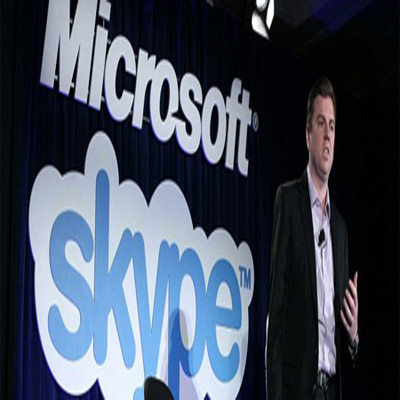
    NEW DELHI: Microsoft, which had officially acquired Skype in 2011, is taking over Skype’s operations in China from 24 November.

    Skype China is still being run by TOM Online – part of Tom Group – a mobile internet company in the country. Skype describes TOM as a majority joint venture partner that helps to provide access to Skype for Chinese customers, “using a modified version that follows Chinese regulations, called TOM-Skype.”


    TOM-Skype’s website says that TOM will be handing over Skype to Microsoft on November 24.


    In the announcement, it was also revealed that Skype has currently surpassed 100 million users in China.


    When Skype turned 10 earlier this year, it announced that the service has helped connect more than 300 million people around the world, letting them talk for more than 1.4 trillion minutes (2.6 million years of conversations). It is not clear if the 300 million figure refers to registered users, but China’s users stand at one-third of the number of people Skype has ever connected.

    There is growing usage of messaging apps in China including WeChat, China Telecom’s Yixin and Alibaba’s Laiwang. 

  • ‘DID 4’ invites you to ‘Dance It Out’

    ‘DID 4’ invites you to ‘Dance It Out’

    MUMBAI: In the last three seasons, it has tapped the audience’s heart with jaw dropping performances by the contestants. From introducing the Indian audience to dance forms like locking and popping, hip hop moves to “slo-mo” style, to making dance popular among all age-groups, dance reality show Dance India Dance has done it all. Now, the show is back with its season 4 with a bang. Come 26 October, it will celebrate the passion of dancing every Saturday-Sunday at 9:00 pm only on Zee TV.

    While Maruti continues to be its title sponsor, the channel has also signed a deal with WeChat and eight other associate sponsors have been roped in.

    The new slogan, “Dance It Out” is refreshing and sends out a strong message to its viewers that nothing is impossible to learn, dancing definitely not!

    Talking at the launch, Zeel content head Ajay Bhalwankar says: “DID brings in raw talent from every nook and corner of the country. You don’t need to be a star, your talent and passion for dance will say it all.”

    Produced by Essel Vision, the show will follow the format similar to the original season where 18 contestants are divided into three teams led by three masters. The masters will groom and mentor their respective teams in every episode to face the “Dance ka Tashan”.

    The show will be hosted by Jay Bhanushali and actor Mithun Chakraborty will continue as the grandmaster.


    You don’t need to be a star, your talent and passion for dance will say it all, says Ajay Bhalwankar

    However, what’s new this season is that besides the original three judges – Geeta Kapoor, Remo D’souza and Terence Lewis, who are an inseparable part of the DID family – the show has roped in three young choreographers in its panel of judges – Mudassar Khan, who has choreographed films like Bodyguard, Dabangg 2 and Ready; Shruti Merchant, comes from a family of choreographers and began her career as an assistant choreographer in films like Dhoom, Rab Ne Bana Di Jodi among others; and Feroz Khan, started his career assisting Farah Khan and has made a name for himself with hit dance moves in songs like Maa da ladla.. and Johnny Gaddaar.

    The judges think that this time it’s not just going to be a challenge for the contestants but even them, who will have to prove their worth.

    alking about the change in format of the show, Zeel chief sales officer Ashish Sehgal says: “Change is the sign of growth. We are proud of our choices for the fresh panel of mentors this season. At Zee, we always believe in making celebrities out of deserving talent. New judges will bring new fans, making the show better and different.”

    Essel Vision Productions, producer Nitin Keni agrees and says: “Each of them come with an impressive body of work in the field of dance. Moreover, it is their passion for dance that has landed them on our panel of judges.”

    The channel is confident that the new trio will drive millions of dance enthusiasts across the country.

    The dancing fever has already gripped the enthusiasts, as the auditions that are being conducted on a large scale in 16 major cities, have received an overwhelming response from the dance lovers.  And it is not just going to be a television show this time. Zeel marketing head Akash Chawla says: “We are bringing the show parallel online. Just saying, Dance it Out won’t make sense till the time you actually bring it out in a complete manner.”

    The entire marketing strategy behind this is that ‘Dance it Out’ should not just be a slogan but a movement, says Akash Chawla

    Throughout the series, every week, the masters will give out a theme and the audience can make a video with that particular theme and submit it online. After being selected by the judges, the best videos will go on air. Adds Chawla: “The main objective is to give a platform to as many people possible in the most convenient manner. Everybody cannot qualify the auditions, but you have to do something for the people who are talented and are passionate about dancing.”

    On its marketing side, to expand its foothold, the channel is also concentrating on on-ground activities. The channel is expanding its presence majorly in ten cities, giving them a particular theme which is relevant to that city at that particular time. It will encourage people to come out and dance. “The entire marketing strategy behind this is that ‘Dance it Out’ should not just be a slogan but a movement. Since it is no longer only a television show, we need to exemplify it in a manner that people connect with it.”

    At Zee, we always believe in making celebrities out of deserving talent, says Ashish Sehgal

    So has it attracted the advertisers?  Sehgal confidently says: “DID has been the darling of all advertisers. They were very excited when we told them about our plans, as it would give them an opportunity to reach out to more people. With this new platform, advertisers have another way to reach the consumers. At the end of the day, advertisers are looking to reach out to the consumers’ doors.”

    We are aware of the numerous shows on all the channels, will DID occupying the 9:00 pm slot, affect the ratings of other famous shows on other GECs? Answers Chawla: “It is not for the first time that we have battling with the biggest shows. GEC is all about different channels launching different shows. It’s a competitive world. People who don’t like competition should retire very soon.”
    He further adds: “We love competition. We respect our competitors and if the show is good and if the communication is clear, viewers will find time to watch all the good shows. And they chose to watch the show which at that time they love the most.”

    We are confident that the new trio will drive millions of dance enthusiasts across the country, says Nitin Keni

    Since the channel is already following the ad cap rule, have the reality shows been affected? “In most of the reality shows, you always kind of adhere to ad cap, we have never over run inventory because they are high priced shows. Moreover, there are high stake sponsors involved, you cannot dilute inventory on these shows. So ad cap is not going to affect us in any manner as far as reality shows are concerned,” signs off Sehgal.

    So, what are you waiting for! Pull up your socks and be ready for the spectacular dancing talent with a renewed vigor in the latest season.

  • WeChat takes forward its campaign

    WeChat takes forward its campaign

    MUMBAI: Riding on its fast-growing popularity, WeChat, a mobile social app, has unveiled its latest brand campaign conceptualised by Ogilvy & Mathers.

    As part of the campaign, the TVC features WeChat’s brand ambassadors – Parineeti Chopra and Varun Dhawan and is already running on television and online screens with the tagline – “Naye Purane Ajeeb Shajeeb, all friends are now on WeChat – the all in one social app”.

    Speaking on the occasion, WeChat spokesperson Katie Lee said, “We are overwhelmed by the positive response which our Indian users have given to WeChat. It is the love of our users which inspires WeChat to continuously innovate and evolve with more and more exciting features.”

    The tagline and the TVC capture the essence of WeChat of being the preferred platform for the youth to connect with all their friends. The TVC drives home WeChat’s growing pre-eminence in the Indian mobile social and communication app space and reinforces its positioning as the most innovative app for the Indian youth to share, connect and communicate with their friends.

    “WeChat is a complete mobile social communication app loaded with all the features which our users look for to connect with their friends. This TVC showcases our unique position of being an ‘all-in-one app’ which resonates with the spirit of the youth of the country, who want to stay connected with their friends and family through conventional messaging as well as fun and exciting elements like ‘Voice Messaging’, ‘Stickers’, ‘Photo sharing’, ‘Video Chatting’, ‘Location-based Features’. We are hopeful that this campaign would help WeChat become the preferred app for a lot of new Indian smart phone users and make their communication experience richer through its unique offerings,” she added.

    WeChat has seen an exponential growth in India and the fact that WeChat has topped the leading app stores such as Google Play, iOS App Store, Windows Marketplace and BlackBerry AppWorld as the most downloaded app only goes to showcase its popularity with the youth of the country.