Tag: Websites

  • TV9 Network appoints Deep Upadhyay as interim editor of Hindi & English websites

    TV9 Network appoints Deep Upadhyay as interim editor of Hindi & English websites

    Mumbai: TV9 Network has expanded the role of editor convergence and strategy Deep Upadhyay by appointing him as interim editor of TV9 Hindi and English websites. He will also coordinate with the group’s regional digital assets.

    The company said, “TV9 Group has gained undisputed leadership in the broadcast space. The network has made significant strides in the digital arena as well. TV9 aspires to replicate its stupendous success in broadcast across its digital properties.”

    “The group, accordingly, is effecting certain strategic changes at the leadership level to ensure TV9 digital emerges as a champion as well,” said the statement.

    Deep Upadhyay had joined TV9 Network from News24 where he had a successful stint as managing editor for more than seven years. He is a senior journalist who has worked with various media houses like India TV, Zee News and Dainik Bhaskar.

  • Adapt My Web: making the web accessible to all

    Adapt My Web: making the web accessible to all

    MUMBAI: There are currently more than 600 million active websites in France.

    Digital transformation has become an integral part of our daily lives and will become more important in the years to come.

    However, in this digital age, more than 2.5 million people with visual or reading disabilities are excluded and therefore don’t have access to information. According to the European Parliament, in 2020, 120 million people in the European Union and more than 20% of the US population (115 million people) will suffer from a disability and will have difficulty accessing the internet.

    In  a  world  where  the  smallest administrative procedure,  source  of  information or  a  simple communication takes place on the Internet, these millions of people suffer and they’re disadvantaged when using digital tools.

    An immediate and instant solution exists. This resource can reduce the inequalities and promote inclusion during the digital evolution : Adapt My Web : The Accessibility Solution.

  • 68 per cent SMEs offline; Google plans smartphone-optimised regional websites

    68 per cent SMEs offline; Google plans smartphone-optimised regional websites

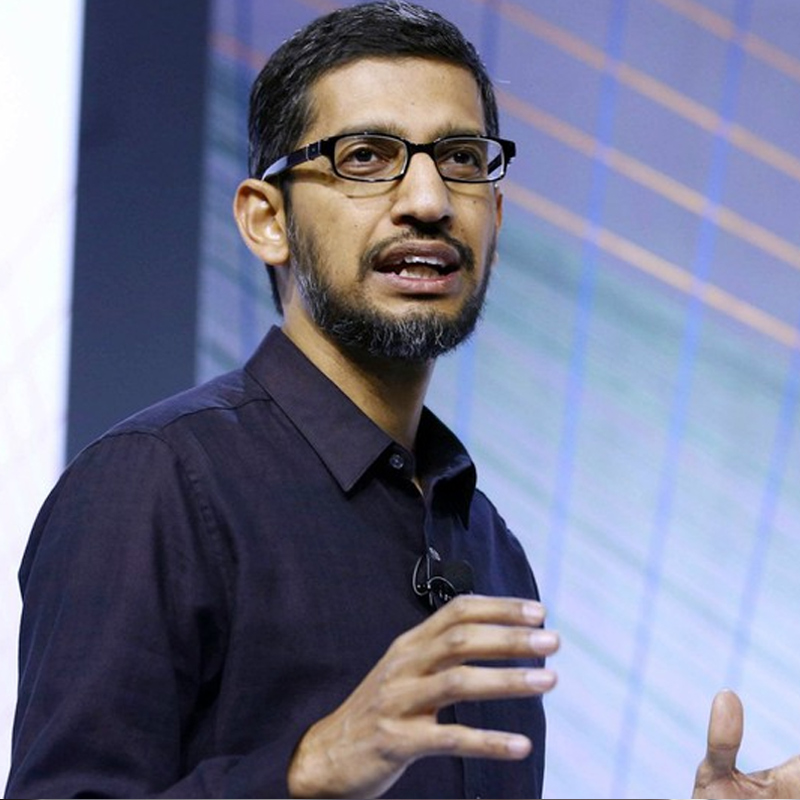
    MUMBAI: Google has announced the launch of Digital Unlocked, a training program to empower thousands of Indian SMBs with essential digital skills that will enable them to get online and start using the power of the internet to grow their business. Google also previewed My Business Websites, an easy-to-use offering to help businesses to have a rich, mobile optimised digital presence that will be launched later this year. Making the announcements at an event held in the city today, Google CEO Sundar Pichai spoke to representatives from hundreds of small and medium business from across the country on the benefits of the web and digital technology.

    My Business Websites will be available in English, Hindi, Bengali, Telugu, Marathi, Tamil, Urdu, Gujarati, Kannada, and Malayalam.

    Google India reaffirmed its commitment to digitally empower India’s 51 million strong small and medium business community.

    During his address, Sundar Pichai said, “The Internet is a powerful equalizer and we are motivated to bring the benefits of information and technology to as many people as possible. Building for everyone and making it available in the hands of as many people is at the heart and core of what we do. And we do this by investing in open ecosystems.”

    Referring specifically to small and medium businesses, Pichai added, “the Internet and digital technology will be an engine of growth for the Indian economy. Today, anyone can become an entrepreneur, a developer, or a creator, but it is important that they have the right tools and skills to digitize. We believe it is important for us to invest in training and equipping these individuals and small businesses to accelerate their journey of growth.”

    Setting the context for the initiative Google unveiled a joint research study with KPMG titled “Impact of internet and digitisation on SMBs in India”. The study reiterates that 68 per cent of the 51m Indian SMBs are offline. Highlighting the macro-economic impact of the internet, the research found that rising penetration and greater uptake for digital by SMBs could help increase their contribution to India’s GDP by 10 percentage points, taking it up to 46-48 per cent by 2020. Ascertaining the benefits of going digital for small businesses, it determined that profits of digitally engaged SMBs grow twice as fast compared to offline SMBs. Likewise digitally engaged businesses are able to grow their customer base significantly with 52 per cent catering to customers beyond their home city versus only 29 per cent offline SMBs. The report cites the lack of understanding of the benefits of digital technologies and technical skills as the essential reasons for being offline.

    With Digital Unlocked, Google is committed to ensuring that every single small business in India that wants to go digital has access to quality training. In keeping with the varied learning needs of the millions of businesses in India, we’ve built this program across online, offline and mobile. The offline training is being conducted in partnership with FICCI and over the next three years, 5,000 workshops will be held across 40 Indian cities. The online training comprises a set of 90 self-paced video tutorials, curated specifically for India and is available free of charge at g.co/digitalunlocked. The tutorials cover a comprehensive set of topics ranging from building a web presence and driving online growth to reaching customers over mobile and video. The trainings are certified by Google, Indian School of Business and FICCI.

    Further, for India’s mobile-first audience, Google also launched Primer, a free mobile app uniquely designed to teach digital marketing skills in a quick, easy and interactive way. It is available for download through the Google Play and iOS app store. Primer also works offline and is currently available in English and Hindi with Tamil, Telugu and Marathi versions coming shortly.

    At the event, Google also previewed My Business Websites, aimed at equipping the vast majority of small businesses with a simple way to start their digital journey by creating a free, mobile optimised website, easily and instantly. Available for Google My Business users later in the year, this new feature will provide simple, templated, editable websites for small businesses created from their data and photos on Google Maps.

    Several small businesses that have leveraged Google’s products and technologies were also present at the event. Three of them – Walnut, Go Co-op and Maganlal Dresswalla – were in conversation with Sundar Pichai and shared their journey to digital using Google offerings including Google My Business, Google AdWords as well as the Google Cloud Platform.

    The announcement today is a continuation of Google’s efforts to support Digital India. Last year Google had launched Google My Business, a program aimed at helping small medium businesses get an online presence on Google Search and Google Maps, without having to invest in a website or domain. Over 8 million Indian SMBs are already on these platforms, with thousands more coming online every month.

  • 68 per cent SMEs offline; Google plans smartphone-optimised regional websites

    68 per cent SMEs offline; Google plans smartphone-optimised regional websites

    MUMBAI: Google has announced the launch of Digital Unlocked, a training program to empower thousands of Indian SMBs with essential digital skills that will enable them to get online and start using the power of the internet to grow their business. Google also previewed My Business Websites, an easy-to-use offering to help businesses to have a rich, mobile optimised digital presence that will be launched later this year. Making the announcements at an event held in the city today, Google CEO Sundar Pichai spoke to representatives from hundreds of small and medium business from across the country on the benefits of the web and digital technology.

    My Business Websites will be available in English, Hindi, Bengali, Telugu, Marathi, Tamil, Urdu, Gujarati, Kannada, and Malayalam.

    Google India reaffirmed its commitment to digitally empower India’s 51 million strong small and medium business community.

    During his address, Sundar Pichai said, “The Internet is a powerful equalizer and we are motivated to bring the benefits of information and technology to as many people as possible. Building for everyone and making it available in the hands of as many people is at the heart and core of what we do. And we do this by investing in open ecosystems.”

    Referring specifically to small and medium businesses, Pichai added, “the Internet and digital technology will be an engine of growth for the Indian economy. Today, anyone can become an entrepreneur, a developer, or a creator, but it is important that they have the right tools and skills to digitize. We believe it is important for us to invest in training and equipping these individuals and small businesses to accelerate their journey of growth.”

    Setting the context for the initiative Google unveiled a joint research study with KPMG titled “Impact of internet and digitisation on SMBs in India”. The study reiterates that 68 per cent of the 51m Indian SMBs are offline. Highlighting the macro-economic impact of the internet, the research found that rising penetration and greater uptake for digital by SMBs could help increase their contribution to India’s GDP by 10 percentage points, taking it up to 46-48 per cent by 2020. Ascertaining the benefits of going digital for small businesses, it determined that profits of digitally engaged SMBs grow twice as fast compared to offline SMBs. Likewise digitally engaged businesses are able to grow their customer base significantly with 52 per cent catering to customers beyond their home city versus only 29 per cent offline SMBs. The report cites the lack of understanding of the benefits of digital technologies and technical skills as the essential reasons for being offline.

    With Digital Unlocked, Google is committed to ensuring that every single small business in India that wants to go digital has access to quality training. In keeping with the varied learning needs of the millions of businesses in India, we’ve built this program across online, offline and mobile. The offline training is being conducted in partnership with FICCI and over the next three years, 5,000 workshops will be held across 40 Indian cities. The online training comprises a set of 90 self-paced video tutorials, curated specifically for India and is available free of charge at g.co/digitalunlocked. The tutorials cover a comprehensive set of topics ranging from building a web presence and driving online growth to reaching customers over mobile and video. The trainings are certified by Google, Indian School of Business and FICCI.

    Further, for India’s mobile-first audience, Google also launched Primer, a free mobile app uniquely designed to teach digital marketing skills in a quick, easy and interactive way. It is available for download through the Google Play and iOS app store. Primer also works offline and is currently available in English and Hindi with Tamil, Telugu and Marathi versions coming shortly.

    At the event, Google also previewed My Business Websites, aimed at equipping the vast majority of small businesses with a simple way to start their digital journey by creating a free, mobile optimised website, easily and instantly. Available for Google My Business users later in the year, this new feature will provide simple, templated, editable websites for small businesses created from their data and photos on Google Maps.

    Several small businesses that have leveraged Google’s products and technologies were also present at the event. Three of them – Walnut, Go Co-op and Maganlal Dresswalla – were in conversation with Sundar Pichai and shared their journey to digital using Google offerings including Google My Business, Google AdWords as well as the Google Cloud Platform.

    The announcement today is a continuation of Google’s efforts to support Digital India. Last year Google had launched Google My Business, a program aimed at helping small medium businesses get an online presence on Google Search and Google Maps, without having to invest in a website or domain. Over 8 million Indian SMBs are already on these platforms, with thousands more coming online every month.

  • Viacom18 blocks Force 2 across 1250 websites; gets interim order from Madras HC

    Viacom18 blocks Force 2 across 1250 websites; gets interim order from Madras HC

    MUMBAI: Viacom18 has secured a John Doe interim order from Madras High Court restricting more than 1250 identified and all other unidentified websites from making the infringing copies of Viacom18’s latest release i.e ‘Force2’ available for public viewing over internet.

    In the said order, the Court has further directed 40 major Internet Service Providers (ISPs) and also other unidentified ISPs to block all such pirate websites which are illegally making the said film available over internet.

    Viacom18 group general counsel Sujeet Jain said, “I welcome this order from the Hon’ble Madras High Court. It is estimated that India loses $2.5 billion to online movie piracy every year. With increased penetration of technology and internet in India, piracy through online distribution is expected to continue to be a major source of revenue leakage for the movie industry. This order is a significant development for the film industry in its fight against online piracy. As immediate next steps, we’ve also launched an investigation into identifying the source of piracy at the threshold level and we will be soon taking strict action on that front. “

    Viacom18 had earlier successfully secured John Doe orders against infringement of its films Drishyam and ‘Manjhi – The Mountain Man’ as well. In the current scenario the High Court in certain states are directing injunction against URLs only which according to many filmmakers is ineffective as URLs are easily mirrored and new URLs pop up in no time. The John Doe Order for Force 2 blocking access to the entire pirate websites should therefore be a relief and aid to filmmakers across country in their war against piracy.

  • Viacom18 blocks Force 2 across 1250 websites; gets interim order from Madras HC

    Viacom18 blocks Force 2 across 1250 websites; gets interim order from Madras HC

    MUMBAI: Viacom18 has secured a John Doe interim order from Madras High Court restricting more than 1250 identified and all other unidentified websites from making the infringing copies of Viacom18’s latest release i.e ‘Force2’ available for public viewing over internet.

    In the said order, the Court has further directed 40 major Internet Service Providers (ISPs) and also other unidentified ISPs to block all such pirate websites which are illegally making the said film available over internet.

    Viacom18 group general counsel Sujeet Jain said, “I welcome this order from the Hon’ble Madras High Court. It is estimated that India loses $2.5 billion to online movie piracy every year. With increased penetration of technology and internet in India, piracy through online distribution is expected to continue to be a major source of revenue leakage for the movie industry. This order is a significant development for the film industry in its fight against online piracy. As immediate next steps, we’ve also launched an investigation into identifying the source of piracy at the threshold level and we will be soon taking strict action on that front. “

    Viacom18 had earlier successfully secured John Doe orders against infringement of its films Drishyam and ‘Manjhi – The Mountain Man’ as well. In the current scenario the High Court in certain states are directing injunction against URLs only which according to many filmmakers is ineffective as URLs are easily mirrored and new URLs pop up in no time. The John Doe Order for Force 2 blocking access to the entire pirate websites should therefore be a relief and aid to filmmakers across country in their war against piracy.

  • ColourCraft bags AIESEC India digital mandate

    ColourCraft bags AIESEC India digital mandate

    MUMBAI: The India chapter of the youth-run, non-profit organization AIESEC has given the mandate to ColourCraft Studio (CCS) for designing and developing multiple websites to strengthen the organization’s digital presence.

    CCS will leverage and amplify the appeal of India as a major contributor to AIESEC’s aim to address the United Nation’s Sustainable Development Goals through AIESEC’s volunteership and professional internship programs. By emphasizing on India’s rich historical and cultural background, CCS plans to project the country as an internship destination. The projects were won following a two month-long brainstorming session between CCS & AIESEC.

    ColourCraft is working on understanding what makes AIESEC such an inspiring organization for the youth worldwide and aims to emit the spirit of the organization while showcasing India as a major cultural destination for global interns.

    CCS Co-founder and business director, Aditi Gandhi said, “The trust in CCS is a huge opportunity for us to create large-scale, strategy-driven and creatively-inclined digital assets.”

    AIESEC in India B2B VP Sean Ankit Bothra said, “We were looking for a partner who would understand and communicate our core values in an out-of- the-box manner. The idea is to work together towards building effective designs and strategies to further enhance AIESEC’s iconic status.

    “We hope to explore AIESEC in India’s potential to enhance the development of today’s Indian youth and break the mindsets of Internationals about the Indian realities.”

  • ColourCraft bags AIESEC India digital mandate

    ColourCraft bags AIESEC India digital mandate

    MUMBAI: The India chapter of the youth-run, non-profit organization AIESEC has given the mandate to ColourCraft Studio (CCS) for designing and developing multiple websites to strengthen the organization’s digital presence.

    CCS will leverage and amplify the appeal of India as a major contributor to AIESEC’s aim to address the United Nation’s Sustainable Development Goals through AIESEC’s volunteership and professional internship programs. By emphasizing on India’s rich historical and cultural background, CCS plans to project the country as an internship destination. The projects were won following a two month-long brainstorming session between CCS & AIESEC.

    ColourCraft is working on understanding what makes AIESEC such an inspiring organization for the youth worldwide and aims to emit the spirit of the organization while showcasing India as a major cultural destination for global interns.

    CCS Co-founder and business director, Aditi Gandhi said, “The trust in CCS is a huge opportunity for us to create large-scale, strategy-driven and creatively-inclined digital assets.”

    AIESEC in India B2B VP Sean Ankit Bothra said, “We were looking for a partner who would understand and communicate our core values in an out-of- the-box manner. The idea is to work together towards building effective designs and strategies to further enhance AIESEC’s iconic status.

    “We hope to explore AIESEC in India’s potential to enhance the development of today’s Indian youth and break the mindsets of Internationals about the Indian realities.”

  • Net Neutrality: Reactions from the consumers provide deep insights

    Net Neutrality: Reactions from the consumers provide deep insights

    NEW DELHI: Issues relating to OTT and net neutrality have been in the news for almost two years now and the Telecom Regulatory Authority of India (TRAI), which had earlier issued a paper on Over-the-top (OTT) apps, came out with a paper on Net Neutrality on 30 May 2016.

    TRAI’s frequent revisiting of the Net Neutrality issue highlights the fact that the regulator is under immense pressure from various stakeholders with diverse interests. TRAI had first issued a consultation paper over 18 months back and had also passed an order — hotly contested by telecom companies— banning differential pricing floated by some telcos recently, which had sounded the death gong for Facebook’s FreeBasic in India.

    However as the TRAI website is seen generally only by those in the broadcasting or telecom sectors, a brief summary of TRAI’s pre-consultation paper has been placed on the mygov.in so that the general public can react and send in their feedbacks.

    As a result, over 73,000 posts have already come on this site from the general public who have unanimously supported net neutrality. Some have gone to the extent of asking why TRAI or the government should ask this question.

    Though indiantelevision.com firmly believes that at times the debate in India over Net Neutrality has been shrill and has clouded real and serious aspects of neutrality, there are some interesting feedbacks as well that indicate how general Indians view Net Neutrality.

    public://image 1_0.JPG

    For example, one writer says: “TRAI focus should be broadband speed minimum 50MBps Download/ 25MBps Upload. There should be no pollution, so focus on fiber/copper with speeds of up to 10GBps (ten GBps) and ensure that latency is very low, connectivity is much better (speed and latency are different).”

    The same respondent points out that companies are offering 5GB on 4Mbps for high prices up to Rs 900 and data caps should be removed or have minimum of 1TBps. He has said that lease lines should be made affordable with customer support.

    Says another respondent: “I cannot imagine an India as net partial with a discriminatory telecom structure not letting me call my kin freely, surf net with discrimination. The Governments needs to recall and emulate Dr Ambedkar’s ideas, the esteemed voice of freedom and non-discrimination of free India.”

    Yet another individual says: “In the name of neutrality. Let us not stop access of net to one billion Indians. Many pay phone/net data bills (simply by transferring data) higher than electricity bills (which is consuming energy, which is costlier to produce). Let the government ensure that data service is affordable to all.”

    Another consumer says, “We want freedom to choose and not Internet Service Provider choosing for us. There is also stress on removing corruption which can be done by removing interest on security deposit, seven days extra charge after disconnection refund, towers on house and low heights.”

    Yet another respondent commented: “Without net neutrality, internet would go into the hands of people who can pay the ISPs to give their websites for cheaper price. This will hamper start-ups and other small players who cannot afford to pay the ISPs. For a thriving economy, it is important to have competing players in market. In the absence of net neutrality, this competition will be disrupted and monopoly will be established — which is not good for the consumers.”

    public://img2.jpg

    But the responses are not confined to just plain feedbacks, and some people have also tried to support their theories and assertions.

    A respondent has attached a presentation with diagrams to say,  “Internet traffic and congestion on network problem can be sorted out by dividing the network into logistic small segments. These small logic segments can have their unique set of protocols, which when connected with the large network enable it to tackle with security and cyber issues as well as enable the large network to tackle the Internet traffic and congestion issues.

    “The logical small segments should be designed and implemented in way so that they can be extended with the increase of customers as well as data demand on that network. The core of the large network can be designed/assembled in a way that its data limitations can be extended with demand (Same technique can be apply on the logistic small networks).”

    The person, who seems to have some understanding of technology and its functioning, adds that designing/assembling and implementation of smart networking system will lead to a major step for providing a standard Internet facility to the individuals, having fixed rate data plan with standard accessibility and speed of the Internet facility. The diagrams show one of a road where the light poles have small boxes to pass the Internet signal from one to the next.

    Incidentally, the original pre-consultation paper on net neutrality issued by TRAI on 30 May 2016 is available at http://www.trai.gov.in/Content/ConDis/20775_0.aspx  on the regulator’s website does not still have any comments uploaded on the issue.  The last date for submission of comments is 21 June 2016.

  • Net Neutrality: Reactions from the consumers provide deep insights

    Net Neutrality: Reactions from the consumers provide deep insights

    NEW DELHI: Issues relating to OTT and net neutrality have been in the news for almost two years now and the Telecom Regulatory Authority of India (TRAI), which had earlier issued a paper on Over-the-top (OTT) apps, came out with a paper on Net Neutrality on 30 May 2016.

    TRAI’s frequent revisiting of the Net Neutrality issue highlights the fact that the regulator is under immense pressure from various stakeholders with diverse interests. TRAI had first issued a consultation paper over 18 months back and had also passed an order — hotly contested by telecom companies— banning differential pricing floated by some telcos recently, which had sounded the death gong for Facebook’s FreeBasic in India.

    However as the TRAI website is seen generally only by those in the broadcasting or telecom sectors, a brief summary of TRAI’s pre-consultation paper has been placed on the mygov.in so that the general public can react and send in their feedbacks.

    As a result, over 73,000 posts have already come on this site from the general public who have unanimously supported net neutrality. Some have gone to the extent of asking why TRAI or the government should ask this question.

    Though indiantelevision.com firmly believes that at times the debate in India over Net Neutrality has been shrill and has clouded real and serious aspects of neutrality, there are some interesting feedbacks as well that indicate how general Indians view Net Neutrality.

    public://image 1_0.JPG

    For example, one writer says: “TRAI focus should be broadband speed minimum 50MBps Download/ 25MBps Upload. There should be no pollution, so focus on fiber/copper with speeds of up to 10GBps (ten GBps) and ensure that latency is very low, connectivity is much better (speed and latency are different).”

    The same respondent points out that companies are offering 5GB on 4Mbps for high prices up to Rs 900 and data caps should be removed or have minimum of 1TBps. He has said that lease lines should be made affordable with customer support.

    Says another respondent: “I cannot imagine an India as net partial with a discriminatory telecom structure not letting me call my kin freely, surf net with discrimination. The Governments needs to recall and emulate Dr Ambedkar’s ideas, the esteemed voice of freedom and non-discrimination of free India.”

    Yet another individual says: “In the name of neutrality. Let us not stop access of net to one billion Indians. Many pay phone/net data bills (simply by transferring data) higher than electricity bills (which is consuming energy, which is costlier to produce). Let the government ensure that data service is affordable to all.”

    Another consumer says, “We want freedom to choose and not Internet Service Provider choosing for us. There is also stress on removing corruption which can be done by removing interest on security deposit, seven days extra charge after disconnection refund, towers on house and low heights.”

    Yet another respondent commented: “Without net neutrality, internet would go into the hands of people who can pay the ISPs to give their websites for cheaper price. This will hamper start-ups and other small players who cannot afford to pay the ISPs. For a thriving economy, it is important to have competing players in market. In the absence of net neutrality, this competition will be disrupted and monopoly will be established — which is not good for the consumers.”

    public://img2.jpg

    But the responses are not confined to just plain feedbacks, and some people have also tried to support their theories and assertions.

    A respondent has attached a presentation with diagrams to say,  “Internet traffic and congestion on network problem can be sorted out by dividing the network into logistic small segments. These small logic segments can have their unique set of protocols, which when connected with the large network enable it to tackle with security and cyber issues as well as enable the large network to tackle the Internet traffic and congestion issues.

    “The logical small segments should be designed and implemented in way so that they can be extended with the increase of customers as well as data demand on that network. The core of the large network can be designed/assembled in a way that its data limitations can be extended with demand (Same technique can be apply on the logistic small networks).”

    The person, who seems to have some understanding of technology and its functioning, adds that designing/assembling and implementation of smart networking system will lead to a major step for providing a standard Internet facility to the individuals, having fixed rate data plan with standard accessibility and speed of the Internet facility. The diagrams show one of a road where the light poles have small boxes to pass the Internet signal from one to the next.

    Incidentally, the original pre-consultation paper on net neutrality issued by TRAI on 30 May 2016 is available at http://www.trai.gov.in/Content/ConDis/20775_0.aspx  on the regulator’s website does not still have any comments uploaded on the issue.  The last date for submission of comments is 21 June 2016.