Tag: Web 3.0

  • GUEST ARTICLE: The future of NFTs: Digital Property Rights

    GUEST ARTICLE: The future of NFTs: Digital Property Rights

    Mumbai: NFTs have revolutionised the internet market, ushering in a new budding world of creator empowerment. But very few people understand the underlying technology and cultural momentum that make NFTs and web3.0 so exciting for, and disruptive to, the traditional entertainment sector. With this technology, creators have a secure and infinitely distributable way to create value around and in their creative endeavours.

    But let’s start with the basics: NFTs possess scalable capabilities that we haven’t seen earlier in the creative sector. 

    1) NFTs are secure–meaning that the age-old issues of piracy and illegal exploitation of one’s creative work are dramatically reduced. 

    2) NFTs are portable at the click of a button; an artist can not only create and share directly with their audience, but the audience can now share and promote that work to the global community as well.

    3) NFTs are dynamic and programmable in any way the creator sees fit; from a simple piece of art to a benefits-packed loyalty club, to a certificate of achievement, NFTs can be created to address a variety of use cases, and the technology’s possibilities continue to evolve to this day.

    NFTs disrupt gaming industry

    Gamification acts as a catalyst for community building, thereby making communities cutting-edge and dynamic. Within communities, managers can provide tangible incentives to their consumers. On accomplishing a milestone in the community, members can be rewarded with a certain NFT that has attached benefits to it. This not only spearheads community participation and community building but evokes the interest of the community members and keeps them hooked.

    The future of businesses and brands

    Even for businesses and brands, NFT communities help in more ways than one; the former get the opportunity to learn more about NFTs and obtain tangible outcomes. Furthermore, brands and marketers are utilising this technology to communicate directly with consumers and potential customers, primarily gen-z and millennials.

    Apart from brands, artists themselves have also begun to experiment with creating NFTs & venture out in this space. The amount of money that some artists make is enough to not only maintain their projects but also fund new projects, pay for education, or even donate some of the earnings to charities and causes of interest. Also, organisations can develop NFT art as a standalone fundraiser, and in exchange, the artists can shower their fans with a range of benefits.

    Additionally, NFTs themselves can be utilised in the metaverse. Online trades in traditional art and collectibles are fairly common, but allowing artists to take their creative works of art worth millions of dollars around the world into the metaverse is a huge win for the creator.

    How NFT artists can actually get digital property rights

    The biggest advantage that artists get as NFT artists is digital property rights. When an NFT artist designs or produces an original piece, the artist automatically gets its digital property rights, which ensures its safety from fraudulent claims by another artist trying to get credit for their piece.

    This, however, is primarily only eligible when the piece is unique, the first and only of its kind. If it becomes a recreation or a digital representation of an already existing masterpiece, it does not give the artist any digital property rights, as the intellectual property rights belong to the original creator. Some of the important aspects of intellectual property that should be taken into consideration include trademarks and copyright. Another big advantage of the blockchain is that NFTs also include restrictions which prevent buyers from reverse engineering the technology and reselling it as their own. Thus, without a valid agreement, a creator may forfeit all ownership rights. Because anyone can create NFTs, both buyers and sellers should be cautious about how IP rights are addressed with NFTs.

    As the NFT industry continues to grow and evolve, artists are known to have more liberty and independence. With being able to decide their royalty fees and getting all sorts of control with the rights for their art, many traditional and digital artists are choosing independence as a means of prospect in their line of work.

    NFTs have the potential to decentralise, providing doors to a new economy and building a large and loyal community. And perhaps, this is one of the many reasons why both digital and traditional artists that are established & emerging have been switching their plans to be a part of the web3.0 space, building their own fanverse.

    The author of this article is HeyHey CEO & founder Caleb Franklin.

  • lDBF 2022: Content marketing to become an extremely powerful tool for brands in future

    lDBF 2022: Content marketing to become an extremely powerful tool for brands in future

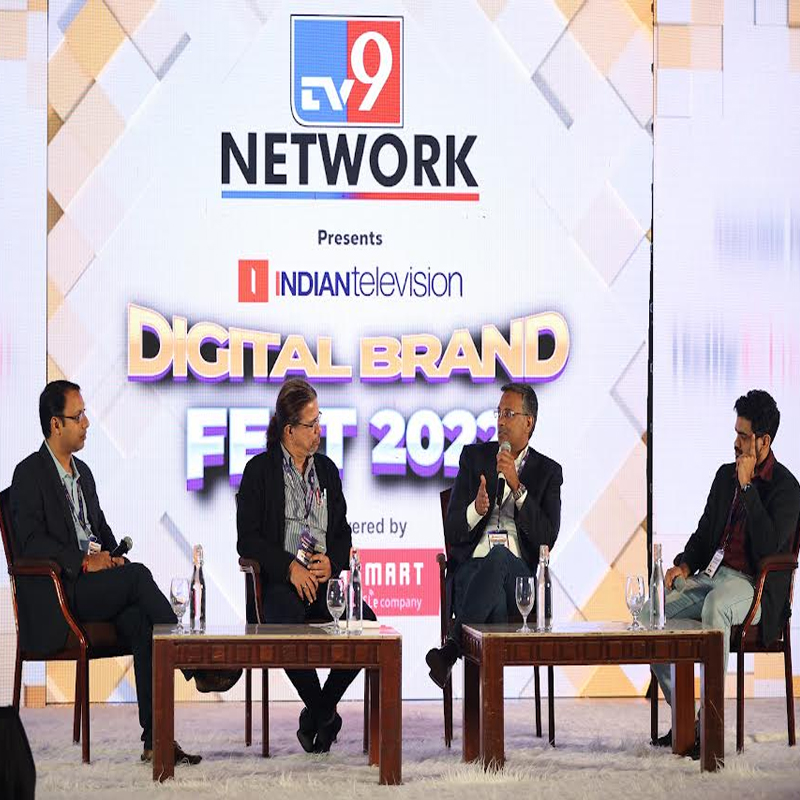
    Mumbai: The second edition of the Indian Digital Brand Fest (IDBF) 2022, which took place on 12 October at ITC Maratha, Mumbai, ran an intriguing panel discussion on the topic “Content Marketing for Web 3.0,” which brought together minds and thoughts on how content marketing is going to be the next big thing and how essential it is going to become to understand the consumer.

    The session was chaired by Indiantelevision.com Group founder, CEO & editor in chief, Anil NM Wanvari.

    Beginning the session and putting things into perspective with the topic of web 2.0, TV9 Network managing editor R Sridharan said, “If you look at the innovation that has happened in web 2.0 is far greater than what we saw much before. Earlier it was static content, then in web 2.0 we saw that it allowed people to interact with content like becoming a publisher on Twitter, Facebook. It became richer in many ways. In that way web 2.0 has done an incredible job in making content an integral part of marketing for every chief marketing officer (CMO).

    “More than advertising, content marketing is important, and for that web 2.0 has done a great job. Web 2.0 has been a great learning experience from a content marketing perspective,” he added.

    However, Madison India vice president Kosal Malladi was of the view, “We have done a job in content marketing, but have we done a good job? I’m not so sure. When content marketing started, we thought that the end consumer wanted to know everything, so initially the content marketing was quite bad. We are getting better; it’s an ongoing learning process.”

    “We got to understand that if there’s too much content and information being bombarded on the consumer, then that’s also a problem,” pointed out HDFC ERGO General Insurance vice president marketing Alok Bhargava.

    Talking about the onset of web 3.0, Sridharan brought out, “No one knows how it’s going to pan out, but some things are very apparent and obvious. Firstly, on the content side, it is going to become far more immersive, and secondly, it’s about privacy. These things are going to change the game, and brands have to understand how to know their customers and how to interact with them.”

    He reiterated, “Content marketing is going to become more important in web 3.0 because, as a brand, I need to build communities and platforms where people will come on their own and share information about themselves.”

    “It is about creating the right content in the first place – if you have created some content which is not engaging the consumer and the consumer is not enthusiastic about it, then you have to have a harder look at what you’ve created. Researching the customer and what would keep them engaged is probably the most important thing,” Sridharan pressed.

    Needless to say, content will become extremely powerful if it is done the right way. He said, “If the customer sees value in interacting with you, he/she will come back to you again and again. You won’t have to persuade them.”

    Bhargava opined, “Content creates a good factor for any brand. If your content is not good, you will have to push it harder to the consumer.”

    According to Malladi, most of the content marketing is paid. Sridharan was quick to add, “When a piece of content is dishonest to the consumer, it’s not going to work. They are able to see through when the brand is not being authentic.”

    Regarding whether digital will overtake TV in outreach, Malladi said, “If you are advertising on digital, it’s not just the reach that happens but your ad is also seen on multiple devices.”

    “Yes, digital will overtake eventually, with connected TV taking over linear TV family viewing habits in India. The content has to be medium-appropriate,” said Bhargava.

  • GUEST ARTICLE: Thinking about data ownership in the web3.0 world

    GUEST ARTICLE: Thinking about data ownership in the web3.0 world

    Mumbai: It has been almost two decades since we saw the rise of the internet and various applications like Facebook, Twitter, Gmail, etc. They have brought a revolutionary change in everyone’s lives. From sending messages or doing a video call, there is a powerful solution available for everything. But even though they solve major problems, there is one major concern: user data.

    Data ownership and web2.0: Introduction 

    Most of the applications we use today store a huge amount of data on their servers to design advanced models and algorithms to show advertisements and information. This information includes not only your name and email address but also the posts you read, advertisements you click, and so on. To be more precise, although you can use such applications for free today, you are giving a huge amount of data to the companies in return.

    This has raised several concerns related to data privacy and preservation. As per the recent survey done by termly.io, in 2013, hackers breached Yahoo’s systems and stole information from over three billion accounts. However, the information did not include any sensitive figures like payment data or bank account numbers.

    Likewise, in March 2021, hackers scraped data from Facebook and exposed 533 million users’ information from all across the world. This has all the important information like user locations, biographical, etc. 

    But with constant technological improvements and the emergence of concepts like web3.0, there has been a new gleam of hope seen among everyone, which would return the data ownership to the users.

    Data ownership and web3.0

    By leveraging blockchain, web3.0 addresses several storage, centralisation, and data ownership concerns. Web3’s architecture does not use centralised servers to store data, but rather a large group of nodes spread across the globe.

    Such nodes act like a bridge for the exchange of data between the decentralised applications and end users. A large number of decentralised applications are non-custodial and community-governed. Also, it secures all intellectual property rights algorithmically, giving users a true experience of data ownership. However, the underlying blockchain makes the process quite transparent and preserves privacy through advanced cryptographic algorithms.

    How does web3 achieve its goal of sovereignty over user data and privacy?

    Web3 utilises some of the most advanced features of blockchain and distributed ledger technology to protect users’ data and privacy.

    Encryption: Every asset, message, or even financial transaction is encrypted. Encrypted data is only accessible by decrypting it and requires private keys.

    Private Keys: A private key is like your UPI pin, cryptographically made. It proves data ownership, digital identity, and the blockchain public address.

    Authenticity: With private keys, users own their data and have the absolute right to share it. Users can leverage all the benefits from the data collected and profit earned from assets.

    New ways of consuming data without compromising users’ control over it

    For example, if user data were democratised, big corporations and users would be able to profit together. Recently, there was a conflict of interest between Apple and Meta-related user data.

    Apple has given a choice to users to share data or not. Individual users’ ability to choose whether or not to share their data has no bearing on any small-scale business seeking to advertise to a specific audience.

    Further, there could be a decentralised marketplace where small-scale businesses could pay the communities for their data exchange instead of paying large entities like Facebook for the same information. This would provide a new source of income for the community members.

    Internet data is not just about making great profits or advertising. There is also a segment of people who collect data, not for profit but to invest in something new. Researchers and surveyors often look for user data to support their research or an invention.

    If we could monetise the data, it would help the users earn some passive income and motivate them to increase the amount of data available to work for the betterment of society and research.

    One such great example is credential data networks. The credential data network allows developers to build better products and communities. It opens up a collaborative infrastructure for users to get rewards where their credentials are used. This helps users earn income and build a large data network.

    Challenges while adopting web3 for data ownership

    Web3 has opened up numerous opportunities but is still in the work-in-progress stage. There are a lot of challenges and hurdles coming up while adopting decentralised applications, bringing a revolutionary paradigm shift in how we consume the internet. One such challenge is regulation. It isn’t easy to regulate things in web3.0. Several experts believe it would open up new ways of conducting cybercrime and online abuse, among several other things.

    Secondly, the user wallets that store account information like private keys have a bad user experience, and it is difficult to understand their usage by any layman. It is difficult for people to understand the terminologies of wallets, gas fees, keys, and much more. A lot of work is needed to onboard users and help them learn such concepts.

    What does the future look like with web3?

    The internet is constantly evolving, and recently many issues have come up regarding the safety of users’ data. Web3 opens up new opportunities for people to control their data by leveraging credential data networks and decentralised social graphs. Products like Soclly are leveraging a decentralised social graph called the lens protocol to revolutionise social media applications.

    The decentralised architecture stores data across numerous scattered ledgers. This eventually reduced the chance of hacking and gaining access to the data significantly. Not only this, but it also gives the opportunities to the users to own their data rather than centralised companies such as Meta and Google to own them. In a nutshell, this new age technology will bring a bright future for internet users to own and control their data.

    The author of this article is Soclly co-founder Prayag Singh.

  • Guest article: What to know about the modern marketing playbook in the era of web 3.0 and AI

    Guest article: What to know about the modern marketing playbook in the era of web 3.0 and AI

    Mumbai: For quite a while now, two terms have been making very speedy rounds in marketing circles-web3.0 and artificial intelligence. This new wave of the internet is set to disrupt the way marketing is done globally, commanding quick and agile systems. The reason: this is where the consumers of the future are. As marketing tactics change along with the advent of the digital revolution, new standards will be established at the same time, drastically altering modern marketing.

    What is web 3.0, and what are the new trends it brings to the table

    The third generation of the internet, or web 3.0, integrates data in a decentralised manner to provide a quicker and more individualised user experience. Constructed with the help of artificial intelligence, machine learning, and the semantic web, it uses the blockchain security system to improve privacy and provide an immersive experience with a marketing opportunity. So, businesses stand to benefit from an online presence here, and marketers will get a stronger opportunity to connect with their target customers.

    Web 3.0’s degree of functionality has been attained in the previous two web generations. Its technical ancestor, known as web 1.0, was born in 1989 and reached its prime in the 1990s and early 2000s. Then came web 2.0, which reached its maturity in the middle of the 2000s and introduced the novelty of collaborating and communicating online.

    A rich and interactive marketing experience

    A marketing challenge today is delivering a hyper-personalised experience at a time when users are expected to have more control over their data. And it indicates that reaching out to both present and future consumers will soon become more difficult. Users now create information on the internet as well as consume it, which is helpful for marketing. Here is where web 3.0 components such as AI help make sense of the massive creator data.

    Web 3.0 marketing uses the rapidly changing internet to improve results. For instance, marketers can examine customer chats using natural language processing technologies. AI has also been utilised to further personalisation, particularly in the areas of online content rendering and presentation, the delivery of e-commerce goods, and automated customer assistance. A greater symbiotic link between humans and machines will lead to more web 3.0 features having a significant impact on marketing. Besides this, the other brilliant arms of web 3.0 are NFTs and the metaverse, which is an all-consuming version of the internet that uses tools like virtual reality (VR) and augmented reality (AR) to work, play, and amuse others in a 3D environment.

    How to market effectively on Web 3.0

    Any kind of creative work can be represented by NFTs, giving advertisers the opportunity to reach consumers with a range of interests. They can be implemented into customer loyalty programmes where participants are given the chance to acquire exclusive products. This is being done to perfection by brands like Taco Bell, Macy’s, and Budweiser.

    Immersive surroundings, virtual user identities, and a working virtual economy are all distinctive aspects of the Metaverse. Its objective is to mirror physical environments and lives in digital form, thus enhancing human potential. The metaverse offers marketers the chance to connect with consumers in a brand-new setting where they are fully engaged. Businesses will have the ability to increase their reputation by highlighting the assured security of blockchain transactions.

    Web 3.0/AR & VR are being touted as game-changers in modern marketing. Given its immersive and ‘phygital’ nature, interoperability, and collaboration capabilities, however, an ongoing commitment to the platform is key. Many web 3.0 principles are still up for dispute.

    Web 3.0 is still being defined as a whole since there isn’t a single, agreed definition of what it exactly is. In other words, we are creating the aircraft while we fly. Despite this, there is no denying that web 3.0 is changing the way that the modern corporation interacts with its clients. In addition to the numerous potential advantages for early adopters, marketers should be actively involved in the process of establishing this next phase of the internet because they have a duty to future generations. Numerous companies have begun experimenting in this realm, including brands like Airtel, MakeMyTrip, Amazon and Swiggy.

    In one classic example Alpenliebe brand house which comprises candies, pop & Eclair collaborated with Nickelodeon’s annual awards property – Kid’s Choice Awards which screened in the metaverse. Hosted at Decentraland which is one of the biggest metaverse platforms globally, the brand organized a quirky entry for its participants where they were asked to form their own ‘’Avatars’’ upon registrations. A slime pool, a blimp pool, slime fountains & fun slides also appealed to the kids. The metaverse event was mobile friendly which delivered an immersive user experience and created good brand value.

    Again, for companies like Starbucks, technology need not alienate us. To quote Tata Starbucks director of marketing, category, loyalty and digital Deepa Krishnan, who is also a jury member at MMA India Smarties 2022, the future will be all about marrying technology with purpose, experiences, and value by getting to know consumers, their interests, and preferences and making their lives simpler through deep analytics, harnessing multi-point data and insights.

    Five years ago, marketers were beginning to shift more spends online through advertising and digitisation, notes Krishnan, adding that the pandemic hastened that significantly. “The future will be about bringing the offline experience online. It is going to be about humanising the digital. People realise and appreciate the power of human connections and are increasingly craving community-driven engagements. How a brand connects with its consumers is still very much significant and will always remain paramount,” she adds.

    Revolutionising the marketing and advertising industry

    The future customer won’t be susceptible to today’s issues, such as obtrusive marketing and inadequate data protection, thanks to a solid foundation. But for businesses looking for success in the new era of the internet, AI and the metaverse-based research technology will not only introduce them to the developing web 3.0 marketing but will also give them access to the consumer and market intelligence necessary to grow a company.

    The author of this article is MMA India country head Moneka Khurana.

  • Eros Investments and Xfinite partner with Calvin Cheng to launch XelebX

    Eros Investments and Xfinite partner with Calvin Cheng to launch XelebX

    Mumbai: Eros Investments and Xfinite have partnered with veteran entertainment and tech entrepreneur Calvin Cheng to launch XelebX, a web 3.0 members-only celebrity fan club.

    With the use of NFTs and fan tokens, the alliance will introduce over 200 million existing followers of global influencers and celebrities linked to the Eros ecosystem and its group companies to the new metaverse.

    Only NFT members will be able to access XelebX. They will have access to a number of advantages, such as exclusive access to virtual meet-ups with influencers, exclusive material, virtual backstage passes, and celebrity NFT collectibles.

    Speaking on this partnership, Eros Investments chairman Kishore Lulla said, “Over five decades, Eros has built one of the largest media and entertainment businesses, enthralling millions of fans and launching some of the biggest stars in India. One of the key reasons for our success is our ability to embrace change—from film to TV to the Internet and now web 3.0 and the readiness to lead it from the front. The metaverse and the immersive Internet are the technological tides that will carry us forward for the next 50 years. Eros is committed to being at the forefront of its adoption.”

    Furthermore, XelebX will introduce fan tokens that measure an influencer’s popularity and can be traded on significant exchanges, enabling holders from various fandoms to freely trade and swap value. As a result, influencers and celebrities will be able to work together and expand their fan bases in a manner that is naturally compatible with web 3.0 interoperability and composability. Xfinite’s Mad Influence, a well-known influencer marketing business, has joined XelebX.

    Xfinite CEO Swaneet Singh said, “With Xfinite, Eros has already gained invaluable experience in media built upon virtual assets and the blockchain. XelebX is the next natural innovation to bring the global community of entertainment fans into the metaverse and unlock immersive interaction with the influencers they follow.”

    Calvin Cheng added, “Web 3 is all about community building. Other platforms have tried this in the past. They built the tech but struggled to build the community—the key to web 3’s success. We already have the tech expertise and an amazing community of hundreds of millions of fans. We will now onboard them into the metaverse using the latest digital asset and web 3 technologies.”


  • Metaverse ecosystem opening up new influencer opportunities for brands, creators, & consumers: FleishmanHillard report

    Metaverse ecosystem opening up new influencer opportunities for brands, creators, & consumers: FleishmanHillard report

    Mumbai: FleishmanHillard and its research practice, True Global Intelligence, in partnership with Eleve Media, have released the ‘Web 3.0 Influencer and Intelligence Report 2022.’ It showcases the ways that conversation and influence are quickly changing in India around the rising evolution of the metasphere.

    Both the creator economy and the topics driving discussion of web 3.0 on social media have sharply increased over the past 12 months. The report research included a survey of over 500 influencers, content creators and select web 3.0 players from March through April 2022, in addition to the analysis of more than 12 months of social conversations. The research confirms the massive excitement around web 3.0, as well as specific areas of interest, including education, regulation and the need for re-imagined communities. 

    “Our report confirms the rapidly growing appetite for news and views about the metaverse and web 3.0-related trends. These advancements are already setting a precedent for brands and content creators who can design highly engaging and differentiated campaigns that leverage this advantage. We hope this report will increase our understanding of the subject and contribute toward the adoption of Web 3.0 in a meaningful way for brands and creators,” said FleishmanHillard India MD and partner Munavar Attari.

    The report also provides a detailed conversation analysis and an overview of the web 3.0 landscape in India.

    “Our research inspected the developments in the web 3.0 space over the past year and highlights just how dynamic the topic is, and how much open territory still exists for brand communications that satisfy this hunger. As brands adopt new technologies in web 3.0, understanding the velocity and direction of the current conversation can be valuable to start from a place of intelligence and understanding in India,” said FleishmanHillard TRUE Global Intelligence, managing director of APAC and global head of analytics Michael Rinaman.

    Major themes and findings are discussed in detail in the report, including how:

    •     The popularity of web 3.0 content reveals a dire need for a better understanding of the new generation of web technologies.
    •     The evolving landscape requires close attention to shifting conversations to understand emergent trends, nuances, and new risks.
    •     Most influencers want to create a community (web 3.0) over algorithms (web 2.0) in the metaverse.
    •     Influencers are on the lookout for next-gen tools to strengthen the creator economy.
    •     Creators and non-fungible tokens (NFTs) have paved the way for the metaverse to become an accelerated reality.
    •     Creators vote for Discord, virtual influencers, and social interactions as key web 3.0 tools.

    “Web 3.0 promises a more direct relationship between brands and consumers. And we would want brands to be equipped to experiment and explore web 3.0 platforms and opportunities. The ‘Web 3.0 Influencer & Intelligence Report 2022’ is a joint effort with FleishmanHillard in India to help brands strategically leverage this societal shift,” said Eleve Media CEO and founder Prince Khanna.

    From the web 3.0 Influencer and Intelligence Report 2022, the research from FleishmanHillard in India and Eleve demonstrates a sense of urgency that brands need to start to develop web 3.0 strategies now while there is still room for differentiation and partnership. As audiences become more familiar with web 3.0 topics such as NFTs, cryptocurrencies, blockchains, and tokens, there will be fewer opportunities to differentiate.

    Web 3.0 is set to change the influencer ecosystem and continue to drive conversation. In the report, brands can learn more about immediate opportunities to act – from embracing the key trio with creators (creation, consumption, and compensation) to crafting the right strategies and messaging to be considered relevant.

  • How is movie marketing evolving in the times of web 3.0

    How is movie marketing evolving in the times of web 3.0

    Mumbai: Movie marketing has come a long way from static print posters advertising an upcoming blockbuster. In today’s attention-deficit times, the marketing of films has had to evolve to become more engaging and focused in order to grab the audience’s attention. The way movies are marketed has been changing at a rapid pace over the past decade, and now, with the metaverse becoming one of the biggest platforms for marketing, it is due for a paradigm shift in the very near future.

    The film industry is known to devise innovative marketing strategies to promote their movies. Filmmakers need to adapt or risk being left behind in ways to attract the attention of their target audience. Hence, filmmakers, in association with agencies, are now taking their marketing campaigns a notch higher with the advent of blockchain technology and trying to use the metaverse and NFT space to promote films using totally immersive experiences that take the viewers into a different world altogether.

    Rediffusion Red Lab’s report titled “Web 3.0 – A new revolution in the world of Indian Cinema,” which examined the link between web 3.0 and Bollywood, concluded that the convergence will be here sooner than we imagine.

    [[{“fid”:”1092789″,”view_mode”:”default”,”fields”:{“format”:”default”,”alignment”:””,”field_file_image_alt_text[und][0][value]”:false,”field_file_image_title_text[und][0][value]”:false},”type”:”media”,”field_deltas”:{“1”:{“format”:”default”,”alignment”:””,”field_file_image_alt_text[und][0][value]”:false,”field_file_image_title_text[und][0][value]”:false}},”attributes”:{“class”:”media-element file-default”,”data-delta”:”1″}}]]

    In the foreword to the report, Rediffusion managing director Sandeep Goyal says, “Bollywood needs to comprehend, if only to understand how the next generation of consumers hopes to be entertained and engaged.” NFTs, or non-fungible tokens, are digital identifications that are recorded on a blockchain. They certify an owner’s authenticity and rights to a specific piece of digital content, such as an image, a video, or a specific animated character in a franchise.” 

    “NFT holders can start to get fan club-like perks that might include wider access, early screenings, and, in many cases, the right to create their own iterations of the character or asset they own,” further says Goyal. He points out, however, that the ethos could be a direct clash with the tight control that Bollywood studios have long enjoyed over content, while adding that the advent of web3 will change a lot of that. 

    The NFT rage seems to have taken over Indian cinema too. Many movies are riding the NFT wave for movie promotions, with actors launching their own NFT series to connect with their fans. Not long ago, Salman Khan ventured into the NFT space where he launched a series of 200 NFTs based on the “Dabang” film series. The actor also launched the $GARI token by Chingari, a short video app, and became the brand ambassador for the platform’s NFT marketplace.

    Popular South Indian actor Rajnikanth too launched a series of NFTs based on his 2007 movie, “Shivaji the Boss,” even as his peer Kamal Hassan went a step further and celebrated his 67th birthday by launching an NFT series and creating a digital avatar to enter the metaverse.

    According to TheSmallBigIdea (TSBI) CEO & co-founder Harikrishnan Pillai, while the metaverse space is still evolving, it is just a matter of time before it becomes a big part of the movie marketing industry. “People today are aware that the metaverse is beyond just a buzzword. At the moment, a lot of the initiatives are short-term in nature, but soon things will become long-term and immersive in nature. Once that happens, things will become captivating,” he says.

    The TSBI agency recently collaborated with Ajay Devgn and Hefty Verse to devise metaverse marketing strategies for the “Runway34.” On how metaverse marketing is emerging as a new means of movie marketing in the Indian film industry, Pillai says, “Marketing in the metaverse has two advantages. One, it allows you to connect with an audience set that is completely new. Also, it allows the current audience to immerse themselves in a much deeper manner. Both benefit the film marketing process.”

    In such times, when movies, OTT shows, and events are eyeing a similar audience set, the metaverse presents itself as an innovative solution for film marketing, he adds.

    NFTs have also recently excelled as a tool for promoting films, according to the Rediffusion report. Two NFTs honouring the recently released Amitabh Bachchan-starring Hindi movie “Jhund” have been produced by the film’s makers. These NFTs, which cost more than Rs 2,15,000 each, were created in association with the US-based NFT marketplace Superstar Xchange, says the report. 

    Additionally, the film “83,” which celebrated India’s victory in the 1983 World Cup, also introduced a line of “83” collectibles, which included tangible cricket memorabilia that had been personally signed, video clips, animated digital avatars, and previously unseen posters and photos.

    VistaVerse partnered with “Rocketry – The Nambi Effect” to introduce some spectacular and desirable NFTs in the metaverse. This partnership resulted in the film going on to become the first Indian film with 10,000 NFTs claimed, says the Rediffusion report.

    “This film represents my labour of love and the team gave it their all to make my dream come true. I’m ecstatic that the long-awaited “Nambi Narayanan” movie is now being shown on a grand stage with fans getting an opportunity to participate in the web 3.0 environment for a personalised experience,” said the film’s director and actor R. Madhavan.

    “The fundamental edge that the metaverse provides is the bragging value of doing things in a virtual dimension,” says Pillai, talking about the opportunities the metaverse presents to movie marketing. “It allows you to do everything that you do in real life, but in a virtual avatar and setting. The other advantage is that it takes monetisation to a different level. It also cuts physical barriers and has the ability to teleport experiences to any environment.”

    Citing the example of the “Runway34” movie, he says,”For the “Runway34″ game we developed, the audience could interact with Ajay Devgn’s character from the film and fly a plane with him, sitting in the comforts of their home. Or they could buy NFTs of Ajay Devgn’s glasses, or Amitabh Bachchan’s attire, or Rakul’s jacket, and also get the real physical item to own, with the NFT authenticating it.”

    “When we approached Ajay Devgn with the idea of him being in the metaverse space, he seemed quite enthusiastic about it,” Pillai says, while talking further about the collaboration. The actor had the foresight to recognise that this was the next and a new approach to audience engagement, he adds. “Further, to bring to life this entire concept, we found the right technology partner in Heftyverse and joined hands with them. We launched more than a dozen NFTs along with an immersive “Runway 34″ game.” 

    Nevertheless, it’s not a cakewalk, and challenges remain as the space is still evolving. “The effort versus the returns is probably not as high as it should be, but the buzz value is pretty high,” says Pillai. “We have to move beyond the novelty of being first movers. There is still some time left as far as the metrics to convert and measure that buzz to a film’s success are concerned.” 

    The Rediffusion report lists several ways in which the metaverse, along with NFTs, could potentially revolutionise the film industry: Even as NFTs can be utilised to crowdfund film projects, it can give a boost to the industry when movies do not do very well in theatres. Since November 2021, industry players have raised around four million dollars by selling NFTs, going on to show NFTs are here to stay and will add to the revenue streams of the Indian cinema industry.  

    The way we view films is also going to be changed by the metaverse, as they can potentially be used to create more immersive experiences and potentially allow viewers to become part of the storytelling experience.

    “The novelty of short-term initiatives will fade away. Brands and films, especially film universes and studios, should become early entrants and build their space in the metaverse to provide an immersive audience experience and create monetisation opportunities,” opines Pillai on leveraging the metaverse further as an important marketing tool for promoting films. The next and prudent step for marketers would be to think long-term, he signs off.

  • GUEST ARTICLE: Metaverse- A marketing trick or future of the internet

    GUEST ARTICLE: Metaverse- A marketing trick or future of the internet

    Mumbai: The metaverse is a concept of a persistent, online, 3D universe that combines multiple different virtual spaces. It is the intersection of virtual reality, augmented reality, and the world wide web. The 3D virtual reality ecosystem allows you to play games, create, explore, communicate, work, and socialise.

    From the advent of the internet in the 1990s to the web 3.0 wave, one of the most remarkable social developments is the confluence of real and digital worlds. The pandemic prompted brands to reach audiences worldwide using engaging ways that appeal to people while maintaining their authenticity, compelling the industry to resort to technology and tap into the metaverse.

    According to KPMG, by 2030, we may spend far more time in the metaverse than in the physical realm. People would use the metaverse’s virtual abilities to seek employment, generate an income, socialise with friends, shop, or even get married.

    Not just games but digital worlds

    The metaverse is so much more than solely a gaming environment; it’s a sci-fi vision come true. It is also not confined to tech giants; it’s open to creators from across industries. Established businesses are preparing for the virtual world. For instance, McDonald’s has applied for a trademark for a virtual fast-food restaurant and virtual goods and services. It will provide consumers another alternative to ordering food online and getting it delivered to their homes. Surely, creativity will drive the economy as experts from diverse professions integrate their expertise.

    The progression of the metaverse economic system will have a direct financial impact on the real-world balance sheets of entities. Which is why brands have started to employ creative marketing tactics to penetrate the metaverse and cash in on that early mover advantage. The metaverse is likely to transform the brand marketing paradigm as marketers will be able to engage consumers in immersive new ways while simultaneously working on developments and innovations to propel them forward with a seamless user experience.

    Additionally, metaverse allows employees’ digital avatars to enter and exit virtual workplaces and conference spaces in real-time. They can use their avatar to deliver live presentations, unwind with colleagues in a networking area, and perform any task with the ease of sitting at their desk.

    Marketing in metaverse

    With the rise of the internet, social media marketing has become essential to driving traffic and revenue for small and large businesses. Brands are shifting their digital marketing approach towards the metaverse to remain relevant, particularly to millennial and Gen Z audiences. They are the most fervent adopters of the metaverse. More importantly, metaverse platforms offer far more immersive and engaging experiences in comparison to traditional social media platforms. Some brands have even experimented with real-time monitoring of their brand visibility and engagement across many virtual platforms. It enables marketers to analyse data such as how long users hold digital products, how long they have users’ attention, and where users gaze while viewing advertisements.

    High-end fashion brands such as Gucci, Nike, and others are vying to “get there first,” putting their advertisements in front of a massive audience in innovative and engaging ways.

    Future of metaverse

    The future of the metaverse could be similar to our present world in many ways and may even replace some real-world activities, or it could almost overshadow our present world in a Ready Player One-esque future. The future trends are looking at the world through AR/VR devices and using immersive technology. Early adopters will have a huge advantage, making it essential for businesses to begin researching and experimenting as the pace of change accelerates.

    The metaverse is still at a nascent stage, and everyone is experimenting to see if they can see success stories as they explore, interact, and try out new marketing tactics. There are a few measures that brands may take to gain an edge by creating virtual experiences, offering in-world purchases, organising virtual events, exploring NFTs, streamlining social media marketing, developing a metaverse marketing strategy, and so on. More brands view the metaverse as a probability to interact with audiences in ways that are beyond their imagination and deliver new and unique brand experiences.

    The author of this article is Blink Digital director of technology Amer Ahmad.

  • GUEST ARTICLE: The role of crypto in facilitating the content creator economy

    GUEST ARTICLE: The role of crypto in facilitating the content creator economy

    Mumbai: With technology opening myriad opportunities across sectors, it has ushered in an era of growth for the creator economy. Content creators today have a new means of monetising content, which is empowering them to become the sole owners of what they produce and engage directly with the audiences. Blockchain is revolutionising how content creators can make money from their creativity and hard work online. In the past, they relied on brands by engaging, promoting or representing them. Despite having millions of followers or influence on social media, they have to depend on brands to make money from their content. 

    With the growth in digital spheres such as streaming platforms and even the metaverse, for instance, they are now able to explore new avenues to showcase their work, establishing a link with audiences and earning directly. At present, the total creator economy market size is over $100 billion, and it also states that 46 per cent of creators generating content for over four years are earning more than $20,000 annually.

    Undoubtedly, the creator economy empowers content creators by giving them ownership. They now do not have to think much about the ever-changing online algorithms, worry about how much brands will value them, and can depend on their actual supporters, fans, or audiences for income. They can decide where and when to work and how to engage with audiences directly to make money. Thus, cryptos are democratising the ecosystem by unlocking many options to make, share, and sell content across platforms.

    How is blockchain boosting the creator economy?

    The rise of creators, consumers, and engagement on social media have made these online platforms leverage emerging and new-age technologies to offer realistic, advanced, and real experiences to their users. It is vital to make sure that creators get paid for their hard work without relying on anyone else as the ecosystem grows. With the advent of technology like blockchain, decentralisation is happening, and as users are gaining ownership of what they create online, it is making the ecosystem more equitable for them by linking consumers and producers through a direct exchange.

    Blockchain, which is the basis of non-fungible tokens (NFTs) and cryptocurrencies, has made it possible to track or record transactions or exchanges in real-time. Content creators today are using NFTs to digitally trade their assets and collect royalties. Once issued, the NFTs assign a monetary value to these digital assets. Also, a token is tied to the content that makes it the original piece. The owners then sell or auction off these NFTs with cryptocurrencies, which can be later converted into real money.

    How does it bring additional benefits for creators?

    The most significant advantage of blockchain technology for content creators is that it empowers them by allowing them to earn directly from their audiences without the use of intermediaries. They get full control, complete rights, and visibility of their earnings. The content creators, thus, by engaging, are able to earn, which greatly boosts the creator economy. Moreover, the benefit of crypto is that it stores the value of financial incentives with the distributed ledger to decentralise each financial transaction with the help of blockchain. The networks don’t hold or store a centralised source of original information, which makes it safe from hacking or exploitation.

    Taking a step ahead, the creators can use creator tokens to create and offer unique resources and provide unique experiences to their followers for community building. For example, they can offer member passes to grant greater access to fans and create new income pathways. Also, such tokens let fans get closer to creators by paying extra. The creators will subsequently be able to expand their income source by possibly investing their earnings in crypto assets. Today, there are leading platforms such as Taki, Chingari Clubhouse, and others that are providing opportunities for content creators to earn money. This sector is gaining huge traction, and as technology, demand, and awareness develop further, it can definitely provide an alternative source of income and possibly higher returns to content creators.

    The way forward

    It is indeed welcoming to see that the Indian government hasn’t banned but regulated the crypto ecosystem, leaving scope for learning and understanding to bridge the trust deficit and address the hesitations. As per reports, the creator economy in India has grown to Rs 1,300 crore in the last couple of years as many small, medium, and even global brands are actively opting for social media creators and influencers to promote their products, which shows that the future is bright. The country, which is on its way to emerging as a resilient digital economy, has to formulate its policies to adopt the innovations and trends to not miss this bus at this juncture. India is witnessing a rise in its internet and social media population, and a conducive ecosystem for the development of blockchain, NFTs, cryptos, and web 3.0 can empower the content creators by making them sole owners of their content and selling it directly to their loyal fan base. 

    The author of this article is Taki co-founder Sakina Arsiwala.

  • GUEST ARTICLE: How blockchain and the metaverse are revolutionising esports and boosting fan engagement

    GUEST ARTICLE: How blockchain and the metaverse are revolutionising esports and boosting fan engagement

    Mumbai: The gaming and esports industries, both in India and worldwide, have come a long way since their humble beginnings. From physical world cardboard games to playing Super Mario on 16-bit gaming consoles to the era of PlayStation and XBox to now playing e-games, fantasy, and multiplayer esports battle tournaments on smartphones, gaming has really evolved and become more organised and interactive with time. What is the next stage of evolution for the esports and gaming industries?

    To answer that, the next big growth frontier for the esports domain will be based on the dual wonders of metaverse and blockchain-based gaming, which are bound to transform the industry and take fan engagement to a whole new level. But the questions are how and why? Let’s delve deep to find out.

    The market and the promise

    Blockchain technology is already positively transforming the esports industry as we know it. If there is a time for blockchain-based gaming, then it is now. Today, global investors, brands, media outlets, and consumers are nothing but immensely bullish about the possibility of esports and blockchain-based gaming in the metaverse. As per insider intelligence estimates, the total viewership of esports is expected to grow at a 9 per cent compound annual growth rate (CAGR) between 2019 and 2023. A report by the Federation of Electronic Sports Associations of India (FEAI) predicts that the total size of India’s esports industry will be more than Rs 1,000 crore by 2025. In another latest report published by Finder, India has gained the top spot in terms of the adoption of NFT gaming and play-to-earn games, with 34 per cent of the surveyed reporting having played P2E games, and an additional 11 per cent of them willing to play such games in the near future.

    What do all of these statistics tell us? It tells us that a gaming revolution is on the horizon, and furthermore, esports within the metaverse and blockchain technology’s applications in esports are poised to be big in the coming decade. The concept of metaverse and blockchain, coupled with augmented reality and NFTs, are inter-related, with critics now arguing that blockchain, with its decentralised architecture, can help esports and games thrive both in the real-world as well as in the metaverse, by overcoming the shortcomings of centralised data storage.

    Blockchain – the disruption driver in esports arena

    The biggest advantage of blockchain is its decentralisation, which removes intermediaries and empowers players to be the decision-making authorities while adding real-world value to their virtual assets, including in-game ones. The decentralised structure of blockchain helps to bring all the stakeholders of esports like players, sponsors, media, team managers, and advertisers under one roof, thus enabling easy management and distribution of prize money, media rights, sponsorship, and fan engagement.

    With the rise of blockchain-based esports and non-fungible tokens (NFTs) in esports, a new gaming model is emerging based around real asset ownership. And thereby, the new “play-to-earn” model is enabling esports to move away from free-to-play and pay-to-play models. In addition, through blockchain applications, players can get rewarded with cryptocurrencies for playing—which will be another advantage along with the emergence of the ‘metaverse’.

    Furthermore, blockchain addresses two of the industry’s major concerns: security and vulnerability, by making transactions safe, transparent, and fair by providing a decentralised, transparent ledger where no single entity controls the network, making attack or hacking nearly impossible. Also, due to low transactional costs, it is easier to transfer money or any other tokenized asset across the globe, thus democratising the sector and improving accessibility for stakeholders.

    Fan engagement 2.0: blockchain and the metaverse 

    Blockchain gaming can take fan engagement to the next level by placing players and the fans at the heart of everything they do – from the creation of fan-centric ecosystems that will enable greater interaction between fans and teams, improving relationships with sponsors, unlocking new revenue streams and much more! To begin with, fan loyalty solutions can be created through blockchain technology, which provides a frictionless way for sponsors, partners, and fans to utilise loyalty tokens across the ecosystem. Fans can also be rewarded for taking certain actions, such as interacting with the team, making purchases from sponsors, or watching advertisements.

    NFTs, for example, can be viewed as the digital equivalent of trading cards in the future, with entire leagues, teams, and individuals licencing them today. Harnessing NFTs can unlock multiple opportunities for esports fans, who can use NFTs to unlock access to VIP spaces, clubs, and channels hosted by leading esports teams, which will allow fans to get closer to their favourite teams and gain a sense of camaraderie. Teams could also build a virtual version of their stadium in the metaverse and sell NFTs as tickets to fans for tours. Over time, NFTs can additionally become the digital tool for membership, rewards, access, and other aspects of ongoing fandom.

    Also, blockchain technology can be used to create and develop tokenized membership or fan tokens that may be purchased by fans and used to unlock discounts, rewards, exclusive content, etc. It can also unlock ways of interacting with pro teams/orgs wherein fans can use their token to get exclusive content, digital collectibles, merchandise, or behind-the-scenes sessions. Fans can even use their token to gain voting rights for their favourite epsorts teams and players, giving them a greater sense of belonging to their favourite epsorts teams and players. Moreover, given that blockchain-based platforms are extremely secure, flexible, and easy-to-scale, fans can make use of digital wallets to store and redeem tokens with ease, make transactions incredibly fast, and earn their rewards quicker than traditional loyalty platforms.

    On the other hand, esports in the metaverse will evolve to be a close-to-reality experience. What are the ways that the metaverse will make gaming more immersive and boost fan engagement? To start with, we will move from a physical event to an immersive hybrid model where instead of attending a tournament arena to watch the players, one could enter a virtual environment that places one within the play environment itself. Thus, esports tournaments in the metaverse could virtualize the entire experience for fans in a never-seen-before manner.

    In conclusion

    While metaverse is still in its early stages as of today, there is a growing interest in the Indian start-up ecosystem in the adoption of web 3.0 and blockchain in this sector. No wonder we are witnessing a revolution in gaming with blockchain. The intersection of blockchain, metaverse, and esports is certain to make gaming more integrated with our real-world experiences and will also make fan engagement more deeply personal, unique, and innovative. Together, blockchain and esports will create an ecosystem that will work seamlessly and make gaming more immersive, fun, and engaging for players.

    The author of the article is Stan co-founder and CEO Parth Chadha.