Tag: Wavemaker

  • It is time for Good News Today

    It is time for Good News Today

    Mumbai: Over the last year, people across the world have faced unprecedented challenges caused by the pandemic. All through this, television served as a window into the world, providing news of everyday events happening across the globe. The coverage across news channels documented the unsurmountable toll that the pandemic took on every aspect of our lives.

    Amid the gloom, there were stories of human sacrifice, hardships, and challenges that inspired people to step up and help others. Stories of Good Samaritans who delivered food to patients kept under isolation and mobilised oxygen supply to those who needed it the most. There were human-interest stories of dhabas that had been deserted during the pandemic and bounced back with the support of their ardent patrons.

    For the longest time, coverage of politics has taken precedence over other subjects for news channels. At a time, when the country is limping back to some sort of normalcy, perhaps it is these stories, that need to be told more than ever.

    “The trend in news media worldwide is to have a strong point of view and take a ‘stance’ in the country’s social-political scenario. That’s a classic way to get more eyeballs from the constituency the stance represents,” said renowned ad sales trainer and Marcom advisor to challenge brands, Shripad Kulkarni.

    There has always been a debate between giving what the audience wants over what you think they need. However, the chase for higher TRPs has led news channels into a rush for ‘breaking news’ and ‘sensationalist headlines’. Experts concur that over a long term, the content of news channels is largely responsible for attracting/ repelling audiences.

    The focus on negative stories also tends to create a bias towards a certain kind of worldview. Swedish statistician Hans Rosling demonstrated through tests that people believe the world is poorer, unhealthier, more dangerous than it actually is. He attributes this bias not to random chance but to a one-sided view of the world that is depicted in the media.

    “In-depth coverage and over the top coverage are not the same thing. There is a point by which too much becomes way too much. Honestly, I think Dilip Kumar (referring to his death) deserved more bandwidth than Raj Kundra – the young people need to know more about his story, from many different angles,” opined Social Access Communications’ founder Lynn De Souza.

    While the news genre continues to play the role of incremental reach builder/ frequency driver as per the structure of different markets, experts highlight that the recent changes in the news ecosystem have somehow diluted its attractiveness. Also, it is this nature of engagement with the news channels that the advertisers are also re-evaluating. 

    “Undeniably, content associations deliver the maximum value for advertisers but, the uncertain nature of content has made advertisers wary of associating with news as sponsors or as on-screen associates,” said Wavemaker India, chief strategy officer, Premjeet Sodhi, emphasising the need for more “regionalisation and localisation” in news coverage, as well as a need to appreciate the changes in mindsets of the small town/ rural consumers with their increased access to media.”

    In the era of the “attention economy,” each channel has created its own unique way of bringing news to the consumers and that may impact the viewers’ choice of channels. Maybe, it’s time, they explore good news as that differentiating factor to connect with their audiences.

    This also explains why the latest launch of channels like Good News from The India Today group offers a chance for the TV news genre to reinvent itself to bridge this widening gap. This also augurs well for brands and advertisers who are keen to invest in the news genre for maximum returns on value.

    “The ultimate product is the content and it is for the news channels to re-discover and re-define News and built their own unique approach to delivering news and analysis. And, this is something that has been done by these very channels in the past. The consumers’ expectations have changed; the market dynamics have changed and the news channels have to tune their strategic direction to the new reality,” added Sodhi.

    The latest example of that has been the coverage of India’s historic feat at the 2020 Tokyo Olympics. Stories that uplifted the morale of the nation in tough times, and gave them something to cheer about. It also drew attention towards the dreams and aspirations of Young India. There were so many backstories not just about Indian athletes but other treasured moments like the first joint gold that has not been properly featured on most of the news channels.

    “With respect to ROI for brands and advertisers, I think TV news is the genre that gives maximum return on value. News works out much more effectively because you can have a lot of frequency- and even in terms of CPR efficiency, nothing can come close to news so far. The only downside perhaps, is that a lot of planners think that you have reached stagnancy with the news. But we have experimented in the past that if you take the right path and expand your choice you can get an optimum reach with news,” says a senior media planner.
  • National brands gauge the Bangla TV market on Tele-wise Bangla summit

    Mumbai: There is little doubt about television as a far-reaching instrument of viewership connecting masses pan India. It remains the medium of choice to build reach and brand salience. However, as the second wave of the pandemic swept through the country, it also impacted the overall TV viewership across regions. This, in turn led the advertisers and brands to reflect on the way they leveraged TV to reach out to their target audience.

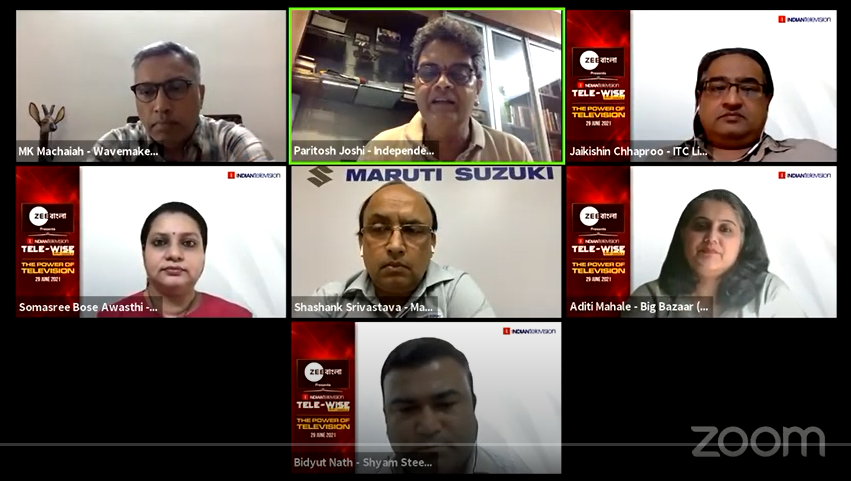
    As a part of the inaugural edition of the Tele-wise Bangla Summit 2021 organised by Indiantelevision.com in partnership with Zee Bangla, industry experts and stakeholders from across sectors weighed in on the strength of the West Bengal TV market and the disruption caused by Covid-19 on people’s lives, their consumer spending, and TV viewing habits.

    In an informative discussion ‘Gauging the Might of the Market’ –  moderated by independent media consultant Paritosh Joshi, marketers debated on how the Bangla market remains highly relevant for national brands looking to make their presence felt in the state when it comes to TV ad spends.

    The session kicked off with Joshi observing that, although the pandemic has largely resulted in an overall bleak economic environment, FMCG remained the sole bright spot. Godrej Consumer Products Limited marketing head (homecare category) Somasree Bose Awasthi pitched in that it was true specifically with regards to essential items, which have been driving the growth in the sector. The premium or discretionary categories like grooming or hygiene products have suffered a setback in the last year. She added, however, that the reverse migration due to the pandemic had led to a revival in the rural economy across the country, including West Bengal.

    Shyam Steel India, head of brand marketing, Bidyut Nath corroborated this by saying that, while the pandemic had brought most large-scale construction activity in the cities to a standstill, with workers going back to their villages, it had continued almost uninterrupted in the rural areas as people did not cease to build houses for themselves, irrespective of the pandemic. So while there was little positive growth in the sector, it did reflect a steady growth with nearly 69 per cent of the populace constructing homes, he said.


    The panellists discussed how the pandemic also caused people to become risk-averse when it came to buying decisions, due to which market leaders in a particular sector and trusted brands gained.

    According to Maruti Suzuki India’s marketing & sales executive director Shashank Srivastava in such times, the trusted brands become the anchor for consumers. “That trust helped us, and our market share went up in most segments, despite Automobiles being a discretionary, high-value purchase. In general, the retail sales were better in 2020 than the previous year for Maruti, mainly because of the change in consumer perception towards public transport, resulting in more people becoming inclined towards owning private vehicles,” he said.

    However, the fall in incomes did show in the “telescoping of demand”, whereby the demand for a higher segment shifted towards a lower segment vehicle, he added.

    Future Group’s Big Bazaar marketing head Aditi Mahale shared that while the group had 15 to 20 stores across the state, nearly eight to ten of them were based out of Kolkata.

    “We had to cut back on TV ad-spend last year, mainly due to lack of fresh content, and we focused more on the news genre and digital,” said Mahale, but the group continues to use television as part of its marketing strategy, especially during regional festivals, for “retail is, by nature, always local” with even their competition being largely local in the genre.

    For ITC, which has its roots in West Bengal, the state is “priority #1 market”, said ITC’s Media & PR head Jaikishin Chhaproo, largely because of the unparalleled distribution strength that it provides.

    When it came to the media mix in the state, panellists shared that television had a regional reach of more than 70 per cent in the state. Hence brands try to capitalize on the richness of the regional content by preparing creatives with local flavour and by going “hyper-local”.

    “Becoming hyper-local is the need of the hour. Doing local TVCs with local actors really pays off. But brands face challenges in terms of talent & cost,” said Wavemaker India’s ITC lead and special initiatives president MK Machaiah.

    In West Bengal, like most other markets- there is an innate attachment to sports. So while Shyam Steel India did see great brand engagement post onboarding Virat Kohli and Anushka Sharma as brand ambassadors, Bidyuth Nath agreed that going hyper-local by engaging with local celebrities is also indispensable. All panellists agreed on the value that localised content brings to brand promotions in the state, regardless of the medium – print, television, or digital.

  • Karima Zmerli is Edelman’s new global head – performance & predictive intelligence

    Karima Zmerli is Edelman’s new global head – performance & predictive intelligence

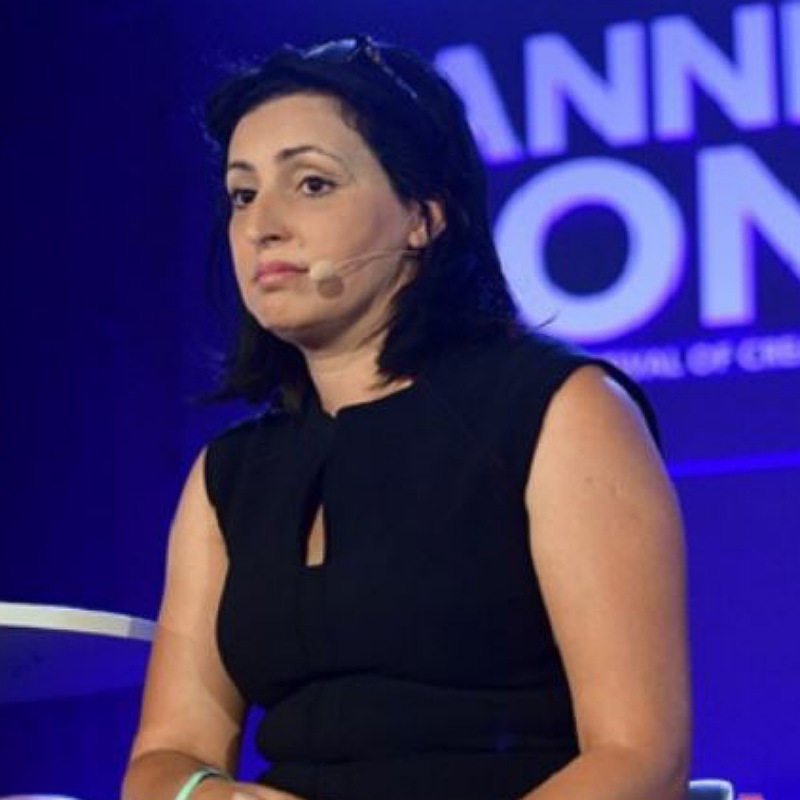
    NEW DELHI: Communications firm Edelman has tapped Karima Zmerli as global head of performance and predictive intelligence for its data and intelligence unit (DxI). 

    In the new role, Zmerli will lead performance and predictive intelligence globally and oversee media buying and marketing strategies for clients. She will be based in New York and report to Edelman DxI global chief data & analytics officer Yannis Kotziagkiaouridis. 

    The hire is part of Edelman’s effort to grow its media, data and technology capabilities as clients adapt to digital transformation and major changes to the media ecosystem, such as the loss of Apple’s IDFA mobile identifier and third-party cookies phasing out.

    Zmerli joins Edelman from the media agency world, as chief data sciences officer at GroupM’s Wavemaker since 2016, where she helped generate over $1 billion in new business. She joined Edelman to help clients adapt to new use cases for data and technology as privacy becomes top of mind.

    “We have to open our horizons and think about the consumer relationship with the brand differently than in a transactional way,” Zmerli said. “Edelman is in a very unique position to understand consumer trust in corporations and brands, a fundamental element to brand strategy and communication.”

    Zmerli is Edelman’s latest hire in a bid to bolster its research and data capabilities, with talent across data science, engineering, software development and performance marketing. Most recently, the firm hired David Bartram Shaw as SVP and global head of data science;  Anjuli Bedi as global head of behavioural science and psychometrics; Tim Hwang as global head of product; Jacob Loban as EVP and US head of performance intelligence; and Matt Sato as EVP

  • Covid learnings: Brands need to remain authentic & relevant to their customer base

    Covid learnings: Brands need to remain authentic & relevant to their customer base

    MUMBAI: More and more, brands are focusing their energies on Bharat, which is poised on the cusp of vast prospects and explosive growth. Kannada is widely regarded as the country’s first success story from a regional language market standpoint. Many marketers have already switched to targeted, localised promotions instead of pan-India campaigns that blow out their budget. While it is apparent that the pay-off from regional and hyper-localised advertising is increasing, there still remains the question – which medium gives the best reach and dividends? The second session of the Tele-wise Kannada virtual summit had retail players and marketers, from national to Karnataka-focused brands, discuss the scope of content, advertising and distribution fronts in the Kannada market in the foreseeable future.

    The event organised by the Indiantelevision.com, in association with Colors Kannada, was moderated by Eggfirst advertising & design COO Kunal Jamuar, and consisted of esteemed panelists including: N Ranga Rao & Sons (manufacturer of Cycle Pure Agarbathies) CEO, Arjun M Ranga, Max Fashion India SVP marketing Jiten Mahendra, Levista Coffee VP, S Shriram, MK Agro Tech (Sunpure oil) head – brand marketing Vijesh C Vijayan, Wavemaker India chief growth officer & office head – south Kishan Kumar Shyamalan and Lodestar Um executive VP Laya Menon.

    The ripples caused by the pandemic are still affecting consumer behaviour and consequently, brand’s choices. Several hard and fast rules have gone out the window and new learnings have been gleaned.

    Max Fashion’s Jiten Mahendra said they were shocked by the lockdown just when the brand’s new collection was about to be launched. But they recovered soon. “We have become more omni-channel now. Eight to nine per cent of the business is coming from e-commerce, where earlier it was just three per cent of our sales and 90 per cent came from retail. May onwards we were able to launch in more markets.”

    Moreover, major operations have been shifted into the virtual realm from brick n mortar and many cross functions like home trial, video etc have been added to enhance customer experience.

    Mahendra went on to add: “Pre-covid, each channel had a separate KPI and brands were trying to deliver that. Now, brands are not channel driven. They need to be authentic and relevant to the customer base.”

    Ranga shared that as a consumer-focused brand they had to keep connected with their customer; to this end they organised online pujas across temples in Karnataka. “We also became more tactical. We moved out of big sponsorship and did smaller localised commercials,” he added.

    One needed to be quick, sharp and adapt their media mixes given the circumstances. “We realised the benefit of print advertising and our online business has of course increased exponentially. But for us, 95 per cent is still TV, with GECs topping the genre.”

    Levista Coffee’s Shriram said that after tasting unprecedented success during last year’s  lockdown and the subsequent months, the brand further stepped up its visibility in the media. On television, they tied up with Chennai Super Kings as coffee partners for the IPL which helped establish their presence further.

    “CSK is not a team, it’s an emotion, and IPL is entertainment. We created CSK ads and showed it in GECs and radio stations focusing on match scores. It was a measured risk which paid off,” he elaborated.

    Ranga added, “Our brand takes the third umpire branding on IPL as much as we can get with the tagline ‘Everyone has a reason to pray’.”

    On the other hand, Max Fashion took the conscious call not to associate with the previous season of the IPL. “Instead we went for Hotstar and targeted women-driven content. We had a far better engagement and affinity. Our core TG is women, the second TG is youth. We have done a lot of ground-level activations where it’s not just dependent on reach but engagement,” revealed Mahendra.

    When it comes to viewership, Kunal underlined a curious dichotomy – while digital growth has been mainly driven by women audiences, TV saw a lot of joint or male driven increase in viewership, which has made it a truly mass viewership medium following the lockdown.

    Talking about how brands are adapting to the medium’s gender dynamics, Sunpure’s Vijesh Vijayan detailed, “Two year ago, we decided to break the gender barrier. Today, our category isn’t dominated purely by one gender. The pandemic has shown us that everybody is a cook. So, our TG is not just women, but anyone who wants to cook or eat – basically anybody who loves food is our TG.”

    Jamuar pointed out that while a metro like Bengaluru tends to overpower the rest of regions when it came to content programming and marketing, it is important to give regional markets their share of inputs. Hence, planning for both sections needs to be separated. When it comes to TV it remains the lowest cost per 1,000 and each regional channel in the state has its pockets of viewership, he noted.

    Shriram felt the quality of content in the Kannada genre has improved tremendously with a lot of colourful fiction programs happening. “But as an advertiser, I would love a breakthrough in how our programming is planned in the GEC segment, which could be a game-changer.”

    Laya Menon felt while regional TV has a  “mass-ish sort of audience” there is “increasing alienation from youth, with the latter moving away to other mediums or screens like OTT/ digital.” So there’s a gap to ensure how to keep TV relevant – whether a national or regional channel – with content that will appeal equally or maybe even skewed to youth can reap dividends for advertisers , brands, broadcaster et al.

    Wavemaker’s Kishan Kumar concluded that just like marketing, in TV content, too, people today look for honesty and emotions at the core, things closer to life. Hence the content needs to mirror that and reflect our society in a better way.

  • Wavemaker India retains media duties of Perfetti Van Melle

    Wavemaker India retains media duties of Perfetti Van Melle

    New Delhi: Wavemaker India today announced that it has retained media duties for Perfetti Van Melle. Wavemaker has been furthermore entrusted with integrated media duties for Perfetti Van Melle India.

    Wavemaker India has been the media agency on records since 2006 in India. The multi-agency pitch saw participation from other leading agencies. The account will continue to be handled out of Gurugram office.

    PVM director marketing Rohit Kapoor said, “Wavemaker has been a trusted partner for nearly 14 years now and we are delighted that our partnership will start its 3rd innings after a well contested integrated media pitch process. Wavemaker has over the years played a significant role in our success and we hope this innings will be an equally good one for both of us.”

    Wavemaker CEO – South Asia Ajay Gupte expressed, “We are extremely thrilled to renew our relationship with Perfetti Van Melle. It is a matter of great pride to win additional mandate of integrated media and continue the traditional media mandate. I am confident with our new operating system, newer models in analytics, e-commerce and media we will be able to unlock growth and drive further efficiency to the brand”.

    In addition, Wavemaker has been appointed by the sweets giant to handle the account in other main markets US, China, Netherlands – as well as in the UK, MENA, Belgium, Turkey and Indonesia – after a series of local pitches held throughout 2020. Wavemaker now handles 85 per cent of Perfetti Van Melle’s global media spend.

    Wavemaker chief client officer and Head – North & East Manso Datta said, “This is an extremely exciting moment for us. To renew our 14 year long relationship and get entrusted with additional digital mandate over our core media mandate is a testament of the existing equity we enjoy with PVML along with our expertise and competency on digital media . We eagerly look forward to creating innovative and award-winning work for Perfetti Van Melle”.

    Perfetti Van Melle is one of the world’s largest manufacturer and distributors of confectionery and chewing gum. Perfetti Van Melle India is the manufacturer of the brands like Mentos, Alpenliebe, Chupa Chups, Center Fresh, Happydent, Center Fruit and many more. 

  • Zee Cafe hosts the best of Indian cinema for a riveting conversation

    Zee Cafe hosts the best of Indian cinema for a riveting conversation

    MUMBAI: Cleverly tailored narratives retold through the lens of avid film-makers bring to you unexpected joys this December. Royal Stag Barrel Select Large Short Films, short films platforms in India, recently hosted some of the greatest minds from the world of films for an engaging conversation on the evolving world of cinema. This association which has been developed by Wavemaker India for Royal Stag Barrel Select Large Short Films brings to you a line-up of untold masterpieces, beautifully depicted in a unique format and fashion. Step into a world of cinematic brilliance for a quality we-time experience every Saturday starting 19 December 2020, 8:30 pm onwards on Zee Cafe.

    Moderating this interesting segment, Mandira Bedi sets the right tone bringing together celebrated actors like Saif Ali Khan, Nawazuddin Siddiqui, Manoj Bajpayee, Samantha Akkineni, Sayani Gupta, Divya Dutta, Shweta Basu Prasad, Tisca Chopra, Niranjan Iyengar and many more to share their school of thought on progressive cinema through the ages. The panellist of actors had much to discuss on how Indian cinema has come a long way in stretching its arm further into a global pool of artists and imbibing foreign film culture. The property will also air on the same day at 11 pm on &Pictures and stream on Zee5.

    Original short films By India's finest directors as well as films made by young, aspiring directors make Royal Stag Barrel Select Large Short Films, the most celebrated and credible short films platform in the country. and most recognised for showcasing such mesmerising stories. The platform has collaborated with successful storytellers from the world of cinema who truly stand for originality and excellence. It has created an ecosystem and with a slew of powerful films and is the perfect stage that provides a canvas for directors and actors to tell compelling stories within 15-20 minutes.

    Zeel chief growth officer Ashish Sehgal said, “Royal Stag Barrel Select Large Short Films has been an evolving chapter in a demanding space for impactful storytelling. It’s a belief beyond wonders to see what can be accomplished in just 15-20 minutes of screen space. Over the years, our discerning viewers on Zee Cafe have truly appreciated the nuanced storytelling and the stirring discussion by acclaimed artists from Indian cinema. With this being the third year of our association with Pernod Ricard India, we are delighted to offer talented filmmakers a wider reach with Zee Cafe and &Pictures along with Zee5. Given its unique and enriching format, the property delivers immense value to even our brand partners who see it as an innovative platform to engage with an enthused audience. With a promising line-up this year, we are certain that the inspiring debate on cinema will truly enthral our audiences across Zee.”

    Pernod Ricard India CMO Kartik Mohindra said, “Royal Stag Barrel Select Large Short Films has revolutionized the short film format in India and has redefined the movie-watching experience. The testament to its wide popularity and success is the overwhelming response to each of our releases as well as industry recognition awarded to our ground-breaking and category-defining films. We are delighted to leverage the power of this platform and associate with incredible story tellers, who, like the brand, personify thespirit of pursuit of excellence. As the short film genre grows, our endeavour is to bring these powerful stories and their creators to the forefront for the most diverse entertainment experience for our consumers.”

    Wavemaker chief content officer Karthik Nagarajan said, “What simply began as an experimental design has culminated into a world of desirable content which now plays a bigger part on a global scale. It has been an absolute pleasure working with Zee in conceptualizing and amplifying the shared endeavour and we look forward to scaling new heights this year with the exciting new line-up of offerings. The Royal Stag Barrel Select Large Short Films has produced some of the finest quality films building on the notion that there is always a growing space to inculcate newer practices sending the right message to a younger generation of budding film makers. We at Wavemaker and GroupM are delighted to continue our long-standing partnership and we are certain to scale newer heights this year with a promising line-up of compelling short features.”

    The property will also air on &Pictures and &Pictures HD on Saturdays at 11:00 pm.

  • ShareChat gets Wavemaker’s Ajit Varghese as chief commercial officer

    ShareChat gets Wavemaker’s Ajit Varghese as chief commercial officer

    NEW DELHI: ShareChat has appointed Ajit Varghese as its chief commercial officer. Varghese brings in a track record of 25+ years of leading large-scale business transformations and building diverse and successful businesses around media, creative, digital, data, content, sports, and performance.  

    Prior to joining ShareChat, Varghese was the global president at WPP group’s Wavemaker, known among the world’s top five media networks with clients ranging from industry giants like Vodafone, L’Oreal, Huawei, IKEA, Paramount Pictures, Chanel, Xerox, Netflix, Chevron, Beiersdorf, and Tiffany.  

    In his new role at ShareChat, he will be pivotal in expanding and strengthening the platform’s revenue efforts and building a robust monetisation approach with the strategic content partnership. He will also spearhead its marketing functions, to be inclined towards brand elevation, aligned with business centricity. He will be reporting into ShareChat COO & co-founder Farid Ahsan. 

    This key appointment announcement comes amidst Sharechat witnessing exponential growth in the past few months. The upward curve not only mirrors the new user growth and higher user engagement on the platform but also reflects an increased interest among B2C brands, for leveraging Bharat internet audiences. 

    Farid Ahsan said, “Brand marketing and monetisation is going to be the core focus of ShareChat and we will direct our efforts towards elevating the brand positioning through strategic communications approach. Ajit, with his leadership capabilities and expert knowledge of the media, marketing and advertising domain, will play a critical role in further building brand awareness, deepening relationships with our business stakeholders and driving ShareChat toward the next phase of growth.”  

    Ajit Varghese said, “Having previously worked and transformed several global organisations, it has always been a hidden desire to contribute towards transforming an Indian organisation to global repute. I believe ShareChat in the next few years will evolve as the default partner to every brand, homegrown and global, who intends to engage with the internet-first population. As the digital advertising landscape awaits the inclusion of over 400 million new internet users, mostly inclined towards native languages, ShareChat will stay at the forefront of unveiling a new digital era. This will be an exciting journey for me as I look forward towards contributing to ShareChat’s growth and building a win-win relationship with our community of users, partners and business stakeholders.” 

    An alumnus of Xavier Institute of Management, Bhuvaneshwar, and a graduate in agriculture engineering from Orissa University of Agriculture and Technology, Varghese has worked across India, Singapore and London. With years of leadership positions across globally-reputed media organisations like Wavemaker (WPP), Maxus (WPP), Madison World, he has been recognised as a Global Media Leader with a track record of turning around organisations, leading rapid growth, and gaining market dominance. 

    Over the past few months, ShareChat has been strategizing to become a future-ready organisation by delivering an immersive social experience to its users and building a global product. The platform has collaborated with leading music labels in India and across the globe, set up ‘ShareChat Labs’ in Silicon Valley, and driven content partnerships with various news and entertainment organisations. Over 150 B2C brands have partnered with ShareChat to explore its strength in engaging with Bharat (language-first) internet audience on the platform. 

  • Will non-fiction shows witness growth post IPL?

    Will non-fiction shows witness growth post IPL?

    MUMBAI: IPL 2020 was the first major live sporting event since the lockdown began. Despite a delayed start owing to the pandemic, it proved to be a respite for Indian audiences who were wilting on a diet of TV news and reruns. Not to mention that it gave a new lease on life to advertisers to once again build a connect with consumers and attain the pre-Covid reach levels. BARC reported that the 13th edition of the league, which has an estimated brand value of $6.8 billion drew record television and digital viewership. The IPL opener was viewed by 200 million plus audiences and a staggering 31.57 million watched the tournament, clocking a 23 per cent rise in eyeballs.

    This year, marquee non-fiction properties Kaun Banega Crorepati (KBC) season 12, Bigg Boss season 14, Fear Factor-Khatron Ke Khiladi, India’s Best Dancer, The Kapil Sharma Sharma, Super Dancer were launched while the IPL was underway. Indian Idol season 12 started after IPL ended. The upcoming non-fiction shows are Taare Zameen Par and Dance Deewane 3. While the league may have gone relatively unscathed in terms of sponsors and revenue (BCCI being cagey about financials notwithstanding), several media experts had pointed out that the overlap of the tournament with the festive season and audience shift to OTT platforms would impact the revenues of television networks.

    By the by, both shows managed to rope in a sizeable number of sponsors and partners (KBC – 10, Bigg Boss – 15). But they failed to make a splash in their opening week – BARC data reflects that none of them broke into the top five shows in the Hindi GEC category. However, the report also stated that Bigg Boss clocked 3.9 billion minutes in the same period, the highest in the last three seasons.

    BARC is yet to release data on how these shows have performed since they premiered this season.

    But the question remains that with IPL over, viewers of the non-fiction genre need the next big thing for their daily dose of entertainment. Will this quest for serotonin give a boost to the genre and viewership? 

    The industry is divided, where some believe that now the IPL is over, things will get better for non-fiction shows in terms of ratings and revenue. Others think that overall market sentiment is low with the festive season behind us. Revival will come, but not before January 2021.

    The Media Ant CEO and founder Samir Chaudhary said, “Both KBC and Bigg Boss have not performed as compared to last year. IPL definitely has a role to play, given that both shows launched during the tournament, which is an unusual scenario. Diwali was the peak season for all advertisers, but now overall ad volumes have gone down. The volume was driven a lot by automobile and e-commerce companies, and both have now come out of their peaks. We are expecting the volumes to come back by mid-December when the second round of sale comes up."

    He further qualified this by saying that since the IPL is over, the shows may see traction and gain a new set of advertisers by mid-December, but that remains to be seen.

    Wavemaker India managing partner Mansi Datta echoed the sentiment and added, “Post IPL (data for four days post IPL), these programs have seen an increase in viewership across different cohorts by 5-15 per cent. This indicates that the audience viewership movement is to be further expected across both genders/age groups. This would also hold the case as momentum for these episodes gain, the viewership will climb.”

    Traditionally, Dussehra-Diwali is the reaping period for TV networks as they launch big-ticket fiction and non-fiction properties, helping them attract advertisers. Estimates are that marketers signed checks to the tune of Rs 24,000 crore during the festival period last year. The pandemic and the lockdowns over the past six months have resulted in Indian advertising expenditure shrinking by as much as 39 per cent since. Soothsayers predict that 2019’s festive season ad-ex will not be breached this year.

    Elara Capital vice president Karan Taurani observed that both ratings and ad volumes of non-fiction shows have gone up but the issue is pricing. Viewership ratings have increased by 10 to 15 per cent but compared to last year the rates are still low. “From October to November, the TV advertising segment grew by 10 to 12 per cent. But post festivities, the entire media plan was put on hold based on how the market functions in terms of consumption pattern. The growth was not sustainable.”

    Taurani projects December to be slightly down in terms of advertising. “But hopefully, January and February will see some relief and the market will bounce back,” he added.

    In terms of ad volumes, both properties have brought in a lot of advertisers, in fact the difference in the total number of advertisers onboard with the IPL and Bigg Boss was just 10 per cent. Others emphasise that these programmes got new sponsors, even those that stayed away from IPL, and the inventory level is almost full.

    Havas Media buying national head R Venkatasubramanian pointed out that now advertisers have the option to choose between HD and SD platforms separately. Hence, the number of advertisers are more in both properties, a win-win for brands and channels.

    During the pandemic, the lines have blurred between primetime and non-primetime. Content consumption patterns have also changed. In an average household, while women and family audiences have been glued to fiction serials, young viewers have taken either to the IPL or to online content that is slowly attracting Hindi-speaking viewers.

    Omnicom Media Group chief investment officer Mamatha Morvankar shared that initial trends post the closure of IPL 2020 are certainly encouraging. Both KBC and Bigg Boss, Sa Re Ga Ma Pa, have shown an uptick in TVRs. In the case of Bigg Boss, the increase was largely attributed to time spent by viewers, whereas for KBC the surge was both with regards to reach and time spent. KBC had its one crore winners in the weeks following IPL and that aspect would have had a positive impact on ratings.

    A media professional, on the condition of anonymity, mentioned that Bigg Boss – which is already on the verge of completing two months – is introducing new formats and twists to lure viewers. And while advertisers are coming on board, they’re doing so on discounted rates.

    But despite challenges, reality shows are slowly but steadily gaining the power to create an impact in the wake of IPL. Morvankar explained, “This is also showing in terms of the ad volumes. Both these reality programs are signing on new sponsors post the IPL 2020 season and going full-on their inventory. KBC has even gotten an extension of four weeks, now stretching to end in January, which should also extend the ratings momentum. These early signs are promising enough for us to anticipate that impact reality shows such as these are set to take the coming quarter by storm.”

    If reports are to be believed, the IPL has already eaten up a Rs 2,500-crore slice of the ad-ex pie. But some experts still hold that non-fiction shows are on a growth trajectory. It will be interesting to see if the genre will hit it out of the park in the coming months or if it’s samay samaapt for it.

  • Marketers want news channel viewership data to be more frequent

    Marketers want news channel viewership data to be more frequent

    NEW DELHI: The Broadcast Audience Research Council (BARC) and the representatives of the news genre have often been at loggerheads; the latter having several complaints regarding how the measurements work. From sample size to data points, everything has been a cause of concern for most of the channel owners and editors. Now, several marketers have raised another important point in the narrative, expressing how they would like the industry ratings, including the IRS ratings, to be more frequent. 

    At a recent webinar on brand safety hosted by Indiantelevision.com, presented by BBC World News and BBC.com, Future Group CMO – FBB Prachi Mohapatra pointed out that ratings remain at the basis of all the math they do to create their marketing strategies and decide their marketing pies and it would really help the cause if they are more regular. 

    “I really want to have data that I can rely on completely and not have to act on my gut feeling basis the data of the past week or the past few months,” she said. 

    PolicyBazaar head of marketing Samir Sethi also insisted that the data should be as real-time as possible so one doesn’t have to wait for the completion of a campaign to gauge its success.

    “I think all advertisers and agencies would want the data to be as frequent as possible because that will aid in instant decision making. If I know about the ratings six months later or two months later, it gets less valuable,” explained Wavemaker CEO – South Asia Ajay Gupte.

    He went on to add that TV channels could potentially lose out to digital modes of marketing, where the data can be tracked and measured practically instantaneously. “It's about having data which is relevant and which is robust and which is to the day because the channels today are also competing with Google, Facebook, YouTube, and Twitter, where the data is almost real-time.” 

    Parle Products senior category head – marketing Krishnarao S Buddha agreed that there is a dire need of a frequent matrix but he highlighted that content should also be taken into consideration to create a differentiation when it comes to picking channels to put ads on. 

    Initiative CEO Vaishali Verma, while acknowledging that there are certain brands that prefer buying news as a commodity and plan their spends basis TRP, said there are some that also see the content and its authenticity. 

    Mohapatra added that along with the individual content of the channel, another factor contributing to their marketing decisions are the fellow brands that are present on the channel. “Looking into the adjacent space helps us create a multiplier effect for the sales. Therefore, it is very important to put your brand in a space that is relevant for you and your category.” 

    However, when it comes to picking content to put ads on, Sethi emphasises that brands should be non-partisan. “If somebody believes in a certain media outlet, he is still a potential customer. Toxicity is a different thing, but when it comes to the leaning of a channel, I think businesses should not pick a side. The world has always been divided and it will continue to be. Our aim should be to be present where the customer is.” 

    The panel also discussed other hot-button issues like the need for 24-hour news channels, and how advertisers are seeing the current news media.