Tag: WatConsult

  • Google Pay tops the chart among e-wallets app users at 38%, followed by Amazon Pay & Paytm: WATPapers

    Google Pay tops the chart among e-wallets app users at 38%, followed by Amazon Pay & Paytm: WATPapers

    Mumbai: WATConsult, the hybrid digital agency from Dentsu Creative India, has released the latest issue of its monthly WATPapers. Titled ‘Digital Transactions in India’, the report is by WATConsult’s research division, Recogn. The report shares insights on the increase in online businesses and purchases, changes in the process of making payments, and the migration of people from cash to digital transactions.

    According to the report, the majority of respondents prefer to use digital payment systems like e-wallets and UPI. Apart from that, they have also used credit cards and net banking to complete transactions. It is worth noting that, while 46 per cent of males prefer e-wallets, the majority of females prefer UPI to transact. Furthermore, many youngsters in the age group of 18 to 24 years prefer using UPI and e-wallets.

    The report further reveals that among the e-wallet app users, Google Pay (38 per cent) tops the chart, followed by Amazon Pay (37 per cent), Paytm (36 per cent), and Freecharge (32 per cent). While female users choose to use Google Pay, male users prefer using Amazon Pay, Paytm, and Google Pay. In small metropolitan areas, users prefer to use JioPay, Google Pay, and WhatsApp to transact.

    Users favour e-wallets owing to the need to switch to a digital payment system and reduce cash transactions. These apps are convenient since they are easy to use and access. Additionally, users also get discounts or cashback on using them, along with some special benefits from specific retailers as well.

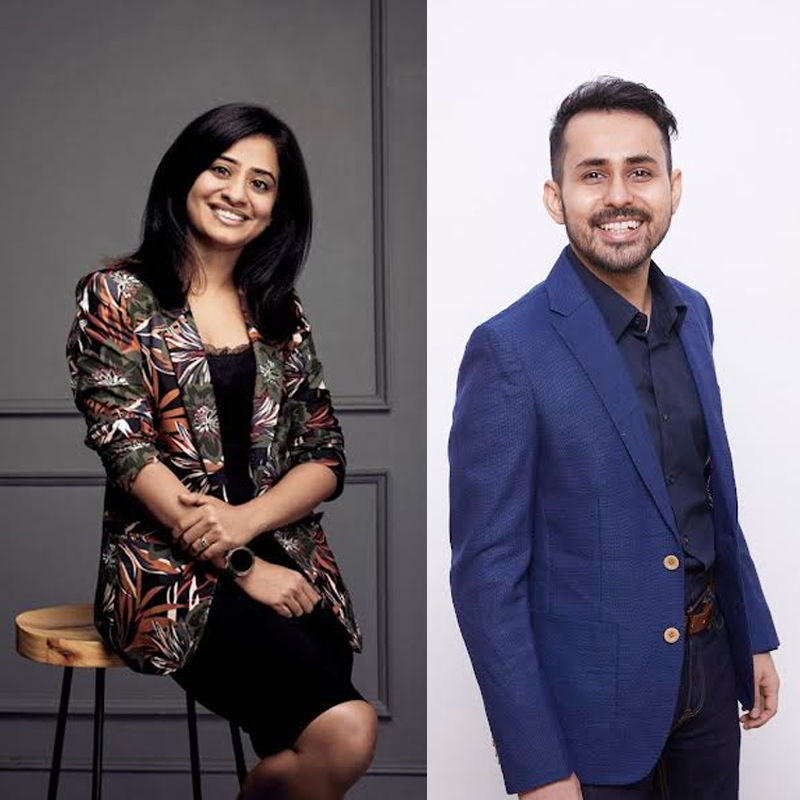
    “Mobile payments, especially mobile wallets, have been a great driver towards this phenomenon and revolution on a global basis,” said Isobar India group CEO Heeru Dingra, commenting on the latest issue of WATPapers. “Gradually, India is moving toward a cashless economy, which explains the increasing trend of using digital payments systems extensively. The government, under the programme of digital India, has been encouraging and promoting the use of e-wallets via UPI.”

    “The UPI platform has witnessed a leap in adoption at a phenomenal growth rate as a payments product across the country. There have been many merchants and businesses in the digital as well as offline ecosystems that have integrated the options of e-wallet apps and UPI for customers’ convenience and ease of transaction. This has positively influenced the country’s mobile wallet market,” she added.

    WATConsult managing partner Sahil Shah said, “In the emerging markets, e-wallet apps have garnered much more attention compared to other forms of payment systems. Digital payment adoption is growing, and the onset of the pandemic has created a need for contactless payments in everyday life. The need for digital payments and the rise in the frequency of usage of e-wallets during the pandemic have been evident. There was a change in the behaviour of consumers during the pandemic which had a direct impact on the retail and e-commerce sectors.”

    For the record, WATPapers are monthly published short reports based on the primary research conducted by Recogn, the agency’s research division that provides consumer and business insights to the audience. It aims to delve into the different aspects of the digital industry, consumer behaviour, and more.

    Link to the report: https://www.watconsult.com/watpapers-digital-transactions/

  • Online advertisements influence 55% of health insurance buyers: WATPapers

    Online advertisements influence 55% of health insurance buyers: WATPapers

    Mumbai: Hybrid digital agency from Dentsu Creative India WATConsult has released its latest issue of monthly WATPapers titled ‘Consumer’s outlook towards health insurance.’ The report explores how the Covid-19 pandemic has transformed the consumer perception about insurance, as more individuals felt the need to have financial backup to meet unforeseen medical expenditures.

    According to the report, more than half of the respondents have purchased health insurance in the last six months. These policyholders belong to the age group of 25 to 35 years, residing in the top four metros as well as small metros.

    Most of them have purchased health insurance for themselves and their parents. With regard to the coverage duration, 32 per cent of the respondents have purchased health insurance for up to two years. 27 per cent of the respondents have opted for a health insurance plan for a year’s duration.

    For the record, in India, there are a plethora of benefits offered by health insurance policies. Most of the respondents say that their health insurance policy covers facilities like cashless treatment and maternity coverage followed by emergency room services, discounted treatment for COVID, and free health check-ups.

    The report further states that when it comes to purchasing health insurance policies online, the journey from assessing the need for a health insurance policy to purchasing one is very likely to start by watching policy reviews and videos online. This enables the consumer to get familiar with the brands and options available. They then visit the brand’s website or search for suitable policies on the internet. Post which, they are likely to compare websites and evaluate a suitable policy based on the benefits and features it offers.

    Commenting on the latest issue, Isobar India Group CEO Heeru Dingra said, “Since the pandemic, there has been an ever-growing demand for health covers because people have realised that huge medical expenses, especially when engulfed in uncertainty can take a toll on their financial and mental well-being. In such a situation relying on savings is not enough, hence, a health insurance policy is ideal as it covers facilities like cashless treatment, maternity coverage followed by emergency room services, discounted treatment, reimbursements, and free health check-ups. This issue of WATPapers is a must-read as it showcases the trends observed in the sale of health insurance plans and how policyholders today are shielding themselves against medical emergencies.”  

    WATConsult managing partner Sahil Shah added, “The pandemic has disrupted the industry by altering how people view health insurance for themselves, and their family members. This period of an extreme health crisis, with the pandemic looming over, has led more and more people to opt for health insurance. The future looks promising for the health insurance sector with changes in the regulatory framework, which will lead to changes in the industry conducting its business. Factors such as growing awareness, the need for health protection and inclusion in the financial planning of an individual, will drive the growth of the Indian health insurance sector even higher and further.”

  • By 2022, hyperlocal commerce shoppers to grow by 52% to reach 214 mn: WATInsights

    By 2022, hyperlocal commerce shoppers to grow by 52% to reach 214 mn: WATInsights

    Mumbai: WATConsult, an Isobar Company and the globally awarded hybrid digital agency from dentsu India, has released the fifth report of WATInsights – digital commerce series. Titled ‘Digital Commerce in India – Hyperlocal Commerce’, the report is by WATConsult’s research division, Recogn. The report shares insights on the demand for hyperlocal delivery, the effects of the pandemic on the hyperlocal usage and captures the benefits & challenges of the model.

    The hyperlocal space has seen a rise in the number of niche brands across categories like home décor, home services, groceries, essentials and pharmaceutical sectors. Since the country has witnessed growth, traditional brands have shifted their focus towards hyperlocal and direct-to-consumer business models. This transition has been accelerated further due to increased internet usage and evolved consumer behaviour.

    It is pertinent to note here that the hyperlocal approach enables the brands to reach out to their target customers directly, removing the middlemen and retail stores as part of the traditional business model. This provides customers with a better shopping experience as it offers convenience and quick delivery, especially in the areas of logistics, food, pharmaceutical and groceries. Some examples of hyperlocal commerce include Dunzo, 1mg, UrbanCompany, BigBasket, to name a few.

    According to the report, this format of e-commerce has seen a huge surge of customers in both metros and beyond. Currently, there are around 141 million hyperlocal commerce shoppers in India, which is 48 percent of all e-commerce users. This number of hyperlocal commerce shoppers will increase by 52 percent to reach 214 million by the end of 2022.

    The report further reveals that while Zomato tops the list of the most used hyperlocal apps, SwiggyGo, Amazon Fresh & BigBasket are some of the popular choices among consumers. This is followed by 1mg, Grofers and UberConnect.

    The report additionally sheds light on the consumer demographic of the hyperlocal commerce users. While most females have used services from Zomato, BigBasket and Grofers, some males have used services like Zomato, SwiggyGo, BigBasket and 1mg, highlighted the study. On the other hand, the majority of young customers belonging to the age groups of under 18 years, 18 years to 24 years and 25 years to 34 years, have been seen using Zomato, SwiggyGo, and Amazon Fresh.

    Commenting on the latest issue of WATInsights – Digital commerce in India – Hyperlocal commerce, Isobar India group CEO Heeru Dingra said, “Hyperlocal businesses have been rapidly growing with the potential of expanding exponentially. There has been an increase in the number of brands emerging in this space and it will consolidate even further, over the next few years. Hyperlocal’s collaboration with local stores and the connection they build with their customers digitally is benefitting all the stakeholders as now they are all connected to the supply chain model.”

    The hyperlocal space has seen a rise in the number of niche brands across categories like home décor, home services, groceries, essentials, and pharmaceutical sectors. Since the country has witnessed growth, traditional brands have shifted their focus towards hyperlocal and direct-to-consumer business models. This transition has been accelerated further due to increased internet usage and evolved consumer behaviour.

    WATConsult managing partner Sahil Shah added, “Businesses, more than ever, are leveraging digital channels to reach out to consumers with a faster go-to-market, controlled brand perception, and increased direct-to-consumer (D2C) interactions. The pandemic has impacted many sectors and as a result, India’s retail market has gone through many changes; the biggest change being the adoption of technology in enabling more digital touchpoints. Amidst this shift, hyperlocal has been one of the top priorities for all D2C brands as well as marketplace-heavy businesses. This new model of hyperlocal has enabled local retailers to increase their market share. Especially the FMCG brands have been able to push their inventories and effectively scale the business.”

    It is pertinent to note here that the hyperlocal approach enables the brands to reach out to their target customers directly, removing the middlemen and retail stores as part of the traditional business model. This provides customers with a better shopping experience as it offers convenience and quick delivery, especially in the areas of logistics, food, pharmaceutical, and groceries. Some examples of hyperlocal commerce include Dunzo, 1mg, UrbanCompany, BigBasket, to name a few.

  • WATConsult wins creative & social media mandate for CarDekho

    WATConsult wins creative & social media mandate for CarDekho

    MUMBAI: An Isobar company and the globally awarded hybrid digital agency from Dentsu India, WATConsult has bagged the creative and social media mandate for CarDekho, India’s biggest digital automotive solutions provider. The account was won following a competitive pitch process and will be managed by the agency’s Delhi office.

    As per the mandate, WATConsult will be responsible for social media management, digital creative designing, content marketing, and ORM for the brand.

    CarDekho SVP marketing & content Charu Kishnani said, “We’re thrilled to partner with WATConsult as our creative and social partners. This engagement will help us elevate our brand presence with the right strategy, ideation and creative thinking. We are looking forward to creating some good and memorable work. Welcome aboard, WATConsult.”

    Speaking on the collaboration, Isobar India group CEO Heeru Dingra said, “CarDekho is a one-stop destination for new as well as second-hand cars. The brand’s auto and non-auto business is expanding, and we are so excited to embark on this journey with them.”

    WATConsult managing partner Sahil Shah commented, “We are happy to have the opportunity to partner with CarDekho and we can’t wait to build a dynamic brand presence for them. Our strategy is to enhance the top of the mind recall that the brand has created by applying creative, new age thinking and a strong storytelling narrative.”

  • CAMM Summit 2022: Experts highlight the advantage of AI for marketers

    CAMM Summit 2022: Experts highlight the advantage of AI for marketers

    Mumbai: Artificial intelligence (AI)  has been a buzzword for a long time now! From content creation to customer support, AI is now everywhere. Interestingly, AI has also touched down the marketing industry. And to discuss the importance of AI and data in the marketing sector, the second day of IndianTelevision.com’s CAMM Summit and Exhibition 2022 witnessed an insightful panel discussion on the topic: ‘AI & Data – Your Tools for Better Efficiency.’

    Moderated by Pixis chief executive officer (Europe & APAC) Neel Pandya, the panel had marketing leaders including WATConsult managing partner Sahil Shah, Ferns N Petals chief technology officer Vasanth Kamatgi, Timex Group head of marketing & e-commerce Ajay Dhyani, and BFSI global technology leader Suresh A Shaan.

    Experts believe that AI can be very helpful in improving the data analysing speed and also to increase the efficiency of marketing campaigns. To begin with, Pandya explained his idea of AI. He feels AI is everywhere.

    How marketers look upto artificial intelligence?

    Taking the discussion further, he asked Dhyani if the Timex Group has ever integrated artificial intelligence approaches in their marketing campaigns?

    To which, Dhyani said that Timex Group has not used artificial intelligence in its marketing campaigns so far but they have come across various case studies and reports on how artificial intelligence is emerging and how companies across the sectors are using it.

    “We are excited to see the efficient use of artificial intelligence and are clearly looking to integrate it in our marketing campaigns,” he highlighted.

    Adding to it, Ferns N Petals’ Kamatgi said, “AI is a very powerful tool and it will change everything, from the way we live to the way we operate our business.”

    He further stated that Ferns N Petals started using AI back in 2018 for better product recommendation.

    Sharing the outcomes of using AI as a tool, he said, “we experienced mixed results, right now we need to work a lot to get better results because efficient use of AI requires smart applications and filtration of data and we are working in this direction.”

    He also told that Ferns N Petals recently concluded its annual business plan and artificial intelligence is going to be the biggest investment of the company. “We have a pipeline of 28 news cases that are supposed to go live in coming times. However, we have not decided the estimated time yet but we are working on it,” Kamatgi asserted.

    Explaining how they will integrate artificial intelligence in their marketing plan, he further said, “we will be applying AI for efficient product recommendations, classification of products, better search, product sequencing, multi-labeling and so on.”

    After listening from the marketers how they are using and planning to use artificial intelligence, Pandya highlighted how artificial intelligence has been helping the marketers. He said, “artificial intelligence is largely doing three simple things- automating the bidden budget which is currently planned manually, better customer targeting and creating more and more personalisation for the potential customers.”

    Metaverse – The next big thing in adtech world

    Shifting the conversation to the vision for the next step in the internet’s evolution – metaverse, Pandya asked WATConsult’s Shah, “Is metaverse or meta just a buzzword or are marketers really trying to do something which will help them and the industry?”

    “Metaverse is a fad to me,” Shah noted. “I am not sure if the metaverse is going to be there for a long time or not. We will get to know it with time.”

    He also said that after talking to a lot of gaming experts he realised that the term has suddenly become so popular after Facebook named its parent company as Meta. Otherwise the gaming industry has been operating in the metaverse for a long time.

    Furthermore, he shared how marketers are using metaverse. He said, “If we look from the marketing perspective, a lot of companies are now investing in metaverse. For example Nike opened a store which is just amazing. But the question is how many people are going to use it? And what is the return on investment in metaverse?”

    “The only concern here is the critical masses and consumers are not headed towards metaverse as of now,” he highlighted.

    How will marketers cope up with the cookie-less world?

    In the next part of the conversation, Pandya moved towards the most critical concern of marketers that is the removal of cookies. There’s been a lot of talk around how this announcement by Google will make it difficult for marketers to do audience profiling and reach out to the right audience at the right time.

    Throwing the next question to BFSI global technology leader Suresh A Shaan, Padnya asked, “how do you think a cookieless world is going to affect the ad and marketing world and how marketers will cope-up with the change?”

    Shaan answered, “now marketers need to switch to personalisation to a greater extent. People easily connect when the campaign is derived from an emotional perspective. Hence personalisation will emerge as a helpful tool for marketers.”

    Other panelists also agreed to him and shared how they are adopting personalisation. Sharing how marketers are going hyper personalised Shaan highlighted a few campaigns from Flipkart where the e-commerce company hired regional celebrities to go personalised for their consumers.

    Will artificial intelligence lead to job cuts?

    Concluding the session, Pandya asked one quick question to panelists, “Will artificial intelligence take away human jobs in the coming time..?”

    While Shah and Dhyani think that artificial intelligence will not take away jobs, Kamatgi thinks that it will definitely take away a few jobs. “I think in urban areas it will lead to a job cut but in rural areas it will not,” Shaan opined.

    “Well! I also think that artificial intelligence will not take away human jobs; rather it will add more power and liberty to manpower,” Pandya commented.

  • The number of voice commerce shoppers in India poised to grow at a rate of 103%: WATInsights report

    The number of voice commerce shoppers in India poised to grow at a rate of 103%: WATInsights report

    MUMBAI: Voice Commerce is making its way into the Indian customers’ shopping habits faster than ever. The number of voice shoppers in India is poised to grow at an impressive rate of 103 per cent by the end of 2022 to reach 168 million voice shoppers, according to the latest report of WATInsights – Digital commerce series. For the record, there are 83 million voice shoppers in India presently, suggesting that it has already seen an uptick.  

    WATConsult, an Isobar Company & hybrid digital agency from dentsu India, has released its fourth report on the digital commerce series, titled ‘Digital Commerce in India – Voice Commerce’. The report by the agency’s research division, Recogn, shares insights on the ever-increasing adoption of Voice Commerce, the evolution of conversational AI solutions, challenges associated with voice-activated assistants and sentiments of consumers towards using this emerging branch of digital marketing.

    There is a paradigm shift in the way searches are performed as users turn to voice for searching and shopping for products online. As per the report, 42 per cent of the females have used voice assistants for online shopping, while most youngsters belonging to the age group of 18-24 years have frequently used the assistant enabled devices to shop online. Additionally, the majority of the working professionals residing in the top four metros and next five metros have also used voice assistants for online shopping.

    It is pertinent to note here that, in India, the use of voice technology for shopping is at a nascent stage and only one-third of the users have used voice assistants to purchase products online, as per the report.

    The report stated that most female voice commerce shoppers are concerned about the privacy and security of the financial data while shopping online using voice, withstanding the benefits of the platform. However, the challenge for older customers belonging to the age group of 65 years and above is the inability to break through the habit of typing and searching for products online.  

    Commenting on the latest issue of WATInsights, Isobar India group CEO Heeru Dingra said, “Voice integrated with online commerce is transforming the future of digital commerce and revolutionising the B2B and B2C e-commerce in India. With artificial intelligence and native language processing undergoing a massive transformation, voice commerce will help a great deal in increasing consumer confidence and improve conversion prospects for brands and businesses.”

    Voice simplifies the online shopping experience, enabling voice-enabled searches to be immensely popular and widely adopted. Voice commerce offers a natural user interface and experience, thus, making it appear as a game-changer for retail and e-commerce brands. To offer a personalised digital shopping experience, retailers are optimising their stores for voice commerce by further investing in upgrading their e-commerce capabilities, technology & platforms. Over time, voice shopping has influenced the way customers purchase online. It has also affected their shopping behaviour, making it even more crucial for businesses to include a voice in their marketing strategies.

    WATConsult managing partner Sahil Shah added, “I vividly remember ordering from Amazon Alexa device for the very first time. It was an extremely smooth and native experience, compared to what I had thought it would be. With the ecosystem developing at breakneck speed, including both hardware and software, voice commerce is here to stay and scale-up for sure. What is exciting to see is who wins the race and commands a significant pie of the voice commerce market; also, how brands scale up their voice-led experiences in a digital-first world? And no, it is not just the basic things one can order, it is everything from paying bills to buying groceries to booking a movie ticket to ordering for a hyperlocal delivery; all with the power of your voice.”

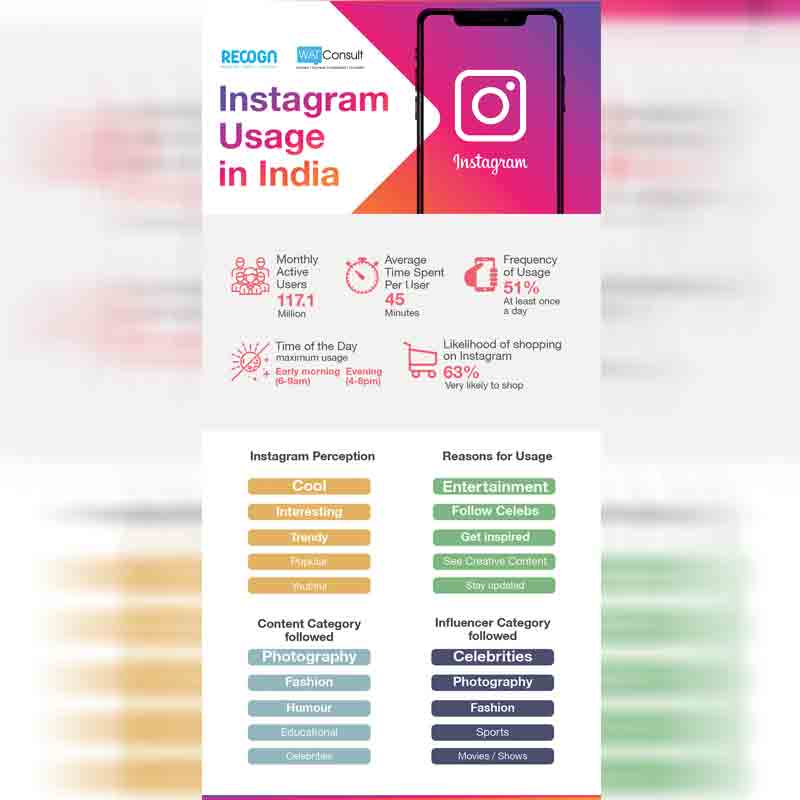
    WATInsights are periodically published reports based on primary research conducted by Recogn, the agency’s research division that provides consumer and business insights to its audience. WATInsights delve into the different aspects of the digital industry, consumer behaviour, and more. Additionally, the research also covers topics like Instagram in India – users’ perspective, voice technology in India, and the usage of the internet in the local language.


  • OTT and the future of sports broadcasting

    OTT and the future of sports broadcasting

    Mumbai: According to a recent study ‘Can OTT sports platforms shake up the broadcast landscape’ by data and analytics firm Ampere, the growing number of pure-play and generalist OTT services in the sports rights market is putting the traditional rights model under stress.

    In Europe, the likes of DAZN and Amazon Prime Video are beginning to eat into the market share of traditional rights holders, accounting for nearly 10 per cent of sports spends annually. Globally, though, the figure stands at slightly below six per. In cases where OTT services increased the number of bidders for rights, the value of rights has increased. For instance, DAZN’s entrance to German UCL market grew the total value by 62 per cent for 2018-21 cycle. For 2021-24, OTT services have secured all rights to the UCL in Germany, with the new deals increasing the total value by 58 per cent. However this trend did not hold in cases where the overall number of bidders came down, where the impact was negative.

    What this suggests is that pure OTT players have the potential to impact an upward growth in sports rights value together with traditional buyers, especially in cases where the value of rights has stagnated over the years. In the short term, until OTT platforms reach a comparable or higher level of subscription than pay-TV, they will keep adding value to the game.

    The study outlined four broad ways in which OTT services are impacting the sports media landscape – targeting digital-first audiences, making premium sports more affordable, super-serving specific categories of sports fans, and creating a range of D2C opportunities like out-of-market selection, co-exclusivity, and exclusive D2C for rights holders. 
    Case in point: IPL stagnation in rights value is a far-cry for a cricket crazy nation as India. Take for instance, the next (2023-27) cycle of IPL rights that has an aggressive set of bidders in the fray, including the content behemoth Amazon Prime Video. 

    Reliance’s bid, which is likely aimed at more data revenue through Jio, than subscription and ad revenue through the media business under Viacom18, will make the ‘Amazon vs RIL vs Disney vs Sony pitch’ more interesting. The winner will be announced around end-March or early April. 

    While Star’s September 2017’s bid of Rs 16,347.50 crore or ~$2.3 billion (amounting to a 158 per cent increase over the previous deal worth $1.03 billion) for just half the number of years was jaw-dropping, equally noteworthy was Facebook’s individual bid of R. 3,900 crore for the digital rights alone. From less than five per cent in the overall pie of 2008 deal, digital had grown by 25 per cent (4.5 times) in 2017, being seen as a standalone package. 

    According to market buzz, IPL’s digital rights value will see similar growth of around 25-30 per cent for this cycle and understandably so. From 2017 to now, IPL has seen considerable value addition in terms of both OTT viewership as well as digital technology. The overall value is expected to soar up to of $ five billion. A senior BCCI official recently told news agency PTI, “With two new teams about to fetch anything between Rs 7000 to Rs 10,000 crore, IPL broadcast rights could more than double to reach $ five billion (~Rs 36,000 crore).”

    The OTT value ad
    Hotstar got on to a flying start with the first match of IPL 2015 registering 7.2 million views on the app; six times the viewership of the first match of IPL 2014 on starsports.com. In the seven years since it began streaming the IPL live, the league’s viewership has grown from around 40 million in 2015 to 300 million in 2019, increasing every year. While the viewership for the 2020 edition on Hotstar could not cross the previous year’s benchmark, it ranged between 5.7 million and 6.7 million throughout the next (2021) season.

    What’s more significant about these numbers is that they were reached despite the matches being played behind a paywall. Going back to the Ampere study, sports OTT audiences currently make up 25 per cent of total sports audience, and there nearly 800 mn to convert. This is a significantly younger audience with 75 per cent aged between 18 and 44 years. Not only are they willing to pay more, but are also spending more time and are more engaged with both live and non-live programming on the OTT services. In addition to accessibility of content and flexibility of billing options, OTT services are more affordable and unbundled, offering higher control to viewers. They target fans of sports which struggle to find sufficient space on traditional broadcasting platforms. 
    Echoing a similar viewpoint, Grapes national business head – Rajeesh Rajagopalan says, “by virtue of being both precise and personal, OTT services have consolidated the scattered viewership for niche sports, or sports other than cricket in India. The badminton and kabbadi leagues that have come into existence today, is because OTT players started buying these rights.” Pointing out another positive contribution of sports streaming, he states, “OTT being way more innovative with advertising than TV, offers scope even for the smaller brands with medium or modest budgets, provided they have a clearly-defined objective.”

    “The decline in TV viewership of niche sports due to NTO will add to the popularity of sports streaming, which has been on the rise since the onset of the pandemic. The growth is expected to come from tier 2 and 3 cities. It will be spearheaded by DTH platforms providing OTT as a part of their services,” adds Zenith VP Linu John.

    Commenting on the OTT opportunity for brands in India Havas Media Group India head–digital services Rohan Chincholi remarks that from the consumers’ standpoint, India is a market with the lowest cost per GB (~Rs seven per GB) & from the advertisers’ standpoint, there is a massive 350 million+ OTT viewership in India. Of these, paid subscribers are to the tune of ~80 million+ and they subscribe to over two OTT platforms each. 

    “Hotstar is projecting to reach close to 100 per cent of OTT users in India this IPL which speaks volumes about viewers’ interest in streaming sports. However, these audiences are not loyal to one OTT service. Cricket has the potential to garner mass reach in a short span, which is where the platforms win via subscriptions and repeat usage,” observes Chincholi.  
    On the kind of advertising being explored this season he adds, “from an advertising perspective, bundled sponsorships, associations and standalone buys will be a function of clients’ budget. Ad rates will command a premium on all marquee streaming events.  Cost per reach will be higher than any other video sharing/social platform but it’s also a function of audience targeting and data layering – transacting audience cut, connected TV audience.”

    Building on the point WATConsult AVP media planning and strategy Shanu Jain shares that about 70 per cent deals are bundled under different sponsorships including presence on different IPL collaterals, Live prediction, pre & post shows brand integrations, special packages, while around 30 per cent of them are standalone on mid-roll video ads. They command 35-40 per cent premium than normal rates on GEC and other video streaming platforms like YouTube. “Majority of IPL viewership comes from the age bracket of 15-30 years, and Hotstar leads the way in innovative ad formats and inventories. A lot of new ad formats have been introduced to facilitate better recall and user engagement, beginning with pre-rolls every time you start the match to drive higher relevance, and integrating the brand communication at different intervals, to additional options like group chats, contests and regular CTW ads have helped brands look at efficiencies in-terms of audiences who’re watching and clicking on the ads,” notes Jain. 

    OTT services globally have only just started to move the dial in the sports rights market which continues to be dominated by legacy players. They have an increasingly significant part to play alongside TV buyers by helping sports appeal to young hard-to-reach demographic. The Ampere study indicates that while the OTT audiences’ higher willingness to pay may make them look more attractive, their size compared to traditional TV broadcasters must be taken into account to ascertain whether this actually equates to higher revenues or not. 

  • WATConsult bags ORM & digital listening mandate for Licious

    WATConsult bags ORM & digital listening mandate for Licious

    Mumbai: WATConsult, an Isobar company and hybrid digital agency from dentsu India, has won the ORM (Online Reputation Management) and digital listening mandate for D2C unicorn Licious. 

    The account was won following a competitive multi-agency pitch and will be serviced from the agency’s Mumbai office.

    “The meat and seafood sector, in India, is still largely in its nascent stage; however, it holds vast potential. Licious being the industry leader, has huge plans to capitalise on this opportunity,” said Isobar India group CEO Heeru Dingra. “The brand is looking at growing its offline business, its ready-to-eat product portfolio and is also keen on geographic expansion. With our strategic understanding of the digital audiences and expertise in scaling up brands, we really look forward to supporting Licious on their journey.” 

    As per the mandate, WATConsult will focus on the company’s philosophy of ‘delighting the world with an unmatched experience,’ thereby, the agency will monitor, listen, respond to queries and report to users online. Apart from the regular social media channels, the agency will also manage the app reviews, Google My Business reviews, blogs, news & public websites along with Crisis Management, which is also a significant part of the mandate.

    “ORM forms a very integral part of the brand-building & reputation management piece. It also builds into the customer obsession promise that Licious upholds,” said Licious VP- brands and new ventures Simeran Bhasin. “We look forward to our partnership with WATConsult to elevate our customer service and the overall Licious experience.”

    WATConsult managing partner Sahil Shah added, “What excited me the most is the vision with which the team at Licious is building the brand and how they are obsessed with customer-centricity. For instance, think of a future where omnichannel ORM will become a reality using the power of data and technology to have a single view of the customer. Thus, driving better customer experience and delight.”