Tag: WAP

  • Airtel launches ‘One Touch Internet’

    Airtel launches ‘One Touch Internet’

    MUMBAI: Bharti Airtel, the telecom service provider with operations in 20 countries across Asia and Africa, has announced the launch of ‘One Touch Internet’ – a first of its kind initiative aimed at simplifying internet services for millions of first-time users in India.

     Airtel’s ‘One Touch Internet’ is a WAP (Wireless Application Protocol) portal designed with a simple, secure and intuitive interface that will allow first-time users to discover the internet easily and help them overcome common perception barriers around the mobile data experience. Now available for prepaid mobile customers on Airtel – ‘One Touch Internet’ will work as a single point destination for uninitiated internet users to see-try-buy a host of popular services (including social networking, videos, online shopping and travel bookings) through free tutorial videos and trial packs – all with just one touch.

    Bharti Airtel consumer business director Srinivasan Gopalan said, “The Indian telecom market has entered a phase of data led growth. As data networks expand and internet enabled devices become affordable – more and more Indians are getting online on their mobile devices. However, our market research has shown that there are millions of customers across the country who own an internet-ready mobile device and are keen on getting online, but are apprehensive due to reasons like lack of know-how and fear of incurring heavy data charges. Airtel’s ‘One Touch Internet’ will address these very customer challenges and play the crucial role of hand-holding first-time mobile users as they discover the internet. We believe that this initiative can play a transformational role in breaking perception barriers among customers and demystifying the internet not only for the young and urban, but for people from across generations and social strata – thus giving the Indian masses an opportunity to enjoy their first ever internet experience”.

    The rapid penetration of mobile telephony has played a pivotal role in transforming the socio economic growth in countries world over, including India. According to estimates – India has over 220 million internet users today, of which, about 59 per cent get online over a mobile device. Projected to reach a whopping 385 million by 2017, the smartphone penetration in India is only growing stronger and contributing to a rapidly increasing base of internet users, which is expected to more than double to 480 million by 2017.

    To self-learn or have family and friends explain the internet to them easily, Airtel prepaid mobile customers can now call 111 or simply visit http://one.airtel.in on their mobile phones’ web browsers. Currently available in English and Hindi, ‘One Touch Internet’ will soon also be available in 8 Indian vernacular languages in weeks to come.

     To promote the launch of ‘One Touch Internet’, Airtel is also launching a full-blown 360 brand campaign. The insight for its Television Commercial (TVC) film comes from the brand’s core territory of enabling relationships, and evokes a strong emotional connect compelling viewers to teach someone how to discover the joys of the internet. The TVC will also be supported by a strong digital leg.


  • Times Internet launches gocricket.com

    Times Internet launches gocricket.com

    MUMBAI: Times Internet recently launched a cricket portal – www.gocricket.com – a cricket news destination with original, editorial content, deeply integrated video features, and a rich, cross-platform experience. 


    Cricket fans will be able to watch Pepsi Indian Premier League 2014 anytime, anywhere on gocricket’s multiple digital platforms. Gocricket launches live on web, iPhone, Android, iPad, and WAP, readily enabled for featured phones and low bandwidth users as well. And when Pepsi IPL begins, the website will also feature a video scorecard, with real time video clips integrated into the scorecard. 


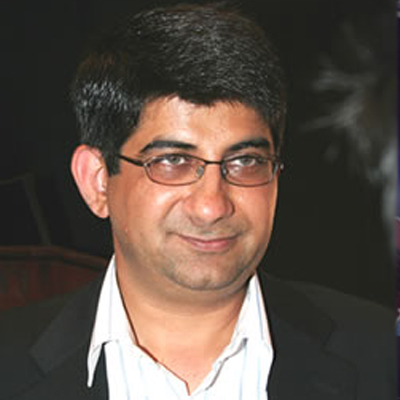
    “We are also proud to announce that one of India’s most successful captains, Sourav Ganguly, will exclusively share his critical insights into the game on our platform.” said gocricket.com business head Ruchir Khanna in a statement. “Gocricket will be the most comprehensive web and mobile cricket destination, offering a multimedia experience.”


    Sourav Ganguly on his part added: “I am extremely happy to be associated with go cricket.com and be involved as a guest editor. We will bring cricket news to you like never before. Stay with us.”  


    Along with rich photos and videos, gocricket will also feature writing from around the world, connecting cricket fans with experts and writers. It will distinguish with cricket records and trivia, making it simple and easy for the fans. In one sentence, gocricket aims to be consumers’ first stop for all cricket content needs.


  • Techzone and Aircel launch Re 1 store

    Techzone and Aircel launch Re 1 store

    MUMBAI: After Techzone’s alliance with Aircel for Re 1 video store four months back, the encouraging response has prompted the launch of another promising platform – Aircel’s Re 1 store!  Powered by Techzone as their technology and platform partner, Aircel has enhanced its offerings for their users by opening the exciting Re 1 store that includes downloading videos, full tracks, images and games just for Re 1.


    Techzone not only offers its vast library of more than 10,000 pieces of content across multiple categories in more than 12 languages to this store but has also powered the VAS platform for Aircel. Consumers can access this latest value added service on mobile via WAP or GPRS/2G/3G and download the same on mobile handset at just Re1 per content. The social media savvy youth can also share their content preference on Facebook and Twitter along with referring the same to their friends.


    The content at store for Re 1 covers over 12 languages including English, Hindu, Marathi, Gujarati, Assamese, Bhojpuri, Tamil, Telugu and Malayalam amongst others. This new VAS would let the consumers download the videos across 8 genres including bollywood, Hollywood, reality shows, lifestyle, music, regional, comedy and more from a vast collection of 10,000+ videos. Along with the latest music, Techzone also offers their aficionados retro music too.


    To engage more customers, the Re 1 store will have ‘Goodies Section’ and Premium section where the customers can collect points on every download and later redeem those points for recharge, movie tickets and much more and Premium section will offer high on value combo offers wherein a user can avail packs for Rs 10 or for Rs 25 and enjoy different services. Users can also book mark by downloading the icon on the handset where the icon would direct them to the WAP page directly, thus making the process simpler. This service is aimed at introducing more Aircel customers to the mobile internet experience. The charges for browsing the portal is as per the data plans opted by the users.


    Explaining the expansion of their VAS offering, Techzone MD Naveen Bhandari said, “Increased usage of smart phones and internet penetration in the Tier II & Tier III cities, has led the VAS industry to grow leaps and bounds resulting us to provide innovative services to the customers. With approximately more than a billion subscribers in India there is a strong potential market for expansion in terms of services. Sticking to our pull based strategy our content team is constantly making an effort to add plethora of new services and features so as to reach out to those billion consumers. The VAS market, though currently facing turbulence for a short term, is likely to see an upward surge and grow by 15-20 per cent by the end of 2013. This growth is majorly due to cheaper handsets and growing digital space and we are expecting positive response for our services.”

  • TRAI: Activation of VAS only on second confirmation

    TRAI: Activation of VAS only on second confirmation

    NEW DELHI: With the aim of reducing complaints relating to value added services (VAS) offered by telecom service providers, the Telecom Regulatory Authority of India (TRAI) on 10 July said any will be activated only after receiving a second confirmation from the customer.

    In the directions issued by it, TRAI says the service provider has to provide a system which takes a second consent from the customer before providing a value added service through any means – OBD, IVRS, WAP, Mobile Internet, USSD, SMS, Tele-calling or any other mode of activation.

    The first offer of a service is on the service providers‘ platform and a second confirmation from the customer is through a dedicated consent gateway which is owned by a third party and not by the service provider.

    At the outset, TRAI said activation of VAS by service providers has been the cause of many customer complaints. The Authority has been addressing, from time to time, consumer issues, which have come to its notice through consumer complaints, relating to activation of value added service through different modes, without the explicit consent of the consumer. These directions essentially prescribe the manner in which the explicit consent of the consumer is to be obtained for activation of value added services through different modes. While issuing these directions, the Authority has also considered the interests of the service providers and growth of value added service industry.

    In partial modification of existing directions, TRAI has directed all Service providers to implement a uniform procedure for taking explicit consent of the consumer for activation of value added service and for deactivation of value added service.

    A Common de-activation procedure using toll Free Common Short Code 155223 has been provided and all requests for de-activation have to be completed in four hours).

    VAS activation procedure will henceforth include all forms of activations and scenarios – OBD, IVRS, WAP, Mobile Internet, USSD, SMS, Tele-calling and any other mode of activation.

    The deactivation procedure should be publicised through advertisements in newspapers, updation in the website and SMS blasts.

    A full 24 hours before auto renewals of the VAS services, information about renewals to be provided to the customers, through SMS and Outbound Dialing (OBD).

    In case of wrong activation, the amount will be refunded within 24 hours of the customer‘s request. Such customer requests should be within 24 hours for VAS with validity of more than one day and within 6 hours for VAS with validity of one day.

    In case of USSD and SMS mode of activation, no activation response time should be more than 10 seconds and 60 minutes respectively and in case of non-response, the same should be treated as ‘no activation required‘.

    Upon activation of VAS service, the de-activation number, the validity of the VAS service and charges for renewal should be explicitly informed.

    A Monthly report on activations, de-activations and complaints received and their redressal to be submitted to TRAI.

    The directions for obtaining explicit consent of consumers for subscribing, renewing and deactivation of Value added services are available on TRAI website http://www.trai.gov.in

  • ‘Rise of the Zombie’ ties up with Techzone for mobile, WAP-based content

    ‘Rise of the Zombie’ ties up with Techzone for mobile, WAP-based content

    MUMBAI: TechZone, aggregators, developers, publishers and distributors of entertainment content, has entered into a strategic alliance with the movie ‘Rise of the Zombie’ for providing its Value added services.

    ‘Rise of the Zombie’ is the first ever zombie film. The consumers can download its songs like ‘Dil Pukaare’ and ‘All Alone’ and set them as their CRBT.

    Additionally, they can also get an access to the exclusive videos of making of the movie, its best scenes, dialogues, wallpapers by just SMSing “ROTZ” to 56060.

    Techzone MD and CEO Naveen Bhandari said,” We are very excited about this collaboration. ROTZ is an interesting movie and has a differential concept. Needless to say, its music is also experimental.The WAP and CRBT service of ROTZ is being very well received. I am extremely glad of this association and am proud that Techzone is a part of this next-gen Indian cinema.”

    Lead actor and co-director Luke Kenny added, “ROTZ is a one of its kind movie with exceptional music rendered by the biggest names in the Indian independent music scene. It being a horror-drama makes music an essential part of the movie. This successful differentiation is clearly visible from the positive feedback of the audience. We want ROTZ’s movie to be available all over across all platforms and our alliance with Techzone is one of our endeavours for the same. Our teams have worked closely to bring out various exciting and innovative ways of promoting the content across all platforms. We are very positive about our association.”

    Rise of the Zombie is India’s First Zombie Origin Film releasing on 5 April. The story follows the transformation of Neil Parker, a wildlife photographer, as he is clenched into the darkness to only rise again as a monster.

  • IMG acquires mobile media solutions provider Nunet

    IMG acquires mobile media solutions provider Nunet

    MUMBAI: Sports, entertainment and media company IMG has acquired Nunet which provides mobile media solutions for
    2.5G and 3G mobile network operators.

    Nunet currently streams more than 200 channels for over 20 mobile network operators in Europe, Africa and the Americas.

    Its clients include Vodafone Germany, Vodafone Global, A1 Mobilkom in Austria, Swisscom in Switzerland and Vodacom in South Africa.

    In addition, Nunet provides both technology and editorial support to leading content owners to help them develop a wide range of mobile content products. From WAP sites, real-time tickers, to VoD services, to dynamic, linear channels with integrated advertising, Nunet has a diverse set of technical and editorial resources to support its clients ranging from HBO, Turner, Fujifilm and Sony BMG.

    IMG Media’s senior corporate VP Todd McCormack said, “I am delighted to announce the acquisition of Nunet, which represents an excellent strategic fit with IMG Media. Nunet’s capabilities perfectly complement those of IMG Media, leading to further synergies and the enhancement of the service we can offer our clients.

    Nunet will continue to operate its content aggregation, content enrichment and distribution services under its own brand, and be run as an independent business within the IMG Media Group. However, many in the Nunet team have already re-located to IMG offices as the company plans to ensure that its mobile solutions can be integrated into the broader set of digital media solutions offered by IMG Media to its clients.

  • PayMate partners OnMobile to allow consumers to pay bills via mobile phones

    PayMate partners OnMobile to allow consumers to pay bills via mobile phones

    MUMBAI: In the era of digital services the mobile phone can well be referred as man’s best friend for the umpteen tasks it performs. Extending the benefits of this little gadget, mobile commerce solutions company PayMate has recently partnered with OnMobile, a value added services provider, to allow consumers to pay bills via mobile for services available on OnMobile powered voice portals and WAP sites such as Hutch, Airtel, Idea, Reliance, Tata, Fame Cinemas, Adlabs Multiplexes and the 505 platform.

    Paymate customers will be able to pay via mobile while shopping, gifting, movie ticketing, airline ticketing and making bill payments on OnMobile powered WAP sites or voice portals. A user selects a product and proceeds to the payment menu wherein PayMate is offered as a mode of payment. The user then has to enter his PayMate PIN and complete the payment process. The user receives an SMS confirming the successful purchase of the product, states an official release.

    “PayMate is extremely convenient, easy to use and compatible across all mobile handsets and operators. Most merchants have difficulty in accepting remote payments since customers are apprehensive about sharing credit/ debit card details online or over the phone. This makes PayMate an ideal solution for accepting payments online, over the phone or even at a counter since customers do not have to divulge any credit or debit card details at any time.” says PayMate founder & MD Ajay Adiseshann.

    “OnMobile has enabled Paymate to offer its innovative and secure payment service via OnMobile IVR and WAP products to more than 100 million telecom subscribers in India. We will continue to offer more payment options for telecom subscribers” says OnMobile head-mobile commerce Balachandran Unni.

    The company is also in the process of tying up with several offline merchants such as telco’s, utilities, insurance companies, cable and broadband services, tele-shopping etc and will be announcing its tie-ups in a phased manner, adds the release.

    PayMate is currently being offered to Citibank bank credit card and banking customers and will roll out services with other banks shortly. To use PayMate, Citibank customers need to sign up for this service free with the bank by simply sending “PayMate” as an SMS to 2484. The customer will then be called and registered for the service following which they can pay at any of PayMate’s accredited merchants via a single SMS.

    On receiving this SMS, the bank will verify the user’s mobile number with the account and on confirmation will debit the account accordingly. The merchant and the customer will receive a confirmation message from the bank approving the transaction. The entire transaction takes place at the cost of a single premium SMS.

    The company ensures a secure payment solution as no credit/debit card information is ever disclosed during the transaction process. The trust model is based on the recommendations by Ernst & Young; which provides the security measures for both the bank as well as the customer.

    PayMate is accepted at over 2500 online portals including travel, astrology, electronics, education, jobs, NGOs, apparels, matrimony, entertainment and healthcare etc. PayMate has also announced its tie-ups with Tele-brands, Big Tree (cinema ticketing), Mumbai Gold Cabs, Planet M, CRS Health, Seijo and the Soul Dish, VSNL, Future Bazaar among others.

  • ‘User generated content is popular in news, music and sports genres’ : Pankaj Thakar – Cellcast Interactive India CEO

    ‘User generated content is popular in news, music and sports genres’ : Pankaj Thakar – Cellcast Interactive India CEO

    With user generated content (UGC) on the rise globally,UK-based Cellcast is betting that its Sumo.TV platform for broadcasters would catch on in India and other parts of the world. People can send in video content and if it is fit for television viewing, it will be put up.


    Cellcast is also looking to launch shows on different TV channels for which it buys airtime. Indiantelevision.com’s Ashwin Pinto caught up with Cellcast Interactive India CEO Pankaj Thakar for a low-down on the company’s plans in India.


    Excerpts:

    Could you give me an overview of Cellcast and the services it provides?

    We work in the area of developing participative content. People watch television and consume it either by mobile or IVR or the internet. Cellcast is a technology and a format company mixed into one. We have integrated technology that is inexpensive to use. Both small and big broadcasters depending on what they want can use our formats.

    What are your different revenue sources?

    Our main revenue source is through mobile, IVR and internet. People pay for premium services like SMS, MMS, Wap, GPRS. We have a show called Bid2win which be participated through SMS or IVR or you can go to the net and log on to the website. We buy airtime on channels and showcase our content.

    In India you worked with Star on their reverse auction format and with Zee on their PlayTV channel. How was that experience in terms of viewer uptake and channel response?

    We did some projects with them. The results were positive with both and the projects were big. We got PlayTV off the ground pretty fast. However we feel that we have to be in control of our own destiny. We are out of PlayTV. We have bought airtime on Sony, Zee, Sahara, Zoom. That is why we could not continue with PlayTV.


    For PlayTV, we did a Housie format. We used formats that work in a diptest environment so you know whether or not the audience is ready to respond. We are now looking to increase the number of formats on air on different channels. By March we hope to have six formats on air.

    Could you talk more on this?

    We currently have bid2win and Bollywood Dhamaal. The latter was launched on Max on 7 January. In the first episode alone we got 100,000 responses. It is a game show where two anchors talk to the audience.


    There are some puzzles shown on TV. Some people get to call live and if they solve the puzzle they win prizes. At the end there is a jackpot round for Rs 100,000.

    What are the other formats being looked at?

    We have a sports format called Beat them All. We have been talking to Max about this. We are talking to Max to use this as the World Cup is coming up. It is a virtual cricket set up that you play along with. If you beat six top players you win Rs 10 million. We did an offline test with a mobile operator and we got 100,000 responses for an India versus South Africa match. This works via SMS and IVR. We are looking at an interactive astrology show, a social networking show, a music show and a matrimony show.


    By social networking, I mean making friends through television. Already it is happening on the net through sites like MySpace. For astrology a viewer can send in an SMS and the astrologer will answer the query. The matrimony show will involve helping the person make the initiative to find a partner. TV is a powerful social medium and can attract people from all parts of life if it is put in a social environment. I am not sure if girls would want to do this but a guy can put his picture and say that he is looking for a bride and this is his background.

    How cost effective is it to acquire airtime?

    It is cost effective in a sense. If the response rates are good, you will be fine. The rationale behind buying airtime is to show people that our formats work. 250 episodes of bid2win got 20 million responses. It has generated $1.4 million in revenue. It is a clear-cut winner. A broadcaster otherwise has to produce his own content, find advertising money. Here we give them free content and pay for the slots. So it is a win-win situation for everybody.

    Could you talk about your channel business in the UK?

    We run six channels on the Sky platform. We also have airtime on Freeview. We have been operating them since 2002. Since we run our own channels, we can experiment with different types of content, technology. This is then exported. Our channels include a psychic astrology channel. We started with one hour and the channel has grown. We have a network of psychics who take calls. We have a dating channel and so people can call up and find people and do matchmaking. We have a shopping and auctions channel.


    Apart from this we operate a channel in China in Shenzhen called Mymobile TV. We operate quite differently outside the UK. We form partnerships with broadcasters to provide programming or buy airtime.


    We would like to eventually start a channel in India on a DTH platform. Our goal is to set up channels on satellite in different countries. We have experience in running small, vertical channels in a multi-platform environment. Our speciality besides providing content lies in running channels in different genres. Our dream would be to run an auction channel and a game show channel in India for sure down the line. However we have not set a timeframe.

    What have the key learnings been from running your own channels?

    I think that it is in terms of the nature of your whole business model. To bring in a niche audience you have to really know how to engage that audience and look for alternative sources of revenue. There is no advertising and subscription income. While profits have taken a hit our revenues in the UK are strong.


    Our channels in the UK are freely available for those who have Sky. You have to provide an engaging experience that people are willing to pay for. Our motto is pay and play. Our experience has been that people will pay for services like an auction.

    Won’t it be difficult to launch a channel in India as DTH has a transponder space problem?

    We face universal constraints. Measat 2 has launched for South Asia. Suddenly space for 400 channels is available.

    bid2win got 20 million responses and generated $1.4 million in revenue. We will increase airtime buying on channels

    How did the concept of Sumo.TV come about and what were the technical challenges initially faced?

    It came out of the participative content that we do. In the UK when we did MMS participation, people sent pictures, lots of videos. We realised that since there is a huge market out there we can actually encourage people to create their own content and send it to us. The challenge was to build a content management system. The other challenge is how do people who participate be a part of the value chain. With mobile technology that allows you to download services we have solved that puzzle also.


    Sumo.TV basically invites individuals to share their personal or creative videos that can be featured on primetime television. Sumo.TV has already launched in China and in the UK. In fact in the UK we have started a 24-hour channel where content is distributed solely by the viewers. This exceeds what youtube and MySpace can do. All content can be shared through the site, www.sumo.in, where viewers can through the net or mobile post their content, which can then be viewed and shared.

    How does the monestisation process work?

    It is very simple. If you download content through mobile or net we charge for it. The content creator gets a percentage of the revenue accrued. There is a pre-agreed revenue sharing arrangement for all the partners in the value chain. Every time content is downloaded by another user or shown on television or streamed on the mobile the creator gets a percentage of revenues. Effectively Sumo.TV users are being invited to set up their own mini-channels. In the UK everyday the site gets 80,000 unique visitors. Of course there is a filtering process and so all submissions are not accepted. This is how we are different from youtube. Whatever is accepted must be fit for television viewing.

    What about India?

    We are talking with Indian broadcasters regarding airing user generated content on their channel.

    Have any special services been introduced in India?

    Cellcast India has introduced three services in India. One is Sumo Ki Pehchaan. This is where you submit a clip and the best one wins Rs 100,000. Then there is Sumo Ki Sangeet. Here you can submit a video of you singing or playing a band. While Indian idol gives an opportunity to talent, Sumo.TV will open avenues to talent that had been previously hesitated to come forward. Then there is the Super Sumo challenge. Here one can submit a short socially relevant film. We will look to help broadcasters build on content.


    A UGC platform like Sumo.TV allows for expansion of content and the most important part is that it connects viewers to viewers. Right now 100 TV programmers decide what a billion people should watch.

    But while India is a huge mobile market the concept of user generated videos is new. Mobile participation is as of now mostly limited to SMS, chat. How long do you feel it will be before UGC takes off in India?

    Well 30 per cent of mobile phones in India in 2009 will have a camera. This means 60 million camera phones or one camera for every 20 Indians. The question will be whether any event can remain in the private domain.


    An event which can’t be published in a newspaper or be seen on television can be put on Sumo.TV by someone who feels that the event is important. More video content will be consumed. This will however not replace traditional television. The fact that Apple has come out with the iPhone, which has video ipod, web, camera, shows convergence. Right now there are nine million phones that are GPRS enabled. This itself is a big number.


    The UGC process can be described as aim, shoot, compose, post and share. Our strategy with broadcasters will be with licensing and revenue sharing. The first step will be to help them aggregate content. Once that is done there will be licensing fee and a revenue share with downloads if for instance Sony asks viewers to send in content.

    What genres are popular with UGC? How do you authenticate content?

    In the short-term shock therapy works. So news, music videos and sports are the three main genres. For authentication we are developing tools. Doctored video we have figured out. But as far as the authenticity of the actual event is concerned, it is for the broadcaster to figure out.

    What are the advantages for advertisers in a participation environment?

    You can tag the product lines, do product placement along with return messages. Participation means a two way communication process. There is a chance for the advertiser to put in a tagline. At first advertisers did not understand the power of UGC. They were also worried about issues of IPR. Once those get sorted out, they will be more than happy to come on board.

    Could you talk about how Cellcast is taking advantage of the synergy between mobile and the internet?

    Going forward, five years from now net will be as present on the mobile as it is on the PC. I do not see a reason to treat them as two separate mediums. Once bandwith prices get rationalised, people will use the mobile to access the net.

    How important do you feel India will be for Cellcast five years down the line in terms of business being generated?

    India is a key market along with UK, China and Brazil. That is where the mobile uptake has been at its most healthy. It has been a long, hard road to get to where we are in India but now we are stable. We have a team that is expanding. From two people, we are now 30 people. We get creative work outsourced from India as the talent here is fantastic.

  • Hurray! enters wireless service pact with MTV China

    Hurray! enters wireless service pact with MTV China

    MUMBAI: Hurray! Holding Co., Ltd., a leading Chinese firm in wireless music distribution and other wireless value-added services has announced its decision to enter into a partnership agreement on wireless value-added services with MTV China.

    Under this agreement, Hurray! will become the official partner for MTV China to deliver wireless value added services to MTV audience interactive with MTV programs, states an official release.

    Commenting on the development, Hurray!’s chairman and chief executive officer QD Wang said, ”We are pleased to establish this important partnership with MTV China. Our wireless value-added services users have remarkably similar demographics with MTV audience. This partnership will not only give both companies a new way to better service its customers, but also further strengthen Hurray!’s leadership in music related wireless products and services. We look forward to bringing best wireless music experience to MTV audience in China.”

    Hurray! offers music and music-related products such as ringtones, ringbacktones and truetones to mobile users in China through SMS, IVR, RBT, WAP, MMS and Java wireless value-added services platforms over mobile networks and through the Internet. The company also provides a range of other wireless value-added services to mobile users in China, including games, pictures and animation, community and other media and entertainment services.

  • ‘We should leverage on each other’s strength and boost the sector by providing the consumer a common platform of services’ : Viren Popli – Star senior VP, Interactive Services

    ‘We should leverage on each other’s strength and boost the sector by providing the consumer a common platform of services’ : Viren Popli – Star senior VP, Interactive Services

    For the last six years, Viren Popli has been an integral part of the Star India system. As the international business senior VP, Popli reported to Kaushik Dalal before moving to the Wireless division to work with Sumantra Dutta. As he puts it, those were days when he worked quietly behind the camera and enjoyed the ‘privacy’ too.


    The so-called privacy was soon broken when he was made the head of Interactive Services in February 2005. As he recognizes the tough task he has at hand to build this emerging business as a strong revenue stream, Popli settles down to give his first interview to the media.


    At the Wireless division, Popli and his team are making efforts to create a highly sought after destination brand for mobile content, Star 7827, to offer specially created and aggregated content for the mobile screen available through SMS, WAP, Web and voice platforms. In this interview with indiantelevision.com’s Bijoy A K, Popli shares Star’s plans and talks about the evolving digital market.


    Excerpts:

    Star India has been spending the last three years to prepare the first draft of its wireless and interactivity plan. And as the first step, the revamped version of Star’s wireless platform 7827 has been unveiled. What went into the research? What are the key findings?

    Several things went into the research. Firstly, we have tried to analyse the effectiveness of areas such as voting, gaming and content. For example, on the gaming front, we have tried to look at the effectiveness of text games and java games. We wanted to know how the product actually sells itself.


    Secondly, we have done a lot of focus group studies and discussions across the country to gather useful feedback. Lastly, while doing the research, we did a series of internal studies which covered the whole News Corp platform. News Corp entities across the globe are doing various things on mobile. Hence, we were able to exchange ideas.


    Research provided us with a total new insight into the market. For example, very few people in this country know how to download using a mobile. There are booklets and help manuals released by mobile phone companies, but you won’t get a solution in any of those. Someone had to teach people to effectively use the mobile phone in such practical situations.


    People are willing to learn technology and pay for it, if they are provided the right content. What kind of content is desired by the mobile community? What is the age group structure here? What is the significance of the word of mouth communication in this segment? Through our research, we got an idea on the kind of efforts we have to make to provide the right response. We also learnt that flexibility, speed and relevance are the most important pieces of this business.

    Could you elaborate on your digital and wireless strategy?

    Our first goal is to make our mobile service 7827 as the most preferred platform both for content owners/mobile operators and consumers. The next focus will be on content. I would rate content space as the biggest challenge in the wireless business.

    What is the next step?

    We want to deliver an all-pervasive service available on all platforms, whether it is text, web or WAP. For an average Indian, Web and WAP are high-end technology words. Hence, we also want to put together an easy-to-access interface method that is more accessible.

    How much of investment has gone into revamping 7827?

    The project requires a significant funding. I can’t provide you the actual figures because we are still in the investment mode. We want to expand in the areas of technology, content and marketing. This is an ongoing process.

    What are the issues that will foster an even faster mobile market growth in India?

    The mobile business has grown tremendously, but the industry is just three or four years old. It will still take some time to evolve. The value chain and the relationship need to fall in place. The audio visual content should reach the masses. The market requires effective strategies and marketing initiatives to attract consumers to audio visual content. This will be crucial for the market to grow.


    3G is still some distance away as far as India is concerned. The Indian market has explored 2G and 2.75G technologies really well, but I would say there is still room for improvement. These technologies have still juice in them to drive innovative concepts and deliver better results.


    Instead of waiting for the arrival of 3G, we should explore the 3C business, which is Cool Connected Consumer. Mobile phone is no more a mere communication equipment. We change our mobile phone models in such frequency, while we never make an attempt to change our fixed phones. Here the content, as the driver of such a phenomenon, takes centre stage. As a content provider for wireless, we want to make sure that the market will not run short of content. That is what we are doing here. We believe that, content can force the technology to catch up or take a leap.

    We have learnt that, flexibility, speed and relevance are the most important pieces of this business

    Will web streaming as a concept catch up in India?

    It is a tremendous opportunity. As I said, it again depends on technology and the technology depends on the content. If the content is really attractive, we will have more and more people opting for the broadband service.

    What is your take on the global scenario? Is there any learning from the China market, where Star Wireless is already operational?

    This space is all about intelligence and experimentation. One interesting development has happened in the international space. Globally, most of the mobile companies are getting out of the content sector. The operators have found working on the content space — which is not actually their main area of strength – very distracting. Across the platform, the players have decided to focus on their main areas of strength.


    In India also, mobile operators will have to move out of the content space. It would be very difficult for them to run content services. Focus on a niche area is very important in this sector.

    Who are the key players occupying the digital and wireless space?

    Yahoo is very strong in the communication space, while Google reigns supreme in search. Entertainment companies are aggressively eyeing the digital space. Fox, for example, has taken major inititatives. There are also many small companies. But once consolidation happens, we will have four or five big aggregators and a range of secondary companies working around them in niche areas.

    What is the role played by News Corp. in Star India’s interactive initiatives?

    There is a macro direction element present in the whole process. News Corp. as a company has been a great idea exchange platform. It is all about sharing ideas and capitalising on the ideas and thoughts exchanged through this vast network. Since each individual country has its own local environment, we won’t be able to accept all the ideas generated. We will have to see what survives in our environment. However, the global platform has helped us tremendously to share and generate information and ideas.

    News Corp recently acquired the social network portal Myspace.com. Are you looking at creating a similar networking platform in India?

    The concept of online social networking has been very successful in the West. Star India is also exploring opportunities to launch a social networking portal on its mobile platform.

    Star India launched mobisodes last year. Now it is more than six months since this happened and how was the experience? How much did the initiatives contribute to Star India’s revenues during the fiscal?

    It did really well. We had significant number of video downloads, though the lack of technology awareness and penetration limited the exercise to certain areas. However, I would say, the initiative covered its costs and made a profit.

    Interactivity works for a channel or a programme, when the viewer chooses mobile phone over remote control

    You are about to launch your mobile voice platform. What are the growth plans for this?

    We have signed agreements with Hutch and BSNL, while more deals are on the anvil. We will have a different short code on Voice. On the technology front, there is bit of a problem since BSNL has a separate short code digit structure. In that case, we will have to market two different short codes for Voice. At present, we are trying to sort this issue out.


    We are also working on the Voice content. The radio channel will offer a mix of created, aggregated and Star India content.

    How do you plan to leverage Star India’s programming dominance with the mobile initiatives? Are there plans to make mobisodes of your popular soaps including Kyunkii…??

    All our programmes can go to mobile as well. At the same time, variations of these programmes can also go. For example, it would be interesting to watch Tulsi’s (the lead character in Kyunkii..) fashion transformation over the years in a mobisode. We can present alternative storylines through mobisodes. Lots can be done in terms of this content variation.


    We have plans to do a lot of things this way. But, I am not in a position to offer a timeline since, once we start such an initiative, we will have to be consistent with our delivery. We can’t provide Kyunkii.. on mobile for a week and forget about it. We will have to offer the Kyunkii.. content six days a week. It requires significant amount of planning and improvisation. The editing of an episode for mobile itself would consume significant amount of time. Hence, to make a formal announcement, we want to be confident of our delivery cycle.

    Does it also work in reverse? Will 7827 also help in driving up viewership?

    It can be assumed that the consumer downloading a mobisode of our programme is a loyal viewer of our shows. The interest in the programme must be inspiring him to download the mobisode of that particular programme. Hence, we believe that mobile holds tremendous potential to boost viewership and audience base.


    Now, how to take it ahead? Here is where interactivity comes in. We are looking at various methods to boost interactivity by way of the existing mobile technologies. Interactivity works for a channel or a programme, when the viewer chooses mobile phone over remote control. There are these traditional methods such as contests and special schemes. Interactivity can be a more powerful weapon, if used effectively in breaks. We are looking at various strategies to improve on this front.

    Any SMS-driven shows from Star? Are you planning any mobile-based gameshow at the moment?

    I have nothing concrete to offer you at the moment. But we are definitely exploring this segment.

    Has Star recently bought any show formats for the mobile and internet?

    We keep scanning the environment. But nothing significant has caught our attention as of now.

    Are you planning to work with film producers for mobile and other interactive initiatives?

    We are looking to work with every content provider in the country, including filmmakers and producers. In fact, we are very keen to work with film producers.

    How much have broadcasters raked in as revenues through SMS services during the last fiscal? How fast will it grow this year?

    It is in the range of Rs 750 million to Rs 1 billion. With more initiatives coming in, we expect this to double this fiscal.

    In the next five years, how much will the mobile division contribute to Star India’s revenues?

    Mobile will evolve as a strong revenue stream for Star India, after advertising and subscription. It is difficult to forecast the figures, because the technology will undergo lot of changes during the next five years.

    Will it be totally subscription driven or is there a scope for ad revenues in the immediate future?

    In the mobile content platform, there have been many experiments to generate advertising revenues. There is this method of inserting brands in content, but it is not generally very effective because of the space constraints. That is just one way of doing it. We believe that the real opportunity is yet to happen and there should be a better way out. Marketing and branding should be handled in a smarter way in this case.

    What is your take on in-game advertising?

    In-game advertising can be effective in the case of console and PC gaming. But, again, when it comes to mobile, we have space restrictions. The brand will look too small to generate appeal. Branded games can be one way out. Still, how many people would want to download a branded game? This space requires an effective strategy.

    What are the plans in India for the Lost game?

    Buena Vista International Television (BVITV) owns the rights for the game and as far as I know, they are very keen to launch the product in India.

    In the next five years, mobile will be a strong number three as Star India’s revenue resource, after advertising and subscription

    Are there any Indian shows that you feel have potential for this kind of an extension?

    Absolutely. I would say, most of our shows have the potential to be extended as various mobile initiatives. But we haven’t really zeroed in on any particular show as yet.

    Have you struck deals with international companies?

    The plan is to aggregate the best content from across the world. We are planning associations with companies working in the areas including content, applications, technology and games. We haven’t reached a position to name any particular company as our associate yet.

    How would you like to explore the interactive market segments such as video sharing, messaging, connecting and email through your digital initiatives?

    We are an entertainment and information service provider. We would stick to what we are doing at present. There is no plan to offer services which are outside our purview.

    How do you rate competition in this segment?

    All the players have competed really well to create their own space in the mobile industry. The next incremental step should be a leap in terms of strategies. All of us should come together to empower the business. We should try to leverage on each other’s strength and boost the sector by providing the consumer a common platform of services.