Tag: Walmart

  • Trump approves TikTok deal ‘in concept’

    Trump approves TikTok deal ‘in concept’

    NEW DELHI: It seems that the Byte Dance owned short video platform TikTok has got a breather in the US after the president had ordered the app to be banned in the region, citing national security concerns.

    During the weekend, President Donald Trump gave his nod to a multiparty deal ‘in concept’, under which TikTok will be partly owned by Oracle and Walmart. Media reports say that TikTok is seeking a valuation of 60 billion dollars of. Oracle will hold 12.5 per cent and Walmart will hold 7.5 per cent stake. Sequoia Capital and General Atlantic, already investors in TikTok’s Chinese owner ByteDance, are also expected to take stakes in the new company.

    “I have given the deal my blessing. If they get it done that’s great. If they don’t, that’s OK too,” Trump told reporters Saturday. “I approved the deal in concept.”

    Read more news on TikTok

    TikTok and ByteDance both welcomed President Trump’s approval of a proposed deal, which would still need to be signed off by the Chinese government.

    TikTok said the deal would ensure US national security requirements were fully satisfied, while ByteDance said it was working to reach an agreement that was “in line with the US and Chinese law” as soon as possible.

    TikTok interim chief executive Vanessa Pappas said in a video posted on Saturday that the app was “here to stay” in the US.


    President Trump’s support for the deal comes days after his administration said it would bar people in the US from downloading TikTok through any app store starting 20 September.

    The deal is more like a joint venture between three companies where Oracle will be acting as a “trusted partner” safeguarding the data of users. If one looks closely at the newly proposed deal, it is not what president Trump has initially demanded as it still allows TikTok’s Chinese owner Bytedance a controlling stake.

    It is expected that TikTok Global will likely be headquartered in Texas and will hire “at least” 25,000 people, Trump said. TikTok will need to recruit thousands of content moderators, engineers and marketing staff that were previously located in China and around the world.

    At present, the ban on TikTok has been delayed by a week by the US authorities.

    For the record, the app has been already banned in India by the Indian government along with several other Chinese apps. 

  • Flipkart’s entry into video streaming space more of an e-commerce play

    Flipkart’s entry into video streaming space more of an e-commerce play

    MUMBAI: Ever since Flipkart announced its entry into India’s booming video streaming space, it’s been the talk of the town. The Walmart-owned e-commerce platform will open it up for Flipkart Plus loyalty program members in a fashion similar to Amazon Prime Video.

    The upcoming video streaming service will enter the market in September, before the festive season of Diwali. The difference between the two is that Flipkart’s service is entirely free for Plus members while the other entails a cost of Rs 129 a month. Another difference is that Flipkart is currently licensing content while Amazon invests in its own. However, industry experts are divided on the effectiveness of the e-commerce player’s plan to enter the market with commissioned content.

    “Walmart acquired Vudu in 2010 and has been trying to scale it with an ad-funded model rather than originals/subscription. For India, if they have decided to do aggregated content, I think it is because they are testing waters initially. Walmart as a new video OTT player is a good step for consumers and the industry. I think once they taste the success they will start investing in local content or originals as well. Walmart is also as deep-pocketed as Netflix or Amazon,” Eros International group chief marketing officer Manav Sethi commented on the strategy.

    On the other hand, Elara Capital vice president research Karan Taurani is of the view that until and unless OTT players make an investment into original content, no massive changes can be expected since it is a very crowded space with more than 30 players. Reports say that Flipkart has not ruled out the possibility of launching originals.

    Despite its different stance, experts are sure that it will definitely boost Flipkart’s business. One media analyst opined that the model is similar to Amazon Prime Video where content is one offering in Flipkart’s loyalty programme. However, instead of targetting a million subscribers, Flipkart’s aim is to get more consumers to spend money on its platform.

    “The play they want to have is really similar to Amazon than Netflix. The idea is to hook the audiences to its content to study consumer behaviour for better targetting,” said another analyst from an auditing firm who wished to remain unnamed. He added that if it can get people to linger on the platform and increase the number of services provided to them, Flipkart will be in a better position to target them efficiently. But he added that the quality of content and price point will also matter.

    “In the past 10 years, our vision and ethos have been to create India-specific tech solutions. What we are rolling out when it comes to addressing the needs of the next 200 million users in our country, is taking forward those founding principles of access and affordability,” Flipkart group CEO Kalyan Krishnamurthy commented as per media reports.

    Taurani added that Flipkart can tie up with multiple OTT platforms which will help it boost its e-commerce segment. As Amazon Prime is restricted to have in-house content, this can be an advantage.

    Moreover, as per Taurani, the OTT platforms or broadcasters providing content to Flipkart will also gain from the deal as this will be an additional revenue stream for them apart from their current tie-up with the telcos. Hence, it’s a win-win situation for both but it will obviously help Flipkart’s e-commerce play more.

    It’s yet to be ascertained how this move will create a dent in the market. “It will increase the competition. The consumers who were having 30-plus options will have one more big option to consume. Depending on how Walmart packages and prices it, I think it should see significant consumption uptake,” Sethi added.

    According to a recent report from KPMG, the digital segment of the media and entertainment industry in India contributed Rs 173 billion in revenue in FY19 with digital advertising and subscription from OTT platforms contributing significantly. The potential of the market is noticeable as the report predicts 580 million OTT consumers by FY24 will be spending more than 30 minutes on online video platforms each day.

  • Flipkart to roll out video streaming for members of Plus loyalty program

    Flipkart to roll out video streaming for members of Plus loyalty program

    MUMBAI: Amid the fierce battle of existing players, the Indian over-the-top (OTT) market is going to see the entry of another player. Walmart Inc.’s Flipkart is planning to roll out video streaming for members of its Flipkart Plus loyalty program by September.

    According to a report by Bloomberg Quint, the service is now in beta stage. Moreover, it will enter the market ahead of the Diwali season. It will help the e-commerce platform to catch up with its main rival Amazon which houses award-winning shows such as The Marvelous Mrs. Maisel for global audiences and popular shows in local languages like Mirzapur.

    Initially, Flipkart will rely on licensed content from Walt Disney Co., local studios like Balaji Telefilms. It won’t take the route of burning cash for original content first. Rather, it would bring in-house content later.

    Flipkart Plus video-streaming will come free just like its no-subscription fee loyalty program unlike Amazon where it has subscription for prime members. According to the report, Flipkart shoppers can become members by amassing 300 “super coins,” at a rate of 2 for every Rs 100 ($1.40) spent on its platform. Back in 2018,  Walmart paid $16 billion for control of Indian e-commerce platform Flipkart. 

  • LinkedIn releases fourth edition of 2019 Top Companies list

    LinkedIn releases fourth edition of 2019 Top Companies list

    MUMBAI: LinkedIn, the world’s largest professional network, today launched the fourth edition of the 2019 Top Companies list for India. Determined by the actions of its 610+ million members globally, the annual ranking highlights the 25 most sought-after companies in the country by professionals. The list reveals where Indian professionals really want to work and stay, fuelled by proprietary LinkedIn insights including job seeker’s interest in the company, engagement with the company’s employees, job demand, and employee retention.

    With more Millennials and Gen Z professionals entering the job market, the 2019 Top Companies have actively deployed employee-first initiatives such as informal work culture and fairness of working conditions and wages. At the same time companies are focusing on blazing business growth through smart acquisitions, and the expansion of employee strength with innovative hiring practices. These emerging trends have led to the debut (and comeback) of IT giants on the list this year, and new entrants including homegrown Internet and IT companies, Swiggy, Zomato, and Freshworks.

    Internet companies dominate the top 10 spots as Flipkart (Walmart) jumps one spot up to #1, Amazon moves to #2 from #4 last year, and OYO has made headway from #10 to#3 – respectively taking the top three spots this year. While India’s IT giant Tata Consultancy Services has debuted at #7, new entrants and homegrown Internet and consumer services companies Swiggy and Zomato rank at #6 and #8 respectively, and Uber, another new entrant, takes the #5 spot. One97 Communications, a constant on the list’s Top 5, comes in #4. Breaking the monotony,India’s Oil and Energy conglomerate Reliance Industries takes a massive leap from #24 to #10, consulting firm Boston Consulting Group (BCG) is a new entrant at #13, along with banks, YES BANK and ICICI Bank that come in on the list for the first time at #14 and #20 respectively.

    “Every year, based on LinkedIn’s unique position to be the pulse of what job seekers in India are looking for, the Top Companies list highlights homegrown companies and global giants, where professionals want to land their next job. Interestingly this year, half the companies are new entrants on the list, including IT giants such as Tata Consultancy Services and IBM that showcase the changing job and hiring landscape. The presence of more blue chip Indian companies such as Larsen & Toubro and Reliance Industries, among others emphasizes the fact that these large firms are getting better at attracting Millennial employees,” said Adith Charlie, India Managing Editor, LinkedIn.

    Here are the 2019 Top 25 Companies in India:

    1.    Flipkart (Walmart)
    2.    Amazon
    3.    OYO
    4.    One97 Communications (Paytm)
    5.    Uber
    6.    Swiggy
    7.    Tata Consultancy Service
    8.    Zomato
    9.    Alphabet (Google)
    10.    Reliance Industries
    11.    EY
    12.    Adobe
    13.    Boston Consulting Group (BCG)
    14.    YES Bank
    15.    IBM
    16.    Daimler AG
    17.    Freshworks
    18.    Accenture
    19.    Ola
    20.    ICICI Bank
    21.    PwC India
    22.    KPMG India
    23.    Larsen & Toubro
    24.    Oracle
    25.    Qualcomm

    Some of the emerging workplace themes this year are:

    Betting big in a dynamic business environment: Most top companies are not shying away from spreading their wings. Of the top three, Amazon is foraying into the offline world by bagging retail chains and setting up kiosks in malls. Flush with money from its $1 billion fundraise, OYO is venturing into food-tech, event management and co-working by acquiring startups. With 450,000 exclusive rooms globally, the online hospitality company aims to overtake Marriott as the world’s largest hotel chain by 2023.

    Engineering – amongst the most hired for job functions: Technology roles were seen to dominate the jobs market but soft skills are also critical to succeed in this tech age according to the 2018 India Emerging Jobs Report  by LinkedIn. This year’s rankings corroborate this trend with majority of companies in the list making maximum new hires for engineering jobs followed by operations and business development. Tata Consultancy Services, the country’s largest IT services company made a net addition of nearly 27,000 employees last year, up four-fold from 7,000 in 2017. Ranked at #9, Alphabet (Google) resumed campus hiring at the IITs in 2018, after giving the elite engineering schools a miss for two consecutive years.

    Informal work culture drives happy employees: Holding #4 rank this year, mobile Internet company, One97 Communications (Paytm) has done away with the concept of work appointments. Employees are free to have impromptu meetings and occupy available rooms without blocking calendars. Designations such as assistant general manager, deputy general manager and general manager could soon be a thing of the past at India’s second-largest private bank ICICI (#20) which seeks to cut hierarchy and boost accountability.

    Traditional hiring takes on a new twist: New entrant on the Top Companies list, Freshworks (#17) has an eye for people with alternate career interests as it looks to employ marketers who host podcasts, engineers who are full-time musicians, and even social activists. At #21, PwC India is moving from its monopoly of chartered accountants and tax professionals by hiring employees from diverse backgrounds such as journalists, doctors, design thinkers, data scientists and environmentalists.

    Sustainable business is a profitable business: With employees putting purpose before passion in their job search, even companies are looking to give back to the society. New on the top companies list, IBM at #15 is harnessing the power of emerging technologies to solve problems specific to India, whether it’s eradicating food wastage or predicting crop prices to help farmers. Mopping up $300 million as part of its partnership with Hyundai which is focused on electric cars, Ola eventually aims to put 1 million green cars on Indian roads by 2022.  
    Read more about the 2019 Top Companies in India list here. Join the conversation on LinkedIn using the hashtag #LinkedInTopCompanies.

    Methodology

    The Top Companies list is the only ranking of its kind to be based entirely on the actions of users. We analyze billions of data points generated by LinkedIn’s 610+ million members around the world to come up with a blended score used to rank the winners in each geography.

    LinkedIn ranks companies based on four pillars:

    (I) Interest in the company: Interest in the company is measured by unique, non-employee new follows of the company’s LinkedIn page

    (II) Engagement with employees: Employee engagement looks at how many non-employees are viewing unique employees at the company

    (III) Job demand: Job demand counts the rate at which people are viewing and applying to jobs at the company, including both paid and unpaid job postings on LinkedIn

    (IV) Employee retention: Employee retention measures how many employees are still at the company at least one year after their date of hire, based on LinkedIn member profiles

    To be eligible, companies must have at least 500 employees as of February 1 and must have flat or positive employee growth over the 12 months (based on LinkedIn Talent Insights data). Only parent companies rank on the list; majority-owned subsidiaries and associated data are wrapped into its total score. All data is normalized based on company size. The methodology and insights time frame is February 1, 2018 through January 31, 2019. All data is aggregated and anonymised to protect members’ private information.

    LinkedIn excludes all staffing and recruiting firms, nonprofits, educational institutions, government agencies and government-owned entities. LinkedIn and LinkedIn’s parent company, Microsoft, are excluded from all LinkedIn Lists.

  • Myntra, Jabong Christmas sales attract 2.5 mn online buyers

    Myntra, Jabong Christmas sales attract 2.5 mn online buyers

    MUMBAI: As revealed by a company statement, Myntra and Jabong collectively had 2.5 million shoppers shopping from their 22 to 25 December special sale. The shoppers ordered eight million products during the sale.

    The shopping carnival also saw 7.2 lakh new customers ordering through the portals. The two portals together sold 1,200 products per minute during the four-day sale.

    "The ninth edition of End of Reason Sale concluded with Myntra and Jabong recording a massive surge in sale and traffic," read the statement released by Flipkart-owned Myntra.

    As a result of the sale, the fashion portals saw a 700 per cent surge in sales and 120 per cent increase in online traffic over normal business days, it added.

    American retail giant Walmart-owned leading e-commerce player Flipkart Group includes online fashion portals Myntra and Jabong.

    "Sports goods were the highest selling category with a total of eight lakh pairs of shoes sold across the country during the sale," the statement added.

  • The year M&A changed the face of the media and entertainment industry

    The year M&A changed the face of the media and entertainment industry

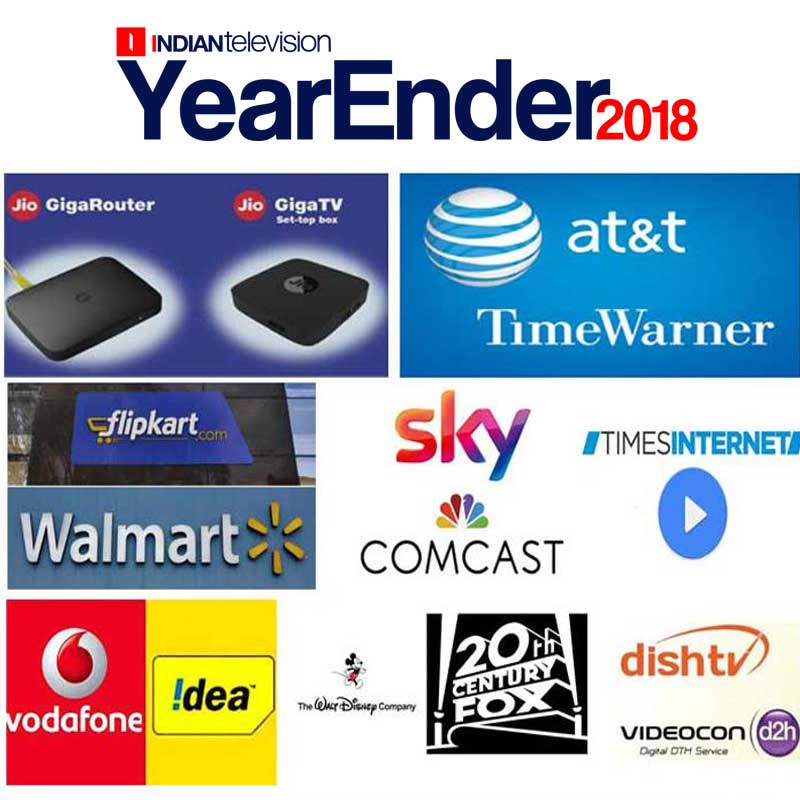
    MUMBAI: The emergence of numerous streaming platforms and convergence between technology, media, and telecom companies shook the core of the media and entertainment business globally. Giant tech and telco players, on the back of their direct customer reach, started taking content creation and distribution a lot more seriously. Rapid change in content consumption pressurised traditional players to invest more in technology and focus more on the B2C model. The ongoing flux brought the industry on the brink of instability, leading to consolidation in the form of mergers and acquisitions.

    In the last couple of years, the nature of competition in the global ecosystem has witnessed a gradual swing. Organisations like Netflix, Amazon Prime and Google have brought a structural shift forcing traditional players to rethink their approach to content and distribution. Legacy brands upped the ante to attract and retain more consumers even through cross-border deals. PwC India partner Raman Kalra points that everybody in this world of media disruption is trying to be relevant in reach and scale, the two critical factors that are driving deals. To corroborate his thesis, he highlights the AT&T-Time Warner deal where the former, with a huge reach, wanted to scale up its content play with the collaboration.

    Closer to home, billionaire Mukesh Ambani’s RIL rode the TMT convergence wave better than most. India’s richest man started the year with a bang, intensifying TV18’s stake to 51 per cent by acquiring 1 per cent of Viacom18’s equity from Viacom Inc. for a cash consideration of $20 million. The RIL-owned Jio Infocomm also acquired a controlling stake in two large MSOs – DEN and Hathway – building ammunition for its FTTH’s foray. That’s not all, RIL also pocketed a small but significant five per cent stake in Eros International.

    E&Y media and entertainment advisory services partner Ashish Pherwani expects more deals to materialise in 2019.

    “Especially technology-driven deals because so many changes are happening in that space, and consolidation, led by inbound investments. There are three types of deal. One type of deal is happening in order to build efficiency and scale in the business, led by cost pressures. Another type of deal is around relevance and market share – to get a bigger slice of the market to monetise a larger base of consumers.  The third type of deal which is happening is basically technology driven – for access to technology that could drive competitive advantage in the digital future. Hence, the three reasons market share, efficiency, technology are driving the deals,” he adds.

    There were other interesting deals struck through the year that are likely to reshape the media and entertainment business going forward.

    Birth of the world’s second largest DTH company

    The Indian market wasn’t exempted from the global merger frenzy. The coming together of two large DTH operators – Dish TV India and Videocon d2h – was finally concluded this year, creating the largest DTH service provider in the country with a subscriber base of about 29 million. Apart from leveraging their individual strengths, it was expected that the combined entity would benefit from economies of scale. One of the biggest attractions for Dish TV as the acquirer was Videocon’s significantly higher average revenue per user (ARPU). Significantly, the combined entity’s ARPU was Rs 207 in the second quarter as opposed to Dish TV’s standalone ARPU of Rs 144 pre-merger. The deal also helped Dish TV position itself better when it came to negotiating with broadcasters.

    Decks cleared for FTTH warfare

    From formally launching FTTH service Jio GigaFiber to acquiring majority stakes in two large MSOs to speed up the rollout, the Mukesh Ambani-led Reliance Jio was definitely the centre of attention in 2018. Reliance Industries Ltd (RIL) made an investment of Rs 2,290 crore for 66 per cent stake in Den and Rs 2,940 crore for 51.3 per cent stake in Hathway. It will save RIL the cost of reaching out to customers as well as making the last mile connectivity easier in its ambitious bid of seizing control over India’s wired broadband business. With the launch of its telecom service, RIL gave rise to what many call ‘digital democratisation’. As the Jio juggernaut marked its entry into India’s multi-billion-dollar cable TV and DTH businesses, traditional players eyed the development with a healthy mix of scepticism and optimism.

    Rivals joined hands

    The Indian telecom sector this year saw the marriage of two giant companies, creating the country’s largest telecom company. In the month of August, Vodafone India and Idea Cellular completed the merger after getting approval from National Company Law Tribunal (NCLT). The consolidation of India’s telecom sector was a direct result of Jio’s relentless pricing war. Post the Idea-Vodafone deal, India’s telco business now comprises of just three players. Analysts expect the combined entity to yield better coverage than before as it would have access to a more robust ecosystem of cellular towers. COAI also believes that as competitive pressures drive consolidation, customers and the industry stand to benefit from the greater stability and better networks which will emerge. Surprisingly, a few years ago, the Indian telco sector had 13 operators.

    Bansals became billionaires

    Walmart gained a strong foothold in India’s this year as it completed its much-talked-about $16 billion acquisition of the country’s largest e-commerce company Flipkart. Poster boys of India’s start-up community Sachin and Binny Bansal became billionaires in a big win for Indian talent and home-grown businesses. Despite protests from traders across the country, as the deal could potentially harm their business, the Competition Commission of India (CCI)’s green signal came earlier this year. The biggest e-commerce deal globally bolstered Walmart’s repertoire in its war with Amazon internationally. With India being one of the most attractive retail markets in the world, a strong play here is bound to further boost the American behemoth in a rapidly changing environment.

    Times Group joined the streaming sweepstakes

    With almost major broadcasters and media companies trying to grab a slice of the hottest piece of the M&E business – OTT, the Times Group too jumped on the bandwagon. To get a stronger foothold in the space, Times Internet invested over Rs 1,000 crore to acquire a majority stake in video playback app MX Player. According to media reports, the company will introduce a streaming service within the app. The large cross-border deal which surprised the industry will definitely help Times Internet in the OTT race thanks to the huge base and popularity of MX Player in south Asian countries. With over 30 OTT players vying for consumers’ attention in India, the game has just begun with enough opportunities for new platforms. Earlier in the year, MX Player content head Gautam Talwar had told Indiantelevision.com that like many other OTT platforms, MX Player too wants to tap into the millennial audience. It wants to cater to users with 50,000 to 100,000 hours of premium curated licensed content along with a high focus on originals, he further added. 

    The telco takeover

    Giant wireless carrier and telco AT&T’s acquisition of content powerhouse Time Warner is just one example of how the lines between distribution companies and content creators are blurring. With the $85 billion deal, the telco gained ready access to the content pool of CNN, HBO, and Warner Bros.

    “Under the terms of the merger, Time Warner Inc shareholders received 1.437 shares of AT&T common stock, in addition to $53.75 in cash, per share of Time Warner Inc.1 As a result, AT&T issued 1,185M shares of common stock and paid $42.5B in cash,” said AT&T providing the financial details of the deal.

    Though the deal was first announced in 2016, it had to negotiate past several subsequent legal hurdles. The Donald Trump-led US Department of Justice (DOJ) even filed a lawsuit against AT&T and Time Warner to block the proposed merger. Following a six week trial, a US district court approved the deal without any conditions on 12 June and also urged the government to not seek any stay. The main argument of the US administration was that the merger would hand over too much power to AT&T, making the market less competitive.

    A once-in-a-lifetime deal

    Another blockbuster deal that came through this year was the $71 billion acquisition of 21st Century Fox assets by Disney. After a long and sustained bidding war with Comcast, the Mouse House got its hands on much of the Murdoch empire. “Combining the 21CF businesses with Disney and establishing new ‘Fox’ will unlock significant value for our shareholders,” 21st Century Fox executive chairman Rupert Murdoch said. The shareholders of both the companies approved the deal immediately, with foreign approvals and regulatory reviews now the final procedural hurdle.

    Disney is now in pole position to take on streaming giants like Amazon and Netflix with its OTT Disney+. The company has also already indicated its desire to stop licensing content to Netflix by ending the deal in favour of its own B2C service. Moreover, Disney now has majority control of Hulu, Endemol Shine Group and Star India, making it the most powerful content owner in the world. The reaction to the growth of OTT services has clearly shown that joining forces with rivals and competitors is not unacceptable anymore to survive in the market.

    Second time lucky

    After a failed attempt to buy 21st Century Fox, US cable giant Comcast won the bid for European entertainment biggie Sky. The former sealed the deal for a controlling stake in the British broadcaster with a winning bid of $40 billion. Analysts said that Comcast and Sky would become the biggest private sector provider of pay TV in the world with 52 million customers. Given the vast reach and growing customer base of Sky in Europe, Comcast took the step to expand its international business with it losing ground in the domestic market. This deal was a direct effect of cord-cutting as Netflix’s growth in the US has posed a major threat to the likes of Comcast. According to an analysis from Ampere, post the media mega-mergers of Comcast/Sky and Disney/Fox, two in every 10 dollars spent on content worldwide will now be spent by these two entities.

    The merger madness from 2018 is likely to continue in 2019, as corroborated by experts we spoke to. Not only would it be interesting to track which companies opt for consolidation, but 2019 will also give us a sense of how the deals from 2018 take shape and play out.

  • Binny Bansal steps down as Flipkart group CEO

    Binny Bansal steps down as Flipkart group CEO

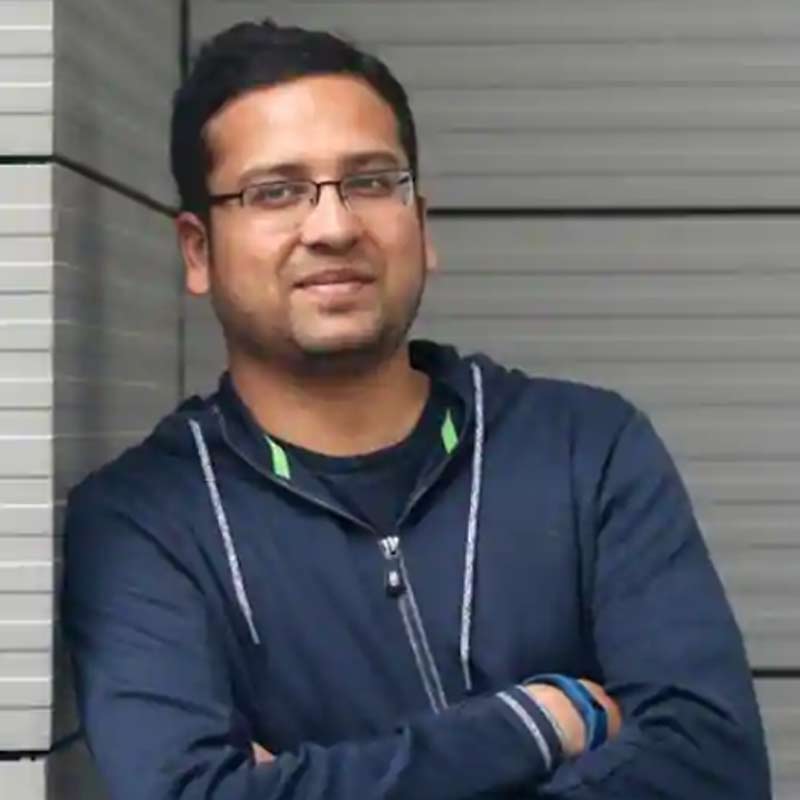
    MUMBAI: Flipkart group CEO Binny Bansal has stepped down following an investigation into alleged "serious personal misconduct”, although he has denied the allegation.

    Walmart Inc, in a press statement, said, “His decision follows an independent investigation done on behalf of Flipkart and Walmart into an allegation of serious personal misconduct, He strongly denies the allegation. Nevertheless, we had a responsibility to ensure the investigation was deliberate and thorough."

    About the investigation, Walmart said that it did not find evidence to corroborate the complainant’s assertions against Bansal but it did reveal other lapses in judgement, particularly a lack of transparency, related to how he responded to the situation. "Because of this, we have accepted his decision to resign," the statement read.

    Kalyan Krishnamurthy will continue as the CEO of Flipkart, including Myntra and Jabong, confirmed Walmart. Ananth Narayanan will continue as the CEO of Myntra and Jabong and will report to Krishnamurthy.

  • Flipkart likely to buy stake in Hotstar: Report

    Flipkart likely to buy stake in Hotstar: Report

    MUMBAI: Flipkart is taking a leaf out of Amazon’s book. Like its US rival, Flipkart is looking at buying a stake in India’s leading OTT platform, Star India-owned Hotstar, according to a report in Mint.

    The OTT scenario in India is booming with Netflix and Amazon Prime Video betting millions on the Indian market as well as several domestic ones providing content. Amazon’s US strategy is to get people hooked to shopping through its video content. Flipkart is likely adopting the same method and using content to increase its shoppers.

    Hotstar was launched in India in 2015 – about a year ahead of streaming giant Netflix and nearly two years ahead of Amazon Prime Video’s debut in the country. The OTT platform remains well ahead of both in terms of its popularity with domestic users.

    A Hotstar representative denied any such talks with Flipkart, but said it was open to partnerships that can help grow the internet ecosystem in India and beyond, according to the report.

    Flipkart has already tied up with Hotstar to launch a video advertising platform in July. Hotstar is also one of the internet partners for Flipkart Plus, its customer loyalty programme competing with Amazon Prime.

    Hotstar has been offering premium content like HBO’s Game of Thrones and live-streaming of popular Indian Premier League (IPL) cricket for an annual subscription of Rs 999 ($13.90).

    Walmart acquired about 77 per cent of Flipkart for nearly $16 billion in what was the US retail giant’s largest-ever deal and a move to take on arch-rival Amazon in a key growth market.


  • Amazon scaling up investment for Indian marketplace biz

    Amazon scaling up investment for Indian marketplace biz

    MUMBAI: E-commerce giant Amazon has invested additional Rs 2,700 crore for its Indian marketplace unit at a time when it continues to battle its local rival Flipkart along with investing about Rs 100 crore for food retail business in India, according to a report from Mint.

    According to the regulatory documents filed with the Registrar of Companies sourced by Paper .vc, the marketplace arm of Amazon India , Amazon Seller Services, received the funds earlier this month. Now its total investment in India stands roughly at $4 billion. The company has been spending all its cash on building massive warehouses, a large logistics unit, marketing, discounts and increasing product assortment.

    Earlier the online retailer pledged to invest at least $5 billion in India along with allocating an additional $500 million to build its food retail business. Back in June 2016, Amazon Inc CEO Jeff Bezos committed an additional $3 billion after fulfilling the initial target of $2billion made in 2014. The Indian market holds high importance for Amazon Inc’s international expansion.

    The report also says that earlier Amazon India chief Amit Agarwal indicated that the company will invest as much as necessary to conquer the Indian market. Flipkart is also leaving no stone unturned, especially on the back of the deal with deep-pocked Walmart. Both the companies are focusing on sales growth rather than cutting losses.

  • CCI approves 16$ bn acquisition of Flipkart by Walmart

    CCI approves 16$ bn acquisition of Flipkart by Walmart

    MUMBAI: The Competition Commission of India (CCI) has approved American retail giant Walmart’s $16 billion acquisition of online marketplace Flipkart. In May, Walmart acquired a 77 per cent stake in Indian e-commerce company.

    With this, Walmart will compete directly with Amazon India in the fast growing e-commerce market. 

    This is the biggest deal for India’s e-commerce sector, which is estimated to grow close to an annual $200 billion in 10 years. The acquisition will give Walmart a strong foothold in Asia’s third largest economy where the company has struggled to expand due to restrictions on foreign investment in retail stores

    In a Twitter post, the CCI has given a heads up to the proposed acquisition of Flipkart by Walmart. The board, in its order, also added that the issue of Flipkart’s discounting practices would be dealt with separately in the upcoming e-commerce policy. 


    The regulatory board also mentioned that the discounting practices by Flipkart may have to be reviewed by the relevant authorities, which will put pressure on regulators to clamp down on discounts on online platforms. 

    Responding to CCI’s approval, Walmart said that the company is committed to contributing to the Indian economy by supporting farmers, businesses run by women in India and small and medium suppliers. 

    The statement read: Flipkart is a prominent player in India with a strong, entrepreneurial leadership team that is a good cultural fit with Walmart.

    Soon after the CCI’s approval on the deal, local trader body, Confederation of All India Traders (CAIT) opposed the Flipkart-Walmart deal on the ground that the acquisition will create unfair competition and drive local convenience stores out of business. 

    CAIT’s secretary general Praveen Khandelwal said to Reuters, “We will certainly move the court against the CCI’s decision. CAIT has called an emergency meeting of its governing council on August 19 at Nagpur, where we will finalise our strategy for a nationwide movement.”