Tag: Vynsley Fernandes

  • Hinduja Group’s HITS to be available on Thaicom 7

    Hinduja Group’s HITS to be available on Thaicom 7

    MUMBAI: Thaicom, one of Asia’s leading satellite operators, announced that its Thaicom 7 satellite is fully booked following an order from Grant Investrade Ltd (GIL).
     

    GIL. a subsidiary of Hinduja Ventures Ltd, confirmed the order for the C-band transponders on the satellite, which it will use to provide digital cable TV services through its Headend-In-The-Sky (HITS) system.
     

    The HITS service, branded Nxt Digital, will help the distribution fraternity smoothly transition to digital and allow customers to choose channels through a satellite multiplex across India.
     

    “It is one of India’s national missions to roll out Digital Addressable Systems (DAS) of broadcasting all over the country and we believe ‘Nxt Digital’ is a significant step towards this goal,” said GIL, MD Tony D’Silva. “Thaicom is a trusted and experienced satellite provider which has played a vital role in this initiative and the substantial number of satellite transponders we have at the time of launch will continue to grow as we expand our portfolio.”


    “We are proud to be able to contribute to India’s broadcast and media development and thank our Indian partners for their trust in us. This latest deal is particularly exciting for Thaicom as it marks an important milestone for us, not only in regards to Thaicom 7 now being 100 percent booked, but also in bringing our platform for content distribution to India which sets us in good stead for the launch of Thaicom 8,” said Thaicom CEO Paiboon Panuwattanawong.


    Castle Media has been appointed as the technology program manager for Nxt Digital. It has been tasked with the design-to-delivery of the HITS service including setting up a state-of-the-art next generation broadcast facility and a robust back-end facility for SMS, CRM, Billing, CAS and other mission critical components and services.
     

    “Thaicom 7 being a recently launched satellite exhibits strong parameters to facilitate a high-quality digital HITS service in India. We’ll continue to work closely with Thaicom to upscale our transponder requirements as our business grows over the next few years, on the back of a strong push by the government to make India a digital nation,” Castle Media ED Vynsley Fernandes added in parting.


  • Hinduja’s NXT Digital installs Actus broadcast monitoring platform

    Hinduja’s NXT Digital installs Actus broadcast monitoring platform

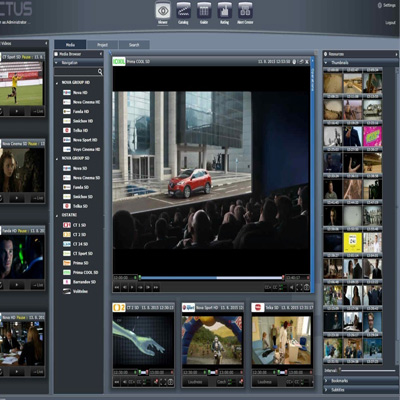
    MUMBAI: Hinduja Group’s headend-in-the-sky (HITS) digital service platform NXT Digital has installed the Actus broadcast monitoring platform.


    The recently launched HITS platform offers over 500 channels to the fast-growing television market in India.


    By implementing the latest version of Actus’s broadcast monitoring platform, NXT is being guaranteed that all IP-based channels are reliably recorded 24×7 and that whenever more channels are added; Actus’s scalable broadcast recording platform will be easily expanded. In order to comply with the current requirements, Actus has deployed Actus View to record and monitor the 350 IP-based channels, Actus Multitrak to support multiple audio tracks, Actus EncoderPro to save hardware resources, Actus Loudness to monitor audio levels, and Actus AlertCenter to provide NXT with real-time alerts for any audio or video issues.


    Grant Investrade MD Tony D’Silva said, “In the dynamic digital video world, we are assured that Actus Digital will not only fulfil our current requirements but also comply with future requirements that the digital world will dictate. Actus has vast experience with installations worldwide and we are confident that the platform will grow as our business expands constantly.”


    Actus was selected for this premier service after a rigorous four-stage RFP evaluation process conducted by Castle Media – Asian broadcast consultancy tasked with end-to-end programme management and delivery of the HITS project.


    “The Actus platform is scalable and modular, which makes the solution cost-effective by allowing GIL to implement only the modules required yet be assured that once additional requirements arise, Actus’s platform will provide us the solution,” added Castle Media executive director Vynsley Fernandes.


    Shaf Broadcast, Systems Integrator, implemented the solution. 


    “We have the knowledge base and experience to deploy Actus Digital’s solutions. The installation, implementation and integration of the Actus platform went fluently and complied with all of our high expectations. The Actus local team worked closely with Shaf engineers to make sure the system will be up and running and meet the high demands and tight time frames. I am assured Actus will provide an excellent platform to NXT Digital also in the future,” said Shaf Broadcast director P.R. Suresh. 


    “One of the challenges, beyond the installation of a large system, was the fastest-possible deployment that was required to meet the time frames of launching the digital rollout of NXT Digital services. In order to be sure that Actus would meet the tight time frames, we sent an Actus-trained local team to the customer’s site to prepare the site ahead of time. With good cooperation with Shaf, we optimized our recorders to take advantage of recent improvements in hardware and of a new version of Actus’s EncoderPro technology and were thus able to offer better performance than initially proposed for the same budget,” said Actus CEO Sima Levy. 

  • Change in investor mindset needed for MSOs to chart growth path

    Change in investor mindset needed for MSOs to chart growth path

    GOA: While the direct-to-home (DTH) sector has managed to attract investment from private investors because of its growth, the cable industry will be able to do so only if multi-system operators (MSOs) add broadband to their services.


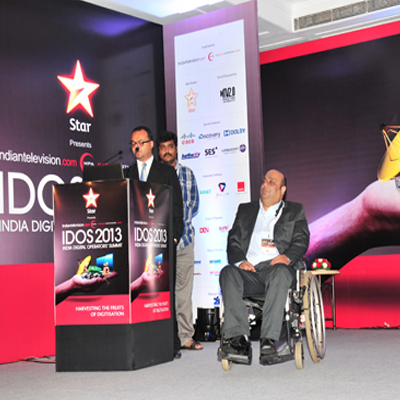
    This was the general consensus of a session on ‘Investing in Digital assets – Gems and long bets’ at the ongoing Indian Digital Operators Summit (IDOS) 2015 organised by Indiantelevision.com and Media Partners Asia.


    HSBC Securities and Capital Markets (India) Pvt Ltd director of analyst telecoms, media and Internet Rajiv Sharma said that DTH had gained as it has shown growth in terms of average revenue per user (ARPU), and innovation.


    While the stocks of cable industry initially went down, a reading of the figures of both cable and DTH showed that there was some recovery towards the end of the year. “The MSOs have not matched up to expectations, partly because of MSO-local cable operator problems,” Sharma said.


    In the session moderated by Castle Media ED Vynsley Fernandes, Sharma said that broadband can be the catalyst, which can bring in growth but only one or two MSOs have entered the broadband space.


    “The scale of growth is directly linked to attracting investments. If LCOs (local cable operators) can show that they own subscribers, they will get investment,” Sharma said. However, he was quick to add that broadband infrastructure and broadband compliant STBs (set top boxes) would help.


    Asked about collaborations, Sharma said that the media can learn a lot from telecom where networking and collaborations led to the government thinking in terms of letting them sell or share spectrum. “Telecoms focus on revenues to share, while the cable industry wants finance for set top boxes,” he said.


    Replying to a question about the slow growth of broadband in the country, he said, “Anything that is wireline will grow slowly whereas wireless will grow much faster. The consumer is willing to pay but it is for the government to facilitate this.”


    Sharma also added that the quality of management, profitability and network will attract investments. He regretted that the cable industry had failed to learn any lessons from the first two phases of the Digital Addressable Systems (DAS).


    Concurring with Sharma, MPA executive director Vivek Couto added, “Investors reward growth and DTH did exactly that.” However, he was of the opinion that the last mile operator (LMO) will consolidate under the Headend In The Sky (HITS) platform and that may change the situation. “The results will begin to show in the three to four years,” he said.


    Referring to NXT Digital, which was prepared to offer funding, he said that LMOs may now come forward.


    Couto added that while organized MSOs were doing well, investment in broadband in the short term would bring in benefits in the long term.


    In reply to a question, he said that India was the only country where content generation was growing. “But in all this, the cable industry was feeling lost,” he opined.


    Indiantelevision.com founder CEO and editor-in-chief Anil Wanvari had the last word when he said that the mindset of investors had to change as few MSOs in India could today afford the kind of growth their counterparts had shown in foreign countries.


    In another session, Maharashtra Cable Operators Foundation president Arvind Prabhoo and Sagar E-Technologies executive director Sudhish Kumar agreed that the cable industry had to organise itself better if it was to attract investments and grow in the digital era.


    Prabhoo said he had succeeded to an extent in this by getting the LCOs to be seen as the last mile operator (LMO). In an example of how the LMOs can grow, he said, “30 LMOs in Nagpur have joined together to form an MSME and were not prepared to invest in other LMOs,” he said.


    He added that if investors put in money to help create model services, there will be a major change in the next six months or so. “If cable operators offer other services through their STBs, there will be a churn in the industry,” he said.


    Kumar, who has a headend in Bangalore, lamented that finance was a major problem. “One STB cost around Rs 1500, but some of the larger MSOs sell boxes for around Rs 1000 and this forced others to sell at lower rates, which in turn results in a loss,” he said.


    Emphasising on the fact that MSOs were not concentrating on marketing, he said that if they did, it would help in consolidating the industry.


    Citing his own example, he said that he had not lost a single LMO despite having had ups and downs in his company because of the faith reposed in the company.
  • NXT Digital to use Thomson Video Networks’ compression technology

    NXT Digital to use Thomson Video Networks’ compression technology

    MUMBAI: Hinduja Group’s headend in the sky (HITS) platform NXT Digital will use Thomson Video Networks’ compression technology.


    Thomson Video Networks has provided a wide range of equipment and solutions for the broadcast centre and master headend platform, including its Vibe SD and HD broadcast encoders and its multiplexing and network management system.


    “We designed our HITS system to deliver best-in-class picture quality with a robust architecture and the highest level of uptime. To make that design a reality, we needed a world-class digital delivery platform to reach the network operators across India from a centralised location, and Thomson met our requirements,” said Grant Investrade managing director Tony D’Silva.


    “NXT Digital is here to help the distribution community in analog markets make a smooth and timely transition to digital, and we are hopeful it will help write what could perhaps be the biggest chapter in the ‘Made in India’ story,” he added.  


    “Thomson Video Networks’ compression technology with advanced statmux features will give us pristine broadcast picture quality at lower bandwidth consumption. The solution is flexible and future-proof, and Thomson Video Networks has a strong local presence, which is an important requirement of the project,” said Castle Media executive director Vynsley Fernandes.


    NXT Digital is scheduled to roll out pan-India services in 2015, and tests of various components of the business are underway.


    “The Hinduja Group is one of the leading business houses in India and one with a global footprint. GIL’s selection of our compression chain will increase Thomson Video Networks’ market share in the satellite segment in India, push the company to among the top compression vendors in the region, and also boost overall market share substantially. This significant project will further strengthen our presence in Southeast Asia,” said Thomson Video Networks vice president, worldwide sales Eric Louvet.

  • Hinduja’s NXT Digital signs Hansen Technologies for billing solution

    Hinduja’s NXT Digital signs Hansen Technologies for billing solution

    MUMBAI: Hinduja Group’s new Headend in the Sky (HITS) platform NXT Digital will be using Hansen’s ICC billing solution.


    The Hinduja Group has signed a multi-year licence agreement for Hansen’s ICC Customer Care and Billing.


    “With a potential target market of more than 100 million subscribers, we needed the leverage of a globally recognised firm with the expertise to move us forward. The implementation of our HITS platform will allow local cable operators to provide high-quality digital TV services to customers within their specific regions,” said Grant Investrade managing director Tony D’silva.


    India is currently going through a government-mandated digitisation programme and it is expected that over 110 million TV homes will make the transition from analogue to digital over the next 17 months.


    Hansen ICC has the strength and flexibility to support HITS by giving control to the parent organisation while allowing the individual businesses to operate independently.


    “Businesses that run distributed models like HITS require the flexibility to balance the needs of the overall organisation with each of the independent operating units. The HITS business hierarchy requirements are highly complex; our Pay-TV solution enables NXT Digital to provide multi system operators (MSOs) and last mile owners (LMOs) a scalable solution from a single deployment,” added Hansen Technologies CEO Andrew Hansen. 


    The company was selected by GIL after a rigorous four-stage evaluation process conducted by Castle Media, which is also the technology programme manager for the HITS service, responsible for design to delivery of the $100 million project.


    “Hansen exhibited the functionality and features that are required for an extremely complex multi-tier operation. With its pedigree and experience in the global Pay-TV space, it is certainly the appropriate partner for such a high-value project,” said Castle Media executive director Vynsley Fernandes.

  • IDOS 2014: News broadcasters still struggling to make money

    IDOS 2014: News broadcasters still struggling to make money

    GOA: The news television industry has been witnessing losses for several years now. To throw some light on what are the hurdles and what needs to be kept in mind while forming regulations, NDTV vice chairperson KVL Narayan Rao, Times Television Network MD and CEO MK Anand and BBC World News India COO Naveen Jhunjhunwala took the stage at IDOS 2014 for the session ‘News Television- a specialised beast’ that was moderated by Castle Media founder Vynsley Fernandes.


    The session took off with a keynote from industry veteran Rao, who spoke of the issues facing the most competitive news industry. “News has always been a high cost, low return industry and since 20 years, there has been an unholy dependence on advertising revenue in an environment that doesn’t seem to be changing,” he said while adding that one needs to consider the importance of news in such a landscape. “Not a single news operator in this country is making money,” he stressed.


    The recent extension to digitisation has also not gone down well with Rao, who just this week stepped down as the president of the News Broadcasters Association. “Digitisation was to finish by this year but has been extended till 2015 and 2016. To say the least, I am very disappointed with this decision,” he said.


    As far as regulations are concerned, he says that content should always be kept separate from carriage. “The business environment that we are operating in is one where we pay a large amount of money as carriage fees. For most news broadcasters, one third of operating cost goes as carriage fees while 90 per cent of revenue is generated from advertising and in some cases 100 per cent. All news broadcasters today pay a large amount as carriage fees and it is a terrible burden that we find impossible to bear,” said he. All the stakeholders must see the way the news channels operate and not look at regulations in isolation.


    News channels during primetime end up showing only panel discussions because of the lack of resources. The western countries have subscription revenue of up to 60 to 70 per cent. All these issues were meant to change after digitisation with subscription revenues kicking in and carriage fees eventually coming down. However, Rao hopes that the new government helmed by Narendra Modi would do all it can in its new ‘Digital India’ plan.


    He spoke of the statement by the Editors’ Guild regarding denial of access to journalists by government and increasing number of significant government authorities taking to social media to give information. He says that this serious issue needs to be addressed since news is not about press releases but rather about ‘ferreting information out’.


    Adding to the issues faced by the industry was Anand. He said that the last six months have seen a loss of collective bargaining due to the deaggregation paper by the Telecom Regulatory Authority of India (TRAI). “The paper has hit news broadcasters and unless one diversifies into entertainment, it is difficult to survive,” he said. In order to make money, the idea is generally to go heavy on branding and marketing and create an aura around the channel. The lopsided ad sales revenue also adds to the woes.


    Jhunjhunwala said that the BBC has been broadcasting news for decades and the technological advancements have allowed it to make it smoother and more cost effective.


    The ad cap has also hit them hard by restricting advertising air time to 12 minutes per hour. Here, the panel agreed that there are times when channels go live for hours without showing any ads and there is no provision to make up for the lost time. Fernandes questioned that in such a scenario, could there be alternative sources of revenue that can be put into use.  Rao said that now, to monetise news one needs to generate revenue through different streams such as sponsorships and associations. “But how can you not have subscriber revenue?” he questioned.


    Fernandes then questioned if there should be a limit on the number of channels that exist to which Rao said that the government should not curtail the number of channels because it is a free market. However, he feels the politicians and political parties should not be allowed to be in news.


    Anand said that the regulator could think about regulating carriage fees with some focus on news channels. He also pointed out that a decade ago, ad spots on news channels were sacrosanct but today it is being sold at one third the rate.


    Jhunjhunwala said that the government could look at raising the FDI limit on news to bring in more investment. There were talks of raising it to 49 per cent but no one has addressed the issue.


    Rao finally concluded by saying that though the digitisation deadline has been extended it will hopefully iron out things.

  • MCOF conclave stresses on importance of broadband for LMOs

    MCOF conclave stresses on importance of broadband for LMOs

    MUMBAI:  It has been touted as one of the leading get together of the last mile owners (LMOs) in Maharashtra. The Maharashtra Cable Operators Federation (MCOF) National Conclave on Broadband and Cable (NCBC) 2014 saw its president Arvind Prabhoo put his best foot forward in trying to get the LMOs to buy into his vision of a digitised cable TV India where they are also prospering. Apart from formally launching Synergy Cable Operators Private Limited (SCOPE), the first Cable Virtual Networks Operator (CVNO), Prabhoo and a handful of industry vets and consultants, stressed on the importance of broadband and how LMOs could increase their business five-fold, using this tool.


    Prabhoo pointed out that number of active broadband subscribers in India is expected double in the next two to three years according to a Telecom Regulatory Authority of India report.  In Mumbai alone, the figure is expected to go up from the current 1.2 million to 4.5 million in the next couple of years. “Broadband will grow, and we need to utilize this opportunity,” Prabhoo said.


    Drawing comparisons with the US where 50 per cent of broadband services are provided by cable operators, he said, “We need to implement the same in India. As things stand, only a fraction of the broadband subscriber base is delivered by cable operators.”


    Apart from the emphasis on broadband, day one of NCBC 2014 saw heated debate over the existing three models i.e. MSO:LMO, HITS and the newly-minted CVNO, which seeks to provide white label cable TV services to smaller operators in phase III and phase IV.


    Presided over by indiantelevision.com founder, CEO and editor-in-chief Anil Wanvari, the session had all parties putting forth their points of view. The panel comprised Kulbhushan Puri of BR Cable Network, Atul Saraf of ABS Seven Star, Vynsley Fernandes of Castle Media, and Prabhoo.


    During the discussion, Wanvari expressed the view that the full rewards of digitisation have yet to trickle down to the broadcaster, MSO or LMO – as they viewed each other with suspicion, though things have improved in recent times. “There is a need for greater communication and understanding among the stakeholders,” said Wanvari. “The LMOs and MSOs need to understand that broadcasters are investing in content and they need to recoup that investment.  Broadcasters need to understand MSOs are investing in setting up infrastructure and that LMOs want a sustainable future. The cable ecosystem also needs to understand that broadband can be extremely rewarding as compared to simple video signals where subscribers tend to be wary of price increases.”


    To this, Prabhoo invited all stakeholders to come together to discuss issues and take the industry forward while benefitting everyone. “Proper constructive pricing model can be worked out if broadcasters, MSOs and LMOs discuss issues on the same platform,” he said.


    Fernandes, who is involved in the upcoming HITS project of the Hinduja Group, said, “Packaging of content should be in the hands of the LMOs. Additionally, the LMOs need to invest in set top boxes which they will deliver to their subscribers so that ownership stays with them. And this is what the HITS project is set to do.”


    Prabhoo said that while there will be areas covered by the CVNO in phase III and IV of DAS called Headend on the Ground (HOGS), there would be some covered by HITS (Headend In The Sky). “There could also be areas where HITS and HOGS can work together to take digitisation forward,” proposed Prabhoo.


     Saraf said the future of DAS phase III and IV lay in MPEG4 and not MPEG2 STBs that were currently being seeded by operators. On the issue of low ARPUs in phase I and II, he said, “ARPUs can go up only by introducing value added services like Video on Demand (VOD), Movie on Demand and YouTube. We need hybrid STBs, which can provide both cable and internet services.”

  • MCOF to hold seminar for LMOs

    MCOF to hold seminar for LMOs

    MUMBAI: With Last Mile Operators (LMOs) viewing digitisation as a threat and legal tussles between them and Multi System Operators (MSOs) on the rise, the Maharashtra Cable Operators Federation (MCOF) has organised an educational and business seminar on ‘challenges and opportunities post DAS’ to address their growing concerns.

    To be held on 23 November at the Prabhodhankar Thakarey Krida Sankool in Vile Parle, Mumbai, the seminar will see the who’s who of the industry educate LMOs about the kind of business opportunities lying in wait.

    Addressing operators from Maharashtra, Andhra Pradesh, Gujarat and Goa will be Castle Media director Vynsley Fernandes, who will speak on ‘global industry standards and trends’; HSBC Securities (Telecom and Media) lead analyst Rajiv Sharma, who will touch upon the financial aspects; former Sun group CEO Tony D’Silva, who will discuss HITS (Headends in the Sky) technology, UPASS managing director Ravindra Deshmukh and PING Network founder Prashanto Das, who will talk about global trends in broadcasting.

    Also among the invitees are small scale industries and the State Bank of India (SBI) regional head.

    Says MCOF president Arvind Prabhoo: “There is a lot of confusion about digitisation and LMOs feel the business is going out of their hands but if you understand what digitisation is and how to go about it as well as reorient yourself to the changing scenario, then you don’t look at it as a challenge but as an opportunity. I want LMOs to know that digitisation is not a threat and remove the fear factor from their mind.”

    A few women cable operators are also expected to attend the seminar that will be conducted in both Hindi and English. Nearly 500 to 600 LMOs are likely to participate with registration fees fixed at Rs 500 per head. Leading Marathi and Gujarati newspapers will be carrying advertorials tomorrow and day after to promote the event.

    Apart from challenges and opportunities post DAS, the seminar will also cover topics such as maximizing broadband penetration, optimised network architecture in DAS and future proof, Value Added Services (VAS), identifying right equipment and spares, supply tie ups and employee training.

  • NewsX launches Sport Grandstand with Linford Christie

    NewsX launches Sport Grandstand with Linford Christie

    MUMBAI: NewsX has launched a sports show, Sport Grandstand. The hour-long show will air every Saturday at 1 pm.

    The English news channel has roped in 100 metres Olympic champion Linford Christie for the show.

    The sports show will have 80 stories every week interlaced with sports guests, reporters live-ins, sports rankings, factiods and trivia.

    For the channel Vijay Amritraj will analyse Wimbledon and Chima Okerie for Euro 2008.

    Says INX News COO Vynsley Fernandes, ” From regular sports to highly popular but unusual games, Sport Grandstand covers every sporting action of the week from around the world. Our sports programmes have consistently enjoyed high viewership, satisfying the sports aficiondos.”

    Chirstie says, “Sports Grandstand is by far the most comprehensive sport show. It covers every important story every week, no matter where in the world.”

  • Rahul Shaw is INX News SVP ad sales

    Rahul Shaw is INX News SVP ad sales

    MUMBAI: Rahul Shaw has joined INX News as senior vice president ad sales. Based in Delhi, he will be reporting directly to INX News COO Vynsley Fernandes.

    In his new post, Shaw will be responsible for driving the revenue function of English news channel NewsX and the other upcoming channels from INX News.

    Shaw was earlier with NDTV Imagine where he was working as senior VP ad sales.

    Commenting on the appointment, Fernandes said: “Rahul has a wide experience of handling advertising sales across several genres in print and television. He has proven expertise of driving revenue growth in start ups as well as building and leading strong sales teams. We are delighted to have him on board.”

    Prior to NDTV Imagine, Shaw was in Star India where he held various roles in the sales function. Shaw also had a stint in Set India, where he was managing revenue for their English language channels.

    Shaw started his career with Bennett, Coleman & Company Ltd. and later moved to Turner International where he handled HBO, Cartoon Network and CNN before joining Set India.