Tag: Vynsley Fernandes

  • IMCL’s Vynsley Fernandes on NTO changes, tech improvements and staying relevant

    IMCL’s Vynsley Fernandes on NTO changes, tech improvements and staying relevant

    MUMBAI: In the last couple of years, streaming services have emerged as a big challenge to traditional cable distributors while the business model has changed too owing to the new tariff order (NTO). Amid the flux, upgrading the existing structure, technology and strategy has become necessity to stay relevant. At the commemoration of the twenty fifth anniversary celebration, IndusInd Media and Communications Ltd (IMCL) unveiled a new mnemonic logo #IamNXT25. As a part of the celebration, the company is launching many new products and solutions to stay relevant in the game.

    As IMCL CEO Vynsley Fernandes summarises, “So everything we do from now is how do we stay relevant and how do we grow and how do we become a brand new generation for the next 25 years.” He adds that a better integration of IMCL’s four products – digital cable, Headend-In-The- Sky (HITS), broadband business and entertainment content will be noticeable. Citing an example, he says IMCL has launched a combination product of HITS and broadband in Hyderabad.
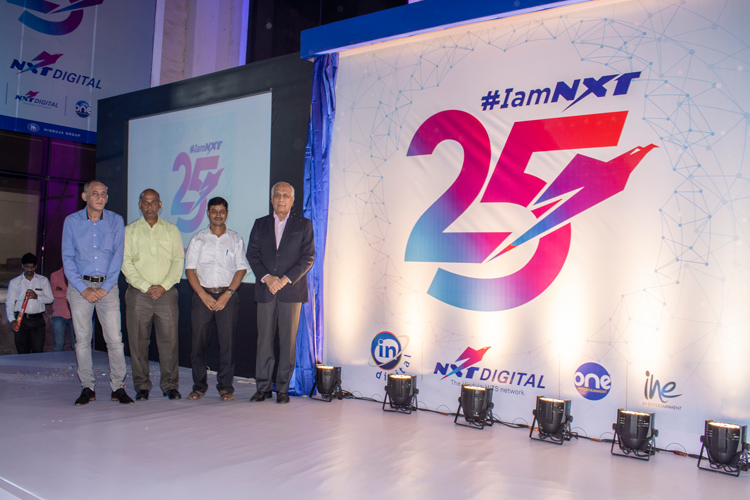
    IMCL’s intra and inter collaborative strategy going forward:

    Talking to Indiantelevision.com, Fernandes also speaks about how IMCL strikes the balance between HITS and digital cable. He says that while the former helps IMCL in remote areas, the latter keeps reigning in high density cities. He cites the example of Andaman and Nicobar Islands, where HITS is a great solution and IMCL has close to 20,000 customers there. Moreover, it is looking at offering customers cable or HITS in their individual terrains coupled with broadband services.

    In a unique model, IMCL has also collaborated with some very large MSOs in India including its competitors who are keen to leverage HITS technology. Under the ‘managed service model’, they will use the technology in the remote areas as a delivery mechanism. While IMCL currently has 5 million subscribers, it has signed managed services agreements for another 5 million customers.
    “We have crossed 50 cities already as we speak. And while broadband has continued to grow and has a significant growth, it will get a renewed thrust in this combo package. Because wherever we go, wherever we have HITS or digital cable, we are bundling our broadband service with it so that will carry more traction. So, while we may not necessarily look at radically growing beyond 50 cities or 50 towns, we are looking at increasing the penetration of our broadband within those 50 cities and towns by bundling it with either with digital cable or HITS,” Fernandes comments on broadband expansion.

    Talking on technological investments, he adds that IMCL has just completed satellite migration moving from Vikon 5 to Intelsat 39. He also adds that IMCL is now on a new technology, 32 APSK. He says that the focus is on ensuring not just investments in new technology, but investments in cutting edge future-proof technology.

    Did IMCL lose consumers during NTO 1.0?

    “I think it would be incorrect to say that our growth in revenues and ARPU is only to do with NTO. We have been building our capabilities and our model year-on-year to meet our promoter’s vision for the future. The group envisaged the need for another cutting-edge platform that could reach phase 3 and 4 markets, and HITS (headend-in-the-sky) was the only way to do this and we launched our HITS services in 2015,” he comments on NTO 1.0’s effect on financial stability.

    “We also were the first MSO to move to prepaid billing of both operators and subscribers. This was a huge challenge in a market used to postpaid transactions, yet we realised that this is where ultimately the industry would have to get to in order to survive. This transition caused us some churn but helped us towards improving our financial stability,” he adds.

    He mentions that IMCL was one of the first MSOs to launch mobile and web applications to help operators and subscribers activate and interact with its platforms more easily. It even migrated to 16APSK modulation on the HITS satellite in order to be able to add more channels within the existing satellite capacity without increasing costs.

    He accepts that IMCL lost subscribers in the new regime like other DPOs but he claims their churn rate was less than that experienced by others. Firstly, he mentions that IMCL engaged with partners, cable operators/distributors, early on, way before implementation of NTO 1.0, in November 2018 – to help them understand what NTO was all about and how it needed to be implemented. IMCL conducted around 150 workshops and training sessions all across India as it felt it was important for all stakeholders to understand and grasp the changes taking place.

    IMCL ensured that everyone was ready and knew how to create packages, bundles, what types of questions subscribers were likely to ask. He says they were, therefore, ready on the ground for handling the shift to the NTO regime.

    “Secondly, the technology we had implemented allowed us to be able to cater to subscribers’ requirements. One important thing about NTO was the whole concept of allowing the customer to choose what he wants to watch and paying only for that. Whilst we did create our own packages to help subscribers, these only have a penetration of around 18 per cent in HITS. The other 82 per cent of our subscribers opted to select their own choice of broadcaster bouquets and ALC. This capability to allow the consumer to effect their choice was one of the key reasons for customer satisfaction and therefore reduced churn,” he states.

    What does IMCL expect from NTO 2.0 and how are they preparing?

    From a DPO perspective, he does not think there'll be significant changes with the implementation of NTO 2.0. Overall, it is effectively tweaks to the NTO 1.0 framework including multi-home TV, right pricing etc, as he says. According to him, there is logic in putting in regulations for multi-homes as this was not included in original regulations. He hopes that it can now use this to help claw back some of the customers it had lost during NTO 1.0 who had relinquished their 2nd and 3rd TVs at home.

    He is also of the view that there will be no significant revenue changes if broadcasters reduce channel prices. He thinks that the more the prices of content drop, the more customers are likely to increase their viewing of content and add their 2nd/3rd TVs to their homes again, many of which were discontinued when transitioning to the NTO regime. He believes that revenues could possibly increase as customers expand their portfolio of channels.

    Fernandes notes that with respect to NTO 2.0, perhaps the key driver is technology-readiness and communications. “Our technology is completely ready if we have to provide new bundles, packaging and pricing. Our systems are effectively already delivering such requirements. We’ve deployed systems from global leaders in pay-TV technology and that are being used by some of the largest platforms in the world. So for us to be able to make a transition, however small or significant, we're ready for it,” he comments.

    “From a communications perspective, we work very closely with our business partners and our local cable operators. They have all played a significant and critical role in helping us to implement NTO 1.0.  Our success has not been because of us directly marketing to subscribers, but because our business partners and LCOs are able to reach and educate customers personally. We would use the same mechanism all over again because we've seen it to be very successful,” he signs off. 
  • VBS 2019: Media industry leaders to discuss challenges facing the industry

    VBS 2019: Media industry leaders to discuss challenges facing the industry

    MUMBAI: The much-anticipated Video and Broadband Summit (VBS) 2019 will be held today in Mumbai with participation from prominent media networks, broadcast distributors, media and advertising agencies, consultancy services, OTT platforms, media monitoring firms, as well as government regulatory bodies.

    Among the prominent media networks who will be participating in the summit are Sony Pictures Network, Star India, 9x Media, Enterr10 TV, BBC Global News, IN10 Media, Shemaroo and Zee. From the distributors side DEN Network, Maharashtra Cable Operators Federation, Fastway Transmissions, GTPL Hathway, Tata Sky, SITI Networks, UCN Cable and Ashwini Cable will be participating in the one-day summit at Hyatt Regency, Mumbai.

    Representatives of India’s prominent media agencies like IndiaCast Media, MediaKind, The Remediation Company, IndusInd Media and Communication, One Take Media, Madison Media will be participating in the event held in the shadows of TRAI’s February 2019 New Tariff Order (NTO) and amidst expectations and fears of further changes to the months-old act, described by many as one of the most significant reform in Indian media broadcast industry.

    There will be representation from auditing firms like PwC and KPMG as well. Since broadband service providers are now key to video distribution, there will be representation from Google, Reliance Jio Fiber, Reliance Jio and Win Broadband.

    TRAI advisor (broadcasting and cable services) Arvind Kumar will also address the gathering of industry leaders and there will also be a special presentation from BARC India COO Romil Ramgarhia.

    Bringing together industry leaders from all sectors of the media industry, the summit will discuss various issues at the heart of the NTO, how it’s impacting broadcasters and distributors, changes proposed to it and why broadcasters are unhappy with TRAI for floating a new consultation paper within six months of NTO.

    After a keynote address by Anil Wanvari, founder Indiantelevision.com, IndiaCast Media Distribution president Amit Arora, Star India Distribution president Gurjeev Singh Kapoor, IndusInd Media and Communications CEO Vynsley Fernandes, GTPL Hathway VP Yatin Gupta, The Remediation Company founder Shyamala Venkatachalam and Bhima Riddhi Digital Services promoter Nagesh Narayandas Chhabria will debate the TRAI consultation paper on tariffs in a panel discussion to be moderated by Elara Capital VP Karan Taurani.

    To give the perspective of distributors on how the NTO, and the expected amendments to it, affects their businesses, there will be a panel discussion in which SITI Networks CEO Anil Malhotra, GC member of SCTE India Shaji Mathews, Fastway Transmissions Consultant Peeush Mahajan and Bhima Riddhi Digital Services Promoter Nagesh Narayandas Chhabria will participate.

    Advertising industry is at the other end of the spectrum, the other big sector that had to adjust to post NTO environment. To discuss the advertisers' view and their take on the dynamic pay-TV landscape, there will be Godrej head media services Subha Sreenivasan Iyer, ITC PR and media head Jaikishin Chhaproo and Havas Media Group managing partner West & South Kunal Jamaur. They will participate in a panel discussion to be moderated by Castle Media CEO Ru Ediriwira.

    There will be a presentation from BROADPEAK business development manager Hervé Creff, on "Keeping control of HDMI1 with Android TV Operator Tier – the "super-aggregator" approach."

    This will be followed by a panel discussion on how to transform the TV broadcast sector to fuel growth – what are the key issues facing the industry and how can more transparency and discipline be injected into it? PwC partner and leader Raman Kalra, Elara Capital VP – research analyst (media) Karan Taurani, KPMG India partner Girish Menon and BBC News head of distribution – South Asia Sunil Joshi will participate in a panel discussion to be moderated by SBICAP Securities head of equity research Rajiv Sharma.

    Local cable operators also constitute an important link in the TV broadcast value chain in India. Despite the presence of strong DTH players like Tata and Bharti Airtel and the rise of OTT, as much as 65 per cent of TV homes in India are still connected through these local cable operators, as per TRAI estimates. Maharashtra Cable Operators Federation (MCOF) president Arvind Ramesh Prabhoo and IndusInd Media and Communication COO Rouse Koshy will participate in a panel discussion on how has the role of the LCO changed under the new regulatory framework and its significance going forward.

    The rise of some of the Free to Air (FTA) channels in the post NTO environment has been another prominent feature of 2019. To discuss the roadmap ahead for FTA channels, there will be a panel discussion in which SAB Group CEO Manav Dhanda, Enterr10 TV MD – Fakt Marathi Shirish Pattanshetty, IN10 Media COO Akul Tripathi, 9X Media chief revenue officer Pawan Jailkhani and Shemaroo Entertainment COO Kranti Gada will participate.

    To discuss the role of the internet in the broadcast industry, there will be a fireside chat between Anil Wanvari and Jio Fiber president Anuj Jain. The summit will end with a panel discussion on the role of the internet in video distribution in which Google Industry head media and entertainment Sandeep Ramesh, Jio VP – advertising and strategy Mohit Kapoor, COAI Director General Rajan S Mathews, ZEE5 chief revenue officer and business head Taranjeet Singh and MediaKind head of marketing – APAC Chiranjeev Singh will participate.

  • VBS 2019 to focus on post NTO environment, relevance of cable and rise of internet

    VBS 2019 to focus on post NTO environment, relevance of cable and rise of internet

    MUMBAI: The year 2019 has fundamentally changed Indian TV broadcast industry. The long-awaited New Tariff Order (NTO) was finally greenlit in February, forcing broadcast networks, DTH players and cable operators to move to a new tariff regime. However, even as TV broadcasters and distribution platforms were adjusting to the NTO, TRAI floated a new consultation paper on tariffs in August, causing further uncertainty and disruption in the already volatile market.

    Amidst this flux and all-around uncertainty, Indiantelevision.com is bringing together stalwarts from the industry on a platform that dissects the various issues at the heart of the NTO, how it’s impacting broadcasters and distributors, changes proposed to it and why broadcasters are unhappy with TRAI for floating a new consultation paper within six months of NTO.

    The initiative is called Video and Broadband Summit (IDOS in its earlier avatar) to be held at Mumbai on 11 December. Leaders from DTH, cable and broadband, broadcast, regulatory bodies, and technology segments will discuss the state of the industry, address issues and find solutions.

    After a keynote address by Anil Wanvari, founder Indiantelevision.com, doyens of broadcast industry and distribution platforms like IndiaCast Media Distribution President Amit Arora, Star India Distribution President Gurjeev Singh Kapoor, IndusInd Media and Communications CEO Vynsley Fernandes, GTPL Hathway VP Yatin Gupta, The Remediation Company founder Shyamala Venkatachalam and Bhima Riddhi Digital Services promoter Nagesh Narayandas Chhabria will discuss the TRAI consultation paper on tariffs in a panel discussion to be moderated by Elara Capital VP Karan Taurani.

    While TRAI has faced a barrage of criticism from industry players for the new consultation paper, it’s important to note that distributors (DTH, LCOs and MSOs) and broadcasters, both have very different grievances from TRAI. While broadcasters are nearly unanimous that TRAI should not disallow them from creating bouquets, nor impose a discount cap on these bouquets – two of the key issues discussed in the TRAI consultation paper – among the cable distributors there is a general consensus that broadcast networks have indeed misused their freedom to create bouquets by offering unlimited discounts on these packs. Distributors are also unhappy with the discounting cap imposed for them but not for the broadcasters.

    Even the recent Open House Discussion, organised by TRAI at Delhi in October, failed to resolve the issue or bring together broadcast networks and distributors on the same page. VBS 2019 provides yet another opportunity for broadcasters and distributors, two of the key constituents of the media and entertainment industry, to deliberate on these issues in a rapidly changing regulatory framework.

    To oversee and participate in these deliberations, there will be TRAI Advisor Arvind Kumar, who will also address the gathering and will bring some much-needed clarity on TRAI future course of action on the consultation paper for which it received nearly 300 comments from broadcast networks, DTH, LCOs and MSOs, as well as from ordinary consumers.

    To give the perspective of distributors on how the NTO, and the expected amendments to it, affected their businesses, there will be a panel discussion in which SITI Networks CEO Anil Malhotra, GC member of SCTE India Shaji Mathews, Fastway Transmissions Consultant Peeush Mahajan and Bhima Riddhi Digital Services Promoter Nagesh Narayandas Chhabria will participate.

    Advertising industry is at the other end of the spectrum, the other big sector that had to adjust to post NTO environment. To discuss the advertisers' view and their take on the dynamic pay-TV landscape, there will be Godrej head media services Subha Sreenivasan Iyer, ITC PR and media head Jaikishin Chhaproo and Havas Media Group managing partner West & South Kunal Jamaur. They will participate in a panel discussion to be moderated by Castle Media CEO Ru Ediriwira.

    There will also be a presentation from Broadpeak business development manager Hervé Creff, on "Keeping control of HDMI1 with Android TV Operator Tier – the "super-aggregator" approach."

    This will be followed by a panel discussion on how to transform the TV broadcast sector to fuel growth – what are the key issues facing the industry and how can more transparency and discipline be injected into it? PwC partner and leader Raman Kalra, Elara Capital VP – research analyst (media) Karan Taurani, KPMG India partner, head-media and entertainment Girish Menon and BBC News head of distribution – South Asia Sunil Joshi will participate in a panel discussion to be moderated by SBICAP Securities head of equity research Rajiv Sharma.

    Local cable operators also constitute an important link in the TV broadcast value chain in India. Despite the presence of strong DTH players like Tata and Bharti Airtel and the rise of OTT, as much as 65 per cent of TV homes in India are still connected through these local cable operators, as per TRAI estimates. Maharashtra Cable Operators Federation (MCOF) president Arvind Ramesh Prabhoo and IndusInd Media and Communication COO Rouse Koshy will participate in a panel discussion on how has the role of the LCO changed under the new regulatory framework and its significance going forward.

    The rise of some of the Free to Air (FTA) channels in the post NTO environment has been another prominent feature of 2019. To discuss the roadmap ahead for FTA channels, there will be a panel discussion in which SAB Group CEO Manav Dhanda, Enterr10 TV MD – Fakt Marathi Shirish Pattanshetty, Republic Media Group CEO Vikas Khanchandani, 9X Media chief revenue officer Pawan Jailkhani and Shemaroo Entertainment COO Kranti Gada will participate.

    There will also be a presentation by Romil Ramgarhia, COO, BARC India will also do a presentation on ‘TV viewership trends in post NTO era,’ and will share with the audience the changing dynamics of TV industry since the NTO. Has TV viewership declined post NTO, are people subscribing to more or less channels post NTO, has the NTO benefitted FTA channels will be some of the themes Romil will take in his presentation.

    Internet has emerged as another prominent distributor in the broadcast industry. Not only have OTT players emerged as challengers to broadcast networks, but also Reliance Jio Fiber is partnering with LCOs and MSOs to deliver video broadcast services. A string of channels are now also available on OTT platforms.

    To discuss the role of the internet in the broadcast industry, there will be a fireside chat between Anil Wanvari and Jio Fiber president Anuj Jain. The summit will end with a panel discussion on the role of the internet in video distribution in which Google Industry head media and entertainment Sandeep Ramesh, Jio VP – advertising and strategy Mohit Kapoor, COAI director General Rajan S Mathews, ZEE5 chief revenue officer and business head Taranjeet Singh and MediaKind head of marketing – APAC Chiranjeev Singh will participate. 

  • IMCL aspires to hit 7 mn subscribers in a year

    IMCL aspires to hit 7 mn subscribers in a year

    MUMBAI: At a time when the face of India’s multi-billion dollar cable industry is changing rapidly with the emergence of new players, IndusInd Media & Communication Ltd (IMCL), one of the oldest players in the industry, has announced a new offering ‘I Am Mumbai, I Am InDigital’. Consisting of premium 22-channel bouquet of ad-free content, the initiative is aimed at providing viewers with a 360-degree experience. The digital distribution platform standing with almost 5 million subscriber base predicts to reach 7 million subscribers over next four quarters.

    The newly announced expansive range of content under the “NXT Services” brand is available to InDigital customers as well as NXT Digital customers across India. From rhymes, cartoons and movies for kids to dubbed movies in regional languages, cooking, music, the bouquet has content from various genres. However, pricing for the ad-free premium channels has not been decided yet.

    “While we have technology pushing our bouquet and opening our channels, we have realised that we have to give people what they want, not what we want them to have. So we cater to each and every age group. Overall this has been our endeavour to upgrade our approach for our city of Mumbai,” IMCL CEO Vynsley Fernandes said.

    To cater to every customer based on their different requirement and affordability, InDigital has also presented a range of next-generation set-top boxes (STBs). The new products include Standard Definition (SD) Zapper, High Definition (HD) Zapper, HD basic hybrid, HD Dual Tuner, HD Advanced Hybrid, 4K Android Hybrid and along with OTT device from group company ONE Fiber with prices ranging from Rs 1000 to Rs 5000.

    For the OTT box, it has partnered with streaming platform Viu. Speaking about more tie-ups, ONEOTT iNTERTAINMENT LTD(OIL) CEO Yugal K Sharma said that more partnerships are in the pipeline. “As far as I can see today, there will be 10 more strategic alliances I have to do. We are not into the internet business anymore; it is called CDCA (Connectivity, Devices ecosystem, Content and Applications),” Sharma said.

    “The whole industry is now shaping up and moving towards intertainment (entertainment moving on to the internet). I firmly believe that all the Ps are given – product, pricing, placement, promotion, packaging and people strategy which is 97 per cent the same for everyone. We already had our underground fibre systems in Mumbai and all the major metros, which was built for cable TV. Now, we are leveraging that for broadband as well. We have fibre system ready in 32 cities. We have a slight edge over Reliance Jio because we started rolling out our 1 GB plans about two months back,” Sharma commented while asked about competition with Reliance Jio.

    While in broadband segment Jio FTTH is a prime competitor, DTH players pose a challenge to traditional cable players. However, IMCL is not losing confidence owing to its Headend-in-the-Sky(HITS) technology. The HITS platform is on C-band keeping it unaffected from any weather change. But DTH platforms being on the KU band are susceptible to any change in weather. Moreover, the channels provided under HITS technology are priced at low cost. Hence, the company claims HITS as the direct competitor of DTH services.

    Through the HITS services, the company also wants to grow a subscriber base in rural areas. However, other than pure penetration, the company is focusing on managed service business. The smaller MSOs, last mile owners who are keen to embrace digital distribution can migrate by using the technology, rather than making own investment. Even IMCL can take the existing technology and repurpose it.

    Other than technological changes, the new TRAI tariff order is going to disrupt the broadcast and cable industry. Though the matter is still sub judice in the apex court, Fernandes thinks technology readiness to provide so many packages is going to be a challenge for distributors. Moreover, as content preference varies from region to region, smart packaging and segmentation are going to be driving factors.

    Though IMCL is putting high focus on new technologies, the in-house engineering team has come up with innovative designs using minimal capex, even less than 100k. In the next one year, it will definitely like to target the sale of over 2 million STBs.

  • Broadband internet subs growth higher in May-18 than previous month

    Broadband internet subs growth higher in May-18 than previous month

    BENGALURU: India witnessed 2.91 percent growth in broadband internet customers in the month of May 2018 (May-18, month under review) according Telecom Regulatory Authority of India (TRAI) data for the month ended 31 May 2018. Hence, 122.10 lakh (122.10 million, 1.221 crore) broadband subscribers were added in May-18. Comparatively, in April 2018, broadband internet customers grew 1.74 percent (71.90 lakh, 7.19 million, 0.719 crore) vis-a-vis the previous month.

    The smallest segment among broadband internet services providers – the Fixed wireless- WiFi, Wi Max, Point to Point, Radio, Vsat segment, lost about 10,000 subscribers – the segment’s subscriber base fell from 4.2 lakh (0.42 million or 0.042 crore) to 4.1 lakh (0.41 million or 0.041 crore) during the month. The wired broadband internet subscriber base dropped by 30,000 to 179.40 lakh (17.94 million, 1.794 crore) in May-18 from 179.70 lakh (17.97 million, 1.797 crore) in the previous month.

    A major portion-100.25 percent (122.40 lakh or 12.24 million or 1.224 crore) of the new users opted for wireless broadband internet through mobile devices and dongles in May-18. The mobile devices and dongles segment grew 3.05 percent in the month. It may be noted that TRAI considers download speeds equal to or in excess of 512 kbps as broadband internet. Also, TRAI subscriber numbers data is published in millions with two decimal places, hence the accuracy of this report is limited to the nearest 10,000 (Ten Thousand).

    As on 31 May 2018, the top five broadband internet service providers were Reliance Jio Infocomm Ltd orJio with 2055.4 lakh (205.54 million, 20.554 crore), Bharti Airtel or Airtel with 959.1 lakh (95.91 million, 9.591 crore), Vodafone with 614.2 lakh (61.42 million, 6.142 crore), Idea Cellular with 420.7 lakh (42.07 million, 4.207 crore) and BSNL with 207.5 lakh (20.57 million, 2.075 crore) subscribers respectively. The top five service providers constituted 97.54 percent market share of the total broadband subscribers at the end of May-18.

    Wireless Internet

    As on 31 May, 2018, the top five Wireless Broadband Service providers were Jio with 2055.4 lakh (205.54 million, 20.554 crore), Bharti Airtel with 894 lakh (89.40 million, 8,94 crore), Vodafone with 614.2 (61.42 million, 6.142 crore), Idea Cellular  with 420.7 lakh (42.07 million, 42.07 crore) and BSNL with 115.6 lakh (11.56 million, 1.156 crore) subscribers each.

    Jio showed the largest growth in terms of absolute numbers across all segments. Jio’s subscribers have grown by 28.39 percent in calendar year 2018 (CY 2018) since 31 December 2017 (or 1 January 2018, Dec-17). Its subscriber base has grown from 1,600.9 lakh (160.09 million, 16.009 crore) as on 1 January 2017 to 2,055.4 lakh (205.54 million or 20.554 crore) on 31 March 2018. Jio grew by 94.21 lakh (9.421 million, 0.9421 crore) in May 2018. At present, Jio provides only wireless broadband internet services through mobile devices including phones and dongles. The highest growth rate in CY 2018 until May 2018 was also by Jio at 28.39 percent. Further Jio led subscriber growth in May-18 with respect to Apr-18 with 4.80 percent growth.  Idea lost 3.30 lakh subscribers (0.78 percent drop) in May-18. BSNL has also being losing subscribers on a regular basis. Please refer to the figure below

    public://g1_3.jpg

    Wired Internet

    Though growth of the wired internet subscribers until May-18 has been led by Hathway Cable & Datacom Limited (Hathway), TRAI data shows that the company did not add any significant numbers in May-18. Its subscriber base for Apr-18 and May-18 was the same as per TRAI data. The company added about 60,000 (grew by 8.22 percent) subscribers in CY 2018 until May-18 and its subscriber base grew to 7.9 lakh (0.79 million, 0.079 crore) from 7.3 lakh (0.73 million, 0.073 crore) at the beginning of CY 2018.

    In May-18, the top five Wired Broadband Service providers were BSNL with 91.9 lakh (9.19 million, 0.919 crore), Bharti Airtel with 22 lakh (2.2 million, 0.22 crore), Atria Convergence Technologies or ACT with 13.2 lakh (1.32 million, 0.132 crore), MTNL 8.5 lakh (0.85 million, 0.085 crore and Hathway with 7.9 lakh (0.79 million, 0.079 crore) subscribers respectively. The government’s BSNL and MTNL have in general being losing subscribers. Please refer to the figure below.

    public://g2_3.jpg

    Other broadband internet service providers
     
    MSOs and (LCOs) or cable video service providers also provide wired broadband internet services in the country. These cable service providers have a number of subsidiaries and alliances, hence broadband numbers are split as applicable. The consolidated subscription numbers of these entities could be larger than the numbers of some of the wired internet services providers mentioned above. However, in general, quarterly results of the major MSOs’ until the quarter ended 31 March 2018 (Q4 2018) indicate that their wired broadband subscription addition efforts have been far below par, some have even had a drop in subscriber numbers.
     

  • OTT platforms discuss need for regulation

    OTT platforms discuss need for regulation

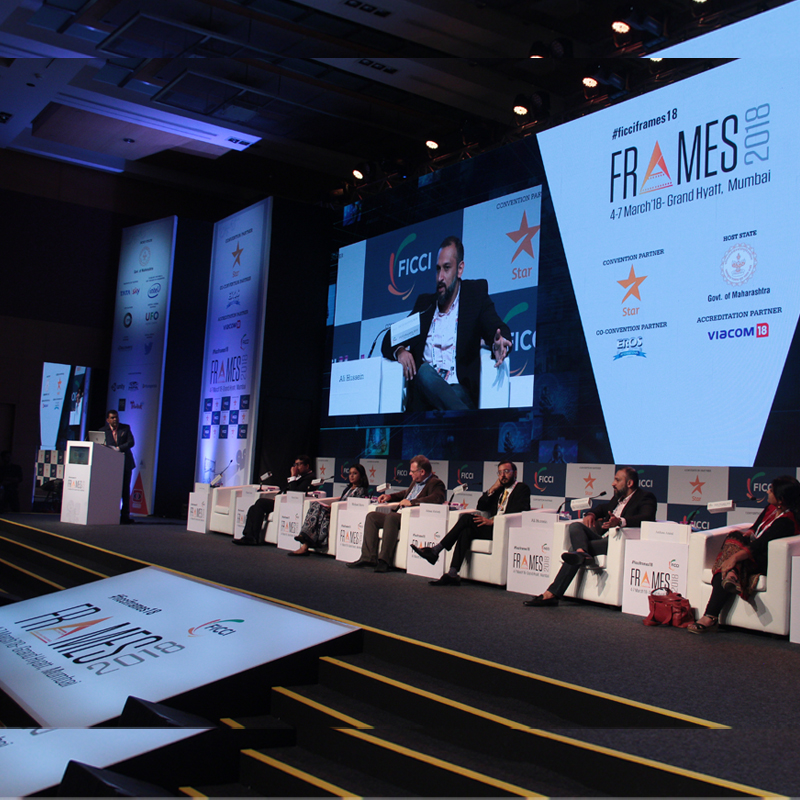
    MUMBAI: At FICCI Frames 2018, stakeholders once again debated the need to bring over-the-top (OTT) platforms under a regulatory system. In a session on digital revolution, panellists discussed how India stood a genuine chance of becoming the digital content hub of the world but the threat of regulation from the content, data and economic perspectives loomed large.

    The session ‘Rise in Platforms: Digital Revolution in India and Impact M&E Industry’ was discussed with panellists Media Partners Asia ED Vivek Couto, Frost and Sullivan director Vidya S Nath, Verizon Digital Media VP – strategic alliances & channel management Michael Sturm, PLR Law Partner Suhaan Mukherji, Eros Now COO Ali Hussein and Z5 business EVP & head of digital – India Archana Anand. The panel was moderated by Castle Media ED Vynsley Fernandes.

    According to Mukherji, the concern is that which authority will regulate OTT as it comes under the ambit of the IT Act. “OTT was defined by the Telecom Regulatory Authority of India and it brought out the information papers on net neutrality,” he said.

    Anand said that OTT needs more freedom than traditional media that can differentiate it as being a little more edgy, cheesy and brave. Nath pointed out that the word ‘regulation’ is often interchanged with ‘censorship.’ “In the broadcasting industry, there are regulations like not showing the ads in the day time or show few ads after 10 pm. But the industry does practice self-regulation too,” she said.

    Agreeing with her, Anand said that Z5 also practices self-regulation and that every platform follows certain fundamentals wherein everyone steers clear of things such as porn. She favoured having a debate between platforms and regulators to come up with a regulation after mutual consensus.

    However, Mukherji cautioned saying, “We should be very careful that we just don’t treat OTT or kids movies or IP networks the same way we treated everything else.”

    Describing the nature of digital platforms, Anand said, “We are always on OTT while traveling or even while waiting. It’s really about us consuming way more than we ever did before.”

    Nath opined that looking at the current business model, India was primarily an AVoD market. She said that by 2020, Indian OTT market has the potential to grow to 500 million. It was 180 million in 2017. She further added, “OTT is not competing with pay TV or FTA channels, it is competing with other digital platforms.”

    The fight is essential for viewer time. Since people don’t pay up easily for content, most platforms adopt a freemium model.

    According to Couto, countries like Australia and Japan are largely based on subscription video on demand. In Australia, TV industry has been demolished and the entertainment is largely driven by Netflix. But India is a country with huge potential market. He said, “India is still slow and the most interesting thing about India is that it has a strong online market and online is the subset.”

    Japan and China are liberating the OTT space. “They are creating their digital ecosystems with games, videos, e-commerce and many things in it,” added Couto. He also said that the average watch time for any OTT platform including Netflix in Indonesia is 15 minutes but in India, it comes to 3 hours a day.

    Sturm believes that Indian markets produce the most content across the globe but looking at the scale, everything falls to AVoD, SVoD and TVoD models. He said, “When you need to reach the mass, then you need to opt for AVoD model. In one or two years, we will be able to run profitable AVoD models.”

    While praising the diversity of India and its content creation Sturm said, “India is not just about English and Hindi speaking consumers, it has consumers consuming content in many more languages.” Anand also added that there is a big regional market in India that is waiting to be captured.

    Whether global or local, whatever the niche or genre, OTT services have become the centre of attention in the entertainment space and they must become sustainable businesses at some point. OTT players are certain that TV won’t die so soon and their fight is on a different level altogether.

    Also Read:

    Localised content the way forward for Netflix in India

    2017: The year OTTs went regional in India

    Regional OTT content more than just catch-up TV    

    Indians among top commute streamers for Netflix

  • IDOS 2017: OTT is here to stay but may not replace pay TV

    IDOS 2017: OTT is here to stay but may not replace pay TV

    NEW DELHI: The over-the-top (OTT) medium is here to stay and cannot be put down, but the television medium will continue to survive in the face of this challenge in India.

    The stressful life of today and the relationship built by the local cable operator are other reasons for the survival and well-being of the television medium. These were some of the views expressed at a discussion on the OTT Challenge to Pay TV at the Indian Digital Operators Summit organised by indiantelevision.com and moderated by the latter’s founder, CEO and editor-in-chief Anil Wanvari.

    Viacom 18 Digital Ventures’ senior vice-president and head of marketing Akash Banerji said that OTT would fundamentally change the scenario but admitted that “we over-estimate the short term, and under-estimate the long term.” He felt that the impact of OTT on pay TV may begin to show some change by 2020-21, but not immediately.

    Clearly, he said, some disconnect with the cable operators had led to the growth of OTT. Secondly, OTT was providing the content relevant to the individual viewer. Thirdly, he said that Viacom 18 was for the first time indulging in a B2C model where the consumer had the last word. He, however, admitted that the long-term survival of OTT lay in the medium moving to a subscriber-based scenario.

    Shaji Mathews, who has recently joined as the CEO of Kerala Cable Communicators in Kochi, said that OTT was no challenge, and (on the contrary) it would augment TV. He was confident that wired technologies will continue to dominate even as wireless technologies attempt to make inroads.

    He also felt that there was no level playing field for OTT at present, and so growth will take time.

    DEN Networks CEO S N Sharma said that the MSOs had entered the field of OTT in an attempt to provide a platform to various OTT players only to reach the consumer, realising that the consumer habits are changing. DEN had made inroads as far as fee-to-air OTT was concerned, and was only amalgamating the OTT players. The aim was to move with technology.

    Ashok Mansukhani of Hinduja Media Group admitted that OTT was a gigantic disruptor of the entire value chain but felt it would take some years to make inroads.

    Vynsley Fernandes of CastleMedia felt that the growth of OTT would largely depend on who has the TV remote in the home.

    Sisir Pillai of Lukup Media was confident that whatever the medium, it would survive if it had adequate content.

  • IDOS 2017: Tech needed to integrate different media in a single box

    IDOS 2017: Tech needed to integrate different media in a single box

    NEW DELHI: With the scenario changing to that of a multi-screen era, the need of the hour is to create a single technology that can deliver all systems into the home.

    This was the general view of CastleMedia’s Vynsley Fernandes and Rahul Nehra, the founder of Kalpin and national secretary of Society of National Telecommunication Engineers, in a panel on soft solutions for set-top box hardware at the Indian Digital Operators Summit organised by Indiantelevision.com whose founder and CEO Anil Wanvari moderated the discussion.

    Fernandes felt that the STBs of today should be like home media gateways that could help operate OTT, tablets or laptops, SD and HD TV, gaming and even radio. The aim was to have master devices that could operate all media.

    He regretted that the failure rate of the present STBs which were mostly of Chinese origin was very high – seven to eight million failed every year.

    The cable industry had learnt its lesson the hard way whereas the direct-to-home STBs were more porous and met the needs of the DTH industry.

    With more options which included complicated technologies like virtual reality, Nehra said, there was need for more sophistication. He said there were no STB manufacturers but the demand for TV remained high, thanks to the cable operators.

    But, he said, work had begun in this direction and a pilot project near Hyderabad was almost ready to prepare hardware for the software. He said consumers wanted HD at the rate of SD and so newer technologies had to be found.

  • CastleMedia sets up Spyke for CPE and STBs repair

    CastleMedia sets up Spyke for CPE and STBs repair

    MUMBAI: Here’s some good news for the DTH Operators, MSOs and LCOs who used to get their STBs repaired from the neighborhood electrical shop at the hands of untrained, unqualified electricians.

    Thanks to the government’s cable TV digitisation push, the population of STBs or consumer premise equipment swelled. With close to 174 million STBs or consumer premise equipment (CPE)  of various types – digital, HD, Ultra HD, and a guesstimated failure rate of around five to eight  per cent, Mumbai headquartered Spyke Technologies (SPYKE) has stepped into the STB servicing and repair game for  distribution platforms.

    Backing the new venture are broadcast technology vets Vynsley Fernandes and CEO Ru Ediriwira of CastleMedia which has worked with leading broadcast, networking & communications product manufacturers across their product lifecycle – right from R&D and field testing to improving “user experience.”

    The company has set up service centers in Mumbai and New Delhi, and a countrywide faulty STB collection center network. The service centres are manned with about 30 tech engineers in Mumbai and 35 in New Delhi.  

    Presuming the STB failure rate at a conservative five per cent of the digital TV ecosystem in India (although actual ground information indicates failures at around 8-10 per cent), SpykeTech aims to capture between 12 per cent to 15 per cent  of the market in the next four to five years. And, helping it get there will be the offices in Bengaluru, Hyderabad, Madras, Ahmedabad and Kolkata which will come up in over the next two to three years.

    The company has invested more than Rs 35 million in Spyke on  its 2500 sq foot Mumbai office located in Vile Parle and and its Delhi office being hosted over 7000 sq feet.  Spyke will be in a position  to fix at least 18,000 STBs every month in Mumbai, while the fixing  figure for Delhi stands at 25,000 a month.

    The company is being positioned as India’s first technology lifecycle management platform for CPE offering a single window and end-to-end service model which includes repairing of STBs, broadband and data communication equipment, home media gateways, networking equipment and VSAT modules.

    Says Spyke Technologies director Sunil Ranadey:  “There exists a demand-supply gap in the country when it comes to quality servicing of not only STBs  but all CPEs. SpykeTech aims to bridge this gap. Our cloud-based proprietary software SPYKENET, is what we believe will separate the “men from the boys” in terms of CPE repairs in the country.”

    “The proprietary software will empower the DTH operators/MSOs/LCOs not only with analytical tools to analyse the faults, but will provide complete transparency with logistic movement and accounting support for their CPs, something lacking in the present system,” Ranadey added.

    Spyke is in its early setup stage but has already begun to have conversations with different distribution platforms. The sticker price for repairing an STB is being talked about as being between Rs 200 and  Rs 450 which is quite an attractive option for all TV viewers.  What’s unique about Spyke is its SpykeTech solutions which uses a powerful and collaborative software platform to support clients and customers across India.

    “SpykeNet will be the difference between us and other repairers. The software is going to be the strong analytical tool which is applicable to all cable and DTH networks,” elaborates Ranadey.

    Adds CastleMedia executive director Vynsley Fernandes: “CastleMedia has been very successful in identifying pain-points in the pay TV industry and developing solutions to address the problem. One such example was the development of a suite of mobile and on-line applications for cable TV customers to go prepaid – this was truly an innovative and pathbreaking initiative. Similarly, we see CPE management – irrespective of whether it’s STBs or other devices; continuing to impact the company bottom-lines – anywhere up to 30 per cent.  Our significant investment in setting up SpykeTech is precisely based on addressing this pan-India issue.”

    Also Read :

    Airtel launches hybrid DTH STB, to have 500+ channels, Netflix & YouTube preloaded

    DEN to launch 4k, ‘open’ STBs, give a leg-up to HD, b’band services

    Dish TV & ALi tie up – chipset tech vital for secure VAS, enriched viewing

    9 Indian companies to manufacture STBs; iCAS cost less than $0.5: Govt

  • IPL 2017: The Piracy Conundrum

    MUMBAI: That the Indian Premier League has become one of the most valuable sports properties globally is a well-documented fact. The audience in India stays glued to its sets late into the night watching action between the various teams. Ditto with the audience in the UK, US, West Indies, Australia (where matches are watched in the wee hours of the morning).

    And, even though the Board of Control for Cricket in India (BCCI) has assigned the telecast rights for fat sums to broadcasters and streaming platforms in India and almost every major nation, the fact remains that piracy continues to dog the telecast of the IPL as well as most other major sport tournaments.

    Anti-piracy UK-based company Friends MTS kept a tab on the first weekend (7-9 April) of the ongoing IPL 2017 tournament. And, alarmingly, it discovered that more than 1,700 unique URLs were telecasting IPL — illegally. It also detected more than 211 unique servers, 122 pirate streams, 51 hosting sites,  and 23 infrastructure providers serving the 1,700 unique URLs.

    To top it all, while one of the streams was delivering at 1080p, at least 16 of them were being delivered at 720p and 37 of them at 360p. While the first two could offer a near-HD experience on HD sets, the 360p streams could have been watched on tablets, phones and even SD sets comfortably.

    Amongst the top infringing sites that turned up in the Friends MTS test trace: cast4u.tv, jazztv.co,  04stream.com,  darksideiptv.com, 80.82.77.77, 89.248.168.91,  51.255.74.170, aliez-player.gcdn.co,  fblive-a.akamaihd.net,  globiptv.com,  lightspeed.sytes.net , root-iptv.is-found.org, tv2iptv.com and webtv.ws.

    Friends MTS executive vice-president global sales and marketing Paul Hastings says that piracy is bleeding the legitimate pay TV industry which has coughed up top dollar for the IPL rights. “These folks who are watching the IPL streams online on illegal sites or on IPTV platforms are avoiding paying the subscription fees to those who are telecasting legitimately. And this incidence is only rising,” says he.

    His company has been working with satellite platform Sky in the UK and has embedded its ASiD security solution in nearly 10 million STBs.  ASiD uses a sophisticated but lightweight watermarking technology, coupled with Friends MTS’ global monitoring platform, to identify originating subscriber accounts that are being used to retransmit live channels and events.  The technology can be implemented without any changes to the video delivery infrastructure, and enables accounts to be identified and video access blocked within just minutes.

    According to Paul, with sporting rights costs escalating, sports associations and bodies and broadcasters will perforce have to keep a strict watch on economic leakages by pirates in order to get the true value for the content.

    Points out pay TV technology firm Castle Media executive director Vynsley Fernandes: “Finding potential illegal streams on the internet has been the crusade of most CAS/DRM providers and, with advanced techniques in forensic watermarking services, which can identify the source of an illegal stream in under five minutes, it is now being perfected to a fine art. Though, there are no absolute safeguards against a potential illegal streamer posting stream URLs on the internet, there are now excellent ones in finding the offender.”

    Fernandes is assisting MTS Friends as it looks at providing security solutions to India’s bubbling with potential pay TV and streaming services segment.

    “Pay TV, streaming and telco (via video) ARPUs in India can go up if piracy is checked,” says he. “If platforms and broadcasters realize more revenues they will be more open to paying higher fees to acquire rights for the various sports – like cricket, football, kabaddi –  that have established themselves  in the country as well as new sports that are emerging. It will lead to the development of a healthy sports broadcast and overall sports ecosystem.”

    Says a media observer: “In India, Sony Pictures Networks’ India is celebrating its 10th and possibly final year of telecasting the IPL as the new auctioning process for the next five years is on the anvil. Additionally, Hotstar.com has the digital streaming rights. Whoever bags the rights when the bidding ends later this year, will have to ensure every revenue leakage is blocked as the tussle to acquire the IPL is going to send prices to stratospheric heights never seen before. My bet is that the IPL could end up being the most valuable televised sports property ever.”

    Says another tech consultant: “Monetisation is going to be crucial. Hence, the BCCI, the new rights owners and platforms will have to keep a track and block every pirated signal. In India, a lot of the viewing is going to be on the mobile, and that is where a low-pixel signal — from a pirate — can be watched reasonably clearly.”

    As they say, when the stakes are high, you cannot afford to leave any corner uncovered.

    Also Read

    FICCI FRAMES: Legitimate screens, stricter laws, best practices for IPR

    FICCI Frames ’17: Maharashtra to form IP crime unit to fight online piracy

    Film piracy: Govt has no ‘losses’ figure, industry estimates Rs 180 bn a yr

    ‘Make piracy an economic offence, good cos ‘badvertise’ too’