Tag: VSNL

  • TCS veteran N . Ganapathy Subramaniam takes chairman’s position at Tata Communications

    TCS veteran N . Ganapathy Subramaniam takes chairman’s position at Tata Communications

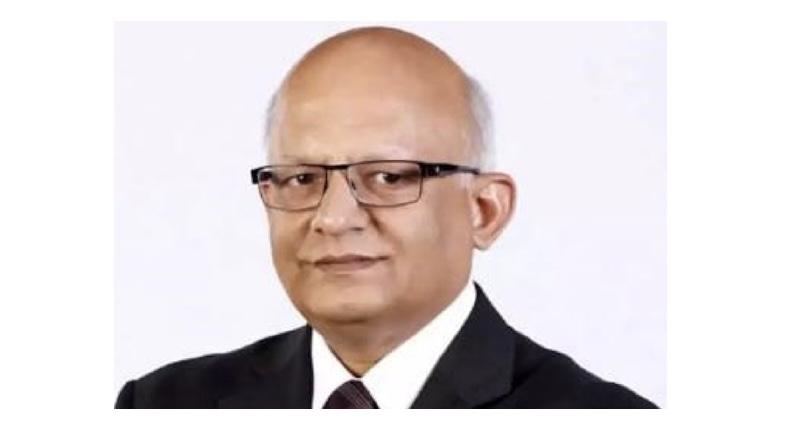
    MUMBAI: Tata Communications has handed the keys to its chairman’s office to N. Ganapathy Subramaniam, the tech wizard who spent four decades cutting code and climbing ladders at Tata Consultancy Services.

    The appointment, which took immediate effect today, adds another feather to NGS’s already well-plumed cap, as the seasoned executive continues his post-retirement tour of Tata boardrooms.

    Having hung up his boots as chief operating officer and executive director at TCS last May, the Bangalore-based tech veteran is chairman at  Tata Elxsi and Tejas Networks, making this latest appointment something of a hat-trick for the self-described “software engineer at heart.”

    Subramaniam’s elevation comes as Tata Communications—formerly the state-owned behemoth VSNL—continues its transformation from stodgy telecom operator to nimble digital services provider. With revenues nudging Rs 17,000 crore, the company has been aggressively courting enterprise clients with cloud and IoT offerings that bear little resemblance to its public sector ancestor.

    The company informed the bourses of the appointment through a  regulatory filing.

    For NGS, whose four-decade tech odyssey has seen him shepherd TCS through banking, telecom and public service transformations worldwide, the new role adds to an already bulging portfolio of responsibilities. 

    Beyond his corporate entanglements, he chairs the governing council of Bharat6G Alliance and serves on the institute body at Sree Chitra Tirunal Institute for Medical Sciences and Technology. To ease off from all his hectic engagements, NGS  enjoys nature walks around his Bangalore home.

  • Telecom sector ‘biggest success story’; Cisco, Alcatel for R&D investment: Economic Survey

    Telecom sector ‘biggest success story’; Cisco, Alcatel for R&D investment: Economic Survey

    NEW DELHI: Hailing the country’s telecom sector as “one of the biggest success stories of market oriented reforms”, the Economic Survey of India, tabled in the Parliament today, has said that by the end of 2012, a total of 650 million telephone connections (including 66 million wired and 584 million wireless connections) are expected to be achieved.

    Interestingly, the report informs that a large number of foreign companies like Alcatel, Cisco etc. have also shown interest in setting up their research & development (R&D) centres in India.

    A proposal for setting up a Telecom Equipment and Services Export Promotion Council and Telecom Testing and Security Certification Centre (TETC) is in the pipeline. With the above initiatives, India is expected to become a manufacturing hub for telecom equipment, the report holds.

    It says that broadband connectivity would be made available on demand, without limiting the speed.

    “Each village would have at least one broadband enabled kiosk. Broadband connection would be provided to schools, health centres and panchayat offices,” it has envisaged.

    It is also been envisaged that internet and broadband subscribers will increase to 40 million and 20 million, respectively, by 2010.

    “India is now amongst the fastest growing telecom markets in the world. Supportive government policies coupled with private sector participation have fuelled the unprecedented expansion of this sector,” the report asserted citing data.

    Looking back, it has said also that the announcement of the New Telecom Policy, 1999, was a watershed event for telecommunications in India. Other policy milestones include the opening of the long-distance market in 2002, the termination of VSNL’s monopoly over international traffic in the same year, and the resolution of the wireless in local loop issue.

    “As a result, telecom tariffs which were among the highest in the world less than four years ago have now dipped to being among the lowest. Tele- density has also increased from 12.7 per cent in March 2006 to 16.8 per cent in December, 2006.

    The data given by the Survey shows that the number of CDMA were 0.61 million in 2003 and in 2006 stand at 44.17; similarly, for the same period, the users of GSM sprang from 12.69 mn to 105.43 mn, and the figures for wireless (CDMA and GSM) rose from 13.30 mn to 149.60 mn.

    The Survey has put the annual growth rate in 2006 stands at 45 per cent, as compared to 2003, when it was 40 per cent.

    The Survey has note that the total number of telephones has increased from 54.63 million on March 31, 2003 to 142.09 million on March 31, 2006 and 189.92 million on December 31, 2006.

    “While 43.72 million telephones were added during the 12 months of 2005-06, during the current year, about five million subscribers are being added every month.
    “With this growth, the number of telephones is expected to reach 250 million by the end of 2007,” says the report

    “The growth of wireless services has been phenomenal, with wireless subscribers growing at a compound annual growth rate (CAGR) of above 90 per cent per annum since 2003.

    “Today the wireless subscribers are not only much more than the fixed subscribers in the country, but also increasing at a much faster pace.

    “The share of wireless phones has increased from 24.3 per cent in March 2003 to 78.77 per cent in December, 2006. Improved affordability of wireless phone has made universal access objective more feasible,” says the report.

    “The number of internet subscribers grew at 25 per cent, while broadband subscribers grew from a meagre 0.18 million to 1.32 million, during 2005-06. It is necessary to increase the broadband connectivity for the knowledge-based society to grow quickly and for reaping the consequent economic opportunities.

    Foreign direct investment (FDI) is one of the important sources to meet the huge funds that are required for rapid network expansion, the report has noted, adding that the FDI policy provides an investor-friendly environment for the growth of the telecom sector.

    “The total FDI approved and the actual inflow up to July, 2006 were Rs 389.2 billion and Rs 11,801.46 billion, respectively,” says the report.

    It says also that of the more than 235.4 million public call offices (PCOs) functioning in the country, 200,000 are in the rural areas.

    “Apart from this, 560,000 village public telephones (VPTs) are also providing access to telecom facilities in the rural areas. The Mobile Grameen Sanchar Sewak Scheme providing telephone at the doorstep of villagers in about 12,000 villages is also in place.

    On the issue of manufacture of telecom equipment, the report notes that the Indian telecom industry manufactures a complete range of telecom equipment, using state of the art technologies designed specifically to match the diverse terrain and climate conditions.

    Production of telecom equipment has increased from Rs 160.9 billion in 2004-05 to Rs 178.33 billion in 2005-06, it has noted, adding that “Rising demand for a wide range of telecom equipment, particularly in the area of mobile telecommunication, has provided excellent opportunities to domestic and foreign investors in the manufacturing sector.”
     

  • PayMate partners OnMobile to allow consumers to pay bills via mobile phones

    PayMate partners OnMobile to allow consumers to pay bills via mobile phones

    MUMBAI: In the era of digital services the mobile phone can well be referred as man’s best friend for the umpteen tasks it performs. Extending the benefits of this little gadget, mobile commerce solutions company PayMate has recently partnered with OnMobile, a value added services provider, to allow consumers to pay bills via mobile for services available on OnMobile powered voice portals and WAP sites such as Hutch, Airtel, Idea, Reliance, Tata, Fame Cinemas, Adlabs Multiplexes and the 505 platform.

    Paymate customers will be able to pay via mobile while shopping, gifting, movie ticketing, airline ticketing and making bill payments on OnMobile powered WAP sites or voice portals. A user selects a product and proceeds to the payment menu wherein PayMate is offered as a mode of payment. The user then has to enter his PayMate PIN and complete the payment process. The user receives an SMS confirming the successful purchase of the product, states an official release.

    “PayMate is extremely convenient, easy to use and compatible across all mobile handsets and operators. Most merchants have difficulty in accepting remote payments since customers are apprehensive about sharing credit/ debit card details online or over the phone. This makes PayMate an ideal solution for accepting payments online, over the phone or even at a counter since customers do not have to divulge any credit or debit card details at any time.” says PayMate founder & MD Ajay Adiseshann.

    “OnMobile has enabled Paymate to offer its innovative and secure payment service via OnMobile IVR and WAP products to more than 100 million telecom subscribers in India. We will continue to offer more payment options for telecom subscribers” says OnMobile head-mobile commerce Balachandran Unni.

    The company is also in the process of tying up with several offline merchants such as telco’s, utilities, insurance companies, cable and broadband services, tele-shopping etc and will be announcing its tie-ups in a phased manner, adds the release.

    PayMate is currently being offered to Citibank bank credit card and banking customers and will roll out services with other banks shortly. To use PayMate, Citibank customers need to sign up for this service free with the bank by simply sending “PayMate” as an SMS to 2484. The customer will then be called and registered for the service following which they can pay at any of PayMate’s accredited merchants via a single SMS.

    On receiving this SMS, the bank will verify the user’s mobile number with the account and on confirmation will debit the account accordingly. The merchant and the customer will receive a confirmation message from the bank approving the transaction. The entire transaction takes place at the cost of a single premium SMS.

    The company ensures a secure payment solution as no credit/debit card information is ever disclosed during the transaction process. The trust model is based on the recommendations by Ernst & Young; which provides the security measures for both the bank as well as the customer.

    PayMate is accepted at over 2500 online portals including travel, astrology, electronics, education, jobs, NGOs, apparels, matrimony, entertainment and healthcare etc. PayMate has also announced its tie-ups with Tele-brands, Big Tree (cinema ticketing), Mumbai Gold Cabs, Planet M, CRS Health, Seijo and the Soul Dish, VSNL, Future Bazaar among others.

  • VSNL to provide support to Yahoo’s voice services

    VSNL to provide support to Yahoo’s voice services

     MUMBAI: Tata-controlled VSNL International will provide international retail call termination facilities for internet portal Yahoo’s voice services.

    “Yahoo! has selected VSNL International’s Teleglobe voice peering and termination services to exchange high quality VoIP (Voice over Internet Protocol) traffic on a global basis,” VSNL said in a statement today. VSNL International is the overseas arm of Videsh Sanchar Nigam Ltd (VSNL).

    Yahoo! will use the Teleglobe VoIPLink™ service, a fast simple and cost effective way to bridge interoperability between VoIP networks, to terminate traffic anywhere in the world.

    “Yahoo! is also utilising the Teleglobe VTS service to ensure quality and cost-effective retail termination for users of Yahoo! Voice’s Phone Out (PC-to-Phone) service worldwide,” the release said. VSNL International is among a suite of providers delivering termination calling services for Yahoo! globally.

    “We are excited to be working with Yahoo! and supporting its internet community with our innovative, high quality voice peering and termination services,” says VSNL International president, global voice services, Michel Guyot. “Consumer VoIP providers, such as Yahoo!, as well as ISP /broadband providers today are looking to engage an experienced global partner to leverage the advantages of voice peering. In response to overwhelming market demand, we are customising our global voice peering services offerings to meet the needs of these providers.”

    The Teleglobe voice peering product, VoIPLink, is currently being utilized by over 450 customers. There are two VoIPLink interconnection products which allow for voice traffic exchange: Interdomain, which offers direct access to the VSNL International network for customers managing entire VoIP networks, and Gateway Direct, which provides direct access to the network for customers using stand-alone gateways for all call signaling, control and media. VSNL International provides interoperable service with a diverse list of VoIP equipment, software and protocols.
     

  • VSNL plans cable link to India, Middle East, Western Europe

    VSNL plans cable link to India, Middle East, Western Europe

    MUMBAI: Tata group company Videsh Sanchar Nigam Ltd (VSNL) has inked an MoU with global telecom firms to construct a new submarine cable linking India, Middle East and Western Europe (IMEWE). 

    The company has joined hands with Etisalat, Saudi Telecom, Telecom Egypt, Telecom Italia Sparkle to work jointly on the new submarine cable.

    The cable will connect the major countries in the region including India, UAE, Kingdom of Saudi Arabia, Egypt, Italy and France to provide interconnection facilities with several existing and emerging systems in the regions.

    The telecom consortium expects to get the IMEWE cable ready for service by mid 2008. The construction contracts are expected to be being awarded by end 2006.

    The network, upon its commissioning, will provide high-speed connectivity to the Asian, Middle East, North & East Africa and Western Europe regions, and meet their exponentially growing bandwidth requirements.

  • Reliance Communications’ Falcon Cable System becomes operational

    MUMBAI: Reliance Communications owned Falcon Undersea Cable System has started its operational from today unleashing international bandwidth between India, Middle East and Europe.

    The Flag Telecom Global Network would be the world’s largest undersea cable system covering 65,000 route kms, with the launch of Falcon. The current bandwidth on India-Europe route is controlled by VSNL and Bharti.

    “Falcon will have an equally powerful impact on the economic front, driving higher levels of trade, commerce and global integration,” Reliance ADA chairman Anil Ambani said.

    The vision at Reliance ADA group is to ‘give millions of ordinary people across the world the means to realize their dreams, the power to shape their destiny, the chance to fulfill their true and diverse potential,” Ambani added.

    The Flag Global Network bridges the distance between 35 diverse developed and developing economies, connecting the global economic hubs in USA, UK, Germany, France, Middle East, India, Hong Kong, Singapore, China and Japan to name a few.

    The Company’s Flag is the first global network of this scale to provide integrated connectivity on one seamless network to the three highest growing regions; India, Middle East and China; in terms of international bandwidth demand.

  • VSNL drops bandwith prices

    VSNL drops bandwith prices

    MUMBAI: Videsh Sanchar Nigam Ltd. (VSNL) has significantly reduced prices for its international bandwidth products – international private leased circuits (IPLC) and internet leased lines (ILL).

    IPLC prices in India will be reduced by up to 25 per cent with effect from 1 September. ILL tariffs will also fall by up to 40 per cent. These products are offered in India using VSNL’s global network that spans over 200,000 route km, connecting 200 countries.

    Demand for international connectivity has been rapidly growing with several Indian companies including Tata Group investing overseas and India emerging as a favourite destination for foreign investors. International connectivity is also an important driver for the growth of the fast growing IT and business process outsourcing (BPO) sectors. The market for international and internet bandwidth is expected to expand as the reduced prices will encourage demand from new customer segments like SMEs, smaller ISPs and academic institutions.

    VSNL also intends to build two new submarine cable systems, one between India and Europe and the other intra-Asia, in partnership with leading carriers in the respective regions. These multi-terabit capacity systems, incorporating state of the art technologies, would interconnect with VSNL’s existing global network that has over 20 terabits of capacity. The India-Europe cable would also provide connectivity to the Gulf region and the African continent, and supplement the Company’s existing bandwidth capacity in several consortium cables in the region. The intra-Asia cable between Singapore, Hong Kong and Japan would enhance the link between the Company’s Tata Indicom Cable (Chennai – Singapore) and TGN Pacific (Japan – USA). The overall build cost of these two cable systems is expected to be in the region of $600 million.

    “VSNL has always taken the lead in growing the internet and international bandwidth market in India. We have invested over Rs 25 billion in expanding our global presence and connectivity in the last 2 years. We have regularly passed on the benefits of improved cost efficiencies and service quality to our customers,” says VSNL executive director N Srinath. “The new cables would enhance VSNL’s global network in two of the fastest growing regions in the world,” he adds.

    IPLCs are point to point, international private circuits, mainly used by large Indian corporates and multinationals to connect to their regional and global locations. Internet Leased Lines are dedicated high speed connections to access the Internet, used by enterprises and small / medium ISPs.

    VSNL acquired Tyco Global Network (TGN) last year to own undersea cable bandwidth. Early this year it also acquired Teleglobe to become a large international wholesale voice carrier with about 17 billion minutes of traffic annually.

  • Star to decide on uplinking plan by next weekend

    Star to decide on uplinking plan by next weekend

    The recent decision taken by the government to allow broadcasters to uplink directly from India seems to have caught the fancy of almost all the television channels and most of them might be thinking about uplinking form India.

    Not to be left behind, officials at Star will be meeting through next week to decide about uplinking from India. According to a Star spokesperson, if the policy is there, they would definitely take a look at it. He also said that they might take some decision regarding this issue by next weekend.

    Asked whether Star’s content partner for Star News, NDTV, would be applying for an uplinking license, because it might be left behind in terms of live coverage of news by rival news channel Zee News, the spokesperson said that NDTV is using VSNL’s uplinking facilities and the time difference between uplinking directly form India and from Hong Kong is hardly be 2 to 3 minutes.

    It can be mentioned that Star has its own uplinking hub in Clearwater Bay – Hong Kong form where it uplinks all its channels. This gives the group economies of scale as it uplinks its entire bouquet from there.

  • Citigroup picks up 6.3 % stake in VSNL

    Citigroup picks up 6.3 % stake in VSNL

    MUMBAI: The telecom sector is attracting investments not only in the global market but also in India. Citigroup Inc. has acquired a 6.3 per cent stake in telecom service provider Videsh Sanchar Nigam Ltd (VSNL).

    Disclosing this in a filing with the Securities and Exchange Commission, Citigroup has said that it now owns 18.61 million shares of VSNL. The The stake was bought through American Depositary Receipts listed on the New York Stock Exchange.

    VSNL expects to see volume growth in voice and data business. The company recently bought out the internet assets of 7 Star, a Mumbai-based cable operator. VSNL also acquired for Rs 750 million Direct Internet Ltd and its wholly owned subsidiary Primus Telecommunications India Ltd to strengthen its broadband presence in the Small and Medium Enterprises (SME) segment.

    The phone market is expanding rapidly in India. This has attracted global giants like Vodafone Group which bought a 10 per cent stake in Bharti Tele-Ventures.


  • VSNL to set up cyber cafes at railway stations

    VSNL to set up cyber cafes at railway stations

    MUMBAI: Videsh Sanchar Nigam Ltd (VSNL) is setting up cyber cafes at major railway stations across the country to create user-friendly public internet access points.

    The company, which has been awarded franchisee rights for running of cyber cafes at 68 locations, plans to make all of them operational in the next few weeks. The first of this was inaugurated at the Bangalore railway station by VSNL president of broadband and retail business Shashi Kalathil.

    Speaking on the occasion, Kalathil said, “This effort will enable VSNL implement the promise made in the Union Railway budget of setting up such cyber cafes across the leading railway stations in the country. We are keen on making internet easily available so that passengers can stay connected even while on the move.”

    All Tata Indicom dial-up internet and broadband subscribers can use this facility by using their existing accounts. “Each of these cybercafes will be equipped with 10-20 high end multimedia PCs with flat panel monitors and will be open 24 X 7. Travellers can now avail Internet browsing and gaming facilities at very affordable rates. We also plan to offer other value added services like printing, scanning, mobile charging and CD writing through these cafes. Passengers can also use the cyber cafes for making onward bookings, checking their bank statements, tracking their investment portfolio and making ISD calls at affordable prices,” VSNL said.

    Tata Indicom will also create select areas in the railway station that are Wi Fi enabled, allowing passengers to experience the internet on their laptop or Wi-Fi enabled PDAs.