Tag: VSAT

  • GSAT-18 successfully launches, new capacity for DTH operators, TV channels

    GSAT-18 successfully launches, new capacity for DTH operators, TV channels

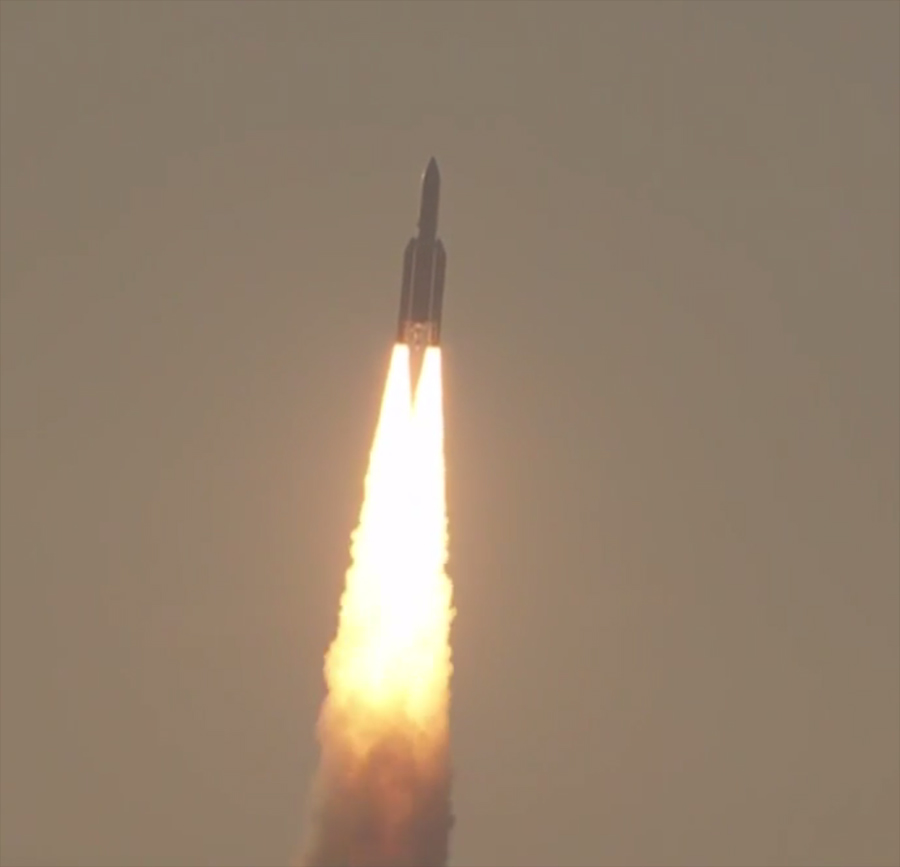
    MUMBAI: Indian DTH operators, television channels, VSAT and digital satellite news gathering providers are a happy lot because of a development in Kouro French Guiana this morning. The reason: the successful launch of Arianespace’s Ariane 5 VA 531 rocket with its passenger, the Indian Space Research Organisation’s GSAT-18 satellite. When the satellite starts ticking fully a few weeks later, its 48 transponders ranging from Ku-band, C-Band to extended C-Band will be beaming their signals over India to Indian TV viewers and companies.

    32:28 minutes after blasting off from the launch site, the 3,400 kg GSAT-18 was placed in geo-synchronous transfer orbit (GTO) this morning around 2:30 am. And, ISRO officials including the Indian ambassador in France Mohan Kumar leapt up, fisting the air in triumph.

    Following that, ISRO’s master control facility took charge of it and will perform operations which will result it being placed in a circular geo-stationary orbit. Following this, ISRO will deploy the solar panels – which will provide it power over its 15 year life – and antenna. The satellite will then be stabilized on three axis, placed at 74 degrees East longitude, and become part of ISRO’s 14 telecom fleet in space

    Later, it is planned to experimentally turn on the communication payloads of GSAT-18. After the successful completion of all the in-orbit tests, GSAT-18 will be ready for operational use.

    This was the Indian space organisation’s twentieth satellite mission through Arianespace. It will add to that count when it launches two more satellites – GSAT 11 and GSAT-11 – using Arianespace launchers in 2017.

    The VA 531 flight had another payload – Australia’s SkyMuster II satellite – which too was placed successfully in orbit. SkyMuster II aims to provide broadband facilities to remote locations in Australia.

    Prime minister Narendra Modi sent out his congratulatory message on Twitter to the scientists at ISRO.


  • Broadband subscribers see 4% rise in July despite mobile growth

    Broadband subscribers see 4% rise in July despite mobile growth

    NEW DELHI: The number of broadband subscribers increased by 4.1 per cent between June and July to touch 113.32 million at the end of July. The total at the end of June stood at 108.85 million.


    Expectedly, the largest growth was seen among mobile devices users (phones and dongles), which rose from 92.7 million to 97.04 million signifying a rise of 4.68 per cent.


    According to information provided by service providers to the Telecom Regulatory Authority of India (TRAI), wired subscribers grew from 15.7 million to 15.84 signifying a minuscule growth of 0.9 per cent. But there was a fall of 2.84 per cent among fixed wireless subscribers (WI Fi, Wi Max, Point to Point Radio, and VSAT) from 450,000 to 440,000.


    The top five service providers constituted 83.83 per cent market share of total broadband subscribers at the end of July. These service providers were Bharti Airtel (26.51 million), Vodafone (22.71 million), BSNL (18.43 million), Idea Cellular Ltd (17.43 million) and Reliance Communications Group (9.93 million).


    Some wireless service providers exclude incidental data users from their subscriber base, based on minimum usage decided by them.


    As on 31 July, the top five Wired Broadband Service providers were BSNL (9.92 million), Bharti Airtel (1.50 million), MTNL (1.13 million), Atria Convergence Technologies (0.75 million) and YOU Broadband (0.47 million).


    The top five Wireless Broadband Service providers were Bharti Airtel (25.01 million), Vodafone (22.70 million), Idea Cellular (17.42 million), Reliance Communications Group (9.81 million) and BSNL (8.51 million).

  • ST Teleport expands capacity and partnership with AsiaSat

    ST Teleport expands capacity and partnership with AsiaSat

    MUMBAI: Full-service satellite and fibre communications solutions provider ST Teleport, based in Singapore, has expanded its capacity commitment and strategic partnership with Asia Satellite Telecommunications (AsiaSat) to enhance service offerings to the VSAT and media sectors.


    ST Teleport recently expanded its C-band capacity in Asia with a new dedicated antenna for AsiaSat 4 at the orbital location of 122°E to provide leading-edge satellite-based service solutions for maritime, oil and gas, enterprise, and media businesses. In response to strong user demand for high-quality connectivity solutions for data and video services in Asia, both companies have further strengthened their collaboration to offer enhanced land/sea/air based VSAT services. 


    ST Teleport’s advanced earth station complex facilities in Singapore is now capable of connecting to AsiaSat’s comprehensive fleet of satellites, including the new Ku-band capacity on AsiaSat 8’s South East Asia and Middle East beams, to offer more choices to customers. The extension of the partnership will accelerate growth opportunities for ST Teleport and increase its offerings to customers looking for fast and flexible satellite communications solutions at competitive prices. 


    “Our partnership with AsiaSat will further strengthen both of our positions in the satellite communication services sector. Access to more AsiaSat capacity will enable ST Teleport to efficiently expand our services geographically and to serve more diverse industries and businesses. ST Teleport’s continuous upgrading of its network and capacity demonstrates its commitment to provide advanced and cost effective satellite solutions to our data, maritime and media clients locally and internationally,” said ST Teleport managing director Joseph Chan.


    “We are pleased with this expanded partnership with ST Teleport. We aim to bring a new level of high performance, cost-effective satellite solutions and comprehensive coverage to ST Teleport and their clients through this stronger partnership. This collaboration also underscores our commitment to working closer with our partners and clients to deliver the quality, value and choice of capacity that meet their service needs,” added AsiaSat vice president sales and business development Philip Balaam.

  • MEASAT-3b launch delayed

    MEASAT-3b launch delayed

    MUMBAI: The much awaited MEASAT-3b launch has been delayed. While the satellite was set for launch on 6 June (7 June Kuala Lumpur time), it has now been postponed after the manufacturer of the MEASAT-3b co-passenger requested time for repairs to their satellite.


    “We are clearly disappointed with the delay and are currently in co-ordination with Arianespace (the launch service provider) on the rescheduling of the launch,” said MEASAT Satellite Systems CEO Paul Brown-Kenyon through a press statement. “We will provide an update when we receive further information on the revised launch date,” he continued.


    MEASAT-3b is designed to provide an additional 48 high powered Ku-band transponders to the 91.5°E orbital slot to expand Direct-To-Home and VSAT services across Malaysia, India, Indonesia and Australia. Co-located with MEASAT-3 and MEASAT-3a, the satellite will more than double MEASAT’s Ku-band capacity at 91.5°E creating one of the region’s most powerful and robust orbital locations.


    The delay in the launch of the satellite will further delay DTH operator Sun Direct’s plans of adding more high definition and standard definition channels. With the launch of MEASAT-3b, Sun Direct is set to add nine more transponders to its existing four transponders.  

  • Broadband usage sees 3.09% increase for the period Dec-Jan

    Broadband usage sees 3.09% increase for the period Dec-Jan

    NEW DELHI: There were 56.9 million broadband subscribers in the country at the end of January 2014, showing an increase of 3.09 per cent as compared to the previous month.


    The total broadband (>512 Kbps) usage is based on the information provided to the Telecom Regulatory Authority of India (TRAI) by 144 broadband service providers.


    The top five broadband service providers constitute 82.57 per cent market share of total broadband subscribers. They are BSNL (16.54 million), Bharti (11.49 million), Reliance (7.07 million), Idea (6.26 million) and Vodafone (5.63 million).


     The top five Wired Broadband Service providers are BSNL (9.98 million), Bharti (1.39 million), MTNL (1.11 million), Hathway Cable (0.36 million) and Beam Telecom (0.36 million). The top five Wireless Broadband Service providers are Bharti (10.10 million), Reliance (6.96 million), BSNL (6.56 million), Idea (6.26 Million) and Vodafone (5.63 million).


     There has been a 0.08 per cent increase between December and January in the wired broadband segment to 14.55 million, while the wireless segment (mobiles and dongles) have shown a rise of 4.2 per cent in the same period with 41.05 million subscribers. There has been an increase of 1.66 per cent in this period to 0.4 million subscribers for Wi-Fi, Wi-Max, Point-to-Point Radio and VSAT


  • SES-8 launched successfully; DTH players to benefit

    SES-8 launched successfully; DTH players to benefit

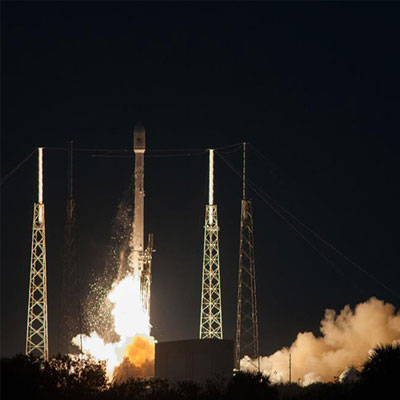
    MUMBAI: When it lifted off with almost perfection from the Cape Canaveral station in Florida in the US, communications satellite SES-8 was a personal victory for the creator of the Tesla vehicle Elon Musk. It was Musk’s company SpaceX’s first successful commercial launch using a Falcon 9 launch vehicle and it helped him break into the duopolistic satellite launch market which is dominated by European firm Arianespace and Russia’s International Launch Services  (which mainly uses Proton rockets). SpaceX has priced its launches in the $55-60 million range.

    While it was a personal landmark for Musk, it was also a victory for the Luxembourg-based SES Satellite management that gleefully watched the $100 million plus 3.1 tonne satellite being hurtled 50,000 miles above the earth into geostationary orbit. Built on a GEO-Star bus by Orbital Sciences, SES-8 is to be co-located with the NSS-6 satellite at 95 degrees east.

    The satellite has 33 Ku-band transponders and is targeting both south Asian and south East Asian clients. “The new satellites will enable improved coverage in fast-growing economies in south Asia and Indo-China,” says a press release from the company.

    In south Asia, it is aimed at providing much needed transmission capacity to India’s DTH and VSat service providers and government. Sources indicated that considering its location at 95 degrees east, one of the potential customers could be India’s first DTH services provider, the Essel group’s Dish TV that is currently beaming off NSS-6 and is also owned by SES. But all the deals will be done through Indian Space Research Organisation’s (ISRO) Antrix arm.

    SES also plans to launch SES-9 in 2015 at 108.2 degree East with extensive Ku-band capacity to give company to the existing SES-7 satellite in order to provide better DTH broadcasting services in South Asia along with north East Asia and Indonesia.

    Although, it was set for launch in early 2013, technical issues pushed the SES-8 to the end of the year.

  • Rising number of SMEs drives growth of Asia-Pacific VSAT market

    Rising number of SMEs drives growth of Asia-Pacific VSAT market

    MUMBAI: The Asia-Pacific VSAT (very small aperture terminal) market is firmly in its growth stage, and has come to represent the new battleground for global VSAT players who are faced with declining growth in other regional markets.

    VSAT services are beginning to gain greater acceptance among the SME (small and medium enterprise) and SOHO (small office/home office) segments. The continuous expansion of corporate VSAT networks is also beckoning the next stage of growth for satellite services.

    New analysis from global growth consulting company, Frost & Sullivan reveals that revenues of VSAT customer premise equipment (CPE) – covering 13 major Asia-Pacific economies – totaled US$73 million in 2005 and is forecasted to reach an estimated US$109 million by end-2012. The total installed base for VSAT applications is likely to grow to over 900,000 sites by end-2012, from the approximate 300,000 recorded in 2005.

    “Future growth in the corporate and enterprise VSAT segment will result from the booming number of SMEs and the associated demand for easily deployable, reliable broadband connections in areas underserved by terrestrial services,” notes Frost & Sullivan research analyst James Lye.

    Growth of the VSAT market is also likely to be driven by the increasing deployments of rural telecommunications, telemedicine and distance education programs across the region. Rural telecommunications, in particular, is expected to contribute significantly to growth in this segment as many rural communities in emerging markets of the region still lack modern telecommunication access. Most governments in the region have universal access programs that set aside funds and subsidies to tackle this issue. Such developmental subsidies help to partially offset the initial capital expenditure required to deploy wireless and satellite infrastructures.

    VSAT service providers in Asia-Pacific will however need to brace themselves for increasing competition from telecom service providers. Sensing the same opportunities in the underserved areas, terrestrial telecommunication providers have been rolling out infrastructure as fast as they can justify it. These telcos are furthermore emphasizing the managed services model among enterprise customers, which increases revenue per customer and builds very strong loyalty due to the provision of complete solutions.

    “Telecom service providers often wait until the local market is sufficiently developed before moving in with lower pricing to oust the VSAT providers,” explains Lye. “The hardest hit segment is where VSAT is used solely to deliver broadband access.”

    The overall Asia-Pacific VSAT market is expected to experience continued and steady growth over the next few years, offering considerable opportunities for both VSAT equipment vendors and satellite service providers. India and Indonesia are seen as markets with high growth potential. Indonesia’s geography, combined with the lack of foreseeable terrestrial infrastructure build-out has already created a lucrative SME market in the corporate VSAT segment.

    While growth in India’s VSAT sector will come mainly from the myriad of small and medium businesses that are flourishing as the country opens-up its economy with the liberalization of regulatory barriers to foreign players.

  • Essel Shyam Communication plans to raise Rs 600 million via IPO

    Essel Shyam Communication plans to raise Rs 600 million via IPO

    MUMBAI : Essel Shyam Communication Ltd, a 50:50 joint venture between Essel Group and Shyam Group, is looking at an initial public offering (IPO) size of Rs 600 million to fund its expansion plans.

    The company plans to set up four teleports, three of which are to be funded from the IPO proceeds. While it has obtained licenses for Mumbai and Noida (in the outskirts of Delhi), the other two teleports will come up at Cochin and Chennai or Hyderabad. The company has earmarked Rs 130 million from the IPO towards installation of teleports and Rs 15 million for playout facilities.

    “We hope to come out with the IPO in January-February. The final size will be decided through the book building process. We are looking at Rs 600 million and if there is a necessity, we will fund it through internal accruals,” Essel Shyam Communication ED and whole time director Lalit Jain tells Indiantelevision.com.

    The new facility at Noida will be for Ku band. Essel Shyam has an existing teleport in Noida where Zee and several other channels are uplinked. The new teleports in Mumbai and Noida are expected to be completed by 2007.

    For the expansion of VSAT operations, the company plans to invest Rs 85 million. Essel Shyam, which has seven hubs, proposes to add another three.

    The fund requirement for expanding deployment of DSNG (digital satellite news gathering) vans is Rs 80 million. These services are offered to customers for the purpose of news gathering, content transfer, live coverage and live uplinking of events. A further investment of Rs 175 million is planned to extend its existing BPO of 32 seats to a BPO/KPO of 500 seats. This will include KPO of 70 seats. New businesses will need Rs 50 million (Rs 10 million for system integration and Rs 40 million for radio frequency identification).

    Post-IPO, the promoters’ holding, which stands at 97 per cent, will faill to 70 per cent. Essel Shyam has filed Draft Red Herring Prospectus for an IPO with SEBI (Securities Exchange Board of India) and proposes to offer 55,00,000 equity shares of Rs 10 each through the book building process.

    The company is into the business of providing various services related to satellite communication such as VSAT, teleport, SNG/DSNG and BPO facilities. The company is providing teleport services to channels of Zee Group, Janmat, Zoom (Times Group), IBN 7, Hungama TV. Several regional channels like Shalom TV, MM TV, Sangeet Bangla, Total TV and Sudarshan TV are also using Essel Shyam’s teleport. The company has recently set up a modern facility for TV Channels from studio to the cable distributor.