Tag: VR

  • Zoom consumers are micro-influencers on their own: Nikhil Gandhi

    Zoom consumers are micro-influencers on their own: Nikhil Gandhi

    MUMBAI: Zoom, the entertainment channel of Times Network recently revamped its identity from just Zoom to Zoom styled by Myntra. The revamped version went live on 19 April 2018 at 9 pm. Now Zoom has a sub brand called Zoom Studio, which will provide content to many OTT players. 

    Currently, the channel has 10 million unique visitors per month and on social media, the channel is followed by 20 million people, according to Times Network president Nikhil Gandhi.

    At Indiantelevision.com’s new video economy event BrandVid powered by Colors, Gandhi said, "The most important thing that has come out of this deal is how we trade around with content that works well for them as well as us.” From Myntra’s strategic point of view to build and influence the whole fashion space, we were lucky to have the timings so well matched that it jelled into their own strategy. The association went beyond just plain vanilla branding to largely on the back of content."

    The event was organised by Indiantelevision.com on 30 October 2018 in Mumbai, for brands, agencies, marketers, broadcasters, publishers and producers to understand how to work closely and create short form and long form content which will connect with the audience directly.

    The deal is a monetised partnership that Gandhi is optimistic will travel beyond at least three years. Outfits for the anchors on the channel are provided by Myntra. Zoom aimed to leverage Myntra’s style quotient for a new look and feel, shows, web-series, short formats and exclusive experiences.

    By the end of the year, its new Zoom Live division will be available. “We are working on a very strategic initiative on how we influence our community which is beyond engaging on digital as well as television. We are building on a phenomenon called ‘Escapism’ where we want the consumers to escape from their reality into our world and engage with them with great content.”

    The channel has original content produced by Zoom like Reunion, Ready to Mingle, Imperfect and many more. Myntra and Zoom get the traction on board in equal measure for the shows. Gandhi believes that each of their consumers are micro-influencers on their own.

    “On the other hand we have been able to also take advantage of the things they have, fashion as a category lends organically to the whole of Bollywood. If you go to the Myntra site, we now have a Zoom store on it and we provide a lot of content to them and they engage with their consumers on how they can influence their buying patterns as far as the content is concerned,” he pointed.

    At the time of the revamp, Gandhi mentioned that they are targeting the sweet spot of 15-24-year-olds.

  • Facebook planning smart STB for TVs with video calling support

    Facebook planning smart STB for TVs with video calling support

    MUMBAI: According to a United States news website, Cheddar, social networking company Facebook is working on smart set-top boxes for TV.

    And according to the sources, the set-top box will be camera equipped. It will also allow video calling along with entertainment services like Facebook’s YouTube competitor.

    Internally codenamed ‘Ripley’, the device uses Artificial Intelligence (AI) to automatically detect and follow people as they move around during a video call.

    Apart from opening the door for video chat feature, the new hardware would help Facebook compete in the TV market averse to Apple and Amazon.

    With concepts like Ripley, Facebook is attempting to build consumer hardware business outside of its virtual reality brand ‘Oculus’. Oculus VR is an American technology company acquired by Facebook in March 2014 for around $2 million.

  • Australian Open, Infosys announce 3-year technology partnership

    Australian Open, Infosys announce 3-year technology partnership

    MUMBAI: Infosys, a global leader in consulting, technology and next-generation services announced a strategic three-year partnership with the Australian Open on 10 September 2018.

    The Australian Open, one of the world’s popular sports and entertainment events, has continued to evolve its digital experiences in recent years. 

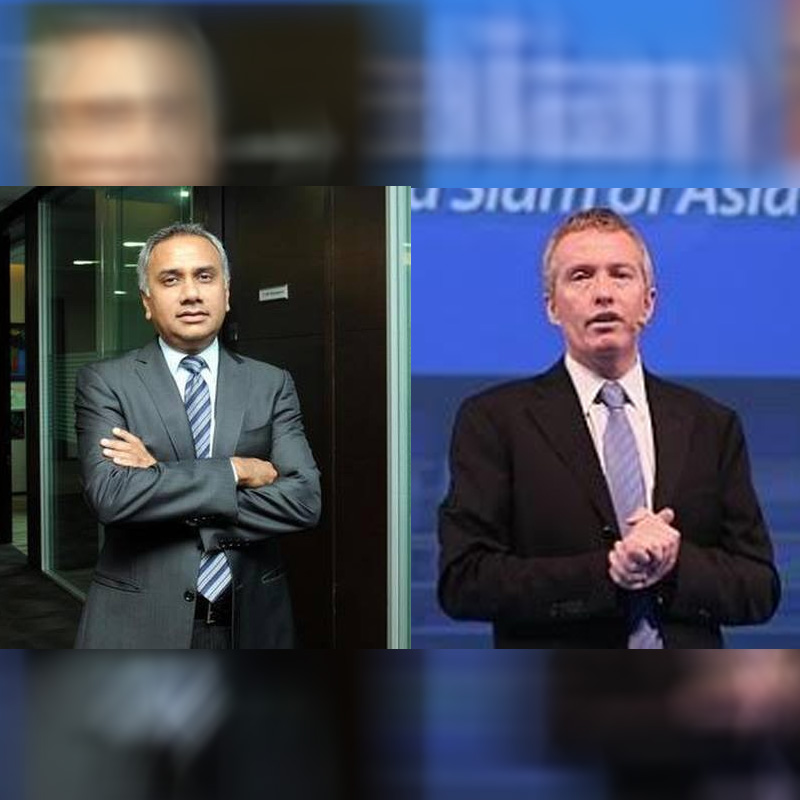
    Infosys CEO and MD Salil Parekh said, “This partnership is about creating new ways of experiencing the Australian Open. We’re really excited about the opportunity to showcase how digital technologies can enhance the boundaries of this tournament, to change the way the Australian Open is watched, analysed and played. This association with Tennis Australia also reaffirms our strategic commitment to the region where we partner with some of the leading enterprises in driving their digital transformation agenda.”

    Infosys, as the official digital innovation partner of the Australian Open, will leverage its expertise in emerging technologies like big data and analytics, Artificial Intelligence (AI) as well as Virtual and Augmented Reality (VR and AR), to provide unique, innovative and engaging experiences for fans. 

    Australian Open tournament director Craig Tiley said, “Partnering with Infosys is an exciting next step in our ongoing quest to innovate the Australian Open and engage new audiences across the world. We have long understood the importance of using data and insights to improve connections with our fans, players, coaches and the rest of the tennis community and we look forward to working with Infosys to change the way we all experience our great sport in the future.”

  • Star India mulls adding VR to PKL 6

    Star India mulls adding VR to PKL 6

    MUMBAI: Star India is taking the Indian Premier League (IPL) experience to other sports. After a  phenomenal reception for using virtual reality (VR) in IPL 2018, it is diversifying into Pro Kabaddi League (PKL) season six.

    Along with VR, wearable technology is another main attraction for PKL. As the next step, wearable devices, artificial intelligence and smart analytics are needed for seamlessly integrating technology with application to guide the next stage of evolution and to ensure higher relevance to human society.

    Star India spokesperson said, “We may experiment with wearable technology like catapult devices which helps to measure heart rate, distance run, force extracted. We are actually deploying technology at the back end. We have some bit of artificial intelligence which is powering our analytics on cricket and we may use the same thing on kabaddi as well.”   

    Hotstar was viewed by 5.5 million viewers in VR in week six of IPL 2018, out of which 30-35 per cent of the viewers watched it live and remaining watched it in highlights. According to the spokesperson, the viewers almost watched 100,000 hours of VR content. For the IPL, it made Hotstar compatible with VR devices giving people the option of 360-degree rotation to get a view of the entire ground. People can even pick the language and camera of their choice for viewing.

    PwC India partner and leader, entertainment and media Frank Dsouza said, “VR does provide an enhanced experience which is immersive technology but the thing that people are grappling with is sports a community experience or not. Therefore, in a VR situation, it can be consumed singularly. The question remains, at what scale you are going to implement it.”

    With 4K adoption in India being marginal, last mile access is limited. “You need to have the infrastructure and the programming to be able to view on 4K. As we have moved from SD to HD, we can now shift to 4K because the experience has been better in HD. Then the question arrives of pricing,” said the spokesperson.

    US’ Fox Sports will be streaming live 4K video from the US Open using 5G wireless technology, with the help of Fox Innovation Lab, Ericsson, Intel, and AT&T.

    A pair of Fox cameras will transmit 4K HDR video to a nearby production truck, and then 5G, which provides multi-gigabit speeds with low latency, will be used to get that footage out to viewers. In the future, Fox could use this setup to stream live virtual reality from the US Open.

  • IPL 2018 gets a makeover with Star India

    IPL 2018 gets a makeover with Star India

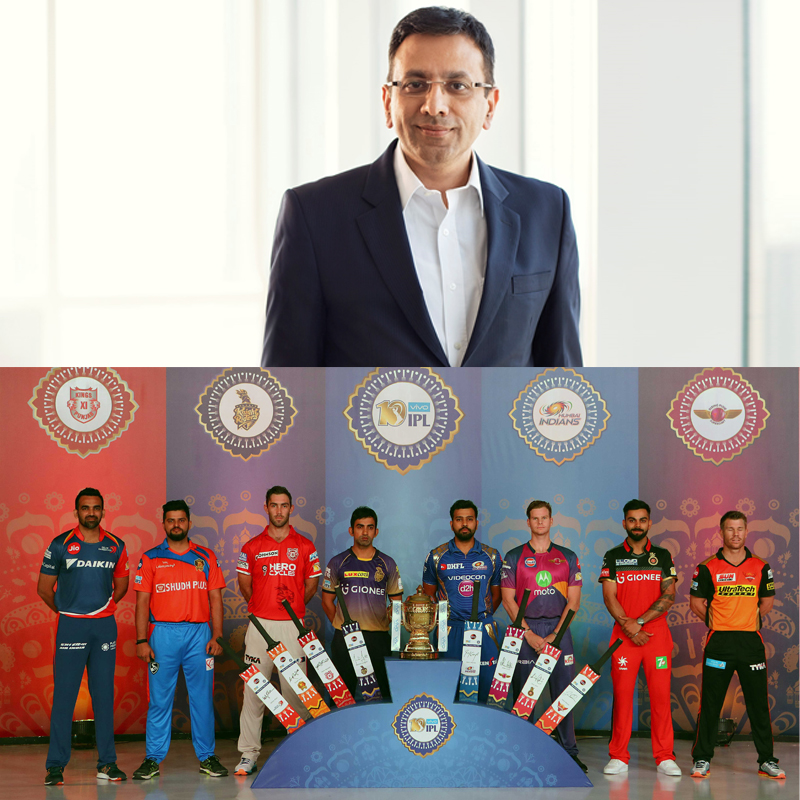
    MUMBAI: IPL 2018 not only has a new destination channel but has changes that have been requested and accepted for the first time.

    It all started in September 2017 when Star India won the global IPL media rights for Rs 16,347 crore for the span of five years (2018-22). This is the first time when both the TV and digital rights are with a single broadcaster, which will result in the simulcast of the game without the groaning five-minute delay.

    For the first time, IPL will be live on 10 channels and Hotstar. On the digital platform, VR will be a key differentiator and will possibly help Hotstar to keep the fans glued on to it.

    For the previous seasons, Sony Pictures Network was airing IPL in two languages Hindi and English on Sony Six, Sony Max and their HD feeds. But Star is planning to telecast it in six different languages English, Hindi, Tamil, Telugu, Bengali and Kannada. The Kannada channel was still in the works some weeks ago.

    Star India recently managed to convince the IPL governing council (GC) to change the timings for the games of the league being held from 7 April to 27 May 2018. The 8 pm game will now begin at 7 pm while the 4 pm game has been pushed forward to 5:30 pm.

    Mumbai Indians co-owner Akash Ambani said that the time change will impact the team. “For us it is tough. Because people of Bombay work till 6:30-7 pm. It’s going to be impossible making it to a game at 7 pm. You are impacting the revenue. You are impacting the audience coming there. So we are objecting to that,” he said to Cricbuzz.com.

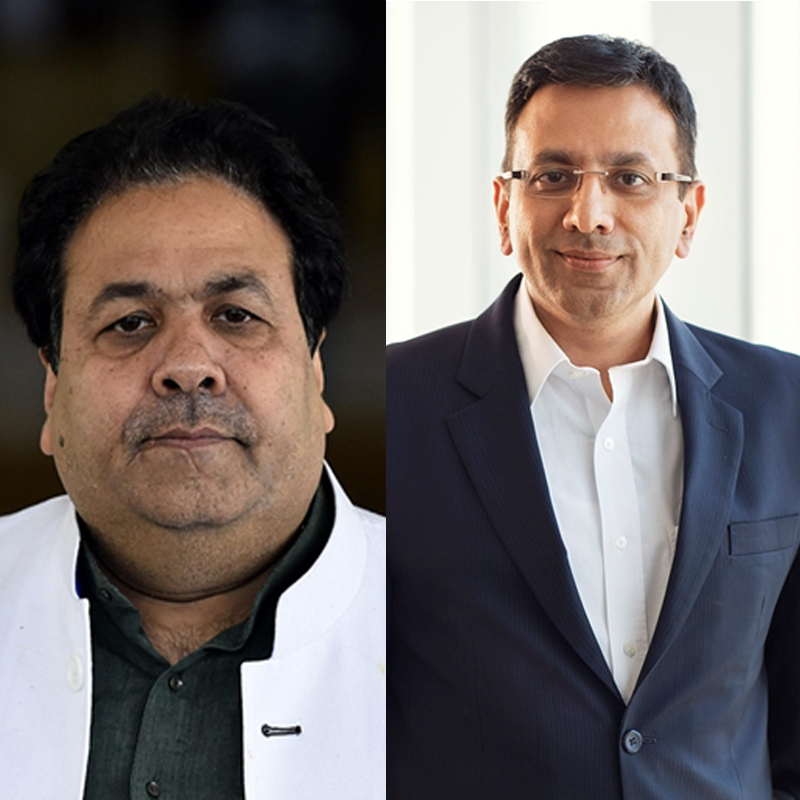
    IPL chairman Rajeev Shukla told Indiantelevision.com, “We have received the letter from Mumbai Indians. We haven’t taken any decision yet and it will be confirmed shortly.” But a week ago he confirmed to Indiantelevision.com that the timings have been changed.

    IPL 2018 will see mid-season transfer after seven games. The players who were not included in the playing 11 can opt for their mid-season transfer to other franchisees.

    The IPL GC announced that each IPL franchise can retain a maximum of five players from their respective current squads. Of the five players, a franchise can retain a maximum of three players through retention in lead up to the auction, and a maximum of three players through the right-to-match card during the auction. The other restrictions on player retention are: a maximum of three capped Indian players can be retained, and only two overseas players and two uncapped Indian players can be retained. For the first time, the player retention event was aired on TV and digital. The event was watched by 8.1 million people across the country.

    The salary cap for each team for the 2018 season has been increased from Rs 66 crore to Rs 80 crore (approximately $12.4 million). A franchise will be allowed to spend only Rs 33 crore on retentions ahead of the 2018 IPL auction, leaving it with just Rs 47 crore to spend at the auction.

    The Information and Broadcasting (I&B) Ministry is working on a proposal to make IPL available on Doordarshan and has asked the Sports Ministry to weigh in on the matter.

    The move will mean that Star India will have to share the live feed of the tournament with public broadcaster Prasar Bharati under the Sports Broadcasting Signals (Mandatory Sharing with Prasar Bharati) Act, 2007. Prasar Bharati runs Doordarshan and All India Radio. For this IPL will have to be categorised as a tournament of national importance at par with events like Olympics, Commonwealth Games and Wimbledon.

    Star India, for the first time, has also thought of starting international fan parks for the IPL and cricket lovers around the globe. Fan Parks were launched in 2015, initially in 16 cities. The 2017 edition of the Fan Park was held in 36 cities in 21 states, bringing fans across the length and breadth of India closer to their beloved sport. These included 14 new cities, like Bhubaneswar, Bareilly, Kochi, Ludhiana, Tumkur and Nagercoil which hosted the Fan Park for the first time.

    For the first time, fans were given a chance to vote for their favourite players on vivoiplelection.hotstar.com as a part of the ‘Election se Selection’ campaign on the network. The campaign, according to Star India MD Sanjay Gupta, received more than one lakh votes in less than 12 hours of its launch. Ajinkya Rahane and Krunal Pandya emerged as fan favourites after the final voting count before the auctions.

    Also read:

    Star ushers in IPL’s new era with a bang

    IPL auction: Gayle to play for KXIP, Unadkat most expensive Indian player

    Star India gets IPL to change match timings for 11th edition

  • Star to air IPL on 10 channels, in 6 languages; live on Hotstar

    Star to air IPL on 10 channels, in 6 languages; live on Hotstar

    MUMBAI: Indian media and entertainment biggie Star India is going full throttle for its first season of the Indian Premier League (IPL). With 12 channels in its bouquet, Star India has decided to involve 10 of them and its digital platform Hotstar to live telecast the matches in six languages including Hindi, English, Tamil, Telugu, Kannada and Bengali.

    “By leveraging the power of TV and Hotstar, IPL will be enjoyed by a total of 700 million fans across geographies which was 550 million in the previous year,” reads a press release issued by Star India.

    The sportscaster which used to stream the action on Hotstar  with a five minute lag will be offering it live on the streaming service with the possibility of a pay option. It is believed to be in conversation with various telecom operators which would bundle it in data and talk plans for their subscribers.  

    The Star India management was quoted in newspaper reports as saying they want to make Hotstar a more massy product than the premium service that is being offered currently.

    Star India has innovated the technology for first time live on TV and digital, check-ins and live score cards on hand-held phones. What this means is that Hotstar users will be able to have a very visible score unit once they logon to the service on their handphones, as compared to earlier when it just streamed the regular TV signals with difficult to read aston bands and cards.

    Star India MD Sanjay Gupta said, “Technological innovations is at the heart of the experience, bringing the stadium home and giving the fans an interactive and immersive viewing experience.”

    public://IPL-Press-Release.jpg

    Star India may also introduce Virtual Reality (VR) for its Hotstar subscribers.

    Meanwhile, the BCCI has announced that the mega auctions for the 11 th IPL will be held in Bengaluru on 27, 28 January 2018.

    Also Read:

    Star India to introduce VR for IPL 2018

    Comment: Does Star stand to gain or lose by sharing IPL with DD?

    Star’s Uday Shankar on distribution challenges, IPL, FTA vs. pay TV, innovations, Made in India content…and much more

  • 55% marketers make better decisions with machine learning: iProspect report

    55% marketers make better decisions with machine learning: iProspect report

    MUMBAI: Digital agency iProspect has released its third annual Future Focus whitepaper geared to examine how machines and technology are impacting marketing and advertising in the year ahead. The paper takes a look at how brands can make the most of machines in 2018, from facilitating seamless consumer experiences to delivering greater efficiencies.

    iProspect interviewed 250 of its global clients, including FTSE 100 and Fortune 500 companies, and used real-time feedback to outline key insights and priorities necessary for businesses to thrive in our fast-moving, high expectation digital economy.

    Feedback shows that the transformative impact of voice, artificial intelligence (AI) and machine learning (ML) is being felt across the entire business landscape with 55 per cent of marketers surveyed agreeing that ML will allow them to make better decisions in 2018. 56 per cent of the marketers surveyed highlighted effective management of large data sets to deliver personalisation and relevant one-to-one experience as their main priority in 2018.

    The 2018 Future Focus whitepaper discusses some new machine rules. Brands enhanced customer experience by closing the gap between consumer expectation and brand reality. While 2017 was about understanding how best to connect data to understand consumers better, 2018 will be the year where marketers put consumers firmly at the centre of communications.

    The concept of ‘consumer moments’ will become widespread in 2018, encouraging marketers to seek out data signals that help them understand not just who their customers really are, but what are the moments that matter most as those consumers interact with brands at different stages of the purchase journey.

    Digital assistants have become the new gatekeepers and are set to fundamentally change the relationship between brands and consumers. According to market intelligence company Tractica, more than 700 million people use some form of digital assistant today, be it Siri on their mobile phone, or Amazon’s Alexa via a home device. With word error rate now at parity with humans, digital assistants can understand us better than ever, and usage of assistants is expected to soar to almost two billion by 2021. Within the next five years, most of the developed world will be using a digital assistant in one form or another to automate and manage many aspects of their daily lives.

    And it’s not just millennials who are early adopters of this technology. Forrester estimates that while 66 per cent of 18-24 year olds are using digital assistants, almost 40 per cent of the 70+ age group are also engaged. For marketers, this represents a new challenge in 2018 and beyond on learning how to market not to the consumer, but to the machine.

    AI & ML have transformed marketing and it is time for brands to get ahead of the intelligence curve. Simply put, AI aims to emulate human cognitive capabilities through artificial systems. One of the specialities of AI is machine learning, which enables computers to solve a problem by themselves, learning through examples, rather than being programmed especially to solve a distinct problem. If AI and ML capabilities are sought-after by tech companies, it’s because those companies understand the benefits for customer experience (eg., personalised recommendations on Netflix), security (eg., fraud detection on Paypal transactions), or product development (eg., autonomous cars for Uber).

    In 2018, we can expect mainstream brands to truly start testing the potential of AI and ML in advertising, taking marketing efforts to the next level. ML has the power to improve efficiency, help scale personalisation, and predict consumer behaviour with greater accuracy. As a result, 2018 will bring greater investment and experimentation in this area.

    VR will take commerce to new horizons and the distance between inspiration and conversion is now smaller than ever. Global e-commerce sales reached nearly $1.9 trillion in 2016, and are forecasted to grow to $3.9 trillion in 2020. As consumers expect to be able to buy everything, everywhere and at any time, this staggering growth will be increasingly supported by ecosystems which weren’t designed to be transaction first, but are now developing commerce features.

    There will be a rise of Amazon, the ‘everything store’. There can be little doubt that 2017 was a significant year for Amazon, as its seemingly irresistible expansion broke new ground across some of the biggest categories in the world. Amazon’s enormous capital power and evident knack for winning in any division it turns its attention to means it truly is becoming the oft-quoted ‘everything store’, apparently achieving the impossible — major, simultaneous expansion without sacrifice of either product or profit.

    Yet the company remains highly secretive, rarely announcing its intent or offering strategic insight. This means that as Amazon claims not only more net shoppers, but also creates new shopper behaviours, the onus is on today’s marketers to be proactive, rather than reactive, in developing their understanding of it. The good news is that there’s no more opportune time to learn than now. As Amazon finally turns its attention to the long dormant opportunity in ads by outlining plans for it to become a major income stream, marketers should seize the opportunity to get in at ground zero and start including it on media plans today.

    iProspect global chief strategy officer Shenda Loughnane says, “Advances in ML will allow for greater effectiveness and efficiency in marketing communications, freeing both marketers and agencies to focus on adding strategic value. Brands will need to understand how to balance the human versus machine elements of their business in order to leverage the full value of both.”

    iProspect India CEO Rubeena Singh adds, “In an increasingly complex digital economy, ML is set to play a pivotal role in our ecosystem. In India, we are already feeling these forces of change are driving better data understanding, enabling personalised conversation at scale and delivering greater efficiencies. We are at an inflection point where brands need to learn how to marry human capital and machines in order to succeed in the transformation that lies ahead.”

    Advances in ML will allow for greater effectiveness and efficiency in marketing communications, allowing both marketers and agencies to focus on adding strategic value, whilst allowing machines to take on more of the more complex administrative tasks associated with digital optimisation.


  • Virtual screens to start replacing TVs & theaters in a year, consumers expect: Ericsson

    MUMBAI: Ericsson ConsumerLab has reported that seven out of 10 consumers believe that virtual reality (VR) and augmented reality (AR) will become mainstream in media, education, work, social interaction, tourism and retail. Consumers expect virtual screens to start replacing televisions and theaters in less than a year.

    For VR and AR to merge with physical reality and become mainstream, 5G is crucial to provide mobility, improve social experiences and address nausea concerns.

    Ericsson has published its latest ConsumerLab report – Merged Reality – revealing insights into how consumers expect virtual reality (VR) and augmented reality (AR) to merge with physical reality, and that 5G will be a key technology for such experiences to become mainstream. The report reveals that when boundaries between people’s perception of physical and virtual reality start to blur, this could result in a drastic impact on lives and society. The way we live, work, and consume information and media will fundamentally change.

    Realities will not merge if the user is tethered to a computer or cut off from physical reality. Early adopters of VR/AR expect next-generation networks like 5G to play a central role. Thirty-six per cent have expectations on 5G to provide VR/AR mobility through a stable, fast and high-bandwidth network. Thirty per cent of early adopters also expect 5G to enable tethered headsets to become wireless.

    Key findings of the latest report include that seven out of 10 early adopters expect VR/AR to change everyday life fundamentally in six domains: media, education, work, social interaction, travel and retail. Media is already being transformed and consumers expect virtual screens to start replacing televisions and theaters in less than a year.

    The qualitative research in the report included an innovative focus group discussion series completely in VR with participants from North America and Europe, as well as traditional focus groups with current users of VR from Japan and South Korea. A series of qualitative VR tests with 20 Ericsson employees were also done to understand how lag in VR can trigger nausea.

    In the quantitative part of the study, the report presents insights from a survey of 9,200 consumers in France, Germany, Italy, Japan, South Korea, Spain, the UK and the US, aged between 15-69 with awareness of the concept of VR.

  • Processing video from linear to live, OTT & VR: Verizon launches Exponent for global carriers

    MUMBAI: Verizon has globally launched Exponent, a new business and technology venture offering a portfolio of software and internet platforms designed to enable carriers around the world to quickly deploy and launch next-generation solutions. Exponent offers a foundation for carriers to fuel their digital transformation and compete with a range of new digital service providers by expanding their Big Data and Artificial Intelligence, Internet of Things (IoT), Media Services and Internet Services Delivery platforms.

    Exponent combines Verizon’s cutting edge innovation with the operating know how of running one of the most advanced networks on the planet, to provide carriers with the right expertise and capabilities to accelerate growth, optimize performance, and monetize assets.

    “As carriers around the world seek to compete with new, emerging technology players and OTT service providers, Exponent provides a cost-effective way for them to leverage Verizon’s investment and experience to diversify and help grow their revenue streams while relying on our tradition of innovation, reliability and excellence,” said Verizon chief product officer Guru Pai.

    Exponent platforms provide a broad range of business and technical benefits to carriers including:

    Big Data and Artificial Intelligence Platform – designed to assist carriers to unlock and monetize their wealth of data through the application of advanced machine learning techniques, deep analytics, and artificial intelligence. This new groundbreaking platform enables services providers to utilize their unique data sets in the marketplace and open new business opportunities.

    IoT Platform – from silicon to vertical solutions, this platform eliminates many of the limitations carriers have traditionally faced in managing the known complexities of its IoT growth business. By integrating a wide set of capabilities, from managing all end user devices and connections to a developer and customer marketplace, carriers are empowered to accelerate their IoT use cases.

    Media Services Platform – through cross-platform video and advanced media services across multiple networks with different end point devices, this platform reduces complexity to a simple integrated end-to-end next-generation video technology, handling everything from content ingestion to the final user screen. These solutions allow carriers to easily process at scale any type of video content from linear TV feeds to live streaming, OTT and emerging formats such as 360 video and VR, at a very convenient cost structure, while delivering a rich and customizable user experience.

    Internet Services Delivery Platform – with the goal of managing the ever-increasing infrastructure demand, this platform provides a powerful and flexible real-time flow-based solution that helps operators launch revenue-generating internet services, create value-based pricing and consumer engagement plans, and deliver dynamic network optimization capabilities through a simple management interface.

    Cloud Computing and Storage Platform – designed and built with carrier-sized deployments in mind, this container-based architecture allows carriers to rapidly deploy new services with a focus on scale and security, all while optimizing for both performance and cost.

    Exponent’s platforms were designed to bring the flexibility and openness of internet technologies with the scale and consistency of carrier-grade solutions, leveraging open source software, comprehensive application programming interfaces (APIs) and micro-services architectures. The platforms interoperate seamlessly with existing carrier’s assets to maximize their utilization and give the customer the ability to scale as their business model evolves.

    “Exponent’s approach to designing and deploying platforms with an open architecture model offers carriers an innovative and much-needed entry into new growth areas while mitigating the required investment and resources to get started. There is significant value for both sides in this model,” said IDC Research group VP Courtney Munroe.

    Created by a carrier, for carriers, Exponent has the potential to change the carrier landscape by helping to generate new revenue streams, reduce investment risk, and embrace tomorrow’s business opportunities.

    “Our launch of Exponent demonstrates our commitment to providing best-in-class experiences and services to the carrier community. After many years of hard work, we are ready to launch and share our learnings, and we welcome all services providers globally to partner with us,” said Exponent VP and GM Brian Higgins.

    Learn more about Exponent at the Verizon Operator Marketplace Speaker Series at Mobile World Congress in Barcelona on February 27, 2017. Over the four days of Mobile World Congress, Verizon will be hosting a dynamic Operator Marketplace and an engaging speaker series, showcasing products and solutions that are disrupting the technology industry. See firsthand and learn from top leaders about how innovation in platforms, content, and advertising will shape the future on a global scale.

  • Budweiser brings ‘What’s Brewing’ to India

    Budweiser brings ‘What’s Brewing’ to India

    MUMBAI: Budweiser’s latest campaign ‘Always Brewing’ derives its genesis from the brand’s core principles of freedom, authenticity and ambition, and engages with today’s generation- who, like the brand, are infused with the drive of constant progress and perfection.

    Kickstarting this campaign will be the launch of ‘What’s Brewing’, Budweiser’s global music property for the first time in India. This event will demonstrate how music and Budweiser are constantly brewing, showcasing three different music genre stages at a single venue, with simultaneous performances by 11 hot electronic musical acts of the country.

    AB InBev, India South East Asia MD Kartikeya Sharma said, “Electronic music culture in India is very dynamic and millennials are extremely keen to explore newer music experiences. ‘Always Brewing’ is an attempt to strengthen our relationship with our target audience by introducing them to newer experiences in the evolving world of music.”

    Budweiser is bringing the first-ever Indian edition of one of the leading global electronic music festival ‘Electric Daisy Carnival’ on 12-13 November 2016 at Buddh International Circuit in Noida. The Vegas-style festival will see mesmerizing performances from over 40 international and Indian artistes combined with a unique carnival like atmosphere.

    Completing the on-ground experience would be ‘Budweiser Unknown’ – Budweiser’s interactive office outreach program that targets millennials in multiple cities of India. The programme will offer an innovative Virtual Reality (VR) introduction of Electric Daisy Carnival. The ‘Always Brewing’ campaign will also see an extensive on-ground promotion in key outlets and heavy promotion on digital platforms.