Tag: VR

  • Story-living: How digital creativity is immersing audiences in PR campaigns

    Story-living: How digital creativity is immersing audiences in PR campaigns

    Digital creativity impacts the relationship between brands and their audiences. Instead of only telling a story, efforts have expanded to allow people to experience the storyline. The change from reading a book that contains illustrations to the use of pictures, moving images, or animations in public relations refers to the strategy of ‘story-living’ whereby users are transported into a narrative environment. This change has also transformed the campaigns to become more immersive, increasing user interactions with the brand.

    What is story-living?

    To put it simply, story living embraces the thought of experiencing a message rather than just showing it. To be exact, story living allows people to be part of a narrative, within a certain time and possibly in a great amount of detail. Indeed, with all of the tools at their disposal, audiences today expect to be able to witness self-exploration in both real and virtual contexts. Virtual reality, augmented reality, and live online interactions give realistic insights into the journey. With these experiences, audiences are encompassed in the story and made to feel that they are part of the brand’s universe.

    Why story-living is effective in PR

    The main reason for this is that the audience is usually fully engaged and costs less to execute. Emotional experience is the main reason a brand succeeds. If the audience takes part in an event, they will have a greater emotional response to the brand. This emotional response causes them to have a better important than usual recall of the brand and a positive feeling towards the brand, making them tell their story to others.

    Differently from the classic advertisements that can be seen as just noise among other mundane content, an interaction is something that engages the audience and extends their loyalty towards the brand. When audiences get personally involved, they are more likely to mention it on social media networks or endorse it to more people, thus increasing the number of the audience of the given brand organically.

    Tools that bring story-living to life

    Well, with the improvement in technology, PR teams now have a variety of instruments to make story-living events a reality. Here are some of the famous ones:

    1.  Virtual reality (VR): VR places audience members into completely new spaces and enables them to navigate and interact within them in a real life setting this creates remarkable impressions of the brand’s universe for the audience.
    2.  Augmented reality (AR): AR adds a layer of digital interaction to the physical world, allowing users to interact with different elements. AR can be used by brands in a number of creative ways so that people can engage with the brands in a more fun and entertaining manner.

    3.  Live streaming and interactive videos: Live video makes it possible to stream events as they occur and to view additional interactions such as questions and comments direct to the presenters. Engagement in this manner makes people feel much closer to the action and hence the feeling of immediacy.
    4.  Social media polls and quizzes: Involving, engaging, and simple tools such as polls and quizzes require the audiences to become part of the narrative. Such tools assist the audience in taking part in the evolution or strategy of a brand.

    5. Custom-made content: Thanks to modern analytics, brands may now provide a high level of customization and create messages and contents that are suitable for every user. This makes an interaction personal, consequently creating a bond.

    The future of story-living in PR

    In the wake of new technological changes, story-living will undoubtedly be included in the core blocks of PR practices and approaches. Such digital tools enable brands to capture the audience’s attention in diverse significant experiences. This particular trend shows a change in PR practice as the bulk of it will not revolve around storytelling but rather engagement.

    Turning the audience into a key piece of the brand story is what story-living brings into PR and transforms it into something new. It is changing how brands speak as they create deeper and better connection with customers in the process. Story-living is bound to trend as companies diversify it, while at the same time cutting through the noise in today’s digital world and maintaining relevance.

    The article has been authored by The Right PR founder & director Harday Gupta.

  • “We believe maximising user experience will maximise LTV in the long run:” Felicity Games’ Anurag Choudhary

    “We believe maximising user experience will maximise LTV in the long run:” Felicity Games’ Anurag Choudhary

    Mumbai: In recent years, gaming has evolved from a niche hobby into a mainstream cultural phenomenon, surpassing both the music and movie industries in terms of revenue. This rapid growth is driven by the increasing demand for interactive and immersive experiences, accessible across various platforms, including mobile devices and web browsers. With advancements in technology, the gaming landscape has expanded, offering diverse genres and innovative gameplay mechanics that captivate millions of users worldwide.

    At the forefront of this transformation is Felicity Games, a leading casual game developer and publisher founded in 2023 by serial entrepreneur Anurag Choudhary. Headquartered in Bengaluru, India, Felicity Games embodies the ethos of ‘building from India for the world,’ leveraging the country’s cost and skill advantages to create high-quality, globally appealing games. In under a year, Felicity Games has launched over 10 titles, attracting more than a million monthly users across 14 geographies.

    The company employs a proprietary framework called “Pokhran” to rapidly prototype and test casual games for commercial viability, ensuring only the successful ones are scaled. With standout titles like Seek & Find and Nova Solitaire, Felicity Games has distinguished itself through strategic partnerships with studios and brands, innovative use of AI for user experience enhancement, and a focus on personalizing gameplay to keep players engaged and returning.

    Indiantelevision.com in conversation with Felicity Games’ founder Anurag Choudhary discussed about their genesis, USP, impact of intrusive ads in mobile games, and much more.

    On the inspiration behind establishing Felicity Games and its stand-out point from its competitors

    After a decade in the consumer startup ecosystem, I noticed a growing appetite for interactive media, with gaming leading this trend. Today, gaming is larger than the music and movie industries. We have a unique opportunity in India due to our cost and skill advantages, positioning us to build a multi-million dollar casual gaming business for the world. What sets us apart from competitors is our focus on building a “business of games” rather than just “a game” wherein we test multiple titles for commercial viability, only scaling the successful ones.

    On the key strategies that contributed to the rapid success of Felicity Games

    At Felicity, we leverage the growing ecosystem of Indian indie developers to produce high-quality game prototypes at a fraction of the cost compared to western markets. We commercially test and scale only the successful titles, maximizing revenue by publishing our games across both conventional and unconventional platforms. This risk-adjusted and diversified approach to publishing has helped us get to 1M plus monthly active users within a short span of time.

    On managing the impact of intrusive ads in your mobile games, and ways in which the gaming industry can strike a balance between monetisation and maintaining a positive user experience

    We believe maximising user experience will maximise LTV in the long run. In our games:

    1  Users can opt for a weekly or lifetime pack to go ad-free for a nominal fee.
    2  We regulate ad pressure within the game using AI-driven algorithms, ensuring a better user experience.

    On your proprietary framework “Pokhran” and its help in game development

    Mobile games have a slim two per cent success rate, as numerous metrics must align for commercial viability. At Felicity, we chose to invest in a commercial testing infrastructure called Pokhran before building games. This blend of workflow and tools allows us to:

    – Rapidly generate creative assets: We can set up any game’s storefront and produce impactful static and video creatives within 24 hours.

    – Initiate user acquisition test campaigns: across multiple geographies.

    – Predict LTV (lifetime value) of users based on their early sessions.

    – Calculate geography/campaign-specific ROAS (return on ad spend) for comprehensive evaluation.

    On the strategies that you use to keep players engaged and returning to your games

    There are two big levers that help us keep users returning to our games:

    1  Personalisation of experiences and level difficulty curve.
    2  Fresh content and quests for power users.

    On the reason behind games like Seek & Find and Nova Solitaire standing out in a competitive market

    Both hidden objects and classic Solitaire are genres with a large TAM and awareness. We’ve taken a unique approach to content, user experience and game objectives for both. In Seek & Find, you can discover objects around Pyramids of Giza to magical fairytale lands – maps which you won’t find elsewhere. In Nova Solitaire, one can build a classic car collection by winning different games of Klondike Solitaire – again an industry first.

    On your collaborations with studios and brands enhancing your game development process and market reach

    Our collaboration with studios currently helps us prototype casual games for our core target group faster, increasing the chances of achieving commercial success.

    On cutting-edge technologies or trends that you are currently exploring to keep Felicity Games at the forefront of the industry

    AI has unlocked a whole new set of possibilities for game publishers like us. We’re leveraging it to solve the following problems:

    – Improving our LTV prediction based on users’ gameplay
    – Enhancing personalisation of levels and in-game ads to maximize user experience
    – Creating and altering game assets for new maps and quests (LiveOps)

    On Felicity Games’ plans for the next few years and any upcoming titles or initiatives you can share

    Felicity is currently prototyping games in five genres, with the aim of commercially scaling at least one or two. Over the next few years, our goal is to build a portfolio of four to five titles on mobile gaming, each capable of generating more than $10M in annual revenue. Additionally, we are exploring opportunities in newer distribution avenues such as UGC gaming and VR.

  • Immersive and branded experiences in commercial interior design and build

    Immersive and branded experiences in commercial interior design and build

    Mumbai: In the ever-evolving world of commercial interior design and build, creating immersive and branded experiences has become a key focus for businesses aiming to captivate their target audiences. The design of a physical space is more than just aesthetics; it is a strategic tool that can shape the way customers perceive and interact with a brand. From retail stores to hospitality establishments, the integration of immersive and branded experiences in interior design is gaining momentum as companies seek to create memorable and engaging environments.

    Immersive experiences in commercial interior design involve engaging multiple senses to create a fully immersive environment that transports visitors to a different world. This is achieved through the thoughtful use of lighting, sound, texture, and technology to create a cohesive and captivating space. By immersing customers in a unique environment, businesses can leave a lasting impression and differentiate themselves from competitors.

    One of the key aspects of creating immersive experiences in commercial interior design is storytelling. By weaving a narrative throughout the space, businesses can engage customers on an emotional level and create a connection that goes beyond just the products or services being offered. Whether it’s through the use of visual displays, interactive exhibits, or thematic elements, storytelling plays a crucial role in shaping the overall experience and guiding customers through a memorable journey.

    Another important element of immersive experiences in commercial interior design is the strategic use of technology. From interactive displays to augmented reality features, technology plays a vital role in enhancing the overall experience and creating a sense of wonder and excitement. By incorporating cutting-edge technology into the design of a space, businesses can create interactive elements that engage customers and provide them with a truly immersive experience.

    In addition to creating immersive environments, businesses are also focusing on developing branded experiences that align with their identity and values. Branded experiences in commercial interior design involve translating a company’s brand identity into physical space, creating a cohesive and consistent brand experience for customers. From the color palette to the choice of materials, every design element is carefully curated to reflect the brand’s personality and values.

    Branded experiences also extend beyond just the visual aesthetics of a space; they encompass every touchpoint that customers encounter, from the moment they step foot in the door to the checkout process. By creating a seamless and cohesive experience that reinforces the brand at every turn, businesses can build trust and loyalty with customers and create a strong brand presence in the market.

    One industry that has embraced immersive and branded experiences in commercial interior design is the retail sector. Retailers are increasingly investing in creating immersive environments that offer customers a unique and memorable shopping experience. From flagship stores to pop-up shops, retailers are using innovative design elements to create spaces that engage customers and drive sales.

    For example, flagship stores often feature interactive displays, personalized experiences, and exclusive product offerings that create a sense of exclusivity and excitement. By creating an immersive environment that resonates with customers and aligns with the brand’s values, retailers can enhance the overall shopping experience and leave a lasting impression on customers.

    In conclusion, immersive and branded experiences in commercial interior design and build are becoming increasingly important as businesses seek to create memorable and engaging environments that resonate with customers. By creating immersive environments that engage multiple senses and tell a compelling story, businesses can differentiate themselves from competitors and build strong brand loyalty. Through the strategic use of technology and a focus on creating cohesive brand experiences, businesses can transform their physical spaces into powerful tools for brand building and customer engagements.

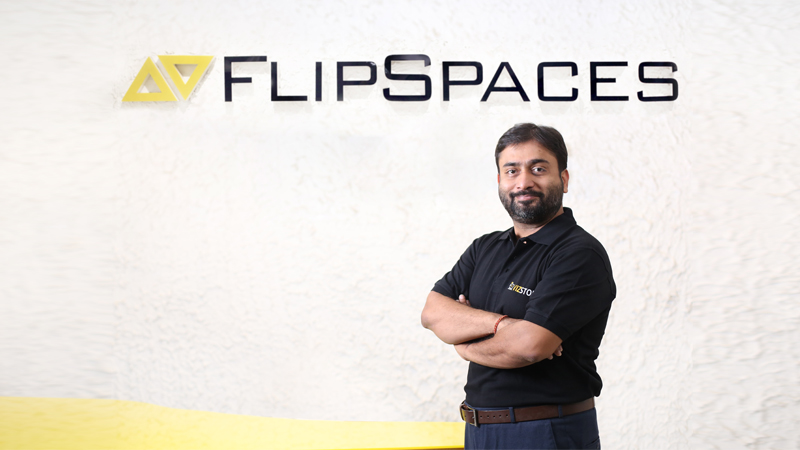
    The article has been authored by Flipspaces founder & CEO Kunal Sharma.

  • Transforming workforce training for Birla Opus Paints with VR innovation: An AutoVRse case study

    Transforming workforce training for Birla Opus Paints with VR innovation: An AutoVRse case study

    Mumbai: Birla Paints, a new entrant in the market, is ambitiously aiming for a quick rise to the top spot. With plans to install production units in and outside India, there is a sudden need for an effective training program for the newly hired workforce. AutoVRse comes to offer the answer through immersive virtual reality (VR) training that caters to linguistic diversity and ensures effective skill acquisition and retention.

    A trained and skilled factory workforce is of utmost importance for manufacturing companies. Whether you are expanding to newer geographies or growing your production per plant, scaling traditional safety and process training comes with its challenges:

    “We implemented a comprehensive digital training program, utilizing immersive VR simulations and gamified learning modules to upskill their factory workforce. This innovative approach not only improved knowledge retention and engagement but also significantly reduced training time and costs, ultimately boosting productivity and ensuring a safer working environment.” exclaimed Anuj.

    Skill Diversification: With diverse job roles spanning from manufacturing to customer service, ensuring uniform skill development across the workforce poses a significant challenge. Tailoring training programs to address the specific needs of each department while maintaining consistency can be complex.

    Language Barriers: Birla Opus Paints operates in regions with linguistic diversity. Ensuring effective communication and comprehension across all levels of the workforce to scale your training across geographies is a major challenge in India.

    Cost constraints: Implementing extensive training programs, particularly those utilizing Virtual Reality (VR), can result in cutting down expenses. Balancing the need for high-quality impactful training with budgetary constraints poses a challenge for most training initiatives.

    Sustainability of learning: Ensuring that the skills acquired through training programs are retained and applied consistently in real-world scenarios is a must. Sustaining the impact of training beyond the initial sessions requires ongoing reinforcement and support mechanisms.

    Remote work challenges: With the rise of remote work arrangements, providing effective training to employees working from different locations becomes challenging. Maintaining consistent training standards and accessibility for remote workers requires innovative solutions.

    Employee engagement and motivation: Keeping employees engaged and motivated throughout the training process can be a challenge, particularly with repetitive or mandatory training modules. Designing training experiences that are interactive, engaging, and relevant to employees’ roles is crucial.

    Measuring training effectiveness: Assessing the impact and effectiveness of training programs is essential for continuous improvement. Developing reliable metrics and evaluation methods to gauge the success of training initiatives and identify areas for improvement poses a challenge.

    “Addressing these challenges requires a holistic approach that combines innovative technology, and tailored training strategies, and a commitment to continuous improvement. By overcoming these hurdles, Birla Paints can ensure that its workforce remains skilled, adaptable, and equipped to meet the evolving demands of the industry,” said AutoVRse enterprise and sales lead Anuj Gupta.

    Birla Opus Paints recognised VR training as the right solution to its needs and picked AutoVRse as the perfect partner to create truly effective and scalable training modules in VR.

    In 4 foundational steps, AutoVRse is helping Birla Opus Paints address the immediate requirement to train the incoming workforce and scale the training program across use cases and geographies.

    Step 1: Beginning with off-the-shelf VR training lessons

    To cater to the immediate requirement of Birla Opus to train the workforce in their new plants, the easy first step was to dip into AutoVRse’s content library of readymade VR training modules… These modules cover key processes along with working at height, electrical safety, fire safety, and lock-out-tag out, ensuring complete training in Hindi, Kannada, Tamil, and more. By leveraging AutoVRse’s proven instructional design philosophy, trainees can gain better skill retention, setting the stage for a solid foundation of protecting work and protocols.

    Step 2: Customide training modules for increased ROI

    Recognizing the need for customized training experiences, Birla Paints utilizes the personalisation options presented with AutoVRse. With the Unity SDK and VRseBuilder, you can tailor training scenarios without the need for coding expertise. This flexibility will allow them to create diverse and challenging situations, which ensures maximum engagement and improvement of skills among trainees. By customizing the modules, Birla Paints optimizes the ROI according to the session, making every training effective and impactful.

    Step 3: Integration with corporate IT systems and scaling with VR-native LMS

    As training initiatives expand, Birla Paints focuses on seamless integration with its existing corporate IT systems. AutoVRse’s VR-native LMS proves instrumental in consolidating training data and simplifying management tasks. Integration with single sign-on (SSO) and Learning Management Systems (LMS) streamlines administrative processes, allowing Birla Paints to efficiently track progress and demonstrate ROI. With all VR training data centralized, Birla Paints gains valuable insights into employee development and skill enhancement.

    Step 4: Scaling XR across teams and use cases

    To further enhance training effectiveness, the last step poised by AutoVRse for Birla Paints is VRseBuilder, an all-in-one platform for VR app creation and management. By adhering to the VRseBuilder philosophy of simplicity and accessibility, Birla Paints will empower its teams to develop immersive training experiences effortlessly. Through VRseBuilder, they can foster a culture of continuous learning and skill development, ensuring employees are best prepared for workplace challenges. With AutoVRse’s innovative solutions, Birla Paints embarks on a journey towards safer, more efficient manufacturing processes.

    “AutoVRse’s training modules adhere to a set of instructional design principles aimed at maximizing learning retention and real-world application” added Anuj.

    Mimic the real world: By creating training environments that closely resemble real-world scenarios, AutoVRse ensures high-fidelity learning experiences.

    Engage learners with active tasks: Through interactive tasks and simulations, trainees are actively involved in the learning process, enhancing knowledge retention.

    Train with variation and repetition: AutoVRse incorporates varied scenarios to reinforce concepts, ensuring comprehensive skill development through repeated exposure.

    Provide instant actionable feedback: Trainees receive immediate feedback on their performance, fostering a culture of continuous improvement and learning.

    Enable real-world behavioral change: By leveraging the immersive nature of VR, AutoVRse facilitates genuine behavioral change, as skills learned in virtual environments directly translate to real-world applications.

    “AutoVRse and Birla Paints are revolutionizing the manufacturing industry, empowering employees with the skills and knowledge needed to thrive in a dynamic workplace environment.” finally exclaimed, Anuj.

    In conclusion, with a focus on instructional design principles that prioritize real-world applicability and engagement, Birla Paints aims to foster a culture of continuous learning and skill development among its workforce with AutoVRse. By embracing VR technology, Birla Paints has not only enhanced workplace safety and efficiency but also positioned itself as a leader in next-generation manufacturing training. As they continue to evolve and innovate, the partnership between AutoVRse and Birla Paints serves as a testament to the transformative power of VR training in shaping the future of manufacturing education. Together, they are paving the way for a new era of training excellence, where virtual reality becomes an indispensable tool in empowering the workforce of tomorrow.

  • How interactive and immersive technologies are reshaping performance marketing industry

    How interactive and immersive technologies are reshaping performance marketing industry

    Mumbai: Interactive and immersive technologies are quickly changing the landscape of performance marketing in the Indian industry, proposing innovative ways to interact with consumers and drive impactful campaigns. Interactive technologies resembling quizzes, polls, and AR filters are driving things up, while immersive technologies like VR and AR are recommending users new scopes.

    Now, in the era of Performance Marketing, Brands can track their marketing strengths with precision, seek out specific demographics with ease, and measure ROI like never before. As consumers devoted more time online, digital performance marketing turned out to be the golden thumb rule for reaching them where they were most active (on their screens).

    Incorporating Immersive Technologies into Your Marketing Approach

    Virtual Showrooms and Product Demonstrations

    One aspect that can always be injected with more creativity is product demonstrations. Creating virtual showrooms where customers can explore products or services in a 3D environment proves especially beneficial for industries where the purchase process can be solidified for heightened customer satisfaction. For instance, Lenskart’s Try on Glasses on the App.

    Infusing Game Elements into Marketing

    Developing interactive games and experiences featuring your products or brand allows customers to engage with your outreach in diverse ways. Gamification encourages customer interaction and competition, driving user participation, fostering positive brand perception, and cultivating long-term loyalty.

    Interactive Storytelling

    Engaging your audience in a narrative and enabling them to interact with various characters and environments can be a potent tool for brand storytelling. While most interactive experiences are typically designed for a universal purpose and story, customizing characters and environments based on your audience and their demographics further captivates them, establishing a lasting impression and positive brand reception.

    Impact of Interactive Technologies on Consumer Engagement

    Personalization and Customization in Marketing

    Interactive technologies resemble the stakeholders of marketing, considering every consumer’s wish for personalized experiences. In today’s digital setting, personalization and customization have become fundamental elements for engaging consumers. From tailored product recommendations to interactive advertisements that respond to user activities, corporations must line up these strategies to stay competitive. Clients are of the opinion that they are seen, heard, and understood, making them more likely to engage with brands that speak their language.

    Enhancing User Experience through Interactivity

    Who wants an uninteresting, one-way chat when brands can have an active, two-way interaction instead? Interactive technologies are narrowing marketing strategy into a mere conversation, welcoming consumers to take part, share their opinions, and co-create experiences with brands. Whether it’s a gamified ad or an interactive shopping experience, customer commitment levels rise steeply when interactivity is in play.

    Aids in Data Analytics and Understanding

    Immersive technologies gather valuable information about customer behavior and preferences, facilitating more precise and efficient long-term marketing strategies for brand building. Ethically applied, these insights become a potent tool for targeting content towards potential customers, refining content types, target markets, and messaging.

    Leveraging Immersive Technologies for Enhanced Marketing Campaigns

    Virtual Reality (VR) and Augmented Reality (AR) in Marketing

    Step into the time ahead with VR and AR in marketing, where borderlines blur between the real and the digital. Brands in India are using VR to ship consumers to virtual worlds where they can check out before they purchase, while AR is bringing products to life in the palm of their hands. Immersive technologies add a touch of magic to marketing campaigns, leaving behind consumers spellbound and eager for more.

    Conclusion

    Integrating immersive technologies into your marketing plan is a forward-looking decision. From the growing demand for distinct experiences to advantages like increased engagement and advanced product visualization, the potential is evident. In the constantly evolving marketing landscape, these combined strategies offer a way to connect more profoundly with your audience, creating a lasting impression and securing a notable position as a leader in innovation in the digital age. The future of marketing is immersive, and to stay at the forefront, we must fully embrace it.

    This article has been written by  ETML co-founder and COO Amitek Sinha

  • AutoVRse secures $2M funding led by Lumikai for enterprise VR solutions

    AutoVRse secures $2M funding led by Lumikai for enterprise VR solutions

    Mumbai:  AutoVRse, a VR/AR tech startup, today announced the successful closure of a $2 million funding round led by Lumikai. This marks a significant milestone in AutoVRse’s journey, having already delivered cutting-edge VR solutions to multiple Fortune 500 companies and industry leaders including Shell, Godrej, Bosch, Tata Motors, Ultratech Cements, Aditya Birla Group, and many others.

    The funding will primarily be utilized to further enhance AutoVRse’s foundational enterprise product, VRseBuilder, “an end-to-end modular technology stack and SAAS platform to integrate VR into workflows of industries like manufacturing, construction, engineering, oil and gas, automotive, replacing ineffective manual instruction and/or expensive simulation techniques for purposes ranging from safety training to sales and collaborative remote work.”

    270 million accidents occur in heavy industries, costing them $1.25 trillion globally. VrseBuilder is a one-stop, self-serve, modular, SAAS-style platform that empowers large organizations to effortlessly create, deploy, and manage VR training solutions and applications at scale, in real-time, across the world.

    This funding will enable AutoVRse to augment its team with top-tier talent, and spearhead expansion efforts in the United States and expand its product suite. The company also plans to set up a B2B sales team in the US to drive qualified lead generation and facilitate market expansion.

    The company also leverages their state-of-the-art, in-house game studio for cutting-edge research and development while building District M, the Multiverse Dance Festival – a social, multiplayer, rhythm VR game. The game’s demo was launched on the Oculus AppLab two years ago and will soon be launched on Meta and PlayStation. The gaming division works closely with the enterprise division to leverage innovations for enterprise product development.

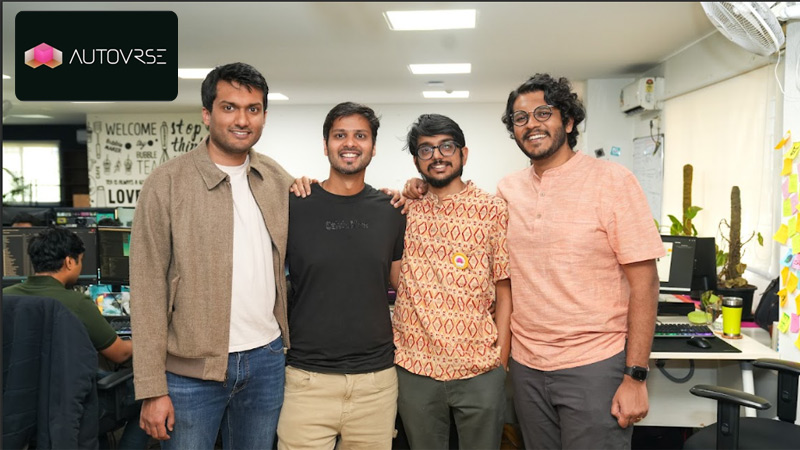
    AutoVRse co-founders Ashwin Jaishanker, and Adarsh Muthappa, enthusiastically shared their outlook for the company’s future, saying, “Virtual Reality (VR) wields transformative potential across diverse industries. Our enterprise solutions offer a world-class, ready-to-use, modular technology stack with SAAS-enabled deployment for purposes ranging from worker safety training to sales training and remote work design collaborations. An example of the real-world impact of our VR tech was our partnership with UltraTech Cements, where we deployed VR safety training modules across 51 plants in India and trained 50,000+ workers in VR—reducing factory incidents and saving lives. We leverage our in-house game studio to test, iterate, experiment and deliver immersive and cutting-edge innovative experiences for our enterprise clients. This cutting-edge research and cross-pollination of technology has also helped us create an immersive gaming experience with an original IP like District M.  Our vision is to build a foundational VR-OS (VR operating system) for enterprises, alongside world-class, meaningful, social, and fun experiences for consumers.”

    Speaking on the announcement, Lumikai founding general partner Salone Sehgal said, “AutoVRse’s technology and solutions for enterprises, compete with the global best. Their focus on innovation and providing scalable, VR-led solutions for very real problems facing heavy industries, coupled with their innovative, state-of-the-art gaming studio, is a powerful combination—paving their rise to becoming a world leader in the VR space. At Lumikai, we are super excited to be lead investors and partner with Ashwin, Adarsh, and the AutoVRse team to build a world-class, enduring AR/VR company.”

    Pushing the limit of what is possible in the immersive media space and delivering consistently path-breaking deployments in the field of enterprise VR/AR for more than 7 years, AutoVRse, has evolved into a pioneer in the AR/VR landscape transforming various industries with their tech prowess. The company’s flagship product, VRseBuilder’s primary goal is to help organizations adopt VR at scale, easily. It consists of 4 components, namely:

       Readymade VR Content Library: Safety and process training VR modules designed with a modular, VR-centric design philosophy

    •    VR-Native Learning Management System: Schedule sessions, assign modules, access performance reports, and observe evaluation metrics in real-time, offering unparalleled training flexibility
    •    Deployment Platform & Knowledge Repository: A secure web dashboard that helps IT and Security teams manage VR users, devices and content by seamlessly integrating with LMS and SSO systems, allowing users to upload videos and PDFs and manage the organization’s VR knowledge repository
    •    Unity SDK + Infinity Workshop: Rapidly prototype VR apps with a no-code editor and massive library of modular blocks (assets, templates and fully finished VR training modules)

    Also participating in this round was angel investor Yash Kotak, Founder and CEO of Jumper.ai, who said “Jumping into AutoVRSe was a no-brainer. Right from the get-go with the founders and the team, I could feel the energy, the focus, and that unstoppable drive to conquer the VR scene. With its fundamentally strong tech, flawless execution, and sky-high market potential, investing was a total blast from day one.”

    Additional prominent figures in the funding round include Rajat Monga, co-founder of TensorFlow and Inference.io and Viswanathan Krishnamurthi, ex-CIO/VP at Yahoo & Eaton.

    While talking about this the Co-founder of TensorFlow and Inference.io, Rajat Monga, also added “AR/VR is where we are all headed, and with Oculus Quest (and now Apple Vision Pro), people think of consumer apps. I loved how Ashwin and the team understood the space and focused on enabling enterprises to bring their ideas to reality.”

  • Metaverse is an incredible opportunity infront of marketers currently: Meta India marketing director Avinash Pant

    Metaverse is an incredible opportunity infront of marketers currently: Meta India marketing director Avinash Pant

    Mumbai: Things are moving towards an immersive connection, which is being powered by technology. One can share an incredible amount of information with an incredible frequency. The metaverse will change our conception of the world’s businesses, industries, brands, and creators. Some devices can help you get there, but more technology will come.

    At The Advertising Club’s third edition of D:CODE Meta India, marketing director Avinash Pant enlightened the audience about the evolution of social connections and the exponentially growing metaverse space, empowering meaningful experiences.

    He said, “Metaverse will take what we love about the internet today, which is about connecting with someone not present in the physical space, and take it to another new level. This is an incredible opportunity in front of marketers.”

    A “metaverse,” he added, is a set of interconnected digital experiences that are able to make you feel present. One can do this from any device, with anyone and anywhere. But the myth he burst is that it is a dystopian reality where people are engrossed in headsets and are completely removed from the real world. That is not the case.

    All technologies put together will make things real and present. There will be a virtual home or many homes. There will be many social experiences. One could work with colleagues in the metaverse. The metaverse does not have to be a representation in the virtual world of one’s physical world. It does not have to follow any of those rules of time, space, or physics. He continued, “The ability to create incredible experiences provides a fascinating opportunity in terms of creativity, storytelling, brand narrative, and commerce.”

    He expects avatars to be synonymous with our digital identity. One way to think about today is that the digital identity is the Instagram handle. Ten years ago, it was an email address. The expectation is that, in time, the avatar will become the digital identity. How do you make it lifelike and more representational? How can it help you present yourself in the digital world? These are things to be considered by digital marketers.

    Felt presence, he said, is one of the concepts of the metaverse. One can be with a friend at a concert through things like a hologram or VR. It will provide an incredible personal social feeling, but you can also share that experience. Even in a professional environment, you can do your dream job while sitting anywhere.

    He further noted that Meta has a workroom product. You feel present because you see someone’s body language, get an idea of their expressions, and how they react as well. The potential this has in commerce is huge. When a consumer can fully immerse himself in an experience, it becomes a powerful tool for a brand.

    But it’s not just about showing off a physical product. He explained that if consumers are living in that reality, then brands have to rethink the concept of who they are. What is the business the brand is in? There is much more significant potential. The metaverse is not predicated on 2D screens. A more immersive setup is possible.

    He gave the example of helping students understand concepts like the solar system better. Meta has done work with the CBSE in this regard regarding the curriculum. He feels that Meta has a fantastic foundation in terms of technology and the platforms that it has built. The work being done in communities, creators, and commerce puts it in a great position to leverage the metaverse. The idea of community itself is evolving. On the creator side, Meta is doing a lot of work to build the creator economy. Also, the idea of storytelling is evolving. People want to interact with content, play with it, not just consume it.

    He also gave the examples of Instagram Reels and AR. In terms of commerce, he said that there was a time when if one had to buy something, you would walk over to the market. Then you started searching online. Today, it has moved from search and buy to discover and buy. People discover brands and services on social media. This spells a massive opportunity when you connect the dots to the metaverse. As a brand, you have to think about it to power demand. Digital collectibles are being unlocked on Meta. All this is coming to bear at a super speed. The ecosystem will be revamped.

  • Global entertainment & media revenues surge to $2.3 trillion; OTT growth to moderate: PwC

    Global entertainment & media revenues surge to $2.3 trillion; OTT growth to moderate: PwC

    Mumbai: Last year, the global entertainment and media (E&M) industry grew significantly faster than the world economy as a whole. Following a 2.3 per cent dip in 2020 due to the pandemic, E&M sales increased by a solid 10.4 per cent in 2021, from $2.12 trillion to $2.34 trillion.

    Virtual reality (VR) and gaming are significant growth drivers for the industry as it becomes more digital, mobile, and youth-focused, and digital advertising permeates every aspect of the industry. These conclusions are drawn from PwC’s Global Entertainment & Media Outlook 2022–2026, which represents the 23rd annual research and forecast of E&M spending by consumers and advertisers across 52 countries & territories.

    Findings in this year’s Outlook include:

    – After growing by 35.4 per cent in 2020, OTT (over-the-top) video revenues increased by 22.8 per cent in 2021, to $79.1 billion. The rate of OTT revenue growth is anticipated to slow slightly; it will increase at a 7.6 per cent CAGR (compound annual growth rate) through 2026, pushing revenues to $114.1 billion.

    – Traditional TV still brings in a sizable amount of money, but it is facing intense competition from OTT streaming services. Global sales are expected to shrink at a CAGR of -0.8 per cent, from $231 billion in 2021 to $222.1 billion in 2026.

    – Revenue from video games and esports worldwide was $215.6 billion in 2021, and it is anticipated to increase by 8.5 per cent CAGR to $323.5 billion in 2026. With $109.4 billion, Asia Pacific produced the majority of the world’s revenues in 2021, more than double the second-highest region, North America. Gaming has overtaken video and communications as the third-largest data-consuming E&M content category.

    – Despite starting from a small base, VR continues to be the fastest-growing E&M segment. Following a strong 39 per cent growth in 2020, global VR spending increased by 36 per cent y-o-y to $2.6 billion in 2021. The segment is anticipated to grow at a CAGR of 24 per cent between 2021 and 2026, reaching $7.6 billion. With $1.9 billion in revenue in 2021, gaming content is the main source of VR revenue. By 2026, this should rise to $6.5 billion, or 85 per cent of all VR revenue.

    – Due to its widespread use in the digital sphere, advertising now dominates its own industry sector. After falling by almost seven per cent in 2020, advertising increased by an astonishing 22.6 per cent in 2021, reaching $747.2 billion. Advertising is expected to expand at a 6.6 per cent CAGR through 2026, driven nearly entirely by digital. The revenue from internet advertising is expected to increase even more quickly, increasing at a CAGR of 9.1 per cent. Advertising is anticipated to exceed consumer spending and internet access in 2026 to become a one trillion dollar business and the largest E&M revenue stream.

    – In 2023, global cinema revenue is anticipated to hit a new high of $46.4 billion after experiencing losses due to the pandemic. Box office revenue is anticipated to grow by 18.9 per cent CAGR from $20.8 billion in 2021 to $49.4 billion in 2026. In 2020, China surpassed the US to become the world’s biggest cinema market, and it is predicted that it will continue to hold this position through 2026.

    – In 2024, live music revenue is anticipated to surpass pre-pandemic levels. Recorded music sales are expected to increase from $36.1 billion in 2021 to $45.8 billion in 2026, driven by the development of digital music streaming subscriptions.

    – Massive data consumption is being fueled by the expansion of content. Data consumption was 2.6 million petabytes (PB) in 2021, and it is projected to increase by 26 per cent CAGR to 8.1 million PB by 2026. With a predicted CAGR of 29.6 per cent, gaming will consume data at the quickest rate during the projection period. The fastest-growing device category between 2021 and 2026 will be mobile handsets, growing at a CAGR of 28.8 per cent and predicted to increase mobile data usage from 1.1 PB to 3.8 PB.

    PwC Germany Global Entertainment And Media Industry Leader Werner Ballhaus said, “Industry press tends to focus on the companies that have dominated the E&M industry. But it is the choices that billions of consumers make about where they will invest their time, attention and money that are fueling the industry’s transformation and driving the trends.  We are seeing the emergence of a global E&M consumer base for the coming years that is younger, more digital and more into streaming and gaming than the current consumer population. This is shaping the future of the industry.”

    North America dominates per capita E&M, but faster growth resides elsewhere: Regionally, North America has by far the biggest E&M expenditures per capita at $2,229, nearly double that of Western Europe’s $1,158. In contrast, Asia Pacific, which had E&M sales of $844.7 billion in 2021, had a per-capita expenditure of $224. Of all regions in the world, the Middle East and Africa spend $82 less per capita on E&M.

    While OTT video and gaming account for the majority of revenue growth, esports and the cinema industry are also experiencing rapid expansion. Latin America, the Middle East, Africa, and Asia make up the top ten growth markets by CAGR. The countries with the best prospects for E&M consumer spend growth over the five-year forecast period are Turkey (estimated 14.2 per cent CAGR), Argentina (10.4 per cent), India (9.1 per cent), and Nigeria (8.8 per cent).

    The metaverse awaits: The metaverse may soon develop into a wonderfully realistic environment where people may access immersive virtual experiences using a VR headset or other connecting device. The potential financial and commercial worth of the metaverse extends far beyond VR because it is an evolution that might fundamentally alter how companies and customers engage with goods, services, and one another. Over time, a significant portion of the profits from video games, musical performances, advertisements, and even online shopping may move into the metaverse.

    How big is the E&M opportunity in the metaverse?  

    One place to start is the rapidly expanding VR sector. Although it is now one of the less significant areas studied, the 36 per cent increase in global spending over the previous year gives an indication of its long-term potential. The number of stand-alone and tethered VR headsets installed worldwide is expected to increase from 21.6 million in 2021 to 65.9 million in 2026.

    Ballhaus added, “With the impressive growth and potential of the E&M industry comes tremendous volatility and what we describe as fault lines and fractures opening up between companies, within sectors and across geographies and generations. For businesses, intense competition and continual disruption will remain the order of the day. Our data shows the mix of revenues and spending is changing rapidly. As fault lines proliferate and widen, every business in E&M stands to be disrupted. The challenge and goal must be to understand your consumer and end up on the right side of disruption.”

  • Emerging technology an integral part  of sports consumption by fans: Capgemini

    Emerging technology an integral part of sports consumption by fans: Capgemini

    MUMBAI– Capgemini, the official Global Innovation Partner of the Men’s and Women’s HSBC World Rugby Sevens Series since January 2018, has launched a new report, ‘Emerging technologies in sports: reimagining the fan experience’. The study, using responses from over 10,000 fans around the globe who regularly watch and follow top sports, has been produced by the Capgemini Research Institute.

    The study shows that for 69 per cent of fans, the use of emerging technologies, such as virtual reality (VR), artificial intelligence (AI) and augmented reality (AR), has enhanced their overall viewing experience both inside and outside the stadium; a positive experience with technologies also enhances overall fan engagement. Of respondents who liked their technology experiences, 56 per cent said they would actually go to more physical matches at their team’s stadium as a result, and 60 per cent said they would stream more matches online. 

    49 per cent of fans have often increased their spending on team merchandise following a good experience and 42 per cent have increased this spend a few times, while 92 per cent said they increased their spend on online subscriptions for watching matches (either often or a few times). The report also shows that fans who have experienced emerging technologies during a recent visit to a stadium are more satisfied with their experience overall, highlighting a 25-point NPS® (Net Promoter Score) difference between fans who have experienced emerging technologies and those who have not.

    Sports fans from Asian countries lead in using emerging technologies

    Fans from Asian countries – including India, Hong Kong, and Singapore – lead in the adoption and acceptance of emerging technologies in sports. Close to three-quarters of Asian fans (74%) have experienced the use of emerging technology in the stadium, with India leading at 88%. However, this drops to 56% for the United States, 50 per cent for Germany, and below 50 per cent each for Canada, France, United Kingdom and Australia. Furthermore, 71 per cent of Asian fans said they would be willing to pay more if new technologies enhanced their stadium experience, compared to 40 per cent of North American fans, 34 per cent of European fans, and 33 per cent of Australian fans.

    Adoption of emerging technologies can convert more followers into avid fans

    Emerging technologies can also convert and upgrade more fans to become avid fans who generate more business and positive word-of-mouth on having a good tech-enabled sports experience. For example, 73% of avid fans attend more matches following a good tech-enabled experience, compared to 50 per cent of the rest, and nearly three-quarters of avid fans watch a match in the stadium when their favorite team is playing.   

    Emerging technologies are helping athletes perform better and avoid injuries

    Athletes are increasingly using a variety of emerging technologies for activities, including training, injury prevention and tracking performance. For example, Zone7, a company using data and analytics for identifying and avoiding potential career-threatening injuries to athletes, has achieved 95% accuracy in predicting injuries and has been able to reduce potential injuries by 75 per cent.

    Tom Mitchell, Captain of England’s Rugby Sevens Team said, “The use of virtual reality in reviewing training sessions and matches can have a big impact on sports. If you can put yourself in a given situation instead of just reviewing a match by watching a video, then the learning and reviewing experience becomes much more real. If you are able to be in that situation again, either through VR or another technology, it would be a massive step up in terms of the reviewing and learning experience.”

    Strategies to unlock the value of emerging technologies in sports

    Sports organisations across the world are now presented with a huge opportunity to tap into evolving consumer expectations and make far more customised and personalised fan engagement. According to the new report, organisations can focus on the following areas to adopt and optimise emerging technologies in sports: 

    • Reassure fans on usage of personal data by seeking consent where possible on use of data, being transparent about the use and protection of consumer data, and demonstrating the value that consumers stand to gain with this data exchange,
    • Identify user needs before investing in and deploying emerging technologies, 
    • Convert more fans to ‘avid fans’ by defining a digital fan experience and offering ‘hyper-personalised’ experiences, 
    • Build digital practices, capabilities, and transform organizational culture by investing in a digital culture, skills, and cross-sharing of information across sports organisations to drive greater innovation.

    Capgemini global digital customer experience practice leader Darshan Shankavaram said, “The use of emerging technologies in the fan experience is an exciting and rapidly growing area. Sports organisations across the world have a huge opportunity to tap into evolving expectations of fans and athletes to build a more joined up, customized and personalised engagement experience. Additionally, organisations can benefit by using technology to improve players’ performance or prevent injuries, or for coaches to strategise the play through simulations.”

  • TV9 enters Hindi heartland with TV9 Bharatvarsh

    TV9 enters Hindi heartland with TV9 Bharatvarsh

    MUMBAI: TV9 News Network is all set to launch its national Hindi channel, TV9 Bharatvarsh, next month in Delhi. The channel is ready with its largest news studio in the country, which will use the best of AR and VR technologies, and BOT news tracker in its presentation.

    Already a leader in regional media with six news channels in different parts of the country, this will be TV9 network's grand entry into the national media with its wealth of journalistic experience.

    TV9 Bharatvarsh will strive to change national television with its unique style of aggressive presentation blended with investigative journalism that will focus on the rights of the people. The Hindi channel will bring back issues that really matter and use the medium of television keeping the core values of humanity and people's interests in the forefront.

    Associated Broadcasting Company Private Limited (ABCL) was started in 2003 by a group of young journalists lead by Ravi Prakash as CEO. TV9 Bharatvarsh will be a free to air news channel. It will be available across all the platforms and will have a presence on cable, DTH and digital platforms worldwide.