Tag: VOOT

  • Saying traditional TV is dying in India is premature

    Saying traditional TV is dying in India is premature

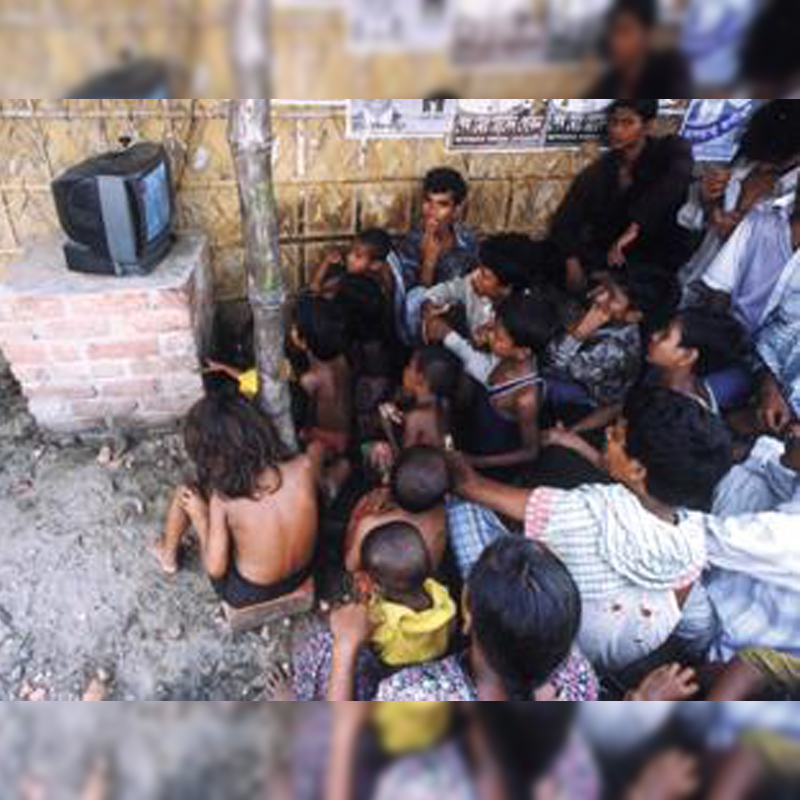
    On a recent road trip to Ladakh with friends we stopped at a nondescript roadside ‘dhaba’ (makeshift eatery) near the Himachal Pradesh and J&K border for tea and to stretch sore limbs. As tea was being boiled, stifled giggling from inside the hutment attracted me. While trying to see if my smart-phone was working so I could check-in on FB, I peeped inside. A group of local kids were enjoying a soap opera on television; courtesy DD FreeDish, a free-to-air DTH platform. My mobile phone, in the meanwhile, showed no signs of life with a No-Network message flashing.

    This, and many other such examples in India’s hinterland, highlight a fact loud and clear: India may be going digital, but Bharat (as non-urban hinterlands of India is referred to by some sociologists and marketers) still roots for the traditional. Such instances also tell us that in a country as diversified, complex and challenging as India, traditional habits, like TV watching, are there to stay despite technological disruptions like streaming video and smart-phones.

    Globally, death of traditional TV viewing has been predicted for past few years. But data and analytics from more mature and developed markets and even some East Asian nations – where digital is a big draw – show that TV as we know it is not going away anytime soon.

    A US Department of Labour Survey, released early 2016, states that watching TV was the leisure activity that “occupied the most time (2.8 hours per day), for those aged 15 and over.”

    BARB (UK equivalent of BARC India) data shows that average daily video viewing by all individuals is 4hrs 35mins and that TV accounts for 94 per cent of all video advertising time. Over the last decade, despite several “disruptive” technological developments, time spent watching TV has hardly dipped, as was being forecast. More importantly, TV continues to have largest reach of all media: it reaches 71per cent of population in a day, 93per cent in a week, and 98 per cent in a month.
    And, these are markets with near total saturation of TV homes, and a highly developed and widespread digital eco-system.

    What about India?

    Appetite for more TV content is only bound to grow given that only 153 million homes in India have TV out of a total of about 250 million (a penetration of about 60 per cent). Rise in disposable incomes, increasing fragmentation of families and continued challenges of Indian infrastructure are bound to push TV viewing higher.

    All-India BARC data for 47 weeks appear to validate that. Average daily TV viewing stands at 3 hours 16 minutes, showing headroom for growth, compared to more mature TV markets that have higher TV penetration rate of 97+ per cent.

    India has close to 900 licensed channels and while Ministry of Information and Broadcasting (MIB) agrees some of these licensees may not be on air, but scores of applicants are in queue too — another indicator of growth in appetite for TV.

    But, what about the perception that traditional TV viewership is losing out due to growth of digital platforms?

    Let’s look at BARC India data for a recent TV event, the Rio Olympics. TV viewership for Rio 2016 grew 2.65 times as compared to London 2012. While 16 million unique viewers watched the broadcast of London Games in India, the corresponding figure for Rio Games is 43 million (using the same viewership base – 1million+ towns). If one looks at the all-India (Urban+Rural) base, Rio 2016 set another high of 203.8 million unique viewers.

    This brings us to cricket, India’s fav sports (apart from politics). BARC data shows that a new viewership high was achieved during an India-Pakistan ICC T20 World Cup match in 2016, which generated a whopping 80.5 million impressions across Star Sports Network and DD National. And these numbers came on the back of not just a larger number of people watching TV, but also considerable higher time spent on TV.

    When asked about linear TV’s impending death in India owing to digital’s growth, Colors CEO and President of the Advertising Club (of India) Raj Nayak waved away the analysis asserting, “I am ready to stick out my neck on this. People who say that traditional television is dying don’t know what they are talking about. TV has been growing and there is still big headroom for its growth in India.”

    India may be adopting mobile phones faster than the US or other western countries, and a major percentage of them are smart-phones. Still, challenges for digital players are big and many ranging from costly data, indifferent bandwidth speed and getting the right content mix for a country that has 22 official languages and over 700 dialects.

    At Vidnet2016, an OTT conference organised by indiantelevision.com recently, Hotstar chief Ajit Mohan admitted that high cost of data is a major hurdle for expansion of streaming services like Hotstar and others like Voot, dittoTV, BoxTv, Arre, Savvn, Hooq, Viu, SonyLiv, etc.

    Data pointing to greater consumption of TV is one side of the picture. Globally, studies and data also indicate that TV remains a highly effective form of advertising.

    A study by the Institute of Practitioners of Advertising (UK’s equivalent of India’s AAAI) shows that TV continues to guarantee best commercial outcomes of campaigns for things such as sales, profit, market share, etc. Echoing similar sentiments, Colors’ Nayak added, “Digital advertising does not have the same impact that TV (advertising) has… Even Amazon, Google and other e-commerce companies have to use TV to make an impact.”

    US-based eMarketer (started in 1996 to study digital trends and considered one of the most widely cited research providers in the media) admits that despite a drop in TV watching time, in general, it hasn’t stopped marketers from pouring significant amounts of money into television advertising.

    Without discounting the strides being made by digital players in India (and they seem to be mushrooming all over like dotcoms during the dotcom boom of the late 1990s), traditional TV’s importance and reach still outstrips that of digital.

    Pointing out that digital does offer consumers choices of watching TV (government lingo for video consumption) at different time and in different formats, a senior government official, having worked at MIB, on condition of anonymity admitted that TV is not going away from India. Rather, the size of India will help it retain its pre-eminence as opposed to other media.

    GroupM too testifies to TV’s strong presence in India compared to other segments of media like print, OOH and digital. In projections made in January 2016, which are re-visited mid-year to do any course corrections if necessary, the company said television was estimated to grow by 17.6 per cent to touch Rs 27,074 crore (Rs. 2,7,0740 million) this year against Rs 23,022 crore (Rs. 23,02,20 million) last year as far as advertising spends go.

    Colors’ Nayak aptly sums up the issue: “There is no doubts that digital will see growth at a phenomenal pace especially with Reliance Jio addressing the bandwidth and speed issues, but digital must be seen as another platform for delivering content and that’s it. There will be lot of content consumption on digital platforms, but it will not be at the cost of (traditional) TV viewing.”

    Like Nayak, I too am ready to bet my bucks on linear or traditional TV in India. Digital has to travel many more miles in India before it can be a replacement for TV, which is still far off from near-saturation point or even plateauing off.

    (Author is Consulting Editor to indiantelevision.com)

  • Ditto TV sees more demand for regional content

    Ditto TV sees more demand for regional content

    MUMBAI: With an aim to be the default app on every internet enabled smartphone in India for content delivery, Zee’s dittoTV seems to have got its marketing pitch correct with #BeeskaTV and #DeshkaTV campaign.

    Poised to clock an annual revenue of Rs 150 crore (according to a media analyst) from a base of approximately six million installs (downloads), mostly in the Hindi speaking markets (HSM), the OTT service is attracting audience from a segment that is still growing in India.

    “We have received a phenomenal response across all our platforms— six million installs and counting! The viewers loved our television commercial and we trended at no. 3 worldwide on Youtube when the campaign went live,” gushed dittoTV business head Archana Anand.

    #BeeskaTV and #DeshkaTV were among the top 10 Twitter trends worldwide, according to Anand who added that the the dittoTV app trended at #1 in the entertainment category in both the Android and iOS app stores.

    With an aim to build on this trending success and further enhance penetration, the digital platform has tied up with sister company Siticable, which is one of the oldest and largest MSOs in the country. Both come from the Subhash Chandra and family-promoted Essel group.

    As part of this collaboration, Siticable will be pushing the authentication and subscription to dittoTV from its portal to the subscribers of its cable TV service for free. The cable TV service will share 20 per cent as revenue for every ditto TV subscription that the operator sells.

    dittoTV subscription charges for three months, six months and one year are Rs 50, Rs 90 and Rs 170, respectively.

    “They say well begun is half done. By that theory, we are in an extremely good position. With the new alliance rolling out and the masses sharing the phenomena of #BeeskaTV, we see the start of a fun and exciting journey,” Anand explained, adding a strong uptake is also reflected on the service’s usage and good content consumption.

    Anand and her team are working on getting new business partnership for the platform and some alliances are said to be in the pipeline, which were not disclosed.

    The platform credits its success to a combination of factors: width and depth of content and its incredible pricing. dittoTV offers access to over 100+ Hindi, English and regional-language channels encompassing general entertainment, sports, movies, news and lifestyle at just Rs 20 a month.

    What worked best on Indian television (general entertainment) seems to have mirrored on the OTT service too as GECs were key drivers of dittoTV, followed by regional and news channels.

    “Regional language content performs superbly across all our platforms and is rising steadily,” opined Anand claiming that regional viewer is also a `returning viewer’ and spends higher time compared to the platform average.

    “On certain days, we’ve actually seen higher consumption for certain regional GECs as compared to key Hindi GECs. Sports and News are very event based and do extremely well for us in bursts when there is a sporting event or breaking news,” Anand said.

    The average view time on the platform has been up to 24 minutes per user. What the reason? Events like cricket (the West Indies vs. India series) and the bundling of dittoTV with data packs with telcos like Idea Cellular have contributed to this substantially.

    dittoTV has deliberately positioned itself differently from other similar players in the markets like HotStar, Sony Liv and Voot as they follow a simple and clear strategy of providing live content similar to what is available on television.

    An aggressive pricing strategy notwithstanding, dittoTV is still far away from replacing cable TV or DTH from consumer homes as a primary source of video consumption, but Anand is upbeat.

    “TV is synonymous with entertainment for the Indian masses and dittoTV being a linear TV offering remains synonymous with TV. I strongly believe that our platform will be a game changer and will help us drive volumes as well as change the way people consume content on-the-go,” she concluded.

  • Ditto TV sees more demand for regional content

    Ditto TV sees more demand for regional content

    MUMBAI: With an aim to be the default app on every internet enabled smartphone in India for content delivery, Zee’s dittoTV seems to have got its marketing pitch correct with #BeeskaTV and #DeshkaTV campaign.

    Poised to clock an annual revenue of Rs 150 crore (according to a media analyst) from a base of approximately six million installs (downloads), mostly in the Hindi speaking markets (HSM), the OTT service is attracting audience from a segment that is still growing in India.

    “We have received a phenomenal response across all our platforms— six million installs and counting! The viewers loved our television commercial and we trended at no. 3 worldwide on Youtube when the campaign went live,” gushed dittoTV business head Archana Anand.

    #BeeskaTV and #DeshkaTV were among the top 10 Twitter trends worldwide, according to Anand who added that the the dittoTV app trended at #1 in the entertainment category in both the Android and iOS app stores.

    With an aim to build on this trending success and further enhance penetration, the digital platform has tied up with sister company Siticable, which is one of the oldest and largest MSOs in the country. Both come from the Subhash Chandra and family-promoted Essel group.

    As part of this collaboration, Siticable will be pushing the authentication and subscription to dittoTV from its portal to the subscribers of its cable TV service for free. The cable TV service will share 20 per cent as revenue for every ditto TV subscription that the operator sells.

    dittoTV subscription charges for three months, six months and one year are Rs 50, Rs 90 and Rs 170, respectively.

    “They say well begun is half done. By that theory, we are in an extremely good position. With the new alliance rolling out and the masses sharing the phenomena of #BeeskaTV, we see the start of a fun and exciting journey,” Anand explained, adding a strong uptake is also reflected on the service’s usage and good content consumption.

    Anand and her team are working on getting new business partnership for the platform and some alliances are said to be in the pipeline, which were not disclosed.

    The platform credits its success to a combination of factors: width and depth of content and its incredible pricing. dittoTV offers access to over 100+ Hindi, English and regional-language channels encompassing general entertainment, sports, movies, news and lifestyle at just Rs 20 a month.

    What worked best on Indian television (general entertainment) seems to have mirrored on the OTT service too as GECs were key drivers of dittoTV, followed by regional and news channels.

    “Regional language content performs superbly across all our platforms and is rising steadily,” opined Anand claiming that regional viewer is also a `returning viewer’ and spends higher time compared to the platform average.

    “On certain days, we’ve actually seen higher consumption for certain regional GECs as compared to key Hindi GECs. Sports and News are very event based and do extremely well for us in bursts when there is a sporting event or breaking news,” Anand said.

    The average view time on the platform has been up to 24 minutes per user. What the reason? Events like cricket (the West Indies vs. India series) and the bundling of dittoTV with data packs with telcos like Idea Cellular have contributed to this substantially.

    dittoTV has deliberately positioned itself differently from other similar players in the markets like HotStar, Sony Liv and Voot as they follow a simple and clear strategy of providing live content similar to what is available on television.

    An aggressive pricing strategy notwithstanding, dittoTV is still far away from replacing cable TV or DTH from consumer homes as a primary source of video consumption, but Anand is upbeat.

    “TV is synonymous with entertainment for the Indian masses and dittoTV being a linear TV offering remains synonymous with TV. I strongly believe that our platform will be a game changer and will help us drive volumes as well as change the way people consume content on-the-go,” she concluded.

  • Government & private initiatives required to achieve ambitious goal of Digital India

    Government & private initiatives required to achieve ambitious goal of Digital India

    MUMBAI: According to Akamai’s 2015 Asia Pacific Survey, India had the lowest average broadband speeds of 2.5 Mbps. As 3G speeds increase and 4G adoption is still nascent; the quality of internet access and affordability in terms of data tariffs and on 3G/4G enabled devices continue to remain a challenge to deliver consumer value. On the regulatory side, there have been a lot of discussions on net neutrality and licensing of OTT services. These will have a significant impact on how digital media evolves in the future.

    Sony Pictures Networks India Pvt Ltd. head – marketing & analytics, digital business Abhishek Joshi strongly believes that content is where you stream it and the government has the a say in it. “The OTT industry has graduated from the innovators stage to the early adopters stage within the innovation diffusion curve, based on distinguished product strategies by players in the market. However to cross the chasm to gain the majority market, policy makers will have to play a very big role. Infrastructure and regulatory policies are going to be the biggest differentiators for industry growth for the next 18 months.”

    While on the other hand, Ping Networks co-founder Rajeshree Naik is of the opinion that the government should not play any role in an individual’sprivacy. “That is a grey area. The government should rather focus on the infrastructure, companies coming up, partnerships, investments, etc rather than on content. Infrastructure does not bother pay because I know it is going to get better soon. The thing that scares me are the two terms related to digital i.e. no censorship and payment methods. Though, the beauty of digital is having no regulations, collective responsibility is to be taken ensuring that the government stays away.”

    Supporting Joshi on government interference was VOOT head, marketing and partnerships Akash Banerji. “Short form of content is not the solution. “These are early days for OTT in India. Players are either following the AVOD or SVOD model today. Both are profitable but for now what concerns me about the SVOD model is that why should a consumer pay for subscription when he is already paying a lot for mobile data. “

    Banerji adds, “There also is limitation of vast content on platforms. 80-90 percent of content is with the top players and a minuscule number of hours of great quality content is curated. For a new entrant for eg VOOT, it is difficult to drive money immediately after it rolled out.”

    Whereas Joshi thinks that even the consumers are not inclined to pay. “There is no inclination to pay. They will pay for content that has some value for them. They want quality content, expect HD, streamless service, etc.”

    Hungama.com COO Siddharth Roy opined that transactions have worked. “There is massive copyright infringement. The government needs to have a robust and strong IPR. Branded entertainment is the driver of this entire eco-system. Branded IP makes money.”

    “Value comes from the content and the way it is consumed. The business needs a lot of clarity. Government and all the players should work together to come to a concrete conclusion. In the end, crows is the king,” asserts Banerji.

    Naik believes that videos and original content will co-exist and that content will keep evolving.

    With global players like Netflix and Amazon Prime in India, the players present in the panel are looking forward to the global entrants. “If Netflix is a success in India, the creators will have more chance to put their content on the digital platforms. It is investing plenty on producing original content here and will be a good example. Viewers will love to pay for quality content that can entertain them.”

    Joshi is also excited with the entry of this global player and India and thinks that it is only going to be good for the business.

    Sharing his thoughts on the future of India’s burgeoning digital market, Technicolor’s country head for India Biren Ghose, in his valedictory remarks, said, “Content is assuming new life in the emerging digital economy. Technology enables innovations in imagery that could hitherto neither be produced nor consumed. FICCI and LA India Film Council need to be complimented on encouraging the conversation for the Indian agenda in this space.”

    Panelists at FICCI Knowledge Series 2016 for the Regulatory and Infrastructural Challenges for Digital Media, concluded that a combination of government and private initiatives would need to be rolled out to achieve the ambitious goal of a truly Digital India.

  • Government & private initiatives required to achieve ambitious goal of Digital India

    Government & private initiatives required to achieve ambitious goal of Digital India

    MUMBAI: According to Akamai’s 2015 Asia Pacific Survey, India had the lowest average broadband speeds of 2.5 Mbps. As 3G speeds increase and 4G adoption is still nascent; the quality of internet access and affordability in terms of data tariffs and on 3G/4G enabled devices continue to remain a challenge to deliver consumer value. On the regulatory side, there have been a lot of discussions on net neutrality and licensing of OTT services. These will have a significant impact on how digital media evolves in the future.

    Sony Pictures Networks India Pvt Ltd. head – marketing & analytics, digital business Abhishek Joshi strongly believes that content is where you stream it and the government has the a say in it. “The OTT industry has graduated from the innovators stage to the early adopters stage within the innovation diffusion curve, based on distinguished product strategies by players in the market. However to cross the chasm to gain the majority market, policy makers will have to play a very big role. Infrastructure and regulatory policies are going to be the biggest differentiators for industry growth for the next 18 months.”

    While on the other hand, Ping Networks co-founder Rajeshree Naik is of the opinion that the government should not play any role in an individual’sprivacy. “That is a grey area. The government should rather focus on the infrastructure, companies coming up, partnerships, investments, etc rather than on content. Infrastructure does not bother pay because I know it is going to get better soon. The thing that scares me are the two terms related to digital i.e. no censorship and payment methods. Though, the beauty of digital is having no regulations, collective responsibility is to be taken ensuring that the government stays away.”

    Supporting Joshi on government interference was VOOT head, marketing and partnerships Akash Banerji. “Short form of content is not the solution. “These are early days for OTT in India. Players are either following the AVOD or SVOD model today. Both are profitable but for now what concerns me about the SVOD model is that why should a consumer pay for subscription when he is already paying a lot for mobile data. “

    Banerji adds, “There also is limitation of vast content on platforms. 80-90 percent of content is with the top players and a minuscule number of hours of great quality content is curated. For a new entrant for eg VOOT, it is difficult to drive money immediately after it rolled out.”

    Whereas Joshi thinks that even the consumers are not inclined to pay. “There is no inclination to pay. They will pay for content that has some value for them. They want quality content, expect HD, streamless service, etc.”

    Hungama.com COO Siddharth Roy opined that transactions have worked. “There is massive copyright infringement. The government needs to have a robust and strong IPR. Branded entertainment is the driver of this entire eco-system. Branded IP makes money.”

    “Value comes from the content and the way it is consumed. The business needs a lot of clarity. Government and all the players should work together to come to a concrete conclusion. In the end, crows is the king,” asserts Banerji.

    Naik believes that videos and original content will co-exist and that content will keep evolving.

    With global players like Netflix and Amazon Prime in India, the players present in the panel are looking forward to the global entrants. “If Netflix is a success in India, the creators will have more chance to put their content on the digital platforms. It is investing plenty on producing original content here and will be a good example. Viewers will love to pay for quality content that can entertain them.”

    Joshi is also excited with the entry of this global player and India and thinks that it is only going to be good for the business.

    Sharing his thoughts on the future of India’s burgeoning digital market, Technicolor’s country head for India Biren Ghose, in his valedictory remarks, said, “Content is assuming new life in the emerging digital economy. Technology enables innovations in imagery that could hitherto neither be produced nor consumed. FICCI and LA India Film Council need to be complimented on encouraging the conversation for the Indian agenda in this space.”

    Panelists at FICCI Knowledge Series 2016 for the Regulatory and Infrastructural Challenges for Digital Media, concluded that a combination of government and private initiatives would need to be rolled out to achieve the ambitious goal of a truly Digital India.

  • TV18 Q1 2016-17: New investments lead to losses

    TV18 Q1 2016-17: New investments lead to losses

    MUMBAI: When you invest in new launches, relaunches, on talent and digital products without additional cash being pumped in, it obviously is going to hurt your bottom-line.

    That’s exactly what’s happened to TV18 Broadcast, which has reported a consolidated segment revenue (including proportionate share of joint ventures considered for segment reports) of Rs 606.7 crore in Q1 to June 2016 as compared to Rs 596.7 core in the year ago period. But it has turned out a loss of Rs 14.1 crore as against a profit of Rs 8.6 crore in the same period last year.

    Rebranding and relaunching of CNN-IBN as CNN-News18 cost the company Rs 3.5 crore. Three new news channels – News18 Kerala, News18 Tamil, News18 Assam/NE were flagged off in April 2016 and contributed Rs 13.9 crore to its operating losses. Rishtey CinePlex and over the top service Voot, which were launched in May 2016, and HD channels in Marathi, Kannada and Bangla that made a debut under Viacom18 in the quarter helped add to the aggregate operating losses to the tune of Rs 29.2 crore. Finally, factual entertainment channel FYI from the AETN18 stable launched 10 days ago reported a loss of Rs 5.4 crore which has been included in the April-June quarter.

    The company says that the segment loss before tax and before interest including performance of the joint ventures stands at Rs 19.1 crore. If one were to exclude the impact of these new initiatives , the segment profit for the business is at Rs 32.9 crore.

    TV18 has also moved to the Indian accounting standards (Ind-AS) from 1 April 2016 and it has restated its comparative results. Under this, its joint ventures Viacom18, Indiacast, and IBN Lokmat have been accounted under the equity method, the company says.

    Additionally, the company had included the financials of Prism TV Private Ltd as a subsidiary in the previous corresponding quarter but which have now been reported as a joint venture from August 2015 when it ceased to be an offshoot.

    Under Ind-AS (accounting for JVs under equity method), TV18’s consolidated revenue stands at Rs 210.7 crore in Q1 2016-2017 as against Rs 273.1 crore in the previous corresponding quarter.

    The company states that if one were to consider the operations of TV18 on a like for like basis, after factoring the change in status of Prism TV from a subsidiary to a joint venture, the growth in revenue is 18 per cent even as the operating loss is down to Rs 19 crore from Rs 22.2 crore in Q1 June 2015.

    TV18 chairman Adil Zainulbhai states in the earnings release that it is bullish about the media business – both linear and digital – and is investing heavily in it to position it for leadership. “…to be ahead of the curve…The results of these investments are starting to bear fruit and will help in healthy revenue growth and profits in the near future,” he says.

    The stock market seems to have taken the financial results and statements with a pinch of salt during trading hours. The TV18 stock shed some 13.5 per cent and closed at Rs 40.70 when trading ended.

  • TV18 Q1 2016-17: New investments lead to losses

    TV18 Q1 2016-17: New investments lead to losses

    MUMBAI: When you invest in new launches, relaunches, on talent and digital products without additional cash being pumped in, it obviously is going to hurt your bottom-line.

    That’s exactly what’s happened to TV18 Broadcast, which has reported a consolidated segment revenue (including proportionate share of joint ventures considered for segment reports) of Rs 606.7 crore in Q1 to June 2016 as compared to Rs 596.7 core in the year ago period. But it has turned out a loss of Rs 14.1 crore as against a profit of Rs 8.6 crore in the same period last year.

    Rebranding and relaunching of CNN-IBN as CNN-News18 cost the company Rs 3.5 crore. Three new news channels – News18 Kerala, News18 Tamil, News18 Assam/NE were flagged off in April 2016 and contributed Rs 13.9 crore to its operating losses. Rishtey CinePlex and over the top service Voot, which were launched in May 2016, and HD channels in Marathi, Kannada and Bangla that made a debut under Viacom18 in the quarter helped add to the aggregate operating losses to the tune of Rs 29.2 crore. Finally, factual entertainment channel FYI from the AETN18 stable launched 10 days ago reported a loss of Rs 5.4 crore which has been included in the April-June quarter.

    The company says that the segment loss before tax and before interest including performance of the joint ventures stands at Rs 19.1 crore. If one were to exclude the impact of these new initiatives , the segment profit for the business is at Rs 32.9 crore.

    TV18 has also moved to the Indian accounting standards (Ind-AS) from 1 April 2016 and it has restated its comparative results. Under this, its joint ventures Viacom18, Indiacast, and IBN Lokmat have been accounted under the equity method, the company says.

    Additionally, the company had included the financials of Prism TV Private Ltd as a subsidiary in the previous corresponding quarter but which have now been reported as a joint venture from August 2015 when it ceased to be an offshoot.

    Under Ind-AS (accounting for JVs under equity method), TV18’s consolidated revenue stands at Rs 210.7 crore in Q1 2016-2017 as against Rs 273.1 crore in the previous corresponding quarter.

    The company states that if one were to consider the operations of TV18 on a like for like basis, after factoring the change in status of Prism TV from a subsidiary to a joint venture, the growth in revenue is 18 per cent even as the operating loss is down to Rs 19 crore from Rs 22.2 crore in Q1 June 2015.

    TV18 chairman Adil Zainulbhai states in the earnings release that it is bullish about the media business – both linear and digital – and is investing heavily in it to position it for leadership. “…to be ahead of the curve…The results of these investments are starting to bear fruit and will help in healthy revenue growth and profits in the near future,” he says.

    The stock market seems to have taken the financial results and statements with a pinch of salt during trading hours. The TV18 stock shed some 13.5 per cent and closed at Rs 40.70 when trading ended.

  • Viacom18 and Turner India tie up for Voot’s kids content

    Viacom18 and Turner India tie up for Voot’s kids content

    MUMBAI: Viacom18 and Turner India have announced a strategic tie-up that will see Turner’s popular kids shows play on Viacom18’s over-the-top service Voot.

    With this deal, Voot will add to its already existing powerhouse list of close to 100 characters that cut through broadcast affiliation. Shows likeThe Powerpuff Girls, Ben10, Roll No. 21 and Chotta Bheem alongside Dora, Spongebob, Motu Patlu, Shiva and Pokemon are among the few.

    Commenting on the tie-up, Turner India South Asia senior vice president and managing director Siddharth Jain said, “We at Turner are dedicated in engaging consumers and collaborators in new ways to develop immersive worlds that enable our fans to experience our brands, franchises and content wherever, whenever and however they like. The collaboration with Viacom18 is a strategic move towards achieving this objective of being where our fans are and we know from our own New Generations 2016 research that 71% of today’s plurals are mobile phone users and 30% of them are on surfing the internet.”

    Viacom18 group CEO Sudhanshu Vats said, “Online kids content is one of the major white spaces that exists in the country today. Through a dedicated offering within VOOT, called VOOT Kids we had started our journey to create the largest online destination for kids’ content in India. This vision saw us aggregate content from both within our network brand Nick and outside, to launch with over ~7000videos of kids content. This strategic partnership with Turner India will further bolster our content repository for VOOT Kids. Additionally, this also brings two powerhouses of kids content on a singular platform to bring forth the best viewing experience for our loyal little viewers.”

    Viacom18 Digital Ventures COO Gaurav Gandhi further explained, “With close to one-fifth of all viewing on VOOT coming in for VOOT Kids already, we clearly have managed to catch the attention of one of the most discerning audiences and the true digital natives. With this multi-year strategic tie-up with Turner India, we are adding to the depth and variety of content for this audience.”

  • Viacom18 and Turner India tie up for Voot’s kids content

    Viacom18 and Turner India tie up for Voot’s kids content

    MUMBAI: Viacom18 and Turner India have announced a strategic tie-up that will see Turner’s popular kids shows play on Viacom18’s over-the-top service Voot.

    With this deal, Voot will add to its already existing powerhouse list of close to 100 characters that cut through broadcast affiliation. Shows likeThe Powerpuff Girls, Ben10, Roll No. 21 and Chotta Bheem alongside Dora, Spongebob, Motu Patlu, Shiva and Pokemon are among the few.

    Commenting on the tie-up, Turner India South Asia senior vice president and managing director Siddharth Jain said, “We at Turner are dedicated in engaging consumers and collaborators in new ways to develop immersive worlds that enable our fans to experience our brands, franchises and content wherever, whenever and however they like. The collaboration with Viacom18 is a strategic move towards achieving this objective of being where our fans are and we know from our own New Generations 2016 research that 71% of today’s plurals are mobile phone users and 30% of them are on surfing the internet.”

    Viacom18 group CEO Sudhanshu Vats said, “Online kids content is one of the major white spaces that exists in the country today. Through a dedicated offering within VOOT, called VOOT Kids we had started our journey to create the largest online destination for kids’ content in India. This vision saw us aggregate content from both within our network brand Nick and outside, to launch with over ~7000videos of kids content. This strategic partnership with Turner India will further bolster our content repository for VOOT Kids. Additionally, this also brings two powerhouses of kids content on a singular platform to bring forth the best viewing experience for our loyal little viewers.”

    Viacom18 Digital Ventures COO Gaurav Gandhi further explained, “With close to one-fifth of all viewing on VOOT coming in for VOOT Kids already, we clearly have managed to catch the attention of one of the most discerning audiences and the true digital natives. With this multi-year strategic tie-up with Turner India, we are adding to the depth and variety of content for this audience.”

  • Zee gets aggressive with dittoTV relaunch

    Zee gets aggressive with dittoTV relaunch

    MUMBAI: Media watchers have been speculating for some time about what Zee Entertainment Enterprises Ltd (ZEEL) would do in the live and linear OTT and VOD space with its dittoTV service. The reason: even as rivals Hotstar, Voot and others such as Hooq, YuppTV seemed to be having strategic direction, dittoTV seemed to be going adrift.

    The riposte came from the Zee management yesterday with its announcement that it would be launching dittoTV with a bouquet of 100 plus channels at a price point of just Rs 20 per month.  As part of the relaunch Zee Digital Convergence Ltd (ZDCL) has re-positioned dittoTV as desh kaTV with a promise to make live television available to every Indian via any device – viz phones, tablet or PC. The price gets even more lip smacking for users subscribing for three months (Rs 50), six months (Rs 90) and annually (Rs 170). 

    The platform has tied up with major Indian broadcasters with the exception of the SunTV group and Star India giving it a portfolio of 100 plus Hindi, English and regional language channels, encompassing general entertainment, sports, movies, news and lifestyle on board.

    “With the new avatar of dittoTV, we aim to change the media landscape to suit the evolving media consumption preferences of consumers. It will allow users to control where they watch television in a way that has not been possible before. We are proud to present a platform that will help scale up this transformation by making it affordable for people across a wide economic spectrum,” opines Zeel MD and CEO Punit Goenka.

    dittoTV business head Archana Anand gives the rational for the competitive and low pricing. Says she: “We really wanted to go mass and affordable with this pricing.  We see it serving as your first and only screen, as your second screen or just your TV on the go! Keeping the Indian landscape in the mind, dittoTV will soon be available in all regional languages. A huge aspirational audience of ours is college students who we believe will use this especially given the Wifi in the colleges. They are the specific TGs that we are chasing. We have found that there is a huge need gap in hostels and we intend to be at youth festivals and various events to make sure that ditto is their one stop entertainment destination.”

    She points out to dittoTV’s adaptive technology which will adjust to a range of internet speeds in order to deliver a seamless viewing experience, making it suitable for both urban and rural markets. A broad marketing campaign – which observers say will include TVCs on the Zee network, Siticable and dishTV – has been drawn out to push the #deshkatv and #beeskaTV to the potential target audience.  

    In a bid to encourage sampling of dittoTV, ZEEL has partnered with Birla group owned telecom provider Idea Cellular. Under this, a promotional offer has been drawn up which allows customers in Idea 3G and 4G provider circles to subscribe to dittoTV free of cost, along with select monthly data packs until 31 July 2016.

    “With the rapid rollout of our 4G services and increased penetration of smartphones in the country, we are providing our customers an array of rich digital services to meet their demand for engaging apps and content,” explains Idea Cellular chief marketing officer Sashi Shankar. “TV being synonymous with entertainment for the Indian masses, we are excited to partner with dittoTV to enable consumers to carry their entertainment wherever they go.”

    Anand adds that dittoTV has sewn up carrier billing deals with almost all the telecom providers. Says she: “It’s not just with Idea. But we are glad to have them on board to bundle dittoTV with their data cards.  We have reached out to a wonderful telecom partner for our distribution. They also see this as valid proposition for them because there is nothing more massy which consumes data than TV. They see it as a good service for their subscribers and in the process getting data consumed. So, there is an increased synergy between the two.”

    dittoTV has also reached out to other service providers within the Essel group – Siti Cable and ITZ Cash – to give it a retail push and make it available to subscribers. 

    Will the low rates of dittoTV spark off a price war in this segment? The jury is out. A media observer states that it is quite possible that rivals such as YuppTV, Airtel’s PocketTV may have to reduce what they charge to consumers.  While YuppTV’s larger offering of 200 plus channels (it also offers SunTV channels) is priced at Rs 99 a month, Airtel’s PocketTV is priced at Rs 45 a month for a bouquet of 150 plus channels.  And then there is the Reliance Jio juggernaut which is set to roll with its much larger channel portfolio JioPlay. The pricing for JioPlay has not yet been revealed but observers expect it to bring about a paradigm shift.

    Anand, on her part, is not letting the competitive noise frazzle her. “Reliance is going to disrupt everything in the broadband ecosystem. So I don’t let that worry me at all,” says she. “We are focused on offering our customer a service that’s good and that’s ditto for television, which means, offering television to them wherever they go.” 

    Amen to that!