Tag: VOOT

  • Voot sets its sights on regional & premium ad-free content

    Voot sets its sights on regional & premium ad-free content

    MUMBAI: It’s time for Voot to woot because the 18-month old digital venture from the Viacom18 stable witnessed four fold the growth in video streaming in November.

    According to App Annie’s November report, Voot is at third position with 7.5 billion minutes of total time spent. The top two slots were taken by Hotstar and Jio TV. For 2018, Voot’s focus is on original and regional content with Tamil in focus. Kannada, Marathi and Bengali are also on the radar. “We will create originals and also dub content into other regional languages,” says Voot COO Gaurav Gandhi.

    The first quarter of 2018 is dedicated to regionalisation while the next three months are dedicated to international expansion catering to the global Indian diaspora. Simultaneously, the second quarter will see Voot’s focus shift to premium ad-free content such as original series and movies. Gandhi says that there are 30 million Indians living overseas and the expansion will be to the US, UK, Canada, South Africa, Singapore, Indonesia, etc.

    The year also has something for kids with 30 new shows. There will be 20 shows in six languages that is a part of Voot’s aggressive ‘going regional’ plan. Last year it won the innovation award for content distribution for its progressive web app (PWA) at the International Broadcasting Convention 2017. This year, it wants to make video available offline on its PWA.

    Voot is getting a makeover with a new logo, refreshed packaging and a brand film that shows Voot as the ultimate entertainment destination. Says Voot head – marketing and partnerships Akash Banerji: “To connect with the audience, we need to connect with them on a thought level. #WHYNOT is not just an expression or a phrase, it is a belief system, a philosophy and a mindset that Voot as a brand aims to foster and encourage in this country.”

    The new brand campaign for Voot, created by Mullen Lintas, is designed to gratify the dynamic media consumption patterns of a new age user, seeking entertainment on their own terms.

    Mullen Lintas national creative director Shriram Iyer says that the campaign is about people who, unhappy with current content choices, moved to Voot. He says, “The idea of any new technology is to question the status quo. And Voot’s new campaign is all about that. The current campaign is about them and their question to the world ‘Why not’.”

    Voot, as a part of both AVOD and SVOD model, has bagged 175 advertisers and 350 brands trust in the year 2017. Gandhi says that this year advertisers have excitedly taken part in participating in various digital offerings, which eventually increases the revenue of content providers.

    Refering to the highlights of the year 2017, Gandhi says that Voot has gained 32 million monthly active users, six million plus daily active users, and 50 minutes time spent per viewer per day. Its daily time spent has taken it to the second position after Netflix, according to App Annie report. Colors’ flagship show Bigg Boss has given Voot 550 million views till date and 60 minutes average time spent per viewer per day. Even a show like Splitsvilla, which has male viewership of 52 per cent, got 150 million views.

    Voot has grown exponentially during the year by banking 10 original serious in the account till date. The next step is to break the regional barrier.

    Also read:

    Our work culture fosters leaders: Viacom18’s Sudhanshu Vats

    Bigg Boss Season 11 garnered 70 mn views on Voot in 10 days

    Voot originals’ strategy of disruptive shows unfolds with ‘Yo Ke Hua Bro’ from 18 Aug

  • Regional content on ALTBalaji to constitute 15% of show hours

    Regional content on ALTBalaji to constitute 15% of show hours

    MUMBAI: The year 2017 has witnessed the phenomenal growth of regional languages, such as Tamil, Telugu, Malayalam, Gujarati, Marathi and Bengali, over Hindi and English. OTT players like ALTBalaji, Viu, Amazon, SonyLIV, Voot, Hotstar, Netflix, and YuppTV have taken a deep dive into offering regional content this year.

    ALTBalaji CMO Manav Sethi observes that though English is a niche audience in India, most competitors aren’t focusing on originals beyond Hindi. “We realised that consumption from non-HSM has been growing where people watched these shows with subtitles. We have also noticed traffic coming from states and cities where these languages are predominant. Then we started to integrate the ‘potential’ universe from a marketing point of view to the ‘consumption’ universe and that is when interesting patterns and trends started to emerge. At that point, we started to invest in creating these stories in languages apart from Hindi as there is latent willingness to consume and pay for it, too.”

    ALTBalaji has released its first Tamil show Maya Thirrai with 16 episodes. Not only did it get audiences from Tamil Nadu but even Tamil-speaking population from Singapore and Malaysia. Even the Bengali original Dhimaner Dinkaal’s trailer garnered traction from Dhaka. “In the next four to six quarters, we will launch originals in more languages. 15 per cent of our total show hours will be regional content and we are heavily investing in it,” adds Sethi.

    ALTBalaji has already launched its comedy show Standup in various regional languages like Marathi, Gujarati and Punjabi. Now, it has announced dubbing of some of the most popular original shows like Karrle Tu Bhi Mohabbat, Dev DD, Bewafaa Sii Wafaa, Romil and Jugal and The Test Case in Malayalam, Telugu and Tamil languages for the regional audience.

    OTT giants believe South Indian languages have the biggest growth possibility and revenue potential. Sethi ascribes the highest revenue potential to the Tamil market because it has a higher payment curve, affluent audiences who are also educated and the mobile uptake is more.

    Viu is focusing on the Telugu-speaking regions with shows such as Cinema Pichollu, Pelli Gola and Pilla. Voot hasn’t tapped any new language yet but is working on three regional series. Amazon Prime has a line-up of many new Hindi originals that will be dub in multiple languages like Marathi, Tamil, Telugu and Bengali. It has already released some of the regional language blockbusters like Arjun Reddy, VIP2, Nene Raju Nene Mantri, Dhananjoy, Bhikariand others soon after their theatrical release. SonyLiv is also looking for an expansion in Marathi and Gujarati languages and it has started looking at south Indian and Bengali language now.

  • Voot’s new series to show urban marriage issues

    Voot’s new series to show urban marriage issues

    MUMBAI: Viacom18’s OTT platform Voot announces a new 6-episode original series titled Time Out featuring Tahir Raj Bhasin and Sarah Jane Dias. After the success of its recent Voot Originals like Yo Ke Hua Bro, It’s Not That Simple, Untag and others, Time Out is Voot’s tenth original series streaming from 28 November.

    It tells the story of Rahul and Radha’s perfect romance, perfect relationship and perfect life until he realises that he’s been living the life he’s supposed to and not necessarily the one he wants to. The series will introduce the audience to the side of urban marriages where the couple has to deal with issues of responsibility, reliability and readiness.

    During the launch, Voot head of content Monika Shergill said, “Adulting in India has never been easy! And the cocktail of expectations & pressures, from family & society, make it even more challenging. With Time Out, we take the audience on a dramatic, fun and totally vicarious journey to explore this highly relevant & relatable modern day theme. Originals at Voot are maturing with every offering and in the coming year with a robust lineup of big series, we are aiming to become the preferred destination for the new discerning digital viewer.’

    Commenting on the same, director Danish Aslam further added saying, “Voot as a platform encourages innovation in content that is both engaging and experimental. Thematically, the story is reflective of the cultural and social milieu I’m part of – married couples who are coming to terms with the idea of parenthood. Thus, directing Time Out was an opportunity to explore the insights that seemed the most relevant and immediate to my life and experiences.”

    Talking about playing Rahul, Tahir Raj Bhasin said, “It was the complexity of the role that drew me to play Rahul. It was challenging to portray a character’s descent from order to chaos that leads to a journey filled with interesting yet gut-wrenching choices.”

    Talking about playing Radha, Sarah Jane Dias said, “Radha is that girlfriend of yours who has her whole life figured out before she’s even lived it. For once, however, she’s forced into a situation where she has no choice but to give up the driver’s seat. I said yes to playing her because it’s always challenging for us as humans to ‘free flow’ through life and trust that things will always work out, eventually.”

  • Regional OTT content more than just catch-up TV

    Regional OTT content more than just catch-up TV

    MUMBAI: The rise of digital content platforms has forever changed television viewing in India. The revolution in the over-the-top content (OTT) and video-on-demand (VOD) industry in the country is reminiscent of the growth of satellite television during the 1990s. Due to the rollout of 4G services and exponential growth in the smart phones, the OTT industry expanded widely in 2017 in India.

     In the past two years, the competitive landscape has evolved quickly with the entry of 25 to 30 OTT service providers in India. There were nearly 10 investments in OTT and OTT technology companies during 2016 and competition is heating up in terms of who is acquiring the exclusive rights of TV shows as well as in terms of launching originals. Millions of rupees are being invested in content production and acquisition by all major players. According to the Accenture 2017 Digital Consumer Survey, the surge in VOD in India is pegged at 78 per cent, which is growth in the number of consumers of VOD services in India.

    When a brand addresses a regional demographic in its language, it builds an emotional connect with it. Likewise, when video content players such as OTTs serve content in vernacular mediums, people tend to associate better with them. And 2017 has seen almost every player dive into the regional language pond.

    The entertainment sector has woken up to the huge potential of the regional OTT language content with platforms like ViuClip, YuppTV, Amazon, ALTBalaji, SonyLIV, Voot, Hotstar, and Netflix providing exclusive regional content.

    In an interaction with Indiantelevision.com’s Kirti Chauhan, Viu country head (India) Vishal Maheshwari, ALTBalaji CMO Manav Sethi, Voot COO Gaurav Gandhi, Amazon Prime Video content director India Vijay Subramaniam, SonyLIV EVP and head digital Business Uday Sodhi, YuppTV CEO Uday Reddy, and Amagi Media Labs co-founder Baskar Subramanian spoke about the current scenario of regional content language on various digital platforms. The inputs by media experts of the industry from Stratagem Media MD Sundeep Nagpal and Lodestar Media GM Deepak Netram overviewed the role and the potential of regional content in the OTT space.

    Among the trends that emerged, include: the current OTT ecosystem is geared towards serving the youth. Said Netram, “Maximum users are in the age group of 18 to 34 years spending 15 minutes plus on average on consuming content via apps and more than 55 minutes overall in a day.”

    Defining regional content

    “Content available in languages catering beyond the Hindi and English-speaking masses in India would be categorised as regional content. The focus of the content is shifting from what is popular across India to what is popular in a select region. At Viu, we are creating relevant and contemporary entertainment to cater to these masses,” commented Maheshwari.

    Gandhi said that besides Hindi, the VOD’s focus on regional languages like Marathi, Kannada, Bangla, Gujarati, and Tamil.

    Amazon Prime’s Subramaniam thinks that their content mix is significantly local. “We have a line up of multiple new Hindi originals coming up that would also be dubbed in multiple languages. We already offer the latest movies in Marathi, Tamil, Telugu and Bengali,” he said. In Bengali, we have tied up with Shree Venkatesh Films, in Tamil, we have partnerships with Dream Warrior Pictures, V Creations and Studio Green; in Telugu, we have tied up with Lakshmi Narasimha Productions, DVV Entertainments, and in Marathi we have tied up with Everest.”

    Amazon Prime Video availed some of the blockbusters of 2017 like Arjun Reddy, VIP2, Nene Raju Nene Mantri, Dhananjoy, and Bhikari soon after their theatrical release.

    The new player in town, ALTBalaji, has added another angle. “Regional content cannot be defined under state boundaries. The democratisation of labour and movement in jobs have showed that language travels across the region from where it originates. So, it will be wrong to look at regional content from location stand point, it has to be looked at from language stand point,” said Sethi.

    The early entrant, YuppTV, shared plans to have Telugu content. For now, it is launching content in Tamil and, going forward, it will feature content in Malayalam, Marathi, and Bengali, too.

    SonyLIV’s Uday Sodhi is gung-ho about regional content. “Besides Hindi, we have a strong catalogue of Bengali content. We are now aggressively looking at adding other languages on our platform as we have created original shows in Marathi and Gujarati. We are looking for acquiring content in south Indian languages to make our regional language portfolio strong,” he said.

    According to Netram, 25 to 30 per cent of the audience visiting the OTT platforms consume regional content and it is expected to reach around 50% by 2018. Maharashtra and the South are the two dominant markets in India at the moment.

    Beyond catch-up TV

    While discussing the restrictions of regional content, Amagi’s Baskar Subramanian said, “I feel that regional OTT is largely driven by television content like what they call catch-up TV.”

    Sodhi, however, believes that catch-up TV is the starting point for consumers because they are familiar with it. SonyLIV is witnessing significant consumption of films, short films and original shows on the platform.

    Sethi offers a different perspective. “Not many investments are being made in creating shows or narratives or stories that have the propensity to be consumed by 10 to 20 million people outside TV. But now ALT is investing a lot in creating shows outside TV.”

    Added Maheshwari, “Video on demand around the country has moved beyond catch up TV. While there is a sizable amount of regular television content consumption on these platforms, the growing effort to create locally relevant originals is establishing the demand for experimental and fresh content created for the digital-first audience.”

    YuppTV, which already has a big basket of TV content to watch on-demand, now has a small basket of originals for binge watching. Reddy said that they have created their own linear TV playout so people can watch it like a typical TV format as well. “We have created epic engagement of audience with our own and syndicated content. Our goal is to have 20 per cent of our own YuppTV content. We will be announcing four more shows soon.”

    Besides making Viacom18’s TV shows available as catch-up TV, Voot is providing exclusive content around the TV shows. Gandhi said that they are now starting to create original series for Voot in regional languages.

    Working with language experts

    Viu works with creative minds from the particular region they are catering to. This builds a content base for them that the millennial audience can resonate with. Said Maheshwari, “We are consistently working with creative talent that has the knowledge and expertise to create content in specific regional languages. We have an in-house team of researchers who dive deep into market and consumer insights. We work with studios big and small, independent producers as well as creative folks.”

    Reddy said that they have content team experts who had been in the industry and going forth, they will be hiring more experts for other regional languages.
    Gandhi added, “We work with our TV networks in each of the regional markets to create and curate the content in the respective language. We also have a regional content team at Voot, which focuses on shows for their respective language.”

    SonyLiv, meanwhile, has a team that looks at the content and understands the content beyond languages.

    Even Amazon’s Subramaniam said that the platform has dedicated teams that assess content demand amongst customers in each region based on various factors.  “A combination of these factors decides our content strategy.”

    Sethi too agreed on having a language expert on board, giving the example of the soon-to-be released Bose and Dhimaner Dinkal series, which have a Bengali expert. “Our choice of the production house is also guided by the person’s understanding of the nuances of that particular region’s language, traditions, culture, and many more things.”

    “The benefit of taking OTT players to regional sectors is that they give them a platform to talk to the local audiences in their language, helping advertisers to engage more efficiently,” pointed out Netram. Nagpal, however, thinks that the benefits for OTT players is just to capture eyeballs from a different screen and different audiences, while they are young, with fresh content and win them over from TV.

    Market research

    According to Sethi, both primary as well as secondary research needs to be done before undertaking a new language sector. “Our secondary research is all about the shows, which have come live, sources of data that have guidance, whether the show worked in particular region, how did it work, what was the monetisation opportunity in that show and many more. From the stand point of primary research, it is largely based on picking up the focus group. While doing our Bengali show research, we spoke to a group of Bengali people to identify the kinds of stories and drama they would like to consume. In our secondary research, we looked at the data consumed on Facebook and Youtube along with the growth in consumption.”

    Baskar Subramanian believes that there are two things to consider for regional content creation. First is the economics of production and second is the cultural nuisances of those regions that can be captured exclusive to the TV content.

    Maheshwari said, “Our strategy is deeply anchored in technology and consumer insights. Research affirms that regional content on OTT will command close to 30 per cent of the overall share in the years to come. Indian language internet users will drive the next phase of internet adoption in India. This new generation of users will come on board from tier 2 and tier 3 cities. With this potential increase in consumer base, there will be immense demand for intriguing regional content.”

    Sodhi said that they have we looked at the original content in language while doing Marathi and Gujarati shows. He said, “We found that both are underserved markets and, besides the television content, there is very little digital only content is available but a lot of our consumers come from these regions, which made it a perfect combination to serve content in these languages.”

    “At Amazon, we keep customers as our prime focus. The best way we customise and select our content is by giving our consumers what they want. We invest a lot of time and effort in market research to understand what customers want in order to deliver it to them,” said Subramaniam.

    Voot is currently open only to those languages on that have a strong TV network content. Based on internet penetration, digital video penetration, content availability, and preference of the native language over Hindi, Voot is looking at opening other markets, too.

    Said Nagpal, “Given the rapid penetration of mobile and growth rates of internet services in the hinterland, as well as the reducing tariff rates of bandwidth and downloads, the biggest challenge can well be to produce compelling content.”

    Content creation and marketing strategies

    For promotion, Voot uses its TV networks and other digital media assets as well. ALTBalaji, however,  focusses largely on digital for marketing. “On digital, it becomes easier for us to target in terms of reach and frequency,” added Sethi.

    At Viu, the content ecosystem is driven by consumer demand and their anticipated entertainment needs. This includes a mix of licensed and originally created content. The platform is focussed on locally relevant content in every market and does not believe that one size fits all. “We knew Korean dramas did well in Malaysia and Indonesia, and decided to put the content on our Indian app as well. Since then, we have witnessed a lot of consumption by a small group of people,” said Maheshwari

    Sodhi’s team is capable of targetting the right content to the right user with the help of analytics, which tells them which audience is coming from which spoken language region. And, similarly, based on the content engagement matrix of YuppTV, Reddy and the team designs the content strategies. YuppTV has its own platform intelligence to build the content strategy. For marketing, they use social media platforms.
     
    Revenue potential

    As the audiences grow across regional language content, monetisation will grow as well. “While this was small so far, it is beginning to become interesting,” Gandhi believes. “It is an early evolving market. We are still at early stage when revenue started coming in. However, we are confident that over the next 12-18 months, we will see significant numbers in revenues,” said Sodhi.

    “With urban markets saturating with content, the regional content demand will be the next thing that OTT platforms are likely to tap into. This will command close to 30 percent share in overall revenue,” Maheshwari added.

    “After Hindi, regional has acquired the maximum share in terms of viewership and monetization ability. From monetization and ROI stand point, largely Tamil language has the highest potential because it has far invite, they are higher on payment curve, they are affluent, they are educated and the mobile uptake is more,” said Sethi.

    While sharing the current regional content on their platforms Sethi said, “15 per cent of our total number of hours of shows will come from regional content. We are investing a lot in regional talent across genres because they have tremendous appeal in terms of following. However, SonyLIV currently have regional content of around 10 per cent, besides Hindi and English, said Sodhi.

    Nagpal commented that OTT content can be made available for advertising almost immediately, but it would take about 2 years to reach a critical mass for advertisers to recognize its value. But the options to market can be many more than just airtime. Wherein, Netram thinks that this is an active aspect, monetization has already started and is expected to further ramp up looking at the consumption pattern. He said, “OTT Platforms like Ozee are centered on the regional content and are monetizing it well.”

    Regional programming

    Maheshwari said that there is an immense scope for original content in regional language. “For Viu, we are focused on creating and providing a mix of regional content beginning with Hindi and Telugu. Currently, we are focusing on Telugu as a region with shows such as Cinema Pichollu, Pelli Gola and PillA. We aim to provide undubbed shows. Instead, we are creating bilingual content in Telugu and Hindi that has universal appeal.”

    Gandhi agreed and said, “We are already working on digital original series across 3 regional languages already.”

    Subramaniam believes that homegrown and original content are significant drivers of viewership and box office collections already. Local stories help them to remain relevant, relatable and eventually widen audience reach.

    Sethi, Reddy and Sodhi accepted that the market has tremendous scope. And the regional content growth will only come from original shows made in various regional languages.

    Where Nagpal thinks that Regional advertisers are still not enthusiast about digital regional content, Netram believes they are.
    Nagpal said, “Not yet, but this will not take time, once the content starts flowing out. There are enough regional success stories to go by. However, “Netram said, “Yes the OTT Platforms are very kicked about the regional content and the same is shown by the way it’s been consumed, special web series in the regional language have also been created.”

    Growth potential

    Gandhi said “Our biggest regional language on Voot is Kannada. We are also seeing good growth in Marathi. We are extremely bullish on our Tamil language play as well, especially as we launch our TV network in that market soon.”

    Sethi believes that Tamil, Bengali, Kannada and Telugu languages has the biggest scope for growth.

    Sodhi said that they have seen significant adoption for South Indian languages which includes Tamil, Telugu, Kannada & Malayalam and then Marathi, Gujarati, Bengali and Punjabi by audience.

    Because YuppTV have started a little early in Telugu, the platform has higher audience numbers in it. Reddy firmly believes that Telugu, Hindi and Tamil, other regional languages like Malayalam, Marathi and Bengali have a big scope for growth.

    Maheshwari said, “We have launched Telugu and Hindi, we are contemplating other language content to get added to our regional repertoire.”
    Netram said, “Identify content that is working well on TV, get the same content in the regional language, for example if a big reality show on TV gets the highest viewership. South being the second highest region to consume regional content, the same could is also been leveraged on OTT.” However, Nagpal only suggests to just watch the growth of technology.

    While talking about the investment in regional content language, Maheshwari said, “Content investment is required to seed adoption. This investment partly goes towards licensing content and partly towards producing originals. In a market like India where there are many OTT players, differentiation is the key. When we do originals, we let the script, production quality required for the script to reach its full potential and audience reach and monetization expectations define the budget for a show. Sometimes, it is well below TV production scale and sometimes it is much bigger.”
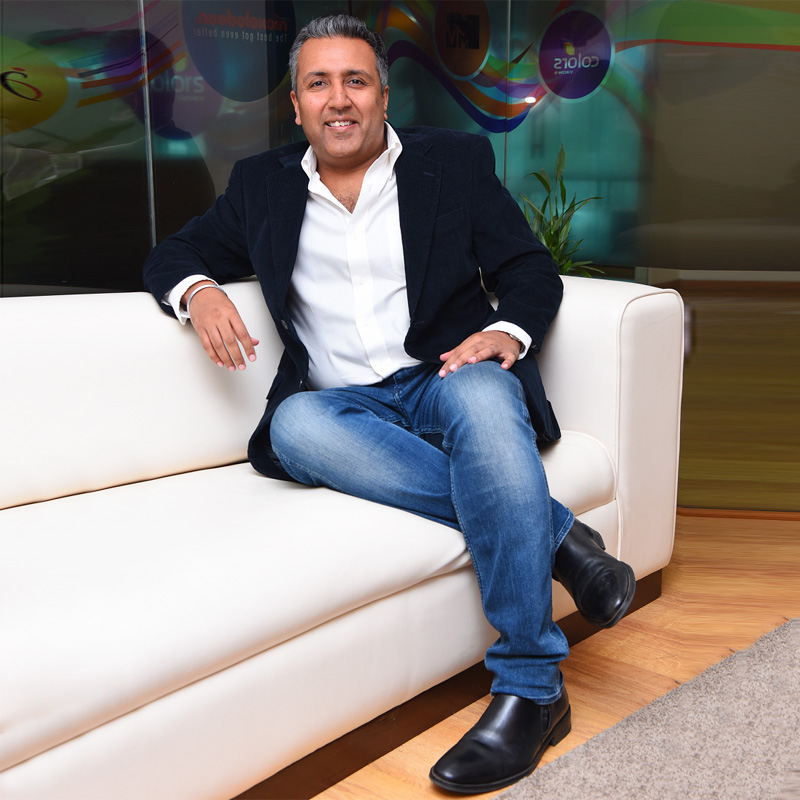
  • Our work culture fosters leaders: Viacom18’s Sudhanshu Vats

    Our work culture fosters leaders: Viacom18’s Sudhanshu Vats

    Over the last decade, Viacom18 has broken new ground in myriad ways. The company has grown to 44 channels and five lines of business from a three-channel operation back in November 2007. Sudhanshu Vats, the group CEO of the company, is a proud man but is far from being satisfied. Looking back, he says the most defining moment for Viacom18 has been the launch of Colors, at a time when the Indian market was deemed to be over served. The launch of Voot in 2016, according to him, is another big moment in the company’s timeline.

    Viacom18 was formed as an equal joint venture between global entertainment giant Viacom Inc. and Raghav Bahl’s Network18, which was subsequently bought by Reliance Industries. The network launched its flagship general entertainment channel, Colors, in 2008, capturing the number 1 rank within nine months of launch.

    Over the course of the decade, the company has diversified into four additional lines of business—films, digital, experiential, and merchandise—creating an entertainment ecosystem that reaches out to audiences across demographics and geographies.

    Launched in 2011, the film business of the media house has become profitable since the 2015 fiscal. For this business, the network has tied up with several companies, with Viacom-owned Paramount Pictures and Lionsgate Movies among them, to release their movies in India.

    In the live entertainment segment, the company already has intellectual properties, including Supersonic and Chuckle Festival. The consumer durables and merchandising arm of the business, launched in 2009, is the second largest merchandising and licensing operation in the country.

    “Our vision to be India’s most-admired M&E company is reflected in our intent to open new worlds for our audiences. Whether through our shows such as Balika Vadhu, Shakti, Lakshmi Baramma, Angels of Rock, Voot Original Untag or movies like Bhaag Milkha Bhaag, Queen, Toilet Ek Prem Katha; a strong undercurrent of social messaging drives a lot of our content,” said Vats on the occasion of Viacom18’s 10th anniversary.

    Identifying regional TV and digital as the new areas of growth, Viacom18 is launching Colors Tamil in February 2018 and a premium offering of its VoD platform Voot in mid-2018. In keeping with its focus on regional entertainment, the network plans to offer digital original regional content on the steadily growing OTT service and dial up its thrust on regional movies as well.

    The network is also aggressively making its push in the kids’ ecosystem. It has taken its homegrown characters to the silver screen and to digital screens via Voot Kids.

    Said Vats: “As we go forward, we have to make content discovery as seamless as possible. We need to work on recommendation engines. It is all about partnerships. In the digital business, we partner with 42 players. It is all about taking your partners along for the ride.”

    Vats is convinced that it is the corporate ethos which has been ingrained into those at Viacom18 that has made the difference. He elaborated: “We are proud of our ability to nurture and manage a multi-brand, multi-platform and multilingual network while growing at a blistering pace and fostering a winning culture based on a shared set of values.”

    So to what does Vats attribute the success to? He said: “What drives our success the most is our culture. And it is our ability to build our culture, where we foster innovation, where we foster openness, where we foster enterprise and entrepreneurial spirit. It is this culture that builds our leaders.”

    With its focus on creating magic for fans and crafting an inclusive organisational culture, Viacom18 is all set for its next decade of growth.

  • Viacom18’s Sudhanshu Vats: Indian media’s growth will be similar to China

    Viacom18’s Sudhanshu Vats: Indian media’s growth will be similar to China

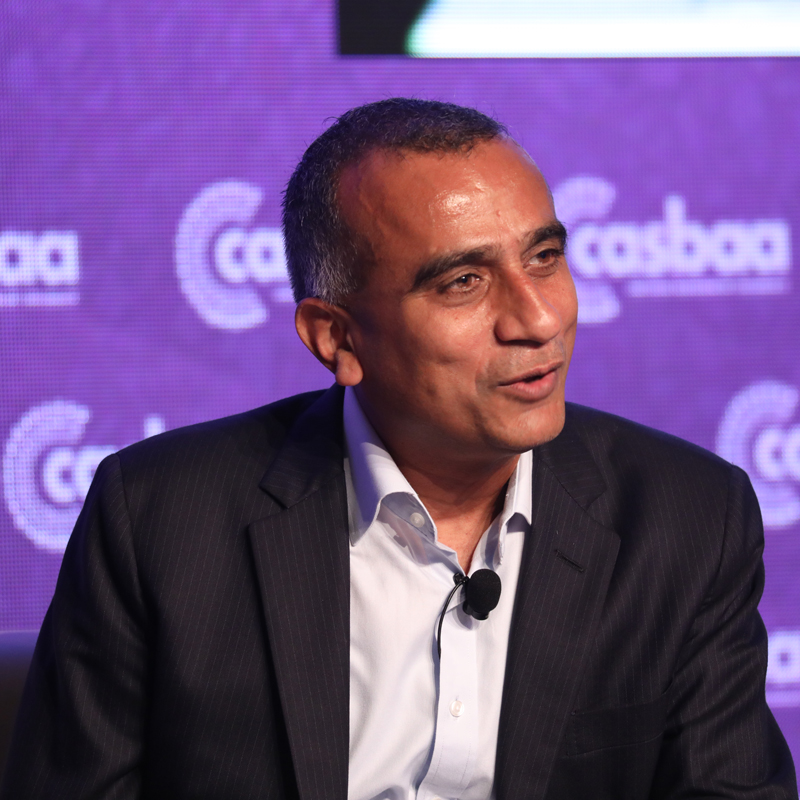
    MACAU: Even as he said that the growth trajectory of the Indian media space will be similar to that of China, Mumbai-headquartered Viacom 18 Media group CEO Sudhanshu Vats made it clear that both television and digital spaces were complementary to each other having a great future in India.

    “Indian media market’s evolution will be very similar to that of China. Where we (India) are today in 2017 is where China was in 2011,” Vats said on Wednesday during the opening keynote on the third and last day of the CASBAA Convention 2017 here in a conversation with media industry veteran Marcel Fenez of Fenez Media.

    “In India, the future of television is television and also digital. If you are a content provider or a story teller, you have an advantage,” Vats said, adding that he expected a significant growth surge on the AVoD and SVoD sides of the media business.

    Vats went on to highlight the reasons for pushing the company’s digital venture VOOT, stating that not only has the app downloads run into double digit millions, but that about 15-18 per cent of the content on the platform was exclusive even as the Viacom18 team learns from the digital evolutionary processes in the US and China markets. Launched in early 2016, VOOT engages kids as well as adults with 17,000 hours of network content.

    “We do a lot of content around digital, which is called VOOT exclusive. India has a big appetite for reality shows and there is a huge amount of curiosity about what happens behind the scenes,” Vats explained. Viacom18 hosts some of India’s biggest reality shows – ‘Fear Factor’ and `Bigg Boss’. He also thinks that India will skip credit cards to e-payment, which can help aim for VOOT SVoD with a paywall.

    According to Vats, a Unilever India veteran marketer-turned-media professional (he jokingly mentioned that in his previous company he was famously referred to as the `Laundry Man’ for driving Unilever’s home washing products in India), “Essentially we are storytellers. The big business we are in is content and we need a robust pipeline of content and creative talent. But the challenge is getting talent, and retaining them.”

    In this context, he explained later, Viacom18 has started a start-up initiative, encouraging young talent to express themselves in a creative manner as new disruptive ideas in Indian media will not come from within an organisation, but from outside.

    (Another reality show running on MTV India is Dropout, a nationwide hunt to find hidden creative talent in ‘dropouts’ to be groomed by industry leaders into entrepreneurs, to solve real-world business problems in a short span of time.)

    Terming Viacom18’s 10-year eventful existence as “fantastic” when it had grown 40x, Vats, whose many passions include running marathons world over, said the company’s journey had “now just begun” in India’s media landscape that has been changing dramatically over the years pushed by content, delivery mechanism and technological evolutions. (Incidentally, he completed his daily quota of an hour’s running before getting ready for the morning keynote.)

    As part of innovations being undertaken by Viacom18, Vats pointed out that the company plans to set up an engineering hub in India’s Silicon Valley, Bangalore, to help various in-house products.

    “The big media companies are consolidating and coming together with telecom companies,” Vats said highlighting the disruptions and convergence happening in the Indian media landscape, “If you had asked me before, I wouldn’t have thought that would happen.”

    Batting on the front foot for a digital India, Vats said the country was an “exciting” market. “It’s at the cusp…ready to take off. If you have a five-year horizon, it (India) is where you should be,” he aptly summed.

    ALSO READ:


  • Bigg Boss Season 11 garnered 70 mn views on Voot in 10 days

    Bigg Boss Season 11 garnered 70 mn views on Voot in 10 days

    MUMBAI: Colors ace Bigg Boss Season11 has garnered a big buzz on the internet. It has amassed around 70 million views in just the first 10 days of the show on Viacom18’s Voot. Voot carries every aspect of Bigg Boss including the full episodes, voting, MTV Bigg Boss Extra Dose and several exclusive show extension properties like Unseen Undekha, cutless and soon to be launched Bigg Buzz.

    About the overwhelming numbers, Viacom18 Digital Ventures COO Gaurav Gandhi said: “Bigg Boss from our network flagship channel Colors is the biggest digital entertainment content property in India by far and we can see the magnitude of it in the first 10 days itself on Voot. There is no other TV show that inspires so much fandom and the biggest fans of the show get everything they can think of now, including voting to save their contestants, on one digital platform and that is Voot. The episodes and the exclusively curated content around Bigg Boss on Voot has witnessed unparalleled digital viewership and has helped deepen the connect of these fans with the iconic show and that is why we see the average watch time per day per viewer for Bigg Boss on Voot is well over 45 minutes. With the momentum we have seen in the first ten days, we are now pushing to cross the magical 1 billion views mark for this season of Bigg Boss on Voot.”

    The exclusive segments, over and above the full episodes, curated for Bigg Boss on Voot include Unseen Undekha – A full dose of Bigg Boss for the true fans with exclusive and unseen content from the Bigg Boss house beyond what can be seen in the show episodes. From intimate conversations, impromptu dances and games organised by the housemates, to all the drama & fun that is an inherent part of BB, Unseen Undekha offer a daily, exclusive view into the saucy lives of the contestants as they go about surviving in the BB house.

    Cutless – A favorite with hardcore BB fans, Cutless offers a daily extensive, no holds barred access to watch complete unedited, uncut action and drama around eliminations, tasks, nominations and other game-changing events in the Bigg Boss house.

    Bigg Buzz –The fervor around the show gets bigger and better with Bigg Buzz, a fun weekend social media round-up show. Bigg Buzz will see a humorous take on all the madness of BB on the web, peppered with Live Video Chats, Twitter Interactions, Facebook Live etc. Upping the heat on the show will be other celebrity guests, the eliminated contestant of the week along with friends & family, ex-BB Stars and Social Media Influencers. Bigg Buzz is all set to up the engagement with the commoners truly making Bigg Boss11 – a show for the fans, of the fans and by the biggest fans of BB11.

  • OTT trumps TV by 44 min among youth: Chrome DM

    OTT trumps TV by 44 min among youth: Chrome DM

    BENGALURU: Online was larger of the two platforms for consumption of content by youngsters who consumed content only on television or only online in India, a Chrome Data Analytics and Media (Chrome) “OTT Consumption” study has revealed.

    The average daily time spent on content consumption online was 44 minutes higher than the average daily time spent on content consumption on television. Chrome’s survey included 2,505 respondents of which 28 per cent were aged between 15 and 24 years and 72 per cent were in the age group of 25 to 34. 49 per cent of the respondents were male and 51 per cent were female.

    Television versus online

    According to the study, 16 per cent of the respondents consumed content only on online devices, while only two per cent said that they consumed content on television alone. 81 per cent of the respondents said that they consumed content on both the platforms.

    Consumption patterns by respondents who used both platforms for content consumption

    2,054 respondents consumed content both on television and online.

    Genres consumption

    A mobile phone was the preferred device for music consumption among respondents who used both platforms. Eighty three per cent of the 2,054 respondents said that they consumed music on mobile phones as compared to 34 per cent that said that they also consumed music on television and 17 per cent who said that they also used a desktop/laptop for listening to music.

    In the case of movies, television was the preferred device with 66 per cent saying that they watched movies on television as compared to 39 per cent who watched movies on mobile phones and 29 per cent who watched movies on a desktop/laptop.

    Television was also the preferred device for news consumption, with 64 per cent watching it on television and 29 per cent who also watched it on a mobile phone and 9 per cent who also consumed news on a desktop/laptop.

    Seventy four per cent of the respondents consumed sports content on television. 21 per cent and 14 per cent also consumed it on mobile phone and desktop/laptop respectively.

    Sixty nine per cent consumed GEC content on television, and 17 and 6 per cent watched it on mobile phone and desktop/laptop respectively.

    Daily time spent on the mediums

    The average daily time spent online by the 2,054 respondents who consumed content on both television and online was 1 hour 37 minutes on television and 2 hours and 21 minutes online.

    Twenty nine per cent spent less that 30 minutes viewing television, 39 per cent spent between 1 and 2 hours viewing television daily; 26 per cent spent between 2 and 3 hours daily watching television, 3 per cent spent 3 to 5 hours viewing television daily and 3 per cent spent more than 5 hours on daily television viewing.

    Comparative numbers for online consumption of content were: 23 per cent spent each less than 30 minutes daily and between 1 and 2 hours daily; 29 per cent spent between 2 and 3 hours daily; 9 per cent spent between 3 and 5 hours and 17 per cent spent more than five hours on online content consumption daily.

    Frequency

    Seventy four per cent of were daily watchers of television and 26 per cent had no fixed routine for watching television. 77 per cent watched content online daily; 14 per cent watched content online during weekends and 9 per cent had no fixed routines.

    Apps

    YouTube was the preferred app for consumption of all types and genres of content. Other apps/websites such as hotstar, JioTV, Eros Now, Voot, gaana, saavn, Wynk Music, Sony Liv, TOI and NDTV were used for different content genres.

    Top three apps for music consumption

    The top three apps for Hindi music consumption were YouTube, Hungama and gaana , while for English music consumption they were YouTube, Wynk Music and gaana. In the case of Regional Music, the top three apps were YouTube, saavn and JioTV

    Top three Movie apps

    The top three apps for Hindi content consumption were YouTube, hotstar and Eros Now, for both English and Regional content they were YouTube, hotstar and JioTV.

    Top three GEC apps

    The top three apps for Hindi GEC content were YouTube, hotstar and Voot, while for English and Regional content they were YouTube, hotstar and JioTV.

    Top 3 sports apps.

    The top 3 sports apps were YouTube, hotstar and Sony Liv

    Top 3 News apps/websites

    The top 3 News apps/websites were YouTube, NDTV and TOI

    Top 3 apps for Online exclusive content

    The top 3 apps for online exclusive content were YouTube, Hotstar and Voot

  • Alternative sports has big demand in India & consumers willing to pay for premium content: Veqta

    Alternative sports has big demand in India & consumers willing to pay for premium content: Veqta

    Where there’s a will, there’s a way. And three sports enthusiasts live up to this adage beautifully. Building a company from ground zero to a level where it’s considered a leading digital media company is no mean achievement. The company: Veqta. The persons involved: co-founders Varun Mathur, Vikram Tanwar and Gaurav Gill.

    So, what does Veqta do? It is a leading (some say the first) Indian OTT subscription service dedicated exclusively to sports. It brings a unique selection of sports action across football, basketball, motorsports, tennis, MMA, Baseball, Fight Sports, badminton, etc. from authentic sources all over the world and the best analysis/opinions from world-class experts.

    Mathur is a former management consultant having worked with companies like TCS, Accenture, Nimbus, IMG and PGTI in leadership positions. Tanwar, apart from being a member of the founding team of Veqta, was previously the founder, CEO and MD of ITW Consulting. Similarly, Gill is also the founding partner and director at Chatsworth Management & Advisors. The company, now gets viewers for sports content, which is not available on other broadcasting and OTT platforms.       

    The business whiz-cum-sports-enthusiasts talk about their journey of a year and a half at Veqta in a free-wheeling conversation with Indiantelevision.com’s Kirti Chauhan. Edited excerpts from the interview follows:

    Q. How was Veqta conceptualized and what are the changes today from the time the platform was launched?

    Gaurav Gill (GG): To design Veqta’s offerings, we were looking at the biggest catchment areas in the Indian context outside the cricket and then we started handpicking our choice of sports properties to serve the needs and demands of the Indian market. Undoubtedly, we have a sound and solid offering in fight sports like wrestling, martial art and boxing, which is the biggest category in the country after cricket. We have a strong offering for basketball lovers because the game has a high demand in urban India. South India has a fan following for motorsports. As tennis is heavily demanded but underserved sports property in India, we have kept a wide offering in the tennis category.

    Varun Mathur (VM): Life certainly has changed from the time we started this OTT platform in many ways. Most notably, when we started, it was us who chased various sports league and federations for content, but today many global sports leagues, federations and sports companies get in touch with us to have their content on Veqta.

    Q. As you have chosen a niche area of sports streaming, how much traction and viewership you are netting? What is the average time spending on Veqta?

    Vikram Tanwar (VT): We monitor user engagement on a day to day basis and have observed that users are spending fairly large time on our platform. 1.2 minute per page is the average time spent by a user and statistics say that we have an average of 11 unique page views for every user. We have crossed 150,000 downloads within a month post the subscription service launch. We have catered 1.8 million page views on Veqta’s website within the first two weeks of the subscription launch. Our digital campaign has got 1.4 billion impressions across various mediums and the campaign video has crossed five million views.

    Q. Recently, you broadcast the boxing bout between Floyd Mayweather and Conor McGregor. How was the response in India?

    VT: Boxing bout between Floyd Mayweather and Conor McGregor was our first live property after the launch of subscription package on Veqta. Our strategy was to make the battle available only on Veqta not even on television. The boxing battle and the digital campaign was a huge success, gathering around 1.4 billion digital impressions across various mediums. Within a month of activation of a subscription package, we have crossed over 150,000 downloads. This made it clear to us that in India there is a big demand for alternative sports, apart from mainline sports like cricket, and there are people willing to pay for premium sports content.

    Q. What is the strategy behind keeping subscription low, compared to other OTT platforms’ rates?

    VT: India was an unexplored market for sports outside cricket and that’s one of the main reasons for Veqta to come alive. As sports fans, our aim was to make Veqta available to as many people and give them the comfort and flexibility to watch sports whenever and wherever on the go.

    GG: Initially, we have kept the pricing very low to make people aware of the product. If the person is genuinely interested in sports, the pricing context should not be a deterrent factor. We have an introductory offer of Rs 99 (actual cost Rs 399) to attract viewers, but it is for a limited time period. We surely want to have a sound subscription revenue based model, but at the same time, we don’t want the journey of watching sports to be difficult in India.

    Q. What is your revenue model?

    VM: Veqta is primarily a subscription-based service and so a bigger share of revenue will come from subscription. According to us, India is completely ready for a very large subscription service. For certain events, Veqta will look at sponsorship and advertising revenue, but that would be the secondary focus. In India, currently, advertisement rate is low for non-cricket sports. Being a sports-oriented service, we don’t want too much of clutter with lots of advertising on our page currently. In future, we might have sponsors’ logo along with sports content.

    Q. Do you presently have advertisers on board?

    VT: Although we do not have any advertiser on board currently, we would look forward getting them. At this juncture, we want our consumers to experience the uninterrupted live sport. Every sport is designed differently. Some sports allow us to showcase ads during a game, while some don’t. While we can fill airtime during a cricket match with ads, sports like basketball, football or tennis do not allow us to showcase uninterrupted feed along with advertising spots as in-between breaks in such games are absent.

    Q. What is your marketing strategy?

    VT: We have a focused marketing strategy, which is to acquire exclusive content rights without sharing it with any other broadcaster. We have adopted this marketing strategy from the time we have launched our subscription service and it is working efficiently. The big fight between Floyd Mayweather and Conor McGregor exemplified our marketing strategy of streaming exclusive content. Also, we are using a targeted digital marketing approach through which our marketing campaign focuses on identifying the sports fan segment specifically in the country. We then interact with them over various digital platforms to engage them with Veqta.

    GG: We are currently focusing on the digital-driven campaign. Our user acquisition cost is currently exciting vis-a-vis industry norms. But in future, we would look forward at above the line (ATL) campaigns. Considering the user demographics, digital is a more efficient and effective medium compared to television in the entire spectrum of various age groups. Based on the matrix, a majority of our users currently are under 15-28 age group, which is active on digital mediums. With the help of our analytics, it is easy to track and grab more subscribers.

    Q. How is the customer acquisition done?

    VT: Our customer acquisition strategy is centered on unique content offering across sports that have a very strong offering via exclusive rights to top sports leagues, events and tournaments for the Indian territory. We use targeted digital marketing to amplify our content package with our target customers.

    Q. Do you think there is a space for a service such as Veqta when domestic players such as SonyLiv, Hotstar, Jio and international ones like Amazon and Perform Group are getting into the business of sports streaming in India?

    VM: Based on Veqta’s offerings, we don’t have direct competitors at this juncture. As compared to us, other OTT platforms like SonyLiv and Hotstar, which offer sports, talk to a different audience with different content offerings. The competitive market of OTT platforms is extremely large and diverse, which has space for multiple service providers. The OTT market space of China has got 11 sports platforms, which are running successfully. Currently, in India, we are the only dedicated sports platform. And, we believe to have a great growth opportunity having crossed the benchmark of a million users within a year. Veqta is turning out to be a great piece of a compact show for which Indian consumers are willing to pay for high-quality content.

    Q. Do you think is there any opportunity for Veqta in cricket?

    VT: We are not targeting cricket at present. At this stage, our bouquet is full of other sports like fight sports, football, basketball, table tennis and much more. We are aware of the fact that India can’t be a single sports country.

    GG: The reason cricket fans are receiving a good experience is the quality and quantity of coverage by various broadcasters and OTT platforms. At the same time, fans of other sports do not receive the same quality experience generally. Looking at this scenario, our prime focus is to address the need of non-cricket sports fans.

    Q. Are you looking at adding any new sport in Veqta’s kitty?

    VM: Veqta would be adding Cue Sports, squash, American sports, eSports, indoor sports and games and much more very soon. Apart from this, we would look to add more properties of basketball and football and more of racquet sports like tennis, badminton and squash in our kitty.

    Q. It would be really helpful if you can enumerate the sports being showcased on Veqta presently.

    VM: VEQTA is currently covering a broad spectrum of sports including boxing, MMA, wrestling, baseball, basketball, tennis, table tennis, and rugby. In tennis, we are exclusive rights holder of WTA (Women’s Tennis Association). We have the rights to broadcast International Table Tennis games. In rugby, we own the rights to stream HSBC Sevens World Series. In the rally category, we own rights to broadcast World Rally Championship. 

    Q. Would you explore adding talk shows-type content on Veqta?

    GG: We are progressively into acquiring content rights to create Veqta as the biggest sports library. We are not targeting producing content ourselves, but we have explored sports reviews, sports analysis, and pre-news shows. in the near future, we would be looking at adding sports reviews, comments, analysis, and pre-match shows. We will be focusing towards reality instead of fiction. Our immediate priority is to make sure that live sports offerings keep growing.

    Q. What type of distribution alliances would be useful for Veqta?

    VT: OTT adoption and consumption is constantly evolving and we believe that distribution alliances will help realise the true potential of any OTT offering. We are already in advanced discussions with two large telecom service providers and with one of the largest OEM handset manufacturers for distribution alliances. We are also having discussions with hardware providers to offer Veqta for the home screen and large screen viewing. These alliances might be done by pre-embedding the Veqta flagship platform in hardware and on handsets or by offering limited Veqta content through a specialist Veqta Sports offering as a part of an OTT listing/marketplace offering by the respective service providers.

    Q. As sports rights are expensive propositions how such acquisitions are funded — internal accruals or are you looking at raising funds?

    VM: We are in active discussions with companies to raise more capital. However, we have spoken about our seed funding once in media, which was Rs. 33.5 million.

    Q.  Since Veqta was a late entrant in the Indian OTT space, what were the challenges faced and benefits reaped?

    GG: OTT as a concept in India is in an evolutionary stage, so we do not consider ourselves a late entrant. As far as dedicated sports platform is concerned, we are one of the early players. Earlier entrants into space successfully introduced the term OTT to the masses, which was not only welcomed but also got a great push from the likes of Reliance Jio. After studying the market and scenario, we decided to be in the SVoD category through which we are netting good subscriber numbers. We feel the subscription-based model is the correct approach to generate good revenue.

    Q: Would you be offering sports content in Indian regional languages and from when?

    VM: We firmly believe that sports still need to touch its potential reach in India. The basic problem we face is the offering of sports in India is limited to a few languages. For example, a sport like a football has a big fan following in pockets like Kerala, West Bengal and North-East, but if the nuances are not understood by a consumer other than his/her mother tongue or in the language spoken in the region, the viewing experience could diminish. We are aiming to go forward and give more customized experience to our viewers, but not immediately. In near future, we would be able to choose some sports properties and offer commentaries and related information in various regional languages.

    Q. Is there a possibility that in future Veqta transforms into a television broadcaster?

    VT: We strongly believe in the long run OTT consumption and viewership globally across general entertainment genres will replace (traditional) television. But, our key business strategy is “never say never” as we keep striving for improvements.

    Q. What technology are you using and who has designed your backend technology?

    VT: Veqta uses the services of multiple third-party technology companies like MultiTv, Switch, Amazon Web Services (AWS), Limelight and a few more. Earlier, people were putting a lot of money in developing in-house technology. As it is difficult for niche digital broadcasters to put a huge amount of money in developing in-house technology, we prefer to use various third-party operators, including those for satellite downlink. Unlike other OTT platforms like Hotstar, Amazon Prime, SonyLiv and Voot, we play 6,000 hours of live content, which has to be accurate and efficient in terms of streaming. Ours is a tougher job as we receive IP feeds from many of our partners who are pushing content from various corners of the globe. This content bounces of several servers and IPs, so we have deployed servers closer to source to receive LIVE match feed and process it there itself, before pushing it on to the CDN. For certain other partners, we receive the LIVE matches through satellite and process the feeds here in India after downlinking them.


    Q. What is your glass-to-glass latency?

    VM: The signals we receive are delivered on CDN (content delivery networks), which are the high-speed global servers that cache and deliver web content instantly. With the help of good internet connectivity, our glass-to-glass latency level maintains less than one second, which is around 300 milli-seconds, much less than television and other sports OTT platforms. It is one of the reasons that we are getting more subscribers as they are willing to pay less and get quick sports updates instead of investing time and money on subscribing television channels.

    Q. Where do you see Veqta over the next five years?

    GG: Five years down the line, Veqta will be one of the dominant forces in the sports streaming and OTT ecosystems. It will evolve into a world-class sports network in terms of number of a sports broadcast, number of customers and in the number of geographies we operate in. Most probably, Veqta will be a global player in the coming five years. Also, we want every sports fan to have a fabulous world-class experience while watching best of sports from all over the world at any point of time.

    ALSO READ:

    Floyd Mayweather vs Conor McGregor boxing fight on Indian OTT VEQTA4

    OTT: VEQTA is exclusive Major League Baseball partner for India

    Sports OTT VEQTA launches its mobile app for sports programming

  • Indiacast rejigs top management to streamline expansion plans

    Indiacast rejigs top management to streamline expansion plans

    MUMBAI: IndiaCast, the domestic distribution, international and digital business arm of Viacom18 and TV18, has restructured its international team with a sharper focus on bolstering business. The move aims at consolidating operational efficiency and bringing in synergies.

    The restructuring exercise is aimed at making the organisation future-ready as it enters its next growth phase. With this move, IndiaCast has emphasised its focus on alternative revenue sources such as digital and live events in its international business.

    The role of Govind Shahi has been expanded as the business head for Europe, Americas, APAC and Outbound Sales. The functional heads of the above-mentioned regions will now report to him directly.

    Sachin Gokhale will now assume the role of heading the corporate strategy, operations for international business, and will continue to oversee the Middle East and Africa region.

    Debkumar Dasgupta continues to head the syndication, new media / digital licensing businesses. In addition to the same, he will also oversee the south Asia linear business.

    All the international business heads will report into IndiaCast Group CEO Anuj Gandhi.

    Gandhi said, “We are at the cusp of a big change in our industry with alternate sources of growth emerging in terms of the technology and business models globally. Keeping in mind the ever-changing landscape, it is important for us to have a structure which is agile, empowers business heads to challenge the given and capitalise on opportunities.”