Tag: Vodafone

  • Vodafone urges people to upgrade life in latest ad

    Vodafone urges people to upgrade life in latest ad

    MUMBAI: Telecommunications service provider Vodafone has launched a new campaign encouraging customers to upgrade their life by upgrading their smartphones.

    In partnership with mobile handset manufacturer Samsung, Vodafone has made a select range of Samsung 4G smartphones more affordable and accessible to customers by offering a cash-back of Rs 1500. The exclusive association enables customers to upgrade to Samsung’s popular 4G smartphone models like J2 Pro, J7 Nxt and J7 Max and enjoy a better quality camera phone along with super-fast internet speed, entertainment and seamless connectivity.

    Vodafone India executive vice president of marketing Siddharth Banerjee says, “Customer expectations from their smart devices and service providers are rapidly evolving with the advent of newer technologies and smarter devices. Our recent communication reiterates Vodafone’s partnership with Samsung enabling customers to upgrade to an aspiring 4G smartphone and enjoy a rich voice and data experience on Vodafone SuperNet 4G.”

  • Vodafone brings back the Pug in AR

    Vodafone brings back the Pug in AR

    MUMBAI: Television viewers and spectators at Sunday’s grand finale of the Vodafone Premiere Badminton League broke into impromptu smiles when they realised they had unexpected company.

    Lending an entirely unique experience to complement the nail biting match, were the adorable Vodafone Pugs in ‘augmented’ avatar. This was the first time that augmented reality was seen on live TV in India.

    The idea was to seamlessly integrate the new data strong network campaign, being championed by the most loved brand icon, Cheeka – the Pug, with Vodafone Premier Badminton League.

    Vodafone India executive vice president of marketing Siddharth Banerjee says, “The finale of the Vodafone Premier Badminton League presented an opportunity for Vodafone India to highlight the newly launched 360 degree Data Strong Network campaign message to our audiences. We wanted to make our campaign ideas bigger and better, by extending this larger than life experience to television viewers – perhaps a first for any Indian brand. The iconic Vodafone Pug, now back with a pack of pugs, brings alive our proposition that the Vodafone network is getting stronger every hour to deliver a ‘Data Strong Network’.”

    Consistent with its commitment of keeping over 211 million customers in India confidently connected 24×7, Vodafone showcased its promise of a more robust, data strong network in an evocative yet simple manner. A specially created augmented enclosure drew the attention of match viewers and television audiences alike, with an army of Pugs coming on the court and interacting with the commentators.

  • The rising trend of coopetition among brands

    The rising trend of coopetition among brands

    MUMBAI: Who would have thought that companies would overcome their ego and actually collaborate with other brands to come up with joint advertisements? That is the new trend in the market-coopetition (a combination of cooperative and competition).

    Companies are willing to do anything today, including riding along with other brands just because it will benefit them. Coopetition essentially involves one company advertising through another company, so that each can benefit from the brand loyalty and reputation of the other. It is also called brand partnership and the term is relatively new to the business vocabulary and is used to encompass a wide range of marketing activities involving the use of two or more brands.

    An early instance of co-branding occurred in 1956 when Renault tied up with French jeweller Jacques Arpels to turn the dashboard of one of its newly introduced Renault Dauphines into a work of art. A unique case of coopetition was when Burger King made a proposal to archrival McDonald’s to create a unique burger McWhopper but Ronald McDonald frowned on it.

    public://Screen Shot 2018-01-14 at 7.03.43 PM.png

    The most infamous case was the success story of Samsung and Sony partnership back in 2004. Two competitors who operate in the same television manufacturing business decided to come together in a joint venture to develop and produce LCD panels for flat screen TV sets. Teaming with a rival produced two innovations, knocking down other competitors from their positions and more than doubled the combined market share of these two companies. The companies ended their partnership of liquid-crystal displays for televisions in 2011.

    Although a common practice internationally, the phenomenon is fairly new in India. The most acknowledged has been Ariel washing powder and LG washing machine coming together for a brand alliance. The partnership was strengthened by a TVC that showcased LG as the best washing machine to wash your clothes using Ariel washing powder.

    Indian two-wheeler motorcycle company Hero Group and Japanese Honda Motor Company entered a joint venture to set up Hero Honda Motors Limited in 1984. The joint venture not only created the world’s single largest two-wheeler company but also one of the most successful joint ventures worldwide. But, on 16 December 2010, the companies signed an agreement to dissolve their partnership.

    We have also witnessed telecom companies partnering with handset manufacturers to strengthen their position jointly in the market. This results in an increased sale of handsets and mobile network subscribers. In 2017, Sunil Bharti Mittal-led Airtel launched Android-powered 4G smartphones in partnership with Karbonn Mobiles. Domestic handset maker Micromax and Vodafone also came together to offer a smartphone at an affordable price hence increasing the mobile and network penetration in smaller markets.

    The latest addition to the list is sanitaryware Parryware joining hands with toilet cleaner Harpic to educate and promote imperative lifestyle habits. Emphasising the need for hygienic and clean toilets, the duo has even jointly launched a television commercial which revolves around the need to keep toilets sparkling clean and germ free for maintaining hygiene as well as longevity, while showcasing bathrooms as an important factor that drives health and well-being of consumers in their living spaces.

    Additionally, various food delivery apps have also been tying up with cab hailing services and e-commerce websites tie-up with mobile handsets as an exclusive seller such as OnePlus with Amazon. Although the trend is fairly new, it is an interesting space to see two brands coming together to achieve marketing and revenue goals together.

    Also Read:

    Indian TVCs that rapped with consumers

    The attention grabbing gimmick of comparative advertising

    Why do we lack animated ads despite their popularity

  • Vodafone brings back its iconic Pug

    Vodafone brings back its iconic Pug

    MUMBAI: Vodafone has been continuously strengthening its network by substantial investments and has now brought back its iconic mascot Cheeka, India’s favourite pug, but this time with a full army to charm customers with this exciting new campaign.

    Vodafone has made significant capital expenditure investments to modernise, upgrade & strengthen its network across the country, empowering customers to enjoy a superior network experience and remain confidently connected at all times. The new campaign will amplify this commitment by highlighting that Vodafone has been adding a tower every hour to enhance connectivity for its over 210 million customers.

    Vodafone India executive vice president of marketing Siddharth Banerjee says, “From the early 2000s, our pug has always been associated with Hutch and then Vodafone’s reliable network. The new campaign #StrongerTogether highlights our continued commitment to providing a world class network experience and we are delighted to present Cheeka and friends to our generation of customers in India. We hope people like the evolution of the ‘Network That Follows You’ to the refreshed thought of The Data Strong Network which always Follows You.”

    The 360-degree high decibel campaign has been conceptualised by Ogilvy & Mather India. Presenting a wholesome marketing mix, the six-week-long campaign will connect with customers across diverse mediums like OOH, radio, print and digital.

    Ogilvy Mumbai executive creative director Kiran Anthony adds, “Refreshing icons are always difficult. People still remember our first boy and dog ad and even the line, ‘wherever you go, our network follows.’ The challenge was to convey the new network proposition that we are getting stronger while retaining the simplicity and charm of our most loved asset.”

  • Reliance Jio, China’s Omnicom fuel massive global mobile data traffic

    Reliance Jio, China’s Omnicom fuel massive global mobile data traffic

    NEW DELHI: Global mobile data traffic growth reached a six-year high in the third quarter of 2017, increasing by 115 per cent worldwide year-on-year with China and India—riding on Reliance Jio primarily—accounting for half of all traffic growth globally, according to new report released yesterday.

    According to Strategy Analytics’ latest `Wireless Operator Performance Benchmarking’ database and accompanying report, Reliance Jio, China Unicom and Vodafone drove accelerated mobile data traffic growth in Q3 2017.

    India and China accounted for half of all traffic growth globally with Jio’s continued disruption in India and strong growth in unlimited data plans in China driving both of those markets. In Europe, Vodafone has enjoyed healthy early traction for its zero-rated Passes, the report said.

    Strategy Analytics provides competitive edge with advisory services, consulting and actionable market intelligence for emerging technology, mobile and wireless, digital consumer and automotive electronics companies. With offices in North America, Europe and Asia, Strategy Analytics delivers insights for enterprise success.

    Other key findings of the report include:

    — Reliance Jio was carrying more data traffic than any mobile operator globally within six months of launch, but its disruptive impact on the market has meant profitable traffic growth has been hard to find.

    — Unlimited plans have accelerated traffic growth in China, up 166 per cent year-on-year in Q3 2017 and have generated a healthy recovery in both service revenue and EBITDA.

    — Vodafone had eight million customers using Passes by the end of September 2017, with a positive impact on ARPU and usage. It has delivered 2.6 times growth in traffic in Europe over the last two years with near-flat opex.

    Phil Kendall, report author and director, Service Provider Group, in a statement said, “It is encouraging to see more success stories from operators using unlimited or zero-rated pricing to unlock growth in both revenue and profitability. The success of China’s Unicom’s unlimited plans and collaborations with local internet giants highlights the importance of partnering with content providers to add value to data plans.”

  • TRAI tightens the screws on interconnectivity for telcos

    TRAI tightens the screws on interconnectivity for telcos

    Mumbai: The Telecom Regulatory Authority of India (TRAI) has issued a mandate to service providers directing them to enter into an interconnection agreement on a “non-discriminatory basis” within 30 days of receiving a connectivity request from another mobile operator.

    The regulator’s release on the subject comprises regulations on important aspects of interconnection such as interconnection agreement, provisioning of initial interconnection and augmentation of points of interconnection (Pols), interconnection charges, disconnection of Pols, and the financial disincentive on interconnection matters.  

    The regulations will come into effect from 1 February 2018 and “will apply to all the service providers offering telecom services in India,” the TRAI release stated.

    Through these regulations, the TRAI has mandated that every service provider shall, within thirty days of receipt of request from a service provider, enter into an interconnection agreement. In has also laid down the framework for provisioning and augmentation of ports at Pols, which stipulates a step­by-step process for provisioning of ports at Pols.

    In October 2016, the TRAI had issued a consultation paper on ‘Review of Regulatory Framework for Interconnection’ for seeking comments of the stakeholders. The comments and counter-comments received from the stakeholders were uploaded on the TRAI’s website.

    The issue of interconnectivity was a bone of contention in 2016 between then newbie Reliance Jio and other established telecom companies such as Airtel, Vodafone and Idea Cellular.

    Also Read:

    TRAI open house to discuss ease of doing broadcast biz

    TRAI landing page norms stayed till 22 December 2017

    Trai to make recommendations on net neutrality today 

  • The year the telecom sector quaked

    The year the telecom sector quaked

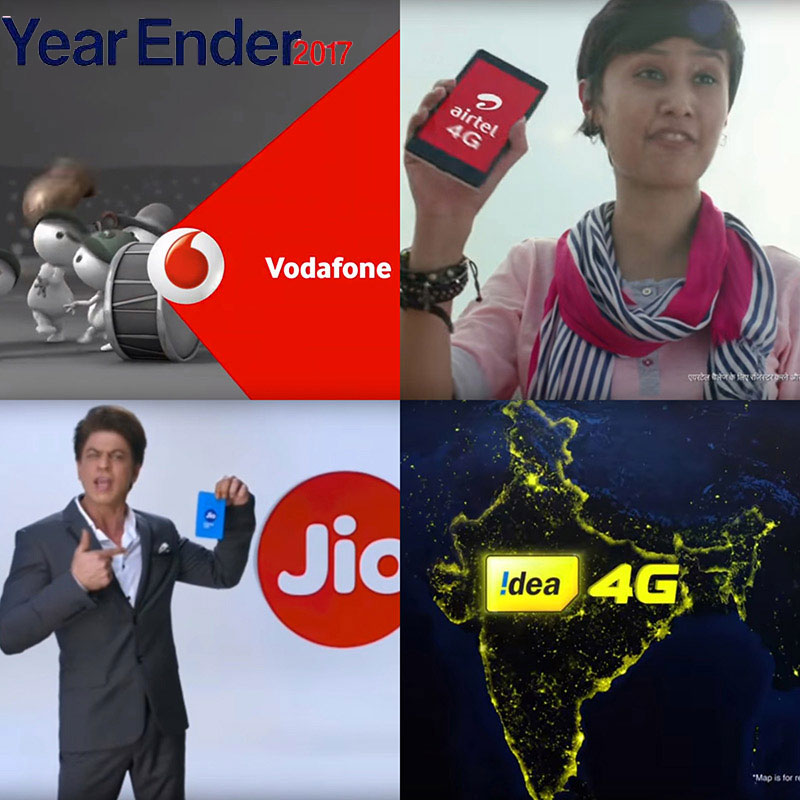
    An interplay of myriad factors contributed to India’s telecom industry witnessing both turmoil and revolution in 2017. Consolidation was the buzzword as some of the largest telecom operators merged even as Reliance Jio Infocomm Ltd (RJio) emerged as a frontrunner for Reliance Communications’ (RCom) assets according to reports. RJio can also take credit for ushering in a data revolution in the country.

    Moreover, smartphone penetration during the year increased three-fold with the aggregate number of users at more than 300 million. With smartphones still accounting for less than 50 per cent of handset users (650 million) in the country, another surge in data consumption is on the anvil.

    The price war

    Indian tycoon Mukesh Ambani sparked a price war in 2016 with the launch of Reliance Jio. As a consequence, the country’s large telcos have been burning through cash this year to hold on to their market share. Vodafone and Airtel tried luring customers through cheap data and unlimited calling offers. Reliance Jio, however, clearly won that battle. Within the first month of commercial operations, Jio announced that it had acquired 16 million subscribers. This was the fastest scaling up by any mobile network operator anywhere in the world. The operator crossed the 50 million subscriber mark 83 days from its launch, crossing 100 million subscribers on 22 February 2017. By October 2017, it had around 130 million subscribers. 

    With telcos looking to push for higher data pack purchases, 4G became cheaper than 3G. Today, 4G data costs are as low as 1 paisa per MB.

    Sectoral consolidation 

    From as many as 13 players at one point in time, we are now left with just five major contenders even as RCom sits on the brink of leaving the fray. Earlier this year, Vodafone India and Idea Cellular decided to merge operations to create India’s largest telecom operator worth more than $23 billion beating Sunil Bharti Mittal-led Airtel. With this deal, Vodafone India’s valuation stood at Rs 82,800 crore and Idea’s at Rs 72,200 crore. 

    RCom, reeling under a debt of around Rs 46,000 crore, shut down its voice services from 1 December 2017 after it failed to close its wireless business merger deal with Aircel. The Telecom Regulatory Authority of India (TRAI) has issued a directive to RCom’s customers to move to other networks by the end of this year. Vodafone, Airtel, and Jio created special packs for RCom customers to lure them to their networks. 

    Telcos and handsets 

    In July 2017, Jio introduced JioPhone–the company’s first affordable 4G feature phone powered by KaiOS. The phone was made available for a security deposit of Rs 1500, which could be reimbursed on returning the phone after three years. This phone was released for beta users on 15 August 2017 and pre-booking for regular users started on 24 August 2017. 

    To strengthen its presence amidst the battle for market share, Airtel launched Android-powered 4G smartphones in partnership with Indian cellphone manufacturer Karbonn Mobiles. Airtel also partnered various other mobile handset manufacturers, including Intex, to create an ‘open ecosystem’ of affordable 4G smartphones.

    Not one to be left out of the party, Vodafone and domestic handset maker Micromax came together to offer a smartphone priced a shade under Rs 1000 with a three-year rider.

    Internet of Things

    Despite posing privacy risks, Internet of Things, or IoT, remained one of the buzzwords in tech circles this year. According to Vodafone Plc’s annual IoT barometer report 2017-18, the percentage of companies with more than 50,000 connected devices active has doubled in the last 12 months with over 84 per cent of IoT adopters saying that their use of IoT has grown in the last year. From the Indian organisations that were a part of the study, 81% felt that IoT was key to digital transformation.

    In India, Vodafone marked itself as the first brand to undergo this evolution. The telco repositioned itself as a contemporary and future-fit brand. It is a significant metamorphosis for one of India’s most iconic and loved brands since the ‘Power to you’ tagline was introduced in 2009. This new positioning, a part of Vodafone’s rebranding exercise across 36 countries, is designed to underpin its belief in new technologies and digital services playing a positive role in transforming society.

    Net neutrality  

    In what was seen as a sign of things to come, the US Federal Communications Commission voted in December to scrap net neutrality, which requires internet service providers to treat all internet traffic equally. The TRAI, not too long after, came out in strong support of net neutrality in a series of recommendations following a long process of consultations on the issue. The regulator believes that the licensing terms should be amplified to provide explicit restrictions on any sort of discrimination in internet access based on the content being accessed, the protocols being used or the user equipment being deployed. 

    With IoT being the talk of the town, networks fighting to grab RCom’s assets and customers, and an ongoing telco war between Airtel, Vodafone, and Jio to become the country’s numero uno operator, it will be interesting to watch how the industry shapes up in 2018.


  • PBL S3 to launch with Saina vs Sindhu match

    PBL S3 to launch with Saina vs Sindhu match

    MUMBAI: The Vodafone Premier Badminton League (PBL) season 3 is just around the corner featuring top Indian and international badminton talent in the world, including eight Olympic Medal Winners.

    The league kicks-off on 23 December 2017 and will go on till 14 January 2018. Guwahati will open the third season. The pan-Indian league will be hosted in five cities this time, with Delhi, Lucknow, Chennai, and Hyderabad being the others. Hyderabad, which is very much Indian badminton’s hub, will get the honour to host both the semi-finals as well as the final.

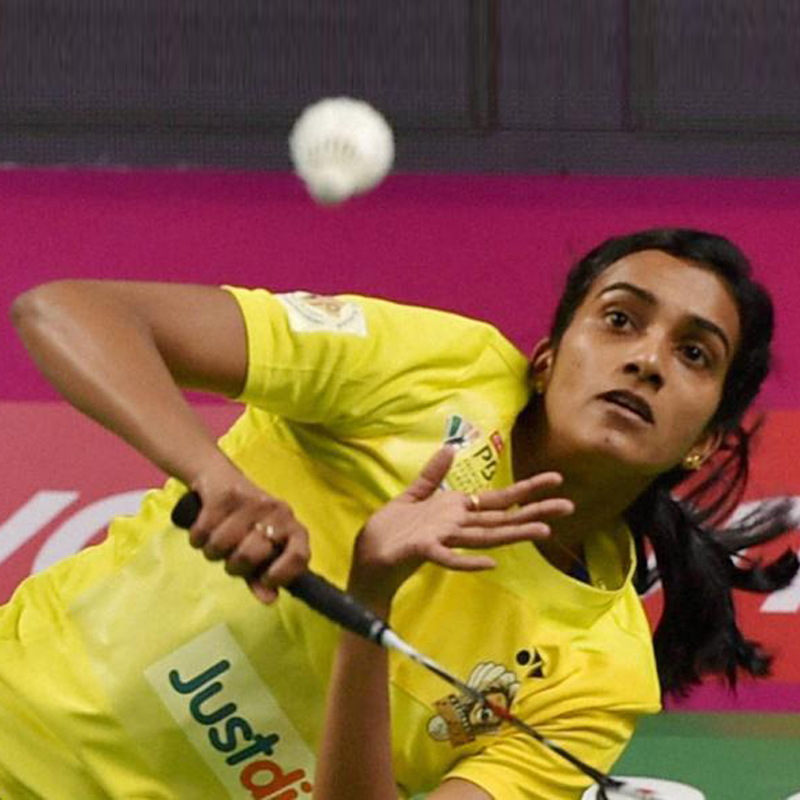
    The defending champions Chennai Smashers will take on Awadhe Warriors on the first day, with the clash between India’s top two shuttle queens, Saina Nehwal and PV Sindhu.

    Indian badminton has a strong legacy from the past with players like Prakash Padukone and Pullela Gopichand who have put India on the global badminton map. Season one of the PBL attracted more than six crore badminton fans in India through various social media and other platforms, and this number only increased in season two.

    The costliest player this time is India’s HS Prannoy. The World No 10 was bought by the Ahmedabad Smash Masters for a whopping Rs 62 lakh.

    The women’s singles top-ranked player, Tai Tzu Ying, who has won five superseries titles this year, is a new name in the PBL and she will represent the Ahmedabad franchise. Men’s singles No 1 Viktor Axelsen, who was crowned the world champion in August, will play for Bengaluru Blasters.

    Besides showcasing the best of international and Indian talent, the tournament has also been successful in widening the base of the game.

  • Vodafone launches industry’s first end-to-end IoT solution

    Vodafone launches industry’s first end-to-end IoT solution

    MUMBAI: The internet has come a long way from connecting only mobile phones and laptops to include smart homes, wearable technology, and smart cities. With the growing recognition for Internet of Things (IoT), the market for IoT in India is poised to reach $9 billion by 2020.

    To enable enterprises’ IoT adoption, Vodafone has launched SuperIoT comprising solutions like vehicle tracking, asset tracking (fixed and mobile) and people tracking (school students and employees). An industry-first solution, it enables end-to-end management of device, application, connectivity, service platform, support and security.

    With SuperIoT, enterprises do not have to face the challenges of managing multiple suppliers and service providers. They can benefit from rapid application development, device management and analytics with the application enablement platform. They can also have better manageability and control of their assets through managed connectivity.

    Vodafone business services director Nick Gliddon said, “As a global leader in IoT, Vodafone has worked closely with enterprises across various sectors like automotive, utilities, manufacturing, banking and logistics on their IoT deployments. We understood the need for an end-to-end, secure solution and with the launch of SuperIoT enterprises will be able to free themselves from the complexities and hassles of the IoT deployment process. This will be able to focus on business outcomes and accelerate their digital transformation by truly harnessing the power of IoT, driving innovation and growth.”

    As per Vodafone’s ‘5th Annual IoT Barometer Report’, 81 per cent of Indian organisations feel IoT is key to digital transformation. While enterprises are becoming aware of the benefits that IoT can bring to their business, they face a host of problems when it comes to identifying and deploying the right IoT solutions–the marketplace is complex and filled with multiple vendors and multiple platforms. Even if they are able to conduct a pilot, they face challenges in scaling for production. 

    SuperIoT addresses these gaps by bringing together all aspects of IoT in one end-to-end solution, covering all the layers from device, application and managed connectivity to in-life support. Having one integrated solution from a single provider delivers unprecedented value to enterprise customers. SuperIoT enables faster time-to-market, while generating timely business insights in a managed service model that lets enterprises focus on their core business areas.  SuperIoT thus has the potential to bring about a digital transformation in enterprises, and the nation at large, enabled by IoT.

    Vodafone SuperIoT includes:

    • Vehicle Tracking: A cost-effective, end-to-end solution that allows customers to have real-time visibility of their fleet, monitor vehicle condition, receive alerts about faulty vehicles, reduce unplanned vehicle downtime and help maintain asset value, thus reducing overall operational costs, ensuring safety and improving customer satisfaction.
    • Mobile Asset Tracking: With this solution, customers can completely transform their supply chain and logistics operations, and deliver goods faster with more operational efficiency. It enables them to track the location and status of their assets, be it healthcare equipment, building materials, construction equipment, etc. thus enabling effective management of business
    • Fixed Asset Tracking:
      • Sales Generating assets : Transforming mere sales-generating assets into smart, connected assets which capture important data (such as location alerts, motion detection, operational status, estimated stock levels and usage, etc.) and deliver useful business insights for decision making and overall operations
      • Diesel Generator (Energy monitoring) : A diesel generator monitoring solution that enables you to monitor the total diesel consumption, energy output, load and kWh/litre ratio and much more, to improve the performance of generator, while reducing cost.
    • People Tracking 
      • Employee Safety: A set of smart solutions which offers safety of employees in and out of the workplace, by combining RFID + GPS + GPRS enabled ID cards and wearables along with emergency call facilities to a central emergency response team
      • Student Safety Solution for Schools: Helping parents, school authorities and school bus transport managers keep track of their school children’s location through RFID + GPS + GPRS enabled ID cards and bus & campus readers, integrated with vehicle tracking and camera facilities. 
  • Vodafone to get new shine from Idea; merger on its last leg

    Vodafone to get new shine from Idea; merger on its last leg

    MUMBAI: The team at Vodafone India is gung-ho about its merger with the Aditya Birla-owned Idea Cellular.

    Consolidation between the networks is in its last leg with most of the approvals already through. “We are just awaiting approvals from National Company Law Tribunal (NCLT) and the Department of Telecommunications (DoT) and it should happen over the next few months,” says Vodafone India CEO Sunil Sood.

    What the senior executive is quite keen on is building a new fighting-fit telco machine with the right imagery. Says Vodafone India COO Balesh Sharma: “We are very optimistic about the merger. We want to give Vodafone a new shine with this merger. All options are open in terms of branding. However, haven’t decided what our brand journey after the merger will be.”

    While that may be true, with the two major behemoths coming together, they will have to deal with the strong messaging that each of these has been pushing out to customers. Vodafone is known for its ZooZoos while Idea rolled out its new tagline of ‘LookLook’ early this year. Vodafone will continue to push the characters of Asha and Bala for all its campaigns post the merger as well.

    While Vodafone has a strong presence in urban areas, Idea has captured a significant chunk of interior India. Together they will surpass Bharti Airtel to become the largest telecommunication company with a combined subscriber base of over 400 million.

    Idea Cellular, our own homegrown brand that was launched in 1995, has a subscriber base of 193.96 million as of July 2017 whereas Vodafone India is the Indian subsidiary of UK-based Vodafone Group, the world’s second-largest mobile phone company. The network enjoys a subscriber base of 250 million and has a 20 per cent market share.

    Under the terms of the deal, Vodafone will hold 45.1 per cent stake in the combined entity, the Aditya Birla Group will hold 26 per cent and the remaining shares will be held by the public. With this deal, Vodafone India would have a valuation of Rs 82,800 Crore and Idea at Rs 72,200 Crore.

    In the ongoing battle for customer acquisitions, Vodafone and Airtel have revamped their tariffs to lure customers. With IoT being the new talk of the town, networks are fighting to seize Reliance Communication customers.

    With the current telecom war between the giants – Vodafone, Airtel and Jio – it will be interesting to watch which one bites the bullet and which bites the dust.