Tag: Vodafone

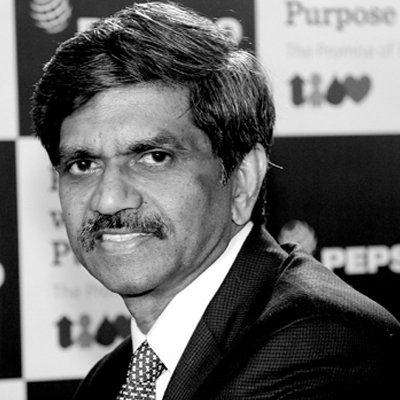
  • PepsiCo India’s Shivakumar says collaboration will be the key to growth

    PepsiCo India’s Shivakumar says collaboration will be the key to growth

    MUMBAI:  “One needs to look at brands which will help each other grow as well as benefit the industry…”


    This was the message conveyed by PepsiCo India chairman and CEO D Shivakumar to a large gathering of who’s who of the industry on Wednesday, as he took them through the highs and lows of marketing, media and advertising in 2013 and indulged in crystal gazing to see what holds for the communication fraternity in 2014.


    In the coming years, Shivakumar sees a conflict between independent growth and dependent growth among agencies as well as brands.


    Giving the example of telecom, Shivakumar said, “Telecom would not have been what it is today if Airtel would not have collaborated with Nokia or Vodafone with Samsung. “


    Apart from all this, the industry is all about innovation wherein size doesn’t matter but all depends on how fast a company is in responding to consumers.


    As the industry waited for the leader with ‘fighter’s instinct’ to share his views at the IAA organised event called ‘Retrospect and Prospects’, Shivakumar stepped on to the stage and made it clear it is more about paying tribute to the city (Mumbai) which has taught him a lot and that he will wrap up within 60 minutes.


    He started with how the city and the people he met here have helped him grow in his career and went on to touch upon various aspects which affect the industry starting with how last year saw the emerging markets slowing down and how it devalued the currency.  


    Not indulging much in the negatives, he highlighted how 2013 was the defining year for the digital space. “The smart phone which gives the power of internet in every person’s hand has opened up the whole world of opportunities for them. It has empowered women and youth,” he said while pointing out how a billion phones were sold last year and this year will see many more being sold.


    People using internet through mobile phone is much higher than through fixed internet, globally, hence, he urged marketers to shift their media strategies.  With that note, he estimated that the year 2014 will see the world media industry spending $505 billion.


    The general elections in India will play a major role in deciding which way the country and the various sectors will head. Shivakumar said in the coming months India will see about Rs 1,000 crore being spent on advertising by political parties, 2.5 times higher than what was spent in 2009.


    The year will also see a shift in the manner the money will be spent. The shift will be in favour of the digital medium wherein 10 to 15 per cent will be spent on the platform as the first time voters (160 million) are on social media.


    Shiv believes that regional markets play an important role as regional languages are driving growth in the number of TV channels. The same stands true for print as well. “We are a hyper fighting market and can never be satisfied with just a couple of choices. But with so much proliferation, it is time to collaborate?” he questioned the audience.


    He then added how TV has been a major contributor in unearthing talent in the country. With too many dance, singing, etc reality shows gracing our television sets only shows the potential this wonder has, he said.


    Maybe that is the reason behind the company (PepsiCo) launching its channel with MTV to help budding talent get a platform to showcase talent.


    For brands which depend on celebrities, one needs to understand how social media has changed the equation and how brands as well as celebs need to help each other reach high numbers (likes and followers) on social media platforms.

  • Vodafone launches India’s fastest data dongle k4201

    Vodafone launches India’s fastest data dongle k4201

    MUMBAI: Keeping in view the growing mobile internet penetration and data usage in India, Vodafone India, one of India’s leading telecommunications service providers, today announced the launch of Vodafone K4201, India’s fastest 3G USB Dongle with data transfer speed up to 21.1 Mbps, at a pocket friendly price of just Rs. 999 for its postpaid customers.

    Commenting on the new launch, Vivek Mathur, Chief Commercial Officer, Vodafone India said, “With the growing penetration of data, there is a constant demand for high-speed connectivity. The launch of Vodafone K4201 3G dongle, with consistent connectivity and upto 21.1 Mbps superfast data transfer caters to this demand for high speed mobile data services.”

    Stylishly designed and feature packed with new customer friendly easier user interface, the superfast Vodafone K4201 3G dongle is  best in class quality with high network efficiency and supports all major Operating Systems, like latest Window 8, Mac, Linux, Fedora and Ubuntu. For subscribers who want to store the data as well, this Dongle provides MicroSD card support with expandable memory of up to 32 GB. It is available at key Vodafone retail stores and comes in three colours, viz Black, Red and Dual Tone White & Red.


    As an introductory offer, customers can avail 100 % cash back on the dongle along with attractive postpaid plans:

    ·Cash Back offer – On 3G plans with rental of Rs 650, 750 & 850, get Rs 100 bill discount every month for 12 months. i.e. effectively free dongle

    ·Advance rental offer – Pay rental for 6 months & get next  2 months rental free i.e 8 months of usage, on select 3G postpaid rental plans (650/750/850)


    The software features of the Dongle are:

    ·New Dialer with enhanced user support functionality: Web Chat, Help Line number on dash board, Online Banner for Vodafone offer updates and troubleshooting guidance for common error codes

    ·Vodafone landing page opens on connection

    ·Online Software Upgrade: New version of dialer software can be upgraded online by the user

    ·One click access to ‘My Vodafone’ and ‘Vodafone Online’ Web Chat Support

    ·Set data usage limit alert and monitor usage


    New Enterprise specific functionality:

    ·Capability to disable Micro SD card functionality

    ·Capability to lock SIM card to a specific Dongle through a SIM lock / unlock tool

  • Ten Sports hits a six with India-SA series ad inventories

    Ten Sports hits a six with India-SA series ad inventories

    MUMBAI: So what if Indian cricket lovers are yet to recover from the loss of their God – Sachin Tendulkar?  Ten Sports is pulling out all the stops as the world’s best cricketing nation gets ready to battle with the world’s No 1 test team – South Africa.

    India’s great performance on the cricket field in almost every tournament recently has resulted in Ten Sports selling out almost 90 per cent of its inventory three days before the action starts with the Proteas. And it seems as if there’s a lot many more advertisers waiting to sign up in what is being billed as ‘Clash of the Titans.’

    Says Ten Sports CEO Rajesh Sethi: “Post the departure of Sachin from the national side, I feel this will be the true test of the young brigade that we have against the fierce pace attack of the South Africans in their backyard. We are looking at this series as speed vs skill and the feedback on social media has been really encouraging for this series.”

    Big names are associated with the tournament, what with Kent RO the title sponsor and iBall the co-presenting sponsor for the studio show; Micromax as co-presenting sponsor for the series along with associate sponsors Xolo, Vodafone, Havells, Go daddy, We Chat, Daikin, Tata Motors and ITC.

    We are targeting nearly Rs 120 crore in terms of ad revenues from this series, says Ten Sports CEO Rajesh Sethi

    Sethi further reveal that for the ODIs, ad slots have been sold at Rs 4.25 lakh for every ten seconds and for test matches, they’ve been sold at Rs 1.25 lakh for every ten seconds.

    “We are in a very comfortable position with just 10 per cent of our inventories remaining to be sold and with three days still remaining for the highly anticipated series to commence, we are planning on hiking the rates by 20 per cent.” he laughs. “We are targeting nearly Rs 120 crore in terms of ad revenues from this series and I am confident of hitting that mark.”

    The 360 degree marketing campaign has cost the channel nearly Rs 10 crore, which includes above the line (ATL) with a wide outdoor campaign as well as below the line (BTL) activities, with road shows in key cities such as Mumbai, Delhi, Hyderabad and Bengaluru. “Apart from this, we have also carried out an innovative campaign on the digital platform with a Hindi jingle that has gone viral on social platforms for the high octane series,” informs Sethi.

    Giving his perspective on the channel’s claim, Madison Media COO Karthik Laxminarayan says: “Big sporting events such as these generally sell out 80 per cent of their inventories and make the most of the remainder of the same. Ten Sports on its part has surely garnered a sizable amount for the series.”

    Madison Media COO Karthik Laxminarayan feels Ten Sports on its part has surely garnered a sizable amount in ad revenues for the series

    On Twitter, Ten Sports has over 43,850 followers while on Facebook, it has got 2.3 million likes with fans continuously interacting about the upcoming series.

    Between 5 and 30 December, the series will be shown live on Ten HD, Ten Cricket and Ten Sports. On Ten Sports, there is Hindi commentary while on Ten HD and Ten Cricket the ball by ball action will be narrated in English.

    Explains Sethi: “With the viewer becoming more and more demanding like any other nation, and rightfully so, there is a viewer base that is looking forward to Hindi commentary and then the usual English commentary feed. Thus, we are only trying to reach out and satisfy the needs of our viewers and keep everyone glued to the action being played out on their screens in the language of their preference.”

    Ten Sports has over 100 million viewers across the market, and will be sharing the telecast of the ODI series with the public broadcaster Doordarshan. Like the last India vs West Indies series, this series too is expected to grab eyeballs.

    “Each property has its own traction and there are different reasons for each event to have the kind of viewership it had, as we all know the main reason for the series being followed was the last two test matches of Sachin’s career; but having said that, with two of the best in the sport locking horns on the field and with the injection of fresh blood in the Indian squad, cricket lovers are surely in for a treat,” Sethi signs off.

  • TRAI study reveals telecom sectors growing pains

    TRAI study reveals telecom sectors growing pains

    MUMBAI: With foreign promoters increasing their stakes or purchasing the stakes of Indian promoters in telecom companies such as Aircel, Unitech, Sistema Shyam, Bharti Airtel and Vodafone, the latter’s total shareholding of major telecom access providing companies has dropped from 59.77 per cent in the year 2007-08 to 40.42 per cent in 2011-12.  A study paper released today by the Telecom Regulatory Authority of India (TRAI) on shareholding, financing and capital pattern of Indian private telecom access service providers (TSPs) has revealed this.


    It attempts to provide an overview of the capital structures (deployment of funds in the form of owners’ equity and loan fund) of companies operating in the telecom sector based on the annual accounts and other information provided by 24 Private Telecom Access Service Providers.


    The study paper also points out that while the share of Indian promoters in the equity shareholding declined from 59.70 per cent in 2007-08 to 56.63 per cent in 2011-12, the share of the foreign promoters has increased from 5.30 per cent to 13.90 per cent in the same period. So while Unitech, Tata and Vodafone have reported a decline in Indian promoters’ equity, Bharti, Unitech, Tata, Sistema Shyam, Loop and Vodafone have seen an increase in the stake of foreign promoters in equity shareholding.


    The study paper is a comparative study of facts in the year 2007-2008 and 2011-2012. The trend indicates that the preference shareholding of Indian promoters and others has declined from 60.89 per cent (2007-08) to 2.62 per cent (2011-12). This decline is mainly in the case of the Tata group. The share of the foreign promoters in the total preference shareholding has gone up sharply from 0.59 per cent to 95.84 per cent. The increase in foreign promoter’s shareholding is Rs 5,988 crore and is mainly in the Aircel group.


    Foreign currency loans for these companies have gone up from Rs 13,929 crore in 2007-08 to Rs 40,045 crore in 2011-12. The increase in foreign currency loans in 2008-09 over the previous year was attributed to the borrowings by Reliance Communications and Idea Cellular.  Reliance, Tata, Bharti Airtel and Idea have the major share (88 per cent) in foreign currency loans/bonds outstanding at the end of year 2011-12.


    The study shows that Bharti, Vodafone and Reliance have not shown any change in their share capital.  Idea’s share capital has increased 26 per cent from Rs 2,635 crore in 2007-08 to Rs 3,309 crore in 2011-12, making it the only TSP showing that kind of growth. Total reserves and surplus in respect of Vodafone have declined from Rs 9,991 crore to Rs 2,975 crore, whereas the total reserves and surplus of other companies have shown an increase.  As on 31 March 2012, while Bharti, with Rs 50,470 crore had the highest reserves and surplus; Tata showed negative reserves and surplus of Rs 4,748 crore.


    As on 31March 2012, Vodafone had the highest debt of Rs 45,332 crore followed by Reliance at Rs 31,195 crore and Tata at Rs 23,986 crore. Vodafone and Tata have shown persistent increase in debt during the past five years whereas the other three service providers have shown fluctuating trends in debt.


     The study also highlights the fall in EBITDA margins for almost all the TSPs over the past five years.  Bharti’s EBITDA has gone up from Rs 11,447 crore in 2007-08 to Rs 15,441 crore in 2011-12; however as a margin it has fallen from 41.96 per cent to 33.82 per cent. Vodafone’s and Reliance’s EBITDA has declined from Rs 6,247 crore and Rs 5,175 crore in 2007-08 to Rs 4,248  crore and Rs 3,018 crore in 2011-12 respectively.


    Vodafone’s PBIT has declined very sharply from Rs 3,473 crore in 2007-08 to Rs 27 crore in 2011-12 while Tata’s has been negative throughout the period and has declined progressively from a negative Rs 1,194 crore to a negative Rs 2,275 crore over the past five years.  Ditto with Reliance which has seen its PBIT fall during 2008-09 and become negative in 2009-10 and 2010-11; however it has improved and become positive in 2011-12.


    The study talks about the problems plaguing the TSP sector.  It says that “After their initial success, the Indian telecom companies are confronted today with serious growth challenges. The sector is characterised by mounting competition, declining average revenue per user (ARPUs) and rising costs. All these factors have put tremendous pressure on operating margins. The main reason cited by telecom service providers for declining profitability are their inability to pass on cost inflation due to hike in the price of power and fuel, debt servicing burden and the declining value of the rupee. This has been further aggravated by the prevalent tariff competition.”


    It goes on to add:  “Each telecom service provider is endeavoring to focus on growth and investment, improvement of profitability and cost control without compromising on the quality of service to the customer.  Of the several strategies being adopted by the sector to witness growth include: focus on development of network and eco-system for 3G and 4G services; shifting towards outsourcing model where various medium and long term leasing arrangements for towers and other network infrastructure have been made with the third party operators or equipment vendors; maximising share of passive infrastructure in the short-term and initiating efforts to share active infrastructure over the longer term etc.”


    The study concludes that the low market tariffs and the presence of large number of service providers in each licence service area have caused profitability to decline and made the telecom sector less attractive for infusion of equity.


    New investments are therefore being financed through debt. Sector indebtedness is growing.  However, the sector’s debt-equity ratio has not as yet reached alarming proportions. On the other hand, the declining profitability of the sector, which lies at the root of the inability to attract fresh investment, is a cause for deep concern.


    The study also indicates that some portion of debt is being utilised for interest payments and other liabilities rather than for acquisition of new assets, which potentially places the companies in a debt trap. Replacing debt financing by equity financing could help increase profitability by reducing the interest burden.


    The report published by the TRAI also says that in order to turn around the financing pattern and the deteriorating profitability position of the sector, apart from measures and strategies of individual companies, clarity needs to emerge on the following policy issues and optimal utilization of resources:


     · Emergence of an enabling environment for mergers and acquisitions to aid in market consolidation;


    · Permission and policy framework for sharing, trading and sale of underutilised or unutilised spectrum by service providers so that spectrum is optimally utilised;


     · Liberalisation of spectrum usage to enable flexibility in deployment of alternative technologies;


     · Improvement in the availability of power to run telecom networks so that network operations require less fuel and captive power generation.

  • Vodafone’s new TVC cashes in on the joy of ‘sharing’

    Vodafone’s new TVC cashes in on the joy of ‘sharing’

    MUMBAI: The best way to tap young customers is by showing their stories in the most fascinating way. Vodafone’s new television campaign, “made for sharing” is doing just that.  It is inspired from the life of youngsters and how they share every moment of their life on the internet.

    The TVC is created by Ogilvy Mumbai and produced by Good Morning Films.

    The commercial chronicles the life of a girl who is sad because she has broken up with her boyfriend. But over the course of the film, she recovers from the heartbreak as she starts having fun with her friends and living her life. During the period of recovery she shares all her feelings – the sadness, hanging out with her BFFs, the joy of taking a holiday, singing, shopping etc – through status updates, Instagram pictures and video uploads using Vodafone’s mobile internet.

    The TVC is a testament of how important ‘sharing’ is to a youngsters’ lives and how Vodafone with 24×7 internet connectivity is made for young people.

  • Temporary ads to mushroom with KMC waiving tax

    Temporary ads to mushroom with KMC waiving tax

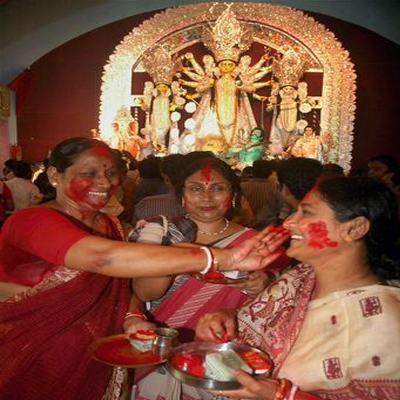
    KOLKATA: Kolkata Municipal Corporation’s (KMC) decision to waive advertisement tax on temporary banners, festoons and hoardings put up on the bamboo structures during the festive season, is likely to see the temporary ads mushrooming across the city during the Durga Puja.


    “Though government’s decision to waive corporation tax on advertisements put up by Puja organisers during the festive season will cost the civic exchequer crores, it will benefit the Puja committee. Companies like Parle, Kurlon, Vodafone, Aircel, ITC have started their advertisement campaigns,” said West Bengal Outdoor Advertising Association treasurer and grievance committee convener Ashif Kumar Biswas.


    Biswas recalls that last year, the KMC authorities had called for a tender and had mopped up over Rs 1 crore as price for collection of advertisement tax from temporary banners, festoons and hoardings. “However, at the last moment, the tender was cancelled after chief minister Mamata Banerjee suddenly announced the waiver,” he said.


    “City based small and medium businesses will be encouraged to put up more outdoor advertising and promote their business further and reach out to a broader mass”, said Let’s Assist Digital Services director Prasit Bhattacharya.


    “The advertising agencies should also offer some discounts which will encourage businesses to try out temporary advertising,” he feels.


    While Fame Per Second chief dreamer Suman Sen opines: “This was the best opportunity for the state government to mop up funds and later use for some good cause.”
     “So it is cheaper for advertisers now especially when the economy is not doing well and companies are not spending on advertisement. Puja Committees can hope for more advertisers backing them now,” said a city based media buying agency.


    The city would be all cluttered with advertisements for next 10 days, states another planner, adding that many advertising companies are likely to make a lot of unaccounted money from such a tax-free venture.

  • Havas Media India makes senior digital appointments

    Havas Media India makes senior digital appointments

    MUMBAI: Havas Media India which has added a slew of wins to the kitty in 2013 has strengthened its ‘digital’ segment with two key senior appointments.

    In tune with the group’s integrated structure, Havas Media India’s full services digital portfolio includes digital media planning and buying, display advertising, digital direct response, search engine marketing, SEO, pay-per-click, social media, as well as ‘Mobext’ for mobile solutions and performance marketing using data and analytics.

    To establish itself further in India, the company has appointed Sumit Kumar as General Manager; while S.V. Sunilkumar has joined as Business Head Digital-Mumbai, whose key responsibility will be to service the existing digital clientele in Mumbai as well as new business development.

    Speaking on the appointments, Havas Media Group, India & South Asia CEO Anita Nayyar said, “Digital is a focal point for us and these appointments will further consolidate our attempt to offer the latest digital services to our clients. Both Sumit and Sunil are talented and committed digital players – we are glad to have them on board.”

    “Sunil and Sumit are mandated to entrenching and expanding the Havas Digital footprint in Mumbai and India”, added Havas Media India MD-Digital Anurag Bhatnagar.

    Havas Media Group, India & South Asia CEO Anita Nayyar
    Havas Media India MD digital Anurag Bhatnagar

    “Mobext not only provides mobile solutions to engage the customer but can also help brands make their sales force more effective with our enterprise solutions – a unique proposition in itself. The profile is a huge challenge and opportunity to create unique experiences and expand the Mobext offering in India”, explained Sumit Kumar, General Manager, Mobext India

    Business Head Digital-Mumbai S.V. Sunilkumar commented, “As a digital enthusiast, it is always exciting to work with an agency whose mantra is ‘Digital at its core’. Havas Media has been on an aggressive growth path and again it is good to be where the action is. I look forward to creating some of this action”.

    Sumit Kumar, with over eight years of leadership experience in business development, strategic partnerships, product management and corporate sales, was earlier leading the performance and app advertising business for InMobi India. Clients worked with include – Tata DOCOMO, Vodafone, Sony Entertainment, Disney, OLX, Viacom 18, Tencent, AOL, Cleartip , Hungama, Nazara, Opera and Times Group. 

    Sunilkumar with 18 years of media experience was working with Infosys as a Principal Consultant and a part of the core product development team at BrandEdge (the global cloud based digital marketing platform). Also, as digital media head at DDB Mudra, he has serviced clients including LIC, Star TV, McDonalds, IDBI Bank, India First Life Insurance, etc.

  • Vodafone ushers in ‘Durgotsab’ with 13th edition of ,Aagomoni’

    Vodafone ushers in ‘Durgotsab’ with 13th edition of ,Aagomoni’

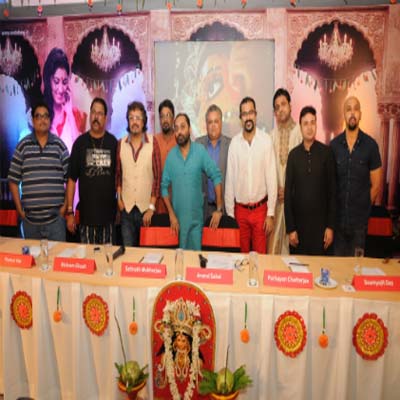
    KOLKATA: Vodafone India has announced the 13th edition of ‘Vodafone Aagomoni’, a nightlong grand musical extravaganza to usher in Durgotsab 2013 to be held on 3 October, at Science City Auditorium, in Kolkata.

     Featuring performances by eminent artists from diverse fields, ‘Vodafone Aagomoni’ is an eagerly awaited annual ritual for the citizens of the city of joy, as they get set to welcome Goddess Durga for the five day Puja festival.

     Some of the noted performers for this year’s ‘Vodafone Aagomoni’ are – filmmaker and actress Aparna Sen, musicians Purbayan Chatterjee, Soumyojit, Sourendra and Anubrata Chatterjee; Bangla band Chandrabindoo, Rupankar Bagchi, Bickram Ghosh, Vocalists Jolly Mukherjee and Shailaja Subramaniam with RD Burman’s original musician Nitin Shankar, Kishore Sodha, Raj Sodha, Suraj Sathe, Franco Vaz and others.

    Vodafone India business head – Kolkata and West Bengal Anand Sahai said: “It is one of Vodafone’s special initiatives to engage and touch the lives and hearts of customers in West Bengal.”

    Additionally, Vodafone is also running a singing contest – ‘Vodafone Shera Voice’, added Sahai.

  • Bigg Boss Seven plays with hell and heaven

    Bigg Boss Seven plays with hell and heaven

    MUMBAI: Each year they try to take it up a notch, and it’s not getting any easier. But Bigg Boss never fails to surprise and entertain TV viewers and Hindi GEC Colors believes that this year as well, the seventh season, will ring well with TV audiences.

    And it introduced it to the media on 11 September evening with a high profile launch with oodles of glam themed around a mix of heaven and hell, which is the signature for the year. And of course with the announcement that long time loyal backer Vodafone has signed on as the presenting sponsor for the fifth year.

    Admits Vodafone chief commercial officer Vikas Mathur: “The program has huge followers and it gives us good impact and reach making it valuable for Vodafone.”
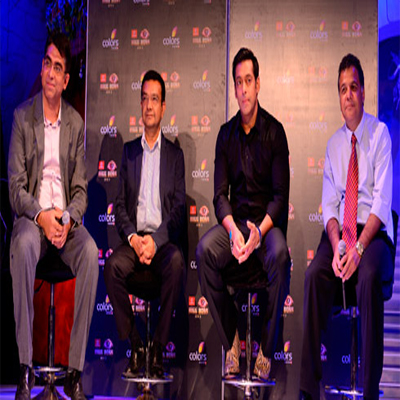
    Deepak Dhar, Vivek Mathur, Salman Khan and Raj Nayak at the launch of Bigg Boss Saath Saat.

    With the set in Lonavala once again, 80 to 90 cameras have been rigged to give audiences a peep into the lives of the 14 contestants who will this time face ‘jannat’ and ‘jahannum’ as part of the deal.

    The show produced by Endemol takes up a good 300 days annually to be put together by a dedicated bunch of 150-170 professionals right from creatives to the casting and technical crews.

    Like in the case of most international formats, the creative folks at Endemol India (the producer of the show) and Colors rely heavily on the Big Brother bible to add elements which have worked elsewhere where the show is telecast globally. The ‘Global Creative Team’ is also constantly working at coming up with new and different ideas. This team meets up twice in a year to look at the progress and variety in Big Brother across the globe.

    “We are constantly looking at what are the best elements and we add to it as well as adapt,” says Endemol MD Deepak Dhar.

    Once the conceptualization has been done, the art director and set designer moves the ship forward to create the set which takes up about four months in all. “It’s less of a set and more of a house because people have to live in it,” adds Dhar.

    Today, Bigg Boss has moved beyond being produced for Hindi audiences; language editions in Kannada and Bengali have also aired on television, the credit for which Dhar attributes to Colors CEO Raj Nayak.

    “We are slowly paving our way into the regional markets of India as well,” reveals Dhar.

    The show has already started making a buzz in the digital sphere with the Facebook and Twitter engagement activities in the form of heaven and hell anecdotes.

    “The fact that there is so much of expectation from Bigg Boss puts a lot of pressure on the digital team because we need to ensure it matches to it,” admits Colors digital head Vivek Srivastava.

    The most important and integral part is prior to the launch when the curiosity needs to be built without giving away names or details about the show. “It gets easier once it has launched but then the workload is more as well,” adds Srivastava. The current idea is using cartoons to get across the dual nature of the show to the viewers.

    The marketing mix seems to be the usual 360 degree campaign involving a lot of focus on TV, on both, Network18 group channels and other channels. “We believe we can reach many viewers through TV,” says Colors marketing head Rajesh Iyer.

    Salman Khan has been the host for four seasons of the show and this is his fifth stint. He gleefully says that he will continue with Bigg Boss till the time Colors gets tired of him. Not much has been revealed about this season although rumors are floating aplenty.

    “The beauty of this show is the surprise and suspense,” says Nayak.

    The launch date has been fixed for 15 September at 9 pm. And as Bollywood’s biggest Salman says audiences will definitely tune in. Says the man: “Why should you watch my shows or movies? Because I’m in them!”

    The coming weeks will reveal whether they are falling for his lines!

  • Bigg Boss Seven plays with hell and heaven

    Bigg Boss Seven plays with hell and heaven

    MUMBAI: Each year they try to take it up a notch, and it’s not getting any easier. But Bigg Boss never fails to surprise and entertain TV viewers and Hindi GEC Colors believes that this year as well, the seventh season, will ring well with TV audiences.

    Deepak Dhar, Vivek Mathur, Salman Khan and Raj Nayak at the launch of Bigg Boss Saath Saat.

    And it introduced it to the media on 11 September evening with a high profile launch with oodles of glam themed around a mix of heaven and hell, which is the signature for the year. And of course with the announcement that long time loyal backer Vodafone has signed on as the presenting sponsor for the fifth year.

    Admits Vodafone representative Vikas Mathur: “The program has huge followers and it gives us good impact and reach making it valuable for Vodafone.”

    With the set in Lonavala once again, 80 to 90 cameras have been rigged to give audiences a peep into the lives of the 14 contestants who will this time face ‘jannat’ and ‘jahannum’ as part of the deal.

    The show produced by Endemol takes up a good 300 days annually to be put together by a dedicated bunch of 150-170 professionals right from creatives to the casting and technical crews.

    Like in the case of most international formats, the creative folks at Endemol India (the producer of the show) and Colors rely heavily on the Big Brother bible to add elements which have worked elsewhere where the show is telecast globally. The ‘Global Creative Team’ is also constantly working at coming up with new and different ideas. This team meets up twice in a year to look at the progress and variety in Big Brother across the globe.

    “We are constantly looking at what are the best elements and we add to it as well as adapt,” says Endemol MD Deepak Dhar.

    Once the conceptualization has been done, the art director and set designer moves the ship forward to create the set which takes up about four months in all. “It’s less of a set and more of a house because people have to live in it,” adds Dhar.

    Today, Bigg Boss has moved beyond being produced for Hindi audiences; language editions in Kannada and Bengali have also aired on television, the credit for which Dhar attributes to Colors CEO Raj Nayak.

    “We are slowly paving our way into the regional markets of India as well,” reveals Dhar.

    The show has already started making a buzz in the digital sphere with the Facebook and Twitter engagement activities in the form of heaven and hell anecdotes.

    “The fact that there is so much of expectation from Bigg Boss puts a lot of pressure on the digital team because we need to ensure it matches to it,” admits Colors digital head Vivek Srivastava.

    The most important and integral part is prior to the launch when the curiosity needs to be built without giving away names or details about the show. “It gets easier once it has launched but then the workload is more as well,” adds Srivastava. The current idea is using cartoons to get across the dual nature of the show to the viewers.

    The marketing mix seems to be the usual 360 degree campaign involving a lot of focus on TV, on both, Network18 group channels and other channels. “We believe we can reach many viewers through TV,” says Colors marketing head Rajesh Iyer.

    Salman Khan has been the host for four seasons of the show and this is his fifth stint. He gleefully says that he will continue with Bigg Boss till the time Colors gets tired of him. Not much has been revealed about this season although rumors are floating aplenty.

    “The beauty of this show is the surprise and suspense,” says Nayak.

    The launch date has been fixed for 15 September at 9 pm. And as Bollywood’s biggest Salman says audiences will definitely tune in. Says the man: “Why should you watch my shows or movies? Because I’m in them!”

    The coming weeks will reveal whether they are falling for his lines!