Tag: Vodafone

  • TRAI’s CDR idea rejected; Govt to look into Rs 3050 cr penalty

    TRAI’s CDR idea rejected; Govt to look into Rs 3050 cr penalty

    MUMBAI: The telecom ministry has formed a committee to look into TRAI’s penalty suggestion on Vodafone, Airtel and Idea as they allegedly failed to provide sufficient inter-connect points (PoI) to Reliance Jio, leading to severe call drops.

    Telecom operators across GSM and CDMA platforms meantime turned down TRAI’s recommendation of computing call drop rates through a meta data analysis of CDRs (call detail records). This, TRAI asserted, has been designed for billing purpose only, and not for checking quality of service. Such an analysis, the operators said, would project a flawed picture as abnormal call disconnects/terminations could be triggered by handsets getting turned off due to other errors, or due to battery draining out or a subscriber moving to an underground building or a station.

    Cellular Operators Association of India (COAI) represented the operators, the Economic Times reported.

    On the the hand, the union telecom minister Manoj Sinha said the ministry has formed the committee to look into the regulator’s recommendation on the proposed Rs 3,050 crore penalty, Business Standard reported. Last month, the regulator had proposed the penalty on the three telcos.

    Lately however Reliance Jio has been allegedly limiting all voice calls to 30 minutes. As a part of Jio’s free Welcome Offer, users were allowed unlimited voice calls. However, lately, the calls were being abruptly disconnected after a duration of 30 minutes, which is not an isolated case.

    The regulator had earlier sent a letter to the Department of Telecommunications recommending a charge of Rs 50 crore per circle for 21 service areas, except for Jammu & Kashmir, for Airtel and Vodafone. For Idea Cellular, TRAI suggested penalty for 19 circles.

    At the meeting of BRICS Ministers of Communications, Sinha said that the committee would give its considerations on the TRAI suggestion.

    The regulator’s suggestion came after Reliance Jio complained that more than 75 per cent of the calls on its network were dropping since the incumbent operators were not giving sufficient PoIs. The regulator stated that the incumbents went “against public interest.”
  • TRAI’s CDR idea rejected; Govt to look into Rs 3050 cr penalty

    TRAI’s CDR idea rejected; Govt to look into Rs 3050 cr penalty

    MUMBAI: The telecom ministry has formed a committee to look into TRAI’s penalty suggestion on Vodafone, Airtel and Idea as they allegedly failed to provide sufficient inter-connect points (PoI) to Reliance Jio, leading to severe call drops.

    Telecom operators across GSM and CDMA platforms meantime turned down TRAI’s recommendation of computing call drop rates through a meta data analysis of CDRs (call detail records). This, TRAI asserted, has been designed for billing purpose only, and not for checking quality of service. Such an analysis, the operators said, would project a flawed picture as abnormal call disconnects/terminations could be triggered by handsets getting turned off due to other errors, or due to battery draining out or a subscriber moving to an underground building or a station.

    Cellular Operators Association of India (COAI) represented the operators, the Economic Times reported.

    On the the hand, the union telecom minister Manoj Sinha said the ministry has formed the committee to look into the regulator’s recommendation on the proposed Rs 3,050 crore penalty, Business Standard reported. Last month, the regulator had proposed the penalty on the three telcos.

    Lately however Reliance Jio has been allegedly limiting all voice calls to 30 minutes. As a part of Jio’s free Welcome Offer, users were allowed unlimited voice calls. However, lately, the calls were being abruptly disconnected after a duration of 30 minutes, which is not an isolated case.

    The regulator had earlier sent a letter to the Department of Telecommunications recommending a charge of Rs 50 crore per circle for 21 service areas, except for Jammu & Kashmir, for Airtel and Vodafone. For Idea Cellular, TRAI suggested penalty for 19 circles.

    At the meeting of BRICS Ministers of Communications, Sinha said that the committee would give its considerations on the TRAI suggestion.

    The regulator’s suggestion came after Reliance Jio complained that more than 75 per cent of the calls on its network were dropping since the incumbent operators were not giving sufficient PoIs. The regulator stated that the incumbents went “against public interest.”
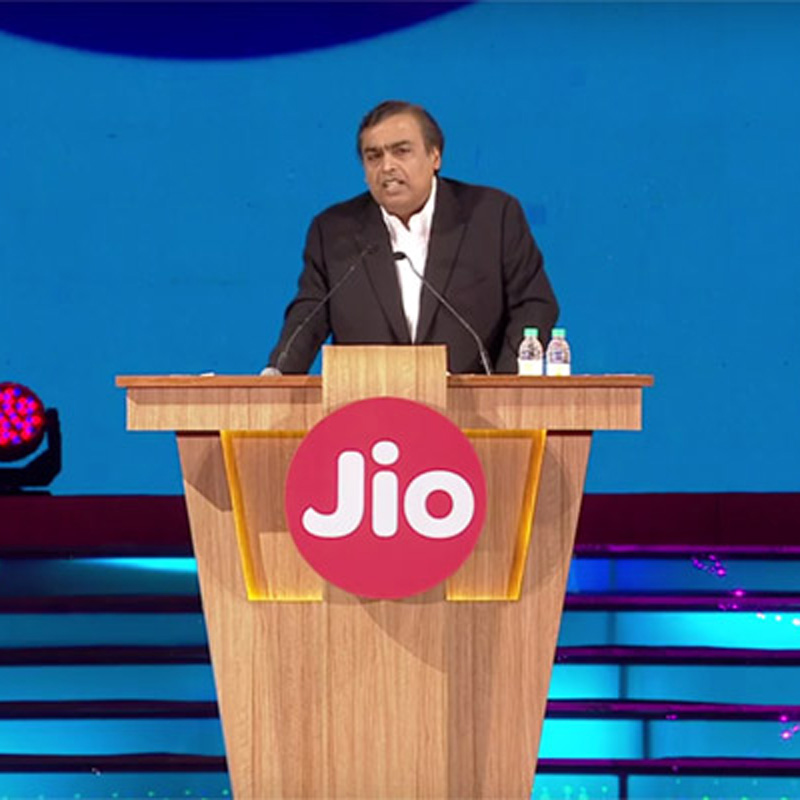
  • Jio 4G to erect 45,000 towers; more the merrier, says COAI

    Jio 4G to erect 45,000 towers; more the merrier, says COAI

    MUMBAI: Late entrant telecom operator Reliance Jio will erect around 45,000 mobile towers in the next six months to boost its 4G network.

    Telecom lobbying body COAI meanwhile stated that it has established around 129,101 base transceiver stations (BTSs) across India to tackle call drops on networks.

    Reliance Jio in meeting with the telecom minister Manoj Sinha has committed to erect 45,000 crore mobile towers in six months to further strengthen its network. The company has said that it has plans to invest Rs 1 lakh crore over a period of four years and the new towers are part of this investment, PTI has reported.

    Reliance Jio reportedly informed Sinha that it has already invested Rs 1.6 lakh crore in the networks and installed 2.82 lakh base stations across India covering 18,000 cities and two lakh villages.

    Jio said that it has made all efforts to provide good consumer experience but non-availability of point of interconnection from Airtel, Vodafone and Idea has led to high call failure rate on its network. Sinha then directed the telecom operators to resolve PoI issue among themselves at the earliest.

    Telecom regulator TRAI had recommended Rs 3,050 crore penalty on Airtel, Vodafone and Idea Cellular holding them responsible for congestion in RJIL network. TRAI chairman RS Sharma has asked the incumbent operators to mutually resolve interconnection issue at the earliest and warned action against those found liable for poor service quality benchmark around network congestion, call drop etc.

    Consisting largely of India’s GSM operators, COAI members are said to have invested Rs 12,000 crore for installing these BTSs. The 100-day-plan to install BTSs was reportedly completed last month. TRAI’s Independent Drive Tests (IDTs) conducted between December 2015 and January 2016 revealed that call drop rates in cities like Mumbai, Pune, Delhi were much above the permissible limits. The limits are set at 2% by the regulator.

  • Jio 4G to erect 45,000 towers; more the merrier, says COAI

    Jio 4G to erect 45,000 towers; more the merrier, says COAI

    MUMBAI: Late entrant telecom operator Reliance Jio will erect around 45,000 mobile towers in the next six months to boost its 4G network.

    Telecom lobbying body COAI meanwhile stated that it has established around 129,101 base transceiver stations (BTSs) across India to tackle call drops on networks.

    Reliance Jio in meeting with the telecom minister Manoj Sinha has committed to erect 45,000 crore mobile towers in six months to further strengthen its network. The company has said that it has plans to invest Rs 1 lakh crore over a period of four years and the new towers are part of this investment, PTI has reported.

    Reliance Jio reportedly informed Sinha that it has already invested Rs 1.6 lakh crore in the networks and installed 2.82 lakh base stations across India covering 18,000 cities and two lakh villages.

    Jio said that it has made all efforts to provide good consumer experience but non-availability of point of interconnection from Airtel, Vodafone and Idea has led to high call failure rate on its network. Sinha then directed the telecom operators to resolve PoI issue among themselves at the earliest.

    Telecom regulator TRAI had recommended Rs 3,050 crore penalty on Airtel, Vodafone and Idea Cellular holding them responsible for congestion in RJIL network. TRAI chairman RS Sharma has asked the incumbent operators to mutually resolve interconnection issue at the earliest and warned action against those found liable for poor service quality benchmark around network congestion, call drop etc.

    Consisting largely of India’s GSM operators, COAI members are said to have invested Rs 12,000 crore for installing these BTSs. The 100-day-plan to install BTSs was reportedly completed last month. TRAI’s Independent Drive Tests (IDTs) conducted between December 2015 and January 2016 revealed that call drop rates in cities like Mumbai, Pune, Delhi were much above the permissible limits. The limits are set at 2% by the regulator.

  • Pricing, analytics, customization, video quality crucial to decide OTT market leader: Frost

    Pricing, analytics, customization, video quality crucial to decide OTT market leader: Frost

    MUMBAI: The nascent over the top (OTT) video market in India is growing as smartphone penetration and 3G and 4G subscribers continue to increase rapidly. The recent launch of Reliance Jio’s affordable data services and initiatives, such as Bharat Net, will continue to drive down data service prices, boosting video consumption over fixed and mobile broadband.

    “It will be critical for market participants to gauge viewership trends, price sensitivity and technical requirements while offering their video services,” said Frost & Sullivan digital media director Vidya S Nath. “Pricing, data analytics, personalization and video quality will be crucial in defining the market leader in the next five years.”

    The Over the Top (OTT) Video Market Update, India, 2016 analysis is part of Frost & Sullivan’s Digital Media Growth Partnership Service program, which includes research, consumer analytics, consulting and advisory services on pay television (TV) services and media technologies.

    While the dominance of YouTube and TV reins in subscription-based models, making digital advertising the most used business model for now, OTT video providers have confidence in the growth prospects of the market:

    . India has over 300 million Internet users and about a billion smartphone users

    . Millennials and Gen Y comprise about a third of the population and are driving viewership trends toward personalized content

    . The country’s fragmented demography offers more than 20 types of audiences by major languages, creating tremendous opportunity for content creators and producers

    . OTT providers can target Indian immigrants internationally

    The market is already crowded with about 25 market participants that include telecom operators, direct-to-home (DTH) TV providers, broadcasters and individual OTT providers. The number of participants will grow further over the next two years.

    “Even though the return on investment for OTT services providers is slow and does not justify the business proposition in the short run, competition will spur all broadcasters to consider the OTT business,” noted research analyst Aafia Bathool. “Exclusive content at a competitive price with a sophisticated, user-friendly interface is the way forward. To achieve this, the market will see increasing strategic alliances among ecosystem players.”

    Key participants in the current market include Hotstar, Eros Now, Ditto TV (Zee Networks), Asianet Mobile, YouTube, and Netflix. New market participants who will likely intensify competition include Amazon and Balaji ALT. Other market participants include Reliance Jio, Airtel, Vodafone, Zee Network, Voot, Viacom, Spuul, Veqta, Yupp TV, Dish TV, HOOQ, Hungama, Shemaroo, SonyLIV, and Tatasky.

  • Pricing, analytics, customization, video quality crucial to decide OTT market leader: Frost

    Pricing, analytics, customization, video quality crucial to decide OTT market leader: Frost

    MUMBAI: The nascent over the top (OTT) video market in India is growing as smartphone penetration and 3G and 4G subscribers continue to increase rapidly. The recent launch of Reliance Jio’s affordable data services and initiatives, such as Bharat Net, will continue to drive down data service prices, boosting video consumption over fixed and mobile broadband.

    “It will be critical for market participants to gauge viewership trends, price sensitivity and technical requirements while offering their video services,” said Frost & Sullivan digital media director Vidya S Nath. “Pricing, data analytics, personalization and video quality will be crucial in defining the market leader in the next five years.”

    The Over the Top (OTT) Video Market Update, India, 2016 analysis is part of Frost & Sullivan’s Digital Media Growth Partnership Service program, which includes research, consumer analytics, consulting and advisory services on pay television (TV) services and media technologies.

    While the dominance of YouTube and TV reins in subscription-based models, making digital advertising the most used business model for now, OTT video providers have confidence in the growth prospects of the market:

    . India has over 300 million Internet users and about a billion smartphone users

    . Millennials and Gen Y comprise about a third of the population and are driving viewership trends toward personalized content

    . The country’s fragmented demography offers more than 20 types of audiences by major languages, creating tremendous opportunity for content creators and producers

    . OTT providers can target Indian immigrants internationally

    The market is already crowded with about 25 market participants that include telecom operators, direct-to-home (DTH) TV providers, broadcasters and individual OTT providers. The number of participants will grow further over the next two years.

    “Even though the return on investment for OTT services providers is slow and does not justify the business proposition in the short run, competition will spur all broadcasters to consider the OTT business,” noted research analyst Aafia Bathool. “Exclusive content at a competitive price with a sophisticated, user-friendly interface is the way forward. To achieve this, the market will see increasing strategic alliances among ecosystem players.”

    Key participants in the current market include Hotstar, Eros Now, Ditto TV (Zee Networks), Asianet Mobile, YouTube, and Netflix. New market participants who will likely intensify competition include Amazon and Balaji ALT. Other market participants include Reliance Jio, Airtel, Vodafone, Zee Network, Voot, Viacom, Spuul, Veqta, Yupp TV, Dish TV, HOOQ, Hungama, Shemaroo, SonyLIV, and Tatasky.

  • Idea, Vodafone neck-and-neck with Airtel, Jio in 4G tussle

    Idea, Vodafone neck-and-neck with Airtel, Jio in 4G tussle

    Idea and Vodafone have spent astronomical sums in spectrum auctions to acquire 2500 MHz airwaves so as to give a tough fight to Airtel and Jio which already have pan-India 4G holdings. Two of three telecom majors in India are betting on lower price of 2500 MHz. Idea Cellular and Vodafone India seem to have bet on 4G airwaves in that band.

    Global telecom expert Sanjay Kapoor however says, India would need further towers for 4G and investments. The former chairman of Micromax said that the telecom industry was moving towards consolidation.

    In the recent spectrum auction, nearly 60 per cent of airwaves, including premium 4G bands, remained unsold. Meanwhile, Airtel, Vodafone and Idea secured adequate 4G spectrum during the recently-concluded auction to counter Jio, making them more competitive, FE reported.

    Airtel acquired 173.8 MHz spectrum in bands of 1800MHz, 2100 MHz and 2300 Mhz for Rs 14,244 crore in circles including Kerala, Assam, Maharashtra, Delhi, Mumbai and the North-East. Idea acquired 349.20 MHz of spectrum for Rs 12,798 crore in 1800 MHz, 2100 MHz, 2300 MHz and 2500 MHz bands and will be able to offer 4G services on its own spectrum across 20 circles, including nine new service areas of Uttar Pradesh (West), UP (East), Gujarat and Mumbai.

    Vodafone India, which has emerged as the most aggressive bidder, has acquired spectrum in 1800 MHz, 2100 MHz and 2500 MHz bands for a total cost of Rs 20,280 crore. It has 17 circles with 4G capability.

    Experts said Vodafone and Idea have taken the plunge amid a rapidly-evolving devices ecosystem in 2500 MHz band in China besides the lower price of these airwaves, ET stated.

    Idea’s management recently guided for a rollout on this 4G band over the next two to five years as the ecosystem matures. Brokerages expect the 2500 MHz band devices ecosystem to evolve quickly in India thanks to Vodafone and Idea investing in them. Nearly, half the Rs 20,280 crore that second-largest carrier Vodafone spent at the auction went to 4G airwaves in the 2500 MHz band in 15 circles, while No. 3 Idea spent Rs 2,520.8 crore on the same in 16 circles.

  • Idea, Vodafone neck-and-neck with Airtel, Jio in 4G tussle

    Idea, Vodafone neck-and-neck with Airtel, Jio in 4G tussle

    Idea and Vodafone have spent astronomical sums in spectrum auctions to acquire 2500 MHz airwaves so as to give a tough fight to Airtel and Jio which already have pan-India 4G holdings. Two of three telecom majors in India are betting on lower price of 2500 MHz. Idea Cellular and Vodafone India seem to have bet on 4G airwaves in that band.

    Global telecom expert Sanjay Kapoor however says, India would need further towers for 4G and investments. The former chairman of Micromax said that the telecom industry was moving towards consolidation.

    In the recent spectrum auction, nearly 60 per cent of airwaves, including premium 4G bands, remained unsold. Meanwhile, Airtel, Vodafone and Idea secured adequate 4G spectrum during the recently-concluded auction to counter Jio, making them more competitive, FE reported.

    Airtel acquired 173.8 MHz spectrum in bands of 1800MHz, 2100 MHz and 2300 Mhz for Rs 14,244 crore in circles including Kerala, Assam, Maharashtra, Delhi, Mumbai and the North-East. Idea acquired 349.20 MHz of spectrum for Rs 12,798 crore in 1800 MHz, 2100 MHz, 2300 MHz and 2500 MHz bands and will be able to offer 4G services on its own spectrum across 20 circles, including nine new service areas of Uttar Pradesh (West), UP (East), Gujarat and Mumbai.

    Vodafone India, which has emerged as the most aggressive bidder, has acquired spectrum in 1800 MHz, 2100 MHz and 2500 MHz bands for a total cost of Rs 20,280 crore. It has 17 circles with 4G capability.

    Experts said Vodafone and Idea have taken the plunge amid a rapidly-evolving devices ecosystem in 2500 MHz band in China besides the lower price of these airwaves, ET stated.

    Idea’s management recently guided for a rollout on this 4G band over the next two to five years as the ecosystem matures. Brokerages expect the 2500 MHz band devices ecosystem to evolve quickly in India thanks to Vodafone and Idea investing in them. Nearly, half the Rs 20,280 crore that second-largest carrier Vodafone spent at the auction went to 4G airwaves in the 2500 MHz band in 15 circles, while No. 3 Idea spent Rs 2,520.8 crore on the same in 16 circles.

  • Jio battles incumbents as Airtel launches Rs 1495 free data plan

    Jio battles incumbents as Airtel launches Rs 1495 free data plan

    MUMBAI: The fisticuffs continue in the 4G telecom marketplace. Even as Reliance Jio has been waging a war of press releases, highlighting how many of its subscribers’ calls are being refused by Idea, Airtel and Vodafone, the Sunil Mittal-led telco today too issued a press release through which it is taking a jab at the Mukesh Ambani-owned telco’s free call and data offer.

    Airtel says it has started offering a free data package for Rs 1495 only, and for prepaid customers only. If you are paying for it, then how is it free? Airtel explains that consumers can surf at wild speeds up to the 30GB data and 90-day limit, after which the accelerator needle will drop to 64kbps. And that’s when the free part of surfing will come in – but at super slow speed.

    At the price of Rs 1495 for 30 GB means the data is coming your way cheaper than the Reliance Jio offer of Rs 50 for a GB. The only difference is you are plonking down the money upfront.

    Will Reliance Jio react to this outrageous offer from a rival telco? No one knows, but it definitely has reacted to rival telco Idea on another front: that of call drops. It says that the Aditya Birla group-owned Idea is blocking out calls from Jio customers, refusing them connectivity. Says the Jio press release: “Adequate interconnection capacity so that call failure rate is less than 5 per 1,000 is a license obligation of all telecom operators. As against this, over 750 calls per 1,000 are failing per day between Idea and Jio networks, which translates to four crore calls failing per day. Over 12 crore calls fail daily between Jio and the networks of Airtel, Vodafone and Idea. This is a breach of licence conditions by the incumbent operators and severely impacts customer interests. This is against zero call failures on the Jio network.”

  • Jio battles incumbents as Airtel launches Rs 1495 free data plan

    Jio battles incumbents as Airtel launches Rs 1495 free data plan

    MUMBAI: The fisticuffs continue in the 4G telecom marketplace. Even as Reliance Jio has been waging a war of press releases, highlighting how many of its subscribers’ calls are being refused by Idea, Airtel and Vodafone, the Sunil Mittal-led telco today too issued a press release through which it is taking a jab at the Mukesh Ambani-owned telco’s free call and data offer.

    Airtel says it has started offering a free data package for Rs 1495 only, and for prepaid customers only. If you are paying for it, then how is it free? Airtel explains that consumers can surf at wild speeds up to the 30GB data and 90-day limit, after which the accelerator needle will drop to 64kbps. And that’s when the free part of surfing will come in – but at super slow speed.

    At the price of Rs 1495 for 30 GB means the data is coming your way cheaper than the Reliance Jio offer of Rs 50 for a GB. The only difference is you are plonking down the money upfront.

    Will Reliance Jio react to this outrageous offer from a rival telco? No one knows, but it definitely has reacted to rival telco Idea on another front: that of call drops. It says that the Aditya Birla group-owned Idea is blocking out calls from Jio customers, refusing them connectivity. Says the Jio press release: “Adequate interconnection capacity so that call failure rate is less than 5 per 1,000 is a license obligation of all telecom operators. As against this, over 750 calls per 1,000 are failing per day between Idea and Jio networks, which translates to four crore calls failing per day. Over 12 crore calls fail daily between Jio and the networks of Airtel, Vodafone and Idea. This is a breach of licence conditions by the incumbent operators and severely impacts customer interests. This is against zero call failures on the Jio network.”