Tag: Vodafone India

  • Nine million broadband subscribers added between Dec 2014 – Jan 2015

    Nine million broadband subscribers added between Dec 2014 – Jan 2015

    NEW DELHI: There was an increase of approximately nine million broadband subscribers between December 2014 and January 2015 with the number going up from 85.74 million to 94.49 million. According to reports received by the Telecom Regulatory Authority of India (TRAI) from service providers, this signified a monthly growth rate of 10.21 per cent.

    As in previous months, the largest growth was seen in the mobile devices users (phones and dongles) segment with 78.66 million subscribers by January end as compared to 69.99 million a month earlier, signifying a monthly growth rate of 12.38 per cent.

    Fixed Wireless subscribers (Wi-Fi, Wi-Max, Point-to-Point Radio & VSAT) showed a growth of 1.59 per cent, going up from 430,000 to 440,000.  


    Wired subscribers increased by 0.49 per cent from 15.32 million to 15.39 million.


    The top five service providers constituted 83.41 per cent market share of total broadband subscribers at the end of January 2015. These service providers were Bharti Airtel (20.29 million), BSNL (19.07 million), Vodafone (17.86 million), Idea Cellular (14.12 million) and Reliance Communications Group (7.47 million).


    Wireless subscribers with less than 1MB data usage in a month have not been considered as internet/broadband subscribers by Reliance Communication Group and Idea Cellular Ltd.


    As on 31 January, the top five wired broadband service providers were BSNL (9.98 million), Bharti Airtel (1.42 million), MTNL (1.14 million), Atria Convergence Technologies (0.63 million) and YOU Broadband (0.43 million).


    Whereas the top five wireless broadband service providers were Bharti Airtel (18.87 million), Vodafone (17.86 million), Idea Cellular (14.12 million), BSNL (9.09 million) and Reliance Communications Group (7.36 million) by January-end.

  • Govt earns about Rs 96,000 crore in telecom spectrum auction; 16% spectrum still available

    Govt earns about Rs 96,000 crore in telecom spectrum auction; 16% spectrum still available

    NEW DELHI: Approximately Rs 96,000 crore has already been committed in the sale of about 84 per cent of the spectrum provisionally allocated to bidders. Around 43 rounds have taken place in the auction of spectrum in 2100 MHz, 1800 MHz, 900 MHz and 800 MHz Bands with six rounds today.


    As spectrum is still available, auction recommenced this morning. The bidding is taking place in all bands. Brisk bidding was seen on seventh day of bidding, with activity requirement set at 100 per cent.


    There is aggressive bidding going on in 1800 MHz, 900 MHz and 800 MHz bands.


     A majority of service areas are going at a premium over reserve price. With 100 per cent activity requirement and activity in new service areas, competitive bidding is expected to continue.


    The government had initially expected to reap around Rs 49,000 crore from the auction.

  • Day four of telecom spectrum bids brings in Rs 86,000 crore

    Day four of telecom spectrum bids brings in Rs 86,000 crore

    MUMBAI: While the government had set aside a reserve base price of Rs 49,000 crore for the ongoing auction of wireless spectrum, it has already received a massive Rs 86,000 crore from a total of 24 bids till 7 March. While some spectrum slots saw strong competitive bidding, other slots are yet to see the bidding, according to reports.


    The spectrum auction is being conducted for airwaves in the 2100, 1800, 900 and 800 MHz bands. The validity of the spectrum is for a period of 20 years.


    When compared to last year’s February 2014 auction, the government had received total bids of over Rs 62,000 crore. In the ongoing auction the first day itself collected Rs 60,000 crore!


    This figure further rose to Rs 66,000 crore on 5 March, followed by Rs 77,000 on 6 March. Day four on 7 March meanwhile saw bids touching a massive Rs 86,000 crore. This figure is easily expected to touch to Rs 1 lakh crore on 9 March. The amount will vary depending on how much these telecom companies are willing to spend to hold on their present spectrum in the vital 900 MHz band. Companies will also keep an eye on 3G spectrum in 2,100 MHz band. The bands of 2,100 MHz is up on sale with a reserve price of Rs 3,705 crores per MHz. The two bands that may witness the highest bids are 800 MHz with reserve price of Rs 3,646 crores per MHz and 900 MHz with reserve price of Rs 3,980 crores. Besides, the government has fixed the reserve price at Rs. 2,191 crores for 1,800 MHz band.


    According to a statement by Fitch Ratings, telcos are likely to cough at least $13 billion in the auctions – over 75 per cent of which is likely to be contributed by the top-four telcos i.e Bhararti Airtel, Vodafone India, Idea Cellular and the newest entrant Reliance Jio.


    The top-three telcos – Bharti Airtel, Vodafone India and Idea Cellular could cough up around $2.5 to $4.5 billion each to renew their expiring spectrum in six, seven and nine Indian circles respectively. On the other hand, Tata Teleservices and Uninor may either bid for few 3G frequencies or try and broaden the range of their 2G spectrum. Idea has been pushed to the wall clearly as it needs to retain its existing spectrum, which is expiring in circles that contribute around 70 per cent of its annual revenue.


    Similar revenue contributes 45 per cent and 35 per cent of annual Indian revenue for Vodafone and Bharti, respectively. If these companies want to continue offering their services it is mandatory for them to bid for their spectrum as their permit is expiring in 2015-2016.


    The ambitious Reliance Jio project, part of Mukesh Ambani owned Reliance Industries, which plans to roll out its services in 2015 with an investment budget of $12 billion, is likely to fill its spectrum gaps in the 1,800MHz band. The Fitch report feels Jio will probably focus on data services using “long-term evolution” technology, with its ownership of 1,800MHz spectrum in 14 circles and a pan-India spectrum in 2,300MHz. However, as occasionally seen in the earlier auctions, Reliance Jio could push up the spectrum price in 900MHz for other telcos, if it chooses to do so, as the auction mechanism hides the identities of participants.


    According to data by the Department of Telecommunications, Assam is the hot favourite with access demand in three circles it is available. Gujarat, Maharashtra, the North East, Punjab and Odisha circles are most sought after in the 800 MHz segment while West Bengal and Himachal Pradesh circles are a hit in the 900 MHz segment.


    The total spectrum that the government put up for auction is 103.57 MHz in the 800 MHz band, 177.8 MHz in the 900 MHz band, 99.2 MHz in the 1800 MHz band and 85 MHz in the 2100 MHz band.


    The eight telcos battling it out are Bharati Airtel, Vodafone India, Idea Cellular, Reliance Communications, Telewings Communications (Uninor), Aircel, Tata Teleservices, and Reliance Jio.

  • Telecom spectrum bid: Rs 77,000 crore committed by end of round three

    Telecom spectrum bid: Rs 77,000 crore committed by end of round three

    NEW DELHI: A total telecom spectrum of Rs 77,000 crore (provisional figure) was reached by the end of the week with 17 rounds.


    Eight telecom operators — Reliance Communications, Reliance Jio Infocomm, Bharti Airtel, Vodafone India, Tata Teleservices, Uninor, Idea Cellular and Aircel attended the six fresh rounds of bidding. 


    On day one, bids value was Rs 60,000 crore, while day two bids value reached Rs 65,000 crore. The bids were held for spectrum in 2100 MHz, 1800 MHz, 900 MHz and 800 MHz bands.  


    The bidding has taken place in all bands, according to the Communications and Information Technology Ministry. There is still some spectrum available and auction will continue for this. 


    The reserve price value was around Rs 49,000 crores of provisionally won spectrum.


    The estimated revenue from the auction of spectrum is targetted at Rs 64,840 crore (excluding 2100 MHz spectrum) of which Rs 16,000 crore is expected to be realized in the current financial year.


    The reserve price approved is Rs 3646 crore pan-India per MHZ in 800 MHz, Rs 3980 crore for 900 MHz band pan India excluding Delhi, Mumbai, Kolkatta, and Jammu and Kashmir; Rs 2191 crore pan India (excluding Maharashtra and West Bengal) in 1800 MHz band. 


    A meeting of the Union Cabinet chaired by Prime Minister Narendra Modi had, early in January, approved the proposal of the Department of Telecom to proceed with auction in 800, 900 and 1800 MHz bands. 


    The quantum of spectrum to be put to auction was 103.75 MHz in 800 MHz band in all service areas, 177.8 MHz  in 17 LSAs in 900 MHz band and 99.2 MHz in 15 LSAs in 1800 MHz band. Thus a total of 380.75 MHz in 800, 900 and 1800 MHz was being put to auction.  


    Payment terms, eligibility criteria and auction objectives shall be as in the previous auction of February 2014. 


    The Cabinet had also decided that intent to put 2100 MHz to simultaneous auction may be announced along with auction of other bands. Details of this will be announced later on.


    Later that month on 15 January, the Telecom Regulatory Authority of India opined that clubbing the 2100 MHz band spectrum with the spectrum of other bands for auction in February will be defeated if sufficient spectrum is not made available in the 2100 MHz band.


    “A split auction of 2100 MHz (one in February 2015 and remaining say, in December 2015 after availability from Defence Ministry) will artificially increase the market price of 2100 MHz in February because of the severe supply constraint. The 15 MHz of spectrum in the 2100 MHz spectrum being vacated by the Defence Ministry should be auctioned in view of the in-principle agreement reached with MoD, even if it is not available immediately,” TRAI had said. 


    The Authority reiterated that in the auction of 2100 MHz band spectrum, an auction-specific cap should be placed that no bidder would be permitted to bid for more than two blocks in a local service area if three to four blocks are available in that local service area. 


    TRAI had said there was no change in the reserve prices for spectrum in the 2100 MHz bands from what were recommended earlier.


    It said the Department of Telecom is responsible to ensure that the spectrum being auctioned is either interference free or to share information upfront about the areas where interference is likely to occur so that the telecom service providers participating in the auction can take informed decision.


    These views were given to the DoT in Clarifications/Reconsideration of Recommendations on ‘Valuation and Reserve Price of Spectrum: 2100 MHz Band’.

  • COAI gets a new core member in Reliance Jio Infocomm

    COAI gets a new core member in Reliance Jio Infocomm

    MUMBAI:  In a new addition to the core members of Cellular Operators’ Association of India (COAI), Mukesh Ambani owned Reliance Jio Infocomm Limited (RJIL) has joined telecom industry body, reported PTI. With this, its core members have risen to seven.


    After being at loggerheads regarding spectrum allocation issues, COAI and RJIL have finally put their problems behind and joined hands. This move precedes RJIL’s pan-India rollout of 4G services next year. The company holds pan India broadband wireless access spectrum that can be used for 4G services.


    Prior to RJIL joining the association, COAI had six core members — Bharti Airtel, Vodafone India, Idea Cellular, Aircel, Unitech Wireless (now Telewings Communications) and Videocon Communications (now Videocon Telecom).


    Talking about the new member, COAI’s director general Rajan S Mathews said, “We are delighted that Reliance Jio Infocomm has joined us in our common endeavour to roll out innovative and affordable mobile broadband services to the citizens of India.”


    COAI represents mobile service providers, telecom equipment manufacturers and other communication services and product companies in India. Members of the telecom body jointly have about 68 percent of subscribers and around 71 percent of revenue share in the market.


    Besides its core members, it also has 12 associate members. COAI has opened the associate membership to social media companies like Facebook. Other associate members include Alcatel-Lucent India, Cisco Systems India, Ericsson India, IBM India, GTL Infrastructure, Huawei Technologies, Indus Towers, Intel Corporation, Nokia Networks, Qualcomm India and ZTE India.


    Corroborating the news, RJIL’s managing director, Sandip Das said, “We are pleased to join the COAI, where along with other operators, we hope to create an operating environment that will help us realise this ambition for all Indians as an industry, in the overall context of our nation’s development.”


    In addition to fixed and wireless broadband connectivity, RJIL also plans to provide various digital services in key domains such as education, healthcare, security, financial services, government-citizen interfaces and entertainment. In the past, the company has also entered into agreements with telecom companies including COAI member Bharti Airtel and its mobile tower arm Bharti Infratel.

  • Vodafone India to recruit more women employees

    Vodafone India to recruit more women employees

    KOLKATA: The telecommunications service provider, Vodafone India, plans to recruit more women employees following the global strategy.


    In the Kolkata, out of 440 employees, the number of women employees till March 2014 formed the 21 per cent as compared to 17 per cent reported at the end of March 2013.


     “Vodafone India has always laid great emphasis on equal rights and opportunities for our employees and our policies encourage women employees to aspire for and achieve their career ambitions. We have women employees across all the levels,” says Vodafone India business head Kolkata and Bengal Anand Sahai, on the sidelines of opening the first ‘Angel Store’ retail outlet in Kolkata, run only by women employees.


    Vodafone is first to launch an Angel store in Kolkata with an aim to provide its women employees with one of the most secure and productive working environments. “We are confident that our Angel Store staff members will excel in their tasks and succeed in making this store one of the finest Vodafone stores,” he adds.


    Talking about the 2G and 3G internet connections in the Kolkata circle, he informs that as on March 2014, the company boasts of around 2,417 2G and 1,918 3G connections, respectively.


    Vodafone currently has 18 stores and 127 mini stores in Kolkata.


  • Bharti Airtel set to acquire Loop for Rs 700 crore

    Bharti Airtel set to acquire Loop for Rs 700 crore

    MUMBAI: India’s largest cellular carrier, Bharti Airtel, is set to acquire small mobile operator Loop Mobile for about Rs 300 crore, according to reports. This would be the first merger in six years in an industry long seen as ripe for consolidation.


    Loop, which operates only in Mumbai with about three million subscribers, was up for grabs as a potential acquisition as its spectrum licence lapses on 28 November.


    If Bharti completes the acquisition it will overtake Vodafone India and become the market leader in terms of customer numbers, although not by revenue in Mumbai – which is one of the biggest cellphone markets in India.


    The deal – if it happens – would also see Bharti take on Loop’s debt of nearly Rs 400 crore.


    Industry consolidation has been slow to take place in the world’s second-largest cellular market due to challenging merger rules, including a new requirement that the buyer pay separately for the target company’s airwaves based on prices determined at an auction.


    Loop Telecom, an associate company of Loop Mobile, lost its permits in 21 of India’s 22 teleco service areas after the Supreme Court order on the 2008 wireless permits. Loop has denied any wrongdoing.


    Loop’s main investor is Dubai-based Khaitan Holdings, whose founders are related to the founding family of Indian conglomerate Essar Group. Essar owns over a per cent in Loop.

  • Telecom spectrum auction further delayed

    Telecom spectrum auction further delayed

    NEW DELHI: The spectrum auction which has been put off from time to time will begin on 3 February 2014. The Department of Telecom (DoT) had been asked to give clarifications to a number of questions from mobile phone companies like Bharti Airtel and Vodafone India on spectrum usage charges, option of withdrawing from auction and availability of contiguous spectrum but there is still no clarity on these issues.

    According to a notice issued today, the DoT will now give clarifications on the concerns raised by service providers on 2 January. The department has also extended the last date for operators to submit their applications to bid in the auction to 15 January.

    While DoT will announce the pre-qualification of bidders by 25 January, bidders will also be given an option to withdraw their applications, according to the changes in the auction schedule. Service providers had objected to DoT’s move to remove the option of withdrawing their bids, as was allowed in the last auction.

    Operators will now be allowed to withdraw their bids by 27 January and the final list of bidders will be announced on 29 January. A mock auction will be conducted over 30 and 31 January.

    Leading operators like Bharti Airtel and Vodafone India had warned DoT in a pre-bid conference held last week that they could stay away from the upcoming bandwidth auctions if the government continued with the present cascading spectrum usage charge (SUC) regime, instead of moving to a flat fee structure of 3 per cent.

    The government levies SUC between 3-8 per cent of revenue earned by telecom companies from telecom services, depending on the quantum of airwaves held.

    The telecom department is set to auction 403 Mhz in 1800 Mhz and 46 Mhz in the 900 Mhz bands in the next round of auctions, beginning 23 January. The government aims to raise Rs 40,874.5 crore from spectrum revenue this fiscal year ending 31 March 2014, including one-time spectrum fee, and has its hopes pinned on this round to raise funds to limit its budget deficit.

    Operators stayed away from the last two rounds held in November 2012 and March 2013 citing very high reserve prices and low spectrum availability. The government has set the reserve price in 1800 Mhz at Rs 1,765 per unit for pan-India airwaves, 25 per cent lower than the last auctions.

    DoT also lowered the reserve price for Delhi, Mumbai and Kolkata circles in 900 Mhz band by 53 per cent from last auctions to Rs 360 crore, Rs 328 crore and Rs 125 crore respectively.

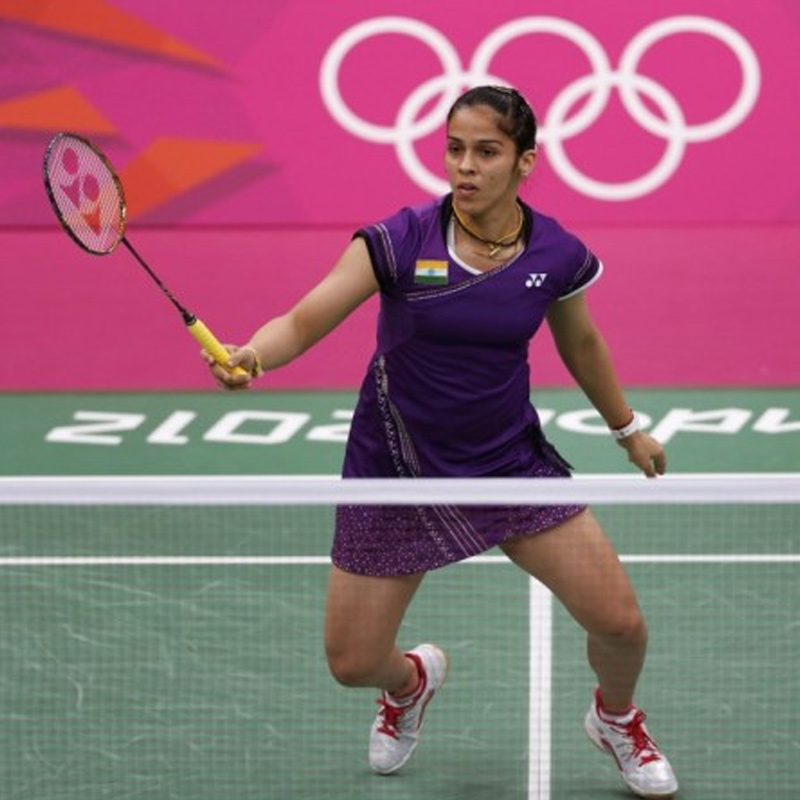
  • Vodafone India secures the ‘title sponsorship’ for inaugural Indian badminton league 2013

    Vodafone India secures the ‘title sponsorship’ for inaugural Indian badminton league 2013

    Bangalore: In one of the most anticipated statements of the high-impact Indian Badminton League, it was announced today that Vodafone India, India’s leading telecommunications service providers will be the ‘Title Sponsors’ for Indian Badminton League (IBL) 2013.

    Speaking on the association, Vivek Mathur, Chief Commercial Officer, Vodafone India said, “Vodafone has a strong association with sport in India. We see a great initiative in the Indian Badminton League. Badminton is a sport that most Indians associate with and we see this as a paradigm shift in the sports entertainment industry. Vodafone India intends to make the best out of this association.”

    Speaking on the association, Mr Ashish Chadha, CEO, Sporty Solutionz, the ‘Commercial Partner’ for IBL, said, “It’s a matter of pride for Indian Badminton League today that Vodafone India has decided to promote the League and this association will take BAI and Sporty Solutionz’s attempt to promote badminton in India to the next level. With its unparalleled reputation for world-class services and pioneering telecom supremacy, Vodafone India’s support will be a key factor to the success of IBL. Keeping in mind Vodafone India’s past association with sports, it gives us the confidence that they will even guide us with their valuable experience through this foray.”

    Speaking on this occasion, Dr. Akhilesh Das Gupta, Badminton Association of India President & MP said, “We welcome Vodafone to the IBL family. We look forward to a strong and successful association and their presence will add goodwill to the League.”

    The $1-million Indian Badminton League is set to launch on August 14, 2013, with some high-voltage action expected between Krrish Delhi Smashers and Pune Pistons. The 2013 IBL will feature six franchises and will run for 18 days. Each franchise will host a two-day leg and the League will showcase a grand total of 90 matches, providing broadcasters and in-stadia spectators with more than 100 hours of LIVE “family entertainment” on STAR Sports 2 & ESPN. The matches will be held during late afternoon and evening to coincide with prime time television and providing a convenient time for the stadium audience. The LIVE IN-stadia entertainment, combined with high-octane on-court action is expected to further hook viewers onto this new adrenalin packed LIVE family entertainment format attracting a much younger fan base, which also includes women and children.

    The top four franchises in the League will clash in the semi-finals and the winners will meet in the grand final on August 31, which will be played in Mumbai, for the richest prize money tournament in badminton till now.

  • Vodafone offers Worldspace Radio on mobile

    Vodafone offers Worldspace Radio on mobile

    MUMBAI: Vodafone India has launched WorldSpace Radio across 18 circles in India enabling customers to listen to more than 100,000 songs across 10 channels.


    Vodafone India customers can avail this service at a price of Rs 30 per month along with 300 minutes of free usage.


    The service is available in Uttar Pradesh East & West, Rajasthan, Haryana, Punjab, Mumbai, Bihar, Kerala, Rest of Bengal, Assam, North East, Karnataka, Madhya Pradesh, Jammu & Kashmir, Orissa, Delhi, Tamil Nadu and Chennai.


    Through this service customers can access different genres of music round-the-clock, ranging from old Hindi films, regional folk songs to ghazals. This service also offers song collections around various themes that include love songs, sentimental gems and artiste-specials that users can browse through at their convenience. Users can thus get the same old stations, now by Timbre Media -the very same team of radio professionals who introduced genre based radio in India with Worldspace.


    Vodafone India has tied up with Timbre Media in association with Saregama for the purpose of radio/music programming and sound packaging. Timbre Media specialises in genre-based radio programming in popular songs and Ghazals in Hindi (old and new), international music, Carnatic and Hindustani classical, songs in regional languages like Marathi, Gujarati, Bengali, Punjabi, Urdu, Tamil, Telugu, Kannada and Malayalam, and spiritual and wellness content.