Tag: Vodafone India

  • TRAI to examine whether 4G offer can ‘Jio’ till Mar ’17

    TRAI to examine whether 4G offer can ‘Jio’ till Mar ’17

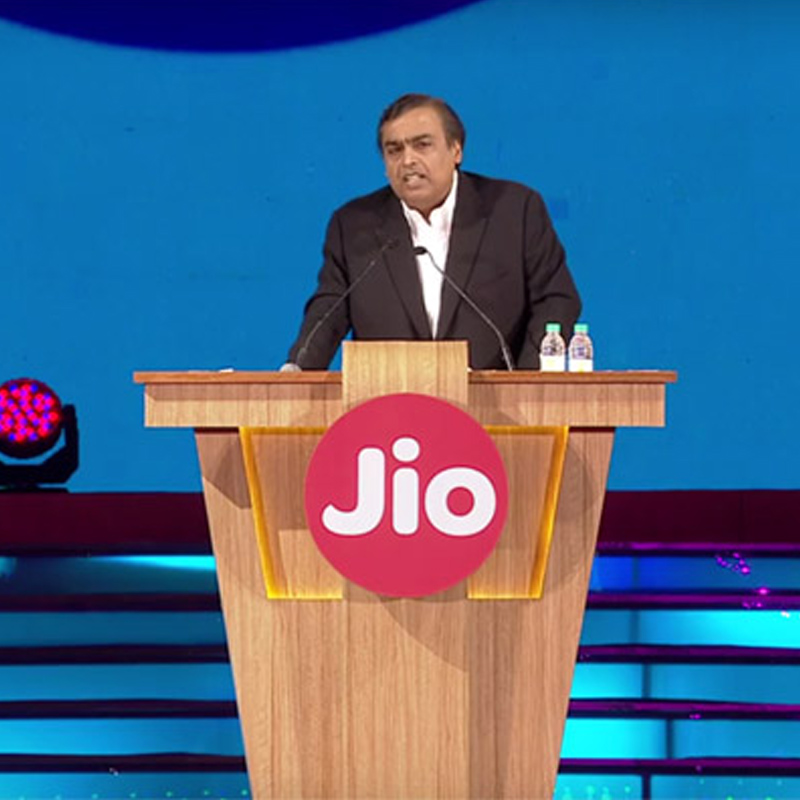
    MUMBAI: In his attempt to arduously chase the 100-million subscriber base, Reliance Jio CMD Mukesh Ambani announced extension of free domestic voice calls and data till 31 March, 2017, having crossed 50 million in 83 days. The Telecom Regulatory Authority of India (TRAI), however, said it will examine Jio’s latest offer providing free 4G services for all till 31 March.

    Jio’s new offer, meanwhile, struck a blow at competing incumbent operators — Idea Cellular, Bharti Airtel, and Vodafone India. The latest offer hurt the rivals’ share price. Airtel was down 1.66% at Rs 319.10 on the Bombay Stock Exchange (BSE), and Idea Cellular and Reliance Communications, respectively, dropped around 6% and 5%. By contrast, RIL price was up 0.45%.

    Ambani, on Thursday, announced the continuation of freebies currently being offered for fourth-generation (4G) long-term evolution (LTE) data and voice services till March next year. TRAI had earlier allowed Reliance Jio to provide free service till the end of this year.

    About the validity of Jio’s offer, TRAI chairman R S Sharma said that they would look into it. Every tariff that was filed before the authority was examined. TRAI would give its response at an appropriate time, Sharma added. TRAI had earlier allowed the new operator to provide free services till the end of 2016 for subscribers who joined till 3 December.

    The Prime Minister’s Office (PMO) meantime stated that it did not formally allow use of the prime minister Narendra Modi’s picture in electronic and print advertisements of Reliance Jio.

    Meanwhile, lower penetration of broadband (7 per cent) may slow down the ‘Digital India’ drive, according to TRAI. Sharma suggested that a potential solution would be to use connections for cable TV for broadband delivery. TRAI has already made the recommendation to the government, he added. Digital India would have to ride on that infrastructure, and if India did not have robust infrastructure, it was not going to achieve the objective of knowledge economy, Sharma added.

    Also read:

    http://www.indiantelevision.com/iworld/telecom/jio-money-merchant-app-helps-transition-to-cashless-economy-161201

    http://www.indiantelevision.com/iworld/telecom/jio-extends-hny-free-data-offer-up-to-31-march-17-161201

  • TRAI to examine whether 4G offer can ‘Jio’ till Mar ’17

    TRAI to examine whether 4G offer can ‘Jio’ till Mar ’17

    MUMBAI: In his attempt to arduously chase the 100-million subscriber base, Reliance Jio CMD Mukesh Ambani announced extension of free domestic voice calls and data till 31 March, 2017, having crossed 50 million in 83 days. The Telecom Regulatory Authority of India (TRAI), however, said it will examine Jio’s latest offer providing free 4G services for all till 31 March.

    Jio’s new offer, meanwhile, struck a blow at competing incumbent operators — Idea Cellular, Bharti Airtel, and Vodafone India. The latest offer hurt the rivals’ share price. Airtel was down 1.66% at Rs 319.10 on the Bombay Stock Exchange (BSE), and Idea Cellular and Reliance Communications, respectively, dropped around 6% and 5%. By contrast, RIL price was up 0.45%.

    Ambani, on Thursday, announced the continuation of freebies currently being offered for fourth-generation (4G) long-term evolution (LTE) data and voice services till March next year. TRAI had earlier allowed Reliance Jio to provide free service till the end of this year.

    About the validity of Jio’s offer, TRAI chairman R S Sharma said that they would look into it. Every tariff that was filed before the authority was examined. TRAI would give its response at an appropriate time, Sharma added. TRAI had earlier allowed the new operator to provide free services till the end of 2016 for subscribers who joined till 3 December.

    The Prime Minister’s Office (PMO) meantime stated that it did not formally allow use of the prime minister Narendra Modi’s picture in electronic and print advertisements of Reliance Jio.

    Meanwhile, lower penetration of broadband (7 per cent) may slow down the ‘Digital India’ drive, according to TRAI. Sharma suggested that a potential solution would be to use connections for cable TV for broadband delivery. TRAI has already made the recommendation to the government, he added. Digital India would have to ride on that infrastructure, and if India did not have robust infrastructure, it was not going to achieve the objective of knowledge economy, Sharma added.

    Also read:

    http://www.indiantelevision.com/iworld/telecom/jio-money-merchant-app-helps-transition-to-cashless-economy-161201

    http://www.indiantelevision.com/iworld/telecom/jio-extends-hny-free-data-offer-up-to-31-march-17-161201

  • Expert-speak on advertising in times of mobile-first consumers

    Expert-speak on advertising in times of mobile-first consumers

    MUMBAI: With Indian government’s demonetisation of high-value currency notes in its second fortnight, there couldn’t have been a better time to discuss how mobile is moving businesses and whether the reality of a cashless economy is still a far-fetched theory.

    In an effort to cash in on the latest buzz words — ‘financial inclusion, ‘digital business’, ‘internet penetration’, ‘digital advertising’, etc. — Facebook recently hosted Mobile Moves Business, an industry event in Mumbai that was designed to bring together businesses, industry experts and marketers to help engage with today’s mobile-first consumers in India.

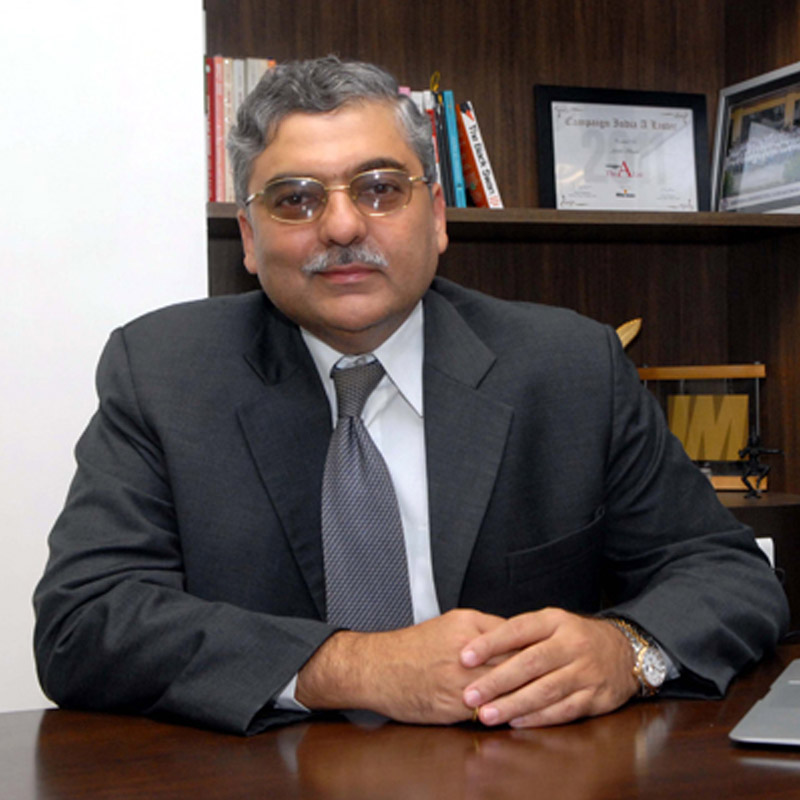
    Making a bold and future-facing statement, Dentsu Aegis Network South Asia Chairman Ashish Bhasin made it clear that the foundations of present day media planning, which depends primarily on frequencies of views, will be shaken as the lines between mediums start to blur.

    “We make a plan based on an assumption of an X number of times it (a campaign) is viewed on television, but we need to start considering that the same communication may be seen in an another format on an another platform several more number of times,” pointed out Bhasin, adding most market studies predicting digital ad ex to reach 40 per cent of the total pie will be proven wrong. “Digital will command 80 to 100 per cent of the total pie, I feel. Of course, the way we classify digital advertising will also change…TV, radio and even print will all become digital,” he said.

    Along with him on the panel discussing matters digital were Facebook India MD Umang Bedi, Vodafone India marketing SVP Sidharth Banerjee and Snapdeal marketing VP Kanika Kalra.

    Banerjee, who seconded Bhasin’s statement, was of the opinion that India, just like China, will soon reach an inflexion point in smart-phone penetration when that number reached one-third of the total phones in the market.

    “I can see that happening in the next 18 months or so. Getting the communication in mobile right will be the main issue then. What advertisers keep getting wrong is treating mobile (devices) like a separate medium to advertise on,” he said.

    Pointing out that advertisers shouldn’t forget the many India’s within India, Banerjee said, “While we ready ourselves for the digital and cashless India armed with smart-phones, we mustn’t forget about a part of India where features phones will still play an important role and marketers shouldn’t exclude them from their plans.”

    But smart tech and devices also bring along newer problems and challenges. Ad blocking, for example. The high rate of ad blocking in India was also addressed by the panel.

    “As the digital advertising market becomes more mature, the issue of privacy will only become more acute. I believe the way ahead is opt-ins. Let’s face it, users don’t pay for advertisements, so ads will always remain (like) an intrusion, “Bhasin highlighted a valid point, adding, “Going forward, consumers will have a choice to allow certain advertisers to communicate with them. So we marketers need to collectively respect the consumer’s choice. Sooner or later we will have laws concerning it and it is better to prepare for it with best practices in place.”

    Clarifying FB’s position on ad blocking, Bedi said that FB respected its users’ privacy and ensures only relevant sponsored ads reach users. “It isn’t bad but actually good for business as brands can seek out only those consumers who are interested in their communications, leading to higher fulfilment of purchase cycle instead of spraying and praying,” Bedi replied, when asked if the social media giant loses businesses due to ad blocking.

  • Expert-speak on advertising in times of mobile-first consumers

    Expert-speak on advertising in times of mobile-first consumers

    MUMBAI: With Indian government’s demonetisation of high-value currency notes in its second fortnight, there couldn’t have been a better time to discuss how mobile is moving businesses and whether the reality of a cashless economy is still a far-fetched theory.

    In an effort to cash in on the latest buzz words — ‘financial inclusion, ‘digital business’, ‘internet penetration’, ‘digital advertising’, etc. — Facebook recently hosted Mobile Moves Business, an industry event in Mumbai that was designed to bring together businesses, industry experts and marketers to help engage with today’s mobile-first consumers in India.

    Making a bold and future-facing statement, Dentsu Aegis Network South Asia Chairman Ashish Bhasin made it clear that the foundations of present day media planning, which depends primarily on frequencies of views, will be shaken as the lines between mediums start to blur.

    “We make a plan based on an assumption of an X number of times it (a campaign) is viewed on television, but we need to start considering that the same communication may be seen in an another format on an another platform several more number of times,” pointed out Bhasin, adding most market studies predicting digital ad ex to reach 40 per cent of the total pie will be proven wrong. “Digital will command 80 to 100 per cent of the total pie, I feel. Of course, the way we classify digital advertising will also change…TV, radio and even print will all become digital,” he said.

    Along with him on the panel discussing matters digital were Facebook India MD Umang Bedi, Vodafone India marketing SVP Sidharth Banerjee and Snapdeal marketing VP Kanika Kalra.

    Banerjee, who seconded Bhasin’s statement, was of the opinion that India, just like China, will soon reach an inflexion point in smart-phone penetration when that number reached one-third of the total phones in the market.

    “I can see that happening in the next 18 months or so. Getting the communication in mobile right will be the main issue then. What advertisers keep getting wrong is treating mobile (devices) like a separate medium to advertise on,” he said.

    Pointing out that advertisers shouldn’t forget the many India’s within India, Banerjee said, “While we ready ourselves for the digital and cashless India armed with smart-phones, we mustn’t forget about a part of India where features phones will still play an important role and marketers shouldn’t exclude them from their plans.”

    But smart tech and devices also bring along newer problems and challenges. Ad blocking, for example. The high rate of ad blocking in India was also addressed by the panel.

    “As the digital advertising market becomes more mature, the issue of privacy will only become more acute. I believe the way ahead is opt-ins. Let’s face it, users don’t pay for advertisements, so ads will always remain (like) an intrusion, “Bhasin highlighted a valid point, adding, “Going forward, consumers will have a choice to allow certain advertisers to communicate with them. So we marketers need to collectively respect the consumer’s choice. Sooner or later we will have laws concerning it and it is better to prepare for it with best practices in place.”

    Clarifying FB’s position on ad blocking, Bedi said that FB respected its users’ privacy and ensures only relevant sponsored ads reach users. “It isn’t bad but actually good for business as brands can seek out only those consumers who are interested in their communications, leading to higher fulfilment of purchase cycle instead of spraying and praying,” Bedi replied, when asked if the social media giant loses businesses due to ad blocking.

  • TRAI reduces ceiling tariff for mobile banking services

    TRAI reduces ceiling tariff for mobile banking services

    NEW DELHI: It couldn’t have come at a more opportune moment, especially when the country is reeling under a severe cash crunch in the aftermath of demonetization of Rs 500 and Rs 1,000 currency notes. Telecom Regulatory Authority of India (TRAI) in an order yesterday reduced the ceiling tariff for the use of unstructured supplementary service data (USSD)-based mobile banking services from Rs 1.50 to Rs.0.50.

    TRAI also amended the Mobile Banking (Quality of Service) Regulations to increase the number of stages from 5 to 8 per USSD session.

    These amendments will facilitate banks, their agents or any entity authorized by the Reserve Bank of India for better delivery of banking and payment services to the consumers through mobile phones over USSD.

    Though these regulatory decisions are an outcome of a detailed consultation process initiated in August 2016, the timing cannot be missed as PM Modi-led government’s move on arresting black money and bring about more transparency through digitalization, including digital banking, has led to partial chaos in society and economy in the short to medium terms.

    “The availability of and easy access to banking services for all our citizens is a major objective of public policy. However, the harsh reality is that a large section of our population is still unbanked/under-banked. With a significant penetration of mobile telephony in rural India, the mobile phone can be leveraged to achieve the goal of financial inclusion. Accordingly, in November, 2013, with a view to facilitate mobile banking for financial inclusion, TRAI had established a framework to facilitate the agents of the banks to interface with the access service providers for use of SMS, USSD and IVR channels to provide mobile banking services and prescribed ceiling tariff of Rs. 1.50 per USSD session for USSD-based mobile banking service. However, all these initiatives did not lead to the desired result and both the number of transactions and success rate are below expectation,” TRAI said in a statement while mandating the tariff reductions.

    The latest diktat on USSD tariffs, which come into force with immediate effect, would, according to TRAI, hopefully result in greater financial inclusion in the country and contribute to the fulfillment of an important aspect of Digital India by encouraging a ‘less cash’ society.

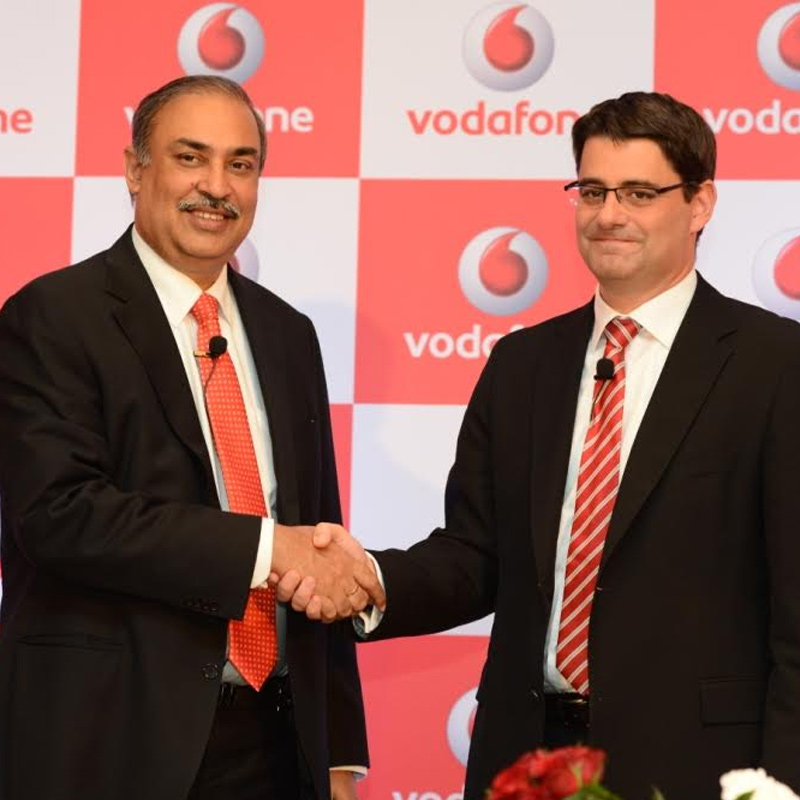
    Welcoming the government’s initiatives to accelerate India’s progress into a `less cash’ economy, Vodafone India MD & CEO Sunil Sood said, “Vodafone India is committed to help actualise the government’s several initiatives designed to make India a digital economy. To ease the burden of masses, we are waiving off all USSD charges presently levied for mobile banking till 31 December 2016. As several million customers use feature phones, we are hopeful that this free access to mobile banking will encourage them to adopt it as their preferred and convenient mode for banking.”

  • TRAI reduces ceiling tariff for mobile banking services

    TRAI reduces ceiling tariff for mobile banking services

    NEW DELHI: It couldn’t have come at a more opportune moment, especially when the country is reeling under a severe cash crunch in the aftermath of demonetization of Rs 500 and Rs 1,000 currency notes. Telecom Regulatory Authority of India (TRAI) in an order yesterday reduced the ceiling tariff for the use of unstructured supplementary service data (USSD)-based mobile banking services from Rs 1.50 to Rs.0.50.

    TRAI also amended the Mobile Banking (Quality of Service) Regulations to increase the number of stages from 5 to 8 per USSD session.

    These amendments will facilitate banks, their agents or any entity authorized by the Reserve Bank of India for better delivery of banking and payment services to the consumers through mobile phones over USSD.

    Though these regulatory decisions are an outcome of a detailed consultation process initiated in August 2016, the timing cannot be missed as PM Modi-led government’s move on arresting black money and bring about more transparency through digitalization, including digital banking, has led to partial chaos in society and economy in the short to medium terms.

    “The availability of and easy access to banking services for all our citizens is a major objective of public policy. However, the harsh reality is that a large section of our population is still unbanked/under-banked. With a significant penetration of mobile telephony in rural India, the mobile phone can be leveraged to achieve the goal of financial inclusion. Accordingly, in November, 2013, with a view to facilitate mobile banking for financial inclusion, TRAI had established a framework to facilitate the agents of the banks to interface with the access service providers for use of SMS, USSD and IVR channels to provide mobile banking services and prescribed ceiling tariff of Rs. 1.50 per USSD session for USSD-based mobile banking service. However, all these initiatives did not lead to the desired result and both the number of transactions and success rate are below expectation,” TRAI said in a statement while mandating the tariff reductions.

    The latest diktat on USSD tariffs, which come into force with immediate effect, would, according to TRAI, hopefully result in greater financial inclusion in the country and contribute to the fulfillment of an important aspect of Digital India by encouraging a ‘less cash’ society.

    Welcoming the government’s initiatives to accelerate India’s progress into a `less cash’ economy, Vodafone India MD & CEO Sunil Sood said, “Vodafone India is committed to help actualise the government’s several initiatives designed to make India a digital economy. To ease the burden of masses, we are waiving off all USSD charges presently levied for mobile banking till 31 December 2016. As several million customers use feature phones, we are hopeful that this free access to mobile banking will encourage them to adopt it as their preferred and convenient mode for banking.”

  • Jio impacts Vodafone India H1-17 results

    Jio impacts Vodafone India H1-17 results

    BENGALURU: Vodafone Group Plc (Vodafone group) reported Group organic service revenue up 2.3 per cent for the half year ended 30 September 2016 (H1-17).  H1-17 Group revenue declined 3.9 per cent to €27,054 million as compared to € 28,151 million for H1-6 (corresponding period of the previous year). H1-17 Vodafone Group reported organic EBITDA growth of 4.3 per cent to €7,906 million, supported by strong cost control. In real terms, EBIDTA declined 1.7 per cent from $8,039 million reported for H1-16.

    India numbers

    Vodafone India contributed about 11.1 per cent to Vodafone Group revenues and adds about 43.7 per cent to Vodafone group mobile subscriber base in the quarter ended 30 September 2016 or Q2-17. About 51.4 per cent of the group’s voice usage was from India in Q2-17 at 183,555 million minutes (Total group 357,034 million minutes).

    Vodafone India Service revenue grew by 5.9 per cent (quarter ended 30 June 2016 or Q1-17: 6.4 per cent, Q2-17: 5.4 per cent) in H1-17 to Rs 22,579 crore from Rs 21,321 crore in H1-16. Excluding regulatory drags including MTR cuts, roaming price caps and an increase in service tax, the quarterly rate of growth slowed from 7.7 per cent in Q1-17 to 6.3 per cent in Q2-17. This underlying slowdown was mainly driven by lower data revenue growth resulting from increased competitive pressure says the company.

    Data revenue growth slowed from 22 per cent in Q1-17 to 16 per cent in Q2-17. This was driven by a flattening of unique data user growth quarter-on-quarter, reflecting the impact of ‘free’ promotional offers from a new entrant, viz., Reliance Jio. 

    Vodafone group’s active data customer base at the period end was 69.6 million or 6.96 crore (Q1-17- 69.7 million or 6.97 crore). Overall data pricing declined 14 per cent year-on-year, while data usage per customer continued to grow strongly to 504MB (+28 per cent). Vodafone group 3G / 4G customer base continued to grow to 36 million (3.6 crore), up 51 per cent, and smartphone penetration was now 34.5 per cent says the company. Vodafone India reported revenue from data of Rs 4,617 crore. Data ARPU (for users more than 1MB) was at Rs 164 in Q2-17 versus Rs 158 in Q2-16.

    Voice revenue growth increased to 2.7 per cent in Q2-17 (Q1-17: 2.2 per cent) supported by a growing customer base. This was despite seasonally lower average minutes of use per customer. Total mobile customers increased 2.8 million (28 lakh) over the period, giving a closing customer base of over 200 million for the first time (Q2: 200.7 million or 20.07 crore).
    During the period Vodafone India added 4,100 new 3G sites, taking the total to 63,000. It also has 13,000 4G sites. In the Indian spectrum auction during October Vodafone India increased its total spectrum holding by 62 per cent. 

    Overall Vodafone paid Rs 20,300 crore (€2.7 billion), of which 92 per cent was on spectrum for the 12 circles in which it claims to be a market leader. Vodafone India plans to extend its 4G footprint from 9 to 17 circles by the end of the current financial year. These circles cover around 91 per cent of Vodafone India’s service revenues and 94 per cent of its data revenues.

    EBITDA grew by 2.6 per cent in H1-17 to Rs 6,704 crore from Rs 6,534 crore, with the EBITDA margin declining by 0.1 percentage points to 29.6 per cent due to higher network and customer acquisition costs, which were largely offset by significant operating cost savings says the company.

    The Vodafone Group intends to proceed with an IPO of Vodafone India as soon as market conditions allow. It does not expect this to take place during the current financial year.

    Company speak

    Vodafone group chief executive Vittorio Colao said, ‘We have further improved our performance during the first half of the financial year with Europe modestly ahead of our expectations – led by Germany and Italy – and good execution in AMAP. Our substantial network investments and ‘more-for-more’ propositions have allowed us to capture opportunities from strong data demand, supporting European mobile contract ARPU and continued growth in emerging markets. As Europe’s fastest-growing broadband operator, we are driving rapid uptake of our consumer fixed and TV services while our wholly converged Enterprise business continues to outperform its peers. We are now translating faster revenue growth into margin expansion, supported by our focus on cost efficiency.

    Competition in India has increased in the year, reducing revenue growth and profitability. We have responded to this changing competitive environment by strengthening our data and voice commercial offers and by focusing our participation in the recent spectrum auction on acquiring frequencies in the more successful and profitable areas of the country.

    Overall, we expect to sustain our underlying performance in the second half of the year and remain on track to meet our full-year objectives despite macroeconomic uncertainties. This performance allows for improved returns to our shareholders, as reflected by the growth in the interim dividend.

    Vodafone India managing director and CEO Sunil Sood commented: “Amidst a dynamic environment, we delivered a solid performance. We are well prepared for the increased level of competitive intensity that we are experiencing. We have strengthened our customer value propositions making Vodafone Play, your one window to the world of entertainment, launched exciting 4G offers – 9GB free on purchase of 1GB pack for new 4G handsets and revamped Vodafone RED for high end voice and data users. Further, we pioneered lifestyle propositions such as Vodafone U for young customers and Vodafone Flex, which allows customers to make a single recharge for voice, sms and data. We expanded our 4G footprint to 9 circles by launching services in 4 new circles. With the spectrum bought recently, we will roll out the Vodafone SuperNet 4G experience rapidly to 2,400 towns and in 8 additional circles by March. We continue to invest to expand our modern and scalable network with a strong backhaul, to support the increasing volumes and need for speed from both retail and enterprise customers. We remain committed to fulfill the evolving needs of our customers and leverage our global experience plus rich understanding of India to play a meaningful role in enabling Digital India.”
  • Jio impacts Vodafone India H1-17 results

    Jio impacts Vodafone India H1-17 results

    BENGALURU: Vodafone Group Plc (Vodafone group) reported Group organic service revenue up 2.3 per cent for the half year ended 30 September 2016 (H1-17).  H1-17 Group revenue declined 3.9 per cent to €27,054 million as compared to € 28,151 million for H1-6 (corresponding period of the previous year). H1-17 Vodafone Group reported organic EBITDA growth of 4.3 per cent to €7,906 million, supported by strong cost control. In real terms, EBIDTA declined 1.7 per cent from $8,039 million reported for H1-16.

    India numbers

    Vodafone India contributed about 11.1 per cent to Vodafone Group revenues and adds about 43.7 per cent to Vodafone group mobile subscriber base in the quarter ended 30 September 2016 or Q2-17. About 51.4 per cent of the group’s voice usage was from India in Q2-17 at 183,555 million minutes (Total group 357,034 million minutes).

    Vodafone India Service revenue grew by 5.9 per cent (quarter ended 30 June 2016 or Q1-17: 6.4 per cent, Q2-17: 5.4 per cent) in H1-17 to Rs 22,579 crore from Rs 21,321 crore in H1-16. Excluding regulatory drags including MTR cuts, roaming price caps and an increase in service tax, the quarterly rate of growth slowed from 7.7 per cent in Q1-17 to 6.3 per cent in Q2-17. This underlying slowdown was mainly driven by lower data revenue growth resulting from increased competitive pressure says the company.

    Data revenue growth slowed from 22 per cent in Q1-17 to 16 per cent in Q2-17. This was driven by a flattening of unique data user growth quarter-on-quarter, reflecting the impact of ‘free’ promotional offers from a new entrant, viz., Reliance Jio. 

    Vodafone group’s active data customer base at the period end was 69.6 million or 6.96 crore (Q1-17- 69.7 million or 6.97 crore). Overall data pricing declined 14 per cent year-on-year, while data usage per customer continued to grow strongly to 504MB (+28 per cent). Vodafone group 3G / 4G customer base continued to grow to 36 million (3.6 crore), up 51 per cent, and smartphone penetration was now 34.5 per cent says the company. Vodafone India reported revenue from data of Rs 4,617 crore. Data ARPU (for users more than 1MB) was at Rs 164 in Q2-17 versus Rs 158 in Q2-16.

    Voice revenue growth increased to 2.7 per cent in Q2-17 (Q1-17: 2.2 per cent) supported by a growing customer base. This was despite seasonally lower average minutes of use per customer. Total mobile customers increased 2.8 million (28 lakh) over the period, giving a closing customer base of over 200 million for the first time (Q2: 200.7 million or 20.07 crore).
    During the period Vodafone India added 4,100 new 3G sites, taking the total to 63,000. It also has 13,000 4G sites. In the Indian spectrum auction during October Vodafone India increased its total spectrum holding by 62 per cent. 

    Overall Vodafone paid Rs 20,300 crore (€2.7 billion), of which 92 per cent was on spectrum for the 12 circles in which it claims to be a market leader. Vodafone India plans to extend its 4G footprint from 9 to 17 circles by the end of the current financial year. These circles cover around 91 per cent of Vodafone India’s service revenues and 94 per cent of its data revenues.

    EBITDA grew by 2.6 per cent in H1-17 to Rs 6,704 crore from Rs 6,534 crore, with the EBITDA margin declining by 0.1 percentage points to 29.6 per cent due to higher network and customer acquisition costs, which were largely offset by significant operating cost savings says the company.

    The Vodafone Group intends to proceed with an IPO of Vodafone India as soon as market conditions allow. It does not expect this to take place during the current financial year.

    Company speak

    Vodafone group chief executive Vittorio Colao said, ‘We have further improved our performance during the first half of the financial year with Europe modestly ahead of our expectations – led by Germany and Italy – and good execution in AMAP. Our substantial network investments and ‘more-for-more’ propositions have allowed us to capture opportunities from strong data demand, supporting European mobile contract ARPU and continued growth in emerging markets. As Europe’s fastest-growing broadband operator, we are driving rapid uptake of our consumer fixed and TV services while our wholly converged Enterprise business continues to outperform its peers. We are now translating faster revenue growth into margin expansion, supported by our focus on cost efficiency.

    Competition in India has increased in the year, reducing revenue growth and profitability. We have responded to this changing competitive environment by strengthening our data and voice commercial offers and by focusing our participation in the recent spectrum auction on acquiring frequencies in the more successful and profitable areas of the country.

    Overall, we expect to sustain our underlying performance in the second half of the year and remain on track to meet our full-year objectives despite macroeconomic uncertainties. This performance allows for improved returns to our shareholders, as reflected by the growth in the interim dividend.

    Vodafone India managing director and CEO Sunil Sood commented: “Amidst a dynamic environment, we delivered a solid performance. We are well prepared for the increased level of competitive intensity that we are experiencing. We have strengthened our customer value propositions making Vodafone Play, your one window to the world of entertainment, launched exciting 4G offers – 9GB free on purchase of 1GB pack for new 4G handsets and revamped Vodafone RED for high end voice and data users. Further, we pioneered lifestyle propositions such as Vodafone U for young customers and Vodafone Flex, which allows customers to make a single recharge for voice, sms and data. We expanded our 4G footprint to 9 circles by launching services in 4 new circles. With the spectrum bought recently, we will roll out the Vodafone SuperNet 4G experience rapidly to 2,400 towns and in 8 additional circles by March. We continue to invest to expand our modern and scalable network with a strong backhaul, to support the increasing volumes and need for speed from both retail and enterprise customers. We remain committed to fulfill the evolving needs of our customers and leverage our global experience plus rich understanding of India to play a meaningful role in enabling Digital India.”

  • Big deals happening in telecom towers

    Big deals happening in telecom towers

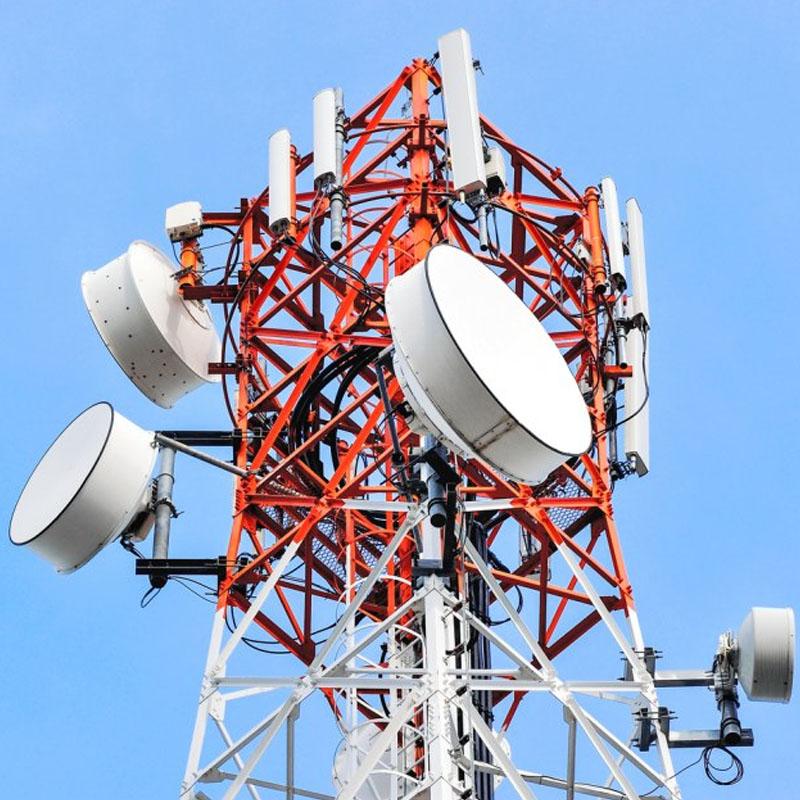
    MUMBAI: Valuation in the business of telecom towers has averaged out over the past decade when the sector witnessed a battery of PE firms negotiate deals in India. There have been, over the past year, a few large deals in the sector.

    American private equity firm Providence, specialising in media, telecom, and technology investments, is reportedly exchanging its holding in Aditya Birla Telecom Ltd (ABTL) with a 4.8% stake in Indus Towers Ltd. The planned potential deal is expected to be a stock swap for Providence.

    The stake for Providence may be worth around Rs 3,000 crore according to estimates in the backdrop of recent deals in the telecom tower space in India.

    VCCircle has reported that the country’s largest telecom tower firm Indus Towers is a three-way joint venture with Bharti Infratel Ltd (42%), Vodafone India (42%) and ABTL (16%). Providence Equity Partners owns compulsory convertible preference shares of ABTL that give it beneficial stake of around 30% in the privately held firm.

    Indus is an independently managed company offering passive infrastructure services to all telecom operators and broadband service providers. It operates in 15 of India’s 22 telecom service areas including Delhi, Mumbai, Kolkata and states in southern, northern and western regions. As of 31 March 2016, it operated 119,881 towers with 270,006 co-locations.

    The Economic Times, earlier this month, reported that the Aditya Birla Group was looking at restructuring its towers venture that could involve Providence swapping shares of ABTL with a 5% stake in Indus. It reported that the group was seeking to sell a large stake in its captive tower business under Idea Cellular, and may merge that arm with ABTL, and then bring down its equity in the merged entity.

    Reliance Communications recently signed term sheet with Brookfield Infrastructure Group for part-sale of its telecom tower business. RCom is selling 51% stake in tower unit for Rs 11,000 crore. The deal involving 45,000 mobile towers will facilitate RCom to lessen debt burden.Reliance Communications has a net debt of Rs. 42,000 crores as of end-June, which it expects to cut by Rs. 20,000 crore. Reliance had been looking to sell its mobile towers business, and had expected to seal a deal by October, CEO Gurdeep Singh had said earlier.

    American Tower Corporation, a year ago, purchased a 51% stake in telecom tower firm Viom Networks for Rs 7,635 crore. Co-promoted by Tata Group and the Kanoria family of SREI Infrastructure, Viom had private investors, some of whom had backed the Kanorias’s Quippo Telecom Infrastructure.

  • Big deals happening in telecom towers

    Big deals happening in telecom towers

    MUMBAI: Valuation in the business of telecom towers has averaged out over the past decade when the sector witnessed a battery of PE firms negotiate deals in India. There have been, over the past year, a few large deals in the sector.

    American private equity firm Providence, specialising in media, telecom, and technology investments, is reportedly exchanging its holding in Aditya Birla Telecom Ltd (ABTL) with a 4.8% stake in Indus Towers Ltd. The planned potential deal is expected to be a stock swap for Providence.

    The stake for Providence may be worth around Rs 3,000 crore according to estimates in the backdrop of recent deals in the telecom tower space in India.

    VCCircle has reported that the country’s largest telecom tower firm Indus Towers is a three-way joint venture with Bharti Infratel Ltd (42%), Vodafone India (42%) and ABTL (16%). Providence Equity Partners owns compulsory convertible preference shares of ABTL that give it beneficial stake of around 30% in the privately held firm.

    Indus is an independently managed company offering passive infrastructure services to all telecom operators and broadband service providers. It operates in 15 of India’s 22 telecom service areas including Delhi, Mumbai, Kolkata and states in southern, northern and western regions. As of 31 March 2016, it operated 119,881 towers with 270,006 co-locations.

    The Economic Times, earlier this month, reported that the Aditya Birla Group was looking at restructuring its towers venture that could involve Providence swapping shares of ABTL with a 5% stake in Indus. It reported that the group was seeking to sell a large stake in its captive tower business under Idea Cellular, and may merge that arm with ABTL, and then bring down its equity in the merged entity.

    Reliance Communications recently signed term sheet with Brookfield Infrastructure Group for part-sale of its telecom tower business. RCom is selling 51% stake in tower unit for Rs 11,000 crore. The deal involving 45,000 mobile towers will facilitate RCom to lessen debt burden.Reliance Communications has a net debt of Rs. 42,000 crores as of end-June, which it expects to cut by Rs. 20,000 crore. Reliance had been looking to sell its mobile towers business, and had expected to seal a deal by October, CEO Gurdeep Singh had said earlier.

    American Tower Corporation, a year ago, purchased a 51% stake in telecom tower firm Viom Networks for Rs 7,635 crore. Co-promoted by Tata Group and the Kanoria family of SREI Infrastructure, Viom had private investors, some of whom had backed the Kanorias’s Quippo Telecom Infrastructure.