Tag: Vodafone Idea

  • This Deepawali, Vi connected with and brought cheer to young students living away from families and loved ones

    This Deepawali, Vi connected with and brought cheer to young students living away from families and loved ones

    Mumbai: New Delhi is a student hub, a plethora of young adults who come here to pursue their education and in search of their dreams. Away from their families and the comfort of their homes, these students reside as Paying Guests, or in Hostels in student hubs like Mukherjee Nagar, Rajendra Nagar, Lakshmi Nagar. More often than not, course commitments or financial challenges prevent these students from being with their families and loved ones on the most auspicious festive occasion of the year. As India celebrates the biggest annual festival- Deepawali, India’s leading telecom operator Vi embraced the spirit of inclusivity with a special initiative for young students in Delhi.  

    Vi’s recent campaign Be Someone’s We showcases that even a small gesture is enough to make someone feel less left out, less lonely and cared for. Inspired by this concept, Vi’s Deepawali initiative sought to engage with and spread festive cheer amongst young students in Delhi. Vi tied up with popular RJ Naved for its Deepawali initiative in the city.

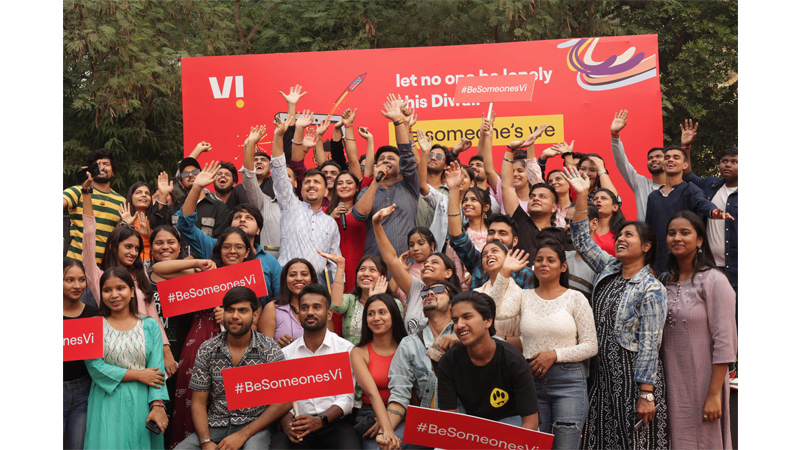
    RJ Naved paid surprise visits to popular student hubs/areas in Delhi and invited them to Vi’s Diwali activity setup. Naved placed surprise calls to the parents of the students to pass on his Diwali wishes. He also engaged with students through multiple activities to infuse the festive spirit, like Rangoli competition and his signature “Murga” prank. Students were also engaged in a unique activity involving “Cards of Connection,” a Be Someone’s We themed playing cards deck that had a unique challenge on each card.  The cards encouraged the students to connect with their loved ones and feel connected with them despite the physical distance. in their festive ethnic attire, the students set the stage ablaze with a Ramp walk, electric dance performances, and melodious musical performances.

    Naved also distributed sweet boxes among the students on behalf of Vi. The added sweet twist was that three lucky students won ‘Ticket to Home’ making their celebration more memorable.  

    Extending his Deepawali Greetings to the residents of Odisha, Vodafone Idea operations director- North Arvinder Singh Sachdev said, “Festivals are a time for families to get together…. but not everyone is as fortunate. Like thousands of Students, who travel miles away from home to Delhi with a vision to make a bright future for themselves but haven’t been able to go home to their loved ones. This Deepawali, Vi decided to practice inclusion and togetherness as per the cadence of our campaign Be Someone’s We and bring smiles to the faces of these students. On this auspicious festive occasion, we urge every citizen to do their bit and bring a little joy to someone. Together, we can ensure that everyone has a truly Happy Deepawali and no one feels left out or lonely”.  

    ‘Be Someone’s We’ reflects the collective effort to extend the joy and warmth of Deepawali to those who may be deprived of it due to various circumstances. It underscores the commitment of Vi to share the spirit of togetherness and inclusivity with all members of society.

  • Vi urges all to ‘Be Someone’s We’ in their new campaign

    Vi urges all to ‘Be Someone’s We’ in their new campaign

    Mumbai: Humans have inherently been social beings. Since the evolution of mankind, humans have always been together to survive and thrive. However, today’s world poses new types of challenges. Several studies indicate that people from all walks of life, especially the GenZ and millennials are struggling with challenges such as loneliness and social isolation impacting their overall well-being. This underscores the crucial need to establish genuine emotional connections in our ever-evolving phy-gital world.

    Bringing together the best of both worlds where physical and digital realms intertwine, Vi, one of the leading telecom operators, launched its new emotionally appealing creative campaign – ‘Be Someone’s We’, rooted in the company’s vision of being a partner to its customers; in building a better today and in building a brighter tomorrow. The campaign is designed to deliver a powerful message of supporting one another through both good and challenging times, even with the smallest of actions. It draws inspiration from everyday life scenarios to illustrate how a network can serve as a bridge for forming human/social bonds, promoting inclusivity and fostering a sense of togetherness.

    It showcases that even a small gesture of a call or message is enough to make someone feel less left out, less lonely and loved and cared for. Establishing Vi as the trusted partner, this 360-degree ‘Be Someone’s We’ campaign seeks to connect, engage, and uplift the mood of this young audience segment.

    Commenting on the unique issues pertaining to our times, Vodafone Idea CMO Avneesh Khosla said, “Loneliness is a growing concern in India, especially amongst the youth. We believe as a brand designed to aid connectivity, we have a strong role to play in addressing this concern. Our new campaign ‘Be Someone’s We’ is designed to reflect our philosophy of inclusivity, helping the world become less lonely.”

    Conceptualized by Ogilvy India, the campaign comprises of different slice of life stories that focuses on situations that may make us feel left out or lonely. The commercials also use the song ‘Akele Akele Kahaan ja rahe ho’ in a new and interesting way to tell the story.

    Story 1: Dandiya: This film shows a boy feeling a bit left out, watching his college mates practicing Dandiya for a fest. Suddenly, he gets a video call as one of the students practicing Dandiya calling him “Bhai…Dandiya dekhte hi rahega ya fir seekh ne bhi aaega?” inviting him to join. The boy smiles and joins them, with the feeling of being included.

    Story 2: Kheer: This film shows a new joinee, tad nervous and lost trying to find a seat for herself in a crowded cafeteria. She finds an empty seat in a corner. Shortly, she receives a message “Hey! yummy Kheer here… join us?”. Through the crowd she sees a girl waving at her with a lunchbox. She smiles and joins a bunch of colleagues as they welcome her and make space for her.

    Commenting on the campaign, Ogilvy CCOs  Harshad Rajadhyaksha & Kainaz Karmakar said, “Loneliness is one of the biggest silent killers of our time. The campaign shows how a simple phone call, a text or a connection in any way, can change how another person is feeling. Each story of the campaign addresses a different aspect of loneliness – from the first day at work to being a student in a city you don’t belong to. Rohit Dubey, who heads creative for Vi at Ogilvy has crafted the stories and Amit Sharma from Chrome films has brought them to life. Here’s wishing “Humari duniya mein akelepan ki koi jagah na ho”

    The campaign goes on air on 5 October 2023 first on the World Cup. In addition to the world cup, the films would also be on surround channels and digital. Apart from the films, the campaign will also be backed by Digital, OOH and Retail.   

  • Vodafone Idea lost 4 mn wireless subscribers in September 2022: Trai

    Vodafone Idea lost 4 mn wireless subscribers in September 2022: Trai

    Mumbai: As per subscription data by the Telecom Regulatory Authority of India (Trai), Reliance Jio added 0.72 million wireless subscribers at the end of September 2022. Bharti Airtel added 0.41 million subscribers during the same period. Vodafone Idea, on the other hand, lost 4 million wireless subscribers.

    The total number of wireless subscribers decreased to 1,145.45 million at the end of September 2022, in comparison to 1,149.11 million at the end of August 2022.

    The number of wireless subscribers in urban areas increased from 627.09 million to 627.14 million for the same period, while in rural areas it decreased from 522.02 million to 518.31 million.

    In September 2022, as per Trai data, there were 1,013.97 million active wireless subscribers. Reliance Jio had the highest number of active wireless subscribers at 386.08 million during the period, followed by Bharti Airtel at 358.99 million and Vodafone Idea at 212.19 million. From public-sector units, BSNL had 56.23 million active wireless subscribers.

    As per information received from 846 operators in September 2022, Trai found that total broadband subscribers increased from 813.94 million to 816.24 million. In September 2022, the broadband subscribers comprised 783.99 million mobile device users, 31.09 million wired subscribers, and 1.15 million fixed wireless subscribers.

    The top five service providers constituted 98.36 per cent of the total broadband subscribers at the end of September 2022. These service providers were Reliance Jio Infocomm with 426.80 million subscribers, followed by Bharti Airtel (225.09 million), Vodafone Idea (123.20 million), BSNL (25.62 million), and Atria Convergence (2.14 million).

    The top wired broadband service providers included are Reliance Jio Infocomm with 6.83 million subscribers, followed by Bharti Airtel (5.27 million), BSNL (3.91 million), Atria Convergence (2.14 million), and Hathway Cable & Datacom (1.13 million).

    Reliance Jio Infocomm, with 419.97 million subscribers, is followed by Bharti Airtel (219.82 million), Vodafone Idea (123.20 million), BSNL (21.71 million), and Intech Online (0.23 million) in the list of the top five wireless broadband service providers.

    The number of wireline subscribers increased from 25.97 million in September 2022 compared to 26.47 million in August 2022.

    The number of telephone subscribers decreased from 1,175.08 million to 1,171.92 million during the same period.

    Both urban and rural telephone subscribers recorded increases in numbers from 651.07 million to 651.61 million and 524.01 million to 520.30 million, respectively, at the end of September 2022.

    Also, during the same period, a total of 11.97 million requests were received for mobile number portability (MNP).

  • Reliance Jio adds 3.28 mn wireless subscribers in August : Trai

    Reliance Jio adds 3.28 mn wireless subscribers in August : Trai

    Mumbai: As per subscription data by the Telecom Regulatory Authority of India (Trai), Reliance Jio added 3.28 million wireless subscribers at the end of August. Bharti Airtel added 0.32 million during the same period. In August, Vodafone Idea lost 1.95 million wireless subscribers.

    The total number of wireless subscribers increased from 1,148.03 million to 1,149.11 million in August. The number of wireless subscribers in urban areas increased from 626.74 million to 627.09 million. However, wireless subscriptions in rural areas increased from 521.29 million to 522.02 million.

    As per Trai data, there were 1013.46 million active wireless subscribers during the month. Reliance Jio had the highest number of active wireless subscribers at 384.63 million, followed by Bharti Airtel at 357.66 million and Vodafone Idea at 214.29 million. BSNL had 56.23 million active wireless subscribers.

    As per information received from 767 operators in August, Trai found that total broadband subscribers increased from 807.42 million to 813.94 million. The broadband subscribers comprised 782.46 mobile device users, 30.37 million wired subscribers, and 1.11 million fixed wireless subscribers.

    The top five broadband service providers were Reliance Jio Infocomm with 425.80 million subscribers, followed by Bharti Airtel (223.98 million), Vodafone Idea (123.12 million), BSNL (25.80 million), and Atria Convergence (2.13 million).

    The top five wired broadband service providers were Reliance Jio Infocomm with 6.56 million subscribers, followed by Bharti Airtel (5.13 million), BSNL (3.88 million), Atria Convergence (2.13 million) and Hathway Cable & Datacom (1.13 million).

    The top five wireless broadband service providers were Reliance Jio Infocomm (419.24 million), Bharti Airtel (218.85 million), Vodafone Idea (123.12 million), BSNL (21.92 million) and Intech Online (0.23 million).

    The number of wireline subscribers increased from 25.63 million to 25.97 million in August.

    The number of telephone subscribers in India increased from 1,173.66 million to 1,175.08.66 million. Urban telephone subscriptions increased from 650.40 million to 651.07 million. However, rural subscriptions also increased from 523.26 million to 524.01 million.

    During August, a total of 11.35 million requests were received for mobile number portability (MNP).

  • Reliance Jio adds 2.9 mn wireless subscribers in July: Trai

    Reliance Jio adds 2.9 mn wireless subscribers in July: Trai

    Mumbai: Reliance Jio added 2.9 million wireless subscribers at the end of July, as per subscription data by the Telecom Regulatory Authority of India (Trai). Bharti Airtel added 0.51 million wireless subscribers during the same period. Vodafone Idea lost 1.54 wireless subscribers in July.

    The total number of wireless subscribers increased from 1,147.39 to 1,148.03 million in July. The number of wireless subscribers in urban areas decreased from 625.49 million to 626.74 million. However, wireless subscriptions in rural areas increased from 521.90 million to 521.29 million.

    As per Trai data, there were 1,013.18 million active wireless subscribers during the month. Reliance Jio had the highest number of active wireless subscribers at 382.17 million, followed by Bharti Airtel at 356.17 million and Vodafone Idea at 216.92 million. BSNL had 52.27 active wireless subscribers.

    As per information received from 694 operators in July, Trai found that total broadband subscribers increased from 800.94 million to 807.42 million. The broadband subscribers comprised 776.81 mobile device users, 29.47 million wired subscribers, and 1.14 million fixed wireless subscribers.

    The top five broadband service providers were Reliance Jio Infocomm with 422.23 million subscribers, Bharti Airtel with 222.12 million subscribers, Vodafone Idea with 122.98 million subscribers, BSNL with 25.25 million subscribers, and Atria Convergence with 2.13 million subscribers.

    The top five wired broadband service providers were Reliance Jio Infocomm with 6.27 million subscribers, Bharti Airtel with 4.99 million subscribers, BSNL with 3.85 million subscribers, Atria Convergence with 2.13 million subscribers, and Hathway Cable and Datacom with 1.13 million subscribers.

    The top five wireless broadband service providers were Reliance Jio Infocomm with 415.96 million, Bharti Airtel with 217.13 million, Vodafone Idea with 122.97 million, BSNL with 21.39 million, and Intech Online with 0.22 million.

    The number of wireline subscribers increased from 25.57 million to 25.63 million in July.

    The number of telephone subscribers in India increased from 1,172.96 million to 1,173.66 million. Urban telephone subscriptions increased from 649.09 million to 650.40 million. However, rural subscriptions decreased from 523.87 million to 523.26 million.

    During July, a total of 10.23 million requests were received for mobile number portability (MNP).

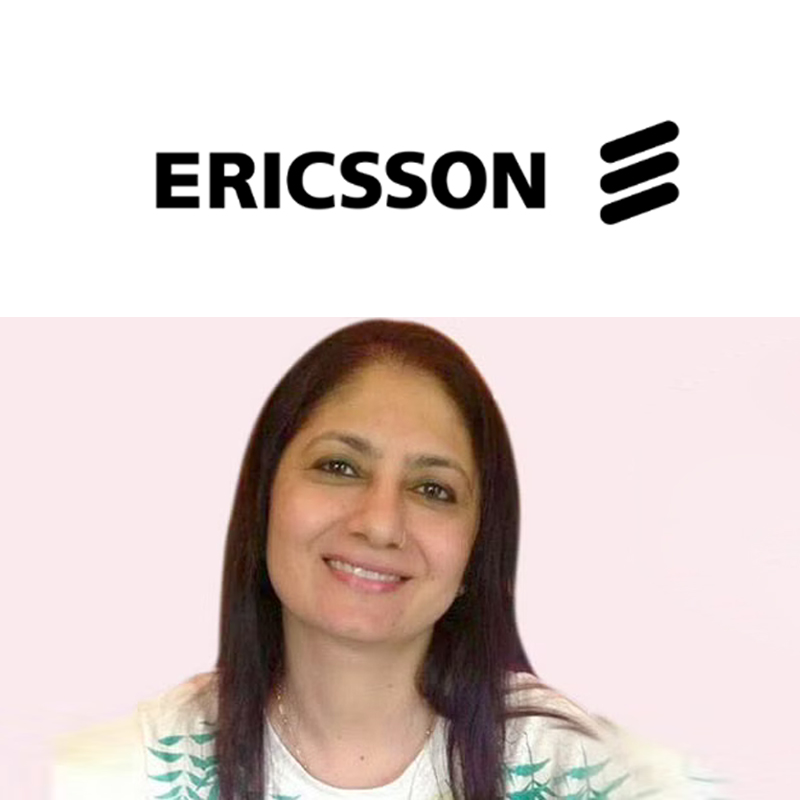
  • Ericsson is ready to power India into the 5G future: VP marketing & communications Ruchika Batra

    Ericsson is ready to power India into the 5G future: VP marketing & communications Ruchika Batra

    Mumbai: With 5G set to take flight in India, telecom companies are gearing up to be the first in the 5G race. The country’s first auction of the 5G spectrum concluded early last month, with service providers Bharti Airtel, Reliance Jio, Vodafone Idea, and Adani Data Networks paying the department of telecom (DoT) a total of about Rs 17,876 crore for the spectrum they acquired. With this spectrum allotment, India is in the final stage of rolling out high-speed 5G telecom services.

    Ericsson India recently unveiled its new brand campaign “Imagine Possible” that sets out to show the limitless possibilities of increased connectivity with 5G for Indian industries, people, and communities. In an interaction with Indiantelevision.com, Ericsson VP-marketing and communications Ruchika Batra talks about the campaign objective, the significance of the Indian market for the brand and how ready the Indian consumer is to welcome the 5G network.

    India has been a strategic market for Ericsson and the leading provider of telecom network equipment has been partnering with the country through generations of mobility—2G, 3G, and 4G—even as it now sets the stage for the 5G rollout.

    The fifth generation of mobile networks or 5G, as it is referred to, is currently the fastest communication network available in the world, as it gradually makes its way to every part of the globe. It opens up a whole new world of entertainment and applications, enabling users to download full-length movies in a matter of seconds and take advantage of more advanced linked technologies like gaming with augmented reality.

    Ericsson’s global campaign – India chapter

    Elaborating on the objective of launching the India chapter of this global campaign, Batra says that “Imagine Possible” brings to life the company’s purpose and vision in the Indian context. “The objective of the campaign is all about showcasing the limitless possibilities that 5G will bring to Indian enterprises, people, and communities. It emphasises the transformational role that 5G can play in creating a more digitally inclusive society in India through relevant use-cases across industries like healthcare, manufacturing, education, and entertainment.” With 5G, the possibilities are endless and the campaign depicts the same, she adds.

    It highlights the potential of 5G through five scenarios: a schoolgirl taking remote lessons from a rural homestead; fans enjoying an extended reality cricket experience; a mountain medic wearing an AR headset allowing him to see the diagnosis from surgeons back in the hospital whilst attending patients at a remote location; a farmer enjoying the benefits of connected digital financial services in a rural setting; and drone operations with 5G powered smart factories.

    Ericsson’s significant achievements in the Indian 5G market

    According to Batra, Ericsson has viewed India as a strategic market since 1903. It became one of the first companies to manufacture telecom equipment for domestic players as well as export it to other parts of the world. So, when Batra was asked about the 5G readiness in the country, she said, “Our Ericsson radio solutions introduced in India in 2015 are 5G ready and we are well prepared to support Indian service providers in their journey from 4G to 5G. We have been working with our operator partners, enterprises, as well as the academic community to test and curate various 5G use cases that would be relevant for the country with the trial spectrum that was made available.”

    Post the recently concluded 5G spectrum auctions in the country, Bharti Airtel awarded its first 5G contract in the country to Ericsson. Some of the recent 5G milestones that Ericsson has achieved include partnering with Bharti Airtel to demonstrate India’s first 5G live network in Hyderabad and trials in Gurugram and Manesar. This was followed by a demonstration of India’s first 5G rural trial in Bhaipur Bramanan village on the outskirts of Delhi/NCR. Ericsson also partnered with Vodafone Idea (VIL) to showcase the power of 5G to bring healthcare to remote parts of the country.

    “At our end, Ericsson is ready to power India into the 5G future. In fact, our radio system hardware has been 5G-ready since 2015 enabling operators to upgrade to 5G with a remote software installation,” asserts Batra.

    Influence of 5G on consumers and enterprises in India

    With 5G services to be rolled out in India shortly, India’s top telcos Reliance Jio, Bharti Airtel and Vodafone Idea are firming up plans to tap into the emerging gaming and e-sports segment that is expected to see strong growth and investments amid faster speeds and low latency. The next phase of growth for gaming is expected to be driven by the accelerating adoption of 5G, cloud gaming, gamification, and mobile gaming devices, among others. For instance, 4K video on a smartphone, AR/VR and mobile gaming applications benefit from 5G capabilities such as ultra-low latency and ultra-high reliability for an enhanced user experience.

    According to Batra, some of the use cases that consumers will see with 5G are cloud gaming, live sports and enhanced video content, with 5G enabled sports being the top predicted revenue drivers. A spectator will get an even more immersive experience using 5G-enabled stadiums, 5G network slicing, 5G enabled cameras and virtual transmission centres, she adds.

    The need for low latency will be even more crucial with AR/VR entering the market for consumers to have a captivating experience, and 5G will be able to address this quickly, points out the Ericsson marketing and communications head.

    In future, gaming will form a core of major telcos’ business strategy going forward, as they seek to increase average revenue per user (ARPU) by engaging more subscribers and boosting user stickiness, predicts industry experts.

    Will 5G services be welcome with premium prices?

    Batra is categorical about Indian consumers’ willingness to pay more for value-added premium services. “There is already quite a lot of enthusiasm amongst Indian consumers for 5G and they are willing to pay a premium for the capabilities it brings,” she asserts.

    According to Ericsson’s ConsumerLab study, at least 40 million smartphone users in India are expected to take up 5G in the first year of it becoming available, she points out. “In fact, they are also willing to pay 50 per cent more for 5G plans that include bundled digital services, compared to just 10 per cent more for 5G connectivity.”

    The latest Mobility Report from Ericsson predicts that by 2027, nearly 40 per cent of all mobile subscriptions in India will be on 5G, which is a whopping 500 million subscribers. This adoption will be driven by significant investment by mobile operators, who are expected to dedicate a huge part of their capital expenditure on building 5G infrastructure, estimates the report.

  • Telecom companies pay DoT Rs 17,876 crore up front for 5G spectrum

    Telecom companies pay DoT Rs 17,876 crore up front for 5G spectrum

    Mumbai: Bharti Airtel, Reliance Jio, Adani Data Networks, and Vodafone Idea have paid the department of telecom an upfront sum of about Rs 17,876 crore for the spectrum they recently won in an auction.

    DoT has received a total payment of approximately Rs 17,876 crore. Only Bharti Airtel has made full payment for four annual instalments. Reliance Jio has made payments of Rs 7,864.78 crore, Vodafone Idea paid Rs 1,679.98 crore, and Adani Data Networks paid Rs 18.94 crore.

    Bharti Airtel has paid Rs 8,312.4 crore, or four annual instalments, while all telecom operators have chosen to pay in 20 annual instalments.

    With a bid of Rs 87,946.93 crore, Mukesh Ambani’s Jio secured nearly half of the airwaves sold in the nation’s largest-ever auction of telecom spectrum, which attracted bids totaling a record Rs 1.5 lakh crore.

    Gautam Adani’s group has bid Rs 211.86 crore for 400 MHz in a band that is not used for providing public telephony services.

    Bharti Airtel, owned by telecom tycoon Sunil Bharti Mittal, submitted a winning bid of Rs 43,039.63 crore, and Vodafone Idea purchased spectrum for Rs 18,786.25 crore.

  • Reliance Jio adds 4.2 million mobile subscribers in June: Trai

    Reliance Jio adds 4.2 million mobile subscribers in June: Trai

    Mumbai: Reliance Jio added 4.2 million mobile subscribers in the month of June, followed by Bharti Airtel at 0.7 million, as per subscription data by the Telecom Regulatory Authority of India (Trai). Vodafone Idea lost 1.8 million subscribers during the same period.

    The total number of mobile subscribers increased from 1,145.50 million to 1,147.39 million, registering a growth of 0.16 per cent. Wireless subscriptions in cities increased from 624.55 million to 625.49 million, while rural subscriptions increased from 520.96 million to 521.90 million.

    There were a total of 1,017.56 active mobile subscribers (VLR subscribers) during the month. Reliance Jio had the greatest number of VLR subscribers at 383.24 million, followed by Bharti Airtel at 357.21 million and Vodafone Idea at 218.67 million.

    As per data received from 666 operators in June, the total broadband subscribers increased from 794.68 million to 800.94 million. Out of which, 28.71 million were wired subscribers; 771.13 million were mobile device users; and 1.10 million were fixed broadband users.

    The top five wired broadband service providers were Reliance Jio Infocomm at 6.16 million, followed by Bharti Airtel at 4.85 million, BSNL at 3.84 million, Atria Convergence Technologies at 2.11 million, and Hathway Cable and Datacom at 1.11 million subscribers.

    The top five service providers constituted 98.47 per cent of the total broadband subscribers at the end of June. These service providers were Reliance Jio Infocomm at 419.17 million, followed by Bharti Airtel at 219.41 million, Vodafone Idea at 122.96 million, BSNL at 25.02 million, and Atria Convergence at 2.11 million.

    The total number of wireline subscribers increased from 25.23 million to 25.57 million in June.

    The number of telephone subscribers in India increased from 1,170.73 million to 1,172.96 million, thereby showing a monthly growth rate of 0.19 per cent.

    Urban subscriptions grew from 647.81 million to 649.09 million, and rural subscriptions grew from 522.92 million to 523.87 million.

    In the month of June, 9.02 million subscribers submitted their requests for mobile number portability (MNP). With this, the cumulative MNP requests increased from 705.54 million at the end of May to 714.56 million at the end of June since the implementation of MNP. The number of active wireless subscribers in June was 1,017.56 million.

  • Vodafone Idea Q1 FY23 revenue soars by 13.7 per cent; loss at Rs 7396.7 crore

    Vodafone Idea Q1 FY23 revenue soars by 13.7 per cent; loss at Rs 7396.7 crore

    Mumbai: Vodafone Idea announced its first quarter results for financial year 2022-2023. The company reported revenue of Rs 10,410 crore up by 13.7 per cent year-on-year (YoY). It reported a loss of Rs 7396.7 crore.

    The company reported earnings before interest, tax, depreciation and amortisation of Rs 4330 crore and capital expenditure (capex) stood at Rs 8400 crore compared to Rs 12,100 crore in the corresponding quarter last year.

    Vodafone Idea’s total gross debt as of 30 June stands at Rs 1,99,080 crore, comprising of deferred spectrum payment obligations of Rs 1,16,600 crore and AGR liability of Rs 67,270 crore that are due to the government, and debt from banks and financial institutions of Rs 15,200 crore.  Cash and cash equivalents were Rs 8600 crore.

    The company’s average revenue per user (ARPU) improved to Rs 128 up 3.6 per cent quarter on quarter (QoQ) from Rs 124 in Q4FY22. On a YoY basis, ARPU witnessed strong growth of 23.4 per cent aided by tariff hikes.

    Vodafone Idea’s subscriber base declined to 240.4 million as compared to 243.8 million in Q4 FY22, however, its 4G subscriber base continued to grow and with one million customers added in Q1, its 4G base now stands at 119 million.

    The company reported high data usage per 4G customer at ~14.3 Gb/month.

    Vodafone Idea Limited MD and CEO Ravinder Takkar said, “We continue to witness 4G subscriber growth on the back of superior data and voice experience offered by Vi GIGAnet as well as due to our focus on creating differentiated digital experience for our customers.

    He further said, “In the recently concluded spectrum auction, we have acquired sufficient spectrum in our key markets to offer superior 5G experience to our customers.”

    “We also completed the first tranche of fund raising in the form of preferential equity contribution of ~Rs. 49.4 billion from our promoters, including the incremental infusion of ~Rs. 4.4 billion by Vodafone Group in July 2022. We continue to remain engaged with lenders and investors for further fund raising.”

  • 5G auctions: Govt to earn Rs 1.5 trillion from sale of 51.236 Mhz of spectrum

    5G auctions: Govt to earn Rs 1.5 trillion from sale of 51.236 Mhz of spectrum

    Mumbai: After seven days and 40 rounds of bidding, the 5G spectrum auctions concluded on Monday and the government generated revenues to the tune of Rs 1,50,173 crore from the sale of 51,236 MHz of spectrum out of 72,098 MHz total spectrum.

    “The process of allocation of spectrum shall be completed within the timeframe and 5G services are likely to be rolled out by September/October,” said the press statement.

    Telco Reliance Jio Infocomm obtained 24,740 MHz spectrum in 700, 800, 1700, 3300 MHz and 26 GHz bands and bid a total amount of Rs 88,078 crore.

    Bharti Airtel obtained 19,867.8 MHz spectrum in 900, 1800, 2100, 3300 MHz and 26 GHz bands and bid a total amount of Rs 43,048 crore.

    Vodafone Idea obtained 6,228 MHz spectrum in 1800, 2100, 2500, 3300 MHz and 26 GHz bands and bid a total amount of Rs Rs 18,799 crore.

    Adani Data Networks obtained 400 MHz spectrum in mm wave band 26 GHz and bid a total amount of Rs 212 crore.

    All the auction winners will pay the government in annual installments of Rs 13,365 crore.

    Reliance Jio Infocomm chairman Akash Ambani said, “Jio is committed to offering world-class, affordable 5G and 5G-enabled services. We will provide services, platforms and solutions that will accelerate India’s digital revolution, especially in crucial sectors like education, healthcare, agriculture, manufacturing and e-Governance.”

    Bharti Airtel MD and CEO Gopal Vittal said, “This spectrum acquisition at the latest auction has been a part of a deliberate strategy to buy the best spectrum assets at a substantially lower relative cost compared to our competition. We are confident that we will be able to deliver the best 5G experience in India in terms of coverage, speeds and latency. This will allow us to change a lot of established paradigms for both our B2C and B2B customers.”

    A statement by Vodafone Idea said, “We actively participated in the spectrum auction to strengthen our pan-India 4G footprint and embark on our 5G roll-out journey in the country in line with our long-term vision. We believe that the above spectrum acquisition will enable us to strengthen our position in our key markets and it aligns well with our long-term strategic intent.

    It further added, “We have successfully acquired mid band 5G spectrum (3300 MHz band) in our 17 priority circles and mm Wave 5G spectrum (26 GHz band) in 16 circles, which will enable us to offer a superior 5G experience to our customers as well as strengthen our enterprise offerings and provide new opportunities for business growth in the emerging 5G era. We will continue to collaborate with enterprise customers and partners in prioritising and developing 5G use cases for real-world deployments. The additional 4G spectrum acquisition in 3 circles of Andhra Pradesh, Karnataka and Punjab will further improve the customer experience; an area where we have been consistently leading the league tables, as per various third-party reports, over the last several quarters.”

    Adani Group chairman Gautam Adani said, “The Adani Group’s foray into the industrial 5G space will allow our portfolio companies to offer a set of new add-on services that capitalizes on all the other digital segments we are building.”

    He elaborated, “Given that our portfolio is a highly distributed asset intensive investment that is all being revolutionized by sensorisation and fast becoming IoT (Internet of Things) enabled, we believe the next data surge will be created more by machines than by people as all devices get interconnected. This data will need to be streamed, stored, processed, and analysed by other machines in real time and this capability will change every single industry. It will help build a set of services that the market cannot even fully conceptualize today. This volume will be exponentially higher and generated at the edges, especially in a country like India, where the Tier 2 and 3 cities are witnessing the fastest all-round growth.”

    The government did not receive any bids for the 600 MHz spectrum band which was auctioned for the first time. The 600 MHz band is still not developed for mobile telephony but may become important in a few years.

    Telcos bid Rs 1.45 lakh crore for the highly-priced 700 MHz spectrum for which the 5G ecosystem is very well developed. The band provides a large range and good coverage. Reliance Jio obtained pan India 10 MHz spectrum.

    Participants who bid for bands between 800 to 2500 were primarily looking to augment capacity and improve 4G coverage.

    Reliance Jio, Bharti Airtel and Vodafone Idea obtained spectrum in the mid band i.e., 3300 MHz which is crucial in providing high throughput. The telco operators are likely to augment existing 4G capacity and provide 5G services in the 3300 MHz band.

    All four telcos acquired mm wave band i.e., 26 GHz band which can be utilised for the captive or non-public network. The 26 GHz band has high throughput but a very short range. The band is becoming popular for fixed wireless access (FWA) that can be used as an alternative to fibre in high-density/congested urban areas.

    The 5G auctions were conducted by Metal Scrap Trading Corporation (MSTC) a public sector undertaking of the government.