Tag: VOD

  • Guest Column: Regulating video in Internet age: Pressing challenges, slow movement

    Guest Column: Regulating video in Internet age: Pressing challenges, slow movement

    Video markets in Asia, as in other parts of the world, are being swept by a wave of commercial and technological adjustment to the rise of internet-delivered video, frequently referred to as “OTT” television.  Unfortunately, in most countries adjustment of regulatory policies by governments is way behind.

    Asia’s cities, in particular, are rapidly being wired for broadband connectivity.  In developing countries like Thailand, the Philippines, Indonesia and India a broad digital divide has opened, with major urban areas enjoying improving connectivity and the countryside still reliant on more traditional modes of video delivery to consumers. 

    That divide is a problem needing attention, but in the meantime urban populations, at least, are enjoying a “sweet spot” of improving broadband and adequate disposable income to pay for services consumers want.  As a result, they have become the object of a “race to serve” on the part of video providers on every scale:

    • Traditional pay-TV operators are upgrading their VOD offerings and broadening device access to include smartphones and tablets. 

    • At the same time, new entrants are seeking to construct the right content offerings at the right price to win over consumers.  Major global providers (Netflix and Amazon Prime) entered Asia during 2016, and immediately were confronted with the need to adapt a global approach to Asian realities (including lower price points).

    • A raft of regional Asian OTT platforms have expanded their offerings (including Viu TV, Hooq, IFlix, and Catchplay), alongside a plethora of locally-oriented offerings (like Hotstar, Dittotv and Voot in India, plus Toggle, Monomaxx, Doonee, USeeTV, MyK+, etc., in Southeast Asia.)

    These market developments have significantly ratcheted up the pressure on governments, who are seeing more and more consumers migrate to lightly-regulated (or totally unregulated) online content supply, and away from the heavily-regulated traditional TV sectors.   Governments are in a quandary – most do not wish to impede their citizens’ access to global information sources, but at the same time they see evident challenges to long-established policies for content acceptability, broadcaster licensing, taxation, advertising etc.   At the extreme, “pirate” OTT services happily locate offshore, respect no rules and meet no obligations of any kind (not limited to copyright authorization), all the while reaping millions in subscription and/or advertising revenues.  Local content industries are crying foul. 
    This very unbalanced competitive landscape causes deep damage to network operators, content creators at home and abroad, and investors in local economies.  In general, it isn’t possible to subject online content supply to outdated “legacy” broadcasting rules, so alternative solutions have to be considered, including self-regulatory approaches (which can gain acceptance from legitimate OTT suppliers, if not the pirate scofflaws) and lightening the burdens on existing players.

    So far, despite various governments in our region trumpeting a desire to update regulations to suit the digital age, only piecemeal measures have been adopted.  Several “major policy reviews” in places like Australia, New Zealand and Singapore have produced thin gruel in the way of concrete adjustments.  That said, to policymakers’ credit, there are now a few examples showing how existing rules can be lightened to allow licensed video providers to give consumers more of what they expect, in the internet age.  South Korea relaxed rate regulation on cable TV operators so they could compete more fairly; Singapore eased its content censorship on VOD over pay-TV networks, to more closely match the approach used for online content suppliers; Vietnam allowed pay-TV providers to construct their own content offerings with different foreign channels instead of hewing to a single national content list.

    So a start has been made, but there remains a huge work to be done; a vast thicket of taxes, licensing rules and interventionist regulation constrains licensed pay-TV providers throughout Asia and these burdens will have to be reduced to attract investments for modernizing network infrastructure and developing local content offerings.   Even governments for whom this is not much of a current issue can see the future coming:  more and better broadband is on the way for Asian consumers, and like viewers everywhere they will be looking to view their content online.  

    Unfortunately, ingrained habits die hard.  Hong Kong’s regulators are wasting energy in a fight with major broadcasters over whether product placement in programming is too prominent; TRAI is going the wrong way – actually seeking to extend and tighten rate regulation on digital content when supplied by traditional cable operators; Thailand – eager to justify the high bids for digital terrestrial licenses – levies burdensome “must carry” rules on cable and satellite operators; Indonesia’s content regulators are pushing protectionist “made in Indonesia” rules for ads on traditional TV platforms.   (Who looks at prices charged, products touted, or ad origins for online content?)

    A better approach is reliance on self-regulatory systems wherever possible.  Many issues (e.g. product placement, ad origination, content guidelines) should be the object of clear rules negotiated by industry bodies which can be applied by the respective players to online and offline networks.   The ad industry is very accomplished at doing this; in the UK, for example, advertising self-regulation is being extended to online platforms as well as traditional ones.
    In another corner of the industry, India’s own BARC is showing well how self-regulatory bodies can wield substantial influence, as it seeks to stem malpractices in audience measurement.
    Rarely is the scope of future challenges so clear, as it is for Asian governments looking at the video industry.  It is time to move to meet those challenges in a pragmatic and realistic way.

    http://www.indiantelevision.com/sites/drupal7.indiantelevision.co.in/files/styles/large/public/jhon_0.jpg?itok=TsRQkaOVThe writer is Chief Policy officer of Hong Kong based media industry group CASBAA. The views expressed are personal and Indiantelevision.com need not necessarily subscribe to them

  • Indian OTT/VOD  will not impact cable TV and DTH: Edelweiss Capital

    Indian OTT/VOD will not impact cable TV and DTH: Edelweiss Capital

    MUMBAI: Financial services firm Edelweiss Capital’s research division’s latest report on the impact of OTT on television in India is surely going to delight the cockles of executives in broadcasting companies and probably raise the hackles of those in the video on demand space. The report says that, even as consumers are bound to increase their spends and time spent on video – either on handheld devices or on their smart TVs or their laptops, this will have a negligible impact on traditional linear TV’s fortunes.

    Cord cutting or cord shaving which has been rampant in the US as cable TV and DTH viewers shift from their expensive services to cheaper VOD options or to cheaper TV packages is not something that is going to pop up in a hurry in India, says the Edelweiss report. The Indian cable TV and DTH segments are marked by low monthly rentals of Rs 300-450 as compared to the US where DTH and cable TV fees have soared.

    “The Indian OTT market is at a nascent stage and is quite like the US was seven years ago,” it points out.

    However, it is optimistic about the growth of the OTT sector. Currently, the challenge is broadband speed, the report points out, with the average home clocking 3.5 mbps, which is not enough to offer lag-free HD video streaming. It reveals that this will change with cheaper data and broadband options fueling VOD and OTT taking consumption of video content up from 3.5 hours to five hours daily.

    Consumers are going to open their wallets and spend Rs 600-700 per month from the current Rs 300-450 per month to view video content across various platforms in the next five years, the report says. “In the case of India, it is largely a single-TV home market where not everyone in the family gets to watch what they want during prime time which will aid the OTT space,” the report adds.

    But, VOD and OTT is only going to complement traditional television and not erode it is the report’s guidance.

    The brokerage house is quite clear that TV advertising is also going to hold its ground because its viewership is going to continue to be steady. And, there is going to be no loss in revenues on account of VOD/OTT and the heady growths in digital video consumption and digital advertising.

  • Indian OTT/VOD  will not impact cable TV and DTH: Edelweiss Capital

    Indian OTT/VOD will not impact cable TV and DTH: Edelweiss Capital

    MUMBAI: Financial services firm Edelweiss Capital’s research division’s latest report on the impact of OTT on television in India is surely going to delight the cockles of executives in broadcasting companies and probably raise the hackles of those in the video on demand space. The report says that, even as consumers are bound to increase their spends and time spent on video – either on handheld devices or on their smart TVs or their laptops, this will have a negligible impact on traditional linear TV’s fortunes.

    Cord cutting or cord shaving which has been rampant in the US as cable TV and DTH viewers shift from their expensive services to cheaper VOD options or to cheaper TV packages is not something that is going to pop up in a hurry in India, says the Edelweiss report. The Indian cable TV and DTH segments are marked by low monthly rentals of Rs 300-450 as compared to the US where DTH and cable TV fees have soared.

    “The Indian OTT market is at a nascent stage and is quite like the US was seven years ago,” it points out.

    However, it is optimistic about the growth of the OTT sector. Currently, the challenge is broadband speed, the report points out, with the average home clocking 3.5 mbps, which is not enough to offer lag-free HD video streaming. It reveals that this will change with cheaper data and broadband options fueling VOD and OTT taking consumption of video content up from 3.5 hours to five hours daily.

    Consumers are going to open their wallets and spend Rs 600-700 per month from the current Rs 300-450 per month to view video content across various platforms in the next five years, the report says. “In the case of India, it is largely a single-TV home market where not everyone in the family gets to watch what they want during prime time which will aid the OTT space,” the report adds.

    But, VOD and OTT is only going to complement traditional television and not erode it is the report’s guidance.

    The brokerage house is quite clear that TV advertising is also going to hold its ground because its viewership is going to continue to be steady. And, there is going to be no loss in revenues on account of VOD/OTT and the heady growths in digital video consumption and digital advertising.

  • Why Ajit Mohan allowed Amazon Prime to advertise on Hotstar

    Why Ajit Mohan allowed Amazon Prime to advertise on Hotstar

    MUMBAI: Hotstar subscribers were a little taken aback when they logged into their accounts to see Amazon Prime being promoted on the masthead during its launch week.

    Some media observers even questioned whether Novi Digital (which runs Hotstar) CEO Ajit Mohan had lost it as he was allowing competitors to use India’s leading OTT/VOD platform to gain traction. Would the Times of India allow a fit and hungry rival to advertise its launch in the newspaper?

    However, Ajit Mohan explained in an internal email to his team why he chose to allow Amazon Prime to advertise on it.

    Indiantelevision.com has got access to this internal communication. Says Ajit in the email:

    “Team:

    Many of you have asked me over the last couple of days why we chose to allow Amazon Prime Video to advertise on Hotstar earlier this week, as part of their India launch. Here is why:

    We are now an indispensable platform for any advertiser that is looking to target users on digital who actually have money to spend. And, nowhere else on digital, whether on social or on news or video, can they find audiences as engaged as they are on Hotstar. It is, therefore, not surprising that Prime Video was keen to launch their service on our platform.

    Equally, we have always assumed that when users are given a choice, they will choose a service that offers a better experience and a more diverse content range. That’s the reason why we are the leading premium video service today. And we will continue to be the leader so long as we focus on retaining our extensive advantage on the above two. And, therefore, there is no reason for us to put artificial barriers vis-à-vis potential competitors. We are not planning to win by blocking others, we will win by continuing to do what we are doing well today.

    Lastly, on Monday, the day Prime Video was on our masthead, we hit the highest watch time ever on Hotstar. Looks like we are adding value to our advertisers even as consumers are showing more and more loyalty to our service.”

    We reached out to Hotstar to get more details on how much Amazon Prime paid for the prime position but came up against a wall. However, observers estimate that it is probably the highest that it has earned for that slot. Stay tuned in for more!

  • Why Ajit Mohan allowed Amazon Prime to advertise on Hotstar

    Why Ajit Mohan allowed Amazon Prime to advertise on Hotstar

    MUMBAI: Hotstar subscribers were a little taken aback when they logged into their accounts to see Amazon Prime being promoted on the masthead during its launch week.

    Some media observers even questioned whether Novi Digital (which runs Hotstar) CEO Ajit Mohan had lost it as he was allowing competitors to use India’s leading OTT/VOD platform to gain traction. Would the Times of India allow a fit and hungry rival to advertise its launch in the newspaper?

    However, Ajit Mohan explained in an internal email to his team why he chose to allow Amazon Prime to advertise on it.

    Indiantelevision.com has got access to this internal communication. Says Ajit in the email:

    “Team:

    Many of you have asked me over the last couple of days why we chose to allow Amazon Prime Video to advertise on Hotstar earlier this week, as part of their India launch. Here is why:

    We are now an indispensable platform for any advertiser that is looking to target users on digital who actually have money to spend. And, nowhere else on digital, whether on social or on news or video, can they find audiences as engaged as they are on Hotstar. It is, therefore, not surprising that Prime Video was keen to launch their service on our platform.

    Equally, we have always assumed that when users are given a choice, they will choose a service that offers a better experience and a more diverse content range. That’s the reason why we are the leading premium video service today. And we will continue to be the leader so long as we focus on retaining our extensive advantage on the above two. And, therefore, there is no reason for us to put artificial barriers vis-à-vis potential competitors. We are not planning to win by blocking others, we will win by continuing to do what we are doing well today.

    Lastly, on Monday, the day Prime Video was on our masthead, we hit the highest watch time ever on Hotstar. Looks like we are adding value to our advertisers even as consumers are showing more and more loyalty to our service.”

    We reached out to Hotstar to get more details on how much Amazon Prime paid for the prime position but came up against a wall. However, observers estimate that it is probably the highest that it has earned for that slot. Stay tuned in for more!

  • Indian players have an edge over global OTT platforms: Akamai’s Sidharth Pisharoti

    Indian players have an edge over global OTT platforms: Akamai’s Sidharth Pisharoti

    Starting from one of the biggest Information Technology companies, Wipro Technologies, as a technical facilitator, he pursued young professionals program in general management from Indian Institute of Management, Calcutta. Soon after attaining a degree, he joined American content delivery network (CDN) and cloud services provider Akamai Technologies, Inc. as a relationship manager of emerging customer group in December 2006. Presently serving the company as the regional VP for media in APAC and Japan, Sidharth Pisharoti is a goal-oriented professional known for his alertness in innovating and bringing in new ideas to improve business processes.

    In an interview with indiantelevision.com’s Megha Parmar, Pisharoti shares interesting insights on a variety of topics, including the growing OTT space in India, impact of 4G, changing consumer behavior and the way forward for the entire digital eco-system. Edited excerpts from the interaction:

    Akamai Technologies, Inc. is an American content delivery network (CDN) and cloud services provider headquartered in Cambridge, Massachusetts. The company’s advanced web performance, mobile performance, cloud security and media delivery solutions are said to be revolutionizing how businesses optimize consumer, enterprise and entertainment experiences for any device, anywhere.

    Edited excerpts from the interview:

    Q: Akamai provides several products like web performance, cloud security, media delivery, etc. In a country that’s increasingly getting digital, who would be your Indian customers and how are each of these products faring?

    Akamai is very focussed on India. We are the largest content delivery platform in the world, which also applies to India. We have 3000+ servers, 59 networks across 14 cities in India. If you look at our customer base, we probably have 265 customers here and these are across different industry verticals. We have the customers who are amongst the top five IT services, media services, commerce services segments, apart from top three three stock exchanges in the country. So, whether you talk about IT, media and entertainment, e-commerce, retail or finance, we have customers across all these verticals.

    Q: Over The Top (OTT) is the new buzzword in India as the number of players, both global and local, grows. What is your take on it?

    If we focus on the media and OTT space, it is growing at   fast pace in India. If you look at the number of OTT platforms that are providing content, it is increasing by the day and so are the audience. The good news here is that not just the services are available, but the consumer pattern, behaviour and the adoption too are growing by the day. Earlier, there was a notion that mostly sports, cricket and live cricket are in demand. But that notion has changed a lot in the recent past. It’s not just live content but also on-demand content, episodic content and anytime content that is available out there which is being consumed by the users.

    Q: What could be the reasons for this change in consumer behaviour and consumption patterns?

    What is happening now is that there are more smart phones being available in the market. Even at Akamai, a big chunk of our delivery is happening to smart phones apart from the traditional internet devices. There are two major developments in India.

    First, the smart phone market has changed and accessibility has improved. Today, you can get a decent Android device at Rs 4,000, which is pretty affordable as compared to what it was four-five years ago. Second, the overall infrastructure has improved. Not just launch of Reliance Jio has spurred on other players, but availability of 4G across the different networks has improved too as compared to what it was one year ago. Today, 4G is available almost throughout the country and with Jio’s arrival the reach has further improved.  

    Both the factors are equally important for any kind of content to be consumed, especially when you are talking about OTT, which is primarily consumed by personal computing devices. The screen size is getting smaller and the consumers are increasing. We are moving away from demography of people who believed in the family viewing experience to having a personal single screen for each member in the house.

    Q:When you say more people are consuming more on smart phones, is the time spent on viewing too increasing? If yes, who are these people and what are they watching?

    The viewing time is definitely increasing. If we look at purely episodic content as video on demand (VOD), the viewing time has increased from what it was 18 months ago.  The average time spent was 5-7 minutes, but it has gone up to as high as about 18-20 minutes now. This is a three-fold jump than what the average session brings in. We are seeing an improvement in the viewing time because of these two reasons. Content providers are ready to provide good quality videos without any buffering or start time. That is the experience the consumer wants — he wants a television-like experience. Because content creators are able to provide uninterrupted content, the viewership is going up. It is not yet as big as TV’s, but it is getting there.

    People are watching from across various demographics though we are yet to nail down a particular type of individual watching. We are having difficulty in pinpointing that as of now, but consumers from tier 2 and tier 3 cities and towns are increasing and are coming to our platform.

    Q: What do you think will be the impact of 4G in India? Do you think it will open up choked and inadequate availability of bandwidth?

    Absolutely. We are already seeing 4G’s effects. More and cheaper bandwidths are available with consumers that are improving consumptions. The consumption was not that great earlier because of two factors. One, the availability and affordability of good quality phones and, second, data costs were high. Even four month back, before the launch of Jio, we were talking about Rs 200/ GB. Today we are talking about Rs 50 per GB. I think, in a year from now even this is going to substantially come down. Data has to become like any other affordable commodity. When it becomes the new normal for the consumers, the industry is obviously going to be impacted.

    Q: While players are still experimenting with their models, what, according to you, will stay in long term?

    See, you have to shift the deal. The consumer will either pay for content or for data. Expecting them to pay for both the things is pushing it a bit too much. Today, the reason behind content creators predominantly offering ad-driven content is because they can’t charge for it as the consumer is already paying for the data. When data becomes cheaper, that is when these creators or broadcasters with their platforms can charge for the content.

    To answer your question, it has to be a dual approach. There has to be content that is available on the `freemium’ model with some part being free of cost, that is advertising-supported, and some behind the pay wall for which the subscribers will need to pay. The Indian consumers will adapt to this model slowly. The day data becomes cheaper and easily accessible, that day content providers can make lot more earnings from subscription perspective.

    Q: When you talk about `freemium’ model, payment gateways remain a crucial part. Will making payments online become easier with ongoing digitization and government push towards cashless transactions in the aftermath of currency demonetisation?

    If you had asked me that question a month ago, I would have said this is definitely a challenge. But, now with demonetization happening and the country trying to moving to a cashless economy, cajoled by the PM Modi government to increase of digital wallets, etc, the scenario is undergoing a change. That is good news for all the online players. Not just OTT, but anyone who is selling or buying online benefits from these changes.

    I think in the medium to long term, the problem will resolve, but, right now, not many consumers are comfortable transacting online. It’s less of being comfortable or paying than choosing what they should pay for. For them, paying for data and content is like a double whammy. With data becoming cheaper, consumers will be willing to pay for content. With the new norms that the government is pushing, it will be easier for the consumers to pay through digital wallets.

    Q: A lot of online content creators are betting big on the kids’ space with original content. Do you think there’s demand for kids’ content in India?

    I think it’s a very good genre to be in. If you remove T-Series and Eros content, some of the biggest YouTube channels in India focus on kids’ content and would definitely have large subscriber base. Such channels have original content created by small companies who are purely creating it for kids. So people who are producing kids’ content are going to be benefitted. It is a big genre, which is has eluded the focused of big OTT players.

    Q: What about the regional markets in India?

    Not many players have looked at it separately and are primarily providing content in Hindi or English. If you look at the OTT space today, some of the big players do have regional content, but their catalogue of regional content is not as complusive as their Hindi catalogue. Though a small quantity of original regional content is being produced, OTT platforms are also syndicating it content from some of the south  Indian media houses. Eventually, each of these markets, for example states of Kerala,  Andhra Pradesh or Tamil Nadu, will have one local OTT player who will be the biggest local player in that market with local content. And, there will be cross syndication. So the national players will definitely syndicate content of all languages, but local players will focus on content of their region’s language and will syndicate content from other languages. I think that is the future. Just like the television space where there a few national level TV channels and many in local languages.

    We will have one or two big OTT players — we are already seeing the emergence of two very big ones platforms at a national level — and then we will see each of the Indian states having one big local player.

    Q: But will that not clutter the space or confuse the consumers? What if they want international as well as their regional content together on one platform?

    The current and future generations are the new subscribers or consumers who are getting online. They are already digital and understand only the digital language.  For many of these consumers TV or cable is non-existent as most of their video consumption is online. Unlike in the US, where there are two large players who are catering to the whole market, the scenario in India is different because in the West primarily there is one language (English) that is popular. We have a huge population with different cultures, speaking different languages and dialects and, hence, there is space for more than just two local players.

    Q: Apart from infrastructure problem, what are the other challenges in the current digital space?  

    Another challenge is to put together the video eco-system. Most of these OTT  companies or the media houses are used to broadcast business because that is their bread and butter. In the last 20 years, they have been working on broadcast and they know that after the content is ready, they have to push it through satellite or cable to people’s homes. But digital is a different ball game. Once the content is prepared, it has to go through its own video platform for it to be ready for a satellite or mobile phone. The biggest challenge is the digital media workflow. The first step is content preparation, which basically means that once you get content that’s to be broadcast, you have to encode it or convert it into a format that can be consumed digitally. Then, you have to re-package it to ensure that it fits all the different softwares on different devices.

    The next step is to transport it to all these formats, repackage it again to make sure storage is proper for a content management system and then send it to a content delivery platform. Then you have to get it on your video player and how do you plan to use it in your analytics and reports. This entire media platform workflow is not easy to manage and is a big challenge when lot of people move from traditional broadcast or regular online streaming to a pure OTT platform. The complexities are very high and that is a challenge.

    Q: Online video consumption has also increased digital piracy. Isn’t this a big challenge for content owners too?

    The good news is that there are lot of companies, including us, who offer security services. Using these services combined with DRN, content protection is possible. Security is like insurance. Can someone give you a 100 percent security? No. But, can you give 99.9 per cent security? Yes. Simply because technology is available today. Whether it is securing your application or data centre or media content, Akamai has a a range of security offerings, which help the media customers to help the customers.

    Second, I also believe that piracy exists when there is non-availability of content or when it is expensive to acquire or view. It happens when someone finds some content at a cheaper price than the legal content. But, today content providers are either giving it for free or are offering it at a very nominal price. Hence, they are killing piracy by making content more accessible. People who are involved in digital piracy are not succeeding because that content is anyway available in high quality on a particular device at affordable rates. So, why would a person go and buy pirated content? This is the case for majority of content. Digital piracy is slowly getting killed. The only problem is movies. But again with platforms like Hotstar, they are releasing movies within four-five weeks of a movie’s release.

    Q: Different mix of companies have got into digital space with even DTH operators now active in this space. Who will be the next bunch of customers for them? What is the scenario there?

    It’s an interesting proposition. I believe you will probably have only one leader in that space too. On one hand, you have folks like Tata Sky who have already moved to that model and are leading in that space. On the other hand, you have dittoTV , which offers you a TV-kind of a service. And, then you have telcos like Reliance Jio, which gives similar kind of service. It will be interesting to see how that plays out. I think there will be a consolidation eventually. I don’t think that for a pure play of a bouquet of channels service,  like each of these players are offering, you can have three to four players.

    It’s about curated content, original content and watching content from wherever the consumer wants. As the market is so fragmented, some of the content syndication deals will be interesting. But, I think they will all reach a point wherein they will realise that rather than syndicating the content, it is better to have it under own network as it is more lucrative. When this happens, you will stop seeing content syndication as well. We have to wait and watch. From DTH point of view, we can have more than one large player.

    Q: Do you see Netflix becoming successful in India? Should the Indian platforms worry about its entrance?

    Netflix, as of right now, is a very urban Indian phenomenon. It produces some original content and some premium content that is consumed by a certain section of the population. It can also turn out that their content strategy for India changes in the longer run. As of now, Netflix is not eating into the viewership base of a Hotstar or a Voot. Both these platforms have their separate viewership base, but that might change when the content that they offer changes or gets popular in India.

    I think these Indian players air some of the shows on their platform first before they go on TV. They air some shows before 24-hour of its TV release. Though it is premium subscription, it is available. So, it is not catch-up television. Their strategy is if-you-want-content-before-TV- we-are-providing-it. Eventually, consumers will start accepting that. That is the plan — consumers should first come to a digital platform and then move on to traditional TV broadcast.

    In the longer run, unless global players have a different content strategy for India, I don’t think they can have (subscriber) numbers like some of these local players do. I think the local players have a big edge over Netflix or any other global platform. Incidentally, globally too Netflix has changed its strategy and has started producing original content. It could be either the studios have stopped giving them content or are giving content at a that makes it difficult for content to be monetised by the OTT platform. So, Netflix has started becoming a media house itself. Same thing has to be India specific.

    Q: What are your predictions for the digital eco-system in the year 2017?

    The future should see is decent amount of consolidation.  In terms of pure play Indian content, I think the players who are leading, will continue to lead at a national level. Locally, there is space for few players that will cater to certain languages. Over the next two to three years, content syndication will go down as each of these platforms will get more consumers and, in turn, generate revenues through subscription. Global players will definitely enter India and will get only a handful of subscribers unless their content strategy is different. To achieve that, they will have to spend a lot of energy, resources and money in India. We can probably have maximum of 10 OTT players — three at national level, two global and couple of local providers.

  • Indian players have an edge over global OTT platforms: Akamai’s Sidharth Pisharoti

    Indian players have an edge over global OTT platforms: Akamai’s Sidharth Pisharoti

    Starting from one of the biggest Information Technology companies, Wipro Technologies, as a technical facilitator, he pursued young professionals program in general management from Indian Institute of Management, Calcutta. Soon after attaining a degree, he joined American content delivery network (CDN) and cloud services provider Akamai Technologies, Inc. as a relationship manager of emerging customer group in December 2006. Presently serving the company as the regional VP for media in APAC and Japan, Sidharth Pisharoti is a goal-oriented professional known for his alertness in innovating and bringing in new ideas to improve business processes.

    In an interview with indiantelevision.com’s Megha Parmar, Pisharoti shares interesting insights on a variety of topics, including the growing OTT space in India, impact of 4G, changing consumer behavior and the way forward for the entire digital eco-system. Edited excerpts from the interaction:

    Akamai Technologies, Inc. is an American content delivery network (CDN) and cloud services provider headquartered in Cambridge, Massachusetts. The company’s advanced web performance, mobile performance, cloud security and media delivery solutions are said to be revolutionizing how businesses optimize consumer, enterprise and entertainment experiences for any device, anywhere.

    Edited excerpts from the interview:

    Q: Akamai provides several products like web performance, cloud security, media delivery, etc. In a country that’s increasingly getting digital, who would be your Indian customers and how are each of these products faring?

    Akamai is very focussed on India. We are the largest content delivery platform in the world, which also applies to India. We have 3000+ servers, 59 networks across 14 cities in India. If you look at our customer base, we probably have 265 customers here and these are across different industry verticals. We have the customers who are amongst the top five IT services, media services, commerce services segments, apart from top three three stock exchanges in the country. So, whether you talk about IT, media and entertainment, e-commerce, retail or finance, we have customers across all these verticals.

    Q: Over The Top (OTT) is the new buzzword in India as the number of players, both global and local, grows. What is your take on it?

    If we focus on the media and OTT space, it is growing at   fast pace in India. If you look at the number of OTT platforms that are providing content, it is increasing by the day and so are the audience. The good news here is that not just the services are available, but the consumer pattern, behaviour and the adoption too are growing by the day. Earlier, there was a notion that mostly sports, cricket and live cricket are in demand. But that notion has changed a lot in the recent past. It’s not just live content but also on-demand content, episodic content and anytime content that is available out there which is being consumed by the users.

    Q: What could be the reasons for this change in consumer behaviour and consumption patterns?

    What is happening now is that there are more smart phones being available in the market. Even at Akamai, a big chunk of our delivery is happening to smart phones apart from the traditional internet devices. There are two major developments in India.

    First, the smart phone market has changed and accessibility has improved. Today, you can get a decent Android device at Rs 4,000, which is pretty affordable as compared to what it was four-five years ago. Second, the overall infrastructure has improved. Not just launch of Reliance Jio has spurred on other players, but availability of 4G across the different networks has improved too as compared to what it was one year ago. Today, 4G is available almost throughout the country and with Jio’s arrival the reach has further improved.  

    Both the factors are equally important for any kind of content to be consumed, especially when you are talking about OTT, which is primarily consumed by personal computing devices. The screen size is getting smaller and the consumers are increasing. We are moving away from demography of people who believed in the family viewing experience to having a personal single screen for each member in the house.

    Q:When you say more people are consuming more on smart phones, is the time spent on viewing too increasing? If yes, who are these people and what are they watching?

    The viewing time is definitely increasing. If we look at purely episodic content as video on demand (VOD), the viewing time has increased from what it was 18 months ago.  The average time spent was 5-7 minutes, but it has gone up to as high as about 18-20 minutes now. This is a three-fold jump than what the average session brings in. We are seeing an improvement in the viewing time because of these two reasons. Content providers are ready to provide good quality videos without any buffering or start time. That is the experience the consumer wants — he wants a television-like experience. Because content creators are able to provide uninterrupted content, the viewership is going up. It is not yet as big as TV’s, but it is getting there.

    People are watching from across various demographics though we are yet to nail down a particular type of individual watching. We are having difficulty in pinpointing that as of now, but consumers from tier 2 and tier 3 cities and towns are increasing and are coming to our platform.

    Q: What do you think will be the impact of 4G in India? Do you think it will open up choked and inadequate availability of bandwidth?

    Absolutely. We are already seeing 4G’s effects. More and cheaper bandwidths are available with consumers that are improving consumptions. The consumption was not that great earlier because of two factors. One, the availability and affordability of good quality phones and, second, data costs were high. Even four month back, before the launch of Jio, we were talking about Rs 200/ GB. Today we are talking about Rs 50 per GB. I think, in a year from now even this is going to substantially come down. Data has to become like any other affordable commodity. When it becomes the new normal for the consumers, the industry is obviously going to be impacted.

    Q: While players are still experimenting with their models, what, according to you, will stay in long term?

    See, you have to shift the deal. The consumer will either pay for content or for data. Expecting them to pay for both the things is pushing it a bit too much. Today, the reason behind content creators predominantly offering ad-driven content is because they can’t charge for it as the consumer is already paying for the data. When data becomes cheaper, that is when these creators or broadcasters with their platforms can charge for the content.

    To answer your question, it has to be a dual approach. There has to be content that is available on the `freemium’ model with some part being free of cost, that is advertising-supported, and some behind the pay wall for which the subscribers will need to pay. The Indian consumers will adapt to this model slowly. The day data becomes cheaper and easily accessible, that day content providers can make lot more earnings from subscription perspective.

    Q: When you talk about `freemium’ model, payment gateways remain a crucial part. Will making payments online become easier with ongoing digitization and government push towards cashless transactions in the aftermath of currency demonetisation?

    If you had asked me that question a month ago, I would have said this is definitely a challenge. But, now with demonetization happening and the country trying to moving to a cashless economy, cajoled by the PM Modi government to increase of digital wallets, etc, the scenario is undergoing a change. That is good news for all the online players. Not just OTT, but anyone who is selling or buying online benefits from these changes.

    I think in the medium to long term, the problem will resolve, but, right now, not many consumers are comfortable transacting online. It’s less of being comfortable or paying than choosing what they should pay for. For them, paying for data and content is like a double whammy. With data becoming cheaper, consumers will be willing to pay for content. With the new norms that the government is pushing, it will be easier for the consumers to pay through digital wallets.

    Q: A lot of online content creators are betting big on the kids’ space with original content. Do you think there’s demand for kids’ content in India?

    I think it’s a very good genre to be in. If you remove T-Series and Eros content, some of the biggest YouTube channels in India focus on kids’ content and would definitely have large subscriber base. Such channels have original content created by small companies who are purely creating it for kids. So people who are producing kids’ content are going to be benefitted. It is a big genre, which is has eluded the focused of big OTT players.

    Q: What about the regional markets in India?

    Not many players have looked at it separately and are primarily providing content in Hindi or English. If you look at the OTT space today, some of the big players do have regional content, but their catalogue of regional content is not as complusive as their Hindi catalogue. Though a small quantity of original regional content is being produced, OTT platforms are also syndicating it content from some of the south  Indian media houses. Eventually, each of these markets, for example states of Kerala,  Andhra Pradesh or Tamil Nadu, will have one local OTT player who will be the biggest local player in that market with local content. And, there will be cross syndication. So the national players will definitely syndicate content of all languages, but local players will focus on content of their region’s language and will syndicate content from other languages. I think that is the future. Just like the television space where there a few national level TV channels and many in local languages.

    We will have one or two big OTT players — we are already seeing the emergence of two very big ones platforms at a national level — and then we will see each of the Indian states having one big local player.

    Q: But will that not clutter the space or confuse the consumers? What if they want international as well as their regional content together on one platform?

    The current and future generations are the new subscribers or consumers who are getting online. They are already digital and understand only the digital language.  For many of these consumers TV or cable is non-existent as most of their video consumption is online. Unlike in the US, where there are two large players who are catering to the whole market, the scenario in India is different because in the West primarily there is one language (English) that is popular. We have a huge population with different cultures, speaking different languages and dialects and, hence, there is space for more than just two local players.

    Q: Apart from infrastructure problem, what are the other challenges in the current digital space?  

    Another challenge is to put together the video eco-system. Most of these OTT  companies or the media houses are used to broadcast business because that is their bread and butter. In the last 20 years, they have been working on broadcast and they know that after the content is ready, they have to push it through satellite or cable to people’s homes. But digital is a different ball game. Once the content is prepared, it has to go through its own video platform for it to be ready for a satellite or mobile phone. The biggest challenge is the digital media workflow. The first step is content preparation, which basically means that once you get content that’s to be broadcast, you have to encode it or convert it into a format that can be consumed digitally. Then, you have to re-package it to ensure that it fits all the different softwares on different devices.

    The next step is to transport it to all these formats, repackage it again to make sure storage is proper for a content management system and then send it to a content delivery platform. Then you have to get it on your video player and how do you plan to use it in your analytics and reports. This entire media platform workflow is not easy to manage and is a big challenge when lot of people move from traditional broadcast or regular online streaming to a pure OTT platform. The complexities are very high and that is a challenge.

    Q: Online video consumption has also increased digital piracy. Isn’t this a big challenge for content owners too?

    The good news is that there are lot of companies, including us, who offer security services. Using these services combined with DRN, content protection is possible. Security is like insurance. Can someone give you a 100 percent security? No. But, can you give 99.9 per cent security? Yes. Simply because technology is available today. Whether it is securing your application or data centre or media content, Akamai has a a range of security offerings, which help the media customers to help the customers.

    Second, I also believe that piracy exists when there is non-availability of content or when it is expensive to acquire or view. It happens when someone finds some content at a cheaper price than the legal content. But, today content providers are either giving it for free or are offering it at a very nominal price. Hence, they are killing piracy by making content more accessible. People who are involved in digital piracy are not succeeding because that content is anyway available in high quality on a particular device at affordable rates. So, why would a person go and buy pirated content? This is the case for majority of content. Digital piracy is slowly getting killed. The only problem is movies. But again with platforms like Hotstar, they are releasing movies within four-five weeks of a movie’s release.

    Q: Different mix of companies have got into digital space with even DTH operators now active in this space. Who will be the next bunch of customers for them? What is the scenario there?

    It’s an interesting proposition. I believe you will probably have only one leader in that space too. On one hand, you have folks like Tata Sky who have already moved to that model and are leading in that space. On the other hand, you have dittoTV , which offers you a TV-kind of a service. And, then you have telcos like Reliance Jio, which gives similar kind of service. It will be interesting to see how that plays out. I think there will be a consolidation eventually. I don’t think that for a pure play of a bouquet of channels service,  like each of these players are offering, you can have three to four players.

    It’s about curated content, original content and watching content from wherever the consumer wants. As the market is so fragmented, some of the content syndication deals will be interesting. But, I think they will all reach a point wherein they will realise that rather than syndicating the content, it is better to have it under own network as it is more lucrative. When this happens, you will stop seeing content syndication as well. We have to wait and watch. From DTH point of view, we can have more than one large player.

    Q: Do you see Netflix becoming successful in India? Should the Indian platforms worry about its entrance?

    Netflix, as of right now, is a very urban Indian phenomenon. It produces some original content and some premium content that is consumed by a certain section of the population. It can also turn out that their content strategy for India changes in the longer run. As of now, Netflix is not eating into the viewership base of a Hotstar or a Voot. Both these platforms have their separate viewership base, but that might change when the content that they offer changes or gets popular in India.

    I think these Indian players air some of the shows on their platform first before they go on TV. They air some shows before 24-hour of its TV release. Though it is premium subscription, it is available. So, it is not catch-up television. Their strategy is if-you-want-content-before-TV- we-are-providing-it. Eventually, consumers will start accepting that. That is the plan — consumers should first come to a digital platform and then move on to traditional TV broadcast.

    In the longer run, unless global players have a different content strategy for India, I don’t think they can have (subscriber) numbers like some of these local players do. I think the local players have a big edge over Netflix or any other global platform. Incidentally, globally too Netflix has changed its strategy and has started producing original content. It could be either the studios have stopped giving them content or are giving content at a that makes it difficult for content to be monetised by the OTT platform. So, Netflix has started becoming a media house itself. Same thing has to be India specific.

    Q: What are your predictions for the digital eco-system in the year 2017?

    The future should see is decent amount of consolidation.  In terms of pure play Indian content, I think the players who are leading, will continue to lead at a national level. Locally, there is space for few players that will cater to certain languages. Over the next two to three years, content syndication will go down as each of these platforms will get more consumers and, in turn, generate revenues through subscription. Global players will definitely enter India and will get only a handful of subscribers unless their content strategy is different. To achieve that, they will have to spend a lot of energy, resources and money in India. We can probably have maximum of 10 OTT players — three at national level, two global and couple of local providers.

  • Reliance-FunOnGo’s multi-lingual Chillx app debuts in VOD market

    Reliance-FunOnGo’s multi-lingual Chillx app debuts in VOD market

    MUMBAI: “Think big, think fast, think ahead. Ideas are no one’s monopoly,” is what kept Dhirubhai Ambani going in life. And, he could do all that just because he could dream, and dream big. Taking inspiration from the founder of Reliance Industries is yet another team. Founded by Vijay Singh and Ujjwal Narayan, FunOnGo is a content aggregator and licenses value added service.

    Anil Ambani-led Reliance Entertainment has bought a two-thirds stake in the FunOnGo Media and Entertainment LLP. With this deal, the younger one of the Ambani brothers has forayed into the digital media content and distribution space.

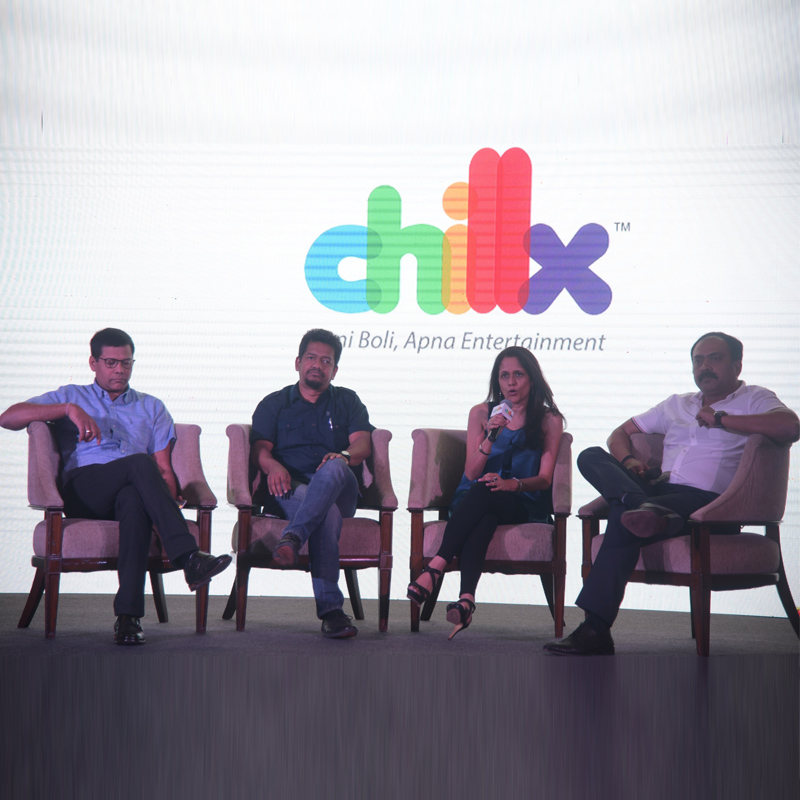
    It has launched its first offering in the entertainment space, an Android app called Chillx. The app offers 90 per cent of its content for free which is advertising-supported but also has a premium content ranging from movies, viral videos, music, games, infotainment, animation, short films, games, etc for different subscription packs. The rates range from Rs 10 a week for a game to a monthly charge of Rs 49 for standard definition (SD) and Rs 99 for high definition (HD).

    The paid content will be ad-free whereas any free content which exceeds five minutes will have ads. Users can either pay through payment gateways, reward points or Google Playstore. “We will launch with over 7,000 pieces of content and will add 150 pieces every week

    While apps downloaded are mostly in line with the global popularity, interest in content consumption in regional language is high. We have different models like subscription based, ad-supported, a la carte, etc. The priority in urban India which accounts for 33 per cent is entertainment, communication and social interactions whereas for rural which consists of 67 per cent first go for communication than social interactions followed by entertainment. This clearly indicates the digital galore from all India,” asserted Reliance Entertainment CEO content syndication Sweta Agnihotri.

    With most of the VODOTT platforms providing content majorly in English and Hindi, the app supplies content in 9 languages (apart from English)- Bengali, Tamil, Telugu, Kannada, Malayalam, Punjabi, Marathi, Gujarati, Hindi Staying true to their tagline ‘Apni Boli, Apna Entertainment,’ the app has a content strength of over 120000+ songs, 10000+ video clips, 5000+ full length movies, 5000+ TV show clips, 2000+ best movie clips, 50000+ ringtones, 50000+ wallpapers and 500+ games. The movie titles from its partners will be made available on the app in 45 days of time right after its launch.

    “We saw a clear need for a one-stop multi linguistic entertainment destination in India. Chillx is a one-stop-shop enabling and delivering entertainment on multiple smart devices like smartphones, smart television, tablets, etc. It provides a platform and promotes the consumption of content in numerous ways including preloading of content in devices, memory cards, pen drives amongst other advanced services. This endeavor allows us to widen the scope of consumer engagement on a scale that is possible only when you are a part of one of India’s leading conglomerates-Reliance Industries,” voiced Singh.

    It is known that smartphones are the primary device for content consumption for users. Keeping that in mind, the company has partnered with several Original Equipment Manufacturer (OEM) and content curators. The app plans to provide a solution to not just the consumers but also their partners. Its clientele consisting of Karbonn, Lava, Micromax, Samsung, Intex, Videocon, etc, according to them make up for more than 60 per cent of the mobile market share. “32 per cent of the users consume entertainment which is mostly videos. With the mobile traffic growing to 72 per cent in 2020 from 40 per cent right now is a big thing. And they are all going to consume data in local languages. We have come up with co-branded OEM customization and exclusive content showcase with them,” added Singh.

    From the past two months, all these mobile brands have included the app’s logo on their boxes thus reaching out to the masses. The app is also available at telecom retail stores and on Google Playstore. It already has got a million handsets from its Phase I, and are targeting 30 million in a year.

    “Our content cost is much lower than other start-ups because of our existing relationships and group synergies. It is a good opportunity for us. We don’t plan to provide catch-up TV on our app because that is what the rest of the players are providing. For us, short format videos, games, apps and movies are a big play. We are providing the users one movie or game at Rs 10 which is very reasonable, according to me. Reliance believed in us and so did our advertisers which makes us very proud. The game section allows a user to try and buy premium games. We have an integrated telecom billing option ease of operation for the use and will launch with over 7,000 pieces of content and will add 150 pieces every week,” added Narayan.

    The app also allows users to share it on Whatsapp and enables them to increase the brightness, volume and lock the screen without stopping the video. It also allows a user to choose the data limit and download options. It is backed by technology partners Wicore, Xerxes Technologies and Good value.

    As far as the content goes, they have partnered with 9XM, Shemaroo, Phantom Films, Rajshri Entertainment, Disney UTV, Reliance Group Synergy, Plan C Studios, etc. Through this, the curators reach out to a larger audience, with better distribution, promotion and monetisation options. The partners can also live monitor all the action and have access to the online dashboard.

    “We are very happy to partner with Vijay and Ujjwal. It all started one and half year back and the most important aspect was the kind of people we are working with. We have invested into the company because we believed in their thought process. All the credit goes to Vijay, Ujjwal, Sweta and their team for all the hard work that they have invested. Digital platforms are encouraging a wider audience with diverse consumption patterns, we recognize that this calls for innovative approach in the manner we produce and present our content. We have got more than 100 partners on board. The launch of Chillx is in line with our business vision,” said Reliance Entertainment COO Shibasish Sarkar.

    With such a diverse content library, the company also plans to crowd-source content from across India. They have already got content fro 10 genre and are looking at approximately 2500 to 3000 content entries in 8 week’s time. It will also provide original content to the users.

    In a world where dozens of apps remain just decorative icons on your smartphones, Chillx, standing true to its name, is a breath of fresh air for the users seeking destinations for entertainment beyond generic methods.

  • Reliance-FunOnGo’s multi-lingual Chillx app debuts in VOD market

    Reliance-FunOnGo’s multi-lingual Chillx app debuts in VOD market

    MUMBAI: “Think big, think fast, think ahead. Ideas are no one’s monopoly,” is what kept Dhirubhai Ambani going in life. And, he could do all that just because he could dream, and dream big. Taking inspiration from the founder of Reliance Industries is yet another team. Founded by Vijay Singh and Ujjwal Narayan, FunOnGo is a content aggregator and licenses value added service.

    Anil Ambani-led Reliance Entertainment has bought a two-thirds stake in the FunOnGo Media and Entertainment LLP. With this deal, the younger one of the Ambani brothers has forayed into the digital media content and distribution space.

    It has launched its first offering in the entertainment space, an Android app called Chillx. The app offers 90 per cent of its content for free which is advertising-supported but also has a premium content ranging from movies, viral videos, music, games, infotainment, animation, short films, games, etc for different subscription packs. The rates range from Rs 10 a week for a game to a monthly charge of Rs 49 for standard definition (SD) and Rs 99 for high definition (HD).

    The paid content will be ad-free whereas any free content which exceeds five minutes will have ads. Users can either pay through payment gateways, reward points or Google Playstore. “We will launch with over 7,000 pieces of content and will add 150 pieces every week

    While apps downloaded are mostly in line with the global popularity, interest in content consumption in regional language is high. We have different models like subscription based, ad-supported, a la carte, etc. The priority in urban India which accounts for 33 per cent is entertainment, communication and social interactions whereas for rural which consists of 67 per cent first go for communication than social interactions followed by entertainment. This clearly indicates the digital galore from all India,” asserted Reliance Entertainment CEO content syndication Sweta Agnihotri.

    With most of the VODOTT platforms providing content majorly in English and Hindi, the app supplies content in 9 languages (apart from English)- Bengali, Tamil, Telugu, Kannada, Malayalam, Punjabi, Marathi, Gujarati, Hindi Staying true to their tagline ‘Apni Boli, Apna Entertainment,’ the app has a content strength of over 120000+ songs, 10000+ video clips, 5000+ full length movies, 5000+ TV show clips, 2000+ best movie clips, 50000+ ringtones, 50000+ wallpapers and 500+ games. The movie titles from its partners will be made available on the app in 45 days of time right after its launch.

    “We saw a clear need for a one-stop multi linguistic entertainment destination in India. Chillx is a one-stop-shop enabling and delivering entertainment on multiple smart devices like smartphones, smart television, tablets, etc. It provides a platform and promotes the consumption of content in numerous ways including preloading of content in devices, memory cards, pen drives amongst other advanced services. This endeavor allows us to widen the scope of consumer engagement on a scale that is possible only when you are a part of one of India’s leading conglomerates-Reliance Industries,” voiced Singh.

    It is known that smartphones are the primary device for content consumption for users. Keeping that in mind, the company has partnered with several Original Equipment Manufacturer (OEM) and content curators. The app plans to provide a solution to not just the consumers but also their partners. Its clientele consisting of Karbonn, Lava, Micromax, Samsung, Intex, Videocon, etc, according to them make up for more than 60 per cent of the mobile market share. “32 per cent of the users consume entertainment which is mostly videos. With the mobile traffic growing to 72 per cent in 2020 from 40 per cent right now is a big thing. And they are all going to consume data in local languages. We have come up with co-branded OEM customization and exclusive content showcase with them,” added Singh.

    From the past two months, all these mobile brands have included the app’s logo on their boxes thus reaching out to the masses. The app is also available at telecom retail stores and on Google Playstore. It already has got a million handsets from its Phase I, and are targeting 30 million in a year.

    “Our content cost is much lower than other start-ups because of our existing relationships and group synergies. It is a good opportunity for us. We don’t plan to provide catch-up TV on our app because that is what the rest of the players are providing. For us, short format videos, games, apps and movies are a big play. We are providing the users one movie or game at Rs 10 which is very reasonable, according to me. Reliance believed in us and so did our advertisers which makes us very proud. The game section allows a user to try and buy premium games. We have an integrated telecom billing option ease of operation for the use and will launch with over 7,000 pieces of content and will add 150 pieces every week,” added Narayan.

    The app also allows users to share it on Whatsapp and enables them to increase the brightness, volume and lock the screen without stopping the video. It also allows a user to choose the data limit and download options. It is backed by technology partners Wicore, Xerxes Technologies and Good value.

    As far as the content goes, they have partnered with 9XM, Shemaroo, Phantom Films, Rajshri Entertainment, Disney UTV, Reliance Group Synergy, Plan C Studios, etc. Through this, the curators reach out to a larger audience, with better distribution, promotion and monetisation options. The partners can also live monitor all the action and have access to the online dashboard.

    “We are very happy to partner with Vijay and Ujjwal. It all started one and half year back and the most important aspect was the kind of people we are working with. We have invested into the company because we believed in their thought process. All the credit goes to Vijay, Ujjwal, Sweta and their team for all the hard work that they have invested. Digital platforms are encouraging a wider audience with diverse consumption patterns, we recognize that this calls for innovative approach in the manner we produce and present our content. We have got more than 100 partners on board. The launch of Chillx is in line with our business vision,” said Reliance Entertainment COO Shibasish Sarkar.

    With such a diverse content library, the company also plans to crowd-source content from across India. They have already got content fro 10 genre and are looking at approximately 2500 to 3000 content entries in 8 week’s time. It will also provide original content to the users.

    In a world where dozens of apps remain just decorative icons on your smartphones, Chillx, standing true to its name, is a breath of fresh air for the users seeking destinations for entertainment beyond generic methods.

  • Amazon seals Rajini film deal; dares Netflix, hikes sellers’ commissions

    Amazon seals Rajini film deal; dares Netflix, hikes sellers’ commissions

    MUMBAI: Amazon India has signed a content agreement with the Tamil Nadu-based V Creations. The alliance has been negotiated at a time when Amazon is all set to launch Prime Video India, competing with Netflix streaming and Star India’s Hotstar.

    Amazon is bringing the cheapest VOD subscription service in India with Amazon Prime, which comes with a complementary Amazon Prime Video subscription.

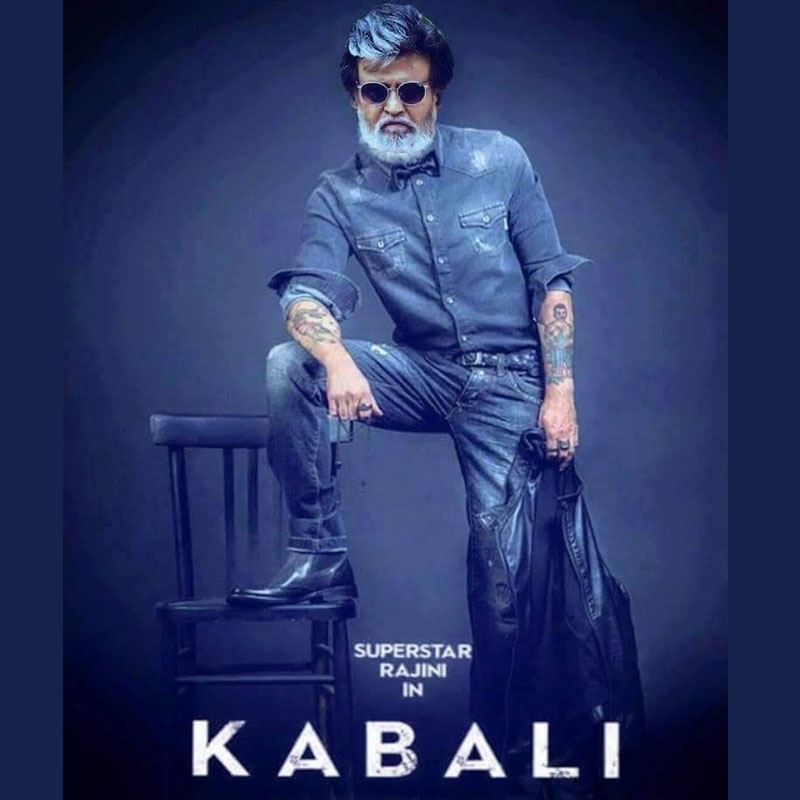
    Amazon has been focusing on the two most popular categories in India, that is, sports and of course Bollywood, Mint reported. With this alliance, Prime would have exclusive subscription streaming rights for two of Tamil Nadu’s highest grossing films — Rajnikanth’s Kabali and Theri, a crime drama released earlier this year. Amazon India recently launched its global Prime membership programme, offering fastest product deliveries for an initial fixed price of Rs 499 a year.

    The largest global online retailer Amazon has signed the long-term content partnership with the film production company V Creations when the former is gearing up for launching of its Prime online television service in India which is dubbed as a leading market for entertainment.

    In the UK and the US, Amazon Prime Video is available for $8.99 a month. Now, it is bringing the same service in India for as low as $15 a year. This significantly dents Netflix India regardless of content availability since the subscription price difference is vast.

    As part of its localization efforts, Amazon has been signing content rights in India. Recently, it teamed up with Karan Johar’s Dharma Productions.

    Amazon meanwhile has hiked the sellers’ commission in categories such as electronics, while reducing it in others such as large appliances, after a festive season confrontation with its competitor Flipkart. Amazon at present has over 120,000 sellers on its platform in India.

    Amazon, Snapdeal and Flipkart operate as marketplaces charging fees and other charges for connecting customers with third-party sellers.