Tag: Vivo IPL

  • Star india signs superstar prosenjit as official ambassador for broadcast of vivo ipl in bengali on jalsha movies

    Star india signs superstar prosenjit as official ambassador for broadcast of vivo ipl in bengali on jalsha movies

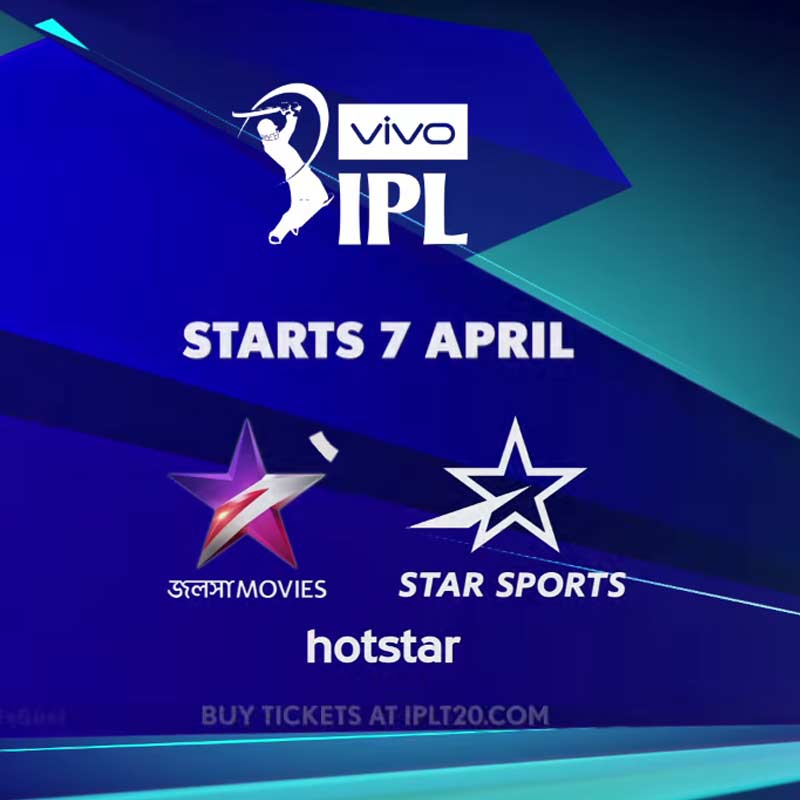
    MUMBAI: Unparalleled in sports broadcasting in India, Star India is all set to reimagine the broadcast of the VIVO Indian Premier League 2018 by making India’s greatest sporting spectacle a never before experience for cricket fans across the country.  For the first time ever, Star India will broadcast live matches of the league in 6 languages – Hindi, English, Tamil, Telugu, Kannada, and Bengali. The VIVO IPL will also be beamed LIVE in these 6 languages on Hotstar.

    With fans at the heart of the experience and to leverage the power of localisation, Star India has announced Jalsha Movies as the destination for the Bengali language broadcast of VIVO IPL 2018. Star India celebrates this announcement by launching a TVC featuring Bangla superstar and a big VIVO IPL fan, Prosenjit Chatterjee.

    The film opens with Prosenjit in his living room, looking for something. As he strolls about, he excitedly starts talking about possible match scenarios. As the film progresses, the viewer realizes that it’s his TV remote that Prosenjit is looking for, following which he reveals that VIVO IPL 2018 will be more special this year as the Bengali cricket fans will get to catch the Best vs Best action in their mother tongue, Bangla! The driving thought behind the initiative is that the pride of watching your favorite sporting spectacle in your own language is an experience like never before.

    Mr. Prosenjit Chatterjee, while commenting on his association said, “I’ve always been a cricket enthusiast and VIVO IPL has been one of the tournaments I look forward to every year. I’m excited about my association with Star India for VIVO IPL 2018 and looking forward to enjoying the best of cricketing action in my mother tongue.”

    West Bengal is a unique market with high affinity to language content and very distinctive viewing habits. Star India’s strong presence in the state has helped the broadcaster understand the pulse of the Bangla cricketing fans. The film with Mr Prosenjit Chatterjee is an extension of Star India’s belief to give the Bangla sports fan more personalised content and further enhance the universal appeal of VIVO IPL by reaching out to their viewers in their own language.

    The 11th edition of VIVO IPL starts on Saturday, April 07, 2018 with defending champions Mumbai Indians taking on Chennai Super Kings.

  • Star unveils Re.Imagine Awards for IPL ad campaigns

    Star unveils Re.Imagine Awards for IPL ad campaigns

    MUMBAI: The American Super Bowl continues to remain one of the most awaited sporting leagues around the world. It is that time of the year when brands don their creative hats to come up with some of the most interesting and ingenious advertisements.

    Taking inspiration from Super Bowl and its notable campaigns over the years and in a bid to bring similar advertising culture in Indian sports advertising, Star India has decided to award the most creative advertisements that will run during IPL 2018. The Star Re.Imagine Awards will recognise creativity and innovation in the use of integrated media in advertising campaigns aired during IPL on Star Sports and Hotstar.

    Every creative broadcast on Star Sports and streamed on Hotstar during the league will automatically be eligible for the Star Re.Imagine Awards. A high-powered jury, including the likes of advertising legend Sir John Hegarty, one of the world’s most celebrated creative directors Piyush Pandey, acclaimed filmmaker Raju Hirani, marketing veteran Vibha Rishi, digital evangelist Rahul Welde and ad-man V Sunil will deliberate on the winners on 26 May and select two campaigns that they believe have excelled in terms of creativity and leveraging the platform. Two winning teams of 24 members each will be hosted for a premier global sporting event.

    Star India head consumer strategy & innovation Gayatri Yadav said, “Vivo IPL 2018 is poised to be one of the biggest sporting events ever and is the most powerful platform to connect with consumers and build brands. Star Re.imagine Awards is a first of its kind initiative that will celebrate and recognise creativity & the integrated use of media on this the largest stage of any campaign. We are very excited to bring together a bespoke independent jury of some of the most eminent names across marketing, media and storytelling to celebrate two campaigns aired during this IPL on Star Sports network and Hotstar which push the boundaries of creativity. Recognising that great campaigns are powered by great teamwork the award will celebrate members of the integrated team across marketing, creative and media, who will be hosted for a premier global sporting event.”

    Partnering  Star India in this initiative are Sideways, Kyoorius and audit partner PWC.  

    For the first time, Vivo IPL 2018 proposes to connect with many Indians in six relevant languages—Hindi, English, Tamil, Telugu, Kannada and Bengali. By leveraging the combined reach of digital and television, the tournament will be broadcast on multiple TV channels and live streamed on Hotstar with an aim to reach out to 700 million fans across TV and digital in India. This will be one of the first few leagues in the world which proposes to use virtual reality (VR) and to bring live action from the stadium to fan homes. This immersive VR experience would make it possible for fans to come closer to the high-octane matches from the comfort of their homes. Along with dedicated language feeds, the network also proposes to have a Super Fan Feed available across cable, DTH and on Hotstar. This will be a curated feed for the intense fans who want more than just to watch the game. It may also include features like multiple camera angle options while viewing and data layers about the teams and players during the telecast.

    Also Read :

    IPL 2018: The dos and don’ts for brands

    Star India bags production rights for IPL 2018

    Star India bags production rights for IPL 2018

  • Guest Column: Star India’s IPL deal raises three crucial questions

    Guest Column: Star India’s IPL deal raises three crucial questions

    “Astronomical”, “whopping” and “staggering” were some of the words used to describe Star Group’s consolidated global bid of $2.55 billion for the media rights of the Indian premier League (IPL). Several newspapers described it as the “costliest” cricket property in the world.

    It seems to be an opportune time to look at the truth behind the numbers, and answer a few relevant questions. Was Star’s “all or nothing” bidding strategy exceptionally brilliant or extremely stupid? Does the seemingly-high price reflect the enormous and growing valuation of the IPL? Are IPL’s media rights costlier than those for the Indian national team?

    The Board of Control for Cricket in India (BCCI) allowed two kinds of bids – a consolidated global bid for the seven rights, including TV and digital, through a consortium, or individual bids for the specific rights. For example, a company could bid for the TV rights for the sub-continent only or only for the ‘Rest of the World’. Another could bid for two, three or four of the seven rights. A fourth could bid for all the seven rights separately. A fifth could do this, and also put in a consolidated global bid through a consortium.

    All-or-nothing Strategy

    From the information that’s available, Star was the only bidder to exercise the last option – a consolidated bid and separate bids for the seven rights. The others chose to focus on specific rights based on their strengths. Sony, which held the IPL TV rights for the first 10 years (2008-2017), put almost all its budgeted payment – over 99 per cent — on the TV rights for the sub-continent. Facebook, Airtel and Reliance Jio had huge, but single, bids each for the digital rights.

    The second component of Star’s “all or nothing” strategy was to bid really high for its consolidated bid, and fairly low for the specific rights. The idea was simple: make sure that it had a relatively higher chance to bag the composite bid, and ensure that if it got only a few individual rights, it paid much less. This is clear from the bid amounts. Star’s consolidated bid was Rs 163,475 million for five years. However, the sum of its bids for the seven individual rights was only Rs 788,247 million, or less than half of the former amount.

    Take a look at the comparative individual bids by the various players to understand Star’s game plan.

    Its bid for the subcontinent TV rights was Rs 61,969 million or much less than Sony’s Rs 110,500 million. Its price for the digital rights was Rs 14,430 million, or even lesser in percentage terms than Facebook’s Rs 39,000 million, Airtel’s Rs 32,800 million, and Reliance Jio’s Rs 30,757 million. Thus, Star made certain that it wouldn’t overpay for the individual rights.

    But Star was willing to go overboard for the consolidated and overall rights. The reason for this was obvious: BCCI’s tender stated that a combined bid could win only if the amount was higher than the sum of the highest bids in the individual categories. The latter figure, as it turned out, was Rs 158,195 million, or just over 3 per cent lower than Star’s consolidated bid of Rs 163,475 million. It was a lucky break for the winner – if its bid had been four per cent lower, it would have got only a puny ‘Rest of the World’ right that was worth Rs 487.5 million.

    Seeking Synergies

    In the future, the “all or nothing” strategy may turn out to be exceptionally brilliant or extremely stupid.

    This can be explained by two examples. When entrepreneurs opt for mega takeovers, they generally have two kinds of plans. The first is to sell off the various assets as they feel that the sum of the parts will be considerably higher than the whole. The other is to leverage and extract synergies that will result in a higher valuation for the whole.

    Both can work, but will the latter strategy work for Star? The quick answer: only if it knows the art and science of synergies.

    Over the past several years, sports organizers, media rights-winners (bidders) and advertisers have explored ways to take advantage of sport viewers’ habits in the age of convergence. According to a 2016 working paper by the Harvard Business School, some of the organizers, like UEFA (football), have successfully integrated “commercial activities and resources of sponsors into sports events” to improve “audience experience”.

    According to a 2016 piece by Patrick Hanavan, Chief Client Officer, Extreme Reach, a cloud technology platform, “There is increasing evidence that consumers are pairing their TV watching with ‘second-screen’ behaviour on social media….” This provides advertisers with “more opportunities for synergy between their TV buys and video buys… and potentially more cost-effective inventory.”

    public://BCCI_1.jpg

    Given such trends, a rights-holder, who has combined and comprehensive TV and digital rights presence, is ideally-placed to woo a larger set of audience, reach more advertisers, grab more spend from the same advertiser, and work closely with the sport organizer. The global trend is towards a seamless ‘rights’ strategy that encompasses TV, digital, broadband and social media.

    Although it’s not strictly similar, Turner Sports’ handling of the NBA media properties is an example. According to a report, Turner’s handling of the NBA’s digital business became so extensive to encompass “everything from mobile and social to broadband and the NBA’s out-of-market package”. Add TV to this mix, and what you have can be a winning combination.

    Star can easily drive, rather than merely woo, IPL traffic to its different properties. Star owns Indian cricket as it has the crucial rights for IPL and national team (the Indian cricket rights are with Star till first half 2018). It can extract cricket synergies if it innovates and thinks differently. Over time, the IPL viewership can translate into increased audience for non-IPL content on Star’s properties like Hotstar. The net result: higher returns on overall investment.

    Unfortunately, such grand strategies can unwind easily. Star’s attempt to drive traffic internally can drive it away. Seamless integration requires time, and five years may not be enough to translate the objectives into reality. Moreover, the fresh bidding for the Indian team’s rights will take place in 2018, and Star may lose them. It will be left with the IPL rights for a short summer period.

    Crucially, competition will keep nipping at Star’s heels, and may overtake it in the future. Next year, Sony, Facebook, Airtel and Reliance Jio will bid more aggressively. This will definitely happen when fresh tender for the IPL bids are floated in 2022. The story of how the bidding for the IPL digital rights has panned out is an indicator. The last time, Star won them for mere Rs 3,030 million for three years or Rs 1,010 million a year. This time, FB bid Rs 39,000 million for five years or Rs 7,800 million a year. It implies that the annual worth has gone up by nearly 225 per cent. Clearly, the social media network hopes to ride the cricket wave. The next time, Star’s “all or nothing” may come to nothing.

    Worth of IPL

    In 2009, when the IPL rights were renegotiated, Sony agreed to pay Rs 82,000 million for a nine-year period or Rs 9,111 million a year. At a simple inflation rate of 10 per cent, the figure will escalate to Rs 17,311 million over nine seasons. At a compounded rate of 10 per cent, the figure will be Rs 21,483 million. Star agreed to pay Rs 32,695 million per year, or a sizeable over 50 per cent higher than the 10 per cent compounded figure. This indicates that the IPL’s valuation has shot up, or at least the stakeholders think so.

    Of course, if one accounts for the rupee devaluation between 2009 and 2017, the math will be different. In 2009, the dollar averaged Rs 46, and is now just over Rs 64.

    A similar 10 per cent inflationary calculation for the price paid per match for the national team (the contract was bagged by Star in 2012) and IPL (2017 deal) will reveal that the conclusion that IPL is more expensive isn’t correct. If one looks at the overall scenario from a different perspective, IPL’s valuation has come down. A couple of years after the inaugural season, the league’s value was $4.1 billion in 2010. In 2016, Duff & Phelps found that it was still worth the same — $4.16 billion.

    Only this year did Duff & Phelps upgraded the valuation of IPL to $5.3 billion. Even this signifies an increase of 29 per cent over seven years, or less than what you can earn on fixed deposits. In fact, according to Brand Finance, the value of the league has diminished from a high of $4.1 billion to $3.8 billion now, after reaching a low of $2.9 billion in 2012.

    But at the same time, other deals indicate that the stakeholders still have faith in IPL. Recently, IPL title sponsorship was sold for Rs 22,000 million or twice the figure for the Indian team sponsorship.

    Only time will tell whether Star India can convert the opportunities to shore up its bottomlines further, considering its financial clout and business acumen.

    ALSO READ:

    Star bids highest for BCCI’s IPL media & digital rights and is the winner

    IPL has come to the rightful home of cricket in India: Star’s Uday Shankar


    public://Alam_Srinivas.jpg(Alam Srinivas, a senior business journalist and Executive Editor of Patriot, has authored two books on IPL, `IPL: Cricket and Commerce’, and `Cricket Czars: Two men who changed the gentleman’s game’. The views expressed are personal and Indiantelevision.com need not necessarily subscribe to them.)
  • Comment: With IPL rights Uday Shankar gambles audaciously, must plan pragmatically

    Comment: With IPL rights Uday Shankar gambles audaciously, must plan pragmatically

    The numbers were close to what we at indiantelevision.com were betting on. In conversations with senior executives from various companies, we had predicted that the telecast rights to the Board of Control for Cricket in India’s (BCCI)’s Indian Premier League (IPL) would fetch it around twice the price that Sony had earlier coughed up. And that too for a rights period which has been halved as compared to Sony’s time.

    Star India’s bid of Rs 16,347.50 crore ($2.56 billion) lived up to that expectation. Sony had last paid Rs 82,000 million ($1.6 billion then) for the rights. In rupee terms that’s close to twice what was earlier paid.

    Of course, the key execs in Star India – led by chairman & CEO Uday Shankar – have good reason to pop the bubbly. They bested a slew of broadcasters, telcos, OTT players and more experienced global sports rights owners to the IPL rights tape with an offer that may appear  mindboggling – nay mind numbing – to many an industry observer.

    Star India, however, got through by what many might say is a thin whisker. The combined highest individual bids for all the rights on offer including India, digital, ROW A,B,C,D, E totted up to Rs 15,8195 million, whereas the 21st Century Fox owned network’s global bid for all rights was Rs 16,3475 million — a difference of just Rs 5000 million. A seasoned industry observer like Kunal Dasgupta, former head of  Sony Entertainment in India, said Star hasn’t bid too high — if one takes into account the combined figure of bids of others.

    Star India led the individual bidding for only one territory – the UK. Elsewhere its rivals bid higher. So, if Star India had not safeguarded itself by putting in a global bid, it well may have been sitting on the losing side with telecast rights only for old Blighty.

    However, it is on the winning side now. And media watchers are questioning whether  Shankar and his team have  bitten off more than they can chew. The network is already anteing up Rs 430 million a match since 2012 for telecast and digital rights to all international cricket that India plays. Thankfully, the Rs 38,510 million deal ends mid-2018 when the IPL-Star era begins.

    But who knows the broadcaster might make its pitch for the same rights once again. If one goes by its hunger to create and own Indian sport, one can expect a spurt in prices for the rights to international cricket featuring India too. So much so that the Rs 550 million per IPL match it is now committed to pay out may look relatively cheap. As things stand today, India cricket rights are cheaper than theIPL’s— and that says a lot about a league that has been valued at a shade over $ 5 billion by an international company.

    That’s for another day. Clearly, new benchmarks have been set with the new IPL deal. For Shankar, it is a calculated gamble that may actually help him raise his stocks within the 21CF family. Star is clearly pulling out all the stops in India. As are his bosses Rupert, Lachlan and James Murdoch. Because it is something they have been used to doing. Up the stakes and keep a stranglehold on sport that viewers cannot do without. Monetising it effectively comes later; remember Kaun Banega Crorepati, the Indian version of Who Wants To Be A Millionaire.

    In 2015, the UK’s monolith satellite operator Sky (21st Century Fox owns 39.14  per cent of Sky and is seeking to own completely through its December 2016 offer of pounds sterling 11.7 billion) agreed to fork out £4.176bn to keep hold of the maximum possible number of English Premier League matches – 126 – in the new three-year cycle, almost double the £2.28bn it shelled out in 2013. That worked out almost £10.2 million (Rs 844 million per game). So doesn’t Rs 550 million look cheap?

    Sky had signed a cheque of just £191 million for rights to the EPL (60 matches a year) from 1992 to 1997 – a steal at £0.6 million per match.

    In  July 2017, the leading UK DTH player  raised the stakes even further by launching an English Premier League channel, which would air the 126 matches as part of an initiative to revamp its sports channels. Ten of its sports channels were available at £27.50 per month, whereas individual channels could be subscribed to at £18 a month.

    Will Star go for a similar spin-off play in India?

    Will it launch an exclusive IPL Star Sports channel with debates and coverage of what the various teams and team owners are doing?  And biopics around some of the main players in the teams? Can it start a talent hunt to zoom in on cricketers who could play in the IPL? Can it create special programmes, format shows around the IPL? Sure the creative ideas are many, and many of them could end up being money spinners as well as duds. A lot of this has not been attempted before and is new territory for all, but Star India knows how to enchant viewers with its programming. However, one expects a lot more from it then just bringing TV characters and actors from its top shows onto the field for some of the ceremonies – something it did when it was the India team sponsor.

    Or will the network go for a simpler idea— broad base its telecast across its TV channel network with regional language commentary? Will it work with the BCCI to bring in further entertainment or excitement into cricket?

    While some may question Uday Shankar and team’s thinking behind paying out such a fat purse, clearly there’s some arithmetic and growth strategy in place. Shankar admitted to that when at a post bidding press conference he hinted that the winning bid seemed the “right” figure keeping in view the competitiveness of the bidding by others. Star India has displayed what many considered derring-do when it took the path to develop very local Indian sports like kabaddi, not to mention badminton, table tennis, football and other sports in India. But it has had the last laugh; especially with kabaddi that has found traction and is emerging as a money-spinner.

    With the world as his playground and the rights to digital and television globally at his disposal, expect Shankar and co to do magic. In one market the Star India team could sell the rights to a telco for the live feed, in the same market,  it could sell it to a VOD player for a delayed telecast and also sell it to a broadcaster there for pay TV or run a pay TV channel. In the UK, it has got a ready buyer in the Sky Sports cricket channel, which it launched along with  EPL Sports.

    The IPL teams have got representation from several cricket and emerging cricket playing countries; so the interest is bound to be there. And, if it is limited, Star and local partners will work to whip up the excitement.

    Otherwise, it could use the fun and action on the IPL cricket field to seduce subscribers in various countries to opt for its VOD and streaming service Hotstar. It has just about begun its global journey for Hotstar with its launch in Canada and the US a couple of days ago.

    The VOD platform has been blanked out in all other nations apart from these two and India. Viewers in these markets are used to paying – even if it is only a monthly fee of $9.99 to $13.99. In Indian rupees that is a lot of money: around Rs 650 to Rs 800. If Star manages to lure in even five million paid subscribers, at those levels it will generate an average of a whopping Rs 100,00 million annually per three month IPL season. Over a five year period it can expect its total subscription pie to grow to Rs 65,000 million in digital revenues from just Hotstar. Of course, one has to calculate expenses and operational costs. But then it will also rope in ad revenue too for the service.

    It is in India where it will seek to really exploit the IPL magic. Television advertising and subscription revenues,  premium VOD revenues for both live and delayed feeds – as well as ad  commercial sales  revenues on the free basic Hotstar service. Or, it could license the live digital feed to a social media network or a telco. Remember Facebook, Airtel and Reliance Jio bid in excess of Rs 30,000 million for the India digital rights alone. If any of them bite when Star makes them an offer, it would secure the broadcaster’s India’s revenue to some extent at least. Star well might keep the free delayed feed in house and stream it on Hotstar or sell even that to another player. The opportunities are mind-boggling.

    Of course, the big money monster is clearly going to be TV in India for the next five years, and even 10 or more, possibly. And that’s where Star India will go in for the kill.  The Indian cable TV ecosystem is evolving. However, cable TV operators and DTH players have been wary of raising subscription rates as well paying more for the content to broadcast partners.
    Though, through cricket, Star may look at building a walled garden — something that competitors have hinted at — the success or failure of it could only be gauged by a future time. As they say, hindsight is a great teacher.

    ALSO READ:

    Star bids highest for BCCI’s IPL media & digital rights and is the winner


  • IPL tendering process to commence 17 July; bidding to be fierce

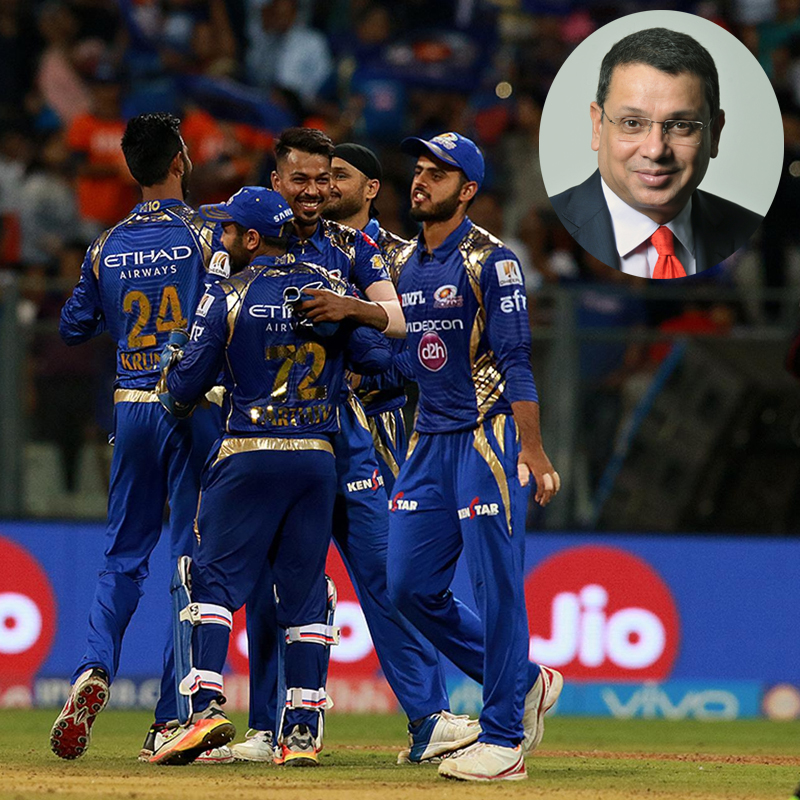
    MUMBAI: The Mukesh Ambani-owned Mumbai Indians pulled of a wafer thin victory against the Rising Pune Supergiants in the final of the Vivo IPL 2017, possibly giving a super boost to the TV ratings that Sony Pictures Networks India (SPN India) will notch up for its telecast. The final match could also be the last time both SPN India and Hotstar could be telecasting the Vivo IPL as both their contracts with the Board of Control for Cricket in India (BCCI) have ended.

    Come 17 July, and the tendering process will start to bag the IPL telecast and rights – both national, international and streaming over the internet. The auction process was supposed to commence last year but was quashed by the Supreme Court appointed Justice Lodha committee.

    The IPL title sponsorship tender will commence earlier on 31 May 2017. Chinese smart phone maker Vivo’s title sponsorship contract too has ended with the latest edition of the IPL.

    The decision on the two dates was taken by the BCCI, the members of the IPL governing council, and the Supreme Court appointed committee of administration on Saturday 20 May.

    Industry experts expect the price for the five year rights – yes, the cycle of the IPL rights has been reduced to five years by the BCCI to further exploit its potential – to reach stratospheric heights. The expectation is that potential bidders like Star India, SPN India, Amazon India, and new player in the game the Discovery promoted D-Sports could end up writing cheque amounts close to double of what was paid for the previous cycle – on a like to like basis.

    For both Star India and SPN India, bagging the rights is crucial. Star India has targets to achieve $1billion EBIDTA by 2020 and one of the tools to help it get there is of course the spread of Hotstar. Over the last two years, it has launched a clutch of sports channels in its bouquet. SPN India too will want to retain the rights as it has been one of its cash cows over the past three to four years, notching up new records in advertising and viewership every year. It too has launched a clutch of channels and has even partnered with ESPN for a channel in India.

    Clearly, the side which bats and bowls well during the tendering process will win.

  • Bigger & Better: IPL ’17 viewership on 5 May touched 386.3m surpassing entire IPL ’16 reach

    MUMBAI: The VIVO IPL continues to hit viewership, attendance and social media numbers out of the park, making the league’s landmark 10th season truly bigger and better than ever before. The latest numbers show TV viewership halfway through the league’s fifth week touched an all-time high, in both urban and rural markets. Stadium attendance so far, too, has grown by 25 per cent from last year.

    Moreover, the IPL continues to make a huge impact digitally, registering nearly 6 million tweets over the first five weeks. The IPL’s other digital properties crossed 750 million page views while the IPL Fantasy League, with participation from 950,000 fans, is well on its way to crossing the as yet unprecedented 1 million mark.

    BCCI CEO Rahul Johri said, “The phenomenal response we’re seeing from fans across various platforms is testimony to the IPL’s enduring and yet still-growing popularity. We have worked extremely hard to ensure the landmark 10th season of the IPL is bigger and better than any before. From the new records being set each week and the trend only set to accelerate heading into the playoffs, I am confident that IPL 10’s success will surpass that of any season that has come before.”

    Appended below are some of the key highlights on TV ratings:

    · The reach of IPL 2017 on television is 386.3 Million (Source: BARC) at the end of Match 43, which has already surpassed the reach IPL 2016 garnered for its entire season
    · Throughout this season, the IPL has remained the most-watched and top-rated product on Indian Television (Source: BARC)
    · As of week five, IPL matches occupied the top seven positions in the top-ten highest-rated TV programs on television (Source: BARC)

    The numbers so far barely scratch the surface of IPL 10’s full potential. With the play-offs just around the corner and the League approaching the ‘business-end’ of its season, viewership, attendance and digital numbers are only set to soar, putting the tenth season of the IPL on course to go down in history as the League’s biggest and best yet.

  • VIVO IPL lines up global broadcasters

    MUMBAI: Indian Premier League, the premier Twenty20 competition in the world, has lined up the best global broadcasters in a bid to reach out to fans across the world.

    One of the marquee global sporting events, VIVO IPL 2017 will be played from 5 April to 21 May, 2017, and will be spread over 47 days across 10 venues. The T20 extravaganza with 60 matches will be available live across a bouquet of broadcast and streaming platforms. The coverage will be more extensive and more live games will be available for international viewers.

    In the Indian subcontinent, VIVO IPL 2017 will be broadcast on Sony Pictures Network. The VIVO IPL 2017 will be streamed online on Hotstar (mobile and internet with a 5-minute delay).

    VIVO IPL broadcasting TV channel and digital streaming list in various countries is as below:

    public://broadcast.jpg


  • SPN India cranks up IPL 10 campaign with fan frenzy films

    MUMBAI: How do you celebrate a tenth birthday? Well, Sony Pictures Networks India (SPN) India, which has been airing the edge-of-the-seat action filled Indian Premier League for the past 10 years, has chosen to do with a campaign “10 saal aap ke naam”.

    “SPN and Vivo IPL have had a great journey, so far. Over the last nine years, we have seen the tournament grow in terms of stature, viewership and the buzz that it creates, and, hence it was only logical to make the tenth year a grand celebration. The marketing campaign borrows from real life insights on how viewers of Vivo IPL engage and involve themselves with the game. We believe that the fans are instrumental in making this tournament the mega blockbuster that it is, and that is why this year’s campaign is an ode to the Vivo IPL Fa. This campaign is the way of saying thank you to millions of people who made IPL what it is,” says Sony Max cluster senior EVP and business head Neeraj Vyas.

    This year’s matches are to be telecast on Sony Max, Sony Six, and Sony ESPN.

    Thus, a series of six films have been filmed and created encapsulating the fervor and madness of fans across gender, generations and geographies. The films celebrate various types of fans, be it the ‘Antaryami Fan’ who, year after year, makes predictions with confidence and even though all his predictions do not come true, he does not deter from making them again and again; the ‘Vehemi fan’ who fears that if he watches the match his team will lose so every time his team plays he is seen standing outside the door, be it a restaurant, a store or even his own house and the ‘Under Pressure fan’ who will postpone even nature’s call and be uncomfortable but will not budge from the television screen till the last ball is delivered.

    The campaign will run in 4-5 languages — English, Hindi, Bengali, Tamil and Telugu. “The Tamil feed grew enormously last year. Twenty per cent of numbers came from Tamil Nadu and Pondicherry which is very encouraging,” informs Vyas.

    SPN India has brought in top drawer talent for its final innings with the IPL (Its rights deal with the BCCI is ending this year and a fierce bidding exercise between Star, SPN, Dsports, and Amazon is expected to take the price up to stratospheric levels.)

    DDB Mudra was behind the creative of the campaign, while the films were helmed by noted ad film director Hemant Bhandari of Chrome Pictures Media. The anthem was composed under the baton of music composer duo, Salim- Sulaiman, and singer, Benny Dayal belted out the vocals.

    With phrases like “Mahaul sajatey, Haal batatey, Halla machatey”, the Vivo IPL anthem salutes the passion of the zealot who passionately follows the game and cheers every four and six and fall of wicket

    The campaign will roll out on other media outlets too. News and regional channels are expected to be tapped into more. But most importantly is the swathe of channels that the network boast of today, reveals Vyas. “Last year when we started the campaign for season 9, the network had 17 channels and now we have 30 channels under Sony umbrella. We have popular channels. But, we will buy some (slots on the) regional (channels) for sure.”

    The good news for the SPN India is that it has managed to lock in 13 sponsor for IPL season 10. Among these figure: Vivo, Amazon and Vodafone as the co-presenters, CEAT Tyre, wire maker Polycab, Make My Trip, Vimal Paan Masala, Yamaha, Frooti, Voltas, Havells, Parle- products and Yes Bank. And, it looks to be on target to rake in Rs 1,300 crore through sponsorships.

    Vyas says that there was fear that prime minister Narendra Modi demonetisation drive might impact advertisers enthusiasm to put in top dollar. “But, the IPL has such a high recall value that you can’t go wrong is what advertisers have told us and that is why the 13 sponsors,” he expresses.

    A media veteran says that the creative peg that SPN India has taken is clearly going to connect with cricket fans in India and worldwide.

    “Already the player auction saw some high-ticket prices being coughed up by the teams for certain players,” says she. “And, if Sony is going to stoke up the fan frenzy by airing the fan films showing stereotypes with high frequency and reach, one can expect the temperature and viewership for the IPL to only go up this year. Now if only the teams on the field work well to have close finishes, and Sony will be laughing all the way to the bank.”

  • Race to acquire IPL rights commences

    Race to acquire IPL rights commences

    MUMBAI: It’s the business of sports! The countdown to the media rights of what is arguably India’s most premium sports property, the Vivo IPL, has begun with the Board of Control for Cricket in India (BCCI) announcing the timeline of the bidding process. The BCCI has made the IPL rights an invitation tender process with the document being made available for purchase from today (19 September) at a purchase price of $10,000.

    Three bunches of media rights are being made available: domestic Indian subcontinent TV rights for all the 10 seasons (2018-2027), domestic digital telecast rights, and the rest of the world (RoW) rights — either as a whole package or as territory groupings – each for five seasons (2018-2022). Bidders have also been permitted to make their offers in any combination of the above three rights. The digital rights entail a five-minute delayed telecast.

    Non-news TV broadcasters will be in a position to bid for the TV rights. However, the field has been thrown open to broadcasters, mobile operators and internet operators for both the digital and RoW rights, with marketing agencies also being permitted to throw in the hat into the ring for the latter.

    The bids can be made singly or as a consortium, as long as the person doing is fit and proper, meets financial standing and BCCI suitability standards criteria, and has no litigation with the cricket body, the BCCI announced.

    At the press conference in Delhi, BCCI president Anurag Thakur said:
    “IPL is the fastest, most popular cricket league and also the sixth most popular sports league in the world. We want it to be a very transparent process. It is going to be bid- but a most historic. In the last nine years, what we have seen is that the world has recognized it has the top most league. BCCI has been proud to start the league which others have followed.”

    BCCI CEO Rahul Johri who made a presentation on the tender process said that it will be two tiered, based on eligibility and on the financial commitment. Bidders will have to make their submissions in two envelopes: Envelope A which will detail the eligibility and envelope B which will contain the financial bid and signed media rights agreement. Financial Bids of only compliant bids will be opened, Johri clarified. He added that the organization was under no obligation to accept the highest financial bid and that it could change the process at any time at its discretion.

    Johri pointed out that potential bidders will have an opportunity to seek clarifications till 4 October, with 18 October being the last date for purchasing the tender, and bid submissions will close at 9:30 am on 25 October. Financial bids of only compliant bids will be opened, Johri clarified. The BCCI is expected to announce the winners of the rights the same day.

    For the RoW, the BCCI has broken up the rights into territory groups, almost like the league it runs. Group A broadly consists of Asia, Australia, Canada, Caribbean, Central and south America, New Zealand, and Israel. Group B consists of middle east and north Africa while Group C covers the whole of South Africa. Group D includes sub-Saharan Africa, Group E covers the UK and Ireland and British territories and Group F, the whole of the US.

    Media observers expect a tough fight between current TV rights holder Sony Pictures Network (SPN) India – which recently acquired the Zee Network’s TEN Sports brand – and digital rights holder Star India for the rights.

    Other bidders who could be contenders include telcos like Reliance Jio and Airtel. The next 10 years rights of the IPL are expected to bring in anywhere between $2.5 billion to $3.5 billion for the BCCI.

  • Race to acquire IPL rights commences

    Race to acquire IPL rights commences

    MUMBAI: It’s the business of sports! The countdown to the media rights of what is arguably India’s most premium sports property, the Vivo IPL, has begun with the Board of Control for Cricket in India (BCCI) announcing the timeline of the bidding process. The BCCI has made the IPL rights an invitation tender process with the document being made available for purchase from today (19 September) at a purchase price of $10,000.

    Three bunches of media rights are being made available: domestic Indian subcontinent TV rights for all the 10 seasons (2018-2027), domestic digital telecast rights, and the rest of the world (RoW) rights — either as a whole package or as territory groupings – each for five seasons (2018-2022). Bidders have also been permitted to make their offers in any combination of the above three rights. The digital rights entail a five-minute delayed telecast.

    Non-news TV broadcasters will be in a position to bid for the TV rights. However, the field has been thrown open to broadcasters, mobile operators and internet operators for both the digital and RoW rights, with marketing agencies also being permitted to throw in the hat into the ring for the latter.

    The bids can be made singly or as a consortium, as long as the person doing is fit and proper, meets financial standing and BCCI suitability standards criteria, and has no litigation with the cricket body, the BCCI announced.

    At the press conference in Delhi, BCCI president Anurag Thakur said:
    “IPL is the fastest, most popular cricket league and also the sixth most popular sports league in the world. We want it to be a very transparent process. It is going to be bid- but a most historic. In the last nine years, what we have seen is that the world has recognized it has the top most league. BCCI has been proud to start the league which others have followed.”

    BCCI CEO Rahul Johri who made a presentation on the tender process said that it will be two tiered, based on eligibility and on the financial commitment. Bidders will have to make their submissions in two envelopes: Envelope A which will detail the eligibility and envelope B which will contain the financial bid and signed media rights agreement. Financial Bids of only compliant bids will be opened, Johri clarified. He added that the organization was under no obligation to accept the highest financial bid and that it could change the process at any time at its discretion.

    Johri pointed out that potential bidders will have an opportunity to seek clarifications till 4 October, with 18 October being the last date for purchasing the tender, and bid submissions will close at 9:30 am on 25 October. Financial bids of only compliant bids will be opened, Johri clarified. The BCCI is expected to announce the winners of the rights the same day.

    For the RoW, the BCCI has broken up the rights into territory groups, almost like the league it runs. Group A broadly consists of Asia, Australia, Canada, Caribbean, Central and south America, New Zealand, and Israel. Group B consists of middle east and north Africa while Group C covers the whole of South Africa. Group D includes sub-Saharan Africa, Group E covers the UK and Ireland and British territories and Group F, the whole of the US.

    Media observers expect a tough fight between current TV rights holder Sony Pictures Network (SPN) India – which recently acquired the Zee Network’s TEN Sports brand – and digital rights holder Star India for the rights.

    Other bidders who could be contenders include telcos like Reliance Jio and Airtel. The next 10 years rights of the IPL are expected to bring in anywhere between $2.5 billion to $3.5 billion for the BCCI.