Tag: Vivendi Universal

  • Vivendi Universal announces Canal Plus, TPS tie-up

    Vivendi Universal announces Canal Plus, TPS tie-up

    MUMBAI: The Paris-headquartered media and telecommunication company Vivendi Universal is buying Television Par Satellite (TPS). The company will also combine its broadcast business with its French pay-TV business Canal Plus to create a company valued at 7.5 billion euros (US$9 billion).

    Vivendi will own 85 per cent of the new company, while TPS owners Societe Television Francaise 1 and M6-Metropole Television will own 9.9 per cent and 5.1 per cent, respectively, the companies said in a media release.

    The aim of this industry alliance is to develop a rich and competitive pay-TV product with strong brand names, for the benefit of consumers. The new group would be a major player on the French broadcasting market. It would reinvigorate and broaden the French pay-TV market, offering its subscribers and future subscribers a significantly richer and improved product the release adds.

  • Vivendi-Universal launch video games

    MUMBAI: New business partners duo Vivendi and Universal music have announced their foray in video games arena. The duo are launching Counter Strike: Condition Zero and Contract Jack amongst other games in India.


    Although a popular culture in all parts of the world, video gaming has just recently achieved a multi-billion dollar industry status. It is expected to achieve double-digit growth and attain $29 billion by 2007, says an official release.

    According to Jupiter Media Matrix’s analysis, there were 187 million gamers in 2002 and the numbers are likely to be 235 million by 2007.

    In Asia, gaming on a personal computer is the fastest growing segment. More Wacraft III games have been sold in Asia than in any other region. Speaking about the Indian gaming scenario and the association, Universal Music India managing director Rajat Kakar said, “Gaming industry in India has not yet realized its potential. With our existing infrastructure and marketing sensibilities we are quite confident to grow and set new standards in this industry.”

    India is seen to be the next big thing when it comes to Asian gaming, says the release. According to the IDC Asia-Pacific survey of 3,600 Internet users about 15 per cent of Indians surveyed, played games regularly. There are already an estimated fifty to seventy thousand active gamers in India, most between the ages of 15-24.

    Over 30,000 gamers were registered for the Indian preliminaries of the World Cyber Games. But while the Indian market has great potential, it is highly fragmented and disorganized. Universal Music and Vivendi Universal aims to address local demands and market trends and plans to make inroads into this industry aided by marketing and distribution.

    According to Vivendi Universal games South Asia regional manager Fabien Siouffi, “We are at a turning point in India. Our association with Universal Music gives all chances possible to achieve a real breakthrough of the gaming culture in India”

    Games by Vivendi Universal Games includes:

    Studio Existing Coming in 2004
    Blizzard Entertainment Wacraft III World of Warcraft (Massive Multiplayer Online games)
    Diablo II Starcraft Ghost (PS2)
    Starcraft
    Cocktel Adi
    Adiboo Adiboo and the Paziral’s secret
    Fox Interactive Hulk Van Helsing
    Simpson’s Hit and Run X Files
    Buffy
    Knowledge Adventures JumpStart
    Massive Entertainment Ground Control II
    Sierra Entertainment Half Life Half Life 2
    Counter Strike Counter Strike Condition Zero
    Tribes Tribes Vengeance

  • Viacom to acquire 75.8 per cent of German music channel Viva Media

    Viacom to acquire 75.8 per cent of German music channel Viva Media

    MUMBAI: Global media giant Viacom that owns MTV has agreed to acquire a majority stake in Viva Media, its only German music television rival.

    The estimated $373 million deal will be Viacom’s largest outside the United States.

    Making the announcements in Frankfurt, Viacom co-president and co-chief operating officer Tom Freston said: “The acquisition of Viva is a significant strategic initiative that would dramatically expand our position in Germany — the biggest multi-channel TV ad market internationally and a key driver of MTV’s European growth plans. In bringing together MTV and Viva as one family, our local management will create a more diverse and exciting programme offer for German TV audiences, while also tapping into the unique advantages of being part of our global network.”

    A group of 14 shareholders including Vivendi Universal and Time Warner have reportedly agreed to sell a 75.8 percent stake in Viva for E12.65 a share.

    It is expected that MTV Networks Central Europe’s managing director Catherine Muhlemann and Viva chief executive officer Dieter Gorny will be responsible for running the combined companies. Both will report to MTV Networks Europe’s president and chief executive officer Brent Hansen.

    Detailed plans for the combined businesses’ management and structure will be developed by an integration committee that will include representatives from MTV and Viva, says a press release.

    The Viva acquisition comes a month after MTV head Tom Freston was named co-president of Viacom with Leslie Moonves after the departure of Mel Karmazin. MTV operates music channels in countries including France, India and Poland. Viva operates two music TV channels in Germany and owns 51 percent of its Viva Plus TV channel, with the rest held by Time Warner, which has agreed to sell the stake to Viacom.

  • RTL, Canal+ Group sell their stakes in Sportfive

    RTL, Canal+ Group sell their stakes in Sportfive

    MUMBAI: RTL Group and Canal+ Group, a subsidiary of Vivendi Universal have concluded an agreement concerning the sale of their interests in sports rights firm Sportfive to Advent International.

    The sale is subject to the confirmation of financing and to the approval of the European antitrust authorities. Under the terms of the deal Advent International, a private equity fund, and RTL Group will set up a new company that will purchase all the shares of Sportfive held by RTL Group (46.4 per cent) and Canal+ Group (46.4 per cent).

    Advent International is expected to hold 75 per cent of the new company and RTL Group the remaining 25 per cent. Canal+ will withdraw from Sportfive entirely.

    Jean-Claude Darmon the founder of Sportfive will continue as its chairman and CEO. Negotiations are proceeding with the acquirers to set the level of the stake that Darmon will hold.

  • Vivendi Universal reduces losses for last year

    Vivendi Universal reduces losses for last year

    MUMBAI: France’s Vivendi Universal has anounced that it lost less money last year. It reported a net loss of 1.143 billion euros compared to a year-earlier loss of 23.3 billion euros.

    The company’s chairman and CEO Jean Rene Fortou was quoted in a company release saying that the financial results for 2003 had exceeded its guidance.” We reduced our debt from approximately 35 billion euros to 11.6 billion euros. We divested approximately 10 billion euros worth of assets.

    “Today, Vivendi Universal is in good working order. In 2003, Vivendi Universal invested 1.6 billion euros of capital expenditures in its core businesses.” As had been earlier reported by indiantelevision in October an agreement was signed by the company with General Electric to combine the assets of Vivendi Universal Entertainment and broadcast network NBC. This will give rise to a new entity NBC Universal. NBC Universal’s 2003 revenues are anticipated to exceed $13 billion. As part of the transaction, GE is expected to pay at closing $3.65 billion of cash consideration, of which Vivendi Universal would receive approximately $3.3 billion. Vivendi will have a 20 per cent stake in NBC Universal.

    The 2003 adjusted net income for Vivendi Universal amounted to 349 million euros. This compares with a loss of 514 million euros in 2002. There was an increase of 1,432 million euros in the operating income segment.

    Fortou added, ” Our main commitment was to improve considerably our operating cash flow and Vivendi Universal managers have focused successfully on this matter. As a result, our consolidated cash flow from operations grew 64 per cent in 2003 and our proportionate cash flow from operations increased almost four times over the previous year, on a pro forma basis.”

    Fortou stated that for the first time in six years the Canal+ Group had recorded a positive operating income. Revenues from the French pay-TV operations, Canal+ Group’s core business, increased by six per cent to 2,813 million euros. Canal+ Group ended the year with nearly 8.1 million subscriptions to its Canal+ pay-TV offerings in France. On the flip side StudioCanal’s revenues went down by 23 per cent to 351 million euros. This is in line with the company¡¦s strategy to be more selective on its movie investments.

    The Universal Music Group and Vivendi Universal Games are implementing a strong and determined reorganisation plan. Looking ahead to this year he said, “In 2004, I expect Vivendi Universal to deliver strong growth in its profit, to reach a level of debt below five billion euros at year end and be in a position to distribute dividends to its shareholders in 2005.


  • Vivendi Q4 sales dip

    Vivendi Q4 sales dip

    MUMBAI: French media and telecom major Vivendi Universal has reported much lower Q4 sales of 7.215 billion euros. Vivendi attributes the drop to the sale of certain businesses and the failure of the telecom sector to grow and and offset weakness at other divisions.

    Vivendi, whose activities include the world’s largest music company, France’s number two cell phone company and the country’s leading pay-TV firm, reported year-ago fourth-quarter sales of 15.969 billion euros including units like Veolia Environment, since sold off.

    Analysts had expected Vivendi to post fourth-quarter sales of 7.169 billion euros, say reports.

  • Piracy main deterrant to Vivendi Universal’s coming to India: Fourtou

    Piracy main deterrant to Vivendi Universal’s coming to India: Fourtou

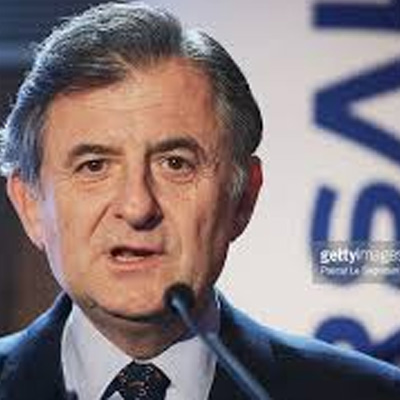
    NEW DELHI: Sell, sell and sell more to get out of debt. Dispose off those businesses that are either not profitable or where the shareholding is in the minority. This seems to be the mantra of Jean-Rene Fourtou, chairman and CEO of the Euro 12.4 billion Vivendi Universal, one of the top media companies in the world.

    “Hopefully, by the end of 2005 there would be almost nil debt left,” Fourtou told indiantelevision.com during a short interview in Delhi. At the time he took over as the chief of Vivendi Universal in July 2002, the company had run up a net debt totaling Euro 35 billion.

    Pointing out that Universal Vivendi would not like to come to India in a big way — its presence here through Universal Music is almost negligible — Fourtou made it clear that the decision is linked to the “problem of counterfeiting and piracy.”

    “It’s not in the interest of India, it’s a real problem. We all have to cooperate (the system in India and global companies like Vivendi) to neutralize the effect of counterfeiting,” Fourtou said. Vivendi operates in 71 countries.

    To hammer in his point, he said that the official market of music, globally, is just one-third of the total music consumed worldwide.

    According to the man, whom Forbes magazine voted as the ‘Businessman of the Year’ in 2002, Vivendi would ideally like to expand business to India as almost 25 per cent of their music sales come from outside Europe. “It’s a market we should be in, but for this huge problem of piracy,” Fourtou added.

    Fourtou was in India in his capacity as the chairman of the International Chamber of Commerce to take part in the proceedings of the Indian chapter of the ICC, which is headed by the Onkar Kanwar, promoter of Apollo Tyres.

    However, Fourtou didn’t want to sound too harsh on India, where the media and entertainment sector is registering a healthy growth and where Vivendi Universal’s competitor Rupert Murdoch’s News Corp has already established a strong presence through Star.

    “It’s not only India, but there are several other countries like Russia where this (piracy) problem is big,” he said, indicating that organized mafia has got into this business as it’s more profitable than peddling drugs and not as dangerous too.

    Asked about the worldwide cost-cutting exercise that he has initiated to bring the company back on track, Fourtou downplayed this aspect by saying, “Cost-cutting is not important. What is important is the cash flow and the
    company should have positive cash flow by 2005,” he explained.

    At the moment, the debts of the company are down to around Euro 12 billion and Fourtou is hopeful that sale of some assets would be able to take care of the rest of the accumulated debts.

    Pointing out that Vivendi Universal has got out of many businesses to focus on some like telephony and entertainment, Fourtou said, “I have 25 more assets to sell this year.”

    Groupe SFR-Cegetel is the No. 1 private telecommunications operator in France with more than 17 million customers as on June 30, 2003. Groupe SFR-Cegetel is the only private operator in France covering all telecommunications activities. Maroc Telecom, a 35 per cent Vivendi Universal subsidiary, is another telephony venture of Vivendi, and is the leader in Morocco.

    Still, Fourtou evaded direct questions on the financial mess created under the reign of the company’s former chairman Jean-Marie Messier.

    Vivendi Universal had to reach a final settlement with the United States Securities and Exchange Commission on a complaint filed by the SEC charging violation of certain US securities laws. In the Consent Decree, Vivendi Universal agreed, without admitting or denying any liability, not to violate certain specified provisions of the US securities laws in the future. Vivendi Universal also agreed to deposit a civil penalty of $50 million into a Sarbanes-Oxley “Fair Fund” to be distributed by the court to certain Vivendi Universal shareholders pursuant to a plan of distribution to be established by the SEC.

    “The board asked Messier to resign,” Fourtou passingly said, while keeping mum that his cost-cutting has resulted in the head of the German operation of Universal Music quitting recently in protest.

    But Fourtou is very upbeat on the alliance struck with General Electric for the merger of NBC and Vivendi Universal Entertainment (VUE) in October last. The new company, to be called NBC Universal, will be 80 per cent owned by GE, while 20 per cent shareholding would be with Vivendi Universal Entertainment.

    “This sort of a merger creates a company that would have many advantages. Even in the movie business that is very cyclical,” Fourtou said.
  • Vivendi posts narrower H1 net loss

    Vivendi posts narrower H1 net loss

    PARIS: French media company Vivendi Universal posted a narrower first-half net loss thanks to fewer exceptional charges and rising operating profits at its telecoms and pay television units today.

    The company, which has been divesting assets to cut debt and is in the midst of selling its US entertainment assets, reported a net loss of 632 million euros compared to a year-earlier loss of 12.31 billion euros. The figure however was worse than the 533 million loss expected by analysts.

    As reported earlier by Indiantelevision.com the company struck a deal with NBC to sell its Universal properties including the theme parks and television stations. The company’s size and shape has changed since the first half of 2002, making comparisons difficult, but the company reported a forecast-beating first-half operating profit of 1.677 billion euros which it said was up 20 per cent on a pro forma basis. Analysts had predicted a first half operating profit of 1.571 billion euros.

  • NBC, Bronfman shortlisted for Vivendi Universal bid

    NEW YORK: It has been two months since Vivendi formally invited bids for Vivendi Universal Entertainment. Initially, the company had claimed that the bids came in fast and furious, but now there are just two parties remaining. They are NBC and the Bronfman Group.
    Vivendi Universal’s board has decided to continue negotiating with the two of them instead of deciding a winner outright. Reports indicate that NBC has the edge because of its media strength and its parent, General Electric.
    However, unlike the Bronfman Group, NBC has not offered cash upfront, of billions of dollars for a debt-burdened Vivendi.
    Whichever way the chips fall, Vivendi will have a substantial minority interest in a US media corporation. Putting a spanner in the works is the fact that Vivendi is looking at an initial public offering for the assets as an alternative to a sale.
    Vivendi’s wants $14 billion for the assets and that is a figure that left many bidders sore. If the sale were to go through it would result in either one of the world’s largest media companies or one of the world’s biggest private equity funds.
    Bronfman’s Group includes Cablevision Systems which is, the main cable TV operator in New York and private equity fund Thomas H Lee Partners.
    Vivendi Universal Entertainment’s assets include the Universal movie studios and theme parks, cable channels.

  • Telepiu taken, DirecTV within grasping distance of Murdoch

    Telepiu taken, DirecTV within grasping distance of Murdoch

    MUMBAI: News Corp chairman Rupert Murdoch looks to be within touching distance of becoming arguably the most powerful media magnate on the planet.
     
     
    The European Union has just given Murdoch’s News Corp the go ahead for buying Italian pay-TV firm Telepiu from Vivendi Universal for $985 million. A new entity Sky Italia will be created by the merger. The all-clear came after News Corp offered concessions including limits of three years on contracts with film studios and two years on contracts with soccer clubs.

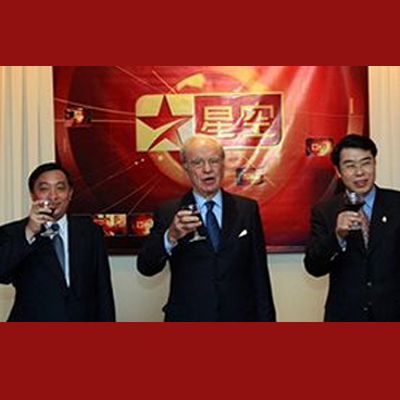
    Will Murdoch be raising a toast soon with his DirecTV success as he did in China sometime back?

    And as far as the far bigger prize of control of long-coveted US satellite pay-TV network DirecTV, which will complete the last major piece of his global satellite ambitions goes, Murdoch’s the only serious bidder left in the fray.

    Murdoch said as much when he told Reuters in California on Wednesday that DirecTV deal was now just a matter of money.

    How much money? Reports say it will cost about $7 billion – less than a third of what Murdoch was thought to be prepared to pay for DirecTV two years ago when he made his initial pitch for Hughes Electronics, which included America’s biggest satellite broadcaster with 9.5 million subscribers. That number had gone up to 11.2 million at the end of 2002.

    It has all worked out well finally for Murdoch who walked away from the DirecTV deal in October 2001, furious over the “betrayal” by the GM board (Hughes is a GM subsidiary).

    Murdoch had reason to feel deceived. After all, he had then to stand in frustration and watch a whole year of tough bargaining go up in smoke after Charlie Ergen’s rival satellite operator Echostar threw its hat in the ring.

    The reasons as to why US regulators blocked Ergen’s bid have been well documented. Suffice it to say that the regulators’ decision followed extensive lobbying from News Corp. What must have really got Ergen’s (a former professional poker player) goat is the fact that not only did he have to finally abandon his takeover bid in December 2002, he also had to pay $600 million in termination fees.

    The four months since Ergen was forced to concede defeat have not been without drama, what with Liberty Media’s John Mallone and US telecoms giant SBC at different times pitching for DirecTV. Malone ultimately backed away from challenging Murdoch, instead opying to back the News Corp bid and upping his own stake in the the company from 17.5 per cent to 19 per cent. And on 2 April SBC dropped out of the bidding.

    It’s not all over though for Murdoch. The fat lady still has to sing what with the money that has to be raised as well as the approvals from antitrust regulators still awaited. But the way events have unfolded, there would be very few who would be willing to put down bets that Murdoch will fail to net DirecTV. And if he does get DirecTV, that would give Murdoch a global network of pay-TV businesses that span the US, Britain, Europe, Asia, Latin America and Australia.

    All bets off?