Tag: Vivek Sarin

  • Ad cap case put off to 1 August, court to hear plea challenging stay order

    Ad cap case put off to 1 August, court to hear plea challenging stay order

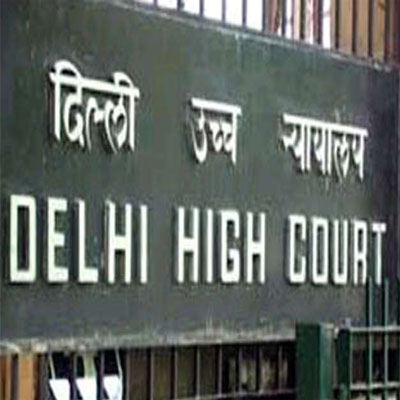
    NEW DELHI: There is clearly no indication to an early resolution to the controversial issue of adcaps on television channels, with yet one more adjournment of the petitions pending before the Delhi High Court, this time to 1 August.

    The matter was put off by chief justice G Rohini and justice Jayant Nath as they did not have time to hear the matter in view of urgent cases.

    When the case comes up next, it is expected to take up an application by intervenor Home Cable Network Pvt Ltd seeking vacation of the order staying action against violating television channels.

    In the hearing on 29 March, a plea was made on behalf of the Information and Broadcasting ministry that a proposal was being contemplated to amend the relevant provision relating to limiting ads to 12 minutes an hour.

    However counsel Vivek Sarin of Home Cable counsel pressed for early hearing of his application for vacation of stay. Thereupon, counsel for Discovery Communications said it wanted to press its application to come in as intervenor. The court had on 11 February agreed to take up the application by Discovery Communications to intervene on the matter.

    Earlier on 27 November last year, the court chaired by the chief justice had said the matter had been pending for some time and therefore it would hear and conclude the case in the next hearing. On that day, the I and B Ministry had informed the Court that it was in talks with the News Broadcasters Association and other stakeholders on the issue of the advertising cap of 12 minutes per hour. This was the first time that the ministry had put in an appearance in the petition filed by the News Broadcasters and others against the Telecom Regulatory Authority of India and others.

    Home Cable Network Pvt. Ltd had been permitted to intervene on 5 January and the Court had agreed to consider contentions on whether pay channels should be permitted to carry commercials in view of subscription fee charged by them. Home Cable Counsel Vivek Sarin had told the court that the petitioners had not disclosed that broadcasters had given their consent to observe the 10+2 ad cap rule under the Cable Television Network Regulation Rules 1994 and the Act that followed a year later and also under the Uplink and Downlink Guidelines. He also said pay TV broadcasters should not be allowed to take ads as they charged subscription fee.

    The case, filed by News Broadcasters Association and others against the Telecom Regulatory Authority of India and the Union Government, has so far been adjourned from time to time on the plea that the government and the broadcasters are in talks on this issue.

    The court has already directed that the order that TRAI would not take any action against any channel pending the petition would continue. In an earlier hearing, the court had, at the regulator’s instance, directed that all channels keep a record of the advertisements run by them.

    The NBA had challenged the ad cap rule, contending that TRAI does not have jurisdiction to regulate commercial airtime on television channels. Apart from the NBA, the petitions have been filed by Sarthak Entertainment, Pioneer Channel Factory, E24 Glamoru, Sun TV Network, TV Vision, B4U Broadband, 9X Media, Kalaignar, Celebrities Management, Eanadu Television and Raj Television.

    Meanwhille, complaints against fifteen broadcasters by TRAI on the ad cap issue are also pending with the chief metropolitan magistrate in Delhi.
  • Ad cap case put off to 1 August, court to hear plea challenging stay order

    Ad cap case put off to 1 August, court to hear plea challenging stay order

    NEW DELHI: There is clearly no indication to an early resolution to the controversial issue of adcaps on television channels, with yet one more adjournment of the petitions pending before the Delhi High Court, this time to 1 August.

    The matter was put off by chief justice G Rohini and justice Jayant Nath as they did not have time to hear the matter in view of urgent cases.

    When the case comes up next, it is expected to take up an application by intervenor Home Cable Network Pvt Ltd seeking vacation of the order staying action against violating television channels.

    In the hearing on 29 March, a plea was made on behalf of the Information and Broadcasting ministry that a proposal was being contemplated to amend the relevant provision relating to limiting ads to 12 minutes an hour.

    However counsel Vivek Sarin of Home Cable counsel pressed for early hearing of his application for vacation of stay. Thereupon, counsel for Discovery Communications said it wanted to press its application to come in as intervenor. The court had on 11 February agreed to take up the application by Discovery Communications to intervene on the matter.

    Earlier on 27 November last year, the court chaired by the chief justice had said the matter had been pending for some time and therefore it would hear and conclude the case in the next hearing. On that day, the I and B Ministry had informed the Court that it was in talks with the News Broadcasters Association and other stakeholders on the issue of the advertising cap of 12 minutes per hour. This was the first time that the ministry had put in an appearance in the petition filed by the News Broadcasters and others against the Telecom Regulatory Authority of India and others.

    Home Cable Network Pvt. Ltd had been permitted to intervene on 5 January and the Court had agreed to consider contentions on whether pay channels should be permitted to carry commercials in view of subscription fee charged by them. Home Cable Counsel Vivek Sarin had told the court that the petitioners had not disclosed that broadcasters had given their consent to observe the 10+2 ad cap rule under the Cable Television Network Regulation Rules 1994 and the Act that followed a year later and also under the Uplink and Downlink Guidelines. He also said pay TV broadcasters should not be allowed to take ads as they charged subscription fee.

    The case, filed by News Broadcasters Association and others against the Telecom Regulatory Authority of India and the Union Government, has so far been adjourned from time to time on the plea that the government and the broadcasters are in talks on this issue.

    The court has already directed that the order that TRAI would not take any action against any channel pending the petition would continue. In an earlier hearing, the court had, at the regulator’s instance, directed that all channels keep a record of the advertisements run by them.

    The NBA had challenged the ad cap rule, contending that TRAI does not have jurisdiction to regulate commercial airtime on television channels. Apart from the NBA, the petitions have been filed by Sarthak Entertainment, Pioneer Channel Factory, E24 Glamoru, Sun TV Network, TV Vision, B4U Broadband, 9X Media, Kalaignar, Celebrities Management, Eanadu Television and Raj Television.

    Meanwhille, complaints against fifteen broadcasters by TRAI on the ad cap issue are also pending with the chief metropolitan magistrate in Delhi.
  • Adcap case put off to 27 April, court to hear plea challenging stay order

    Adcap case put off to 27 April, court to hear plea challenging stay order

    NEW DELHI, 29 March: In a day of swift developments, the Delhi High Court listed the adcap case for 27 April when it will hear an application by intervener Home Cable Network Pvt Ltd seeking vacation of the order staying action against violating television channels.

    Early in the morning, a plea was made in a mention before Chief Justice G Rohini and Justice Jayant Nath on behalf of the Information and Broadcasting Ministry that a proposal was being contemplated to amend the relevant provision relating to limiting ads to 12 minutes an hour. Thereupon, the Court adjourned the matter for 21 July.

    However when the matter came up in the list, counsel Vivek Sarin of Home Cable pressed his application for vacation of stay. Thereupon, counsel for Discovery Communications said it wanted to press its application to come in as intervener.

    After hearing counsel for both sides, the judges agreed on early hearing and pre-poned the matter to 27 April.

    The Court had on 11 February adjourned the hearing to today when it had agreed to take up the application by Discovery Communications to intervene on the matter.

    Earlier on 27 November last year, the Court chaired by the Chief Justice had said the matter had been pending for some time and therefore it will hear and conclude the case in the next hearing.

    On that day, the I and B Ministry had informed the Court that it was in talks with the News Broadcasters Association and other stakeholders on the issue of the advertising cap of 12 minutes per hour.

    This was the first time that the Ministry had put in an appearance in the petition filed by the News Broadcasters and others against the Telecom Regulatory Authority of India and others.

    Home Cable Network Pvt. Ltd had been permitted to intervene on 5 January and the Court had agreed to consider contentions on whether pay channels should be permitted to carry commercials in view of subscription fee charged by them. Home Cable Counsel Vivek Sarin had told the court that the petitioners had not disclosed that broadcasters had given their consent to observe the 10+2 ad cap rule under the Cable Television Network Regulation Rules 1994 and the Act that followed a year later and also under the Uplink and Downlink Guidelines. He also said pay TV broadcasters should not be allowed to take ads as they charged subscription fee.

    The case, filed by 9x Media, News Broadcasters Association and others against the Telecom Regulatory Authority of India and the Union Government, has so far been adjourned from time to time on the plea that the government and the broadcasters are in talks on this issue.

    (It is learnt by indiantelevision.com that this comes in the wake of a statement made by Minister Arun Jaitley in January last year that there should be no ad cap in the print or electronic media, However, no instructions have been issued in this regard by the Minister so far,).

    The Court has already directed that the order that TRAI will not take any action against any channel pending the petition will continue. In an earlier hearing, the Court had, at the regulator’s instance, directed that all channels keep a record of the advertisements run by them.

    The NBA had challenged the ad cap rule, contending that TRAI does not have jurisdiction to regulate commercial airtime on television channels. Apart from the NBA, the petitions have been filed by Sarthak Entertainment, Pioneer Channel Factory, E24 Glamoru, Sun TV Network, TV Vision, B4U Broadband, 9X Media, Kalaignar, Celebrities Management, Eanadu Television and Raj Television.

    Meanwhille, complaints against fifteen broadcasters by TRAI on the adcap issue are also pending with the Chief Metropolitan Magistrate in Delhi.


  • Adcap case put off to 27 April, court to hear plea challenging stay order

    Adcap case put off to 27 April, court to hear plea challenging stay order

    NEW DELHI, 29 March: In a day of swift developments, the Delhi High Court listed the adcap case for 27 April when it will hear an application by intervener Home Cable Network Pvt Ltd seeking vacation of the order staying action against violating television channels.

    Early in the morning, a plea was made in a mention before Chief Justice G Rohini and Justice Jayant Nath on behalf of the Information and Broadcasting Ministry that a proposal was being contemplated to amend the relevant provision relating to limiting ads to 12 minutes an hour. Thereupon, the Court adjourned the matter for 21 July.

    However when the matter came up in the list, counsel Vivek Sarin of Home Cable pressed his application for vacation of stay. Thereupon, counsel for Discovery Communications said it wanted to press its application to come in as intervener.

    After hearing counsel for both sides, the judges agreed on early hearing and pre-poned the matter to 27 April.

    The Court had on 11 February adjourned the hearing to today when it had agreed to take up the application by Discovery Communications to intervene on the matter.

    Earlier on 27 November last year, the Court chaired by the Chief Justice had said the matter had been pending for some time and therefore it will hear and conclude the case in the next hearing.

    On that day, the I and B Ministry had informed the Court that it was in talks with the News Broadcasters Association and other stakeholders on the issue of the advertising cap of 12 minutes per hour.

    This was the first time that the Ministry had put in an appearance in the petition filed by the News Broadcasters and others against the Telecom Regulatory Authority of India and others.

    Home Cable Network Pvt. Ltd had been permitted to intervene on 5 January and the Court had agreed to consider contentions on whether pay channels should be permitted to carry commercials in view of subscription fee charged by them. Home Cable Counsel Vivek Sarin had told the court that the petitioners had not disclosed that broadcasters had given their consent to observe the 10+2 ad cap rule under the Cable Television Network Regulation Rules 1994 and the Act that followed a year later and also under the Uplink and Downlink Guidelines. He also said pay TV broadcasters should not be allowed to take ads as they charged subscription fee.

    The case, filed by 9x Media, News Broadcasters Association and others against the Telecom Regulatory Authority of India and the Union Government, has so far been adjourned from time to time on the plea that the government and the broadcasters are in talks on this issue.

    (It is learnt by indiantelevision.com that this comes in the wake of a statement made by Minister Arun Jaitley in January last year that there should be no ad cap in the print or electronic media, However, no instructions have been issued in this regard by the Minister so far,).

    The Court has already directed that the order that TRAI will not take any action against any channel pending the petition will continue. In an earlier hearing, the Court had, at the regulator’s instance, directed that all channels keep a record of the advertisements run by them.

    The NBA had challenged the ad cap rule, contending that TRAI does not have jurisdiction to regulate commercial airtime on television channels. Apart from the NBA, the petitions have been filed by Sarthak Entertainment, Pioneer Channel Factory, E24 Glamoru, Sun TV Network, TV Vision, B4U Broadband, 9X Media, Kalaignar, Celebrities Management, Eanadu Television and Raj Television.

    Meanwhille, complaints against fifteen broadcasters by TRAI on the adcap issue are also pending with the Chief Metropolitan Magistrate in Delhi.


  • TDSAT asks LCOs on signal source post complaints against Tejpur Cable

    TDSAT asks LCOs on signal source post complaints against Tejpur Cable

    NEW DELHI: The Telecom Disputes Settlement and Appellate Tribunal (TDSAT) has asked Mahabhairab Cable Network and other cable networks to file an affidavit by 27 January disclosing the source of their signals after 31 December, 2015.


    Listing the matter for 29 January, TDSAT chairman Aftab Alam and members Kuldip Singh and B B Srivastava took note of the statement by the LCO counsel Vivek Sarin that his clients were not receiving the signals from Tejpur Cable Networks and others despite the statement by the latter that the signals were being transmitted.


    On the contrary, Sarin said none of the petitioners were receiving any signals from Tejpur Cable post 31 December, 2015 as the latter had removed the nodes through which the signals were being supplied to the LCOs. 


    Earlier, the Tribunal was told that all the LCOs had paid their dues to Tejpur Cable for the month of November 2015 (even though payments were made beyond the date as directed by the Tribunal).


    As far as the dues of subscription fee for December 2015 were concerned, Sarin said only petitioner no.23 was in default. Sarin stated that petitioner nos. 10, 24 and 25 have “merged” and continued their relationship with Tejpur Cable. He further stated that except petitioner no. 23, all other petitioners had paid the subscription fees for December 2015 to Tejpur Cable by 12 January, 2016. 


    Tejpur Cable counsel Sharath Sampath said four among the petitioners – nos.2, 10, 23 and 25 – were in default stated in payment of subscription fees for December 2015. 


    But notwithstanding this, Sampath said Tejpur Cable was continuing the supply of its signals to all the petitioners including the four defaulters.

  • TDSAT asks LCOs on signal source post complaints against Tejpur Cable

    TDSAT asks LCOs on signal source post complaints against Tejpur Cable

    NEW DELHI: The Telecom Disputes Settlement and Appellate Tribunal (TDSAT) has asked Mahabhairab Cable Network and other cable networks to file an affidavit by 27 January disclosing the source of their signals after 31 December, 2015.


    Listing the matter for 29 January, TDSAT chairman Aftab Alam and members Kuldip Singh and B B Srivastava took note of the statement by the LCO counsel Vivek Sarin that his clients were not receiving the signals from Tejpur Cable Networks and others despite the statement by the latter that the signals were being transmitted.


    On the contrary, Sarin said none of the petitioners were receiving any signals from Tejpur Cable post 31 December, 2015 as the latter had removed the nodes through which the signals were being supplied to the LCOs. 


    Earlier, the Tribunal was told that all the LCOs had paid their dues to Tejpur Cable for the month of November 2015 (even though payments were made beyond the date as directed by the Tribunal).


    As far as the dues of subscription fee for December 2015 were concerned, Sarin said only petitioner no.23 was in default. Sarin stated that petitioner nos. 10, 24 and 25 have “merged” and continued their relationship with Tejpur Cable. He further stated that except petitioner no. 23, all other petitioners had paid the subscription fees for December 2015 to Tejpur Cable by 12 January, 2016. 


    Tejpur Cable counsel Sharath Sampath said four among the petitioners – nos.2, 10, 23 and 25 – were in default stated in payment of subscription fees for December 2015. 


    But notwithstanding this, Sampath said Tejpur Cable was continuing the supply of its signals to all the petitioners including the four defaulters.

  • Adcap case on 11 February to consider if pay channels have right to show commercials

    Adcap case on 11 February to consider if pay channels have right to show commercials

    NEW DELHI: The Delhi High Court, which is slated to hear the advertising cap (adcap) challenge case on 11 February, today agreed to consider contentions on whether pay channels should be permitted to carry commercials in view of subscription fee charged by them. 


    In a brief hearing, counsel Vivek Sarin on behalf of Home Cable Network Pvt. Ltd, which has come as an intervenor in the case, also told the Court that the petitioners had not disclosed the fact that broadcasters had given their consent to observe the 10+2 minutes ad cap rule under the Cable Television Network Regulation Rules 1994 and the Act that followed a year later and also under the Uplink and Downlink Guidelines.  


    Defending the plea that pay TV broadcasters should not be allowed to take ads as they charged subscription fee, Sarin wanted the Court to order that offending pay TV broadcasters should deposit the advertisement revenue earned during the period from 17 December, 2013 onwards in the Consumer Welfare Fund maintained by the Union Government.


    He said the Standard of Quality of Services Regulation 2012 and the subsequent amendment of December 2013 was clear that all channels had to observe the adcap.


    However, Sarin also sought to argue that since pay channels charge a subscription fee, they should not be permitted to air ads and even if they do so, then the subscription charges should be adjusted accordingly. He said that the amendment of 17 December, 2013 to the Standard of Quality of Services Regulation should be modified accordingly and the protection given by the subsequent order of 27 November last should also be modified.


    The case, filed by 9x Media, News Broadcasters Association (NBA) and others against the Telecom Regulatory Authority of India (TRAI) and the Union Government, has been adjourned from time to time on the plea that the government and the broadcasters are in talks on the issue.


    Sarin wanted issuance of directions to the TRAI to enforce the 2012 Standards of Quality of Service (Digital Addressable Cable TV Systems) Regulations as amended in 2013 and the provisions of rule 7(11) of the Cable TV Network Rules 1994 against the offending pay TV broadcasters.


    He also sought directions to TRAI and the Union Government to enforce the Clause 5.1 of the Down Linking Guidelines and the undertakings given by the Pay TV Broadcasters under Form A 1 against the pay TV broadcasters.


    In the last hearing in November 2015, the Information and Broadcasting Ministry informed the Delhi High Court that it was in talks with the NBA and other stakeholders on the issue of the advertising cap of 12 minutes per hour on television channels.


    Consequently, the Court put off hearing of the matter to 11 February, 2016 but observed that the matter had been pending for some time and therefore it will hear and conclude the case in the next hearing.


    The intervention application by multi system operator (MSO) Home Cable Network and its head Vikki Chaudhary said it wanted to intervene as it was directly affected by the outcome of the present petition and “the ordinary subscribers are unduly burdened with unjustified charges when the cost of operating the channels can be recovered from the advertisement revenue. The said cost includes notional profits also.”


    The application wanted the NBA petition to be dismissed and added, “The pay channel broadcasters are profiteering at the expense of subscribers and the DPOs. There is no justification for changing monthly subscription when commercial advertisements are inserted. The Standards of Quality of Service (Digital Addressable Cable TV Systems) Regulations 2012 (with Amendments thereafter) is justified to the extent they are applicable to pay channels. The pay channel broadcasters cannot charge the subscription fee while inserting commercials into the content or in the alternative, the subscribers have to be compensated for the revenue earned on the basis of their being subscribers of the channels.”


    In the last two hearings on 8 and 23 September, the NBA had sought the adjournment on the ground that the matter was under discussion with the Ministry to seek certain clarifications.


    It is learnt by Indiantelevision.com that this comes in the wake of a statement made by I&B Minister Arun Jaitley in January last year that there should be no ad cap in the print or electronic media, However, no instructions have been issued in this regard by Jaitley so far.


    The Court in an initial hearing of this case directed that TRAI will not take action against any channel violating the ad cap rule until the hearing of petition is over. The Court has since reiterated that this order will continue. In an earlier hearing, the Court had, at the regulator’s instance, directed that all channels keep a record of the advertisements run by them.


    The NBA had challenged the ad cap rule, contending that TRAI does not have jurisdiction to regulate commercial airtime on television channels. Apart from the NBA, petitions have been filed by Sarthak Entertainment, Pioneer Channel Factory, E24 Glamour, Sun TV Network, TV Vision, B4U Broadband, 9X Media, Kalaignar, Celebrities Management, Eenadu Television and Raj Television.

  • Tariff Hike Case: SC rejects appeal challenging TDSAT order; asks TRAI to out new tariff

    Tariff Hike Case: SC rejects appeal challenging TDSAT order; asks TRAI to out new tariff

    NEW DELHI: Dismissing the appeal challenging an order of the Telecom Disputes Settlement and Appellate Tribunal (TDSAT) setting aside the amendments in two tariff orders, which had sought to put an inflation-linked hike of 27.5 per cent on addressable and non-addressable systems, the Supreme Court today asked the Telecom Regulatory Authority of India (TRAI) to come up with new tariff as early as possible.

    The Court also said that the multi-system operators (MSOs) will not insist on a refund of their payments to broadcasters but will wait for the new tariff orders.

    Thus, the apex Court held intact the 28 April order of the Tribunal holding as ‘untenable’ the Telecommunication (Broadcasting & Cable) Services (Second) Tariff (Eleventh Amendment) Order, 2014’ and ‘The Telecommunication (Broadcasting & Cable) Services (Second) Tariff (Thirteenth Amendment) Order, 2014’.

    Appellants Indian Broadcasting Foundation (IBF), Star India, Vijay Television, Viacom18 and Sun TV had sought stay on the ground of wholesale price index. They also sought to argue that there was consultation prior to issuance of the Tariff orders, which they said were not strictly Tariff orders.

    While the appellants were represented by senior advocates Kapil Sibal and Abhishek Manu Singhvi, the defendant Home Cable Network Services Pvt Ltd and Vikki Choudhary were represented by senior counsel Aman Lekhi and Vivek Sarin.

    When the appellants late last month sought early hearing, the Court asked TRAI not to give effect to its direction asking broadcasters to roll back the 27.5 per cent tariff hike for non-addressable areas until the next hearing. The regulator had on 27 July asked broadcasters to revise their wholesale tariffs, even though it had noted that the Supreme Court had declined to stay the TDSAT order.

    In its order, TDSAT had said TRAI “will be well advised to have a fresh look at the various tariff orders in a holistic manner and come out with a comprehensive tariff order in supersession of all the earlier tariff orders.”

    “While doing so, it may consider all the agreements and relevant data available with it. It may consider differentiating between content which is of a monopolistic nature as against that the like of which is shown by other channels also.”

    “It may also consider classifying the content into premium and basic tiers. It may identify the major cost components so that increase or decrease in such costs may be suitably factored while working out the inflationary hikes. Increase in costs of such components as may be available in indexes such as Wholesale Price Index (WPI), GDP deflator etc. can then be applied. While working out the tariffs, the effort should be to encourage a correct declaration of SLR. While carrying out the exercise, it may take the inputs from various stakeholders and give a reasoned order for accepting or rejecting the same. We want to be amply clear that the above are only some suggestions and TRAI being an expert body may arrive at suitable tariffs independently; it is up to it to consider the above and/or any other factors,” the Tribunal said.

    The IBF had come in as an intervener while the other interveners were direct to home (DTH) operators, MSOs, Association of Cable Operators and cable operators.

    TRAI had allowed a 15 per cent hike from 1 April, 2014. The second installment of 12.5 per cent tariff hike came into effect from 1 January, 2015.

    TRAI said the inflationary increases given by it were based on increase in the WPI. In the Explanatory Memorandum with the Second Amendment to the Principal Tariff Order, it was explained that for making adjustments for inflation WPI had been used. It was explained that Consumer Price Index (CPI) was not used as latest information for this was not available and further this related to certain specific consumption baskets. As per the Explanatory Memorandum to the impugned Tariff Order, the WPI has increased by 43.69 per cent and giving a pass through of 63 per cent, an inflation linked increase of 27.5 per cent is allowed.