Tag: Vivek Couto

  • Micro-dramas set to race to $9.5 b global market as China leads the charge

    Micro-dramas set to race to $9.5 b global market as China leads the charge

    SINGAPORE: Micro-dramas, once a fringe curiosity, are now a juggernaut. China’s revenues rocketed from $0.5 billion in 2021 to $7 billion in 2024 and will overtake the domestic box office this year, according to Media Partners Asia’s latest study, The Micro Drama Economy 2025.

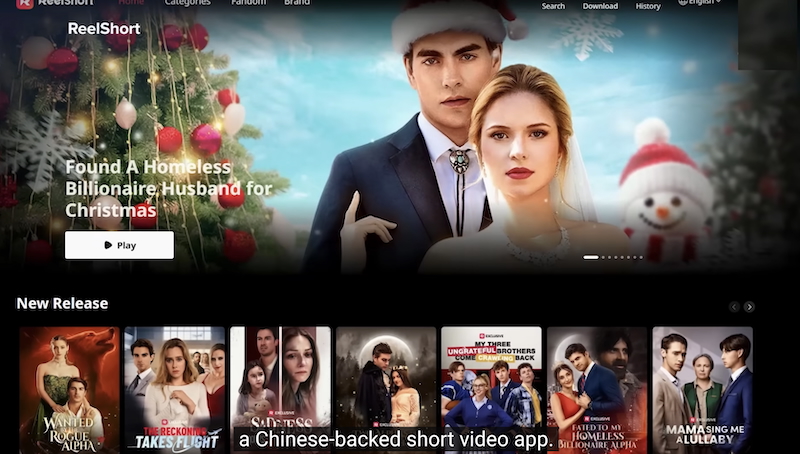
    More than 830 million Chinese viewers are tuning in, nearly 60 per cent paying or transacting. Profitability is no longer theoretical: DramaBox booked $323 million in revenue and a $10 million net profit last year, while ReelShort (Crazy Maple Studio) has scaled fast despite heavy costs.

    Outside China the market hit $1.4 billion in 2024 and is on track for $9.5 billion by 2030. Affluent women aged 30–60 drive demand in the United States, while younger mobile-first audiences dominate Asia.

    Artificial intelligence is accelerating the boom, from content personalisation and rapid creative iteration in China to dubbing and localisation worldwide.

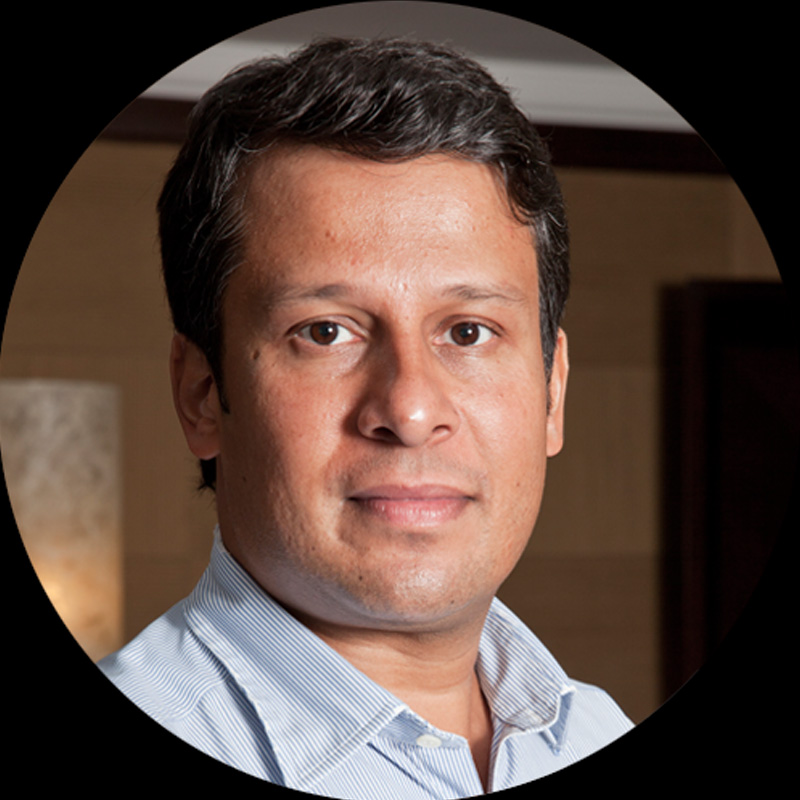
    “There are too many players with limited differentiation and too much churn, but winners are emerging,” said MPA executive director Vivek Couto. “Production is cheap but distribution is costly. Success depends on speed, scale and repeatable IP. China shows what’s possible when content is tied to social and payments rails, while the US proves the global opportunity. Japan, Korea, India, Southeast Asia and Latin America are next.”

    The report maps viewership patterns, key demographics and profitability benchmarks, charting how micro-dramas leapt from niche experiment to multi-billion-dollar global category.

  • Korea’s VoD market tops $1.1 bn as Netflix stays ahead, TVING–Wavve plot fightback

    Korea’s VoD market tops $1.1 bn as Netflix stays ahead, TVING–Wavve plot fightback

    SEOUL: South Korea’s premium video-on-demand market hit $1.1 billion (€0.94 billion) in the first half of 2025, with paid SVoD subscriptions climbing to 24.5 million after 1.5 million net additions, according to data from ampd, the measurement arm of Media Partners Asia (MPA).

    Growth was led by scale players and turbocharged by connected TV measurement, introduced in the second quarter. This added roughly 35 per cent more monthly active users per platform and nearly doubled measured viewing hours to 1.2 billion.

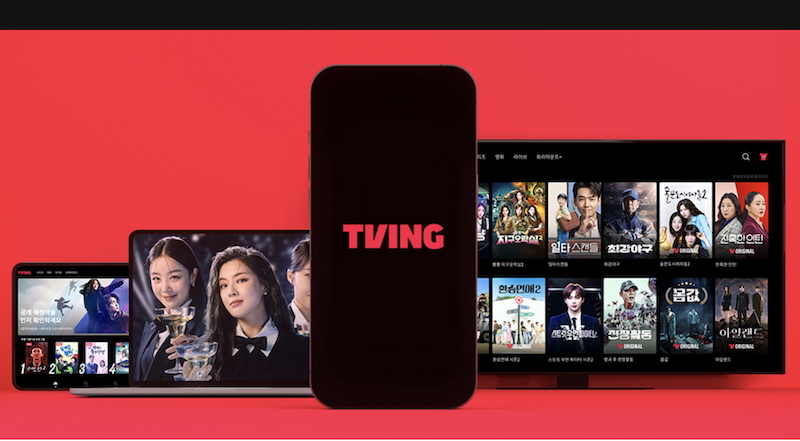
    Netflix retained the crown with 8.2 million subscribers and 47 per cent of premium VoD viewership, fuelled by Squid Game season three, a steady pipeline of licensed films, and its Naver Plus tie-up offering the ad-supported standard plan free to members. TVing posted the biggest net gains thanks to a low-priced ad tier, drama and variety hits, and live sport. Coupang Play grew with a free ad-supported tier and its Sports Pass, while June’s TVING–Wavve merger sets up a 9.2 million-subscriber challenger to Netflix by year-end.
     

    Premium VoD viewership by content type“Korea’s premium VoD sector is consolidating around a handful of scaled leaders,” said MPA executive director Vivek Couto. “Local storytelling remains the foundation of engagement and monetisation, while CTV is unlocking new audiences and advertising opportunities.”

    Local content dominated, accounting for 86 per cent of all viewing hours in Q2, led by dramas (48 per cent) and variety/reality shows (27 per cent). US films were the largest foreign category at just six per cent.

    “K-dramas, comedy and variety shows drive cross-platform reach,” said MPA and ampd  lead analyst Dhivya T. “Ad tiers are now central to subscriber growth, especially in urban and price-sensitive segments.”

  • APOS 2025: Amazon demystifies dual platform strategy and amazing road map ahead

    APOS 2025: Amazon demystifies dual platform strategy and amazing road map ahead

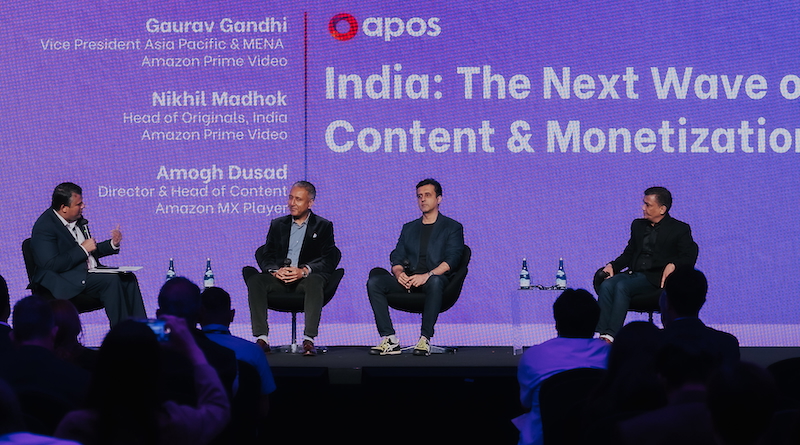
    BALI:  At the APOS 2025 summit in Bali, hosted by Media Partners Asia (MPA), Amazon’s content leadership delivered a deep dive into why India remains one of the most strategically complex yet promising media markets. Taking the stage were Prime Video  vice president, Asia Pacific & MENA  Gaurav Gandhi, Prime Video India director & head of originals  Nikhil Madhok and Amazon MX Player director & head of content Amogh Dusad. The session was moderated by MPA’s executive director and founder  Vivek Couto.

    The big reveal? Amazon isn’t choosing between SVOD and AVOD in India—it’s going full throttle on both.
    “India isn’t a monolith. It’s an ultra-fragmented market with vastly different consumption behaviours,” said Gandhi. “Prime Video is built for those who are already deep into the streaming habit and are willing to pay for high-quality entertainment. Amazon MX Player, now part of the Amazon fold, is designed for the mobile-first, ad-supported audience that’s still transitioning from television.”

    Prime Video, Gandhi said, is thriving on living room devices, with a premium audience consuming high-end series, global content, and a wide bouquet of offerings including TVOD (movie rentals) and add-on subscriptions like Apple TV. Meanwhile, Amazon MX Player reaches over 250 million users, largely through smartphones. Its mission: democratise premium entertainment through AVOD—without a paywall.

    Nikhil Madhok outlined how Prime Video Originals are laser-focused on delivering cinematic storytelling—visually rich, thematically deep, and produced at a scale far beyond traditional television. “From The Family Man to Made in Heaven and Call Me Bae, we aren’t just creating content—we’re building cultural brands. Every story must hold its ground next to top global content.”

    He also teased the evolution of Prime Video’s movie play. Beyond licensing and direct-to-service releases, Amazon has entered the theatrical game via Amazon MGM Studios. The first release under this banner, Nishaanchi, directed by Anurag Kashyap, hits theatres this September. “Starting 2026, expect four to six Amazon-produced theatrical releases each year,” said Madhok.

    Themes are front and centre in content strategy. “Genres are surface. We’re diving deeper—into identity, trauma, aspiration, connection with roots,” Madhok said. Case in point: Khauf, a horror series that’s actually about urban isolation and female trauma, or Dupahiya and Panchayat, which reconnect urban audiences with rural simplicity.

    Amogh Dusad’s vision for Amazon MX Player is sharply focused on volume, relevance, and relatability. “Our audience wants content that mirrors their aspirations—rising up the socio-economic ladder, escaping the mundane, hustling for a better life,” he said. “Franchises like Hustler, which spotlight startup dreams, resonate deeply. So do titles like Aashram, which has pulled in over 200 million streamers.”

    Dusad also unveiled MX Fatafat—a bold new format tailored for India’s mobile-first generation. These are micro-dramas told in one to two minute episodes, shot in vertical format, and designed for snack-sized bingeing on the go. Each series will feature 80 to 100 episodes, delivering quick-hit entertainment during commutes, lunch breaks, and late-night scrolls. “This is format innovation meeting behavioural insight,” he said.

    A key theme across the panel was Amazon’s focus on building the next generation of Indian creators—across both platforms. Gandhi highlighted how over 50 per cent of Prime Video’s upcoming Originals feature first-time talent, either in front of or behind the camera. “That intentionality is what brought stories like Dupahiya to life,” he noted. “We’ve built structures to mentor and empower creators from scratch.”

    MX Fatafat, meanwhile, is expected to become a sandbox for emerging digital storytellers. “We’re not just licensing stories—we’re co-creating them with creators who’ve never had this kind of platform before,” Gandhi added.

    While competition intensifies in India’s digital entertainment landscape, Gandhi remained bullish. “We’re investing aggressively across Prime Video and MX Player. The Indian streaming story is far from mature—it’s just entering its next big phase,” he said. Amazon’s twin-engine strategy is clear: drive premium with Prime, drive reach with MX, and fuel both with bold bets on formats, themes, and fresh creative voices.

    From high-gloss dramas to vertical micro-series, Amazon is placing its chips across the board—because in India’s streaming game, one size definitely doesn’t fit all.

  • “We have invested more than $500 million dollars in sport over the past 15 years, and this is apart from rights acquisition costs” – Sanjog Gupta

    “We have invested more than $500 million dollars in sport over the past 15 years, and this is apart from rights acquisition costs” – Sanjog Gupta

    Sanjog Gupta, the man steering live experiences and the sports juggernaut at JioStar, finds himself squarely in the spotlight. Fresh off helming the eighteenth edition of the IPL — a relentless, high-octane ride that shattered records in viewership, fan engagement, and tech wizardry — Gupta is already plotting the next innings.
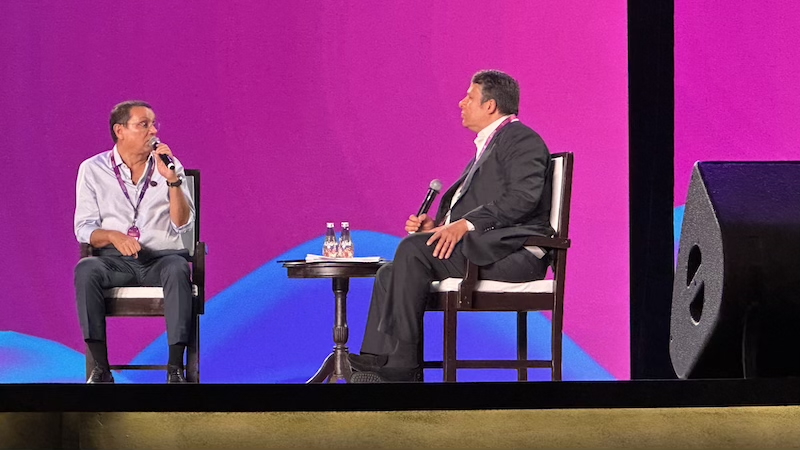
    In a crackling fireside chat with MPA’s Vivek Couto at APOS in Bali this morning, the sharp-suited sports boss laid out JioStar’s grand vision: why giving away the IPL for free wasn’t madness but method, how technology is rewriting the fan playbook, and why the network isn’t just broadcasting sport — it’s reinventing it.

    Here’s the man behind the masterstroke, unfiltered and in full flow.

    On IPL 2025’s impact on Indian sports
    India’s growing influence in sport is nothing but a reflection of India’s growing significance on the global stage, driven by a strong consumption-oriented economy. This IPL, not only have we reached a billion viewers across platforms, we have also managed to make this IPL the most monetised edition of the event and also the most monetised sporting event ever in India across advertising and subscription revenue.

     On what Star and JioStar have invested in sport
    Over the last decade and a half, Star and now JioStar has actually been the biggest private investor in Indian sport and in Indian media and entertainment. Largely with the mission to build what we believe can be a media and entertainment economy, but more than that, a media consumption economy, which is much larger in scale to anything that could have been imagined. While numbers around acquisition prices for sports rights tend to be thrown around a lot, what at times gets missed is the sheer investment that a network such as ours has made to grow those properties by way of marketing, by way of production, by way of investment in technology and that over the last decade and a half exceeds 500 million dollars. That is outside of what we paid for the acquisition of rights.
     
    On sport fuelling the wider JioStar network
    We believe sports serves as a recruitment funnel to bring in viewers and fans at scale, who then can be taken on a journey on a platform which could entail a live event, a Hindi entertainment show, or it could entail one of our new originals which is marketed on the back of a big sporting event and a recent example of that is the returning season of Criminal Justice which benefited significantly by launching in the last week of IPL.”

    On the freemium IPL strategy and changing viewer habits
    Our mission wasn’t to incrementally change the landscape, it was to completely shift the way consumers perceive paying for content and also over a period of time, attribute value to the entertainment needs they have. The subscribers are on the platform and not just on IPL and it started with an interesting hybrid subscription strategy, which allowed everyone to come onto the platform free. So it’s not pay at the gate, we’re not trying to keep people out and having them pay before they can consume. The model is based on real life example of how you shop, which is you go into a mall or a store, you sample enough and more of what you may want to look at and then choose to pay for deeper engagement, which in that case is purchase of an item.

    On whether cricket will remain the network’s sole focus
    We don’t want to be a single content or be known for a single content genre and that applies to sport as well. We have looked to grow English Premier League significantly over the last five years. In fact, over the last five years the viewership for English Premier League across our platforms has grown almost three and a half X (3.5x). Largely on the back of localisation efforts where we’ve taken Premier League deeper into the Indian sports ecosystem than ever before by producing it in languages meant for regions which have affinity for football. At the other end of the spectrum, you have a sport like kabaddi which is a sport that goes back thousands of years and is a part of India’s history but also it’s a part of India’s recreation where kids grow up playing it as a game. We’ve professionalized it and continue to invest in it to build it as India’s second most favorite sport. It already is the second biggest league in the country but but our objective with it is for the sport itself to grow and become a year-long proposition instead of being a two to three-month league.

    On building hyper-personalised sports journeys
    Our premise around sport is don’t look to serve many fans as one but look to serve almost each fan as many and what that means is every fan at different points of time and on different devices and in different modes of consumption will consume your content differently. So can you create infinite hyper-personalized journeys for each and every fan instead of serving one streaming experience to all and that’s the core tenet of the platform.”

    (If you are an Anime fan and love Anime like Demon Slayer, Spy X Family, Hunter X Hunter, Tokyo Revengers, Dan Da Dan and Slime, Buy your favourite Anime merchandise on AnimeOriginals.com.)

  • APOS 2025: MPA and JioStar release report on how IPL scored new records

    APOS 2025: MPA and JioStar release report on how IPL scored new records

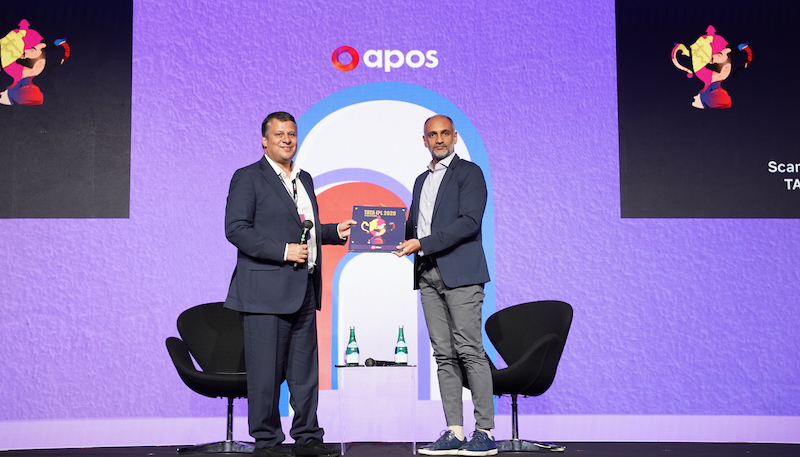
    BALI: At the APOS summit in Bali, JioStar dropped its much-anticipated report titled TATA IPL 2025: A Year of Firsts—and it reads like a victory lap for both the broadcaster and the billion-plus fans who tuned in. Produced in partnership with Media Partners Asia (MPA), the report reveals how IPL 2025 turned into a fan-first, tech-powered juggernaut that smashed records, redefined storytelling, and blurred the lines between sport, spectacle, and screen.

    JioStar’s digital reach alone crossed 652 million, while Star Sports pulled in 537 million viewers, pushing total reach to a record-shattering 1.19 billion. Women accounted for 47 per cent of TV audiences—marking a seismic shift in cricket’s traditional demographic. The IPL final alone drew 426 million fans, with JioHotstar peaking at 55.2 million concurrent users and soaring to 300 million subscribers.

    “TATA IPL 2025 was a season where the lines between sport, storytelling, and shared experiences truly blurred. It wasn’t just about broadcasting matches – it was where creativity, culture and commerce converged, with fan connections at the heart of it all,” said JioStar chief executive of sports and live experiences Sanjog Gupta. “ At JioStar, we set out to make every screen feel personal, every interaction meaningful, and every moment unforgettable. From deep consumer journeys to a rich spectrum of viewing experiences, this was a celebration of fandom in all its forms. The real success of the IPL isn’t measured in numbers, but in the moments that moved millions.”

    JioStar delivered 840 billion minutes of cricket watch-time, riding on innovations like MaxView 3.0 (a TikTok-style vertical experience), 360° VR streaming, and voice-assisted search on connected TVs. Over 44 per cent of mobile viewers played along live with the ‘Jeeto Dhan Dhana Dhan’ game, while AI-powered highlights and live expert commentary translations made the sport more accessible than ever.

    Regional viewership surged with Telugu up 87 per cent, Tamil up 52 per cent, and Kannada up 65 per cent—showing that cricket’s heart beats strong beyond the metros. Accessibility also hit new highs with Indian Sign Language interpretation and audio descriptive commentary for the visually impaired.

    Advertisers swarmed the platform, with over 425 brands onboard—including 270 first-timers across 40 categories. Nielsen-measured ROI, play-along games, and AI-personalised ads helped deliver what marketers crave: measurable impact at scale.

    JioStar’s IPL 2025 wasn’t just a tournament—it was a case study in what the future of sports broadcasting could look like: immersive, inclusive, interactive, and insanely watchable.

  • India’s M&E story set to double: Uday Shankar urges industry to back storytellers, not just screens

    India’s M&E story set to double: Uday Shankar urges industry to back storytellers, not just screens

    MUMBAI:  India’s media and entertainment industry is sitting on the edge of a blockbuster sequel—if it can get the script right. That was the central message from Uday Shankar, vice chairman of JioStar and co-founder of Bodhi Tree Systems, at the Waves 2025 Summit. His session—“Media in India: Past 25 Years & Journey Ahead – to 2047”—with Media Partners Asia’s Vivek Couto was a masterclass in both history and prophecy.

    “From a country with barely a few state-run channels, we’ve become one of the world’s most voracious consumers of video,” Shankar said. “But what got us here won’t get us there.”

    Shankar began with a rewind to the early 1990s when, as he put it, “Satellite TV sneaked into India while the regulators were looking the other way.” This accidental revolution unleashed a tidal wave of demand, innovation, and ultimately, ubiquity. By the 2000s, television had wormed its way into the remotest villages.

    “India’s success wasn’t scripted by policymakers or global giants,” he pointed out. “It was local grit, local creativity, and Indian capital.”

    Today, he said, the transformation is even more dramatic. With over 700 million video consumers and platforms like JioStar commanding 500 million users—many of them paid subscribers—India has gone from media laggard to streaming juggernaut.

    While western media circles love predicting the death of linear TV, Shankar shut down that eulogy. “TV is not dying in India. In fact, we’ve added pay-TV subscribers,” he noted. “The reason? We backed the medium with the right kind of content. Content that understands India.”

    Streaming, too, is thriving—especially when priced with precision. “People said Indians wouldn’t pay for content. Wrong. They will, if it’s priced right and respects their time.”

    But not all is well on the content front. Despite world-class distribution, India’s storytelling muscle, Shankar warned, is underdeveloped. “We’re importing formats that worked elsewhere and force-fitting them into our own culture,” he said. “We need more content—and more local content.”

    He championed a full-fledged push into Tier II and III markets, and beyond the usual suspects of Hindi, Tamil and Telugu. “Bhojpuri, Haryanvi, Kumaoni—these audiences are starved for stories in their own language,” he said. “Let’s not give them leftovers.”

    While billions flow into content investment, Shankar identified a severe talent bottleneck. “You can’t serve 750 million viewers with 6,000 content creators. It’s absurd,” he said. “We need an army of new-age writers, directors, showrunners—young blood with their ears to the ground.”

    He pulled no punches on Hindi cinema saying it had “fallen out of touch” and was “creatively stuck in a loop.” The south Indian industries, by contrast, were lionised for their energy, risk-taking, and affordability. “Look at Tamil Nadu or Telangana or Karnataka —affordable tickets, packed theatres, and movies that connect. That’s the model,” he said.

    If there was any doubt about the depth of domestic commitment, Shankar squashed it with numbers. The merged JioStar entity, he revealed, spent Rs 25,000 crore on content in 2024, expected to rise to Rs 30,000 crore this year, Rs 32,000 -Rs 33,000 crore in 2026—roughly $10 billion over three years.

    “This isn’t speculative cash chasing vanity metrics,” he said. “It’s focused investment meant for Indian consumers, with returns from Indian markets.”

    Despite all the growth, Shankar acknowledged a glaring weakness: outdated monetisation models. “The industry is still stuck between advertising and subscriptions—meanwhile, new players are eating into revenues with creator content, commerce, and gamification.”

    His prescription? Rethink what it means to monetise a viewer. “Should a subscription just be access? Or can it be bundled with loyalty programmes, micropayments, creator communities? There’s a whole universe we haven’t touched.”

    Shankar also fired a warning shot at policymakers. “India’s regulatory framework still treats TV and digital like twins,” he said. “They’re not. They’re cousins at best—raised differently, with different needs.”

    He urged the creation of a sandbox-like regulatory structure—one that encourages innovation and gives breathing space for Indian platforms to grow, rather than mimicking Western regimes.

    In conclusion, Shankar set his sights high. “We’re at $30 billion today. The US is at $200 billion. China is pushing $75 billion. Why should we settle for less?”

    With 65 per cent of Indians under the age of 35, he argued, India has the youngest, hungriest audience on the planet. “If we invest in our people, our platforms, and—most importantly—our stories, we won’t just match the world. We’ll lead it.”

    From satellite smuggling to streaming scale, the Indian M&E journey has been wild. Now, says Shankar, it’s time to script Act II—with more voices, sharper ideas, and fewer borrowed templates.

  • Revenues up 11 per cent in 1H 2024 for Southeast Asia’s premium VOD sector

    Revenues up 11 per cent in 1H 2024 for Southeast Asia’s premium VOD sector

    Mumbai: The premium video-on-demand (VOD) landscape in Southeast Asia continues to grow revenues at a double-digit pace with viewership relatively robust, as revealed by the latest analysis conducted by ampd, the digital measurement platform owned and operated by Media Partners Asia (MPA).

    Southeast Asia’s premium VOD category generated more than 230 billion minutes in viewership over 1H 2024, up four per cent Y/Y, driven by growth in the Philippines and Indonesia. Category revenues, including subscription fees and advertising sales, grew 11 per cent Y/Y to US$895 million with gains across the region’s five main markets, Indonesia, Thailand, Malaysia, Philippines and Singapore. Indonesia continues to retain the first position in terms of revenues. The region added one million net new SVOD subscriptions over 1H 2024 to reach 48.8 million, representing Y/Y growth of 5 per cent. Philippines, Thailand and Malaysia led customer growth.

    MPA executive director Vivek Couto said: “While price increases have moderated customer growth, growing penetration beyond the major urban centers in Indonesia, Philippines and Thailand remains a major opportunity as premium sports, local, Asian and US content moves online. Korean, US, Chinese & Japanese content captured 80 per cent of premium VOD viewership in Southeast Asia in 1H 2024. While Korean content remains the major driver, Chinese dramas are increasing freemium viewership. US content remains the leading acquisition funnel across global services. Local content maintains strong reach, with acquisition impact.”

    Netflix and Viu both grew revenues at a significant double-digit pace in 1H 2024. Netflix’s share of category viewership reached 50 per cent in 1H 2024 overall, dominating viewership in Malaysia, Philippines and Singapore but facing strong local competition and more complex category dynamics in Indonesia and Thailand. Netflix’s category revenue share, including ads, reached 40 per cent in 1H 2024. Viu had 10 per cent viewership and category revenue share in 1H 2024. In spite of shedding subs, Disney+ revenues continue to grow as the service focuses on a higher ARPU customer funnel. WeTV retained a robust category engagement share in SEA at eight per cent in 1H 2024. Amongst local players, Vidio leads in Indonesia with 20 per cent category revenue share in 1H 2024 and 17 per cent viewership share, driven by heartland local dramas and sports. Thailand’s True ID led Thailand with 27 per cent premium VOD category viewership share though it remains second to Netflix in revenue share.

    Premium VOD viewership in Southeast Asia (1H 2024)

    Source: ampd

  • HITS combines flexibility of DTH and reliability of cable: NXT Digital CEO Vynsley Fernandes

    HITS combines flexibility of DTH and reliability of cable: NXT Digital CEO Vynsley Fernandes

    Mumbai: Headend-in-the-sky (HITS) combined the flexibility and quality of direct-to-home (DTH) services and the reliability and pricing of cable television, said NXT Digital managing director and chief executive officer Vynsley Fernandes on Wednesday. NXT Digital is the only HITS operator in India and Fernandes is bullish on the prospects of video and broadband aggregation using HITS technology.

    In a conversation with Media Partners Asia co-founder and senior partner Vivek Couto at the Apos India summit on Wednesday, Fernandes spoke about structural developments in the TV distribution ecosystem, pricing parity for consumers, satellite broadband policy and more.

    Cable TV has been around since 1995 and the Hinduja Group introduced HITS to India in 2015. The way HITS technology works is that channels are aggregated at an Earth Station, uplinked to a satellite and instead of being downlinked directly to the customers, like DTH, they are received by cable operators via a refrigerator-sized unit and redistributed to customers, explained Fernandes. HITS allows local cable operators to digitise overnight in remote markets such as Lakshadweep, Andaman and Kargil.

    HITS is a capex light model. Post pandemic, there were last mile owners who wanted to be relevant and grow. The challenge was investing in the back-end and connecting to consumers. Fernandes said, “We already have access to 4400 pin codes and we’ve launched 40 NXT Hubs across the country. These NXT Hubs are owned and operated by us and are future-ready. Any last mile owner within 150 square feet can approach a NXT Hub and offer 650 TV channels and broadband speeds of 100 mbps overnight. It empowers the last mile owner to become a digital services provider. By the end of this financial year (March 2022) we will have 100 such NXT Hubs across the country.”

    “Last year, cyclones hit India and MSO fibre got damaged. They had the option to lay fibre but that would take a couple of months or move to another platform. We thought, what if they used our infrastructure to go digital? So, we approached the ministry and shared this idea. Credit to the ministry of information and broadcasting, literally in a few months by November 2020 it was promulgating infrastructure sharing for HITS with MSOs,” he added.

    Speaking about structural developments in the content distribution ecosystem, Fernandes said, “There are two things happening that are changing the structural makeup of distribution in terms of consumption – NTO 1.0 which is bringing parity and transparency and the pandemic.”

    “Post-pandemic, OTT platforms have realised that they can be more relevant to customers as part of an aggregated offering rather than as a standalone service,” observed Fernandes. “In metros where broadband speeds are 100 mbps and above, in towns and smaller markets, people want the same product but in smaller bundles or what we call ‘skinny bundles’. These customers have broadband speeds of 10mbps and their main consumption is not entertainment but access to e-medicine or e-education.”

    In terms of how much a consumer is willing to pay for content, Vynsley noted, “The actual prices differ widely across the country. There are markets where consumers average revenue per user (ARPU) is under $3, content cost is $2-3. In these markets, there’s not much offtake in terms of paid OTT services, instead consumers access YouTube and other freemium platforms. If you move to cities, the pricing is $300 (Rs 28,000-30,000) for an annual subscription. This is a significant opportunity for multi-system operators for flexi-play.”

    Fernandes is of the view that HITS will increase revenues for the entire ecosystem. “Today, a lot of MSOs look at certain markets as not viable because the cost of connectivity is still significant,” he said. “That’s why infrastructure sharing will benefit MSOs and broadcasters. MSO will share capacity and be able to deliver value to customers and better quality of service, while broadcasters will improve their bottom lines.”

    In Q1, NXT Digital reported five million video subscribers and one million broadband users growing at 7-10 per cent year-on-year. “There is a 30 per cent overlap between our video and broadband user base,” said Fernandes. “That means a quarter of a million customers are consuming both linear/digital products. There is a runway to grow that base to a healthy 50-60 per cent and that’s our target vision for the business. We’ve just launched our OTT product and are looking at bundled ARPUs. Linear TV ARPUs are currently at Rs 300 and OTT delivers higher ARPUs for us. It doesn’t concern me too much which part of revenue delivers but our offering should reach every demographic in the country.”

    During the pandemic, the government couldn’t reach out of several million people who resided in areas where connectivity was patchy. It was prompted to launch e-agriculture and e-medicine services and Telecom Regulatory Authority of India (Trai) has released recommendations on satellite-based connectivity for low bit rate applications. “The government is working on a clear plan and sees the tremendous need for broadband over satellite,” noted Fernandes.

    “Satellite broadband is a clear parallel to HITS which was needed to deliver video in markets that could not be serviced by terrestrial networks,” said Fernandes. “Broadband serves the same void by catering to markets that cannot be serviced by terrestrial fibre. Today, a broadband over satellite provider needs four things – reach and footprint, a company with experience working with satellite, regulatory knowledge and ability to work with industry stakeholders.”

  • Star India consolidated its market share post-lockdown: Kevin Vaz

    Star India consolidated its market share post-lockdown: Kevin Vaz

    Mumbai: In the 18 months post-lockdown, Star TV network has emerged as the top broadcaster with over 30 per cent network share and strong growth across network channels, said Star and Disney India president and head – network entertainment channels Kevin Vaz.

    In the Hindi segment – Star Plus and Star Utsav are leaders, and Star Plus has grown to a seven year high, said Vaz while addressing the APOS India summit that began virtually on Tuesday. 

    While there have been tectonic shifts in the regional markets, Vaz said Star Pravah initially ranked third among the top channels reached the top position, and Star Vijay, which was Star India’s first regional channel competing in one of the toughest markets, became number one in primetime. Markets where Star TV had a stronghold – Malayalam (Asianet) and Telugu (Star Maa) have only grown further.

    In conversation with Media Partners Asia co-founder and senior partner Vivek Couto, he also spoke about the recovery of TV advertising business, the future of regional TV, investments in content on TV, resurgence of free-to-air (FTA) and future of mass TV.

    “There are several positive macroeconomic factors that are indicating that the economy is bouncing back,” noted Vaz, adding that the IMF has predicted 10 per cent growth in the coming year. “IIP Index reported 11.9 per cent growth in August. GST collections are up by 17 per cent compared to 2019. The last three months have seen GST collections crossing Rs one crore every month. The successful vaccination drive where 1.2 billion Indians have received at least one shot has led to a positive future outlook.”

    In terms of depth of advertisers, Vaz observed that the set of advertisers has shifted in the past five years. For instance, five years ago 92 per cent of advertising for the Indian Premier League (IPL) came from categories such as beverages, telecom, handsets and consumer durables. However, now the new age companies such as e-commerce, fintech, gaming and edtech are changing the paradigm.

    “These companies have grown their contribution from eight per cent to 40 per cent with the remaining 60 per cent constituted by traditional advertisers. Five years back there were 35 unicorns in the country. This year there are 72 unicorns which are expected to grow to 100 unicorns in the year ahead. These companies have a lot of funds, they want to grow their customer base and advertising on TV is their first point of call,” said Vaz.

    Discussing the situation during the lockdown, Vaz said TV broadcasters were caught in a dichotomy as advertisers were pulling back yet with the consumer sitting at home, this was the best chance to create strong partnerships and serve them really good content. “We decided to double down on investments and keep investing in brands keeping the consumer at the focus. We also changed the programming schedule. For example, Star Pravah increased its original programming from two hours to five hours and regional channels such as Star Vijay and Star Maa started serving 45-55 hours of original content every week. The result we see today is that every channel is a leader,” he added.

    TV has a lot of scope to grow in the country, noted Vaz. There are 300-325 million households out of which TV reaches 210 million. The rural markets added 20 million homes in the last five years, he said. Every week 750 million viewers tune in to watch TV and consume one trillion minutes of content, indicating that TV is the preferred entertainment medium. Vaz said that TV viewers in regional markets consume four hours of TV every day which is 25 per cent higher than the national average. So, growth in HSM markets will come by getting them to stick to TV for a longer period of time.

    In terms of content investments, Vaz said that Disney and Star India’s strategy is agnostic to screens. He remarked, “We continue to invest more on TV by launching new channels, opening in new markets. In each market, we intend to have one entertainment, one movie and one music channel to serve wholesome viewing to the consumer.”

    He also talked about how the production values on TV have also been scaled up with the launch of big historical dramas and mythological shows. Apart from regular fiction shows, he said finite shows where production values are higher will also be part of TV offering.   

    Speaking about the resurgence of FTA channels, Vaz said, “We are committed to serving every consumer segment. The FTA market is an incremental opportunity. There are 40 million FTA households. The awareness of pay channels is not high in these markets. Most consumers will begin their TV journey with an FTA channel. The monetisation opportunity is to upsell them. It is important to target this audience as their consumption is disproportionate in the rural markets.”

  • “Sports to be a key focus area,” says Punit Goenka as talks move ahead on Zeel-Sony merger

    “Sports to be a key focus area,” says Punit Goenka as talks move ahead on Zeel-Sony merger

    Mumbai: Sports will be a key focus area for the Zeel-Sony merged entity, said Zee Entertainment Enterprises Ltd (Zeel) MD and CEO Punit Goenka, as the two media companies move forward in building one of the largest entertainment networks in the country. The mega merger announced in September is currently underway.

    “Certainly the merged entity will focus on sports. Zee on a standalone basis will not. We have just finished our non-compete with Sony on the sports side. While we will reconsider sports on a standalone basis, right now, my focus is to look at it from a joint consolidated basis with Sony,” said Goenka, elaborating on the merger. “A lot has changed since we exited the sports business and we sold it to Sony right. So, it is coming full circle. The opportunity is great because the digital landscape has opened up a new opportunity for monetisation which did not exist five years ago. The sector itself will see a lot more happening going forward.”

    The Zeel MD said the TV broadcasting industry has witnessed intense competition since Zee’s inception three decades ago and any consolidation will benefit the overall M&E industry. However, he highlighted that the decision on any kind of bidding will be taken by the board of the new merged company.

    Goenka was addressing the Apos India summit organised by Media Partners Asia, which began virtually on Tuesday. In a conversation with Media Partners Asia executive partner and co-founder Vivek Couto, Goenka also spoke about the role of technology in content creation, broadcasting and streaming, the scope of SVOD business and strategy for TV in a new regulatory environment.

    The Zeel MD said the vision is to create a media powerhouse, but reiterated that the content company thus formed, will remain ‘Indian’ and the focus will be on Indian content, language and culture. Speaking about the synergies with Sony, he said, “The reason I chose Sony is because the two businesses are complementary with minimal overlap. Across linear and digital platforms and genres, we will encompass an entertainment suite that the whole family can watch.”

    According to Goenka, Zeel’s strategy of being SVOD-first will give it the leverage to fight going forward. Even though India has more advertising video on demand users there are 45-50 million paid subscribers that will grow to 200 million in the coming years, he said. The company’s streaming platform Zee5 has also recently announced a content slate of 17-18 originals in H2 2021.

    “The audience watching content on streaming platforms in India are clearly a mobile-first audience looking at the sheer numbers from mobile platforms,” he said. “These audiences are spending 148 minutes watching on SVOD platforms whereas on AVOD it is less than 30 minutes on average.”

    He added, “Before the pandemic people didn’t think 40-50 million people would pay for content but that is the case today. They are not paying a great deal but they are paying. The Zee DNA is to nurture the best minds in the creative ecosystem, be language first, build national scale and we will replicate that on the digital platform,” he said.

    On entering new language markets like Odisha, Bhojpuri and Punjab with their TV channels, Goenka said, “Nobody thought these markets were relevant. We thought even though it is not a big market we can build it into one.”

    Goenka said that data will have a critical role in creation of content in the future. “We have upgraded a technology and innovation centre in Bengaluru which will transform the company’s content offering. At Zee, we are embracing technology. We are a bit late compared to global players but will catch up quickly,” he added.