Tag: Vivek Anchalia

  • Value 360 goes public with a plot twist

    Value 360 goes public with a plot twist

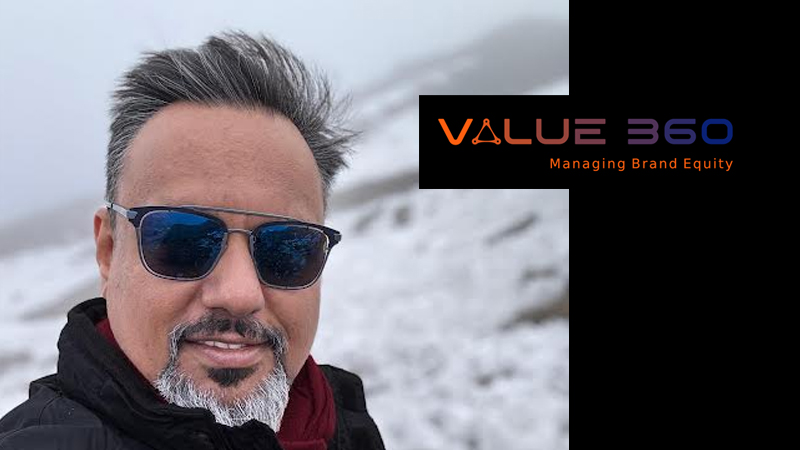
    MUMBAI: Just before it hits the stock market, Value 360 Communications has dropped a blockbuster announcement. The 18-year-old PR and brand-building firm is joining forces with filmmaker and AI trailblazer Vivek Anchalia to launch a generative AI-powered creative studio — a bold move meant to future-proof its business as it eyes an IPO on the SME Exchange.

    The upcoming studio blends the art of storytelling with the speed of generative tech, promising personalised, high-volume content for brands across platforms — and with a lot less fuss. It’s Value 360’s way of telling the market (and its future shareholders) that it’s not just keeping up with change, it’s helping write the next chapter.

    Vivek Anchalia, the man behind India’s first AI-generated feature film Naisha and co-writer of Netflix’s Rajma Chawal, will lead the creative direction of the studio. Anchalia, who also helms the AI-first content company Amazing Indian Stories, called AI “a force multiplier for creativity” that can help brands scale content without killing the soul of storytelling.

    “This new AI-powered creative studio reflects Value 360’s larger vision to not just participate, but actively lead the evolution of communications, marketing, and storytelling,” said Value 360 Communications Ltd group CEO & co-founder Kunal Kishore. “As we enter the public markets, we want to demonstrate to our investors, clients, and partners that our growth strategy is rooted in innovation, agility, and anticipating what modern brands will demand over the next decade.”

    The studio will sit within Value 360’s growing ecosystem, complementing its PR, influencer, media, and digital services with on-demand, AI-generated creative muscle — perfect for brands racing against the content clock.

    “AI is not a threat to creativity, it’s a force multiplier,” said Anchalia. “Together, we are building a model that enables brands to scale quality content like never before, while preserving creative integrity. This is the future of storytelling, and I’m excited to build this vision alongside Value 360.”

    The announcement lands just weeks before Value 360 is expected to file its Draft Red Herring Prospectus, kicking off the countdown to its IPO. The company, now transitioning from a scrappy startup to a listed firm, is banking on innovation-led growth — and it’s betting big on AI to lead the charge.

    Because if content is still king, AI might just be the new crown.

  • AI, angst and applause: Goafest day three blends bold ideas with brave tech in storytelling

    AI, angst and applause: Goafest day three blends bold ideas with brave tech in storytelling

    MUMBAI: Day three at Goafest 2025 opened not with a whisper but a roar. Under the theme Ignite Hungama, Indian playback singer Javed Ali lit up the morning with a rousing set, presented by Mahindra Auto and Mahindra Electric Origin SUV in association with Bingo! What followed was a cocktail of courage, code, and craft.

    Marcel France CCO & CEO Youri Guerassimov delivered a punchy keynote on ‘Creativity That Dares to Disrupt’ – presented by Youtube under the theme Ignite Bravery. He challenged the room to get comfortable with discomfort. “Fear is temporary. Regret lasts far longer”, he said, quoting campaigns like Nike’s Colin Kaepernick ad and Marcel’s own ‘Inglorious Fruits and Vegetables’. Guerassimov pointed out that 86 per cent of consumers expect brands to take a stand, and 66 per cent are willing to jump ship if they don’t.

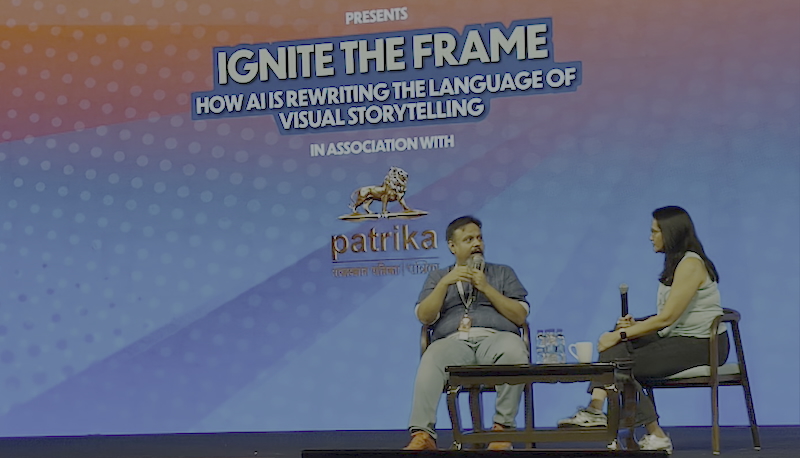
    Next, the session ‘How AI is Rewriting the Language of Visual Storytelling’ took centre stage. Amazing Indian Stories founder & CEO Vivek Anchalia demonstrated how AI was bulldozing old production paradigms. From replacing animatics to cutting the need for bloated crews and locations, AI was making storytelling faster, cheaper, and sharper. His upcoming AI-powered film Naisha will feature machine-generated drone shots of Uttarakhand. In the fireside chat that followed, Landor president-APAC Lulu Raghavan summed it up: “AI is underhyped. Master it early, lead the next wave”.

    Anchalia added nuance: while AI could mimic drone pans and 3D shots, it couldn’t replace emotional tonality in sound or a filmmaker’s rhythm. He also advised self-learning over formal AI education, hailing online creative communities as the real labs of experimentation.

    Meanwhile, the Bioscope – The Cinema ran a series of sessions under the theme ‘What Ignited the Jury Room?’. Havas Creative India CCO & JMD Anupama Ramaswamy insisted the jury prioritised the power of creative ideas over just causes. Famous Innovations founder & CCO Raj Kamble brought his signature candour, likening case studies to ads that must hook judges in seven seconds. VML India CCO Senthil Kumar reminded the room: “If a film makes you want to watch it again, it’s doing its job”. Youri Guerassimov rounded off the jury talks, reiterating that creativity must remain consistent across platforms.

    Adding a personal note, The Advertising Club COO Bipin Pandit launched his book presented by Amazon MX Player and powered by Mediakart. From a viral Linkedin post to a deadline set by AdClub president Rana Barua, the book’s origin story was as compelling as its content. It featured a foreword by Piyush Pandey and an article by Prasoon Joshi. A microsite, www.bipinpandit.com, was launched, along with a Walk of Work display at Cascade.

    Day three also served up a buffet of masterclasses. Gowthaman Ragothaman led a session on data, privacy and intelligence, followed by Vijay Singh’s take on game commerce. Nick Eagleton of D&AD unpacked creative liberation with ‘Ideas Unlocked’. Sana Shaikh from Flipkart Ads outlined their latest innovations. Amogh Dusad from Amazon MX Player guided attendees on seamless brand integration. Meanwhile, Krishnendu Dutta and Vara Prasad of MRSI demystified AI’s impact on consumer insights.

    Lunch was hosted by Vijayavani, wrapping up a first half that balanced firebrand ideas with futuristic tech.


  • GoaFest 2025: Amazing Indian Stories’ Vivek Anchalia unveils how AI is turning ‘what if’ into ‘what now.

    GoaFest 2025: Amazing Indian Stories’ Vivek Anchalia unveils how AI is turning ‘what if’ into ‘what now.

    MUMBAI: “AI isn’t coming for your job, it’s coming for your excuses,” quipped filmmaker and founder of Amazing Indian Stories, Vivek Anchalia, during his provocative keynote at Goa Fest 2025. Hosted at Taj Cidade de Goa Horizon and moderated by Landor  president APAC Lulu Raghavan, the session titled ‘How AI is Rewriting the Language of Visual Storytelling’ pulled no punches as it spotlighted how artificial intelligence is shaking up the storyboarding, scripting, and shooting process across the advertising and film industries.

    Anchalia shared that AI has slashed production prep time from six hours to mere minutes, thanks to new tools like integrated  production modules (IPM). Today, a single AI-generated slide can capture an actor’s look, lighting, costume, and setting—compressing what used to take a 100-slide deck into one.

    One of the biggest breakthroughs? AI-generated spec ads that outshine traditional animatics in both narrative cohesion and visual clarity. It’s not about replacing the director—it’s about amplifying their vision. “AI lets you shoot in Paris without stepping out of Mumbai,” Anchalia joked, referring to the ability to simulate exotic drone shots for a fraction of the cost. His upcoming film, Naisha, is the ultimate proof-of-concept—everything from visuals to drone footage created with AI, with only the music left to human hands.

    But even Anchalia isn’t all-in. He firmly stated that AI isn’t ready to replace human storytelling or emotional scoring, citing that while tools can handle generic effects like phone rings or car screeches, they falter in crafting soul-stirring background scores. For Naisha, human composers were non-negotiable. “AI can’t replicate a filmmaker’s rhythm Tarantino and Hirani don’t come out of code,” he said.

    Cost savings may be dramatic (up to 90 per cent in some cases), but not absolute. Skilled AI artists now command premium rates, even if subscriptions to Midjourney, Runway, and Eleven Labs are dirt-cheap. Still, AI is making multi-campaign content creation viable for brands once boxed in by budget.

    While creatives remain wary some even hostile business leaders are racing ahead. “James Cameron is already on the board of an AI company,” Anchalia pointed out, urging the industry to “stop being ostriches” and start exploring. His advice to learners? Ditch the fancy degrees. “YouTube is the new Harvard,” he declared. His own journey went from one successful AI image in 50 attempts to a solid 1 in 4 just through grit, Google, and global communities.

    AI may reduce headcount, but agencies won’t be obsolete. Anchalia insists that strategic thinking, brand DNA, and cultural insight remain human territory. What AI does offer is better client persuasion data-backed visuals, real-time mock-ups, and faster pitch approval cycles.

    As Lulu Raghavan aptly closed, “AI isn’t overhyped, it’s underhyped. Those who harness it now will define the future of storytelling.”

    With the appetite for content exploding and the barriers to entry crumbling, the next blockbuster might just come from a bedroom laptop instead of a Bollywood backlot. The script is changing and AI is co-writing it.