Tag: Visual Publicity

  • DAVP ads: Audio-visual medium gets lion’s share

    NEW DELHI: A sum of Rs 12.8577 billion was spent in 2016-17 in advertisements on various media by the Directorate of Advertising and Visual Publicity, the Parliament has been told.

    As against this, the total expenditure in 2014-15 was Rs 9.9834 billion, and Rs 11.888.5 billion in 2015-16, the minister of state for information and broadcasting Rajyavardhan Rathore said.

    Of this, the expenditure in the audio-visual medium was the largest: Rs 6.0914 billion in 2016-17, Rs 5.316 billion in 2015-16 and Rs 4.7367 billion in 2014-15.

    DAVP is the nodal advertising agency of the government for releasing advertisements only on behalf of various ministries/ departments to disseminate information in respect of government policies, schemes, programmes and other projects and events of the government.

    AlsO Read :

    Give more funds to DAVP for empowering people: Parliamentary Committee

    DD invites short films on Govt schemes, ‘DAVP producers’ preferred

  • Audo-visual, electronic media greatest beneficiary of Govt ads in 2016-17

    NEW DELHI: A sum of Rs 5.0983 billion was spent on government advertisements through the audio video and electronic media.

    Giving figures of 2016-17 until 17 March 2017, Parliament was told today by Minister of State for Information and Broadcasting Rajyavardhan Rathore that in comparison, a sum of Rs 4.2377 billion was spent on the print media.

    A total of Rs 1.3291 billion was spent on Advertisement Boards / Outdoor Publicity.

    Advertisements are given out through agencies accredited with the Directorate of Advertising and Visual Publicity.

    Advertisements were given out to the electronic media on behalf of 65 departments or programmes of the government, with the largest being spent on Department of Drinking Water Supply – just over Rs 1.336 billion.

    In comparison, 415 different government ads were given to print media, and 35 ads went to outdoor publicity.

  • Only one-third of govt ads went to electronic media

    NEW DELHI: A sum of Rs 340,52,61,236 was spent on advertisements in the electronic media by the Directorate of Advertising and Visual Publicity on behalf of various Ministries/Departments of the Government for advertisements during the current year.

    Of a total of Rs 992,46,45,257 spent so far, the major share of Rs 545,60,50,506 has gone to the print media. The Parliament was told that Rs 92,51,00,816 was spent on outdoor publicity (hoardings etc).

    Printed Publicity material cost totaled Rs 9,48,28,635 and Rs 4,34,04,064 went into exhibitions.

    The Ministry/Department-wise break-up of expenditure in respect of the advertisements released through the above Media Vehicles is available on DAVP’s website under head ‘Newspaper’ and sub-head ‘Reply to Rajya Sabha Question -› Annexure of Question No.- 880’.

    The DAVP has seven empanelled impact assessment agencies which can be used by the client ministries according to their requirement.

    Also read:   Over Rs 149 million spent on govt ads post-DeMo

    No proposal to bring news portals under PRB or PCI Acts

  • News disallowed but advt terms relaxed for community radio

    News disallowed but advt terms relaxed for community radio

    NEW DELHI: While holding that the grant of permission agreement will be extended for five years at a time for community radio stations, the government has said that the application will have to be submitted in the fourth year.

    In relaxation of its Guidelines of 2006 to promote the growth in the sector, it was stated that the first extension shall be granted on the basis of an application and verification of adherence to the terms and conditions of the permission.

    For second extension beyond 10 years, the continuous operation of CRS by the permission holder for 10 years will be treated as ground for extension. CRS should submit their application for extension of permission a year before end of the permission period.

    Considering that there are less than 150 operational CRS even after more than a decade of launch of the scheme, the changes announced along with the funding scheme announced earlier this month would help the growth of this sector.

    News and current affairs and programmes of current affairs which are political in nature will not be permitted. However, CRS can broadcast news and current affairs contents sourced exclusively from All-India Radio in its original form or translated into the local language/dialect. AIR shall source its news to CRS without any charge. It will be the responsibility of the CRS permission holder to ensure that the news is not distorted or edited during translation.

    Another important relaxation is in terms of permitting additional categories that can come under non-news and current affairs broadcast.

    These are:

    (a) Information pertaining to sporting events excluding live coverage. However live commentaries of sporting events of local nature may be permissible;

    (b) Information pertaining to traffic and weather;

    (c) Information pertaining to and coverage of local cultural events, festivals;

    (d) Coverage of topics pertaining to examinations, results, admissions, career counseling;

    (e) Availability of employment opportunities;

    (f) Public announcements pertaining to civic amenities like electricity, water supply, natural calamities, health alerts etc. as provided by the local administration;

    (g) Such other categories not permitted at present that may subsequently be specifically permitted by Ministry of Information and Broadcasting from time to time.

    The additions also say that transmission of sponsored programmes shall not be permitted except programmes sponsored by Central and state governments and other organisations to broadcast public interest information.

    Limited advertising and announcements up to a maximum of seven minutes per hour relating to local events, local businesses and services and employment opportunities will be allowed.

    (In a related development, the Directorate of Advertising and Visual Publicity deleted the empanelment condition that “Community Radio Stations will undertake in writing that DAVP approved rates accepted by them are their lowest rates and exclusive to DAVP and cannot be offered to any other agency”.)

    The additions in the Guidelines further said: “In disaster situations, the District Magistrate’s permission shall be sufficient to relocate CRS. However, Ministry of Information and Broadcasting should be informed of the change of place by both the CRS and District Magistrate.

  • News disallowed but advt terms relaxed for community radio

    News disallowed but advt terms relaxed for community radio

    NEW DELHI: While holding that the grant of permission agreement will be extended for five years at a time for community radio stations, the government has said that the application will have to be submitted in the fourth year.

    In relaxation of its Guidelines of 2006 to promote the growth in the sector, it was stated that the first extension shall be granted on the basis of an application and verification of adherence to the terms and conditions of the permission.

    For second extension beyond 10 years, the continuous operation of CRS by the permission holder for 10 years will be treated as ground for extension. CRS should submit their application for extension of permission a year before end of the permission period.

    Considering that there are less than 150 operational CRS even after more than a decade of launch of the scheme, the changes announced along with the funding scheme announced earlier this month would help the growth of this sector.

    News and current affairs and programmes of current affairs which are political in nature will not be permitted. However, CRS can broadcast news and current affairs contents sourced exclusively from All-India Radio in its original form or translated into the local language/dialect. AIR shall source its news to CRS without any charge. It will be the responsibility of the CRS permission holder to ensure that the news is not distorted or edited during translation.

    Another important relaxation is in terms of permitting additional categories that can come under non-news and current affairs broadcast.

    These are:

    (a) Information pertaining to sporting events excluding live coverage. However live commentaries of sporting events of local nature may be permissible;

    (b) Information pertaining to traffic and weather;

    (c) Information pertaining to and coverage of local cultural events, festivals;

    (d) Coverage of topics pertaining to examinations, results, admissions, career counseling;

    (e) Availability of employment opportunities;

    (f) Public announcements pertaining to civic amenities like electricity, water supply, natural calamities, health alerts etc. as provided by the local administration;

    (g) Such other categories not permitted at present that may subsequently be specifically permitted by Ministry of Information and Broadcasting from time to time.

    The additions also say that transmission of sponsored programmes shall not be permitted except programmes sponsored by Central and state governments and other organisations to broadcast public interest information.

    Limited advertising and announcements up to a maximum of seven minutes per hour relating to local events, local businesses and services and employment opportunities will be allowed.

    (In a related development, the Directorate of Advertising and Visual Publicity deleted the empanelment condition that “Community Radio Stations will undertake in writing that DAVP approved rates accepted by them are their lowest rates and exclusive to DAVP and cannot be offered to any other agency”.)

    The additions in the Guidelines further said: “In disaster situations, the District Magistrate’s permission shall be sufficient to relocate CRS. However, Ministry of Information and Broadcasting should be informed of the change of place by both the CRS and District Magistrate.

  • Tewari issues clarification on Sardar Patel ad releases by govt

    Tewari issues clarification on Sardar Patel ad releases by govt

    NEW DELHI: The Government gave out 2164 newspapers advertisements on the occasion of the birth anniversary of Sardar Vallabhbhai Patel between 1998 and 2003.


    Interestingly, the Information and Broadcasting Ministry said in a statement in response to statements by certain political leaders that no advertisements were released during the years 1999, 2000 and 2001.


    However, 20,915 newspapers were given the advertisement between 2004 and 2013. No advertisement was given in the year 2008.


    The Ministry said the Directorate of Advertising and Visual Publicity had been regularly releasing advertisements on the birth anniversary of prominent national leaders including Sardar Patel.


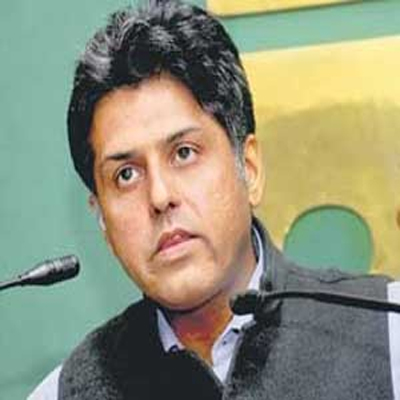
    In this context, I and B Minister Manish Tewari said: “The Ministry of Information & Broadcasting has always followed a policy to acknowledge the contribution of prominent national figures in nation building by releasing advertisements. The advertisements released on the birth anniversary of Sardar Patel are part of the continued policy of this Ministry of expressing gratitude to great leaders for instilling confidence and inspiration in the young minds.” 

  • Delhi Lokayukta wants DAVP panel to certify circulation figures before giving govt. ads

    Delhi Lokayukta wants DAVP panel to certify circulation figures before giving govt. ads

    NEW DELHI: Delhi Lokayukta Justice Manmohan Sarin has favoured setting up of a panel of Directorate of Advertising and Visual Publicity for empanelment as well as granting of government advertisements.


    The order by the Lokayukta came following a complaint that a local newspaper misrepresented facts about circulation figure in getting advertisement from government agencies and departments in Delhi.


    In his order, Justice Sarin particularly sought a thorough verification of circulation figures of newspapers, journals and magazines owned, edited and published by “public functionaries”.


    “Whenever a public functionary is the owner, editor, printer or publisher or otherwise has a substantial interest in the newspaper, journal, magazine, then the verification of circulation be made compulsory,” he said.


    “A committee of officers of DAVP be constituted for grant of empanelment subject to verification of circulation by Registrar of Newspapers for India (RNI),” the Lokayukta said in the order.


    The complainant had alleged that a local newspaper has printed a few copies with a view to obtain advertisements from government departments.