Tag: Visual Effects

  • Gold and Frameboxx draw up a new script for animation education

    Gold and Frameboxx draw up a new script for animation education

    MUMBAI: When academia meets animation, the result is pure motion magic. India’s pioneering animation studio Green Gold Animation pvt. ltd., the creative powerhouse behind some of the country’s most beloved animated universes, has teamed up with Frameboxx Animation & Visual Effects pvt. ltd., one of India’s top training institutes, to script a new chapter in animation education.

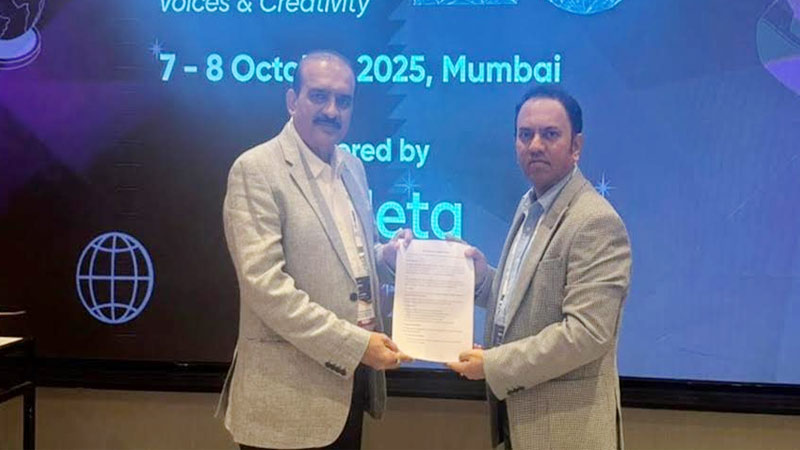
    The two industry leaders have signed a Memorandum of Understanding (MoU) to introduce an Industry Embedded Degree Programme in Animation and VFX, a first-of-its-kind initiative that fuses classroom learning with real-world studio experience. The MoU was signed by Sitarama Rajiv Chilakalapudi, founder and managing director of Green Gold Animation, and Rajesh Ramesh Turakhia, founder and managing director of Frameboxx.

    Under the partnership, Green Gold’s senior Subject Matter Experts (SMEs) will deliver 150 hours of in-class, hands-on training across three years, ensuring students learn not just the theory but the thrill of production itself. These will be live, interactive sessions with Green Gold’s artists and mentors people who’ve turned sketches into global success stories.

    Students will also work on live production projects during their final year, gaining direct exposure to industry workflows, pipelines, and creative challenges. The result: graduates who don’t just dream in animation, but think, design, and deliver like studio professionals from day one.

    “India’s animation industry is expanding rapidly, driven by global demand for quality content and the explosion of digital platforms,” said Green Gold Animation founder and CEO Rajiv Chilaka. “Yet, there’s a widening gap between what’s taught in classrooms and what studios need. Through this collaboration with Frameboxx, our goal is to bridge that gap by embedding real production expertise into academic learning. We want students to experience the pulse of a professional studio and understand how global projects are executed from concept to credits.”

    He added that this collaboration could help India emerge not just as a major consumer of animation content but as a consistent exporter of world-class animation talent.

    Echoing the sentiment Frameboxx founder and managing director Rajesh Ramesh Turakhia said, “This partnership marks a milestone in academic-industry collaboration. Students will benefit from live projects, masterclasses, workshops, and project reviews by Green Gold’s experts across Frameboxx centres nationwide. Together, we’re offering a learning experience that’s as real as it gets.”

    The programme will award a joint certification from Green Gold and Frameboxx, in addition to the degree from the affiliated university. Students will have access to cutting-edge technology, structured mentorship, and a well-defined career pathway that aligns with global production standards.

    Beyond academic reform, the alliance signals a shared mission to nurture India’s next generation of animators and visual storytellers. For Green Gold, it reinforces its role not just as a studio but as a mentor for the creative economy. For Frameboxx, it deepens its reputation as a bridge between education and employability.

    As the animation industry evolves from art to asset class, this partnership gives India’s young dreamers the tools to not only sketch their ideas but also shape their futures. After all, when the worlds of imagination and education collide the credits don’t roll, they begin.
     

  • Madhya Pradesh unveils AVGC-XR policy to boost jobs and investment

    Madhya Pradesh unveils AVGC-XR policy to boost jobs and investment

    MUMBAI: Madhya Pradesh (MP) is making a power move in the world of animation, visual effects, gaming, comics, and extended reality (AVGC-XR), unveiling a bold policy aimed at transforming the state into a digital media powerhouse. With the AVGC-XR sector projected to grow at 14-16 per cent annually, the state government is eyeing a significant slice of this booming industry, setting ambitious targets of Rs 10,000 crore in investments, 50,000 new jobs, and 150 start-ups by 2029.

    The Madhya Pradesh AVGC-XR Policy 2024 is designed to not only position the state as an industry leader but also to boost local talent, attract global players, and accelerate innovation. The government has earmarked Rs 500 crore in financial incentives, offering substantial reimbursements on production costs, training subsidies, and infrastructure development grants. Companies setting up AVGC-XR studios in the state can avail up to 35 per cent reimbursement on eligible production expenses, capped at Rs two crore per project, making MP one of the most attractive destinations for digital content creation in India.

    The policy also focuses on infrastructure expansion, with plans to establish two centres of excellence (CoEs) in Indore and Bhopal, dedicated AVGC-XR labs in schools and universities, and India’s first Animation Theme Park to create an immersive learning and entertainment ecosystem. The state is also investing heavily in workforce development, offering up to 50 per cent reimbursement on AVGC-XR training fees, with additional incentives for women entrepreneurs and underprivileged students entering the sector. By 2029, MP aims to train at least one lakh skilled professionals in AVGC-XR disciplines, addressing both local employment needs and global industry demand.

    Government officials are confident that the policy will be a game-changer for the state’s economy. A senior official from the Madhya Pradesh industrial development Corporation stated that the AVGC-XR policy is expected to contribute at least Rs 3,000 crore annually to the state’s GDP, with exports from the sector projected to reach Rs 2,500 crore in the next five years. He further emphasised that the initiative is not just about entertainment but also about positioning MP as a hub for ed-tech, defence simulations, medical imaging, and virtual reality training modules, expanding the scope of AVGC-XR beyond gaming and film.

    The policy also includes provisions for international collaborations, offering financial support for MP-based companies participating in global trade fairs and co-productions. By integrating global best practices and fostering partnerships with leading AVGC-XR firms, the state hopes to bring Rs 1,500 crore in foreign investments over the next decade.

    Madhya Pradesh’s aggressive push into the AVGC-XR space comes at a time when the Indian AVGC sector is projected to be worth Rs three lakh crore by 2030. By laying the groundwork for a thriving digital ecosystem, MP is positioning itself as a leader in next-gen storytelling, immersive experiences, and high-tech content creation. With a structured policy framework, strong financial backing, and a clear vision for the future, the state is not just embracing the digital revolution, it’s setting the stage to lead it.

  • Union cabinet clears AVGC National Centre of Excellence

    Union cabinet clears AVGC National Centre of Excellence

    MUMBAI: The Modi-led central government is putting its might behind the AVGC (animation, visual effects, gaming, comics &XR ) component of the media & entertainment sector. It has followed up its announcement a couple of weeks ago about the setting up of a National Centre of Excellence (NCoE)  in Mumbai by getting the plan cleared by the  union cabinet.

    The NCoE is planned to be set up as a section 8 company under the Companies Act 2013 with equity participation from the Federation of Indian Chambers of Commerce & industry  (Ficci) and the Confederation of Indian Industry (CII) and the Indian government. More than  Rs 500 crore is to be pumped into the centre by the government, possibly through the National Film Development Corporation (NFDC). .

    Provisionally named the Indian Institute for Immersive Creators (IIIC), the center aims to revolutionise the AVGC sector and foster innovation in immersive technologies. It is planned  to be modelled after the Indian Institutes of Technology (IITs) and Indian Institutes of Management (IIMs) with a sharp focus on creating content for India and the world.

    A press release issued by the ministry of information &  broadcasting on 29 September said that the idea is to create “a world class talent pool in India to cater to the Indian as well as global entertainment industry and make India a global hub for AVGC.”

    With rapidly evolving technology and increasing internet penetration all across the country, coupled with one of the cheapest data rates, the usage of AVGC-XR globally is poised to grow at an exponential pace.  This is bound to create abundant opportunities, particularly through the National Centre of Excellence (NCoE).

    Some of its key objectives are:

    * Focusing on creating Indian IP
    * Leveraging India’s cultural heritage in new age
    * Create a multiplier effect in the industry
    * An industry led initiative, in partnership with state and academia
    * Integrated focus on education, skilling industry, development, innovation
    * Hub and spoke model of development to be followed
    * IIIC as the hub and several centers as its spokes dedicated innovation and research fund to promote start-up ecosystem.

    The NCoE is being planned to provide a fertile platform for immersive tech – including virtual reality, augmented reality, mixed reality, 3D modelling, animation, comics and gaming – by offering cutting-edge training and integrate India’s rich cultural heritage with modern technology, fostering the creation of indigenous intellectual property (IP) and building the future of India’s digital creative economy.
    The target is to create an estimated 500,00 jobs,  with students gaining  practical experience through industry-driven courses, ensuring they are job-ready upon graduation. Those graduating will be provided with internships while start-ups will be mentored.  

    It may be recalled that union minister of finance & corporate affairs Nirmala Sitharaman had announced in the 2022-23 budget that an AVGC task force would to created. The NCoE is one of the recommendations of the task force.

  • Karnataka Government and ABAI drives Bengaluru GAFX augmented intelligence for AVGC Power

    Karnataka Government and ABAI drives Bengaluru GAFX augmented intelligence for AVGC Power

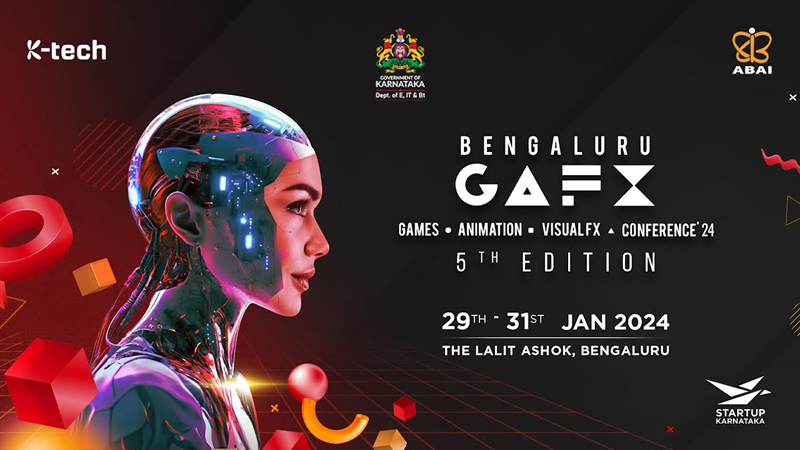
    Mumbai: Flagship event in Animation, Visual Effects, Gaming & Comics (AVGC) sector by Karnataka’s Ministry of ITBT and ABAI.

    Bengaluru GAFX is all set to be held in the city from 29 – 31 January 2024 at the Lalit Ashok, Bengaluru.

    Bengaluru GAFX focused on augmented intelligence to unite the AVGC industry for knowledge exchange. The event brings together industry, academia, and government to discuss trends, challenges, and the future of Animation, Visual Effects, Games, and Comics. It aims to strengthen Karnataka’s leadership in fostering holistic growth and development of AVGC in India.

    Govt. of Karnataka Minister for Electronics, Information Technology & Biotechnology and Rural Development & Panchayat Raj Priyank Kharge expressed “As pioneers in the formulation of India’s 1st AVGC policy and initiative, Karnataka continues its leadership in this rapidly growing sector and has been the home to the world leaders in the AVGC space having left an indelible trail of success and awards on the world stage. It is our vision that Karnataka becomes the skilling epicentre for the global AVGC community as we provide a career pathway through the establishment of more incubators and accelerators in this sector. Bengaluru GAFX is a key convention for us to propagate our plans and schemes to promote our ever-expanding vision in this sector.”

    The Technicolor India ABAI president & country dead Biren Ghose said: “The sessions at Bengaluru GAFX 2024 shall celebrate the enormous successes of the past year and identify new vistas of growth and opportunity for the holistic growth & development of AVGC in India. Packed with multiple conference tracks, masterclasses, student competitions, an e-Sports competition arena, B2B networking sessions, an exhibition track and much more, Bengaluru GAFX is a must-attend event for anyone involved with imagery, animation and simulation and with the new tech in the audio-visual space has applications in several new areas. Above all, ABAI members have helped build an ecosystem taking India’s prowess in storytelling and entertainment to become a recognized “soft power” from India to the world”.

    In the decade-plus of Bengaluru GAFX, several global giants including Walt Disney Animation, Nickelodeon, Paramount, DreamWorks Animation, Netflix, Rockstar Games, Electronic Arts, Ubisoft and many others have chosen Bangalore as their production and programming hub for their creative technology activities. The city has become home to the best talent in the country and has made significant contributions to bring an increasing global work share in the creation of games, movies, and episodic content for these media & entertainment majors among many others.

    The event’s past editions have left an indelible impact on the industry, drawing over 4,500 attendees and 120 companies, and featuring a spectrum of activities from live conferences to student competitions. With the participation of 40 colleges, the event featured 18 live conferences, 45-panel speakers, 10 virtual sessions, and 30 virtual speakers across the world, with renowned speakers from Epic Games, MPC, Gamitronics, Hombale Groups, The Mill, Technicolor Games, Rockstar Games, Electronic Arts, Netsport Media and many more.

    As Bengaluru GAFX gears up for its latest edition, it aligns strategically with the launch of the Karnataka Animation, Visual Effects, Gaming, Comics, and Extended Reality (AVGC-XR) Policy 3.0 (2023-28). Karnataka, renowned as India’s IT hub, is a dominant force in the AVGC-XR sector, commanding a robust 20% share of the Indian Media & Entertainment industry. The state boasts over 300 specialized AVGC studios and a workforce exceeding 15,000, providing a solid foundation for industry growth. Education is pivotal, with Karnataka housing 5 animation institutes, 3 visual effects institutes, and 12 gaming-focused institutes. Initiatives like Digital Art Centers in 27 colleges and an AVGC Finishing School further bolster the state’s commitment to nurturing talent.

    This visionary policy endeavours to position Karnataka as a global innovation leader in AVGC-XR technologies, create a robust talent pool, generate 30,000 jobs, and foster sustainability within the AVGC industry. The policy’s strategic pillars, spanning skill development to global market access, resonate with the core discussions expected at Bengaluru GAFX, making the event pivotal for shaping the future of AVGC in Karnataka and beyond.

    This edition of Bengaluru GAFX will witness a stellar lineup of speakers comprising industry veterans and thought leaders- including the winners of multiple Oscars, British Arrows, VES Awards, Cannes Golds and prestigious Indian awards. 

  • Exploring public-private partnership to prepare students for upcoming M&E technology fields: Anurag Thakur

    Exploring public-private partnership to prepare students for upcoming M&E technology fields: Anurag Thakur

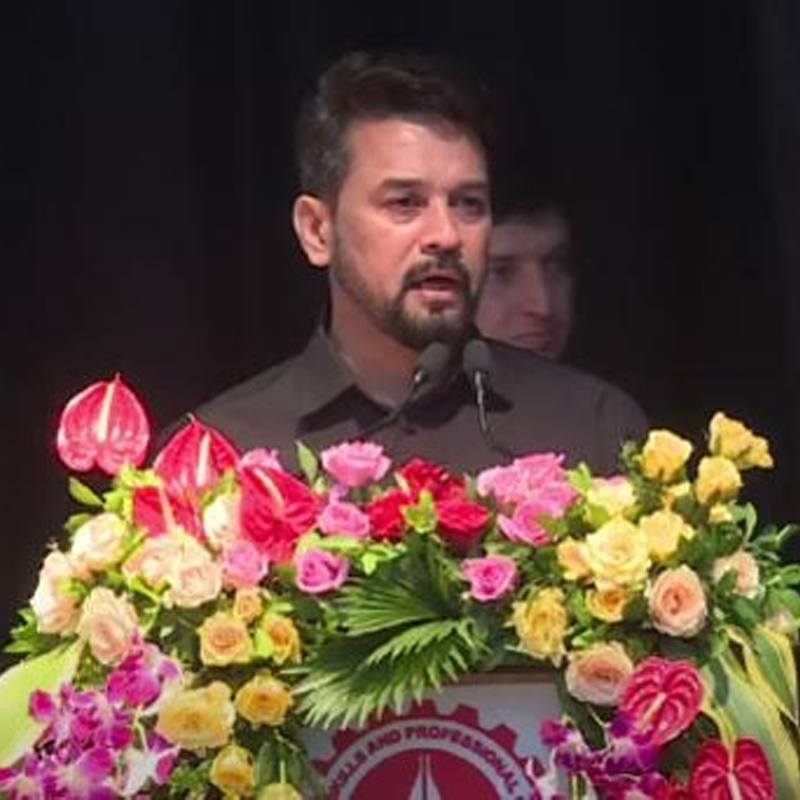
    Mumbai: Union minister for information and broadcasting Anurag Singh Thakur on Sunday announced that the Government of India is exploring partnerships with the private sector to ensure Indian students are in tune with upcoming technology trends in the media and entertainment sector.

    The minister was delivering a key-note address at the international conference on ‘Changing Landscape of Media and Entertainment 2022’ organised by Symbiosis Skill & Professional University in Pune. The main topics of the conference were the emerging field of opportunities in animation, VFX, gaming and comics, opportunities in OTT, TV and film production, augmented reality/virtual reality immersive media skills etc.

    He stated that “The radio, film and entertainment industry has a huge employment opportunity as we leapfrog into the digital era of quality content creation. Many job roles have emerged in the field – video editing, colour grading, visual effects (VFX), sound design, rotoscoping, 3D modelling etc. Each job role in this sector requires a specific set of skills and competencies. It is imperative for industry and academia to come together and design programs relevant to the needs of this sector.”

    Thakur highlighted that the Indian media and entertainment ecosystem is a sunrise sector that is expected to generate rupees four lakh crore annually by 2025 and reach $100 billion or Rs 7.5 lakh crore industry by 2030.

    He further added that the Government of India has designated audio-visual services as one of the 12 champion service sectors and announced key policy measures aimed at nurturing sustained growth.

    The rapidly expanding digital infrastructure in the country and ongoing advancements taking place in the AVGC (animation, visual effects, gaming and comics) sector have the potential to make India the preferred post-production hub of the media and entertainment industry, he observed.  

    To establish a solid digital foundation for the AVGC sector emerging across the country, the government has established a task force for the AVGC sector in order to develop world class creative talent to meet domestic and global demand.

    Thakur said that Prime Minister Narendra Modi’s enthusiasm for technology has provided an oasis of opportunities and given wings to the ambition of youngsters. The PM’s ambition to empower the youth has been realised by the Skill India Mission that aims to train 40 crore youth in market relevant skills.

    Thakur shared that the talents discovered during the ’75 Creative Minds of Tomorrow’ project undertaken during International Film Festival of India 2021, have been creative contributing to the media and entertainment sector and have established successful startups.

    Keeping in mind the growing start-up ecosystem in India, Thakur said that during the Covid pandemic period India added as many as 50 unicorn start-ups, which speaks volumes about India’s entrepreneurial spirit. The minister said he hopes to see more and more start-ups emerging from the talent pool produced by leading film schools like Film and Television Institute of India (FTII) and Satyajit Ray Film and Television Institute (SRFTI) too.

    The I&B minister noted that India’s content creation industry has undergone a massive uplift with ‘Digital India’. He said, “With quality content, easy access and an eager audience, India is ready to narrate its own success story and become a content creation hub”.

    Adding further, he impressed the importance of recognising the efforts of technical people behind the scenes of India’s content industry who should be adequately recognised and rewarded, moving beyond the current focus on lead characters.

  • DNEG hires Academy Award winners Eric Brevig, Greg Butler as visual effects supervisors

    DNEG hires Academy Award winners Eric Brevig, Greg Butler as visual effects supervisors

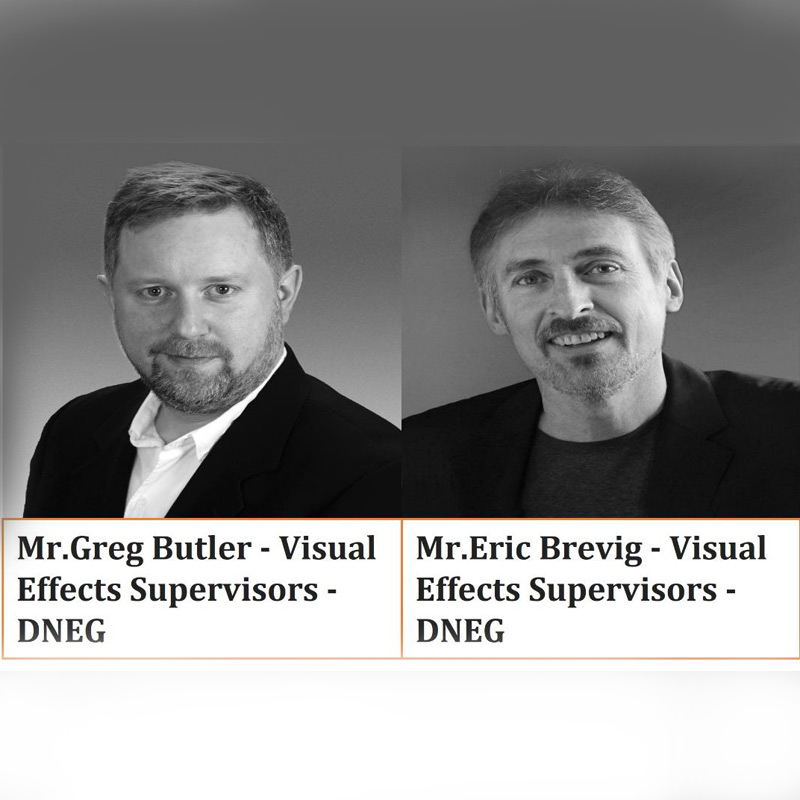
    MUMBAI: Visual effects (VFX) and animation studio DNEG has announced on Friday the hiring of Eric Brevig and Greg Butler as visual effects supervisors. Brevig and Butler each join DNEG with decades of experience in the film industry.

    Brevig’s notable award-winning credits as VFX supervisor include ‘Total Recall’ (1990), for which he received the Academy Award for Best Visual Effects, “Hook” (1991), for which he was nominated for the Academy Award for Best Visual Effects, “Men In Black” (1997), which earned him a Bafta nomination for Best Visual Effects, and “Pearl Harbor” (2001), which earned him an Academy Award nomination for Best Visual Effects.

    Butler’s portfolio of credits as VFX supervisor includes Sam Mendes’ ‘single shot’ war drama ‘1917’ (2019), which earned him an Academy Award and a Bafta for Best Visual Effects, and ‘Harry Potter and the Deathly Hallows: Part 2’ (2011), which earned him his first Bafta. Earlier in his career, Butler received a Visual Effects Society Award for ‘Outstanding Character Animation’ for his work on Gollum in ‘The Lord of the Rings: Return of the King’ (2003).

    “I am proud to have both Eric and Greg, two highly accomplished industry veterans each with their own incredible legacy of breathtaking work, join DNEG’s creative ranks. Eric and Greg will certainly help us continue to push the creative boundaries of what is possible during this period of technological advancement in our industry and unprecedented demand for our services. Adding professionals with track records, talent, and expertise such as theirs further solidifies DNEG as the VFX and animation studio leader in the category” said DNEG chairman & CEO Namit Malhotra.

    Talking about his new role, Brevig said, “I have had the pleasure of working with DNEG and Namit on several projects in the past and I am delighted to become part of this world-class creative team. DNEG’s commitment to excellence and future growth plans make this a very exciting time for me to join the company.

    “My approach to the craft of VFX has always been to find the right techniques to create the most believable, engaging, and immersive experience for the audience. Using both virtual and physical tools, we can now realize anything the filmmaker can envision.”

    Butler joins DNEG from Method Studios, where he worked as a VFX Supervisor on various feature, episodic, and advertising projects, including most recently on a large scale, yet to be announced project for Amazon.

    “I have been following DNEG for many years – even before my London Soho days – as a competitor, a collaborator and as the home to many of my favorite people in visual effects. I am very excited to join DNEG’s Montréal office and I know we are going to make some great work together.

    “Visual effects is a magic trick. Its purpose, to keep the audience engaged in the story and the world of the film. Whether it is used to create fantastic wand duels in Harry Potter or invisible cuts in 1917, visual effects is a series of illusions created in service of the story. While it’s the end result that matters, I have always been enthralled by the filmmaking process; the dynamic behind-the-scenes collaboration of VFX artists and the live action crews whose work is their foundation” said Butler.

  • DNEG renews visual effects services agreement with Netflix

    DNEG renews visual effects services agreement with Netflix

    The leading technology-enabled visual effects and animation company, DNEG, has signed a multi-year agreement with Netflix. The agreement covers the provision of visual effects and virtual production services for Netflix series and feature programming.

    This agreement extends and expands on a previous agreement that the companies signed back in September 2020 and creates a pipeline of Netflix programming work for DNEG through 2025.

    The DNEG-Netflix agreement aligns DNEG’s scale and global footprint as one of the world’s largest content services companies with Netflix’s diverse programming slate. As part of the agreement, DNEG will build upon its existing award-winning Netflix work with a significant expansion of its premium VFX work, both domestic and abroad. DNEG’s redefine division will also supply VFX services and top-end creative supervision for select Netflix programming.

    DNEG has previously delivered visual effects services for Netflix episodic series including Locke & Key seasons one and two, Shadow & Bone, The Irregulars, Cursed, Altered Carbon seasons one and two, Jupiter’s Legacy, Away, The Letter For The King, Black Mirror seasons four and five and The Dark Crystal: Age of Resistance as well as a number of Netflix movies. DNEG won a Visual Effects Society Award for its work on Altered Carbon and a BAFTA TV Craft Award for its work on Black Mirror. ReDefine has delivered VFX for Netflix movies such as “The White Tiger”, “Mimi and Sweet Girl”, and is currently in production on the upcoming Adam Sandler movie, “Hustle”.

    Commenting on this agreement, DNEG chairman and CEO Namit Malhotra said, “Netflix is the leader in the field of streaming content, and DNEG is at the forefront of VFX and virtual production services. This agreement is transformative for DNEG and creates the opportunity for further expansion of our global scale and further investment in DNEG’s industry-leading technology.”

    He added, “The signing of this multi year agreement reflects the success of our partnership with Netflix to-date and validates DNEG’s strategic direction and worldwide growth initiatives.”

    Malhotra continued, “This deal allows us to continue providing Netflix with the very highest levels of quality and service across its programming globally. I am proud of the long relationship DNEG enjoys with Netflix and our work on some of their most popular and critically acclaimed shows. To meet the strong demand for our services and drive even further growth, DNEG is looking to expand our capacity up to 40 per cent by year-end 2022.”

    DNEG, which in recent years has won seven Academy Awards® for its visual effects work, including six of the last eight awards, is already working with Netflix on a number of projects in its upcoming slate, including the highly anticipated Stranger Things Season four; Rian Johnson’s Knives Out two; fantasy action-dramas The School for Good and Evil and Avatar: The Last Airbender; origin story The Witcher: Blood Origin; and upcoming fantasy comedy-adventure Slumberland for director Francis Lawrence. DNEG Animation is providing animation services for the much anticipated animated feature film Nimona, which will be released by Netflix in 2023.

  • 20th VES Awards: DNEG sweeps seven awards for visual effects

    20th VES Awards: DNEG sweeps seven awards for visual effects

    Mumbai: The London-based VFX major Double Negative (DNEG) has received seven awards at the 20th Visual Effects Society (VES) Awards held in Los Angeles on Tuesday. The company is a technology-enabled visual effect and animation studio for the creation of feature film, television and multiplatform content.  This year’s seven VES awards bring The company’s all-time total to 18.

    The four of DNEG’s seven awards honoured its VFX work on Denis Villeneuve’s Oscar 2022 frontrunner “Dune,” including the main award for ‘Outstanding Visual Effects in a Photoreal Feature,’ which was presented by the filmmaker himself.

    DNEG also received two awards for its work on the Apple TV+ drama “Foundation,” as well as the award for ‘Outstanding Supporting Visual Effects in a Photoreal Feature” for Edgar Wright’s “Last Night In Soho.”

    DNEG’s dominant and expansive awards haul on the evening provides further evidence of the company’s leading capabilities in the visual effects and animation industries. This year’s extraordinary levels of success and the recognition of the Visual Effects Society add to DNEG’s impressive list of recent and historical accolades, said the statement.

    “Thank you to the Visual Effects Society for honouring the incredible work of our teams and congratulations to all of our winners, collaborators, global teams and clients on this epic achievement,” commented DNEG chairman and CEO Namit Malhotra. “It is important to note that these projects were all in production during the pandemic. Despite the challenges of finding new ways of working in this incredibly difficult time for the world, DNEG has produced work of a quality that has been recognised as outstanding by the VES – an industry body that provides a detailed and comprehensive gauge of the technology and artistry that makes this work so special.”

    “This, alongside the unprecedented number of awards that we won last night, is a massive testament to the capabilities of our teams, and the trust of our customers that DNEG will always deliver their vision to the highest possible standard. It is also a huge validation of DNEG’s ambitious growth plans as we go from strength to strength, scaling our business, and delivering great results across all of our global teams,” Malhotra further said.

    DNEG’s complete 2022 VES Award winners are:

    Outstanding Visual Effects in a Photoreal Feature: “Dune” – Paul Lambert, Brice Parker, Tristan Myles, Brian Connor, Gerd Nefzer

    Outstanding Supporting Visual Effects in a Photoreal Feature: “Last Night in Soho” – Tom Proctor, Gavin Gregory, Julian Gnass, Fabricio Baessa

    Outstanding Visual Effects in a Photoreal Episode: “Foundation” – The Emperor’s Peace – Chris MacLean, Addie Manis, Mike Enriquez, Chris Keller, Paul Byrne

    Outstanding Model in a Photoreal or Animated Project: “Dune” – Royal Ornithopter – Marc Austin, Anna Yamazoe, Michael Chang, Rachael Dunk

    Outstanding Effects Simulations in a Photoreal Feature: “Dune” – Dunes of Arrakis – Gero Grimm, Ivan Larinin, Hideki Okano, Zuny An

    Outstanding Effects Simulation in an Episode, Commercial, or Real-Time Project: “Foundation” – Collapse of the Galactic Empire – Giovanni Casadei, Mikel Zuloaga, Steven Moor, Louis Manjarres

    Outstanding Compositing & Lighting in a Feature: “Dune” – Attack on Arrakeen – Gregory Haas, Francesco Dell’Anna, Abhishek Chaturvedi, Cleve Zhu

    DNEG served as lead VFX partner on each of the above projects, with work completed throughout its worldwide studios, according to the company.

  • DNEG set to become the only Pure-play publicly-traded visual effects, animation company

    DNEG set to become the only Pure-play publicly-traded visual effects, animation company

    Mumbai: DNEG, a technology-enabled visual effects, and animation company, and Sports Ventures Acquisition Corp, a publicly-traded special purpose acquisition company have entered into a definitive business combination agreement that will result in DNEG becoming a public company.

    Upon closing of the transaction, the combined company will be renamed DNEG and it is expected that its ordinary shares will be listed on the Nasdaq. The combined company will be led by DNEG chairman and chief executive officer Namit Malhotra.

    A subsidiary of Prime Focus, DNEG creates visual effects and animation for feature films, television, as well as multiplatform content, with operations based in North America (Los Angeles, Montréal, Toronto and Vancouver), Europe (London) and Asia (Bangalore, Chandigarh, Chennai and Mumbai)

    Commenting on this merger, DNEG chairman and CEO Namit Malhotra said, “This transaction creates long-term stability for our teams while also allowing us to exploit the tailwinds in the media and entertainment industry and the explosion in demand for content, which are huge growth drivers for our company. Leveraging our leading technology stack, DNEG is already making great strides into new growth areas such as gaming and content creation partnerships, and we are perfectly positioned to exploit massive new opportunities in the metaverse and the convergence of all forms of content creation.”

    DNEG’s work has earned the company six Academy Awards®️ for Best Visual Effects and numerous BAFTA and Primetime EMMY®️ Awards. Current and upcoming DNEG projects on behalf of its Hollywood and global studio and production company partners include Uncharted (February 2022), Death on the Nile (February 2022), Moonfall (February 2022), Borderlands (2022), Stranger Things S4 (2022), Aquaman and the Lost Kingdom (2022), Knives Out 2 (2022), The Last of Us (2022), The Flash (2022), and Shazam! Fury of the Gods (2023).

  • Indian M&E industry can reach $100 billion by 2030: K Madhavan

    Indian M&E industry can reach $100 billion by 2030: K Madhavan

    Mumbai: The Indian media and entertainment industry touched $19 billion in 2020 down from an expected $22 billion, but it’s poised to grow up to $100 billion by 2030, said The Walt Disney Company India and Star India, president, K Madhavan. This goal is ambitious and challenging but not impossible, he added.

    Madhavan was speaking at the Confederation of Indian Industry (CII) SummitFX – Global AVGC and Immersive Media Summit, which began virtually on Tuesday. “The pandemic forced the M&E industry to adapt, but it is still growing and that is an encouraging sign. There have been changes in the habits of audiences, in the way content is produced and new and evolved methods of distribution”, said Madhavan, who is also the chairman of the CII National Committee on media and entertainment.

    Over 55-60 million Indians subscribed to video-on-demand services, more than doubling from the 23 million in 2019.The paid subscribers are likely to grow to 89 million by the end of 2021, and reach 150 to 160 million by the end of the decade, contended Madhavan.

    “The rise of digital subscription did not lead to a fall in TV viewing audience” he noted, adding that there are 300 million households out of which only 200 million are connected to TV. There are 120 million pay TV households.

    In a developed country, the media and entertainment industry generally contributes three per cent to the country’s GDP. In India, however, the contribution is one per cent. Also, customers in developed countries spend $7-10 for entertainment whereas in India it is less than $1. The pricing in India is very customer friendly, he noted.

    Speaking about the animation, visual effects, gaming and comics (AVGC) industry, he said, “The global market for AVGC industry is close to $260 billion and India’s share of that is less than one per cent i.e., $2.1 billion. The AVGC industry in India has the highest potential to grow and we should aim for a five per cent share of the global market with annualised growth at 25-30 per cent.”

    Similarly, the global gaming market is pegged at $160 billion worth more than music and movies combined. Online gaming in India has grown by leaps and bounds and last year there were 360 million gaming audiences and 17 million viewership of esports in India. “The gaming and esports industry are still in infancy and need freedom to grow without conflicting regulation. The Indian AVGC industry can be a global success story for India, the same as the IT revolution,” said Madhavan. “The emerging esports landscape is projected to grow at 36 per cent CAGR over the next few years.”

    The Star India president also charted a roadmap for India to capture five per cent of the global AVGC market. Currently, 65 per cent of India’s AVGC revenues come from exports. Madhavan emphasised that we need to create B2B opportunities in the country. Policymakers, regulators and industry must work together for ease of doing business. There should be convergence initiatives between technology and the creative sector.

    “There’s a huge demand for VFX and animation, globally and in India but we are not in a position to deliver” he said. To make this happen, job creation in this sector must increase by three to four times in the next four to five years. “We have 400,000 engineers graduating every year, but they need to be trained properly and brought into the content pipeline. There must be regional content creation and distribution hubs in Tier II and III cities.”

    “I’m sure this industry will thrive with innovation,” he summed up.