Tag: Vishwanath Shetty

  • Saregama  partners with MTV Hustle 4 to elevate India’s rap game

    Saregama partners with MTV Hustle 4 to elevate India’s rap game

    Mumbai: MTV Hustle is teaming up with Saregama to elevate Indian hip-hop and provide emerging artists the spotlight they deserve. As per the press release music label gains exclusive audio-video rights to all music from MTV Hustle Season 4: Hip Hop Don’t Stop and the first opportunity to sign any of the 15 talented contestants. This strategic alliance marks a key moment in the evolution of Indian hip-hop, pushing rap culture into the mainstream while offering a powerful platform for artists to break into the music industry.

    A press release states that with this partnership, MTV Hustle 4: Hip Hop Don’t Stop is set to elevate Indian rap to new heights, ensuring wider visibility for contestants across major platforms. It further strengthens MTV Hustle’s reputation for nurturing fresh talent and expanding the boundaries of Indian rap within a rapidly evolving musical landscape.

    FilterCopy, a sister concern of Saregama, joins as an Associate Sponsor for MTV Hustle Season 4: Hip Hop Don’t Stop. As part of this collaboration, FilterCopy will feature a segment, ‘FilterCopy Freshly Brewed Bangers’, showcasing standout rap performances from each episode. Popular FilterCopy talent will collaborate with contestants to create engaging content, leveraging the platform’s audience to amplify the rap movement. Fans can also contribute lyrics through user-generated content (UGC), fostering a community-driven celebration of rap culture.

    Anshul Ailawadi business head of youth, music & English, said, “MTV has a rich legacy of producing culture-shaping music. Over the years, MTV Hustle has grown to become the definitive melting pot of desi hip hop music, as extremely talented rap artists vie for glory in each edition. As we strive to build these young artists, Saregama makes for a great partner, to take this modern music format to new audiences. Personally, I am thrilled to see the Saregama team share our vision of building new talent and showcasing fresh music globally.”

    FilterCopy D2C business head Vishwanath Shetty commented, “As one of the first pop culture creators on digital, FilterCopy has always championed fresh talent and created content that resonates deeply with India’s youth. Our partnership with MTV Hustle, the biggest talent discovery platform for hip hop in India, reflects this ethos, enabling us to celebrate the dynamic art of rap while crafting immersive experiences for young audiences.”

    Season 4 of MTV Hustle Hip Hop Don’t Stop promises to be an unforgettable ride, with Saregama and FilterCopy’s collaboration setting the stage for unparalleled entertainment and showcasing the country’s best rap talent. Tune in and catch the latest in India’s rap revolution!

  • IBS: Tapping into the D2C Opportunity

    IBS: Tapping into the D2C Opportunity

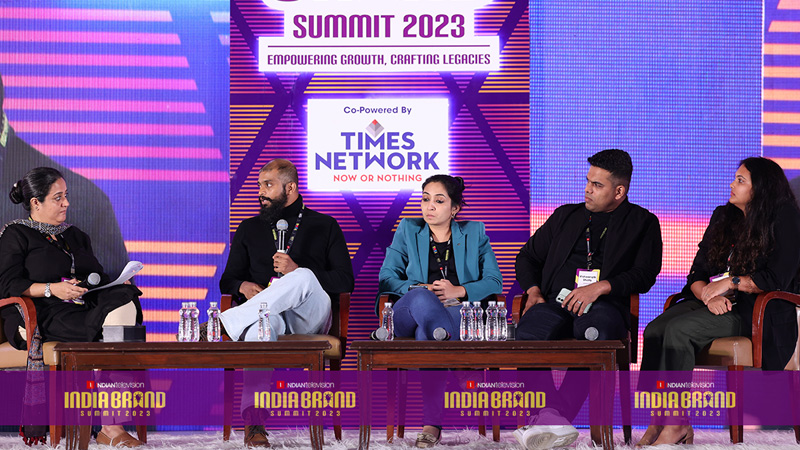
    Mumbai: The India Brand Summit held on 28 November 2023 at The Lalit Mumbai, convened leaders, marketers, entrepreneurs, and experts to explore current trends, challenges, and opportunities in the dynamic brands and marketing arena.

    The session delved into: Is D2C the correct way for businesses? How bright is the future? The session offers an in-depth exploration of the brands choosing the way of D2C and how that decision has impacted the success journey and contributed to their successful brand building.

    The key highlights of this session were: Brands are turning to D2C for rapid revenue growth and enhanced customer loyalty. This shift, crucial in price-sensitive markets like India, overcomes distribution challenges. D2C not only bridges gaps but also utilizes data for personalized user journeys, ensuring quicker and more efficient consumer connections.

    The panel was moderated by Boston Consulting Group partner and associate director Jyoti Narula Ranjan and had panelists including

    Candere By Kalyan Jewellers head of marketing, brand experience & data Akshay Matkar, NIVEA India digital precision marketing manager Tanvi Amladi, Pocket Aces business head Vishwanath Shetty, Kaya VP & head of marketing Samyukta Ganesh Iyer.

    The session began with Ranjan asking, “How do you as a brand, map the consumer journeys in this omni-channel D2C world? There is an aspect of marketing to these users in this digital world and there is a method of mapping the consumer journeys.”

    Amladi answered, “ I think one for us was to really acknowledge that today consumer journeys are not linear. So we know consumers are exposed to so many different touchpoints, especially in a category like skincare. I think the first step for us when we talked about customer journey was to really acknowledge that fact and say then therefore What are these different ways in which I can reach my consumer? The second thing was actually understanding the consumer and therefore just making sense of who she is because we knew weren’t talking to someone who is just 18 to 22. That is someone who is just displaying a certain specific life she would within that she’s doing so many different things. She comes in with different, she’s at different stages in her skincare journey. So speaking, again specifically to the category that we play in, it was very important for us to even understand what is her category entry point. When she gets into skin care. Someone’s getting into it, at the age of 18, by the time she’s 22, she’s already super evolved in her journey. Someone is getting introduced to it only at the age of 25, maybe when she’s a little bit into her career. So, for us just understanding all these little nuances around how the consumer comes into the category and how kind of she plays around with it, in different in different ways. That was the starting point and that’s always been kind of the anchor around which we build a lot of what we do at NIVEA.

    Commenting on the same, Ranjan said, “I think one thing which is probably coming out stronger is how over the long term period there were a lot of micro-moments that you’re probably capturing in how these consumers are entering the purchase journey or just the brand interaction journey.”

    She then asked Matkar, “It would be very interesting to see how really as a brand to thrive in an environment where consumers are doing this omni channel touch point. How do the marketing teams really thrive using agile methodologies, both on preparing the back end, and getting the right touchpoints in place? How do you make that happen at the backend because one is knowing the consumer, but then how do you capture that touchpoint in a digital-first world?”

    Matker replied, “I’ll break it into two parts. Part A is, how you look at the consumer area. So in our case, since we have an online store and also offline store. We look at it in four parts. Part A is, that the user has discovered the product online and purchased it offline. Part B is, consumers have discovered the product online and purchase is also happening online. Third and fourth is user has discovered the product offline and purchased it offline and the user has discovered the product offline and made the purchase online. So these are the four different types of consumer journeys that we look at. Hence our entire marketing spends, the teams, the way we operate, it shifted. We started our offline reading journey in 2022. Prior to that, it was completely online. What we do is, we have something created called our entire data warehouse, and we have something called a CDP like many brands do. The main problem in the digital space is that it’s not about collecting the data, it’s about how accurately your data you’re collecting and what are the data losses that are happening. So because we have multiple systems, we have CRM, we have a communication platform, we have personalisation tools, we have recommendation tool and then so many data points that we need to collect, we need to process and then we need to look at different data and based on that how do we actually split the entire marketing spends. So looking this journey into four halfs has helped us to make informed decision on which channel we need to invest more. Though, I think we can see that, our data pointers like 70 per cent of the consumers are discovering the product online. So though our CPA on the retail side would be lower, but our investments should be on the higher side on the digital space.”

    Thereafter bringing Iyer into the conversation next, Ranjan asked, “How did you help these (Baskin Robbins & Kaya) brands find out the value proposition to the right consumer set mapping? And how did you really use digital media to drive this omnichannel existence for the brand?”

    Iyer said, “One big thing I think we were discussing just before the panel right now in terms of saying that, today every brand, small, big otherwise needs to have a very strong presence both online and offline. So it’s no longer about whether I’m a D2C brand, or whether I have an offline brand. Everyone’s omnichannel today. Brands that were born on D2C have now started opening up stores offline in order to give consumers the experience that they’ve been craving because they don’t get that online. And vice versa, the convenience, the comfort of calling for things online is why even the large brands who registered for the longest time today are all there. A great case study would be what happened with CPR in, when we actually did one of the first collabs, that we drove with Swiggy where we actually did a 50/50 partnership in terms of making the ads, making all of the media buys including Hotstar Integration. For the very first time, two brands, one aggregator brand and one brand actually came together and it hit the nail on many boxes because one, a brand like Baskin-Robbins, which had been there in the Indian market for 26 years at that point in time, globally for 75 years, suddenly became relevant to millennials who had kind of played back to us saying ‘it’s my childhood friend, it’s a brand that I grew up having as a kid with my parents. After dinner, we would go for a walk, go to the nearest Baskin-Robbins parlor, and pick from their 31 flavours. But today it was not the brand of choice for millennials so there was a definite issue there. For Swiggy, they wanted a premium ice cream brand on their platform. So it kind of hit the nail on many, many boxes there. Second, it had also become irrelevant to the male audiences, perhaps because of the color pink it had become little alienating to the audience, that ice cream as a category is fairly gender agnostic otherwise. Third, there was also a problem of the brand not being easily available because ice cream, as a category, was not something that people were calling for online. So going live on IPL being there from, the first match to the last match, we did this fantastic innovation with Hotstar as well where you could just call for the ice cream while the gamification was happening. It has changed the landscape because suddenly the brand became relevant. The brand had fresh fruit ice cream flavors like Naturals and Ibaco and it also helped everybody. As I was saying it was a much larger connect because suddenly during the lockdown the brand was available and that would have never happened. I mean we could have never forced on. So I think why D2C matters, it kind of answers the question of the topic today, the brand is then available. Any brand of your choice is then available at your fingertips.”

    Thereafter Ranjan asked Shetty, “What is the mantra for getting content right on social marketing and how do you advise brands to leverage content social media influencer marketing for building brands having that direct connect?”

    Shetty replied, ”I feel knowing your customer is very important. Where is the customer? Are they on Instagram or are they on Facebook or on LinkedIn, That’s also really, really important. So content is a huge bucket where you can bifurcate its basis where your audience is. Interestingly, when the influencer wave started post-COVID. I think there was good traction initially. I remember basically when we started Skinsi which was direct competition to Kaya then and we largely were D2C, so we provided clinical services at home. So for us, I still remember we did drop challenge which was one of the first campaigns that I did for Skinsi back then and this was I think Woman’s Day. So there was a clear trend that we saw, globally whatever works on TikTok on Insta, in a week’s time it is to travel to India. So you always want to make your UGC content a success and everyone starts digging into what should we do. While it was very simple for what we saw, we executed in 10 days and we spent barely around 10-12 lacs. Interestingly, we didn’t get a lot of leads in such, but the consideration and the conversion doubled our business. So, I think influencer marketing is not just a big mark in a box, but you need to be very, very sure what will work for your brand and how your audience will take it and if you make it a very inclusive community campaign, budget doesn’t matter. It will work for your brand. So that’s influencer marketing and working and you don’t have to spend crores, but you can still leverage it using international trends or global trends. Indianise it, take one or two good influencer and make a UGC content, do a tactical campaign, and kick-off. So that’s how influencer marketing has really helped especially for a skincare category. So I think that’s a great example. But now what has happened is a lot of these influencers also don’t want to be called influencers, they want to be called creators. So if you go back to the influencers, tell them, ‘You know what here is a reel, a post, do one story, one reel’, they’ll charge you a bomb but instead if an Instagram influencer wants to do a podcast series on Spotify and as a brand you help him to do that, he will come at 1/3 the cost and he will do value ads like no one’s business. So when you start connecting with the creator, help him in his journey, is when the brand grows and then the creator will be happy to push extra stuff from his side.”

  • toothsi names Vishwanath Shetty as VP of brand partnerships

    toothsi names Vishwanath Shetty as VP of brand partnerships

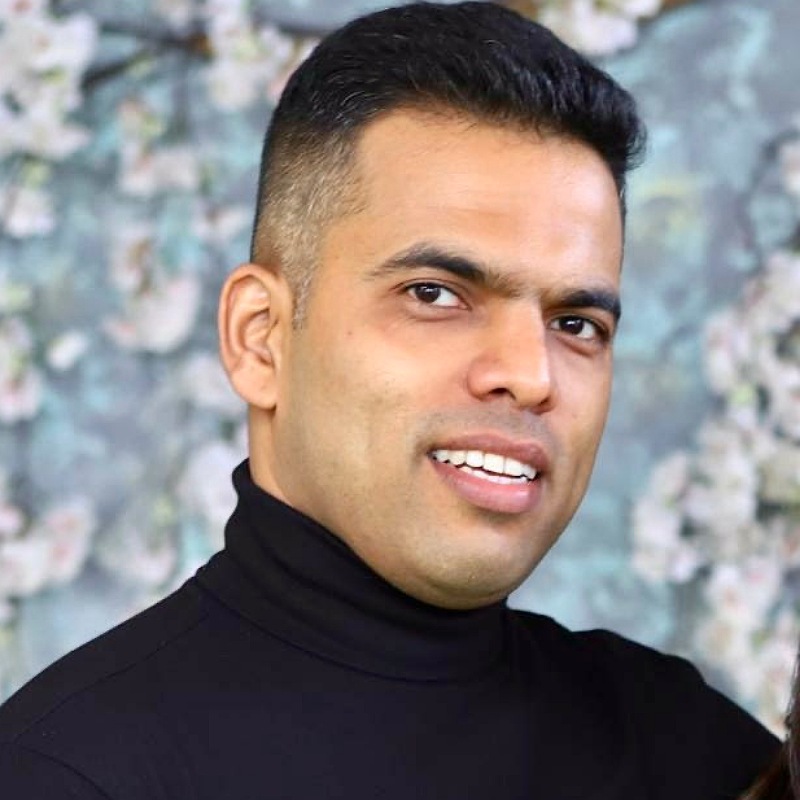
    Mumbai: toothsi, a D2C start-up recognised for its smile makeover products and services has named Vishwanath Shetty as its new vice-president of brand partnerships. 

    With more than 15 years of experience in IP/branded content sales across media, advertising and martech, Shetty will lead the newly-formed partnership development team. The team was created to optimise the information flow and develop new initiatives with partners across the marketing and advertising ecosystem.

    “At toothsi, we are proud of the long-term value exchange we have developed with our partners. Nurturing these partnerships and integrating new ones is a significant concept of our mission in a fast-evolving technology, said toothsi co-founder and CEO Dr Arpi Mehta. “Shetty’s strong cross-functional expertise and dynamic leadership style will guide our new partnership development team to even higher levels of excellence in serving our clients.”

    Before joining toothsi, Shetty was associated with Pocket Aces as vice president, head of sales and brand solutions, where he was instrumental in building and growing its business and advertising partnerships team. He has also served at The Walt Disney Company as regional head – brand content (W&S), where he was instrumental in strategising high-profit revenue model for youth cluster in media networks by creating marquee intellectual properties such as “Girl in the City” season 1-3 and “The Trip” season 1-2.

    “I am thrilled to join the toothsi team at this pertinent juncture in their development and to collaborate with a brilliant set of people across the company,” said Vishwanath Shetty. “Our efforts to build partnerships will strengthen our position, allowing us to integrate strategic objectives that create mutual value for brand marketing strategies that involve our partners.”