Tag: Visa

  • OMA’s MobiSwipe to deploy 50k MasterCard-preferred & Visa-ready mPoS devices in ’17

    MUMBAI: In line with the government’s vision of Digital India and complemented with the RBI’s policies advocating non-cash transactions, MobiSwipe has announced that it will be deploying over 50,000 mPoS devices within the next three quarters of 2017.

    MobiSwipe is a part of the solutions offered by OMA Emirates and is currently being used by merchants across metros like Mumbai, Pune, Bengaluru, Chennai as well as other cities like Coimbatore, Cuddapah, Sriviliputhur etc.

    The mPoS solution enables merchants to accept payments through Swipe and Chip debit and credit cards on the go via a smartphone or tablet loaded with the MobiSwipe app connected to the pocket sized card reader.

    While metros and Tier 1 cities have been steadily moving towards transacting minus cash, MobiSwipe is focused on Tier 2, Tier 3 and other smaller cities that are yet getting familiar with the concept. With nearly 1000 terminals already in operation, the company’s next target is the retail and e-commerce sector followed by financial institutions, banks, etc.

    OMA Emirates Group CEO Niranj Sangal said, “We see India as a huge opportunity for growth. We are strong advocators for digital payments. Demonetisation was a learning curve for all to understand how payments worked and urged consumers to look beyond cash payments.”

    “Avenues have opened for non-cash payments and today, there is more than just a handful of solutions available be it wallets, PoS, mPoS, internet banking, or Government initiatives like UPI and BHIM. We have already received a demand for around 20,000+ MobiSwipe mPoS devices over the last few months of commencing operations and are hopeful of supplying these within the following two months. Simultaneously, there is a demand for PoS devices as well, indicating that India is ready and has progressed to accept non-cash payments as a better alternative. We aim to set up at least 1,00,000 of our PoS terminals by year end,” said Sangal.

    He further added, “A section of merchants have already progressed to using mPoS devices from regular PoS due to convenience, cost and mobility. In smaller cities we understand that there is lack of knowledge about operations and costs. We are hoping to bring about a change in this outlook and are attempting to reduce the costs associated with such transactions while simplifying operations and processes making it a favourable choice for all. We attempt to create an eco-system where merchants can benefit and all parties are able to profit from the system.”

    The sign-up procedure for MobiSwipe is simple and requires a merchant to submit KYC and the merchant agreement form. After the necessary documentation, mPoS is handed over to the merchant. A merchant can link his existing current account with MobiSwipe and does not need to open a new account as a part of the on-boarding process. Real-time transactions are enabled and funds get transferred to the merchants account on a daily basis. MobiSwipe is available at a highly competitive price point with flexible payment options. It comes along with an Ingenico mPoS device which is PCI-DSS and PA-DSS Certified and is MasterCard preferred mPOS and Visa Ready Partner. MobiSwipe promotes paperless transactions, is a cost-effective solution as compared to PoS and is accessible via most Android smartphones. The custom web portal allows merchants to keep a record of the history, reports and other tools.

  • Taxing e-ways cash in on utilities

    Taxing e-ways cash in on utilities

    MUMBAI: Utility and other companies are seeing more pronounced use of plastic money or online payments — the obvious choice of the connected world in the times of demonetisation.

    Since inception, DishTV has been open to e-payment. The company is in sync with the government’s demonetisation. It has witnessed over 65 lakh unique transactions through electronic payment till date.

    The service tax component on the above transaction was approximately Rs 2600 lakh. DishTV incurred a collection cost of four per cent on the tax. The tax is in addition to state entertainment tax and the license fee levied by MIB on DTH operators. Other distribution platform are not subject to license fee.

    As per industry estimates Rs 25000 crore of turnover escapes tax compliance in Cable TV services which results in loss of direct and indirect taxes to the tune of Rs. 8000 crore to the exchequer on annual basis. Demonetisation, timely implementation of digitisation and rollout of GST will bring in much needed transparency and ensure a level playing field.

    Not only the entertainment services, the transport services too are using plastic money. Popular digital payment solution, Ola Money can be used at over 25 major utilities including BESCOM, BSES, Reliance Energy and Indraprastha Gas. It is already being accepted by over 500 merchants across online payments and offline POS, outside the Ola platform. A maximum recharge of up to Rs. 20,000 is permitted on Ola Money wallet until 30 December, 2016.

    Ola Money announced that it has enabled cashless payments through its wallet for key utilities. By selecting the ‘Bill Payment’ option on the Ola Money app and selecting their utility provider, users can instantly pay their utility bills with one touch. The RBI recently increased the recharge limit on wallets like Ola Money from Rs. 10,000 to Rs. 20,000 until 30 December to facilitate cashless transactions.

    Ola Money SVP and head Pallav Singh said, “We are proud to add 25 leading utilities to this list. We are coupling our experience in payment technology with our deep commitment to keep India moving towards a cashless economy.” Ola Money can be recharged using net banking debit cards or credit cards including MasterCard, VISA, American Express and RuPay.

    The department of telecommunications notification has extended the deadline for the acceptance of 500 rupee notes as legal tender for recharging prepaid phones for top-ups till 15 December, 2016. The Cellular Operators Association of India (COAI) director-general Rajan Mathews said, “Despite initial teething problems, demonetisation will benefit the nation by driving increased digital transactions, promoting transparency, boosting tax collection and ensuring social equity..”

    Continuing the use of old Rs 500 notes as legal tender for prepaid mobile services is crucial because industry estimates indicate between 30 per cent and 50 per cent fall in demand as customers are still struggling with less cash in hand.

  • Taxing e-ways cash in on utilities

    Taxing e-ways cash in on utilities

    MUMBAI: Utility and other companies are seeing more pronounced use of plastic money or online payments — the obvious choice of the connected world in the times of demonetisation.

    Since inception, DishTV has been open to e-payment. The company is in sync with the government’s demonetisation. It has witnessed over 65 lakh unique transactions through electronic payment till date.

    The service tax component on the above transaction was approximately Rs 2600 lakh. DishTV incurred a collection cost of four per cent on the tax. The tax is in addition to state entertainment tax and the license fee levied by MIB on DTH operators. Other distribution platform are not subject to license fee.

    As per industry estimates Rs 25000 crore of turnover escapes tax compliance in Cable TV services which results in loss of direct and indirect taxes to the tune of Rs. 8000 crore to the exchequer on annual basis. Demonetisation, timely implementation of digitisation and rollout of GST will bring in much needed transparency and ensure a level playing field.

    Not only the entertainment services, the transport services too are using plastic money. Popular digital payment solution, Ola Money can be used at over 25 major utilities including BESCOM, BSES, Reliance Energy and Indraprastha Gas. It is already being accepted by over 500 merchants across online payments and offline POS, outside the Ola platform. A maximum recharge of up to Rs. 20,000 is permitted on Ola Money wallet until 30 December, 2016.

    Ola Money announced that it has enabled cashless payments through its wallet for key utilities. By selecting the ‘Bill Payment’ option on the Ola Money app and selecting their utility provider, users can instantly pay their utility bills with one touch. The RBI recently increased the recharge limit on wallets like Ola Money from Rs. 10,000 to Rs. 20,000 until 30 December to facilitate cashless transactions.

    Ola Money SVP and head Pallav Singh said, “We are proud to add 25 leading utilities to this list. We are coupling our experience in payment technology with our deep commitment to keep India moving towards a cashless economy.” Ola Money can be recharged using net banking debit cards or credit cards including MasterCard, VISA, American Express and RuPay.

    The department of telecommunications notification has extended the deadline for the acceptance of 500 rupee notes as legal tender for recharging prepaid phones for top-ups till 15 December, 2016. The Cellular Operators Association of India (COAI) director-general Rajan Mathews said, “Despite initial teething problems, demonetisation will benefit the nation by driving increased digital transactions, promoting transparency, boosting tax collection and ensuring social equity..”

    Continuing the use of old Rs 500 notes as legal tender for prepaid mobile services is crucial because industry estimates indicate between 30 per cent and 50 per cent fall in demand as customers are still struggling with less cash in hand.

  • Tata Sky and Visa to collaborate for DTH recharge options

    Tata Sky and Visa to collaborate for DTH recharge options

    Mumbai: Tata Sky and Visa have collaborated to offer Tata Sky subscribers a unique QR code based mobile payment solution, powered by mVisa. Tata Sky subscribers can now recharge their account by scanning the QR code through their mobile phones directly from the TV screen or online on mytatasky.com.

    Visa Group country manager, India and South Asia T.R. Ramachandran said, “Visa is focused on digital innovation to accelerate the development of next generation platforms and solutions that will shape digital commerce. mVisa enables secure, digital commerce through the mobile phone, which today has become the single point of access to technology for consumers. The mVisa solution for Tata Sky subscribers will cater to a large user base across India; we will continue to build more such use cases across online and offline channels to accelerate the adoption digital payments.”

    Tata Sky MD and CEO Harit Nagpal said ”One of our most important pillars of business at Tata Sky is that Innovation has to be Simple and Easy to Use for all. Convenience to use any new technology is the key to ensuring its mass utility and success. We believe mVisa will help subscribers across India with this payment solution from the comfort of their homes.”

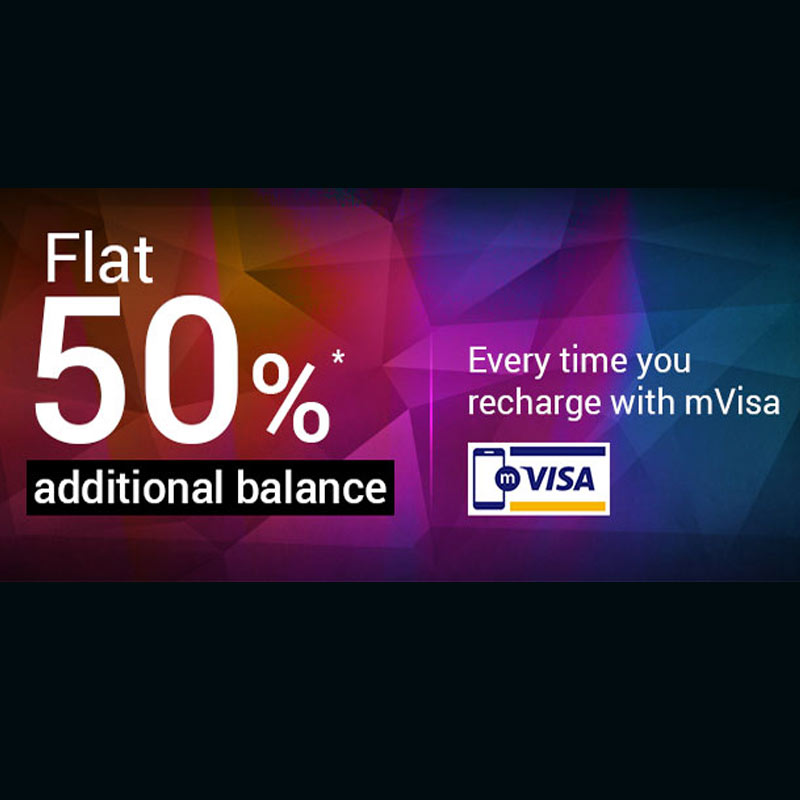
    As an introductory offer, subscribers will get 50% additional credit up to a maximum of Rs. 200 on recharge using mVisa. This offer can be availed three times in a calendar month.

    India is currently the 2nd largest smartphone market in the world, with over a billion smartphones expected to be sold in the next five years. The increasing popularity and adoption of mobile devices presents a huge opportunity for the growth of mobile-based digital commerce. The mVisa payment solution on Tata Sky will empower over 17 million subscribers spread across Indian cities, towns and villages, to make payments without having to use cash, debit or credit cards and from the comfort of their homes.

    In order to make payments, customers simply need to open their bank’s mobile application, select the mVisa option, which will activate their smartphone’s camera. The unique QR code on the TV screen (appears on clicking the home or yellow button on the Tata Sky remote control) will prompt for the payment amount, followed by entering the mPIN, to complete the transaction. It is a card-less solution which facilitates payments by scanning the merchant/service provider’s QR code. Subscribers can also log on to mytatasky.com and recharge their account online using the mVisa payment option.

    India is the first market globally where mVisa has been introduced to support the migration from cash to electronic commerce. mVisa is available on the following apps – Axis Bank Mobile Banking App, Bank of Baroda M CLIP App, Bank of India mVisaApp, Pockets by ICICI Bank, HDFC Bank PayZapp andState Bank Anywhere App. Any bank’s mVisa customer can transact on any mVisa merchant.

  • Tata Sky and Visa to collaborate for DTH recharge options

    Tata Sky and Visa to collaborate for DTH recharge options

    Mumbai: Tata Sky and Visa have collaborated to offer Tata Sky subscribers a unique QR code based mobile payment solution, powered by mVisa. Tata Sky subscribers can now recharge their account by scanning the QR code through their mobile phones directly from the TV screen or online on mytatasky.com.

    Visa Group country manager, India and South Asia T.R. Ramachandran said, “Visa is focused on digital innovation to accelerate the development of next generation platforms and solutions that will shape digital commerce. mVisa enables secure, digital commerce through the mobile phone, which today has become the single point of access to technology for consumers. The mVisa solution for Tata Sky subscribers will cater to a large user base across India; we will continue to build more such use cases across online and offline channels to accelerate the adoption digital payments.”

    Tata Sky MD and CEO Harit Nagpal said ”One of our most important pillars of business at Tata Sky is that Innovation has to be Simple and Easy to Use for all. Convenience to use any new technology is the key to ensuring its mass utility and success. We believe mVisa will help subscribers across India with this payment solution from the comfort of their homes.”

    As an introductory offer, subscribers will get 50% additional credit up to a maximum of Rs. 200 on recharge using mVisa. This offer can be availed three times in a calendar month.

    India is currently the 2nd largest smartphone market in the world, with over a billion smartphones expected to be sold in the next five years. The increasing popularity and adoption of mobile devices presents a huge opportunity for the growth of mobile-based digital commerce. The mVisa payment solution on Tata Sky will empower over 17 million subscribers spread across Indian cities, towns and villages, to make payments without having to use cash, debit or credit cards and from the comfort of their homes.

    In order to make payments, customers simply need to open their bank’s mobile application, select the mVisa option, which will activate their smartphone’s camera. The unique QR code on the TV screen (appears on clicking the home or yellow button on the Tata Sky remote control) will prompt for the payment amount, followed by entering the mPIN, to complete the transaction. It is a card-less solution which facilitates payments by scanning the merchant/service provider’s QR code. Subscribers can also log on to mytatasky.com and recharge their account online using the mVisa payment option.

    India is the first market globally where mVisa has been introduced to support the migration from cash to electronic commerce. mVisa is available on the following apps – Axis Bank Mobile Banking App, Bank of Baroda M CLIP App, Bank of India mVisaApp, Pockets by ICICI Bank, HDFC Bank PayZapp andState Bank Anywhere App. Any bank’s mVisa customer can transact on any mVisa merchant.

  • Networkplay Unveils VideoPlay

    Networkplay Unveils VideoPlay

    MUMBAI: Networkplay, Indian subsidiary of Gruner+Jahr takes video advertising to a whole new level with the launch of VideoPlay, a revolutionary byproduct of its recent acquisition – Vxchange. Further enhanced with multiple features, added benefits, VideoPlay is a digital video ecosystem that offers an open marketplace platform for video content and ad inventory to content providers, publishers and advertisers.


    An easy-to-use marketplace platform, VideoPlay enables trading of video content and advertisements. The platform provides syndication opportunities to content providers while enabling publishers to add value to their existing content by picking videos from the platform and hosting it on their websites. Advertisers will also be able to leverage this scheme by delivering ads on various genres of video content. The platform offers both custom flash-based video players as well as HTML5 compatible video player to deliver video through embed codes, thus ensuring that it supports all devices including mobiles and tablets.


    Advertisers will get to choose from ad formats such as pre-roll, post-roll, mid-roll and overlay image ads. Depending on the type of user (content provider, publisher, advertiser) VideoPlay provides customised user interfaces and functionality features.  


    Commenting on this launch, Mr. Kuldip Singh, CEO Gruner + Jahr, India says, “G+J’s strategy for Networkplay focuses on further growth of the existing business and expansion of the product portfolio. With India as Asia’s 3rd largest online video market after China and Japan, and online video consumption has grown to more than 3.7 bn videos as against 1.8 bn in 2011, the market is witnessing shifts in ad budgets inclined heavily towards video advertising. The launch of VideoPlay brings to fore, Networkplay’s focus on building strong technological competence in the video space, thus differentiating itself from other players and helping it pave the way for a long-term position in this segment.”


    According to Ampreet Singh, CEO Networkplay, “The company is taking myriad initiatives to establish itself as a large media firm. The core continues to remain digital and due diligence by our team in the market with several content providers, publishers and advertisers, further reinforces our product offering as of  immense value to all. Our successful campaigns delivered in a couple of months for clients like Visa, KFC, Mitsubishi Electric & Virgin Atlantic have made us very visible in the market. The performance on these campaigns has been above industry standards and we expect it to be even better in the coming months.”


    The launch of VideoPlay, marks the beginning of a series of exciting novel schemes. Networkplay has already tied up with various content providers and publishers for this proposal and is expecting more traction in the coming months.

  • Silicon Valley Tech Entrepreneur Karl Mehta Launches: Code For India

    Silicon Valley Tech Entrepreneur Karl Mehta Launches: Code For India

    MUMBAI: Karl Mehta, the Silicon Valley technology entrepreneur and venture capitalist, today announced Code For India (CFI), a global community of software engineers from around the world to build technology for public service to solve developing world problems. With India as the test-bed, CFI proposes to build tools that will help solve problems on the ground, and empower citizens to actively participate in partnership with local government to give communities the power to help themselves.

    “As a firm believer in the power of crowd sourced and open sourced technology, we have created Code For India to provide tools to fight day-to-day public service issues,” said Mehta.
    “Code For India’s use of technology will promote transparency, participation and efficiency in the way local people can voice their concern and find solutions. The transformative power of technology will aid India — and other developing countries facing similar problems.”

    Code For India has support from Indian-origin tech professionals around the world. Software engineers from Microsoft, Google, eBay, VISA and Facebook have volunteered in developing social awareness apps in the first phase of Code For India. Potentially adding thousands of volunteers, the organizations TiE Silicon Valley, TiE Mumbai, TiE New Delhi and The Morpheus Fund have partnered with Code For India to encourage their large network of tech community members to get involved. In addition, Professor Vijay Pande of Stanford University, Mohandas Pai, Chairman of Manipal Global Education and Vish Mishra, Venture Director at Clearstone and mentor to The Hive and The Fabric have joined the Advisory Board.

    “Code for India is a unique and commendable initiative whereby the sharpest of computing minds can apply themselves to altruistic causes. TiE Delhi NCR are proud to be associated with the program,” said Deep Kalra, President of TiE-New Delhi.

    “TiE is volunteerism at its best as demonstrated since its inception. We are thrilled to partner with Code For India in leveraging Silicon Valley technology and entrepreneurial talent to solve pressing needs of the Indian society,” said Venkatesh Shukla, President of TiE-Silicon Valley.

  • ‘India is our largest revenue contributor’ : TSA Group CEO Marcus Luer

    ‘India is our largest revenue contributor’ : TSA Group CEO Marcus Luer

    As it plans to grow its business in India, Total Sports Asia (TSA) is looking at media formats that combine sports with lifestyle.

    Plotting an aggressive growth strategy, the sports marketing company has been able to double its India business year on year.

    The business in India has been divided into three verticals – media, licensing and events and sponsorship. Forty per cent of the business comes from media. Another 40 per cent comes from events and sponsorship, while licensing takes up the rest.

    In an interview with Indiantelevision.com‘s Ashwin Pinto, TSA Group CEO Marcus Luer talks about the challenges sports marketing companies face in Asia.

    Excerpts:

    How has the business grown over the last couple of years?
    In the TV rights and production business, we are physically involved in over 50 live events across the globe. We provide satellite and production service to our core properties in badminton, table tennis, squash and boxing. We own and sell major properties worldwide including BWF Super Series, ITTF Pro Tour and all other ITTF events, PSA Pro Tour, AIBA Boxing and the World Series of Boxing.

    So far as partnerships and sponsorships go, we work on both ends of the spectrum. We work directly with rights holders and help them find new partners in Asia, including major football clubs from Europe, F1 teams, US Open Tennis and ITTF Pro Tour.

    What challenges did the economic downturn pose for you?
    2008-09 were not “fun” years. We had invested heavily into new areas, manpower and had lost a big account. We stuck to our core principals and retooled certain areas of the business. We are on target to have our best year ever.

    As it plans to grow its business in India, Total Sports Asia (TSA) is looking at media formats that combine sports with lifestyle.

    Plotting an aggressive growth strategy, the sports marketing company has been able to double its India business year on year.

    The business in India has been divided into three verticals – media, licensing and events and sponsorship. Forty per cent of the business comes from media. Another 40 per cent comes from events and sponsorship, while licensing takes up the rest.

    In an interview with Indiantelevision.com‘s Ashwin Pinto, TSA Group CEO Marcus Luer talks about the challenges sports marketing companies face in Asia.

    Excerpts:

    How has the business grown over the last couple of years?
    In the TV rights and production business, we are physically involved in over 50 live events across the globe. We provide satellite and production service to our core properties in badminton, table tennis, squash and boxing. We own and sell major properties worldwide including BWF Super Series, ITTF Pro Tour and all other ITTF events, PSA Pro Tour, AIBA Boxing and the World Series of Boxing.

    So far as partnerships and sponsorships go, we work on both ends of the spectrum. We work directly with rights holders and help them find new partners in Asia, including major football clubs from Europe, F1 teams, US Open Tennis and ITTF Pro Tour.

    What challenges did the economic downturn pose for you?
    2008-09 were not “fun” years. We had invested heavily into new areas, manpower and had lost a big account. We stuck to our core principals and retooled certain areas of the business. We are on target to have our best year ever.

    Are things back to normal now or has the Japan earthquake set things back?
    Sports marketing in Asia has been back to normal since 2010, which was also a big Football World Cup year. I believe the industry has growth potential for the next 20-30 years. Of course, there will be course corrections based on global macro economic problems or more domestic issues in key markets which will affect everyone.

    On the other hand, sports marketing is still only a toddler in Asia and has plenty of years left before it reaches levels of maturity as seen in the US, Europe or Australia. Certain sports have already been developed like cricket in India. But even cricket has plenty of room to improve and grow. As powerful as the IPL is, it‘s not on the same level of professionalism as major football Leagues in Europe. For a still relatively new League, it has done incredibly well and has plenty of room to grow and improve.

    How has the business in India grown?
    The business from India has been doubling year on year. India has always been a very important market, even prior to 2004 when we set up our local subsidiary. Over the years, India has now grown to be the single largest country in terms of revenue contribution to the group.
    ‘We already have great scale in India and do very little in cricket. That just shows that there are plenty of other areas to concentrate on and grow the business outside cricket‘

    Given that India is a one sport country, what is the strategy to build scale here?
    We already have great scale in India and do very little in cricket. That just shows that there are plenty of other areas to concentrate on and grow the business outside cricket.

    We have divided the business into three verticals – media, events and sponsorship and licensing. We do six to seven events a year.

    How did you get involved with the Delhi Golf Club?
    The Delhi Golf Club made the most sense for us in terms of taking the rights for their calendar year and getting sponsors. We have got sponsors like Mitsubishi Motors and China Tourism. The other option is to do a one off event like everyone else. We did not want to get into a crowded space.

    How are you going to get involved with the F1 event here?
    In F1, our focus is on the teams and only occasionally we work with the local races.

    I do believe that F1 viewership and general interest in the sport will dramatically grow in India over the next three-five years. I saw it first hand in Malaysia where F1 was unknown to the general public prior to the first race in 1999; now everyone seems to be an expert. I have no doubt that F1 will have a similar success in India. It‘s an amazing product and even more exciting to watch live than on TV.

    Once Indian corporations have a chance to see the F1 spectacle live, they will get the idea pretty quickly on how to leverage the power of it in the local market and even worldwide.

    In India what work are you doing to grow soccer?
    We have worked with several clubs including Churchill Brothers to help them grow their commercial revenue streams. We had partnered with CAA to bid for the rights, which now are handled by IMG/Reliance. So we were ready to invest considerable resources into the sport, but unfortunately came up a bit short.

    We are seeing sports bodies and agencies making a bigger push in India. WWE just set up an office here. IMG Reliance is doing work to push sports. How will all this activity benefit the sports marketing environment here?
    It clearly will grow the size of the pie,,there is no doubt about it. Just like Cricket, there are several other sports which have good growth potential. It has happened all over the world and will happen here as well. Clear second tier sports will emerge and will develop their own niche and space.

    Growth will be led by new star players emerging in certain sports; the 2012 Olympics will particularly unearth new talent. Sports will be driven by corporations seeking new ways to reach consumers and being driven or prized out of cricket.

    Are you looking at the possibility of a JV in India like what IMG has done with Reliance?
    We are always open to team up with powerful partners.

    In terms of leveraging their brands, to what extent is digital becoming important for sports federations and sports marketing agencies?
    The digital world is a huge opportunity for sports in general. Niche sports can now deliver their content directly to their fan base without having to rely on the big sports platforms or channels.

    At the same time, sports is the only true “appointment TV” and, therefore, will continue to drive pay TV and other traditional media platforms as it caters to huge audiences — “live”.

    The only difference is sports, where it is all about live experience; no one will tape a crucial match of their favourite team, player or sport. People make “appointments” to watch it live; the delivery mechanism and the viewing experience might change but not the desire to see it while it unfolds. That‘s the true power of sports.

    What progress has your online streaming service Total Sports TV made since launch?
    It‘s an on-going case study into the digital world for us. We don‘t claim to have found the ultimate solution yet — but it gives us exposure into a new fast developing area and will lead to new business opportunities down the line.

    How is Total Sports Asia planning to get involved with the 2012 Olympics?
    I assume that the economic impact in Asia will be much smaller compared to 2008. We are working with several companies who are major Olympic sponsors and helping them with marketing and leveraging ideas and implementation across the region.

    I believe the London Olympics will be big in Asia, because of the host city itself. Beijing was unique in many ways and might not be topped in terms of the sheer scale and size. But I have no doubt that London will set new standards in many other ways. Overall, the Olympics will definitely grow in Asia and we will see more and more global sponsors trying to take its advantage by making it locally relevant.

    What are the new technologies coming up here that are enhancing the viewer‘s experience?
    Our racket sport production business is growing dramatically this year. We have brought in many innovative ideas such as speed guns and virtual technology to enhance the viewer experience. We are also aiming to provide fans with new data and info about their sport.

    We will continue to work with our Federations to push new technologies and ideas, while making it commercially viable at the same time.
    Sports marketing in Asia has been back to normal since 2010, which was also a big Football World Cup year. I believe the industry has growth potential for the next 20-30 years. Of course, there will be course corrections based on global macro economic problems or more domestic issues in key markets which will affect everyone.

    On the other hand, sports marketing is still only a toddler in Asia and has plenty of years left before it reaches levels of maturity as seen in the US, Europe or Australia. Certain sports have already been developed like cricket in India. But even cricket has plenty of room to improve and grow. As powerful as the IPL is, it‘s not on the same level of professionalism as major football Leagues in Europe. For a still relatively new League, it has done incredibly well and has plenty of room to grow and improve.

    How has the business in India grown?
    The business from India has been doubling year on year. India has always been a very important market, even prior to 2004 when we set up our local subsidiary. Over the years, India has now grown to be the single largest country in terms of revenue contribution to the group.
    ‘We already have great scale in India and do very little in cricket. That just shows that there are plenty of other areas to concentrate on and grow the business outside cricket‘

    Given that India is a one sport country, what is the strategy to build scale here?
    We already have great scale in India and do very little in cricket. That just shows that there are plenty of other areas to concentrate on and grow the business outside cricket.

    We have divided the business into three verticals – media, events and sponsorship and licensing. We do six to seven events a year.

    How did you get involved with the Delhi Golf Club?
    The Delhi Golf Club made the most sense for us in terms of taking the rights for their calendar year and getting sponsors. We have got sponsors like Mitsubishi Motors and China Tourism. The other option is to do a one off event like everyone else. We did not want to get into a crowded space.

    How are you going to get involved with the F1 event here?
    In F1, our focus is on the teams and only occasionally we work with the local races.

    I do believe that F1 viewership and general interest in the sport will dramatically grow in India over the next three-five years. I saw it first hand in Malaysia where F1 was unknown to the general public prior to the first race in 1999; now everyone seems to be an expert. I have no doubt that F1 will have a similar success in India. It‘s an amazing product and even more exciting to watch live than on TV.

    Once Indian corporations have a chance to see the F1 spectacle live, they will get the idea pretty quickly on how to leverage the power of it in the local market and even worldwide.

    In India what work are you doing to grow soccer?
    We have worked with several clubs including Churchill Brothers to help them grow their commercial revenue streams. We had partnered with CAA to bid for the rights, which now are handled by IMG/Reliance. So we were ready to invest considerable resources into the sport, but unfortunately came up a bit short.

    We are seeing sports bodies and agencies making a bigger push in India. WWE just set up an office here. IMG Reliance is doing work to push sports. How will all this activity benefit the sports marketing environment here?
    It clearly will grow the size of the pie,,there is no doubt about it. Just like Cricket, there are several other sports which have good growth potential. It has happened all over the world and will happen here as well. Clear second tier sports will emerge and will develop their own niche and space.

    Growth will be led by new star players emerging in certain sports; the 2012 Olympics will particularly unearth new talent. Sports will be driven by corporations seeking new ways to reach consumers and being driven or prized out of cricket.

    Are you looking at the possibility of a JV in India like what IMG has done with Reliance?
    We are always open to team up with powerful partners.

    In terms of leveraging their brands, to what extent is digital becoming important for sports federations and sports marketing agencies?
    The digital world is a huge opportunity for sports in general. Niche sports can now deliver their content directly to their fan base without having to rely on the big sports platforms or channels.

    At the same time, sports is the only true “appointment TV” and, therefore, will continue to drive pay TV and other traditional media platforms as it caters to huge audiences — “live”.

    The only difference is sports, where it is all about live experience; no one will tape a crucial match of their favourite team, player or sport. People make “appointments” to watch it live; the delivery mechanism and the viewing experience might change but not the desire to see it while it unfolds. That‘s the true power of sports.
     

    What progress has your online streaming service Total Sports TV made since launch?
    It‘s an on-going case study into the digital world for us. We don‘t claim to have found the ultimate solution yet — but it gives us exposure into a new fast developing area and will lead to new business opportunities down the line.

    How is Total Sports Asia planning to get involved with the 2012 Olympics?
    I assume that the economic impact in Asia will be much smaller compared to 2008. We are working with several companies who are major Olympic sponsors and helping them with marketing and leveraging ideas and implementation across the region.

    I believe the London Olympics will be big in Asia, because of the host city itself. Beijing was unique in many ways and might not be topped in terms of the sheer scale and size. But I have no doubt that London will set new standards in many other ways. Overall, the Olympics will definitely grow in Asia and we will see more and more global sponsors trying to take its advantage by making it locally relevant.

    What are the new technologies coming up here that are enhancing the viewer‘s experience?
    Our racket sport production business is growing dramatically this year. We have brought in many innovative ideas such as speed guns and virtual technology to enhance the viewer experience. We are also aiming to provide fans with new data and info about their sport.

    We will continue to work with our Federations to push new technologies and ideas, while making it commercially viable at the same time.

  • The History Channel looks to build a local connect for ‘Ultimate Cars’

    The History Channel looks to build a local connect for ‘Ultimate Cars’

    MUMBAI: The History Channel (THC) is looking at different ways in which to build a closer brand connect with viewers.

    Last month it had announced a slew of initiatives which includes airing a set of interstitials called Timepieces. Now it has done a unique stunt for its show Ultimate Cars.

    The show which airs every Wednesday at 10 pm looks at cars including Ferrari, Alfa Romeo, Porsche 91, Corvette. It looks at what makes them special, the history as well as their novelty value. The channel has now tied up with car designer Dilip Chhabria.

    Speaking to indiantelevision.com on this THC VP marketing Rajesh Sheshadari says, “Dilip Chhabria is an expert on the subject of cars. We therefore chose him as our endorser of the show. On air we have cut promos which air during the course of each episode. He gives his views on a particular car being featured.

    “Online we have created a microsite at www.historychannelindia.com/dc.html. Visitors can read his views on the cars. They can also offer their feedback. There is a car of the week feature as well as an episode guide. For the next season next year we are looking to take the relationship to the next level by possibly organising an on-ground event with a motoring association.” The channel has roped in Pepsi, Visa, Nokia, ICICI Prudential, Club HP and Kinetic Blaze as sponsors.

    As had been reported earlier by Indiantelevision.com THC has kicked off an online initiative is a campaign called Save Your History. This is a community sharing site that will allow Indians to share and collaborate on important historical happenings in their lives, which could be in the form of photos, precious documents and artifacts.

    Right now a trial version of the site is up. The final version will be launched at the end of next month. The channel is also in the process of roping in well known personalities like industrialists to endorse the initiative. Promos featuring them will be cut and will go on air towards the latter half of next month.

  • Hutch lines up host of offerings for Champions Trophy

    Hutch lines up host of offerings for Champions Trophy

    MUMBAI: Cellular provider and ICC Global Partner Hutch has lined up a host of offerings for its subscribers at the ICC Champions Trophy in India.

    Hutch is providing live scores, analysis and live commentary in Hindi and English, SMS updates and Hutch alerts for fans to stay in touch with the action at the Champions Trophy.
    Hutch’s services during the ICC Champions Trophy include: On mobile portal PlanetHutch – Free live scores as well as other paid content like games, wallpapers and themes; also a reverse auction of tickets for the ICC Champions Trophy 2006 Finals; video replays of all ICC Champions Trophy 2006 matches; and coaching techniques with India captain Rahul Dravid.

    On voice portal – Expert analysis in Hindi of all matches by former India player Arun Lal; the same in English for selected matches by former India player Sanjay Manjarekar & Arun Lal. 

    Live commentary – Audio streaming – Live scores and cricket commentary of all matches in English and Hindi; subscribers to this service also get SMS-based alerts of all wickets and every 10 overs.

    On SMS – Subscribers can get the score by sending CKT as a SMS to 123 and get the detailed scoreboard by sending DET as a SMS to 123.

    On Hutch Alerts – Cricket alerts for the latest breaking action.

    In addition to these services, Hutch is beginning a promotion on 15 October with all prepaid subscribers that refill with Rs 250 getting alerts as well as who buy a new Hutch postpaid connection for all cricket matches for the next one month free of cost.

    The promotion starts from the ICC Champions Trophy 2006 and continues for six months, until the ICC Cricket World Cup 2007. Also, new subscribers – prepaid as well as postpaid – can enter a contest and win an all expense paid trip to see the ICC Cricket World Cup 2007 in the West Indies and ICC merchandising. These offers follow a cricket quiz Hutch ran during September with the winners getting tickets and accommodation to the final of the ICC Champions Trophy in Mumbai on 5 November.

    This quiz was available over Hutch’s voice portal – available in 10 India languages – on SMS and on mobile portal PlanetHutch.

    Hutch is one of the ICC’s four Global Partners, along with LG, Pepsi and Hero Honda. The ICC also has four official sponsors, Indian Oil, Cable & Wireless, VISA and Standard Chartered Bank.