Tag: Virtual Reality

  • GUEST ARTICLE: How virtual reality (VR) is changing the dynamics of the content industry

    GUEST ARTICLE: How virtual reality (VR) is changing the dynamics of the content industry

    Mumbai: By offering a vivid, immersive, and interactive experience, virtual reality is changing the very face of the content industry by allowing users to be at the centre of all the action.

    The concept of virtual reality (VR) has sprung into prominence in the last couple of years. Although the technology has existed since as early as the 1990s, its applications were quite limited and confined only to high-tech, expensive gaming consoles. However, in the early years of the 2010s, VR started getting attention from wider sections of the industry, and consequently, the technology started reaching the doorsteps of potential customers. Going forward, VR has evolved significantly and has now established itself as one of the fastest and most cutting-edge technologies of the 21st century.

    While VR has applications in a number of different business domains, it is proving particularly beneficial for the content industry. With the help of VR, creators can produce far more engaging and immersive content that can prove instrumental in enhancing user experiences. In fact, it won’t be an exaggeration to say that VR is significantly uplifting the creative abilities of creators and helping them to take their engagement with audiences to a different level.

    With the help of VR-enabled content, users can experience the world like never before. Using specific headsets and devices, VR allows audiences to be there right in the middle of the action and experience the surroundings in immersive 3D formats. Just like we interact with our friends and colleagues on social media platforms, VR-enabled content takes this experience to another level through its immersive 3D experience. This captivating experience elevates the users’ experience and helps the creators strengthen their relationship with the target audience. No wonder, big tech giants such as Microsoft, Google, Amazon, and Facebook are betting big on the potential of VR and investing heavily to capture the imagination of the masses faster and better than others.

    Before specifically elaborating on the role of VR in content creation, it’s important to put things in perspective. Let’s take the example of news, one of the cornerstone pillars of the content industry. Not long ago, we used to rely on television, newspapers, and radio to get our daily dose of news. While in the morning, newspapers were the primary source of information, news channels and radios were used to dish out the hot and happenings of the world in the daytime. However, fast forward to today, and the scenario is completely different. Digital media is leading the revolution in the news industry, and more than channels or publication houses, social networks such as Facebook, Twitter, WhatsApp, and Instagram have become our primary sources of news and information.

    In the backdrop of such altered realities, the content industry is now making a tectonic shift. To strengthen their user base and elevate the customer experience, many creators today offer their viewers the opportunity to experience the content in a completely immersive manner with the help of VR technology. Media outlets such as The Guardian, the BBC, and the New York Times are offering VR-enabled content that puts the viewers right in the “middle of the action”. It feels so real and engaging, as if you’re present at the venue and experiencing things as they are unfolding on a real-time basis. This unprecedented level of engagement that has never been completely unseen and unheard of before has become possible today only with the help of VR-enabled content.

    One of the most popular ways in which VR manifests its utility in content creation is through the 360-degree video formats. These formats, coupled with augmented reality (AR), capture scenes from every possible direction and help evoke a more passionate response from viewers. Especially in the background of falling sales in the print media, content creators are now banking on these surrounding videos to widen their appeal among new sets of customers while strengthening their current viewer base. Along with video formats, computer-generated graphics for a vivid interactive experience are also part of the VR technology that is used to offer a more immersive experience to users.

    Of course, there are many challenges that VR-enabled content has to overcome, with the high cost and gouging customers’ appetite for new-age technologies being the primary issues confronting the industry currently. To find satisfactory solutions, content creators, including the broadcasting studios mentioned above, are collaborating with leading VR players and other stakeholders in the industry, including policymakers, among others. The idea behind this coming together is to offer audiences a vivid perspective and a greater sense of understanding through VR-enabled content within the realistic boundaries of cost and resources.

    With the help of VR, content creators allow users to experience venues and situations first-hand. This is particularly beneficial for increasing engagement with viewers and strengthening the relationship between content creators and their target audiences. VR-enabled content with the help of certain gadgets and devices can create a sense of “belongingness” and take the engagement experience to a different level altogether. The use of immersive, 3D technologies is proving immensely beneficial for all stakeholders in the content industry, and if the costs of VR headsets rationalise further, the enormous potential of VR-enabled content can be realised in no time. In sum, while the segment of content creation has always remained dynamic and evolving, the latest change in the form of VR integration is changing the face of the industry like never before.

    The author of the article is Interality founder and CEO Farheen Ahmad.
  • ZEE unveils metaverse induction program in Bengaluru

    ZEE unveils metaverse induction program in Bengaluru

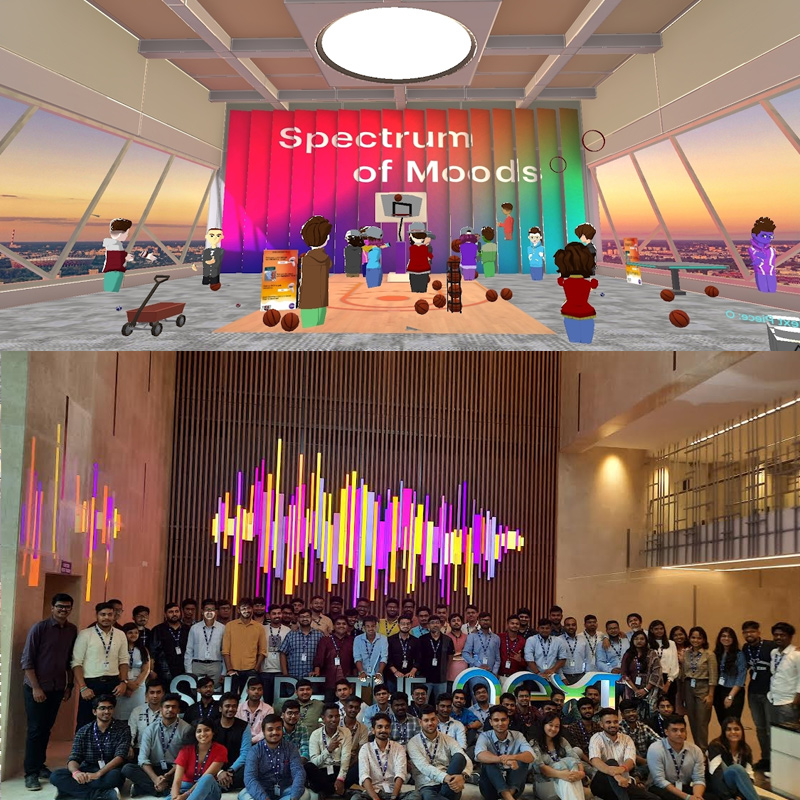
    Mumbai: Media & entertainment powerhouse Zee Entertainment Enterprises on Wednesday conducted its first-ever induction in a metaverse environment by welcoming 100+ campus graduates from top tech institutes across the nation; at its Technology and Innovation Centre in Bengaluru. The company’s Technology & Innovation Centre is focused on building the metaverse platform by leveraging augmented reality (AR), virtual reality (VR), non-fungible tokens (NFTs) and relevant data models for its digital platforms.

    The initiative was led by ZEE president – digital businesses and platforms Amit Goenka and ZEE president – technology & data Nitin Mittal, addressing the fresh batch of recruits. The metaverse induction was conducted by leveraging the Technology and Innovation Centre’s state of the art infrastructure and cutting-edge technology solutions: thereby offering an immersive mixed reality experience to the fresh recruits.

    Speaking about the initiative, Goenka said, “At ZEE’s Technology and Innovation Centre, we are imbibing a sharp strategic focus on enhancing our tech capabilities through a confluence of technology, data and talent. As we break new grounds and redefine entertainment by providing robust experiences across platforms, we are delighted to converge ZEE’s collaborative and entrepreneurial culture in the physical and digital realms through an immersive environment such as the metaverse. We aim to provide intuitive experiences across all aspects of an individual’s consumption, creation and transactional journey, and the first-ever metaverse induction program at ZEE, will not only help enhance our employee experience by boosting innovation and productivity, but also our consumer experience by several notches.”  

    Mittal added, “For over three decades, we have been a pioneer in breaking the norms of the industry and creating path-breaking content for more than 1.3 billion viewers across the globe. Our focus now remains on building capability for ZEE by leveraging technology to provide our consumers with extraordinary entertainment experiences. Our quest is to shape the next chapter of India’s media & entertainment Industry and the Metaverse Induction Program is yet another major step in that direction. Inducting, nurturing and retaining the right talent is key to any organisation’s success and we are committed to giving a world class experience to our tech enthusiasts right from day one.”  

    Commenting on the induction program, ZEE president – HR and transformation Animesh Kumar said, “As digital transformation continues to accelerate globally, the Technology and Innovation Centre at ZEE will play the lead role in driving the next era of innovation in content consumption. ZEEverse, is another major stride in a string of initiatives launched by the company in recent times towards our internal digital transformation that will enable the organisation to become future-ready and win in the emerging digitalised economy. Our focus is on building a collaborative, high-capability driven environment for our tech enthusiasts, who are the innovators of tomorrow. As we reimagine the future of our workplace, we are also elevating our employee experience by adopting a new induction module that will deliver an immersive and unique on-boarding experience to our fresh batch of recruits.”  

    ZEE is focused on offering a holistic environment to its talent workforce through the adoption of innovative and path-breaking technology. The company aims to enhance and widen its digital footprint, as it continues to cater to the global community and redefine the future of entertainment by leveraging a technology and innovation led strategy.

  • GUEST COLUMN: Marketing in the metaverse – A giant leap for the advertising world

    GUEST COLUMN: Marketing in the metaverse – A giant leap for the advertising world

    Mumbai: The pandemic made digital engagement very mainstream. Nowadays, people are up for exploring the variety of tech innovations available in the virtual space. During the pandemic, they switched from offline engagement to online engagement, whether in the field of shopping, eating, gaming, lifestyle, etc. This switch resulted in wide online social traffic, especially in the immersive gaming experiences through the use of augmented reality (AR) and virtual reality (VR).

    With 4.8 billion active internet users worldwide, the online social sphere is growing to accommodate new kinds of communication, engagement, and entertainment for a tech-savvy generation. A recent concept that has come alive in the online social sphere is metaverse. It is backed by a fully working virtual economy, much based on cryptocurrencies and digital items and assets such as nonfungible tokens (NFTs).

    Metaverse, the internet’s evolution, is emerging as a potential tech innovation in the spheres of marketing and social connection. It encapsulates a set of immersive virtual experiences where people can exist and engage with each other on virtual platforms. It builds rich user engaging virtual spaces using augmented reality (AR), virtual reality (VR), blockchain, and digital media principles. Merging the virtual, physical and augmented reality in real-time, metaverse allows interaction in a virtual 3D environment through avatars.

    The worldwide metaverse market is worth $63.83 billion in 2021 and is expected to be worth $1,527.55 billion by 2029. It implies growth at a CAGR (compound annual growth rate) of 47.6 per cent between 2022-2029. Prodigious companies are eagerly investing in the metaverse market. Therefore the marketing and advertising companies have found their newly developed fondness for the metaverse. And true enough, the newly developed concept projects ample opportunities for tech-savvy entrepreneurs and brands to advertise themselves through it.

    Metaverse creating value in advertisement wold

    Marketing space has continuously evolved in time from radio to television to the internet and now metaverse. The early days of social media saw a rise of social marketing agencies likewise for metaverse, these agencies will have to, urgently, explore virtual and metaverse practices lest new metaverse dedicated companies prop up to better engage customers.

    Marketers constantly seek out customers, whether in person or online, therefore, the expansion of metaverse will undoubtedly be one of the primary future playgrounds for the digital advertising sector. Experiments through influencer marketing are also being undertaken in the metaverse for engaging customers in metacommunities. Virtual reality will revolutionise business and marketing attitudes by serving as a medium for invention, discovery, identification, expression, connection, and socialisation.

    Some companies have already taken a lead. Big brands like Google, Facebook, Microsoft, Puma, Gucci, Nike, etc are making their way into the metaverse. For e.g Nike’s Nikeland, a virtual universe that offers sports venues, digital showrooms where people can dress their avatars, etc. Or M.A.C cosmetics that provide virtual make-up facilities or Fortnite, which introduced in-game concerts for its players. These moves will strengthen their digital foundation more.

    Some apparent benefits make it clear why the companies must explore the metaverse to create value in the advertisement world. Metaverse is believed to have a high engagement rate. Tech-savvy gen-z and millennials who engage in it are the future customers. They spend their significant time on the internet. Companies and brands must step into the world of metaverse to advertise and capture this expansive lot of audience. Furthermore, because it is a novel concept in the market, it is less expensive than standard advertising modes. Therefore, the first-mover advantage will have a cost-benefit for the businesses.

    The data-driven interaction is another benefit. The data collected in the virtual 3D environment will come from real people that are operating as avatars. This data can be analysed and used to forecast or make business scaling strategies both for the online and offline market. Not only tech companies and business industries, but even government entities are keen on investing in the multiverse. Several innovative advertising methods have been explored so far. Use of non-fungible tokens, collectibles, cryptocurrencies, in-game activities, and virtual billboards are some to name.

    Direct to avatar sales values at $54 billion and innovative entrepreneurs are already envisaging the ways for new income streams. From real estate purchases to online AR / VR-based offices to gaming, all is happening in the metaverse. Silicon Valley sees it as the next generation of the internet. Facebook has made a significant investment in its growth. Snapchat has incorporated augmented reality components into its services. Thus, it is bound to become a parallel reality because technological innovation is here to stay.

    Data privacy, security and copyright issues are challenges that will prevail for now, but that must not prevent companies from exploring. Smart advertisers will succeed in any reality if they focus on matching their needs with the needs of their customers to produce useful experiences.

    The author is Wing Communications CEO and founder Shiva Bhavani

  • GUEST COLUMN: Is AI a threat to digital marketing industry in terms of employment?

    GUEST COLUMN: Is AI a threat to digital marketing industry in terms of employment?

    Mumbai: Artificial Intelligence (AI) has been one of the celebrated buzzwords of all time across various industries. It has been answering a lot of questions and taking humankind to new places, quite literally, with customer service like chatbots and autopilot driving machines.

    With people adopting the digital way of living, brands aggressively engage with digital technologies and innovation to propel their marketing efforts. AI is disrupting nearly every digital experience and has altered the way consumers interact with services.

    The deployability of AI-led technologies and the difference it has brought in achieving customer satisfaction is now posing a serious threat to digital marketers. With AI’s agility, it is normal for marketers to be a little insecure. However, the day when AI takes over digital marketing jobs is still years away. On the contrary, automation creates more opportunities than it is killing, with vacancies for AI coders and AI software handlers.

    Seven in 10 marketers claim to have a comprehensive AI strategy. Undoubtedly, organisations have found various machine learning applications that can benefit marketing endeavours.

    Customer service chatbots are one of the everyday uses of AI. It allows brands and businesses to offer 24/7 service to their customers and address basic queries. AI gives advertisers an edge by offering a tailormade digital advertising experience. and allows advertisers to acquire factual information for customer profiling such as age, gender, geographies and behaviours. This data further will enable marketers to create effective ads.

    AI technologies such as Augmented and Virtual Reality are also stealing the limelight by the way they are revamping the online shopping experience.

    Marketing professionals are also aligning Artificial Intelligence towards marketing content creation. With stacks of data accumulated by AI, marketers can easily decide on the content that will drive engagement. AI has been efficient in predictive analysis, allowing marketers to identify potential customers and strategies that will yield better results.

    Despite the significant advancement witnessed by AI, there are still some aspects that consistently need human intervention and expertise.

    Creative quotient: No matter how advanced, machines are still lagging in keeping pace with the human brain. Creative problem solving, music creation, painting landscapes, photo and video editing remain a few aspects where AI fails to perform. On the other hand, AI has been bringing a revolution in cutting down repetitive tasks such as creating customer profiles, sending personalised messages and scheduling.

    Decision-making: AI is adept at assisting humans but can’t have the final say. It requires a considerate amount of critical thinking and analysis to govern any marketing action. AI is crucial for acquiring data but cannot strategise or develop a plan on its own.

    The human touch: AI has proven effective at answering all the questions hurled at it by customers, but AI cannot build customer relationships due to the lack of emotional connection. The responses provided by AI-powered chatbots are restricted to their programming, whereas humans share similar experiences with other people, which forms a sense of relatability and understanding.

    AI is dependent on humans: AI is a technology developed by humans and cannot function independently. Therefore, it is dependent on humans to be programmed and be successful at performing a task. In addition, AI machines need to be upgraded as per the market’s changing landscape, which again requires human expertise.

    AI may still not be powerful enough to take up creative jobs, but it definitely eliminates a lot of human intervention from monotonous and routine jobs. As a result, businesses have been quick to deploy automation to boost productivity and mitigate the costs of resources.

    (About Author – Sahil Chopra is iCubesWire founder and CEO)

  • GUEST COLUMN: The all-pervasive role of technology in new-age marketing

    GUEST COLUMN: The all-pervasive role of technology in new-age marketing

    Mumbai: It was October 2020 when a Cadbury campaign featuring the Bollywood star Shah Rukh Khan (SRK) caught my attention. Christened as a ‘NotJustACadburyAd’, the campaign blended SRK’s image and voice using AI to create customised ads for local shops by directly naming them.

    This idea to promote local businesses when they had taken a big hit during the pandemic was widely appreciated. Also, from a creative angle, the campaign went viral. This level of hyper-personalisation could only be possible with the use of AI-led innovation and technology. This reflects two defining developments:

    1.      How new-age marketing is developing a deep understanding of the latest technology tools now playing a key role in developing meaningful customer relationships, and delivering friction-free, cross-channel experiences for consumers.

    2.       ‘Unified Analytics’ will replace ‘analytics by channel’ and customer groups will see an elevated level of strategic measurements and a much more holistic view of the customer.

    The chances are that while browsing through any marketing guide today, you will find it peppered with tech jargon. That’s how ubiquitous technology has become to the very essence and practice of marketing. As a result, brand campaigns have become more personalised and immersive than ever.

    While technology has exploded and there are hundreds of versions vying for space in the market, here are the ‘Top five most transformative technologies’ that will reshape marketing in times to come:

    1.      Increasing use of Chatbots

    This AI-led software can simulate meaningful conversations with internet users in a natural language through a combination of text and voice messages. Its popularity is increasing by the day due to its 24×7 role in solving customer queries. Bluebot, the chatbot of KLM Royal Dutch Airline, reported in excess of 1.7 million messages from 500,000 passengers.

    According to Salesforce, 69 per cent of the US consumers prefer using chatbots when engaging with brands since it often leads to a prompt response. As per estimates, ~40 per cent of big organisations are already using chatbots, and in the next few years, ~80 per cent of communication between the customers and organisations will be done through chatbots.

    2.      The rise of Voice Assistants

    Voice assistants like Amazon’s Alexa and Apple’s Siri have greatly altered the way users search for information on the web, fast gaining popularity in the voice search feature of search engines due to two important factors;

    -Average typing speed of 41.4 words per minute is far less productive than the speed at which we speak, i.e.160 words per minute

    -The Natural Language Processing (NLP) technology has gotten very advanced, making it easier for voice assistants to pick up and dissect queries accurately.

    Recent statistics reveal that one-third of 3.5 million searches on Google are voice searches. Therefore, from a marketer’s point of view, the voice search SEO strategy becomes important by updating content and becoming mindful of keyword research tools to come up with more voice search questions.

    3.      Fast growth of Virtual Reality

    The rise of Virtual Reality (VR) is mainly due to two reasons. Firstly, the hardware is relatively inexpensive. A Google Cardboard VR headset and a smartphone are enough for you to immerse yourself in another world. Also, many VR applications available on smartphones are completely free to play.

    Secondly, the unique user experience is visceral, the controls are far more intuitive, and the characters more relatable. That’s why it has been dubbed as the ‘ultimate empathy machine.’

    Taking a few examples from the retail sector, Tanishq partnered with Milestone Brandcom to install augmented reality (AR) kiosks (termed as ‘MirrAR’) for elevating the jewellery shopping experience. On the other hand, Lenskart offers 3D face modelling by measuring and mapping the user’s face from multiple angles, thereby providing a 360-degree view of the glasses. Similarly, Sephora’s AR beauty app lets users try makeup by superimposing certain lipstick shades and eyeliner looks using users’ selfie poses.

    4.      The imminent rise of Web 3.0

    Web 3.0, which is being built on blockchain technology [underlying bitcoin and other cryptocurrencies], aims to eliminate all-controlling intermediaries and provide the key benefit of a single login across social media accounts for seamless browsing, networking, engagement, and data security.

    This blockchain-led tech has the potential to re-invent the digital marketing industry. With users having direct control over their data and privacy, companies will have the opportunity to become highly user-centric and transparent by :

    -Analysing customer buying habits across platforms

    -Gathering previously unobtainable data on how consumers interact with devices and products

    -Gaining deeper insights on where a customer is in the buying journey.

    International luxury brands such as Balenciaga and Adidas are ahead of the curve and have started experimenting with Web 3.0, but time will tell how such virtual interactions can become stickier, and translate to potential sales. Even everyday brands like Taco Bell, Coca-Cola, McDonald’s, Gucci, and Warner Music are using non-fungible tokens [NFTs], thus introducing more and more audiences to the process of buying, owning, and selling digital collectibles. A great way for marketers to leverage NFTs is to use the technology for tickets and souvenirs.

    5.      AI-led Hyper-Personalisation

    The concept of a hyper-personalised experience is based on the use of AI in understanding and learning from human responses to communication by using data, such as recent purchases etc. This hyper-accurate segmentation of AI engines is a marketer’s delight in providing improved customer experience beyond assumptions and practices by using Customer Data Platforms (CDPs) as solutions for data architecture, integration, and reliability problems.

    Starbucks is an excellent example of hyper-personalisation. It took its already personalised menu to the next level by adopting a real-time personalization engine [primarily pulling data from their loyalty app] that produces individualized offers for their customers based on their previous behaviour and preferences.

    Most organisations utilise only ~15 per cent of the technologies and capabilities they are already paying for. Therefore, the number of technologies adopted is not as important as ‘applying’ them to solve business needs. Today, marketers are at the critical junction of integrating human experience and technology. They have forever been trying to demystify the customer’s mind. Thanks to technology, now we have endless ways of knowing!

    (The author is executive vice president – global marketing at Wadhwani Foundation. The views expressed in this column are personal and Indiantelevision.com may not subscribe to them.)

  • How AR, VR is reshaping the world of advertising and marketing

    How AR, VR is reshaping the world of advertising and marketing

    KERALA: From wall paintings and posters to highly advanced digital medium tools, the world of marketing and advertising has undergone groundbreaking transformation over the years. And now, with the internet at customers’ fingertips, marketers are making use of advanced technologies like virtual reality (VR) and augmented reality (VR) for their advertising campaigns. 

    According to a Statista report, the global VR market is growing at a fast pace, and is projected to increase from around $5 billion in 2021 to more than $12 billion by 2024. When it comes to AR, the number of mobile users of this tech is expected to reach over 800 million and is forecast to grow to 1.73 billion in the next three years. 

    As the popularity of smartphones has reached an all-time high among Indians, marketers are keener in using AR than VR, as VR advertising demands specific devices like Virtual Reality Headsets. However, advertising campaigns using AR are more effective in countries like India, as it does not need a head-mounted display, and can be accessed using a smartphone. Data suggests that both VR and AR will become equally popular among marketers by the end of 2024. 

    Considering its immense potential to boost the conversion rate, more and more brands are incorporating virtual reality (VR) into their marketing strategy. The implementation of VR and AR technology in marketing is providing great help to e-commerce companies too, as it allows the customer to make a proper buying decision after viewing the product in different dimensions on a virtual platform. 

    Virtual Reality Marketing: All you need to know

    The appeal of virtual reality marketing is its life-like quality and that it can provide a completely immersive experience to customers. This immersive experience can be attained using a VR headset, while a VR Instagram filter simply overlays objects or pictures onto the camera view. 

    On the other hand, augmented reality is a type of virtual reality where a digital image is overlaid in the real world. Brands tend to prefer AR marketing strategy as it does not demand specific hardware like headsets to offer an immersive experience. Moreover, AR is more accessible to customers, as it just demands a smartphone or desktop. 

    The success story of Sephora

    It was French multinational retailer of personal care and beauty products, Sephora, which initially popularised augmented reality marketing with its Virtual Artist app. This augmented reality feature allowed users to upload a selfie to virtually try on various products that can be purchased from its platform. 

    Later, the company launched a new update that allowed users to view themselves moving in real-time with digital makeup. Sephora’s Virtual Artist app now has a more interesting user experience with live 3D movement. 

    Try products before purchasing

    The success of Sephora’s AR advertising campaign gave several brands the courage to launch their virtual reality marketing initiatives. The introduction of AR tools literally helped the e-commerce industry, as over 60 per cent of e-commerce returns are because the product doesn’t meet the customer’s expectations. 

    As customers get a chance to try the products before purchasing, returns could be reduced to a great extent, and it will also catalyse the conversion rates. According to a Deloitte report, several industries including furniture, makeup, and shoe companies are reaping benefits from augmented and virtual reality marketing. 

    Ikea’s successful AR advertising campaign

    Swedish home furniture brand Ikea is another company that is successfully carrying out its AR-powered advertising campaign. The brand’s AR app Ikea Place allows customers to see how furniture will look in their home interiors before they buy. Customer testimonials indicate that the app has improved user experience over the previous website. 

    Try your shoes on Gucci AR 

    Recently, luxury apparel brand Gucci launched an AR feature in its app to promote the new line of Ace sneakers and other shoes. This advanced feature allows users to know how the shoes will fit on their feet, and thus they will be able to make the most perfect buying decision. The app is also capable to track movements, and it helps the customers to view the shoes from different angles. 

    Harnessing the power of VR and making way to MR

    Augmented reality and virtual reality are currently in use among marketers all across the globe. By ensuring an immersive experience to customers, these technologies help boost brand recognition and sales for the company. However, in the future, mixed reality (MR) will also grab the attention of brands. 

    Mixed reality is nothing but a blend of VR and AR and it creates an environment in which digital and physical objects can interact. To make things clear, MR allows marketers to put virtual products in consumers’ hands and gauge their responses. 

    Clearly, given the rapacious uptake of AR and VR by brands, the day’s not far when mixed reality too will become a part of their marketing mix. In fact, Statista pegs MR’s market size to grow from $47 million in 2018 to over $3.7 billion by 2025. With more consumers eager to take part in digital experiences, marketers are bound to comply.

  • AR, VR fantastic tools for brands to communicate their story

    AR, VR fantastic tools for brands to communicate their story

    MUMBAI: The outbreak of Covid2019 has changed life and business more than anybody could have imagined. To survive this pandemic, businesses around the globe are embracing digitisation faster than ever before. Two kinds of technology, augmented reality and virtual reality, are once again in the spotlight due to the pandemic. These two technologies have been underestimated and underutilised in the past. A virtual conference held by The Advertising Club  Bangalore on the topic ‘Bringing brands to life through AR & VR technologies’ saw panellists AliveNow CEO Adhvith Dhuddu, AutoVRse co-founder Ashwin Jaishanker, and FlippAR CEO Vivek Jain. The session was moderated by VRNAculars and Tripvana CEO Aneesh Koorapaty and Pink Lemonade founder and CEO Tina Mansukhani Garg.

    Koorapaty raised a question before the panellists about why it is more immersive now as compared to other media segments like print, radio etc.

    Dhuddu said that if you see the history of media and advertisement, especially on the web and on the mobile phone, it has always been about swiping up and down, left and right, clicking and other dimensions. AR and webAR are now able to interact through a person's eyes, lips, hands and facial gestures. It is now an immersive experience for people, they can use their front and back camera to bring life to a product and understand their placing in the real environment. He notes that the possibility of using augmented reality is endless. Because of the experiences created on augmented reality it feels immersive and realistic.

    “AR is in the business for a very long time, but it is in the past two to three years that brands and agencies are able to look at AR differently. The credit goes to social media platforms like Snapchat and now Instagram who have allowed tech companies and developers to build AR experiences into their app. So, the brand that already has its audience on their page can expose them to AR experiences.”

    Stories are the most powerful means for brands to inspire and influence. Products attached with stories have higher value as compared to products with just description notes Jain. Immersive tools like AR and VR are fantastic tools for brands to communicate their story.

    Ashwin Jaishanker thinks that brands recognised the potential of virtual reality very recently. With time, audiences started seeing a very complex narrative of AR. “The metrics that you create with AR on your customers is on a different level. This technology invites your user to experience the world designed in your product and it helps them explore the product by themselves,” he further added.

    Aneesh highlighted that for brands, AR and VR are great ways to create emotional connection.

  • Amazon brings Prime Day Celebration Alive with Virtual Reality Experience Zones!

    Amazon brings Prime Day Celebration Alive with Virtual Reality Experience Zones!

    Bangalore: Amazon India is bringing Prime Day celebrations alive with one-of-a-kind Virtual Reality (VR) based experience for Prime Day. Aimed at bringing the touch-and-try charm to ecommerce shopping, the VR experience allows customers to enjoy an immersive experience before buying the product. Customers will be able to view products in life-size, inspect products up close, enjoy 360 degree views and evaluate products in the environment that they are likely to use it in. This VR experience is available for hundreds of new products launching on Prime Day. Customers in Delhi NCR, Bengaluru, Chennai, Pune, Hyderabad and Kolkata can enjoy the VR experience by visiting the Amazon Prime Day Experience Zones in select malls in their city from July 6 to July 16.  Customers who experience VR will get exclusive cashback offers for shopping on Prime Day.

    Prime Day is Amazon’s flagship event exclusively for Prime members that offers new product launches, best deals, blockbuster video titles, celebrity curated music playlists, and more. Now in its third year in India, Prime Day starts at midnight on Monday, July 15 and – for the first time ever – runs for 48 hours.  Amazon has partnered with top brands such as Samsung, LG, Whirlpool, JBL, Sennheiser, Intel, Marks & Spencer, UCB, Kate Spade, Mothercare, Nestle and more to launch 1000+ new products on Prime Day available in India first to Prime members.

    With VR, Amazon will enable customers to experience the new products being launched and not just rely only on images to make a purchase decision. Through VR, customers will be transported to the world of Prime Day where they can see the fit and fall of a dress on a 360 degree hologram, pick up a necklace or earring and inspect the intricate details up close or open and look at the inside of a fridge. The VR experience will help customers evaluate the products to buy on Prime Day. Customers can also enjoy a fly through of the world of Prime Day, walk through its streets and play engaging games.

    Amazon is releasing 14 new Prime Video titles over 14 days in English, Hindi and 7 regional languages leading up to Prime Day. Customers can experience the stellar Prime Day entertainment line-up in a virtual movie theater. They can enjoy favourite scenes from hits like Kalank, Venom, NGK, A Star is Born, Maharishi and get surprise messages from their favourite movie stars!

    Commenting on the Virtual Reality Experience, Akshay Sahi, Director & Head of Prime, Amazon India said, “We are proud to bring to customers a one-of-a-kind way to experience the exclusive product launches and entertainment we have lined up for Prime Day 2019. We wanted a way to showcase hundreds of exclusive launches and bring them closer to customers. Through virtual reality, we are able to highlight the products as well as allow customers to interact with them. We are bringing the fun back to shopping by allowing customers to fly through the world of Prime Day, stroll through its streets, play games and have an enjoyable experience.”

    VR Experience Zones are open to all visitors, free of charge. At the Experience Zones, customers can also take selfies against the Prime Day wall, share their experiences on social media by tagging #AmazonPrimeDay & #DiscoverTheJoyOfMore and can win exciting prizes.

    Amazon Prime Day Experience Zones will be operational from July 6, 2019 until July 16, 2019 from 12 noon to 8 p.m. in:

    City

    Mall


    Delhi NCR

    Select City Walk

    Ambience Mall


    Bengaluru

    Phoenix Market City


    Chennai

    Express Avenue


    Pune

    Amanora Mall


    Hyderabad

    GVK One


    Kolkata

    Mani Square


    Not a Prime member yet? Customers can join Prime now for ₹129/month at www.amazon.in/prime to enjoy Prime benefits including free fast delivery, unlimited video, ad-free music streaming, exclusive deals and more.

  • Innovation is the pillar of the new events industry

    Innovation is the pillar of the new events industry

    Over the last few years, the events industry in India has experienced exponential growth and transformation, as a result of advancements in technology, new opportunities, platforms, and so on. While earlier, the sector dealt primarily with small scale events, today, massive, elaborate events are a common sight, with people flocking to them from all over the country. However, large scale events like these require a great deal of ideating, innovating, and brainstorming, and often, are not executed as well as they could have been, owing to the challenges involved.

    The phrase “If you do something, do it well, or don’t do it at all” is one that almost all of us are familiar with, and resonates with me greatly. As such, I believe that in order to make an event a massive success, the backend work and preparation that go into it, are of tremendous importance. It isn’t just about the efforts, but rather, the innovative ideas, concepts, and execution that make an event exceptional. A few of the factors and key innovations which make up the backbone of the event industry are enumerated below:

    Out-of-the-box concepts

    Given the explosive growth that the events industry has seen over the last few years, a large number of key, established players have poured into the market, while many more new groups are making their way in, every now and then. This is why it is extremely important for an event to be able to set itself apart from the rest, to leave a lasting impression. Out-of-the-box thinking and innovative concepts help create a unique experience for the guests, which not only ensure that they have a great time but also makes them eagerly look forward to the next event in the calendar.

    Importance of unique venue design

    The venue selected also has much to do with the success of the event, as it provides the framework for the experience that the guests will be a part of. Gone are the days when a stage and sound equipment were all that you need to make an event successful. From open-air concert grounds and underground basements to nature trails and more, event venues have only evolved more and more, with time, and hence, need to continue pushing boundaries, to create the perfect ambience and environment that complement the kind of event being organised.

    Variation in lighting

    In any kind of event, lighting plays a major role in creating the kind of aura and ambience that will make it a success. Not only that, the kind of lighting used and the way it is used have a lot to do with the prevailing mood of the audience as well, controlling the ebb and flow of the crowd, and its energy. From colourful psychedelic lights to more sombre, grim ones, lighting is one of the most important parts of the fundamentals of an event, and as such, need to be organised and set up appropriately and accordingly.

    Technology used

    The options offered by technology have made today’s event industry dynamic, revolutionary, and highly interactive. From drones and VR to live streaming and more, event organisers nowadays have a host of options to help augment their events and make them larger than life. Additionally, technology has also helped streamline and organise the industry as a whole, providing various platforms, features, and innovative solutions for it to grow and evolve.

    Crowd-sourcing

    The concept of crowdsourcing, though an old one, was almost unheard of, even a decade back. However, today, the event industry has realised the true potential of crowdsourcing, and more and more talented but unknown artists are gaining exposure, as a result. Additionally, crowd-sourced events are affordable and cost-effective, while providing the audience with a chance to directly contribute towards making their desired events a reality.

    Marketing/digital marketing

    To promote any event, it is extremely important to plan a great marketing strategy keeping in mind the target audience for the event. An event relevant blog post can also help in reaching out to the audience considering a blog is a good strategy to showcase everything around the event. Blogs can be directly targeted to the audience through interviews with the speaker or performer. Email marketing can also be considered as the second strong channel in all industries. Also, social media has been the most preferred platform for planning, promoting and executing the event; it is used to create a buzz around the event with various content and allows the followers to share and discuss it.

    Owing to these factors, the evolving dynamics of event technology have helped improve the attendee experiences and the level of engagement, as a result of which, the event industry has today become highly competitive and sought after. Every event organiser attempts to ensure that they create an event which is out of the box and caters specifically to the audience, in order to guarantee success. The power of social media is also a huge boon, which helps in spreading awareness and engaging the target audience, even before the event, so as to build the hype and ensure maximum attendance. These elements teamed with effective marketing strategies, and attention to every detail, play the most important role in helping organise a successful event. Not only does that ensure the maximum number of attendees, but it also helps create a unique experience that is attuned to the guests and their specific preferences, because of which, they keep coming back for more.

    (The author is MD, Dome Entertainment. The views expressed here are his own and Indiantelevision.com may not subscribe to them)

  • Uber Eats, CCD partner to launch India’s largest virtual restaurant network

    Uber Eats, CCD partner to launch India’s largest virtual restaurant network

    MUMBAI: Uber Eats, the world’s largest food delivery network and Café Coffee Day, India’s largest café chain, have announced a partnership to launch the country’s largest network of virtual restaurants, which will soon bring foodies a greater choice of ‘delivery-only’ restaurant brands exclusively on the Uber Eats app.

    The first restaurant brand under this partnership is scheduled to launch in November.

    This partnership will leverage Café Coffee Day’s robust and innovative F&B expertise, pan India café network with the technology that Uber Eats is renowned for. Uber Eats will help Café Coffee Day with data, analytics and insights to help identify food or cuisines that consumers crave the most. This will enable Café Coffee Day and Uber Eats to launch menu offerings as per evolving consumer trends, for multiple ‘delivery-only’ virtual restaurants.

    Uber Technologies vice president Jason Droege says, “Using experience and lessons learnt in the virtual restaurant space from our global operations, we hope to provide our Indian restaurant partners greater growth opportunities. Our customers too will enjoy ordering and eating their favourite everyday meals at the tap of a button.”

    Café Coffee Day chief executive officer Venu Madhan adds, “With this association we aim to take the goodwill and trust earned in the F&B space and combine it with new age reality of virtual restaurants to offer everyday meals that can be delivered to nomadic millennials at home or at work in a convenient manner. Uber Eats’s strength and expertise in the business of home delivery will ensure delight to millions of aspiring youngsters who have moved away from their homes with great quality products from Café Coffee Day’s virtual restaurants every day across the country.”

    Virtual restaurants are digital-only eateries that allow business owners to explore new culinary options and reach a wider audience by using the space in their existing kitchen. Virtual restaurants allow partners to test new opportunities in today’s dynamic market in a nimble manner.

    Uber Eats is currently present in 37 cities in India with a strong presence in tier 2 cities. In the last 3 months, the number of orders on the app has grown 6 times and Uber Eats is adding 100 new restaurants to its platform everyday. Café Coffee Day currently has a network of 1742 cafes across 246 cities in India.

    Uber Eats started in 2014 as a small delivery pilot in Los Angeles and launched as a separate application in Toronto in December 2015. Since then, it has grown incredibly fast, and is now a stand-alone app available in 350+ cities around the globe. In India, Uber Eats was first launched in Mumbai in May 2017.