Tag: Viren Razdan

  • Netflix’s ‘Indian Matchmaking’ shows content is the best marketing tool for OTT platforms

    Netflix’s ‘Indian Matchmaking’ shows content is the best marketing tool for OTT platforms

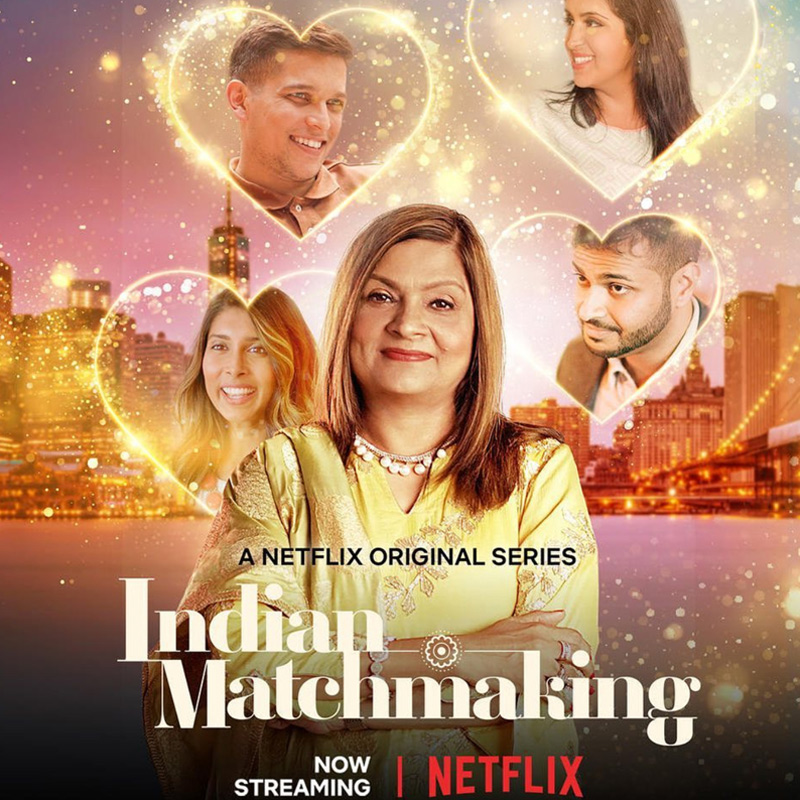
    KOLKATA: A week after Netflix dropped Indian Matchmaking, Mumbai-based matchmaker Sima Taparia had her face splashed on memes and posts on social media. Unlike its reality TV breakout hits Love Is Blind and Too Hot To Handle, Indian Matchmaking does not show a liberal dating culture setup or deep connection of love. Instead, it promotes the Indian arranged marriage trope. 

    Media, content creators and millennials across the globe have expressed their views and written official reviews about the latest trending show. While some think we can’t hide bitter truths for long, some are of the view that Netflix should not have promoted such a tainted social system. The appearance of colourism and casteism has made it receive a fair amount of backlash.

    “While the show normalises patriarchy and racism, the reason why we are hooked (including those of us who are outraged by it), from my observation, is because Indian Matchmaking gives us an opportunity to project our ideals and ‘wokeness’ on the back of the show. Screenshotting problematic statements and uploading it on my Instagram stories is a part of my ‘full watching experience,’” says Dentsu Webchutney creative director Binaifer Dulani.

    The trend again establishes a cliched notion that content is the biggest marketing tool for OTT platforms. The appealing shows broaden the appeal of the platform and help to grow a diversified following. And obviously, content travels globally. The show was not an Indian original from Netflix but it has received a great response from the country. As on Thursday morning, it was trending as the number one show in the country. Oddly, its local originals have not been able to create any buzz lately. 

    “For an OTT player, there are two kinds of products, the tech platform and the content it hosts. And irrespective of the business category, the rules stay the same. No matter how buzzworthy the marketing campaign is, if the product lives up to it, it takes it notches higher. The show almost immediately opened up an undercurrent of conversation and everyone wants to be in on the memes they scroll past. This need for belongingness is a big driver for subscriptions. And a good marketing strategy would only add to it by evolving and capitalising on this wave,” Dulani adds.

    “As the OTT market matures, we would begin to see genre-specific specialised platforms emerge, and so a distinct image. However, as of now most OTT platforms are generic entertainment service providers with content driving their imagery. New content campaigns become their marketing drive to recruit new subscribers and segments,” says Brand-nomics managing director Viren Razdan. 

    The audience has always perceived Netflix as a progressive, socially-aware platform and the platform has always been aware of its take on sensitive issues.

    Dulani adds, “Funnily enough, Netflix has managed to create this persona where you feel it thinks like you and is secretly laughing at some of the catchphrases with you (in spite of the ‘Netflix, what is this trash’ comments). Perhaps because Netflix manages to play the role of creator and spectator seamlessly. Through its owned content on social, it’s part of the Indian Matchmaking meme culture, like the rest of the internet.”

    “However, I feel that all content creators, advertisers and OTT platforms should further content that shows a world that’s more equal and questions problematic norms rather than glamorising them. I strongly believe that time and money should be invested in the pursuit of that versus clickbait. We carry this responsibility together,” she points out.

    Razdan says that in the new scenario, with movie halls going out of the social scene for a while, new releases lining up on OTT platforms are going to create the new blockbuster labels of content viewing.

    For now, Indian Matchmaking, though not made in India, has created all sorts of criticism on social media and has only served to spread the name of Netflix. Despite the negative comments, it could work well in getting more subscribers as Netflix targets India with new lower-priced plans.

  • What next after the WFH honeymoon?

    What next after the WFH honeymoon?

    NEW DELHI: The ‘new normal’ might already have started setting in with major conglomerates of the world taking calls like allowing their employees to work from home ‘forever’. Recently, Twitter CEO Jack Dorsey announced in a company-wide email that while opening the offices will be the company’s call, to come back will be totally an employee’s choice.

    Several other tech companies, including the other two giants Facebook and Google, have told their employees to work from home till the end of this year. Closer home, e-learning platform Unacademy announced that 60 per cent of its workforce will be working from home permanently, even after the lockdown.

    This gives a clear picture of what the future of workplaces is going to be like, at least for the tech firms where most of the work can be managed over servers and clouds. Reacting to the same, brand-thinker and independent consultant Harish Bijoor noted: “WFH makes sense for every factor: economic, social, family, commute, cost, time, and common sense. Corporate society does not need to artificially divide home and work anymore. It makes great sense!”

    Brand-nomics managing director Viren Razdan said: “While Google has announced WFH beyond the lockdown, the truth is tech companies have thrived on the idea of WFH or rather WFA or Work From Anywhere. Amazon and Apple were born in home-garages, giving birth to the cult of ‘ideas behind napkins’, start-up buzz at cafes, the informality bred a new culture of play.”

    Sharing his thoughts on how the culture can be embedded in other industries, he added, “This IS perhaps the WFH honeymoon; we are all learning and encouraging, holding each other’s hand firmly through this phase. The real truths would unveil once we bring the practice into regular play.  The biggest challenge perhaps would be to disrupt our culture to allow this fluidity and freedom. Our models at work based on firm control, checks and balances in place. The buzzing office is symbolic of efficiency and business as usual. Companies would be pushed to make accountability a key factor, and shed the weight of authority. A lot of companies are moving to fast-forward to agile models of work, which are perhaps more conducive to adapt to these new systems.”

    Recently, in  a webinar hosted by the Advertising Club of Bangalore, BBH India CEO and managing partner Subhash Kamath and Wunderman Thompson South Asia group CEO and chairman Tarun Rai supported the idea of allowing flexibility to agency workforce to work from home, citing reasons like the fact that it will bring more gender-equality within the teams and liberate the talent from geography.

    However, they had also noted that to make this culture a reality, people will have to bring some behavioural changes in themselves and leave control that they like to have on subordinates, and also the firms will have to rework their appraisal policies.

    Agreeing to this, Samsika Marketing Consultants MD Jagdeep Kapoor said: “I had learnt this from grandmother and it stands relevant today that when everything closes there should be one thing that remains open, and that is your mind. I think any transition will be possible if people keep an open mind and accept changes.”

    He also vouched for the many benefits that working from home will come with. “I think working from home increases productivity, saves time, and allows teams across cities to work together for better deliverables. Personally, I have been working from a home office for more than a decade now and it has been great. I have this policy that I don’t visit client offices and meet them at my place. With remote working, now clients have eased out even more and we have those meetings over video calls now.”

  • Alia Bhatt’s YouTube channel to boost her brand value

    Alia Bhatt’s YouTube channel to boost her brand value

    MUMBAI: In the past few years, YouTubers across the world have managed to grab a celebrity status for themselves. Names like Bhuvan Bam, Prajakta Koli, Ashish Chanchlani have become immensely popular and have got the chance to perform with several Bollywood celebrities. Creators like Shibani Bedi and Harsh Beniwal also made their Bollywood debuts this year.

    While these micro-and mini-influencers are on their way to embrace the silver screen, a star from there has shifted to the digital pedestal in a big way. Alia Bhatt, who within a career spanning over just 7 years has become a critically acclaimed star and has been getting abundant love from the fans as well, has launched her own YouTube channel on which, in her own words, she is planning to showcase her ‘unadulterated’ self.

    Bhatt is already a huge star and has a massive following on Instagram and Twitter. Then why did she decide to go the YouTube way?

    As per communications consultant on digital/social media marketing and PR Karthik Srinivasan the move is understandable as YouTube helps in long-form content far better than Facebook or IGTV given the SEO benefits.

    Indiatimes and Lifestyle Brands at Times Internet COO Angad Bhatia says that Bhatt already has strong cultural relevance and with YouTube she can become an influential content creator in her own way.

    It is not the first time that a celebrity is trying to dabble in the social media space away from conventional platforms like Instagram and Facebook. Jacqueline Fernandez has a strong Snapchat presence, and she also debuted on TikTok recently along with Shahid Kapoor, and Tiger Shroff. Sonam Kapoor has her own app where she connects with her fans sharing beauty tips and offering a sneak peek into her lifestyle. In fact, a few celebs like Ajay Devgn, Shilpa Shetty Kundra, and Priyanka Chopra have their own YouTube channels as well, but they often upload just professional stuff.

    Alia, who is one of the most loved stars in the country right now, could have easily leveraged these other media as well, especially her own app. Brand-nomics’ Viren Razdan notes that apps have their own limitations and challenges and that has led to international celebs like Kim Kardashian and Taylor Swift shutting down their individual apps.  

    Srinivasan says, “An app demands that people install it in the first place. And unless they happen to be really big fans, they may not install the app since it has limited appeal on an everyday basis. Plus, app content cannot be discovered by casual fans and fans of specific topics they address from time to time, while a YouTube page, with well-curated titles and tags would be.”

    Landor managing director Lulu Raghavan adds that an app needs very strong market machinery to promote and it is quite doubtful that people would want to add more app to their phones. Meanwhile, users are already there on YouTube and watching many forms of content and it makes it easier for discovery.

    Brand guru and founder Harish Bijoor Consultants Harish Bijoor quips, “YouTube is the place to be. A magnet star with a magnet brand-name can do just so much in promoting her own app. YouTube, on the other hand, provides it all and more within a nano-second. For Alia Bhatt, it must be like saying, ‘why dig a well when you can outsource the sea?’”

    Rightfully so, within just three days of the launch and just one introductory video online, Bhatt’s channel has more than 310K subscribers. Meanwhile, Sonam Kapoor’s app on Google Play Store reflects only 100K+ downloads in three years.

    Experts also believe that being on YouTube will add several points to Alia Bhatt’s already sky-high brand value.

    Raghavan feels that the platform might give her an edge amongst her peers and it is possible that she emerges as the next global star from India after Priyanka Chopra.

    “Of course, her primary brand value will be based on her roles and how well her movies perform. But if shares genuinely interesting and useful content besides, she could considerably enhance her brand value,” says Srinivasan.

    “An active medium definitely helps build your influencing power and has the potential to strengthen conversations. If curated well, it could build her value immensely,” adds Razdan.

    Bhatia adds, “This new generation of celebrities is very social media friendly. They know how to convert excessive social scrutiny to their benefit. More visibility is important for a top of the mind recall and higher brand value. Different media and social platforms ensure just that.”

    Also, brands can come forward to leverage in this new side of Bhatt’s social media presence. The actress is already associated with prominent brand names like Caprese, Frooti, Garnier, and Nokia and her venture into this new domain might open up other big opportunities.

    Srinivasan mentions that this will especially help brands that cannot afford expensive TV media. Her YouTube channel could be their first big media push if the target audience is appropriate.

    However, Raghavan points out that this is the one area in which Bhatt will have to tread carefully. “If she has authenticity then she should only promote those brands that she truly believes in. It shouldn’t become another value for sales pitches as that can easily backfire. But if she can track it (the products) beautifully in the narrative of her life, the word of mouth of a celebrity is extremely fast.”

  • Ad execs voice opinion on call to boycott Surf Excel’s Holi campaign

    Ad execs voice opinion on call to boycott Surf Excel’s Holi campaign

    MUMBAI: Brand Surf Excel has been known for its string of heart-warming advertisements that say ‘Kuch Accha Karte Hue Agar Daag Lag Jayein Toh Daag Acche Hain’. Be it Ramadan, Holi, or Diwali, the brand always has something interesting to offer the viewers in terms of a beautiful narrative promoting unity, most of the times with kids as the anchor.

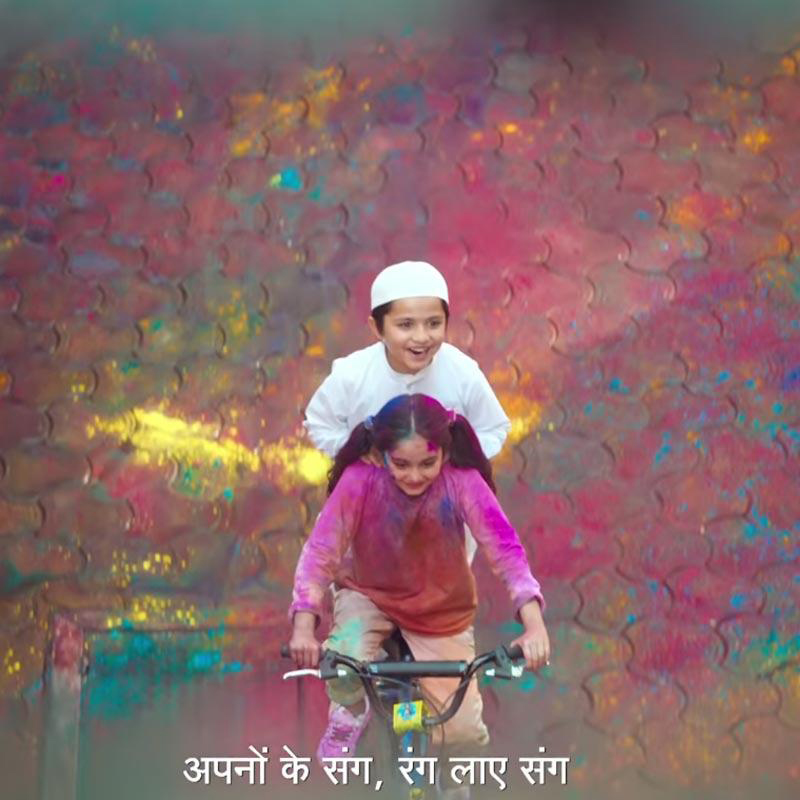
    This Holi as well, the brand came up its ‘Rang Laaye Sang’ campaign with a video ad that shows a little girl helping a Muslim boy reach the mosque without getting the colours on his cloth. In the end, she also quips that he will have to play with colours once he is done with praying. While the ad impressed a lot of people, a certain section did not like the narrative, which allegedly was against the Hindu sentiments.

    The ad is drawing a lot of backlash on social media, with #BoycottSurfExcel trending on Twitter over the weekend.

    However, there has been immense support pouring in for the brand as well. Vasan Bala, the director who is a part of the team that has made the ad, took to Twitter to share his pride on the support they have received for the ad.

    Speaking about the ad and the backlash it is facing, communications consultant on digital/social media marketing and PR Karthik Shrinivasan said, “In the social media space, everything is a conversation because big brands and people are merely part of the stream of conversations.”

    Sharing his own views on the ad, Shrinivasan quipped, “I thought the new Surf Excel ad was a lovely piece of work by Lowe Lintas. It made me smile at the ingenuity of the little girl who helps her little friend, while also tearing up a bit at the innocence with which children look at each other, beyond the differences we adults create among ourselves. Surf Excel has been doing similar ads using festivals as a backdrop, even in Pakistan (done by Lowe Lintas India). The connecting link is, of course, Daag Achche Hai.”

    He further added, “I do not understand the pointless objections and controversy over the ad. If someone wants to see the ad from their Hindu lens, then doesn’t the ad show the girl (presumably a Hindu) as a brave, intelligent, magnanimous and quick-witted child? It shows her as a fantastic human being. That’s worth lauding if you care deeply about Hindu sentiments, I presume.”

    Shrinivasan concluded, “The other objection is that they show Holi colours as daag and that somehow is insulting Hinduism. I do not understand this either. Holi may be a Hindu festival but it is not a pan-Indian festival. For South Indians, Holi colours are nothing but daag simply because they do not celebrate Holi. I won’t even venture into addressing the love-jihad angle given we are talking about children and that argument is way too disgusting and demeaning to even refer to.”

    Brand-nomics managing director Viren Razdan also reflected the same sentiments as he said, “Adding a ‘human touch’ to dirt has been a continuing theme of the ‘Daag Ache Hain’ campaign. This ad too sits pretty much in the centre of this platform. Holi has on one hand been a celebration of the spirit of togetherness, its brash aggressive play being its hallmark – this story adds a layer of being sensitive and respectful, of course till you hug them with Holi.”

    Logicserve Digital co-founder and CEO Prasad Shejale, however, feels that marketers need to be cautious about the sensitive issues like religion and politics while designing their campaigns. He said, “A well-intended campaign can be seen in a different light as well, the negativity can spread rapidly with the use of social media. The unintended consequence of a well-intentioned idea can actually lead to brand erosion. Gone are the days when we could say that ‘any news is good news’. With multiple conversations across several platforms, all happening in real time, the perceptions of individuals are most fragile/easily malleable. Brands need to be aware of this and strategise their campaigns considering all the factors and without diverting themselves from the core brand values.”

    He added, “HUL, known for its heart-warming campaigns, tried to accomplish something similar with a well-intention-led advertisement for Holi. In what has become a habitual trend on social media, the advertisement was seen in poor light, essentially blowing a non-issue out of proportion.”

    Despite all this, a number of celebs and public figures also stood in support of the campaign. Here are a few tweets that have come up to support the campaign: