Tag: Vir Das

  • 31st October: Genuine effort wasted

    31st October: Genuine effort wasted

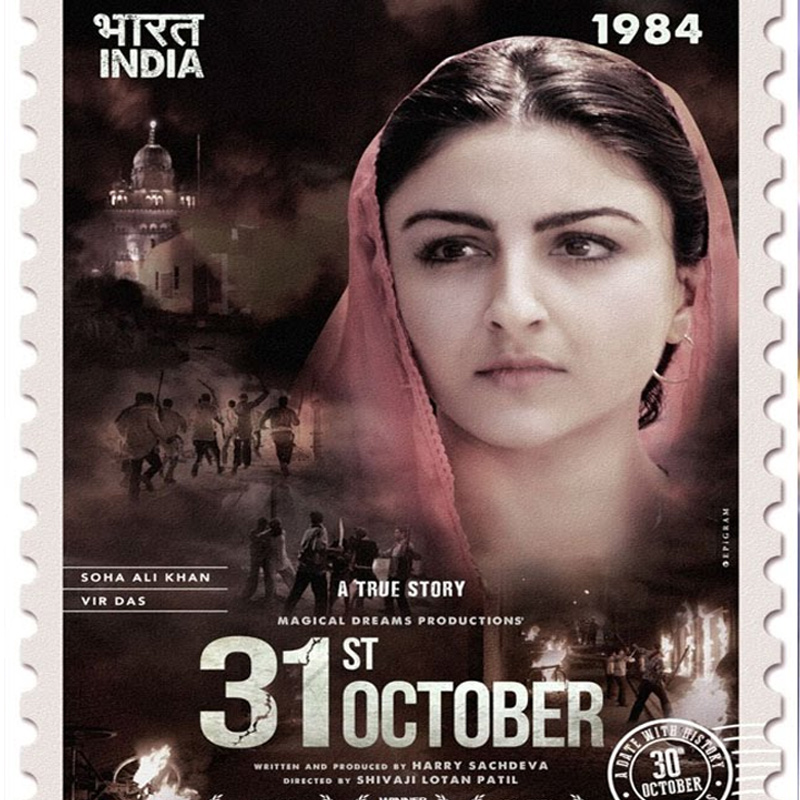
    MUMBAI: Rather late in the day, 31stOctober is a film about the Sikh genocide of 1984 in Delhi in the aftermath of assassination of the then prime minister of India Indira Gandhi. She was killed by her security guards, who happened to be Sikh. That assassination, again, is attributed to the anger of the Sikh community following an army operation in the precincts of the Golden Temple in Amritsar. It has been 31 years since the episode and the relevance of this film and, what it wants to convey would make sense to few if any.

    It is pre-October 31-1984 Delhi (mainly East Delhi as depicted in the film) where things are normal. People are going about doing their business, there is bonhomie. There never was a feeling of a divide between Hindu and Sikh, neither the issue nor a reason to think of them as different persons or of community was considered.

    Vir Das is shown as a simple family-loving Sikh working for a government enterprise and has Soha Ali Khan as his wife and three children making up his family. He is a sincere worker and is much respected by his colleagues as well as friends.

    It is another day at work and Vir is on his desk. But, unknown to him, things seem to have changed suddenly as even the office peon fails to respond to his calls, and there is an eerie silence around him. As he soon finds out, the whole office has gathered around a transistor radio; the news is not good. PM Indira Gandhi has been shot.

    Suddenly, everybody has turned cold to Vir. He is advised to leave immediately. The offices are closed, shops down shutters and a pall of gloom and fear envelopes the air. Two lookalikes of prominent politicians are seen inciting the crowds (of Hindus) to go out and seek revenge from Sikhs.

    What follows is a massacre of Sikhs all around the city reminiscent of Hindu-Muslim clashes of the Partition era. No Sikh seems to be safe, on the road or hidden at home, nor ones in the refuge of Hindu families.

    Since this is not a documentary, a hint of a story and to balance things as well as to showcase a semblance of sanity among Hindus, comes in the form of Vir’s Hindu friends coming to his rescue risking their lives and braving police (which sided with the rioters) and the goons killing people indulging in arson mercilessly.

    31stOctober is a sketchy, half-hearted effort to depict the genocide. As numerous Sikhs are slaughtered, an operation to save one family has little effect on the viewer. The direction is patchy; few films have succeeded in showing riot scenes convincingly in Hindi films and this film ranks at the bottom. What is bad about the film is the casting of Vir Das as the Sikh in danger. He carries his deadpan standup comedian look to this rather serious role. Add to that his characterization, which is of a Sikh who breaks down instead of standing by his family while his friends take the risk and one of them also sacrifices his life for the cause. Rest of the actors make a sincere effort.

    If 31st October has an audience to cater to, it is unlikelyto be found in cinema halls.

    Producers: Harry Sachdeva.

    Director: Shivaji Lotan Patil.
    Cast: Vir Das, Soha Ali Khan.

    My Father Iqbal: No drama in Indian Muslim’s honesty

    ‘My Father Iqbal’ is like recreating the life of an honest man from Jammu & Kashmir. It is unlike any film as it is neither a potboiler nor cinema. There are no twists and turns, no villains nor a drama or a dramatic ending. It is the documentation of the life of a man and his circumstances. It is supposed to be a real-life account.

    Iqbal Khan, played by Narendra Jha, is a family loving Muslim in Bani, a township in the state of Jammu & Kashmir, surrounded by Punjab, Himachal Pradesh and close to the Pakistan border. Jha is an engineer in the PWD and is a caring man to his wife, Komal Thacker, and his daughter and son. Jha is also sincere with his work, held in high esteem not only by his bosses and colleagues but also by people of the area for whom he always goes out of his way. 

    Jha, a man who is devoted to his family, lives like any normal, law-abiding and patriotic citizen despite the circumstances of terrorism and violence surrounding him and his town. He is probably traditional in the local sense because, while he dreams of sending his son to a high school in a bigger city, his daughter stays put in this small place.

    Time passes by with Jha and Komal tending to the family, romancing and singing while the son on whom they hang much hope has grown up. He has decided to opt for a career in media and, much against his parents’ hopes, has decided to move to Mumbai. His concern for his family comes in the form of regular remittances of money.

    Terrorism, which was lurking on the outskirts, has now invaded the town. The terrorists confer with Jha’s boss, the town police chief and the local MLA, to find a man with a clean image to store a bag full of RDX. The honest man in their sight happens to be Jha. Why do they need an honest man when the cop and the MLA are a party to the plan?

    Jha’s refusal to accept the bag is countered by a threat of harm that can be done to his son in Mumbai. With his loyalty at stake, Jha asks his son to return home instantly. He wants to share his dilemma with his now grown-up son. The son is on his way and his train is running late by a couple of hours. But, Jha, who has made his decision not to betray his country, takes the ultimate step of not waiting for those two hours for his son to return.

    That is about all as, if one is waiting for a traditional ending to the story, there is none. It is about a patriotic man who was a Muslim and from Jammu & Kashmir, who was neither a terrorist nor a supporter.

    Besides the scenic beauty of the area of Bani and its surroundings, My Father Iqbal has some soothing music in a couple of ghazals. Performance-wise, Jha is impressive and Komal supports well.

    Producer: Paresh Mehta.

    Director: Suzad Iqbal Khan.

    Cast: NarendraJha, Komal Thacker, Paresh Mehta, Raj Sharma, Amit Lekhwani, Sudam Iqbal Khan.

  • Leo Burnett gets Vir Das to take on sexist ads

    Leo Burnett gets Vir Das to take on sexist ads

    MUMBAI: Vir Das is back and this time with a vengeance against sexist commercials. Starring in a television commercial for Emami’s flagship men’s deodorant brand He, Das puts on the shoes of every female model who has to go through awkward and uncomfortable film shoots to promote a product. In his signature satirical style, Das takes on several brands, which are instantly recognisable in the parody thanks to their trademark ‘sexist’ ads. Launched digitally on 13 May, the video has already garnered over a lakh views on Facebook, and the YouTube counter is going strong.

    The video starts off with Das sensuously caressing a mango in his hand (very clearly hinting at Slice’s ads featuring Katrina Kaif), while shooting for an ad film, and the scene quickly cuts to a sporty looking bike on which Das tries a sexy pose. He leads the audience to a very familiar ‘fallen angel’ setting of a deodorant advertisement, while subtly hinting at Axe and its flagship range of TV spots that are known to titillate men by objectifying women.

    All the while Das points out how silly it is to objectify women to sell products, just like ‘He Respect’, the deo brand he is promoting, cause ‘real men respect women.’ In fact, another spot released by the brand on May 13 starring the brand ambassador Hrithik Roshan clarifies the brand’s positioning with #AsliMenRespectWomen.

    Conceptualised by Orchard Advertising and directed by Surjo Deb under UBIK films, the one minute video is clever and inspiring — a much needed differentiated brand communication in the men’s grooming product segment.

    “The product had an interesting brand positioning to work with. Highlighting the need to ‘respect’ women, the brand spoke of a different breed of men who are cool because they respect women. It’s not the deo that gets them admiration from the opposite sex, it’s this identity as a man who respects women that does,” shared Leo Burnett chief creative officer Raj Deepak Das, adding that the product idea was also developed by the creative agency.

    When asked about calling out other brands for being sexist in the video, the creative clarified, “While the ad film does communicate the message that a product doesn’t need to objectify women to be sold, the video has done a funny take on it. It is more of a generalisation than targeting any brand and I hope viewers take it in the funny light that it’s been created.” Besides, “you can’t stop a comedian from making fun of things,” he added with a chuckle.

    This isn’t the first time that a brand has taken on advertising stereotypes to position itself differently. Emraan Hashmi starrer Meglow ad that came out last year, came under the critical radar within the industry after speaking strongly against fairness cream ads that claim to perform life altering wonders for men. Though it was debatable whether it managed to stay progressive till the end, the reception it got on social media was quite commendable.

    Treatment of women in advertisement has been a long running debate and a sensitive topic within the industry and thus requires a clever handling, lest it appears run of the mill. It may be recalled that recently a TV spot promoting Ola Micro had to be called off for its sexist intonations that sparked outrage over social media. Thus, a brand communication that speaks directly against it may work in Emami’s favour. Whether Vir Das’ funny take on it will add that much needed factor x, only time will tell.

  • Leo Burnett gets Vir Das to take on sexist ads

    Leo Burnett gets Vir Das to take on sexist ads

    MUMBAI: Vir Das is back and this time with a vengeance against sexist commercials. Starring in a television commercial for Emami’s flagship men’s deodorant brand He, Das puts on the shoes of every female model who has to go through awkward and uncomfortable film shoots to promote a product. In his signature satirical style, Das takes on several brands, which are instantly recognisable in the parody thanks to their trademark ‘sexist’ ads. Launched digitally on 13 May, the video has already garnered over a lakh views on Facebook, and the YouTube counter is going strong.

    The video starts off with Das sensuously caressing a mango in his hand (very clearly hinting at Slice’s ads featuring Katrina Kaif), while shooting for an ad film, and the scene quickly cuts to a sporty looking bike on which Das tries a sexy pose. He leads the audience to a very familiar ‘fallen angel’ setting of a deodorant advertisement, while subtly hinting at Axe and its flagship range of TV spots that are known to titillate men by objectifying women.

    All the while Das points out how silly it is to objectify women to sell products, just like ‘He Respect’, the deo brand he is promoting, cause ‘real men respect women.’ In fact, another spot released by the brand on May 13 starring the brand ambassador Hrithik Roshan clarifies the brand’s positioning with #AsliMenRespectWomen.

    Conceptualised by Orchard Advertising and directed by Surjo Deb under UBIK films, the one minute video is clever and inspiring — a much needed differentiated brand communication in the men’s grooming product segment.

    “The product had an interesting brand positioning to work with. Highlighting the need to ‘respect’ women, the brand spoke of a different breed of men who are cool because they respect women. It’s not the deo that gets them admiration from the opposite sex, it’s this identity as a man who respects women that does,” shared Leo Burnett chief creative officer Raj Deepak Das, adding that the product idea was also developed by the creative agency.

    When asked about calling out other brands for being sexist in the video, the creative clarified, “While the ad film does communicate the message that a product doesn’t need to objectify women to be sold, the video has done a funny take on it. It is more of a generalisation than targeting any brand and I hope viewers take it in the funny light that it’s been created.” Besides, “you can’t stop a comedian from making fun of things,” he added with a chuckle.

    This isn’t the first time that a brand has taken on advertising stereotypes to position itself differently. Emraan Hashmi starrer Meglow ad that came out last year, came under the critical radar within the industry after speaking strongly against fairness cream ads that claim to perform life altering wonders for men. Though it was debatable whether it managed to stay progressive till the end, the reception it got on social media was quite commendable.

    Treatment of women in advertisement has been a long running debate and a sensitive topic within the industry and thus requires a clever handling, lest it appears run of the mill. It may be recalled that recently a TV spot promoting Ola Micro had to be called off for its sexist intonations that sparked outrage over social media. Thus, a brand communication that speaks directly against it may work in Emami’s favour. Whether Vir Das’ funny take on it will add that much needed factor x, only time will tell.

  • Goafest  2016: Mindshare and Maxus dominate Media; Dainik Jagran leads publisher category

    Goafest 2016: Mindshare and Maxus dominate Media; Dainik Jagran leads publisher category

    MUMBAI: Goafest 2016’s first ABBY night kick started with healthy dose of laughter well packed in snarky and quick witted jokes delivered by the ever charming Vir Das. Still holding their stomachs, the entire advertising fraternity of India prepared themselves to see who bagged the metals in the Media and Publisher categories.

    Continuing their winning streak two years in a row, Mindshare India were the clear leader in the media category with 17 metals to their name, out of which two were gold, six silver and nine silver. The agency bagged gold in Best Use of Newspaper and Magazine category for their Lakme Lip pouts in Grazia — Play time for your pout campaign for Lakme; and in Best use of Integrated campaign category for  Before Iftar time; It’s Lifebouy Time for Lifebouy.

    The second agency leading Media ABBY was Maxus, with 7 metals to their name. Maxus got their gold for their ‘Get A Job’ campaign for LinkedIn in the Youth Marketing category.Apart from this they bagged two silver and four bronze trophies.

    Extending his congratulations to the winners, The Advertiisng Club president Raj Nayak said, “It is such a pleasure to see such tremendous work from brilliant minds winning much deserved Abbys for their efforts. What we’ve seen and are likely to observe in the next two days are some of the most creative works produced by advertising, media and marketing professionals in the country. It makes me immensely proud to be witnessing the triumph of talent across the board. With Goafest 2016, our aim is to celebrate creativity, originality and innovation and I believe we have begun on the right note today. I’m very happy that the entire industry has come together to celebrate the industry’s biggest event.”

    Apart from them, Pratap Bose’s The Social Street emerged as a powerful contender in the media category winning two golds and two silver trophies on their first year of entering the ABBY.

    A total of 11 golds were given away in the Media ABBY, followed by 36 silver and 30 bronze trophies. In the Publisher category,  Dainik Jagran rose as the clear lead bagging all the three golds given out in the category.

    2016 has proven to be a good year for the ABBY. With total entries clocking at 4500, there has been a clear 25 per cent increase in entries from the previous year. This trend isn’t limited to entries. This year 150 jury members participated in the judging, with 86 for media ABBY alone. In total, 76 media agencies participated this year as compared to 53 last year.

    “Along with giving young enthusiastic talent a platform for their work, it is also our outlook, as the organizing committee of Goafest to curate best in class seminars and conclaves which will provide opportunities for professionals from the industry to learn and grow together. It is our constant endeavor to recognize and felicitate the best of the best creative minds for the unparalleled work that they have been doing. My heartiest congratulations to all our winners tonight,” Goafest Organizing Committee chairman Nakul Chopra added in parting.


  • Goafest  2016: Mindshare and Maxus dominate Media; Dainik Jagran leads publisher category

    Goafest 2016: Mindshare and Maxus dominate Media; Dainik Jagran leads publisher category

    MUMBAI: Goafest 2016’s first ABBY night kick started with healthy dose of laughter well packed in snarky and quick witted jokes delivered by the ever charming Vir Das. Still holding their stomachs, the entire advertising fraternity of India prepared themselves to see who bagged the metals in the Media and Publisher categories.

    Continuing their winning streak two years in a row, Mindshare India were the clear leader in the media category with 17 metals to their name, out of which two were gold, six silver and nine silver. The agency bagged gold in Best Use of Newspaper and Magazine category for their Lakme Lip pouts in Grazia — Play time for your pout campaign for Lakme; and in Best use of Integrated campaign category for  Before Iftar time; It’s Lifebouy Time for Lifebouy.

    The second agency leading Media ABBY was Maxus, with 7 metals to their name. Maxus got their gold for their ‘Get A Job’ campaign for LinkedIn in the Youth Marketing category.Apart from this they bagged two silver and four bronze trophies.

    Extending his congratulations to the winners, The Advertiisng Club president Raj Nayak said, “It is such a pleasure to see such tremendous work from brilliant minds winning much deserved Abbys for their efforts. What we’ve seen and are likely to observe in the next two days are some of the most creative works produced by advertising, media and marketing professionals in the country. It makes me immensely proud to be witnessing the triumph of talent across the board. With Goafest 2016, our aim is to celebrate creativity, originality and innovation and I believe we have begun on the right note today. I’m very happy that the entire industry has come together to celebrate the industry’s biggest event.”

    Apart from them, Pratap Bose’s The Social Street emerged as a powerful contender in the media category winning two golds and two silver trophies on their first year of entering the ABBY.

    A total of 11 golds were given away in the Media ABBY, followed by 36 silver and 30 bronze trophies. In the Publisher category,  Dainik Jagran rose as the clear lead bagging all the three golds given out in the category.

    2016 has proven to be a good year for the ABBY. With total entries clocking at 4500, there has been a clear 25 per cent increase in entries from the previous year. This trend isn’t limited to entries. This year 150 jury members participated in the judging, with 86 for media ABBY alone. In total, 76 media agencies participated this year as compared to 53 last year.

    “Along with giving young enthusiastic talent a platform for their work, it is also our outlook, as the organizing committee of Goafest to curate best in class seminars and conclaves which will provide opportunities for professionals from the industry to learn and grow together. It is our constant endeavor to recognize and felicitate the best of the best creative minds for the unparalleled work that they have been doing. My heartiest congratulations to all our winners tonight,” Goafest Organizing Committee chairman Nakul Chopra added in parting.


  • ‘Mastizaade:’ Sex tragedy!

    ‘Mastizaade:’ Sex tragedy!

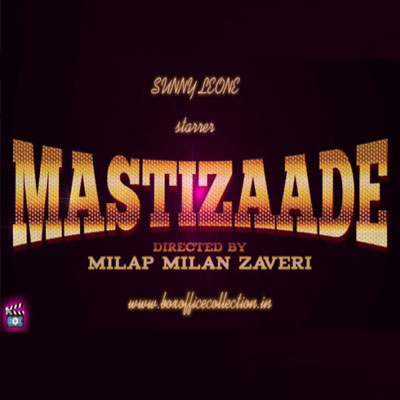
    Comedy films in Hindi are bad enough most of the time, but what comes in the name of sex comedy is pathetic. It is all about lewd gestures, vulgar innuendos and a voyeur for the camera. There have been films with partly lewd and suggestive scenes and dialogues but the Mastizaade script aims to be a thesis for doctorate in this genre. Milap Zaveri has been attempting to write sex comedies but this time round, he also decides to direct the film.

    The saleable face or the inspiration for Mastizaade is Sunny Leone or, rather, her background. The makers stretch it a bit as they cast her in a double role of twins. Rest of their assets being same, how do you tell one from the other? One wears skimpy clothes, while the other sports scholarly specs, a red tikka on her forehead and sari. But, she being Sunny Leone too, the blouse is as skimpy as befitting Sunny.

    The sisters run an institution for perverts addicted to sex. The idea is to cure them of this affliction on the face of it but actually the sisters Sunny and Sunny use such guys for their own gratification. The sisters readily find two such sex starved buffoons in Tusshar Kapoor and Vir Das. Both soon prove that if they had any expression or twitching or any movement of muscle, it is their hidden talent; hidden in their underclothes!

    Both fall for one Sunny each. While otherwise they are known to be sex fiends, with Sunnyx2 oozing with sex, they seek romance as in love!

    The problem is that one Sunny wants only sex sans love, the other one is in love with a paraplegic wannabe soldier.

    The rest of the film is about Tusshar and Vir making bananas represent them as well as their aspirations while they see rounded fruits in Sunnyx2.

    The problem is that it’s unimaginative script writing. Even what has been lifted is from PJ department. The 1960s and 1970s English film and even Dada Kondke films entertained better than this one.

    Writing about direction, music, editing etc would be futile. And, to write about performances nigh impossible because no performers are involved in this film.

    Producers: PNC
    Director: Milap Zaveri
    Cast: Tusshar Kapoor, Vir Das, Sunny Leone

    ‘Saala Khadoos:’ Made to prescription

    A pattern has been set for sports related films in India, a pro forma is followed. The format followed by such films is an underdog from poor background, who is oozing with talent, which lies untapped. There is a down and out ex-champ of the sport in whichever sport the film deals with, who spots the talent and decides to hone it. A corrupt and debauch official heading the said sports body. The finale, of course, being the underdog under the aegis of the charged up ex-champ, takes on the best in the world.

    Saala Khadoos, produced in Hindi and Tamil (as Irudhi Suttru meaning Final Round), follows the set pattern.

    R Madhavan is an ex-champion boxer who aspired to win a boxing gold for India. His dream lay unrequited due to internal politics when his boxing gloves were spiked by his own coach, Zakir Hussain, due to which he had to fight blind bout and lose the fight. Madhavan has been appointed the coach of the national women’s boxing team which, Madhavan’s b?te noire, Hussain, heads now. Sparks fly between the two instantly. There is no way the power wielding Hussain would want Madhavan around him.

    Madhavan is accused of molesting his women team members and, as a compromise, transferred to Chennai to coach the local team there. The state team here figures at the bottom of the national ranking and Hussain expects Madhavan to fail in his posting.

    As Madhavan gets down to business and starts disciplining his wards, he is witness to partiality decision as a contender, Mumtaz Sorcar, looks the obvious winner but is declared a loser because her opponent happens to be an official’s daughter. Mumtaz’s sister, Ritika Singh, can’t take this and immediately gets violent and starts punching and felling the jury members. Ritika is the bindaas kind and street smart; she sells fish for earning. Madhavan is impressed by her aggression and the way she throws her punches.

    He has spotted a prospective champ and decides to make her his pupil. She is unwilling but he offers to pay her Rs 500 per day to get her to take up boxing. Besides him, Nassar, his assistant coach, is also convinced the girl has it in her. The training of the team begins with special emphasis on Ritika. Madhavan has a point to prove to Hussain and others.

    To redeem his prestige, Madhavan makes all sorts of sacrifices including financial to the extent of selling his bike. Two human emotions come to play in this situation: While Ritika is infatuated by Madhavan and professes her love to him, her sister Mumtaz starts getting jealous of Ritika. She plans to hurt her hand and Ritika is knocked out of the qualifications.

    Madhavan feels let down when Ritika loses and tells her to get lost. Other predictable things happen including Hussain wanting to seduce Ritika and failing leading to her ouster from team. But, soon there is a major tournament for women on Indian soil. And, Madhavan sees the only hope for the country in Ritika. She makes it to final and slated to face the same Russian who knocked her out earlier.

    The end comes on expected lines.

    Indians are familiar with women’s boxing thanks to Mary Kom and have seen at least one film on woman’s boxing in her bio-pic, Mary Kom. The script is on predictable lines and, hence, does not really touch a viewer as such a film about an underdog should. But, it keeps one engaged. Direction is capable though with a heavy South touch. Music as the songs go, is purely functional. Cinematography is generally good.

    The best thing is the casting, which makes the film convincing and, what’s more, all of them live up to their characters. Ritika’s casting has stories behind it already covered in the media and she tops. Madhavan is a veteran of many films in many languages (also being one of the producers of this film) and puts in his best as a determined sports failure. However, he could have done with a suave look rather than the unshaved rough one he sports. Nassar and Hussain are around for their talent and they are naturals. Others cast mostly from the South are adequate.

    Saala Khadoos aims at a limited patronage and unlimited praise. The opening response is weak and the film faces opposition from India Australia T20 matches on Friday as well as on Sunday thus limiting its prospects to pick up at the box office.

    Producers: Rajkumar Hirani, R Madhavan
    Director: Sudha Kongara Prasad
    Cast: R Madhavan, Ritika Singh, Mumtaz Sorcar, Nassar, Nazir Hussain, Bajinder Kaur, Kaali Venkat, Radha Ravi

  • ‘Mastizaade:’ Sex tragedy!

    ‘Mastizaade:’ Sex tragedy!

    Comedy films in Hindi are bad enough most of the time, but what comes in the name of sex comedy is pathetic. It is all about lewd gestures, vulgar innuendos and a voyeur for the camera. There have been films with partly lewd and suggestive scenes and dialogues but the Mastizaade script aims to be a thesis for doctorate in this genre. Milap Zaveri has been attempting to write sex comedies but this time round, he also decides to direct the film.

    The saleable face or the inspiration for Mastizaade is Sunny Leone or, rather, her background. The makers stretch it a bit as they cast her in a double role of twins. Rest of their assets being same, how do you tell one from the other? One wears skimpy clothes, while the other sports scholarly specs, a red tikka on her forehead and sari. But, she being Sunny Leone too, the blouse is as skimpy as befitting Sunny.

    The sisters run an institution for perverts addicted to sex. The idea is to cure them of this affliction on the face of it but actually the sisters Sunny and Sunny use such guys for their own gratification. The sisters readily find two such sex starved buffoons in Tusshar Kapoor and Vir Das. Both soon prove that if they had any expression or twitching or any movement of muscle, it is their hidden talent; hidden in their underclothes!

    Both fall for one Sunny each. While otherwise they are known to be sex fiends, with Sunnyx2 oozing with sex, they seek romance as in love!

    The problem is that one Sunny wants only sex sans love, the other one is in love with a paraplegic wannabe soldier.

    The rest of the film is about Tusshar and Vir making bananas represent them as well as their aspirations while they see rounded fruits in Sunnyx2.

    The problem is that it’s unimaginative script writing. Even what has been lifted is from PJ department. The 1960s and 1970s English film and even Dada Kondke films entertained better than this one.

    Writing about direction, music, editing etc would be futile. And, to write about performances nigh impossible because no performers are involved in this film.

    Producers: PNC
    Director: Milap Zaveri
    Cast: Tusshar Kapoor, Vir Das, Sunny Leone

    ‘Saala Khadoos:’ Made to prescription

    A pattern has been set for sports related films in India, a pro forma is followed. The format followed by such films is an underdog from poor background, who is oozing with talent, which lies untapped. There is a down and out ex-champ of the sport in whichever sport the film deals with, who spots the talent and decides to hone it. A corrupt and debauch official heading the said sports body. The finale, of course, being the underdog under the aegis of the charged up ex-champ, takes on the best in the world.

    Saala Khadoos, produced in Hindi and Tamil (as Irudhi Suttru meaning Final Round), follows the set pattern.

    R Madhavan is an ex-champion boxer who aspired to win a boxing gold for India. His dream lay unrequited due to internal politics when his boxing gloves were spiked by his own coach, Zakir Hussain, due to which he had to fight blind bout and lose the fight. Madhavan has been appointed the coach of the national women’s boxing team which, Madhavan’s b?te noire, Hussain, heads now. Sparks fly between the two instantly. There is no way the power wielding Hussain would want Madhavan around him.

    Madhavan is accused of molesting his women team members and, as a compromise, transferred to Chennai to coach the local team there. The state team here figures at the bottom of the national ranking and Hussain expects Madhavan to fail in his posting.

    As Madhavan gets down to business and starts disciplining his wards, he is witness to partiality decision as a contender, Mumtaz Sorcar, looks the obvious winner but is declared a loser because her opponent happens to be an official’s daughter. Mumtaz’s sister, Ritika Singh, can’t take this and immediately gets violent and starts punching and felling the jury members. Ritika is the bindaas kind and street smart; she sells fish for earning. Madhavan is impressed by her aggression and the way she throws her punches.

    He has spotted a prospective champ and decides to make her his pupil. She is unwilling but he offers to pay her Rs 500 per day to get her to take up boxing. Besides him, Nassar, his assistant coach, is also convinced the girl has it in her. The training of the team begins with special emphasis on Ritika. Madhavan has a point to prove to Hussain and others.

    To redeem his prestige, Madhavan makes all sorts of sacrifices including financial to the extent of selling his bike. Two human emotions come to play in this situation: While Ritika is infatuated by Madhavan and professes her love to him, her sister Mumtaz starts getting jealous of Ritika. She plans to hurt her hand and Ritika is knocked out of the qualifications.

    Madhavan feels let down when Ritika loses and tells her to get lost. Other predictable things happen including Hussain wanting to seduce Ritika and failing leading to her ouster from team. But, soon there is a major tournament for women on Indian soil. And, Madhavan sees the only hope for the country in Ritika. She makes it to final and slated to face the same Russian who knocked her out earlier.

    The end comes on expected lines.

    Indians are familiar with women’s boxing thanks to Mary Kom and have seen at least one film on woman’s boxing in her bio-pic, Mary Kom. The script is on predictable lines and, hence, does not really touch a viewer as such a film about an underdog should. But, it keeps one engaged. Direction is capable though with a heavy South touch. Music as the songs go, is purely functional. Cinematography is generally good.

    The best thing is the casting, which makes the film convincing and, what’s more, all of them live up to their characters. Ritika’s casting has stories behind it already covered in the media and she tops. Madhavan is a veteran of many films in many languages (also being one of the producers of this film) and puts in his best as a determined sports failure. However, he could have done with a suave look rather than the unshaved rough one he sports. Nassar and Hussain are around for their talent and they are naturals. Others cast mostly from the South are adequate.

    Saala Khadoos aims at a limited patronage and unlimited praise. The opening response is weak and the film faces opposition from India Australia T20 matches on Friday as well as on Sunday thus limiting its prospects to pick up at the box office.

    Producers: Rajkumar Hirani, R Madhavan
    Director: Sudha Kongara Prasad
    Cast: R Madhavan, Ritika Singh, Mumtaz Sorcar, Nassar, Nazir Hussain, Bajinder Kaur, Kaali Venkat, Radha Ravi

  • Viacom18 Motion Pictures to release ‘Santa Banta Pvt Ltd’ on 11 March

    Viacom18 Motion Pictures to release ‘Santa Banta Pvt Ltd’ on 11 March

    MUMBAI: Viacom18 Motion Pictures will be releasing the comic caper Santa Banta Pvt Ltd on 11 March, 2016.


    The movie is produced by Viacom18 Media and Cinetek Telefilms.


    Santa Banta Pvt Ltd is an out-an-out laugh riot that chronicles the misadventures of Santa and Banta in the island of Fiji.


    Directed by Akashdeep Sabir, the film stars Boman Irani, Vir Das, Lisa Haydon and Neha Dhupia.

  • Censor Board stalls release of PNC’s ‘Mastizaade’

    Censor Board stalls release of PNC’s ‘Mastizaade’

    MUMBAI: The Central Board of Film Certification (CBFC) has stalled the release of Pritish Nandy Communications’ (PNC) forthcoming comedy film titled Mastizaade due to its explicit content.


    Directed by Milap Zaveri and starring Sunny Leone in a double role, the movie also stars Tusshar Kapoor, Vir Das and Riteish Deshmukh in a special appearance. It has been co-written by Mushtaq Sheikh and Zaveri.


    The CBFC and the Film Certification Appellate Tribunal have not cleared Mastizaadeso far, which was initially slated to release on 1 May, 2015.


    PNC has informed the Bombay Stock Exchange (BSE) that it is taking appropriate steps to resolve this issue in the quickest possible manner.

  • The story of untold tales

    The story of untold tales

    MUMBAI: Storytelling is an art and many have mastered it. Television, which is the biggest platform after films, gives thousands of writers the perfect setting to tell a story. Some stories manage to touch a chord with the viewers and go on for hundreds of episodes while some are shelved within a few months itself.

    At a glance, television in India seems to have progressed in their storytelling efforts but unfortunately, there are still many tales that are lost in the industry.

    “Almost 15 years ago, I wrote a show called ‘Ab Ke Baras’. We had put in a lot of effort and almost all the paper work was done, but after three months of hard work, it got shelved,” says Balika Vadhu screenplay writer Gajra Kottary. She adds,
    “Another show of mine that got dropped was ‘Ek Admee’. It was directed by Ajai Sinha and was supposed to be aired on NDTV Imagine. We had already shot a year worth of episodes before it was put on hold.”

    Kottary is not alone. Balaji Telefilms creative director Nivedita Basu, who was involved in the remake of Sherlock Holmes which was slated to air on Life OK, tells us that despite having a great cast comprising film actors Arjun Rampal, Vivek Oberoi, Vir Das and Sharman Joshi, the show did not eventually take off. She explains, “We had a stellar cast and the series was going to be directed by Rohan Sippy. It was an expensive project and the show had a lot of potential. However, after doing a lot of back and forth with the channel, the show got shelved.”

    In 2001, film director Imtiaz Ali had directed a light-hearted series named ‘Yeh Jeevan Hain’. The show was produced by the existing creative head of Epic, Ravina Kohli, who recalls that the programme, which was expected to air on one of the leading GECs, was unfortunately shelved due to it being “too progressive”.

    She states, “We had spent almost six months shooting, editing and canned 13 episodes. At that time, however, the saas-bahu trend was on the rise so the channel shelved it.”
    There are many reasons for projects not making to television screens. Broadcasters need to be sure if the proposed show will generate the desired ratings. According to Basu, another reason for series being put on hold could be a channel’s incapacity to justify the expenses involved.

    Writer and producer, Ila Bedi Dutta agrees that a lot of money is involved and broadcasters need to analyse the content before giving the green signal. She asserts, “There is a lot of competition in the television industry. Channels today place a lot of emphasis on research.  Sometimes they have an annual programming plan where the pitched programmes do not fit.”

    Presenting another perspective to the story, Kottary reveals that more often than not television shows get held back due to a change in programming heads of a channel.  When there is a midstream change in the programming heads, producers are almost sure that stories, which are in process, will never see the light of the day and are left in a lurch.  

    Apart from these, the absence of creative elements also plays a role in shows getting shelved. Producer of Diya Aur Baati Hum, Sumeet H Mittal believes that sometimes what looks good on paper might not turn out to be that great when it is finally developed. He adds, “Although, normally it does not happen, but at times a show can even get shelved when the shoot is on, post approval. Nobody can predict TRPs, so generally channels go with their understanding and gut feeling.”

    There are also unpredictable instances that can cause a hindrance. Basu recalls, “My team and I worked on Kyunki Returns for almost four to five months. The whole idea was to get the old cast back together including Smriti Irani herself. We did not want to go with a new cast as the essence of the show lied in all the characters. They had a history. Smriti had even given her dates but then she became a cabinet minister. As a result, the show did not happen.”

    The amount of time that a channel takes to approve a show is in itself extensive. While Kottary explains that the entire approval process can take up to two to three months, Dutta informs that it took her nearly six to seven months to get the approval for Hitler Didi.  “The approval process is long. Some channels have an audio pilot, where the entire concept is narrated and played to a sample audience while other channels have a visual pilot. The pilot episode plays a crucial role in deciding the fate of the pitched show,” adds Dutta.   

    However, there is a silver lining as well. Mittal points out that the makers, who have a good rapport with a channel, get their shows approved very fast.  Emphasizing on the same point, Basu highlights that the approval process and time differs from producer to producer. She claims, “If you are an Ekta Kapoor pitching for a show, the programme is likely to get approved within a week as channels are aware that Ekta gives her heart and soul to the story. However for a new producer, it could take anywhere between three to six months.”

    So, what happens to all these untold stories? Are they chucked aside and never revived?

    Dutta, who remains hopeful that one day her shelved shows will see the daylight, frankly confesses that she is clueless as to what happens to all these lost stories. Kottary, on the other hand, admits that if she passionately feels about a story, she would look at other mediums.  “Sometimes, I could take the subject of the shelved serial and put it as track in an existing serial,” she states.  

    Mittal points out that if the channel is paying for the pilot episode, there is no way a producer can look at pitching to other mediums or channels. This is because the content becomes the rightful property of the channel and stays with them only till they decide to revive the show.  He, however, adds that if he shoots a pilot at his own cost and pitches it to a channel which then gets rejected; he can consider taking it other mediums such as online or making a short film out of it.

    Dutta discloses that she had recently shot a pilot for Zee and is currently waiting for the feedback. She shares, “Hitler Didi was something different and Zee supported me a lot. Zee, as a channel is very forward thinking. I feel they encourage fresh stories more than other channels do.”

    Well, much could be said about the television industry’s storytelling efforts. Although there are several untold stories, a show being shelved is just a part and parcel of the industry.

    “While there is a tremendous sense of wasted effort, one does get used to it over a period of time,” Kottary signs off.