
Tag: Vinod Ranganath

  • Indiantelevision Dot Com’s Qalam to commence from 21 June

    Indiantelevision Dot Com’s Qalam to commence from 21 June

    MUMBAI: Good news for all those aspiring writers who couldn’t apply for Indiantelevision Dot Com’s scriptwriting course Qalam, which was supposed to commence from 14 June.

    Interested candidates can still join the course as the date of the commencement of the course has been extended till 21 June. The entrance for aspirants will be held on 19 June.

    Qalam has already received an overwhelming response from wannabe script writers. Keeping this in mind, the date for the course has been extended.

    Qalam is a full fledged, well-structured, four month comprehensive Television Scriptwriting Course guided by a governing board comprising Nimbus Communications CEO Akash Khurana, ex-Siddhant Cinevision creative director Vinod Ranganath, Indian Television Dot Com CEO Anil Wanvari, film maker Aditya Seth and writer-director Vijay ‘Victor’ Acharya.

    In its second year, the course will be co-ordinated by Seth and boasts of an acclaimed faculty which includes television luminaries like noted scriptwriters and directors BM Vyas, Dr Chandraprakash Dwivedi, Ashwini Dhir and Vivek Agnihotri, among others.

    The questionnaire for the examination has already been put up on this website along with eligibility criteria, course content and other details.

    Qalam’s earlier batch has produced students who are currently working with serials like Jassi Jaisi Koi Nahi, Kitty Party and Yeh Meri Life Hain amongst others.

    The course fee is set at Rs 12,000. For further information call Abhishek at 022-2673 0986/659.
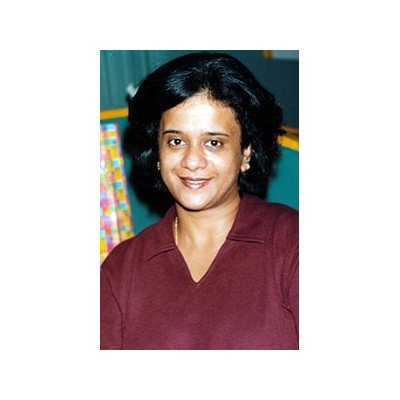
  • “Kittie Party women are all around us” : Tamara Nedungadi

    “Kittie Party women are all around us” : Tamara Nedungadi

    Tamara Nedungadi started off as an assistant editor in the late eighties to the veteran late Renu Saluja and went on to assist Ashutosh Gowarikar in direction in his pre –Lagaan days before she came on her own with a soap called Waaris on Zee TV.

    She went on to direct several episodes of the Shobhaa De penned Sukanya for B4U TV. After a brief lull when she was busy on the home front taking care of her little daughter, she is now back with another Shobhaa De serial, Kittie Party– which at the moment is being used by Zee TV as its trump card and is pitted against Kahaani Ghar Ghar Ki.

    For someone who is handling some of the biggest stars on TV day in and day out, Tamara is incredibly unassuming. Her reaction to the positive responses her serial has generated is one of guarded optimism as she acknowledges the need for further improvement.
    Kittie Party interestingly, also has her working in tandem with her scriptwriter husband, Vinod Ranganath who is writing its screenplay. Excerpts of an interview Tamara gave to indiantelevision.com correspondent, Amar.

    How did you get into TV serial direction?
    I always wanted to be involved with the medium. I started off assisting the late Renu Saluja in editing. Renu however, would always tell me that I should assist someone in directing a movie and then involve myself with the editing of the same movie. This way I would learn things in a more rounded way. So, I assisted Pamela Rookes for Beatty's Children, where I was in charge of the costumes. My first independent assignment as director was Waaris.
     
    As director, which subjects appeal to you?
    I don't have any specific preferences. I like as many disparate subjects as I can work on except gory stuff and horror stories.
     
    "I am receptive to their point of view but I would never tamper with a scene to cater to someone's whims and fancies"
     
    What are the factors that you take into consideration before taking up a new project? What made 'Kittie Party' particularly appealing?
    Primarily I consider the subject, and the producer of the show. The subject should be one I can personally relate with, as well as put my own conviction into. As far as Kittie Party is concerned, the eight women appealed to me. Their characters are very relatable. It's like we see these women around us especially in urban society. .
     
    You are directing some of the biggest names on TV in this serial. Is it difficult handling stars? Do you have to pamper their egos?
    No, as director I have to set the right ambience. You have to be professional with them and they have to be professional with you. Luckily, all these stars, despite being big names are extremely well behaved and nice people. In any case, what does pampering their ego mean? I am receptive to their point of view but I would never tamper with a scene to cater to someone's whims and fancies.
     
    Are you satisfied with the way the show has shaped up? Is there anything you are working on to improve it further?
    Well, let me put it this way – I'm not disappointed. Kittie Party has got favourable responses from most quarters. Of course, there is always scope for improvement and we are looking at improving it on various fronts.
     
    There are suggestions that 'Kittie Party' has a limited niche appeal. Do you feel the same?
    No, I won't say it has a limited appeal. I would say that every household will be able to strongly relate with at least one of the main characters in the show. That is what makes it appealing overall.
     
    How does your background in editing help you as director?
    It saves a lot of time while shooting. There are times when I have worked backwards. For instance, if two characters are involved in a scene and one hasn't arrived on time, I have completed shooting the other actor's portions separately, because I know where exactly each shot has to be cut.
     
    As director, what are the factors you never compromise on while shooting?
    Primarily, on the performances. If I am looking at a certain level of performance, I don't compromise on it till I get it, no matter how much time it consumes. Another area where I don't compromise is on the look or feel I want a scene to have. If I want a certain prop to be there, I won't can the shot till it is there.


    "Many directors do not attach significance to the clap, but given the volume of pictures one has to can on TV, I believe it is imperative to treat it seriously "

     
    For the sake of aspiring directors, could you please dwell on the importance of clap and continuity?
    Clap on TV basically serves the purpose of earmarking each scene and helps in sequencing them later in the post production stage. Many directors do not attach the right significance to it but given the volume of pictures one has to can on TV, I believe it is imperative to treat it seriously.

    Continuity records are just as important to ensure there are no glitches in the scene. There are several continuity records- costume continuity, dialogue continuity – all of which should be carefully monitored. Being an editor I know how lapses in clap and continuity can make things difficult at the post production stage.

     
    Who are your favourite directors? What are the stylistic elements you have imbibed from them?
    I would say I have been inspired by the directors who I have assisted- Ashutosh Gowarikar and Gogi Anand. They are also both very particular when it comes to handling performances. Subconsciously, I have also imbibed their style of shot-taking but if you ask me to pinpoint anything specific, I wouldn't be able to do it off hand.
     
    As a writer- director couple how well do you both complement each other in your respective fields? Does it make work smoother?
    See, when we are working together, I don't think of Vinod as my husband. He is just another writer and I the director. I never interfere at the stage of writing. It's only after the first draft is ready that I give my inputs. I won't say work becomes smoother because in any case, I am very particular about detailing when it comes to scripts and I would call up any writer even at midnight if I have to clarify something.
     
    How do you handle performances? Do you personally enact scenes, especially for new actors?
    As far as senior actors are concerned, explaining a scene is sufficient. However, new actors are sometimes not able to understand the essence of a scene and in that case I enact the scene out. But such instances are rare because I feel that as far as possible an actor should first be allowed to do a scene his or her way.
     
    What do you look for in a person before taking him/her under your wing?
    The willingness to take on more responsibilities with a smile. I get put off by the passing the buck attitude. I started off as a costume co-ordinator and expect my assistants to take on varied responsibilities without any ego hassles.
  • Scriptwriters course Qalam 2003 kicks off Saturday

    MUMBAI: The television industry’s constant cry for trained scriptwriters is getting a hearing and how. With positive response from channels as well as production houses, television and media services company Indiantelevision.com flags off a three-month comprehensive TV Scriptwriters course tomorrow.
    Qalam, which is what the course is called, has been ideated, created and executed by prominent television writers and media personalities.
    Qalam will open tomorrow, in Mumbai, with a valedictory address by award winning writer and Nimbus Communications CEO Akash Khurana.
    Addressing a press conference today at The Taj Hotel in south Mumbai, Dr Khurana reiterated the general feeling in the television industry saying that, “While everyone feels the need for such a course, very few people do anything about evolving writers and training them.”


    “I would have done better if I had similar training facilities in my time,” he reflected.
    Siddhant Cinevision creative director Vinod Ranganath, who’s the force behind the structuring of the course, feels that Qalam is about getting quality writers into the industry. He believes Qalam will provide structured and specific teaching for aspiring writers to cater to the growing and demanding television industry. “Qalam has more to do with the technique of writing than linguistics. Language can be trained,” he explained.
    With more than 20,000 hours of programming generated every year in only the Hindi entertainment television channels, Indiantelevision.com CEO Anil Wanvari believes, “That’s a lot of plots, stories, tracks, and dialogue. And we don’t have enough trained talent.”
    Emphasising the value of hands-on learning experience, Dr. Khurana said the course would focus on a practical learning-by-doing approach. He said companies like Contiloe Films, Star TV, Neo Films, In House Productions, and Nimbus Communications, which have come forward to sponsor scholarships, will invite students to come and avail of the infrastructural and other facilities in their offices.
    This, he stressed, would not only give them an idea of the real working terms but will also help them to put together their own body of work by the time they are through with the course. This tangible profile of hands-on experience, he said, would also help them in jump-starting their careers. The sponsors also indicated that they would be interacting closely with the students and would consume some of the skilled products that the course will throw up.
    The course is slated to run for 12 weeks with three interactive sessions a week, spanning two to four hours. The longer weekend sessions would focus on illustrating the educational experience with the help of video sessions. Additionally, participants will be urged to take part in the discussions, ideation and analyses. Interactivity will be the keyword for the entire course. The course fees have been set at Rs 10,000.
    Qalam has on its governing board Dr Khurana, Ranganath, Wanvari, writer-director Aditya Seth, and writer-director Vijay ‘Victor’ Acharya.
    The guest faculty includes television luminaries like eminent scriptwriters and directors including Sanjay Upadhyay, Atul Tiwari, BM Vyas, Ashwani Dhir, Vivek Agnihotri and many more. Aditya Seth will be the course coordinator for Qalam.
    Khurana sees Qalam as a vicarious personal victory as he believes that Wanvari has delivered what he had only dreamt of. He also expressed hope that Qalam would act as a catalyst for other corporates to come in with their own initiative.
    Answering a question, Khurana commented that hindi television writers were not drawing much upon their literature unlike Bengali and Marathi television which draw a lot from their respective regional literatures because, for one, most writers had poor awareness of literature. Secondly, it was a market driven industry and market responses ultimately reflected in their bottomlines.
    For the organisers and the faculty, Qalam is an exercise in giving back to the industry. And as Ashwini Dhir recounted Wanvari’s words, “If you write so well, what’s the use if you take it with you. Pass it on.”

  • Indiantelevision to offer 3-month scriptwriting course

    MUMBAI: After a series of successful scriptwriting workshops, Indiantelevision Dot Com now offers aspiring writers a much needed full fledged, well rounded and complete script writing course.
    Qalam, a three month course, scheduled to begin on 2 August 2003 will be guided by a governing board that comprises Nimbus Communications CEO Dr Akash Khurana, Siddhant Cinevision creative director Vinod Ranganath, Indian Television Dot Com CEO Anil Wanvari, television creative professional Aditya Seth and writer-director Vijay Victor Acharya.
    The course will boast a faculty that includes television luminaries like noted scriptwriters and directors including Sanjay Upadhyay, Ishan Trivedi, Sanjay Chhel, BM Vyas, Ashwani Dhir and many more. Aditya Seth will be the course co-ordinator for Qalam.
    The television scriptwriting course has been born of the belief that the industry needs to absorb trained writers, just as scribes too, need to be tutored in the science and art of scriptwriting for television. Says Ranganath, “The aim is to get quality writers into the industry. Thus far, there has been no structured teaching for aspiring writers. Now that the industry is bigger than what it was a decade ago, there is a definite need for quality writers which Qalam will help provide.”
    Agrees Khurana,”The objective of the course is to encapsulate the theory and craft as comprehensively as possible and apply it meaningfully on to a hands-on writing experience.” He adds, “Aspiring writers need navigation. Qalam hopes to provide them with a compass.”
    The Qalam syllabus has been broken down into three modules, crafted specially to cater to different skill sets that need to be mastered by the students. In the first module, trainers will initiate students in the rudiments of story ideas that are relevant to television, the different kinds of concepts that work for the medium and the creation of the characters that go to make up a complete story. The second module will deal with how to weave a story into an interesting teleplay, the graphing of a story for the teleplay, the difference in the teleplay for different kinds of stories and on how to create the cliff hangers that define a teleplay.
    The third module will deal with the construction of the scene and dialogue. The fourth module will have students creating a story from an idea/concept, creating the characters, developing plot points and overall graph. They will be required to write an episodic teleplay and dialogues for an episode. 
    Says Indiatelevision Dot Com CEO Anil Wanvari, “The aim of Qalam is to ensure that channels and production houses have a bunch of talented writers that will help take the industry to the next creative level.”
    The course will run for 12 weeks with three interactive sessions per week. The weekend sessions will be longer, and the focus will be to illustrate the educational experience with the help of video sessions. Additionally, participants will be urged to take part in the discussions, ideation and analyses. Interactivity will be the keyword for the entire course.
    Each module of the course will take up to three weeks and six to nine sessions. Admission to the course will be decided on the basis of an entrance test aspirants will have to answer, that will test their language, perception and ideation skills. The questionnaire will shortly be put up on www.indiantelevision.com along with eligibility criteria, course content and other details.
    The course fees have been set at Rs 10,000. Indiantelevision Dot Com is also looking for partners to offer scholarships/fellowships for deserving candidates who may not be able to afford the fees.
    For further details on the course, contact Rinku at Indiantelevision.com on 26730986/0969.

  • Indian Telly Awards 2002 on 1 November

    Indian Telly Awards 2002 on 1 November

    MUMBAI: The Indian Telly Awards, the first and the biggest awards programme to recognize the talent and achievements of the people in television industry, will be presented in Mumbai on Friday, 1 November 2002.

    Into its second year, The Indian Telly Awards 2002 has received tremendous response from the television industry with more than 750 entries from various production houses, television channels, studios, technicians, actors, writers, musicians and others associated with the industry.

    The awards will be presented at a gala presentation ceremony which is to be held at The Tulip Star (formerly Juhu Centaur), Juhu Poolside in Mumbai on Friday, 1 November 2002 at 6:00 pm.

    Anil Dharker (left) makes a point as does Ashutosh Gowarikar with Dolly Thakore to his right and jury members Rakesh Sharma to his left and Rekha Nigam to his extreme left

    The large number of entries has been whittled down to about 250 after being vetted by various juries comprising eminent personalities associated with the television industry such as Ashutosh Gowarikar, Anil Dharker, Kiran Deohans, Lekh Tandon, Dolly Thakore, Rekha Nigam, Rakesh Sharma, Vanita Kohli, Vinod Ranganath, Ravi Kiran, Amit Khanna, Rajesh Pant, Markand Adhikari,Vikram Sakhuja, Nandan Maluste and Mohan Nair.

    Says Indian Television Dot Com CEO Anil Wanvari: “The Indian television industry has responded extremely well to The Indian Telly Awards this year going by the number of entries we received and the eminent personalities and professionals who agreed to be on our juries and help us recognize and select excellence in each of the categories. I expect and hope that The Tellies will only grow in stature from hereon.”

    The Indian Telly Awards jury and event partners Opus Events’ Tarun Chopra and Kunal and TV production partner UTV’s Fazilla, along with the Band Of Boys at the Press Conference at Mumbai’s Taj Mahal Hotel on 14 October 2002 , and Optymystix’s Sanjiv Sharma and Vipul D Shah share some thoughts with indiantelevision.com’s Anil Wanvari

    The crme de la crme of television in India will be present at The Indian Telly Awards 2002. The presentation ceremony will feature performances by eminent television and film personalities.

    The special jury to decide the Lifetime contribution to Indian Television Award (from left to right): Percept Advertising CEO Rajesh Pant, MindShare’s Vikram Sakhuja, Reliance Group’s Amit Khanna, Doordarshan Mumbai station director Mukesh Sharma, Indian Television Dot Com CEO Anil Wanvari, BusinessWorld media editor Vanita Kohli, Kotak Mahindra’s Nandan Maluste, and Asianet’s Mohan Nair

    The ground management on the day of the presentation will be in the hands of Opus Events, while UTV has been commissioned for the television production. Discussions are on with Indian television channels for telecast rights to the event.