Tag: Vinod Mehta

  • Mumbai Press club awards Ninan , NDTV editor Ravish Kumar

    Mumbai Press club awards Ninan , NDTV editor Ravish Kumar

    NEW DELHI: Veteran business journalist T N Ninan has been honoured with the Red Ink Life Time Achievement Award of the Mumbai Press Club. The ‘Red Ink Journalist of the Year’ Award was given to NDTV India’s senior executive editor Ravish Kumar for his consistent and good reporting on politics and issues that concern the common man.

    The awards presented by Maharashtra governor C Vidyasagar Rao and Union Energy minister Piyush Goyal recognizes Ninan’s extensive contribution to business journalism through editorial leadership which he provided to a host of publications. Vinod Mehta, Kuldeep Nayar, N Ram, Mrinal Pande and Prannoy Roy were in the past honoured with the Life Time Achievement Award.

    ‘The Wire’, a news and public affairs website founded by Siddharth Varadarajan and Siddharth Bhatia, was adjudged the ‘Red Ink Start-up of the Year’.

    The Mumbai Press Club also honoured posthumously Jagendra Singh of Shahjahanpur, UP with the ‘RedInk Veer Patrakar Puraskar. Jagendra Singh was allegedly killed for his exposes on illegal sand mining and other misdemeanours of a local politician in June 2015.

    The Red Ink Awards for Excellence in journalism were given away in 10 categories for meritorious work in TV, print and digital formats. The categories were politics, crime, health and wellness, business, environment, human rights, photography, science and innovation, entertainment and lifestyle and sports.

    The theme of the Red Ink Awards 2016 was ‘To Rise Above It All’ . A panel discussion held on the occasion reflected upon many challenges being faced by journalism in a period of increasing violence, vested interests and hashtag writings. The panel moderated by Shobha De comprised veteran journalist Meenaz Merchant, co-founder of Wire news portal, Siddharth Varadarajan, Moneylife Foundation’s Sucheta Dalal and NDTV editor Ravish Kumar.


  • Mumbai Press club awards Ninan , NDTV editor Ravish Kumar

    Mumbai Press club awards Ninan , NDTV editor Ravish Kumar

    NEW DELHI: Veteran business journalist T N Ninan has been honoured with the Red Ink Life Time Achievement Award of the Mumbai Press Club. The ‘Red Ink Journalist of the Year’ Award was given to NDTV India’s senior executive editor Ravish Kumar for his consistent and good reporting on politics and issues that concern the common man.

    The awards presented by Maharashtra governor C Vidyasagar Rao and Union Energy minister Piyush Goyal recognizes Ninan’s extensive contribution to business journalism through editorial leadership which he provided to a host of publications. Vinod Mehta, Kuldeep Nayar, N Ram, Mrinal Pande and Prannoy Roy were in the past honoured with the Life Time Achievement Award.

    ‘The Wire’, a news and public affairs website founded by Siddharth Varadarajan and Siddharth Bhatia, was adjudged the ‘Red Ink Start-up of the Year’.

    The Mumbai Press Club also honoured posthumously Jagendra Singh of Shahjahanpur, UP with the ‘RedInk Veer Patrakar Puraskar. Jagendra Singh was allegedly killed for his exposes on illegal sand mining and other misdemeanours of a local politician in June 2015.

    The Red Ink Awards for Excellence in journalism were given away in 10 categories for meritorious work in TV, print and digital formats. The categories were politics, crime, health and wellness, business, environment, human rights, photography, science and innovation, entertainment and lifestyle and sports.

    The theme of the Red Ink Awards 2016 was ‘To Rise Above It All’ . A panel discussion held on the occasion reflected upon many challenges being faced by journalism in a period of increasing violence, vested interests and hashtag writings. The panel moderated by Shobha De comprised veteran journalist Meenaz Merchant, co-founder of Wire news portal, Siddharth Varadarajan, Moneylife Foundation’s Sucheta Dalal and NDTV editor Ravish Kumar.


  • Farewell Editor

    Farewell Editor

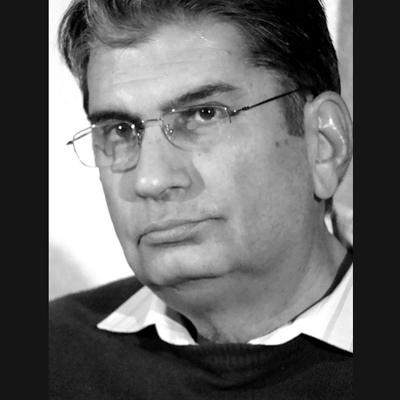
    The last time I did an India at 9 debate on CNN IBN on June 2, 2014, Vinod Mehta was on the panel. As the debate was ending, Vinod insisted on having the last word. ‘What is this I am hearing about you quitting or going on a sabbatical? Don’t stay away from the screen for long, you must return soon!’ As it turned out, that was my last appearance on CNN IBN: I did not return. Little did I know then, that neither would Vinod. He left us permanently this Sunday, leaving behind a great void.

    I never had the privilege of working under Vinod, although my wife Sagarika did and she told me wonderful stories of an editor who was passionate and committed to journalism. My interactions with Vinod were largely on the television screen though he did get me to write the occasional column for Outlook. I found him the person I had always imagined him to me: honest, straightforward, and above all, irreverent. Most editors take themselves very seriously and believe their one article or programme can change the world. Many will tell you how proximate they are to the corridors of power. Not Vinod. His almost self-deprecating attitude to being an editor was perhaps his greatest strength (he had even named his dog ‘Editor’). That coupled with a nose for news and the big, bold headline made him the ideal reporters’ editor, someone who nurtured and embraced many fine young talents. For Vinod, the story mattered, not the pomposity of the byline or the celebrityhood of being editor.

    In a sense, Vinod belonged to what I would call the grand ‘Bombay school of editors’, reared in the more genteel 1960s and 70s. Leading the pack was my first editor when I was in college: Behram Contractor or Busybee, someone also blessed with the craft of using simple language to bring a story alive. Vinod and Behram were in many ways two of a kind: they didn’t flaunt their connections or get intimate with their sources, but enjoyed the idea of bringing out a cracking good newspaper or magazine.

    Sadly, we live in an age where the editor is an endangered species, combating marketing, corporate and political pressures. Vinod is perhaps one of the last of the editors who would not compromise on journalistic independence. As he once told a colleague: “Let someone serve a legal notice, the story must go!” His views were his own, he did not wish to follow the herd or be intimidated by the cacophony of cheerleaders and naysayers. That both LK Advani and Sonia Gandhi were present at his funeral exemplified his ability to cut across the political divide. He wrote a fine book on Sanjay Gandhi and an equally well written biography of Meena Kumari: in both books, there was just enough gossip and anecdote to make them real page turners. Editor, author, journalist: we shall all miss his affable, always energetic presence. RIP.

    Post- script: Vinod made the effortless transition to being a pundit on television. ‘I don’t really like it, but it does pay well,’ he told me with a smile. That was quintessential Vinod: he liked expressing his thoughts candidly, but not without a glass of whiskey in the hand!

    (The piece has been written by veteran journalist Rajdeep Sardedsai on his blog http://www.rajdeepsardesai.net and Indiantelevision.com took his consent and uploaded it after his approval)

  • Labour court restrains Outlook group from terminating People mag employees

    Labour court restrains Outlook group from terminating People mag employees

    MUMBAI: It was last weekend that the Outlook group announced that it was shutting down three of its magazines – Geo, People, and Marie Claire. That announcement may end up being just a proclamation if the journalists working at People magazine have their way. They have managed to get the Mumbai Labour Court to issue a restraint on the Outlook group management from terminating its employees till the due process of law is followed.


    In its order, the court, presided by small causes court judge P K Chitnis, directed Outlook to maintain status quo of the services of its employees. “Respondents are directed to maintain status quo and services of the complainants may not be terminated without following due procedure of law,” said the court order.


    The copy of the court order has been sent to both Outlook management president Indranil Roy and editorial chairman, senior journalist Vinod Mehta.


    The court took notice of a petition filed today morning by People magazine editor Saira Menezes along with 16 other employees. Advocate Anees S Kazi represented the complainants.


    The Outlook management had through a public statement issued on 26 July announced the termination of its licenses with international magazines-People, Marie Claire and Geo.


    Almost 60 employees will be affected by the shutting down of the three magazines. The petition was filed by the employees of People, India, but could apply to the employees across the three magazines.


    At the time of writing the report, the Outlook management had not received the court order. “I have not received the order as yet, but have only heard about it,” informed Outlook Publishing president Indranil Roy.


    “Outlook group has never held back anyone’s dues and neither do we plan to do it in this case. The dues will be cleared. After all we are all friends. No one should doubt our intentions,” he added.


    When asked on the time frame within which the dues of the employees will be cleared Roy said, “Now that the matter has been taken to the court, we will talk to the court only.”


    When Outlook Group editorial chairman Vinod Mehta was contacted, he refused to comment.

  • Election Commission wants ban on opinion polls: Quraishi

    Election Commission wants ban on opinion polls: Quraishi

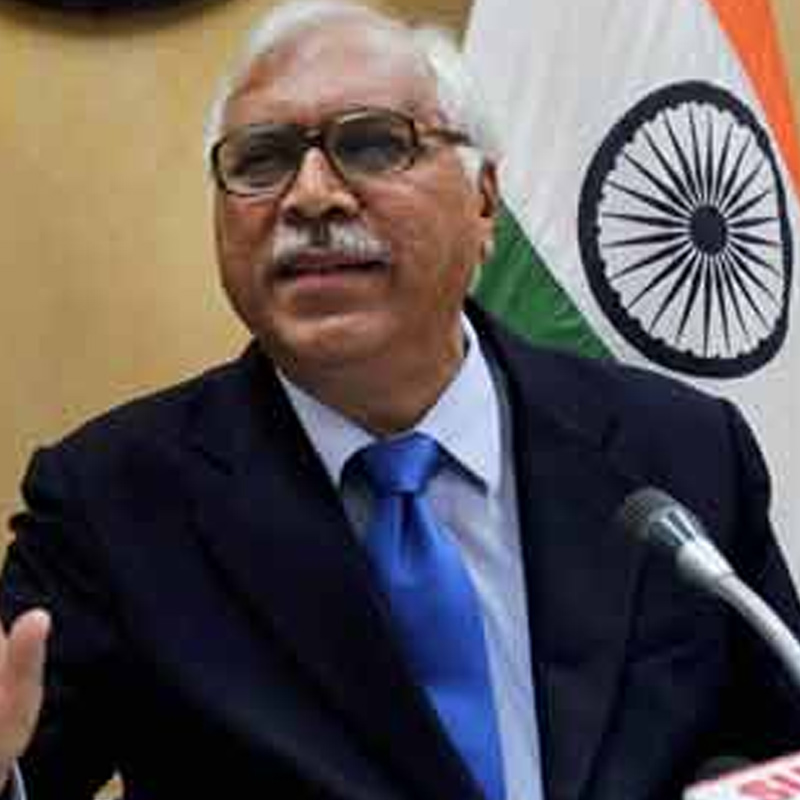
    NEW DELHI: The Election Commission is in favour of banning opinion polls in media.

    Chief Election Commissioner S Y Quraishi said that the Election Commission would like to press for the ban as the Exit Polls could be as misleading.

    He refuted charges that a ban on opinion polls amounted to an attack on the freedom of expression. It was equally erroneous to say that Article 19 (1) (a) did not apply to social media.

    Releasing the book ‘Media Ethics: Truth, Fairness and Objectivity – Making and Breaking News’ by noted media commentator Paranjoy Guha Thakurta, he said the recent elections threw up 112 cases of paid news in Uttar Pradesh.

    Speaking on the occasion, ‘Outlook’ Editor Vinod Mehta said it was natural for mediapersons and editors to be opinionated or have prejudices and biases. However, these should not reflect in news and should be voiced only in editorial comment.

    He said media in India was facing its most major credibility crisis since 1975 when the National Emergency had been imposed.

    But media should realise that it is not a player on the national scene: it merely has the best ringside seats to watch, report and comment.

    He felt that demands for self-regulation were a hoax since experience had shown that even editors seldom wanted to come forward to make clean confessions of mistakes made. The editor being the custodian of a publication has to be above board. There was imperative need for a Code of Conduct.

    Rajdeep Sardesai of CNN-IBN said it was interesting that the media was facing a vigorous credibility crisis at a time when it was the most powerful but commanded the least respect – unlike the early years of Independent India when the media was not so powerful but commanded respect.

    Agreeing that television news channels had become entertainment, he said that the primary external threat to the media was the business model where the editor had to bow to the proprietor or the marketing people. He also said the carriage fee demanded from TV channels – which he claimed was like underhand payment – was also a major problem.

    The primary revenue of TV was from advertisements and not subscriptions since the people were unwilling to pay. He said it was natural, therefore, that channels resorted to telecasting programming like that of Nirmal Baba, who paid for his time. He hoped the situation would change after digitisation.

    The internal threats were sensationalism instead of sense and jingoism instead of journalism, since competition had taken away the ‘moral compass’.

    He was happy that the self-regulatory bodies of the news and general entertainment channels were ‘naming and shaming’ the culprits in the eyes of their peers, since that would bring a semblance of sanity.

    Thakurta regretted that the Press Council of India was toothless and the scant respect given by the Government to the recent report on Paid News was an example of this. He also wondered why private radio was not being permitted to telecast news.

    Mazhar Khan of the Oxford University Press which has published the revised and enlarged edition of the book noted that OUP had completed one hundred years in India.